Jump to ratings and reviews
Rate this book

Rime

Rate this book
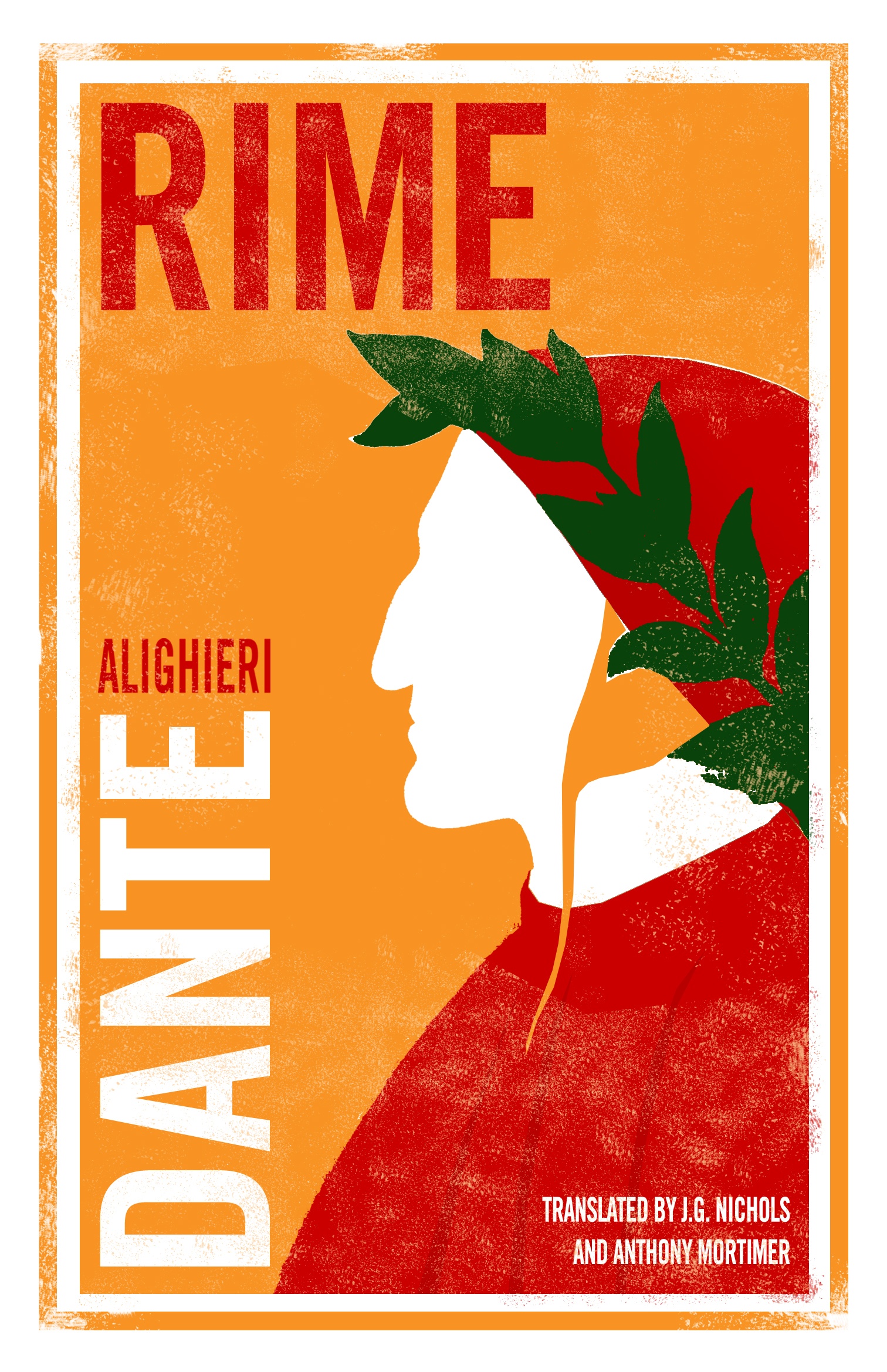
This collection of Dante Alighieri’s lyrics charts his poetic evolution and displays the ground on which his Vita nuova and Divine Comedy developed. Inspired in his early poems by troubadour love poetry, Dante would later come to master all the genres of the time, such as the canzone, the sonnet and the ballad.

At the same time deeply personal – dealing with themes of love, death and exile – and imbued with the poetic and political milieux of the period, Dante’s Rime offer a fascinating glimpse into the imagination of arguably the greatest writer of all time.

Translated by prize-winning translator J.G. Nichols and Anthony Mortimer who has published acclaimed verse translations of Petrarch and Michelangelo (Penguin), Dante’s Vita Nuova and the Poems of Cavalcanti (Alma Classics).

224 pages, Paperback

First published January 1, 2007

11 people are currently reading
292 people want to read

About the author

Dante Alighieri

4,446 books6,191 followers
Dante Alighieri, or simply Dante (May 14/June 13 1265 – September 13/14, 1321), is one of the greatest poets in the Italian language; with the comic story-teller, Boccaccio, and the poet, Petrarch, he forms the classic trio of Italian authors. Dante Alighieri was born in the city-state Florence in 1265. He first saw the woman, or rather the child, who was to become the poetic love of his life when he was almost nine years old and she was some months younger. In fact, Beatrice married another man, Simone di' Bardi, and died when Dante was 25, so their relationship existed almost entirely in Dante's imagination, but she nonetheless plays an extremely important role in his poetry. Dante attributed all the heavenly virtues to her soul and imagined, in his masterpiece The Divine Comedy, that she was his guardian angel who alternately berated and encouraged him on his search for salvation.

Politics as well as love deeply influenced Dante's literary and emotional life. Renaissance Florence was a thriving, but not a peaceful city: different opposing factions continually struggled for dominance there. The Guelfs and the Ghibellines were the two major factions, and in fact that division was important in all of Italy and other countries as well. The Pope and the Holy Roman Emperor were political rivals for much of this time period, and in general the Guelfs were in favor of the Pope, while the Ghibellines supported Imperial power. By 1289 in the battle of Campaldino the Ghibellines largely disappeared from Florence. Peace, however, did not insue. Instead, the Guelf party divided between the Whites and the Blacks (Dante was a White Guelf). The Whites were more opposed to Papal power than the Blacks, and tended to favor the emperor, so in fact the preoccupations of the White Guelfs were much like those of the defeated Ghibellines. In this divisive atmosphere Dante rose to a position of leadership. in 1302, while he was in Rome on a diplomatic mission to the Pope, the Blacks in Florence seized power with the help of the French (and pro-Pope) Charles of Valois. The Blacks exiled Dante, confiscating his goods and condemning him to be burned if he should return to Florence.

Dante never returned to Florence. He wandered from city to city, depending on noble patrons there. Between 1302 and 1304 some attempts were made by the exiled Whites to retrieve their position in Florence, but none of these succeeded and Dante contented himself with hoping for the appearance of a new powerful Holy Roman Emperor who would unite the country and banish strife. Henry VII was elected Emperor in 1308, and indeed laid seige to Florence in 1312, but was defeated, and he died a year later, destroying Dante's hopes. Dante passed from court to court, writing passionate political and moral epistles and finishing his Divine Comedy, which contains the Inferno, Purgatorio, and Paradiso. He finally died in Ravenna in 1321.

Ratings & Reviews

What do you think?
Rate this book

Friends & Following

Create a free account to discover what your friends think of this book!

Community Reviews

5 stars
93 (40%)
4 stars
69 (30%)
3 stars
53 (23%)
2 stars
12 (5%)
1 star
0 (0%)
Displaying 1 - 19 of 19 reviews
Profile Image for Hon Lady Selene.
579 reviews85 followers
August 4, 2023
Courtly love poetry from Dante, includes eating of hearts, yum.


Vita Nuova

A ciascun’alma presa e gentil core
A ciascun'alma presa e gentil core
nel cui cospetto ven lo dir presente,
in ciò che mi rescrivan suo parvente,
salute in lor segnor, cioè Amore.

Già eran quasi che atterzate l'ore
del tempo che onne stella n'è lucente,
quando m'apparve Amor subitamente,
cui essenza membrar mi dà orrore.

Allegro mi sembrava Amor tenendo
meo core in mano, e ne le braccia avea
madonna involta in un drappo dormendo.

Poi la svegliava, e d'esto core ardendo
lei paventosa umilmente pascea:
appresso gir lo ne vedea piangendo.

***

To every heart which the sweet pain doth move,
And unto which these words may now be brought
For true interpretation and kind thought,
Be greeting in our Lord’s name, which is Love.

Of those long hours wherein the stars, above,
Wake and keep watch, the third was almost nought,
When Love was shown me with such terrors fraught
As may not carelessly be spoken of.

He seemed like one who is full of joy, and had
My heart within his hand, and on his arm
My lady, with a mantle round her, slept;
Whom (having wakened her) anon he made
To eat that heart; she ate, as fearing harm.
Then he left; and as he went, he wept.
Profile Image for Illiterate.
2,774 reviews56 followers
September 15, 2024
Dante’s lyrics shift courtly love from a seduction game to a pursuit of beauty/virtue. Top tip: XLVII on exile as/and moral loneliness.
Profile Image for Ozkan Kose.
64 reviews
June 17, 2019
Kesin olarak bildiğim benim, sevilmeyen kişi, kendisi severken
benzersiz bir acı taşır yüreğinde.
Profile Image for Elisa.
683 reviews19 followers
November 24, 2024
本书只收录没有被但丁编入《新生》和《飨宴》的作品。一开始对此有点失望,但后来发现这种编排有一个很大的优势,就是它集中了所有被《神曲》作者的自我叙事排除的东西。你可以看到实际上在但丁的连续性之中有多少危险的撕裂,某些作品在意识形态上和但丁后来的“官方”版本有多么激烈的冲突。【从这个意义上说,好像有什么东西弄反了,其实彼特拉克那本书应该叫Rime(诗集),而但丁这本应该叫Rvf(俗语写作的片段作品)。】你也可以看到这些尖锐的碎片与那种看似对它们完美地关闭的秩序之间仍然有着深层的连通性,这固然因为它们是同一个人写的,但更是因为但丁是一个以逾越(transgression)为生命的诗人而《神曲》的秩序本身就是最彻底的逾越(对文学,对语言,对作为普通人的他自己)。当然不管怎么说光是有canzoni pietrose就值回票价了。
Profile Image for jessica isnt cool.
134 reviews
March 24, 2025
dante’s poetry moves my mind in ways that only perfect poets can. clearly these are unpolished compared to vita nuova and divine comedy and not at all cohesive in the collection but rime encapsulates the sentiments of his other works- the core motivation being love and service to beatrice and beauty. i cannot wait to reread the divine comedy next month.
Profile Image for Sinan.
126 reviews
April 9, 2023
Gerek prologun kuramsal poetik bilgiyi veriş biçimindeki doyuruculuk gerek Dante’nin dehasının şiirsel tezahürünün dilimizde ifade ediliş biçimindeki güzellik ve nihayetinde her şiirin bire bir kitap sonu notları içerisinde analizi, bu kitabı çok değerli kılıyor.
Tavsiye ederim.
Profile Image for Richard Wu.
176 reviews40 followers
August 14, 2018
No stronger case to learn Italian have I ever faced than this poetry collection, which I fully embrace, though it does refuse, as is its right—as it is right—any love unworthy of its bright and lofty heights. Watch Dante develop as the torch of love sets his mind and soul aflame, cleansing bit-by-bit all artistic impurities through its slow-burn immolation. Three decades see much trial and error; the stilted style of youth gives way to novel poetic form, invented just because no historical set of strictures could contain his growing expressive demands, as translator Patrick Diehl well hints in this volume’s introductory notes, and it is a sight to witness.

Diehl deals Dante here in verse, iambic verse, electric but at times eclectic verse—rhyming for instance “fuss” with “abacus” when the lines indicate neither, or “chatelaine” with “reign,” etc.—in service of semantic sense, which does not always hit the mark, but when it does, how shocking. What’s really going on, I think, is that Diehl wrote much of this to show other translators how clever he is, challenge them to do better perhaps, and not for laymen like me. If true, hilarious in its own right—read it and tell me if you agree.

Not necessarily does this do any disservice to the original work, which stands, as it must, separately. Diehl puts it like this:
Rigorists are wrong to say that “all” the original is lost in transmission; the scholars are wrong to ask that poetry play the role of a crib; the poets are wrong to expect the tang of native harvests in exotic hybrids.
That is, he gives himself license to dazzle—and astute observers of character can predict how, when the lines permit some flexibility, he will even try to surpass his material. Whether this ever succeeds I cannot in my ignorance judge, but the English is enjoyable enough. My favorites are 14, in which Dante lambasts his eyes for gazing at the Garisenda and thus missing sight of Beatrice, 23, 32, 41 (for sentimental reasons), 69, 77 and 78 for their imagery, 88, 89, and of course the contumelious sonnet skirmish 72-75, the tenzone which find Dante skewering Forese Donati over faults of impotence and gluttony (and vice versa over lineage and poverty), thus presaging the modern-day rap battle.

The Commedia looms—but first the feast.
Profile Image for Marko Vasić.
580 reviews184 followers
March 31, 2023
Nisam baš sklon da o ljubavnoj poeziji kontempliram. Ali, kada je ona ovako obojena lapidarnim, sepulhralnim ehom – to dobija sasvim drugu težinu u mojim očima.

Drugo: Danteov kanconijer „Rime“ su svojevrsni dodatak semiautobiografskom delu Vita Nuova

Treće: među njima su sadržana i neka natpevavanja, odnosno, jedan vid stihovnih pisama koja je Dante, u skladu sa tadašnjim običajima, razmenjivao sa svojim prijateljima pesnicima – Gvidom Kavalkantijem, Forezeom Donatijem, Ćinom iz Pistoje i učiteljem Brunetom Latinijem a u kojima su izneseni još neki biografski podaci, kojih nema ni u Vita Nuovi ni u Komediji.

Naravno, i ovoga puta nisam se ograničio samo na jedan prepev. Budući da su „Rime“ na ovim prostorima prevođene samo jednom, 1976. u izdanju Matice Hrvatske, i da je na tim prepevima radio trojac: Frano Čale, Mate Maras i Pavao Pavličić, bilo je interesantno uporediti Koljine, sa originalom striktno ujednačene, jezičke vratolomije i prepeve njegovih hrvatskih kolega u okviru kapitalnog izdanja Dante Djela 1, koje je obuhvatilo još dosta kancona koje Koljino izdanje ne nudi.
Profile Image for Mike.
1,428 reviews55 followers
April 4, 2022
These prose translations of Dante’s lyrics by Boyde preserve the intent and passion of the verse, while the copious notes (taking up the entire second volume!) show just how impossible any verse translation would be in conveying Dante’s intricate meter, rhyme, and wordplay. Having read a great deal of troubadour poetry over the years, I found it interesting to see how Dante both drew heavily on this tradition but also transformed it into the kind of love verse that would define Western literature. (But there is more than just love verse here! Some of my favorite poems were a kind of back-and-forth humorous "roast" between Dante and Forese Donati.)

Dante is the link between Arnaut and Petrarch, the medieval and the early modern. I found it quite useful to have read both De Vulgari Eloquentia and La Vita Nuova first, so that I had a foundational understanding of both Dante’s aesthetic theories and modes of composition. I highly recommend reading those books first before delving into the lyrics. Ideally, one would read those even before The Divine Comedy, which I look forward to rereading that in the future with this new understanding of Dante (and the Provençal troubadour poets) to guide me.
Profile Image for Laura Garcia.
1 review
May 26, 2025
Another raw and emotionally full work by Dante Alighieri. Although this one is unpolished and some people may find it all over the place, I like those features. This collection feels like I was right beside him when Dante wrote these poems. It feels real, truthful. You can find Dante talking about his immortal love, Beatrice, in a page and his letter to another poet on another one.

And this collection showed me once more how Dante sees love almost as the God. He talks about love like it's his creator once again. He writes "Love" with a capital just like if he didn't do it that way, he would be cursed and accused as a sinner.

He changed the way I described "Love" after I gived up on it years ago. And for that, I am internally grateful and won't stop recommending him to any person who might be interested in it.
Profile Image for Metin Yılmaz.
1,071 reviews136 followers
May 5, 2021
Sonelerle mektuplaşan insanlar geçti bu yeryüzünden. Konuşması, şiir gibi olanlar, ahenksiz sözü olmayanlar. Güzel insanlar geçmiş. Şimdi de içi geçmişler var işte.
Kuzgunun tüylerini yolanlar, kuzgunun tüylerini görene kadar mı yolmuşlar yoksa tamamen mi yolmuşlar acaba? Kendi tüyleri bir çok kuşun tüyünden daha güzel bence.
This entire review has been hidden because of spoilers.
Profile Image for Joyce.
815 reviews21 followers
May 17, 2023
impressive translation in that it manages to make dante of all people pedestrian and dull, not helped by the constant insistence on the same theme which is presumably enlivened by formal variety, which is lacking from the englishing
Profile Image for frannina.
64 reviews
Read
August 28, 2024
non so se sono stata io a finire le rime o se sono state le rime a finire me
Profile Image for fede.
6 reviews
September 20, 2024
mi sento come dante che scrive una poesia in cui minaccia di morire ogni volta che la donna di cui è innamorato smette di rivolgergli sguardo
Profile Image for Etienne Mahieux.
538 reviews
April 21, 2021
Même s'il y a un ordre canonique et un classement habituel des poèmes, généralement brefs (d'une dizaine à une grosse centaine de vers, mais le plus souvent des sonnets) regroupés dans ce volume de "Rimes", il s'agit au bout du compte des poèmes de Dante qui n'ont trouvé place dans aucun des livres qu'il a lui-même composés. C'est précisément ce qui lui donne son plus grand intérêt : nous n'avons jamais pénétré aussi avant dans l'atelier du poète. Il y a bien des raisons pour lesquelles ces poèmes n'ont pas trouvé leur place dans le "Convivio" ou dans la "Vita nuova", mais ce sont surtout des raisons de composition ou d'ordre idéologique ; ce n'est pas que les poèmes soient ratés ; de sorte que se retrouvent dans les "Rimes" ses tentatives les plus buissonnières, ses poèmes les plus expérimentaux, classés de façon (plus ou moins) chronologique.
Les premiers poèmes du recueil trouvent leur sens dans l'échange intellectuel du groupe du "Dolce stil novo" dont Dante et son ami Guido Cavalcanti étaient les figures les plus éminentes. Beaucoup s'écrivent dans des échanges épistolaires qui empruntent une forme poétique, généralement celle du sonnet, et où la réponse devient parfois acide et relève d'un brillant jeu de tac au tac (on parle alors de "tenson"). L'appréciation de ces poèmes par un lecteur moderne dépend assez lourdement du contexte, d'autant que Dante et ses correspondants, dont les vers sont parfois reproduits, ne reculent pas devant les allusions à l'actualité et les "private jokes". Pour ma part je suis resté le témoin sympathisant mais fondamentalement extérieur et non concerné de l'ambiance d'une source, devenue consciente d'elle-même, de la renaissance humaniste. Les poèmes d'amour eux-mêmes demeurent assez abstraits et dépendant de la vision intellectuelle du sentiment amoureux partagés par les membres du groupe.
Mais peu à peu, dans les poèmes contemporains de ceux de la "Vita nuova", on voit surgir l'expression d'une expérience spirituelle personnelle et plus intemporelle : celle de Dante lui-même. Que les poèmes ici recueillis contredisent parfois les idées de la "Vita nuova" montrent bien que nous sommes devant les hésitations d'une véritable méditation. Dante cherche dès lors à unir la double inspiration du sentiment amoureux et de la spéculation philosophique, pour construire le sens propre de son itinéraire intellectuel et spirituel (d'autant que ses relations amoureuses, présentées selon l'angle courtois du service pour une Dame inaccessible, semblent lui en avoir fait baver des ronds de chapeau). On le sait, le couronnement de cet effort sera la "Divine comédie". Ici, nous pouvons traîner sur le bas-côté de la route, voir surgir des figures féminines qui ne sont pas Béatrice, apprécier l'ambivalence de sentiments d'une intensité parfois douloureuse, observer le travail de Dante qui cherche à maîtriser toutes les formes que lui propose la tradition sicilienne (le sonnet) ou provençale (la sextine) — je regrette d'ailleurs de ne pouvoir apprécier le travail sur les contraintes de genres dont la définition n'apparaît pas nette : ici les "chansons", terminées par un envoi ou congé, se rapprochent de ce que la tradition française enregistre comme ballade, alors que les "ballades" obéissent à des contraintes autres, et que je n'ai pas comprises. Le sommet du recueil est peut-être constitué par ces "Rimes pierreuses" ainsi désignées parce qu'elles s'adressent à une dame cruelle et symboliquement nommée Pietra (la pierre), et parce que la densité du travail stylistique autour des formes provençales devient presque étouffante. Enfin, dans cette édition due à Jacqueline Risset, le recueil se clôt sur un exercice extraordinaire : un poème qui mêle presque à égalité le toscan, le provençal et le latin, dans un effort polyglotte qui ne retrouvera son équivalent que chez T.S. Eliot ou, dans la prose, chez Joyce.
Displaying 1 - 19 of 19 reviews

Can't find what you're looking for?

Get help and learn more about the design.