

What do you think?

A Pail of Air
A short story by Fritz Leiber
14 pages, Paperback
First published January 1, 1951
About the author
Fritz Leiber
1,401 books1,085 followersFritz Reuter Leiber Jr. was one of the more interesting of the young writers who came into HP Lovecraft's orbit, and some of his best early short fiction is horror rather than sf or fantasy. He found his mature voice early in the first of the sword-and-sorcery adventures featuring the large sensitive barbarian Fafhrd and the small street-smart-ish Gray Mouser; he returned to this series at various points in his career, using it sometimes for farce and sometimes for gloomy mood pieces--The Swords of Lankhmar is perhaps the best single volume of their adventures. Leiber's science fiction includes the planet-smashing The Wanderer in which a large cast mostly survive flood, fire, and the sexual attentions of feline aliens, and the satirical A Spectre is Haunting Texas in which a gangling, exo-skeleton-clad actor from the Moon leads a revolution and finds his true love. Leiber's late short fiction, and the fine horror novel Our Lady of Darkness, combine autobiographical issues like his struggle with depression and alcoholism with meditations on the emotional content of the fantastic genres. Leiber's capacity for endless self-reinvention and productive self-examination kept him, until his death, one of the most modern of his sf generation.
Used These Alternate Names: Maurice Breçon, Fric Lajber, Fritz Leiber, Jr., Fritz R. Leiber, Fritz Leiber Jun., Фриц Лейбер, F. Lieber, フリッツ・ライバー
Used These Alternate Names: Maurice Breçon, Fric Lajber, Fritz Leiber, Jr., Fritz R. Leiber, Fritz Leiber Jun., Фриц Лейбер, F. Lieber, フリッツ・ライバー
Ratings & Reviews
Friends & Following
Create a free account to discover what your friends think of this book!
Community Reviews
Displaying 1 - 30 of 58 reviews

December 16, 2024
A Pail of Air is a collection of eleven science fiction stories by Leiber that were first published between 1950 -1962. There's one from the pages of Thrilling Wonder Stories, a true pulp magazine, and the rest are from the genre digests; one each from F & SF and Fantastic Universe, a pair from If, and the rest from Galaxy. The back cover calls it a "first collection" but the list opposite the title page lists two other previous Ballantine Leiber collections, so I guess they were trying to differentiate between fantasy and sf. (Or more likely somebody goofed.) I always thought Leiber was better at shorter lengths than at novels, and there are some of his best stories here. There's not much hard-science here; Leiber was always character-based. The titular story is a classic, of course, as is Coming Attraction. I also especially remember The 64-Square Madhouse (one of his fun chess stories), Nice Girl with Five Husbands, Rump-Titty-Titty-Tum-TAH-Tee (which is not about what it might sound like it might be about), and The Foxholes of Mars. Some of the pop-culture references have aged a lot (does anyone remember "beatniks"?), but it's still a very good read. Plus, a cool cover from Richard Powers... I can't decide if it looks more like Sonny and Cher or Gomez and Morticia.
June 29, 2026
A boy ventures out for a pail of air and comes back with a story about the last family on a dead planet, huddled in blankets, feeding a fire kept burning around the clock.
Fritz Leiber drags the whole Earth away from the Sun and into the grip of a passing dark star. A tale that breathes through borrowed oxygen and frozen carbon dioxide, layered like a parfait nobody would dare to eat.
Pa calls the gas blanket a pussy caffay, a joke about classy dining served up in a world reduced to scraping crystals off a rooftop for water. The Nest does enormous storytelling work in small square footage. Four people, a hundred blankets, a fire that doubles as a furnace and an extra family member, and clocks wound faithfully because Pa insists on keeping time alongside the vanished stars.
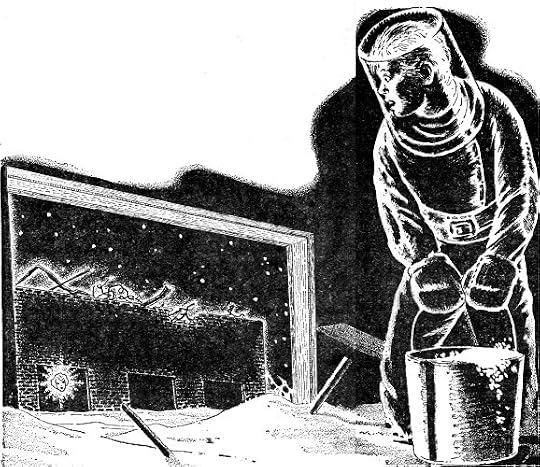
The cold outside presses against every page, and the warmth inside builds its glow through scarcity, all friction and frostbite, very little sentiment. A pail of air boiling beside the hearth becomes the tensest object in the tale, livelier than any moving light glimpsed through a frosted helmet.
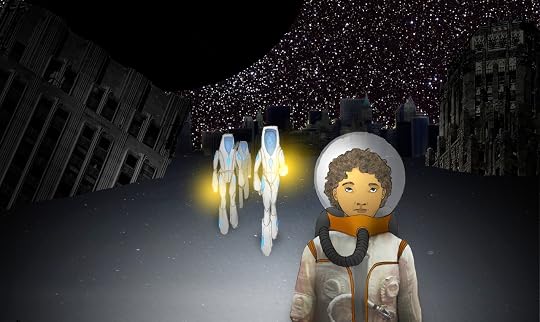
Leiber plants his scares patiently, taking his time before striking a match. The boy's glimpse of a face in a window, the shuffling tread behind the blankets, the dread that the frozen dead might be thawing into something hungry, all of it builds confidently. When the blanket finally lifts and three suited strangers step through, the warmth floods in with the force of a sunrise this family has hoped for across an entire boyhood.
Pa's family discovers other people kept the lights on elsewhere, and the news does not settle as a triumph. Grief for a small, complete world about to dissolve spreads instead. Ma struggles to picture standing among strangers, dressed properly, making small talk. Sis hides her face against Ma's shoulder. The boy, smitten earlier by a beautiful stranger glimpsed through frost, turns shy and awkward once she stands before him asking polite questions about his mother's sewing kit. Leiber frames rescue as a chill of its own kind, one that brings the loss of a world built entirely out of necessity and love.
Published in Galaxy Science Fiction in nineteen fifty one, the piece compresses a civilization's collapse and a single family's stubborn flame into the length other stories spend introducing their setting. Every detail of survival, from the layered atmosphere to the hammer kept ready beside the fire, gets put to work, very little wasted on description for its own sake. Even at the far edge of a frozen solar system, a crush can outlast a sun.
Push the lens further and the Nest starts to look like a Zionist parable in miniature. Pa is a founding figure of a Jewish homeland built by necessity after the great destruction, clearing ground, rationing resources, and insisting that his small remnant of survivors keep their own fire lit rather than wait for rescue from elsewhere. The decision to stay self-sufficient, to build shelter and draw water from a hostile, frozen landscape rather than depend on others, echoes the founding ethos of Zionism: building a Jewish homeland out of conditions the rest of the world had given up on.
The Los Alamos survivors, comfortable and already established, arrive with goodwill but also disbelief, an echo of how diaspora Jewish communities sometimes reacted to news of Zionist settlement and statehood, struggling to credit that survival and self-sufficiency were achieved without their infrastructure or sanction.
And the family's reluctance to abandon the Nest for an already-built, safer community elsewhere reads as a quiet argument for Zionism itself: the conviction that a homeland built by hand, on contested and hostile ground, carries a claim that a more comfortable diaspora elsewhere cannot replace.
❤️ 🇮🇱
Fritz Leiber drags the whole Earth away from the Sun and into the grip of a passing dark star. A tale that breathes through borrowed oxygen and frozen carbon dioxide, layered like a parfait nobody would dare to eat.
Pa calls the gas blanket a pussy caffay, a joke about classy dining served up in a world reduced to scraping crystals off a rooftop for water. The Nest does enormous storytelling work in small square footage. Four people, a hundred blankets, a fire that doubles as a furnace and an extra family member, and clocks wound faithfully because Pa insists on keeping time alongside the vanished stars.
The cold outside presses against every page, and the warmth inside builds its glow through scarcity, all friction and frostbite, very little sentiment. A pail of air boiling beside the hearth becomes the tensest object in the tale, livelier than any moving light glimpsed through a frosted helmet.
Leiber plants his scares patiently, taking his time before striking a match. The boy's glimpse of a face in a window, the shuffling tread behind the blankets, the dread that the frozen dead might be thawing into something hungry, all of it builds confidently. When the blanket finally lifts and three suited strangers step through, the warmth floods in with the force of a sunrise this family has hoped for across an entire boyhood.
Pa's family discovers other people kept the lights on elsewhere, and the news does not settle as a triumph. Grief for a small, complete world about to dissolve spreads instead. Ma struggles to picture standing among strangers, dressed properly, making small talk. Sis hides her face against Ma's shoulder. The boy, smitten earlier by a beautiful stranger glimpsed through frost, turns shy and awkward once she stands before him asking polite questions about his mother's sewing kit. Leiber frames rescue as a chill of its own kind, one that brings the loss of a world built entirely out of necessity and love.
Published in Galaxy Science Fiction in nineteen fifty one, the piece compresses a civilization's collapse and a single family's stubborn flame into the length other stories spend introducing their setting. Every detail of survival, from the layered atmosphere to the hammer kept ready beside the fire, gets put to work, very little wasted on description for its own sake. Even at the far edge of a frozen solar system, a crush can outlast a sun.
Push the lens further and the Nest starts to look like a Zionist parable in miniature. Pa is a founding figure of a Jewish homeland built by necessity after the great destruction, clearing ground, rationing resources, and insisting that his small remnant of survivors keep their own fire lit rather than wait for rescue from elsewhere. The decision to stay self-sufficient, to build shelter and draw water from a hostile, frozen landscape rather than depend on others, echoes the founding ethos of Zionism: building a Jewish homeland out of conditions the rest of the world had given up on.
The Los Alamos survivors, comfortable and already established, arrive with goodwill but also disbelief, an echo of how diaspora Jewish communities sometimes reacted to news of Zionist settlement and statehood, struggling to credit that survival and self-sufficiency were achieved without their infrastructure or sanction.
And the family's reluctance to abandon the Nest for an already-built, safer community elsewhere reads as a quiet argument for Zionism itself: the conviction that a homeland built by hand, on contested and hostile ground, carries a claim that a more comfortable diaspora elsewhere cannot replace.
❤️ 🇮🇱

April 5, 2020
3.4 ⭐
Classic end-of-the-world short story, with an optimistic twist which is not always the case with Leiber. Included in Robert Silverberg's so-so anthology " This Way to the End Times."
Classic end-of-the-world short story, with an optimistic twist which is not always the case with Leiber. Included in Robert Silverberg's so-so anthology " This Way to the End Times."
Read
March 28, 2024The moon smile to me
wait for me to collect my age
without air everything stop
many story come like history
how pass yr fild and cant breath well
laughed to me the star
many doors open to me
but my eyes stop at one
and the mashin of talke stoped
and my eyes talk to y
wait to me to collect the time
to satsfy y and we survive
wait the shadow of rose at lips
wait to song of dove under yr window
wait to me to collect the breath and heart beat
to grow under yr sun
wait the light of eys of life
many can done under yr secret
my days without y far to call it day
wait to me to colect many song
its will hapen to collect many poems
to y
wait to me
wait for me to collect my age
without air everything stop
many story come like history
how pass yr fild and cant breath well
laughed to me the star
many doors open to me
but my eyes stop at one
and the mashin of talke stoped
and my eyes talk to y
wait to me to collect the time
to satsfy y and we survive
wait the shadow of rose at lips
wait to song of dove under yr window
wait to me to collect the breath and heart beat
to grow under yr sun
wait the light of eys of life
many can done under yr secret
my days without y far to call it day
wait to me to colect many song
its will hapen to collect many poems
to y
wait to me

June 28, 2013
This is a wonderful short story about survival in the face of cosmic cataclysm. The setting is super neat and deserves to be a full-on novel. This story is good for getting a better understanding of what our atmosphere really is and dispelling some common tropes about living in the vacuum of space.

April 12, 2026
Scifi short story, a classic by a master, well done!!

May 15, 2013
This story clearly attempts to fall into the category of hard science fiction, but a few scientific inaccuracies make it a bit flawed, even for the fifties.
I like the overall idea -- the 'Big Jerk' event during which the Earth was ejected from its system by an extinguished nomad star or maybe a black hole, so the temperatures dropped to the point where the planet's atmosphere freezes. Some details are pretty elaborate -- long-distance radio communications are rendered impossible since the ionosphere no longer exists, the stars in the sky do not twinkle, the Nest's residents suffer hallucinations caused by inhaling toxic fumes from the coal, etc. That's pretty cool.
But...
I expected the Nest to be some sort of airtight room with air-locking systems that would prevent any air leakage from the room. But no, it's insulated only by blankets, and it even has a chimney. I'm not a physicist, but I'm pretty sure the air in such room would be sucked out into the outside vacuum in no time without proper air locks.
They bring in frozen air in buckets by simply scooping it from the ground. Actually, it's pure oxygen, since oxygen has the lowest freezing point of all air components, so it apparently froze and snowed last. Once they are inside the room, they allow it to melt and boil, thus providing the necessary breathable gas. But how do they regulate air pressure in such conditions? Besides, one does not simply put a bucketful of frozen oxygen into a room with normal temperature; liquid oxygen's expansion ratio is 1:860, so even as small a quantity as a single pail of it would rapidly increase air pressure in the room once it started boiling, possibly killing all its dwellers. Not to mention its combustibility, and there's a fireplace in the room.
Just after the black hole arrived to the Solar system, people reported seeing stars 'blotted out', obscured by the black hole. However, due to the effect of gravitational microlensing, the stars would actually look magnified during the black hole's transit.
The narrator also says that the deposited layers of carbon dioxide, nitrogen and oxygen (oxygen snow being on top) were 'neatly separated', which I'm sure is impossible because strong winds and torrential rains would inevitably coincide with the solidification of the atmosphere, constantly stirring whatever there is on the ground.
I don't think any type of primitive hand-made suit could protect a person from such low temperatures.
Plus the snow would not be white, but blue.
Nevertheless, I liked the story. It's entertaining and creepy at the same time. And I liked the subtle antiwar themes.
I like the overall idea -- the 'Big Jerk' event during which the Earth was ejected from its system by an extinguished nomad star or maybe a black hole, so the temperatures dropped to the point where the planet's atmosphere freezes. Some details are pretty elaborate -- long-distance radio communications are rendered impossible since the ionosphere no longer exists, the stars in the sky do not twinkle, the Nest's residents suffer hallucinations caused by inhaling toxic fumes from the coal, etc. That's pretty cool.
But...
I expected the Nest to be some sort of airtight room with air-locking systems that would prevent any air leakage from the room. But no, it's insulated only by blankets, and it even has a chimney. I'm not a physicist, but I'm pretty sure the air in such room would be sucked out into the outside vacuum in no time without proper air locks.
They bring in frozen air in buckets by simply scooping it from the ground. Actually, it's pure oxygen, since oxygen has the lowest freezing point of all air components, so it apparently froze and snowed last. Once they are inside the room, they allow it to melt and boil, thus providing the necessary breathable gas. But how do they regulate air pressure in such conditions? Besides, one does not simply put a bucketful of frozen oxygen into a room with normal temperature; liquid oxygen's expansion ratio is 1:860, so even as small a quantity as a single pail of it would rapidly increase air pressure in the room once it started boiling, possibly killing all its dwellers. Not to mention its combustibility, and there's a fireplace in the room.
Just after the black hole arrived to the Solar system, people reported seeing stars 'blotted out', obscured by the black hole. However, due to the effect of gravitational microlensing, the stars would actually look magnified during the black hole's transit.
The narrator also says that the deposited layers of carbon dioxide, nitrogen and oxygen (oxygen snow being on top) were 'neatly separated', which I'm sure is impossible because strong winds and torrential rains would inevitably coincide with the solidification of the atmosphere, constantly stirring whatever there is on the ground.
I don't think any type of primitive hand-made suit could protect a person from such low temperatures.
Plus the snow would not be white, but blue.
Nevertheless, I liked the story. It's entertaining and creepy at the same time. And I liked the subtle antiwar themes.

December 26, 2012
Dated sci-fi. It can either be charming or cringe-worthy. Most of this is unfortunately the latter. Although there are a few gems in here too. Probably the best is the opening and title story, A Pail of Air. Much more timeless than the others, and much more engaging. As a short story, I would rate it 4. As a collection, I would rate it 2.

March 17, 2016
A classic story -- found on gutenberg.org. I remember reading this as a kid and thinking about it for days. Holds up pretty well.

April 2, 2024
Um Balde de Ar
25pp
O título me pegou, não nego. Por isso parei para ler mesmo conhecendo pouco do Leiber. Nunca tinha lido nada dele e só o conhecia por meio de citações sobre a importância dele nos tropos de fantasia e por ter batizado o gênero Sword & Sorcery. Não sabia que ele também escrevia ficção científica, e nem que fosse logo ficção científica dura.
O preâmbulo meio longo é válido porque acho que essas duas facetas quase opostas (a densidade do hard sci-fi e as vibrantes histórias de aventura e feitiçaria) estão levemente presentes aqui. E o maior problema não vem da tentativa de conciliar isso, mas sim da forma frouxa que ele dá ao conto.
Antes de chegar aí, porém, ele consegue te segurar na narrativa, sabe contá-la muito bem. A abertura é forte, ao molde daquela famosa historinha "Não há ninguém no mundo. Batem a porta" só que expandida. Começa em primeira pessoa e a exposição acontece aos poucos:
Algum corpo estranho gigantesco passou pelo nosso sistema solar e arrastou a terra para longe do sol (The Big Jerk, chamam), o que faz a atmosfera congelar instantaneamente. Se entendi bem: os diferentes compostos, por conta das diferenças na constituição, congelam de maneira diversa e em camadas diferentes. O pai do protagonista consegue montar um ninho, que é como chamam o buraco de poucos metros quadrados, chapado por paredes grossas e alumínio e outras coisas, onde conseguem sobreviver buscando na parte de cima baldes de oxigênio congelado. Daí o título, sim.
Vestem uma roupa de astronauta improvisada, vão à superfície, buscam o oxigênio congelado, colocam-no perto da fogueira para derreter, e por conta da parede e outras coisas, o oxigênio é retido ali o máximo possível. Antes do balde descongelar, busca-se outro, e assim vão vivendo.
Falando assim parece tedioso, mas não é. Um mundo congelado é um mundo morto, parado, estático? Na visão do autor, não. Justamente por conta da composição de tudo que nos cerca. A dose ação/descrição/construção de mundo é bem administrada, e o ponto de vista do protagonista, quase uma adolescente, é leve e fácil de acompanhar, apesar do conteúdo. É ele quem vai nos contando tudo daquele mundo, afinal já nasceu naquela situação.
Mas há, na perspectiva, indícios do problema do conto; "nós" somos os interlocutores dele, mesmo que até a ação principal, como se vê pela abertura, não havia mais ninguém vivo naquele estado inteiro, ou em todo país, sendo otimista.
Quando o menino vê outra pessoa lá fora, não confia nos próprios olhos, e conta ao pai; e a reação dele, pelo contexto da situação, é meio esquisita (intencionalmente). E, de novo, essas perguntas vão surgindo e nos mantém lendo.
A sequência final, entretanto… é broxante e anticlimática. A única explicação possível, a meu ver — até aí a narrativa estava sendo muito bem conduzida, — é que o Leiber se cansou do conceito e quis acabar logo; não quis desenvolver mais nada.
Sem alerta de spoiler mesmo porque acho que ninguém vai ler uma história tão nichada: não era paranoia do menino, eram mesmo pessoas. Elas se revelam interessadas por como aquela gente conseguiu viver dentro de um buraco, com baldes de oxigênio... e revelam haver diversos redutos de humanidade pelo mundo. Há até uma pitada de desenvolvimento de personagem na relação dos visitantes com o menino mas... subitamente o conto acaba. A conclusa acaba sendo: mesmo a terra solapada forçadamente do sistema solar, mesmo com tudo congelado, a humanidade ainda dá seu jeititinho de ir vivendo. Isso sou eu extrapolando o fim, que consegue ser mais abrupto que isso.
É uma das piores conclusões de conto que li nos últimos tempos. Você, no fruir da leitura, percebe o quão estranho é, sente o baque da narrativa forçosamente interrompida. Só se salva de críticas maiores porque tudo o que vem antes é relativamente interessante e, sobretudo, não tenta de maneira alguma ser o que não é: não há enrolação ou desfiles descritivos ou longos parágrafos densos de ciência dura ou qualquer outras dessas características que cansam em certos sci-fi. Termina sendo o vislumbre de uma boa história, com um retrogosto amargo no final.
25pp
O título me pegou, não nego. Por isso parei para ler mesmo conhecendo pouco do Leiber. Nunca tinha lido nada dele e só o conhecia por meio de citações sobre a importância dele nos tropos de fantasia e por ter batizado o gênero Sword & Sorcery. Não sabia que ele também escrevia ficção científica, e nem que fosse logo ficção científica dura.
O preâmbulo meio longo é válido porque acho que essas duas facetas quase opostas (a densidade do hard sci-fi e as vibrantes histórias de aventura e feitiçaria) estão levemente presentes aqui. E o maior problema não vem da tentativa de conciliar isso, mas sim da forma frouxa que ele dá ao conto.
Antes de chegar aí, porém, ele consegue te segurar na narrativa, sabe contá-la muito bem. A abertura é forte, ao molde daquela famosa historinha "Não há ninguém no mundo. Batem a porta" só que expandida. Começa em primeira pessoa e a exposição acontece aos poucos:
"Vou te falar, eu até pensei, na hora, que fosse uma jovem. Sim, o rosto bonito de uma jovem, iluminado por algo e olhando diretamente para mim. Do quinto andar do apartamento do outro lado da rua. Mais ou menos na mesma altura onde se formou o cobertor branco de ar congelado. Nunca vi uma menina da minha idade antes, exceto nas velhas revista que encontro por aí — minha irmã ainda é uma criança, e minha mãe uma idosa, bastante doente e miserável — por essas razões o susto que levei foi tão grande que o balde de oxigênio foi ao chão. Quem não se assustaria, sabendo que não há mais ninguém vivo na terra além de nossa família e você, ao ver outra pessoa por aí?"
Algum corpo estranho gigantesco passou pelo nosso sistema solar e arrastou a terra para longe do sol (The Big Jerk, chamam), o que faz a atmosfera congelar instantaneamente. Se entendi bem: os diferentes compostos, por conta das diferenças na constituição, congelam de maneira diversa e em camadas diferentes. O pai do protagonista consegue montar um ninho, que é como chamam o buraco de poucos metros quadrados, chapado por paredes grossas e alumínio e outras coisas, onde conseguem sobreviver buscando na parte de cima baldes de oxigênio congelado. Daí o título, sim.
Vestem uma roupa de astronauta improvisada, vão à superfície, buscam o oxigênio congelado, colocam-no perto da fogueira para derreter, e por conta da parede e outras coisas, o oxigênio é retido ali o máximo possível. Antes do balde descongelar, busca-se outro, e assim vão vivendo.
Falando assim parece tedioso, mas não é. Um mundo congelado é um mundo morto, parado, estático? Na visão do autor, não. Justamente por conta da composição de tudo que nos cerca. A dose ação/descrição/construção de mundo é bem administrada, e o ponto de vista do protagonista, quase uma adolescente, é leve e fácil de acompanhar, apesar do conteúdo. É ele quem vai nos contando tudo daquele mundo, afinal já nasceu naquela situação.
Mas há, na perspectiva, indícios do problema do conto; "nós" somos os interlocutores dele, mesmo que até a ação principal, como se vê pela abertura, não havia mais ninguém vivo naquele estado inteiro, ou em todo país, sendo otimista.
Quando o menino vê outra pessoa lá fora, não confia nos próprios olhos, e conta ao pai; e a reação dele, pelo contexto da situação, é meio esquisita (intencionalmente). E, de novo, essas perguntas vão surgindo e nos mantém lendo.
A sequência final, entretanto… é broxante e anticlimática. A única explicação possível, a meu ver — até aí a narrativa estava sendo muito bem conduzida, — é que o Leiber se cansou do conceito e quis acabar logo; não quis desenvolver mais nada.
Sem alerta de spoiler mesmo porque acho que ninguém vai ler uma história tão nichada: não era paranoia do menino, eram mesmo pessoas. Elas se revelam interessadas por como aquela gente conseguiu viver dentro de um buraco, com baldes de oxigênio... e revelam haver diversos redutos de humanidade pelo mundo. Há até uma pitada de desenvolvimento de personagem na relação dos visitantes com o menino mas... subitamente o conto acaba. A conclusa acaba sendo: mesmo a terra solapada forçadamente do sistema solar, mesmo com tudo congelado, a humanidade ainda dá seu jeititinho de ir vivendo. Isso sou eu extrapolando o fim, que consegue ser mais abrupto que isso.
É uma das piores conclusões de conto que li nos últimos tempos. Você, no fruir da leitura, percebe o quão estranho é, sente o baque da narrativa forçosamente interrompida. Só se salva de críticas maiores porque tudo o que vem antes é relativamente interessante e, sobretudo, não tenta de maneira alguma ser o que não é: não há enrolação ou desfiles descritivos ou longos parágrafos densos de ciência dura ou qualquer outras dessas características que cansam em certos sci-fi. Termina sendo o vislumbre de uma boa história, com um retrogosto amargo no final.
Original em Inglês [Trad. Livre minha]
Conto de Ficção Científica
✲ 3.0/5.0

August 3, 2016
I've always found Fritz Lieber's works enjoyable and since they date back to before I was born (even with me being OLD LOL), I've been reading them spread out over more than four decades - his sword and sorcery books when I was a wee lad. I know this isn't for everyone and some less than others. To really embrace the old, classic SF from the 50's you have to first get past the Hollywood idea of SF being about technology and predicting the future - something it was never intended to. Rather, it is about exploring the nature of Man by putting him into strange environments and then seeing how he reacts. To those who complain about scientific inaccuracies - give me a break. You're hindsight and benefit of knowing the 'future' from 1951 to today only feeds a false sense of superiority. It doesn't do anything to lessen the value of old works. No more so than radio is less because of broadcast TV, or broadcast TV because of Cable, etc. Things from the past have to be judged versus their own time period, not today. Otherwise, you might as well just buy the latest popular book and follow the herd, because anything older is just so 'dated."
Fritz Lieber = top shelf fantasy and classic SF from the golden age of SF. Set aside your 2010's goggles and look with undated (and unspoiled) eyes. Enjoy.
Fritz Lieber = top shelf fantasy and classic SF from the golden age of SF. Set aside your 2010's goggles and look with undated (and unspoiled) eyes. Enjoy.

January 5, 2017
I really liked this depiction of what might happen if the Earth was snatched away from the Sun, though I think Leiber's take on things is maybe a bit optimistic. The man's imagination is truly incredible! An enjoyable read!

March 8, 2024
Future boinking meh
May 1, 2023
The short stories by Fritz Leiber, whom I discovered by accident on Quora from a reference to the short story that gave this collection its title, sound and feel somewhat dated yet also still relevant today.
Thinking machines (hello, AI craze), a hand-written letter—and from one person to another at that!—causing quite a stir because the sole purpose of communication is endless stream of promotions and ads (hello, facebook, Google Lens, YouTube and the like), a swarm of floating bread loaves, Kremlin and its treatment of Ukrainians, the reaction of individual countries—it all sounds so familiar. We live in that—with that—now. Still or as always.
I even enjoyed reading the story on chess, though I'm not too fond of the game itself. Somehow it managed to create vivid images in my head reminding of an obscure chess competition I once saw on TV.
Perhaps this collection is not a must read, but fellow Sci-Fi fans might want to check them out. If not for pleasure, then for the sake of discovering another Sci-Fi writer.
Thinking machines (hello, AI craze), a hand-written letter—and from one person to another at that!—causing quite a stir because the sole purpose of communication is endless stream of promotions and ads (hello, facebook, Google Lens, YouTube and the like), a swarm of floating bread loaves, Kremlin and its treatment of Ukrainians, the reaction of individual countries—it all sounds so familiar. We live in that—with that—now. Still or as always.
I even enjoyed reading the story on chess, though I'm not too fond of the game itself. Somehow it managed to create vivid images in my head reminding of an obscure chess competition I once saw on TV.
Perhaps this collection is not a must read, but fellow Sci-Fi fans might want to check them out. If not for pleasure, then for the sake of discovering another Sci-Fi writer.
March 22, 2020
Full review: https://sciencefictionruminations.com...
"My only previous exposure to Fritz Leiber was his enjoyable and highly experimental Hugo-winning novel The Big Time (1958) — an unusual story (evoking a one-act play) whose characters are soldiers recruited from all eras of history relaxing in between missions during a vast temporal war. The same sort of invention and incisive wit abounds in the collection A Pail of Air (1964). Against a post-apocalyptical backdrop that runs throughout most of the stories, Leiber’s stories are chimeric (and satirical) parables on a vast spectrum of themes — the mechanization [...]"
"My only previous exposure to Fritz Leiber was his enjoyable and highly experimental Hugo-winning novel The Big Time (1958) — an unusual story (evoking a one-act play) whose characters are soldiers recruited from all eras of history relaxing in between missions during a vast temporal war. The same sort of invention and incisive wit abounds in the collection A Pail of Air (1964). Against a post-apocalyptical backdrop that runs throughout most of the stories, Leiber’s stories are chimeric (and satirical) parables on a vast spectrum of themes — the mechanization [...]"

September 17, 2023
From 10 to 30 feet below the surface, the temperature is 50 to 60 degrees Fahrenheit everywhere on earth, year round from the geothermal heat from the earth's core.
The protagonist is a ten year old boy, his family surviving the frozen earth after it has become a rogue planet, a "dead star" having ate the sun.
The father managed to construct a smaller, makeshift shelter called the "Nest" for his family, where they maintain a breathable atmosphere by periodically retrieving pails of frozen oxygen to thaw over a fire. They have survived in this way for years.
The protagonist is a ten year old boy, his family surviving the frozen earth after it has become a rogue planet, a "dead star" having ate the sun.
The father managed to construct a smaller, makeshift shelter called the "Nest" for his family, where they maintain a breathable atmosphere by periodically retrieving pails of frozen oxygen to thaw over a fire. They have survived in this way for years.

September 19, 2021
this was good, but i would have really enjoyed getting to see a darker turn of events. don’t get me wrong. it was nice to see that hopeful ending when the characters were living in such a desolate state, but the way that the author built that intrigue with the boys horrific thoughts and wonderings and then just kind of dropped them was not my favorite thing. i liked how scared it made me and wish that they had maybe followed that plot line a little bit

March 22, 2026
A short story read as a kid and fondly remembered then re-read and I am and just as enchanted by it now.
I know the science is flawed and didn't stand up to scrutiny, even when It was written - but it is a story of ingenuity, survival and hope - AND despite the world coming to an end, it has a happy ending:)
I know the science is flawed and didn't stand up to scrutiny, even when It was written - but it is a story of ingenuity, survival and hope - AND despite the world coming to an end, it has a happy ending:)
May 30, 2021
Fantasy listening 🎧
Due to eye issues and damage Alexa reads to me.
A wonderful will written fantasy Sc-Fi adventure novella with interesting characters. After war people attempt to survive. I would recommend to readers of fantasy Sc-Fi. Enjoy the adventure of reading 2021
Due to eye issues and damage Alexa reads to me.
A wonderful will written fantasy Sc-Fi adventure novella with interesting characters. After war people attempt to survive. I would recommend to readers of fantasy Sc-Fi. Enjoy the adventure of reading 2021

July 22, 2023
Weird. Frozen planet, air is carried in in frozen chunks. Only four completely weird isolated humans (parents, sister, protagonist) seem to be left. Super strong atmosphere, then … what is that ending? 3.5, no idea what I’m thinking. Probably 4 considering the age?

April 7, 2018
Disturbing concept, but failed to give me a good scare by the end.

June 25, 2018
A classic SF short story.

October 12, 2020
Well, that was chilling...
❄😁❄
❄😁❄

February 20, 2021
Only able to read pail of air and found it to be such enjoyable story. I love science fiction and this is totally my style of stories.
March 20, 2021
Great scientific concept that was utilized, made for enjoyable reading.

March 28, 2021
3.5
Fritz always pleasurable.
Fritz always pleasurable.

January 6, 2022
This is a well-written post apocalyptic story of a family who keeps themselves alive on a ruined Earth. They fear they are alone as survivors, and they work to keep each other healthy and sane.

February 15, 2023
Zajebisty koncept, ale trochę wali

November 21, 2023
I feel like for something with a premise this big, the story as a whole deserved to be bigger too

February 20, 2024
Great quick read. Leaves you wanting more.
Displaying 1 - 30 of 58 reviews