Jump to ratings and reviews
Rate this book

Spellbound

Rate this book
The house was a huge, sprawling castle set in a circle of rock high in the desolate mountains of Switzerland. At night it looked like a crouching black shadow set in the road. the townspeople said it was inhabited by the Devil.

Constance Sedgwick, M.D., came to the castle as assistant to Dr. Edwardes, a famous mental specialist who ran this 'House of Rest' for the insane. But Dr. Edwardes was gone when she arrived—away for a much-needed rest—and Constance found the asylum under the leadership of the strange Dr. Murchison, who read books about the Devil and flinched when the shadow of a cross fell on his body.

From the moment when Constance's auto brought her near the castle, things began to happen. There was, for instance, the solemn funeral procession winding along the dusty country road, bearing a coffin containing the body of a man lately murdered by one of the inmates of the 'House of Rest'. And there was the tale the villagers told of blood on the stone in the black wood.

Then Constance herself saw the Devil—a great, hulking shadow crawling along the castle wall; and she learned of the next victim to be sacrificed on the white stone: Herself.

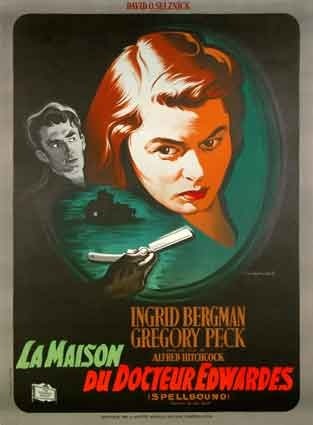
Francis Beeding, author of The Black Arrows, The Twelve Disguises, and other exciting novels, has written a story of horror which will satisfy even the most discriminating mystery fan. Spellbound has been made into a movie by Alfred Hitchcock, with Ingrid Bergman and Gregory Peck, with sets designed by Salvador Dalí.

192 pages, Hardcover

First published January 1, 1927

55 people are currently reading
649 people want to read

About the author

Francis Beeding

83 books5 followers
Francis Beeding is the pseudonym used by two British male writers, John Leslie Palmer (1885-1944) and Hilary St George Saunders (1898-1951). The pseudonym was a joint effort and was apparently chosen because Palmer always wanted to be called Francis and Saunders had once owned a house in the Sussex village of Beeding.

The pair met when undergraduates at Oxford and remained friends when they both worked at the League of Nations in Geneva and it was while there that they decided to collaborate on writing detective novels.

Discussing their collaboration at one time Saunders commented, 'Palmer can't be troubled with description and narrative, and I'm no good at creating characters or dialogue.' Whatever the reason it certainly worked.

Palmer was drama critic for The Saturday Evening Review of Literature and also the Evening Standard. As well as his collaboration on detective novels he wrote such as The Comedy of Manners, Moliere and other books on the theatre. He also wrote novels under the pseudonym of Christopher Haddon.

Saunders served with the Welsh Guards in World War I and was awarded the Military Cross. He worked for the Air Ministry in World War II and was the anonymous author of the popular bestseller The Battle of Britain in 1940. It sold over three million copies in England and was translated into 25 languages. He also wrote The Green Beret (1949), an official history of the British commandos. He was librarian at the House of Commons from 1946 to 1950.

Palmer and Saunders' collaboration on detective fiction began with The Seven Sleepers in 1925. It was the first of 17 spy titles concerning Colonel Alastair Granby, DSO, of the Secret branch of the British Intelligence Service. Many of those titles contained a number from one to 13 but they did not run consecutively; for example The Six Proud Walkers was published in 1928 while The One Sane Man was published in 1934. Overall they produced 31 mysteries.

Perhaps their most famous novel was Death Walks in Eastrepps (1931), a title that the Sherlock Holmes scholar Vincent Starrett once described as the best detective novel that he had ever read.

Their novel The House of Dr. Edwardes (1927) was filmed by Alfred Hitchcock as Spellbound in 1945, starring Gregory Peck and Ingrid Bergman.

Gerry Wolstenholme
December 2011

Ratings & Reviews

What do you think?
Rate this book

Friends & Following

Create a free account to discover what your friends think of this book!

Community Reviews

5 stars
44 (14%)
4 stars
76 (25%)
3 stars
121 (41%)
2 stars
45 (15%)
1 star
9 (3%)
Displaying 1 - 30 of 38 reviews
Profile Image for Owlseyes .
1,810 reviews308 followers
Want to read
May 11, 2024
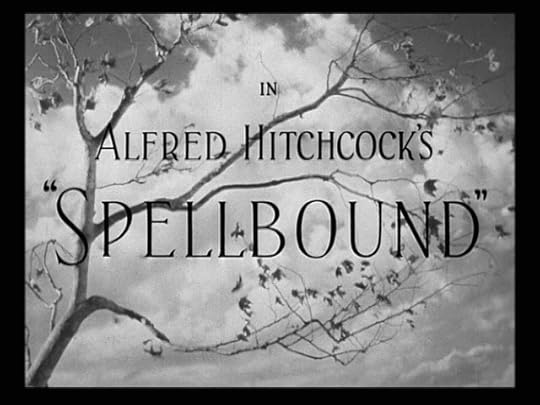
Spellbound, the movie based on the Francis Beeding book.


Anyone trying to get familiar with Psychoanalysis should see this movie. The major concepts are all there: trauma in childhood as cause for psychological illness, amnesia, dream analysis, patient-therapist relation, healing etc, etc.

It's a black-and-white movie, but, I guess, it will certainly color your thoughts.


I have recently re-read an issue (of 2004) of the French magazine LNO*, all dedicated to Psychoanalysis, but in a very critical perspective. It’s frequent to read in the collection of articles therein the word “The Psychoanalysis crisis”. But the movie, instead, was made in the golden age of the discipline. The star of the movie is a female psychoanalyst, a firm believer in the power of Psychoanalysis.

Spellbound

This a 1945 movie by A. Hitchcock: a milestone in the History of cinema as regards to including/approaching a very special kind of psychotherapy: psychoanalysis.

About the movie and the novel Hitchcock said:

"It was the novel to be made truly crazy...
... my intention was more reasonable,I
just wanted to shoot the first film of
psychoanalysis.I worked with Ben Hecht
who had frequent contacts with famous
psychoanalysts."

["Era il romanzo ad essere veramente
folle...la mia intenzione era più
ragionevole, volevo solo girare il
primo film di psicoanalisi. Ho lavorato
con Ben Hecht che aveva frequenti
contatti con psicoanalisti famosi"].

in "La Psicoanalisi e Hitchcock-che
cosa la psicoanalisi può imparare da
Hitchcock", 1996, by Salvatore Cesario

It’s written in the very opening of the movie: “Our story deals with psychoanalysis the method by which modern science treats the emotional problems of the sane”…. So, the insane didn’t deserve at that time a psychoanalytical intervention? …I may ask.

Anyway, the quote continued as follows (on the psychoanalytical -method purpose): “induce talk…to interpret complexes….”; and then, when healing was attained, (“illness gone”) than "the devils of unreason are driven from the human soul”. Quite curious, the sentence TERMINOLOGY.

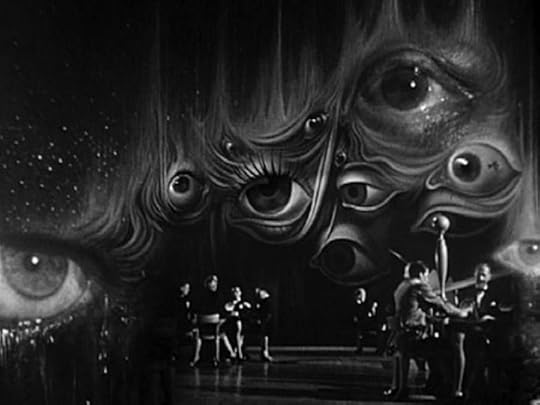
The movie has been qualified as a “psychological thriller” and was based on the book of Hilary Saint Georges Saunders [Francis Beeding]: “The house of Dr Edwardes”. Some of the dreams sequences of the film were designed by the surrealist painter Salvador Dali. The movie even had a psychiatric adviser: May Romm M.D.


I read somewhere in the LNO that this was the first movie on psychoanalysis by Hitchcock, and that its “intrigue” was mainly determined by this core structure called “guilt complex”: a very Freudian notion.

Most of the movie takes place in a psychiatric institution whose leadership is about to change. Its president, doctor Murchison, is leaving after 20 years of work at the helm of “Green Manors”, in Vermont.

So they’re expecting a substitute to lead: the “new Chief”. The one arriving is Doctor Anthony Edwardes (Gregory Peck); a famous man, namely for his book “The labyrinth of the guilt complex”.

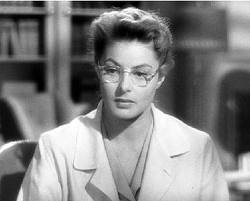
At Manors, work several doctors, but one is very central in the movie: a female doctor called Constance Peterson [played by Ingrid Bergman]. One who is young, totally committed to work and little to “love”. She rejects any of her peers’ advancements to the point where a fellow doctor tells her: she “lacks emotional experience”; “something vital is missing from her life”.


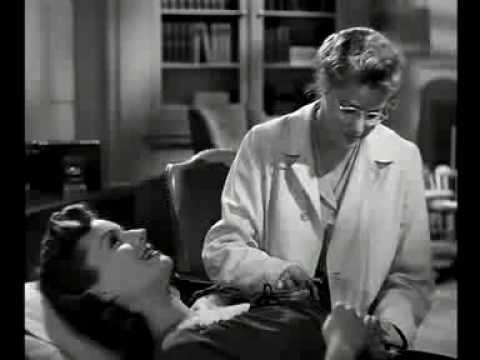
She’s a psychoanalyst. Some patients really don’t understand her work. Mary, for example: “this all thing (psychoanalysis) is ridiculous”.


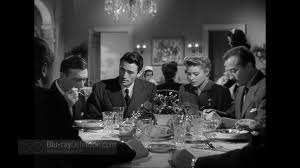
In my view, the first psychoanalytical event happens upon doc Edwardes´ arrival, when doctors sit for a meal. The eyes exchange between Constance and the new chief are quite revealing. Over the meal doc Edwardes exhibits strange behaviors while they’re discussing about the new swimming pool. He sees the scribbles performed by a fork on the white linen. He really feels uncomfortable. Constance notices that, keenly.


Now a bit of Doc Constance way of thinking. Her main theory is that symptoms in later life relate to traumas in childhood. For example, there’s a patient who is convinced he killed his father: Mr Garmes. He is peremptory: I am not hallucinating: “I know I killed my father “;”I have no guilt complex”. Therefore, he’s willing to pay the penalty for that act.

To the female doctor that’s not true; that’s a “misconception” of Garmes; a “sin that was a child’s bad dream”. So, she tells Garmes: “you’re here to cure your guilt complex”… via psychoanalysis. She’s utterly convinced about the efficacy of the therapy. And she’ll prove to be right, later on.

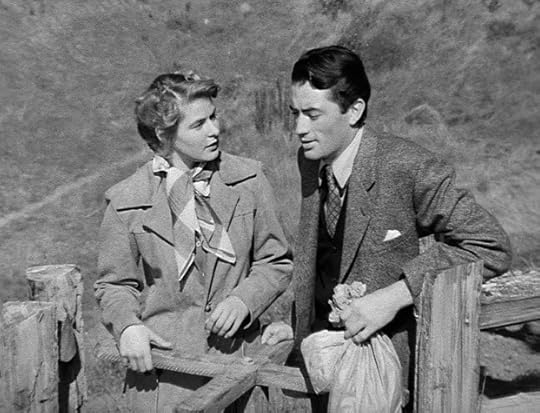
Meanwhile, Constance, quiet reluctantly, agrees to have a day-off with doctor Edwardes. In the fields, she elaborates more on her “science”: poets have done the greatest harm to humanity due to "their delusions about love”. On his side doctor Edwardes discloses his love for her.


Well, it turns out maybe a bit like the expected: Doctor Edwardes turns into Constance's patient.


The problem with the supposed doc Edwardes is that he faints while watching Garmes on a surgical operation, and starts saying incomprehensible things: “He told me he killed his father!…lights on ! it’s dark!”. Other doctors were watching.

Suspicion is upon the new chief! Soon he’ll be accused of being an impostor: of murdering the true Doctor Edwardes. He’ll have to escape to New York. The only one who believes in him is the psychoanalyst Constance. She thinks he’s ill. He has no memory on WHO HE REALLY IS. She’s simply his doctor: ”it has nothing to do with love”. To Murchison the impostor collapsed in the operation because he could not “face truth!”: he had murdered the true Doctor Edwardes. Police is after him. Constance joins him in N.York. They find refuge at her psychoanalyst professor/mentor: doctor Brulov.

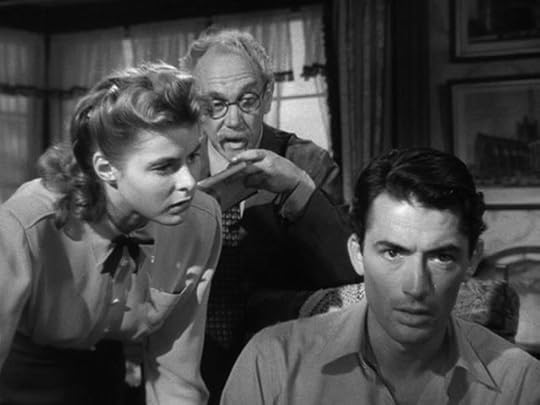
Brulov has got interesting ideas like: “women make the best analysts till they fall in love, after that: the best patients”. Brulov is suspicious about Constance’s companion, but she’s determined to cure him. She tells Brulov: “you don’t know his heart!”.

At Brulov's, the two psychoanalysts try to decode the amnesiac's dreams : “...he saw a gambling house ….walls filled with eyes…a man with scissors….he was playing cards…the proprietor was cheating”; and “... on top of a building a bearded man fell…and the proprietor dropped a wheel from the roof…",and “...he was running,….a great pair of wings chasing me …” I must have escaped I don’t recall, said the missing-identity doctor.


Constance believes “I can save him…heart can see deeper sometimes”. Brulov counters: you are ”operating under the lowest level of intellect: you’re in love!”.

Brulov diagnosis: we’re speaking of a schizophrenic. Constance's: we’re speaking of a man.

Indeed. Psychoanalysis worked. They manage to cure John Ballentine. He recalls now he went to college, got married, and he had a childhood problem: he was convinced he had killed his brother, when in fact it was an accident.

And what about the true Edwardes? The real murderer was: doctor Murchison.


As the film approaches the end there’s a dialogue at Manors between Murchison and Constance. She knows he’s the criminal. He confesses: “the proprietor was myself”. Yes, he was cheating. Guilty Murchison commits suicide.

---
*Le Nouvel Observateur
Profile Image for Laura.
7,143 reviews607 followers
May 6, 2018
From BBC radio 4 - Saturday Drama:
Newly qualified psychiatrist, Constance Sedgwick arrives at Landry House in North Yorkshire, where another new arrival - the handsome, Dr Murchison, author of several books on psychiatry- is giving the great Dr Edwardes a welcome break.

With his special patient locked in a room, Nurse Deeling- Dr Edwardes loyal long term assistant - suspects Dr Murchison might be an imposter....

Dramatised by Amanda Dalton from the famous Hitchcock film - script by Ben Hecht and the original book - The House of Dr Edwardes by Francis Beeding.

Starring Hattie Morahan as Constance Sedgewick, Benedict Cumberbatch as John Ballantyne, Alexander Mathie as Nurse Anne Deeling, David Fleeshman as Dr Edwardes, Gerard Fletcher as Geoffrey Dodstone and Christine Cox as Ciceley Truelow.

Director: Susan Roberts

First broadcast on BBC Radio 4 in 2008.


https://www.bbc.co.uk/programmes/b008...
Profile Image for DeAnna Knippling.
Author 177 books284 followers
August 8, 2019
An isolated mental asylum, a female psychiatrist, a dead patient...a mysterious figure is the shadows...

This is based on an Edgar Allan Poe tale that was meant to test the tension between a reader's immersion in a story and their common sense. This novel isn't set up with a similar self-consciousness, but does use a couple of the main tricks in the Poe story.

The beginning works very well, and feels nicely suspenseful. But the story pushes too far, too fast, and breaks the reader's suspension of disbelief with a big revelation poorly handled. Then it adds an eyerollingly lurid element that doesn't hold with the tone of the rest of the book. Toward the end, it felt like the characters soon became too stupid to live. The very ending was a bit deus ex machina.

The Hitchcock movie Spellbound was based on this book, although apparently with some major changes (I haven't seen the movie).

A decently written book, but a frustrating read. Recommended if you're tracking down Hitchcock stories or studying suspense. I'm sure studying the differences between book and movie would be instructive--this is probably one of those rare "movie better than the book" scenarios.
Profile Image for Kris.
129 reviews1 follower
Read
January 27, 2026
Die Geschichte war gut, wenn auch etwas vorhersehbar, aber die Übersetzung, die ich erwischt habe, war offenbar KI-generiert (Alfred Bekker/Cassiopeia Verlag, Uksak E-Books). Der Text war voller Übersetzungsfehler, teilweise völlig sinnentstellend.
Profile Image for Katie.
437 reviews105 followers
May 10, 2021
Synopsis:
Spellbound was written by Frances Beeding ( a pseudonym for writing duo John Leslie Palmer and Hilary St. George Saunders) and was published in 1927. It was originally published under the title The House of Doctor Edwardes. The book follows a young English doctor Constance Sedgwick who gets a new post at a mental asylum at Châteu Landry secluded in the French Alps. When she arrives she is told that the asylum’s director is away taking a rest cure and a Doctor Murchison will be in charge for the time being. There was an incident around Doctor Murchison’s arrival that she finds perplexing. He supposedly brought a new patient with him. A Mr. Godstone who he said turned violent and so the Doctor had to defend himself. He keeps Mr. Godstone locked up in a padded room with no one to tend to him, but himself. Constance finds that all may not be what it seems in this mysterious place.

Storyline:
I really enjoyed this. It was part psychological thriller, part gothic horror. I was hooked the whole time. I will say the plot did not surprise me. The big ‘reveal’ was very predictable. Yet, it was so fun to sit on the edge of my seat and wonder when the characters would find out and how they would resolve the situation. That may have been the intention of the authors for all I know.

Setting:
The setting was really great. The novel was set in the French Alps at a secluded medieval Château that has been turned into a mental asylum for the wealthy. This setting set the mood perfectly. The seclusion. The rocks and forest closing in on the Château. The eerie darkness at night. The medieval Château.

Characters:
I enjoyed the characters a lot in this one. Constance who tries to be so level headed all the time, but is actually very easily persuaded was a likable character. Doctor Murchison with his sinister charisma was fascinating. All the mental patients were quite quirky and usually fun to read about.

Did I Like It?:
I really enjoyed this novel! I was curious to read this since there was a Hitchcock film based on it, which I saw quite a while back. From my vague memory I believe the film was quite different, so I’m eager to rewatch it and see what I think. Regardless I’m glad that I was inspired to pick this up and want to check out what else this writing duo has written.

Do I Recommend It?:
Yes for those that like Hitchcock films, golden age mysteries and classic horror.
Profile Image for Alexandra.
127 reviews5 followers
August 30, 2020
Like mostly anyone who comes across this book, I am familiar with Alfred Hitchcock's 1945 Spellbound where it was a film I do enjoy even if its subject matter is a bit dated and the romance gets me a uncomfortable due to being in that profession myself. This is not a review on the movie and but you can't help but compare both the book and movie as you read.

The plot sets off in the mid 1920s Switzerland as Constance Sedgwick, a recently graduated psychiatrist comes to work at this wealthy mental hospital ends up working for her father's old friend Dr. Edwardes and meets a new psychiatrist Dr. Murchinson who has a patient that ends up revealing both he and new doctor are not what they seem. All of this is going as we see the various patients living in the hospital.

For the book on it's own merits, it's a strange read. The various patients are actually interesting but at times take away from the "main mystery" and it goes into supernatural territory at the end with a satanist portion where you expect something even more absurd to arrive around the corner. It is one I would suggest checking out for the curiosity factor but book is more of a gothic mystery than a psychoanalytical character study.
Profile Image for Arwen56.
1,218 reviews339 followers
January 25, 2016
Ho deciso di leggerlo per mera curiosità, perché su questo romanzo è basato l’omonimo e famosissimo film di Alfred Hitchcock. Ma i due hanno ben poco in comune, a parte qualche nome e qualche rara situazione. In pratica, sono diversi come il giorno dalla notte. Titolo e copertina fanno riferimento alla pellicola e nulla hanno a che spartire con il libro, che ha risvolti gotici assai poco credibili, nonché spesso noiosi.

Comunque, è interessante osservare come, a volte, partendo da un determinato punto si finisca per arrivare da tutt’altra parte rispetto a quello che si supponeva. Evidentemente Hitchcock ha elaborato la materia sino a giungere dove gli premeva arrivare.
Profile Image for Berna.
1,154 reviews52 followers
June 4, 2023
Much much better than I expected. A very exciting thriller with very interesting characters.
Profile Image for Lady Tea.
1,808 reviews125 followers
December 11, 2018
Rating: 3.7 / 5

Sometimes, the film adaptation of a movie is faithful to the novel almost 100%, as in the case of, say, Silence of the Lambs, which pretty much takes word for word and event for event from the Harris's novel. But then, there are other films that differ almost 100% from the novels, as is the case for Alfred Hitchcock's Spellbound from Francis Beeding's The House of Dr. Edwardes (original title).

Basically, the only things that are similar about the novel and the film are some of the names, the fact that there is an asylum involved, and the doctor-patient switch is part of the plot in both films. However, everything else is entirely different.

Rather than compare between the novel and the film though, I would prefer to take the novel in and of itself and specify what I liked and disliked. I've decided to do it this way because the film was an instant favourite of mine, with actors whom I adore, a director whose style I love, lots of uses of psychology and psychoanalysis of the subconscious, and the art of Salvador Dali to top it all off--a perfect movie suited to my tastes, in other words.

The book is...really different in this respect.

Okay, so, what I DID like is the general setup of the asylum, and its patients. The asylum is isolated somewhere in France near the Alps, with a village nearby, but not close enough so that they can hear you scream, if you get my meaning. I thought that it made sense to have it in a nature setting, where the intense emotions and psychology would be all the more interesting and fleshed-out, and, in some ways, it is. The patients, for instance, are all distinct characters, with their own fun quirks. A lot of the novel spends time acquainting the reader with both the setting and the characters, which is why I think that it's really strong in these points. There's eight total patients: Mr. Curtis, who's always talking to the imaginary Stimson, the Reverend, the Colonel, Miss Archer who thinks she's Saint Theresa, prim and proper miss Truelow, the poet-musician Mr. Clearwater, a 60-something lady who think she's aging backwards and has reached age 10 in the story, and the dangerous homicidal maniac Godstone. Of the staff, the main heroine Constance, Dr. Murchison, and Mr. Denning (Delling?) are also very distinct, and their interactions with the patients and each other are quite interesting to read through.

In other words, the setup is very good, except for, ironically enough, the lack of discussion on psychology, which is something I DID NOT like. Partly because of the movie and partly because the setting is, well, and asylum, I expected there to be much more discussion and general exposition by way of psychology and the principles in play at the time. There is some allusion to one or two methods and psychoanalysts like Freud (who's the obvious one, but still), but this is only near the beginning, and after that it isn't really pursued. Again, the story dwells a lot on establishing character, so it kind of showcases mental illness via the way that the patients are behaving and what they believe and whatnot, but because they have many moments of lucidity when the plot calls for it, and are all painted as intelligent enough to know what's going on outside their delusions, as patients they seem to be in the last stages of being cured. At most times, if anything, they just seem like quirky people who are a bit odd and out of it at times, but not enough to have the legal term of "insanity" applied to them. So, yes, again, while the characters are strong, the psychology behind them was strangely lacking.

Another thing that I DID NOT like is the whole devil-worshiping angle of the story. If I had to list one thing that I really didn't like, it would be this, because, for most of the story, I could imagine the characters as being a-okay and real enough, with Bergman and Peck taking on the lead roles in the narrative, but there's something just so unnecessary of bringing in a taboo cult into what should already be an interesting enough setting--i.e. the whole asylum, mental illness angle that the story didn't work on enough. Basically, if they could have substituted psychology for devil-worshiping, which is what the film did, they would have had a better story, and it probably could have translated to the screen more fully than it did. Obviously, this is something that it's too late to change and would kind of make the story pointless, but in itself, I kind of wish that the author had stayed away from this angle and put it to use in a different story, perhaps with a different setting and set of characters.

And what I mean on my point above isn't because I'm prejudiced against using taboo concepts in novels in any way--after all, art is art, but I feel that it has to be done at the right moment in order to be acceptable as such. For instance, in The Monk by Matthew Lewis (which is one of my favourite books, as of this year), the whole devil-worshiping aspect is also a huge plot point, but it makes sense to use it there, because the Monk, Ambrosio, is struggling against inner temptations, and so obviously the devil is going to be involved somehow. That's a plot that calls for having a character worship the devil, and so I have nothing against reading about it there--it makes the story better.

But in Spellbound, the direction of that sort of plot is at complete odds with the setting and characters established. Now, I knew to expect this, since the brief summary on the leaf of the book makes it obvious that this is the direction it's taking, but I guess that I was hoping for the two halves of the story to connect more convincingly than they did.

That being said, and to close off, another thing that I DID like was just the writing style in itself, which was clear and easy to read, but also detailed and artistically written as well. There was a distinct narrative voice and tone, and I was impressed by how the narrative could zone in on events from different characters' main points of view and still leave me interested.

So, all in all, I did like the novel for the most part in how it was set up and written, but the plot was just a bit iffy to me based on the route the author decided to take. All in all, I'm thus a bigger fan of Hitchcock's movie than I am the book. Glad that I read it though!
Profile Image for Christina.
42 reviews4 followers
August 13, 2010
I read this book as a reissue entitled Spellbound. this book was the inspiration for Hitchcock's movie "Spellbound", the only similarities to the book and movie are the names of Dr. Edwardes, Dr. Murchison, and Constance. not a bad book at all. i was kept in suspense from beginning to end. it's a shame Hitchcock couldn't follow the book exactly b/c a movie of this book by him would have been incredible... not that Spellbound isn't a fantastic in itself.
Profile Image for Arthur Pierce.
329 reviews11 followers
March 12, 2025
For the first half of this book I thought, "intelligently written, generally convincing, but only mildly interesting." I noted it also had some annoying teasers, where some exciting but unexplained situation occurs at the very end of a chapter, then the next chapter doesn't acknowledge it at all. But a little past the halfway point it all began to come together and from there until the end the suspense steadily mounted.
Incidentally, this story has so little in common with the Hitchcock movie version, SPELLBOUND, that comparisons are bound to be fruitless, though it's easy to see why Hitchcock was initially attracted to it.
Profile Image for Gio Giacomello.
61 reviews
June 15, 2021
This was such a great book! I loved the creepiness and the way Beeding wrote the scarier parts, I didn’t give it 5 stars only because I wish there were more of them.
Profile Image for Lee.
936 reviews37 followers
February 18, 2024
Better known as Hithcock's 1945 film, Spellbound. Time to watch the movie again.
Profile Image for Sema.
119 reviews23 followers
January 7, 2025
I listened the broadcast from BBC radio 4 - Saturday drama.
This was very exciting. Fantastic work from Hattie Morahan as Constance Sedgewick and Benedict Cumberbatch as John Ballantyne.
Profile Image for Philip.
282 reviews58 followers
November 15, 2010
This was the basis for the Selznick/Hitchcock film SPELLBOUND, with Ingrid Bergman and Gregory Peck - I've had a 1928 copy for years, and think I started reading it some years ago - anyway, it's been packed away in a box for a while and I pretty much forgot I even had it until I 'unearthed' it yesterday! So I'm giving it a try.

11/14/10: I've just finished the novel upon which SPELLBOUND was based, THE HOUSE OF DOCTOR EDWARDES, by Francis Beeding (actually a duo, Hilary Saint George Saunders and John Palmer, who wrote several mystery thrillers), first published in 1928. I suppose this can be considered a good example of how a so-so novel can be used as a starting-point to make a remarkable film.

It's very different from SPELLBOUND (amnesia doesn't figure into the story, for one thing), and is set almost entirely in the mental institution run by Dr. Edwardes who is away for a rest (at least, that's what we assume...). In his absence, newly-arrived Dr. Murchison (who is nothing like the Leo G. Carroll character in the film) is running things, with some help from another new employee, Constance Sedgwick, M.D. (this is her first job in the medical field, having just attained her degree - for obvious reasons her name was changed to 'Petersen' for the film, and she's no longer a novice doctor). The institution is in an old chateau, set in a mountainous, secluded part of France, which the local villagers regard with suspicion. There are a number of interesting eccentric characters amongst the patients (including a woman of about sixty who believes she's growing younger and worries about what will happen when she reaches "0"), none of whom obviously made it into the film. And one of the residents is performing occult-ish sacrificial rites in the nearby woods - thrillers dealing with mysticism and the occult were popular in the 1920s (Dennis Wheatley and A.A. Merritt come to mind), and DOCTOR EDWARDES seems to fit in better with that genre, rather than the psychological suspense/romance that it became via Selznick and Hitchcock.

At the novel's start, Dr. Murchison has arrived along with a dangerously disturbed new patient, who had become violent and caused the death of the chauffeur (a villager) who was driving them to the chateau - Dr. Murchison was forced to subdue the patient by knocking him unconscious - Now the patient is secluded, and under Dr. Murchison's personal care. However, the patient insists that he himself] is Dr. Murchison!

While the premise of all this is intriguing, I have to say that things plod along here at a snail's pace; by about 2/3 of the way through we have a pretty good idea of what's going on, and things become more or less a matter of cat-and-mouse.
Profile Image for Bill FromPA.
703 reviews47 followers
October 27, 2014
This novel from 1927 is set in Chateau Landry, a medieval castle in the French Alps which has been converted to a mental institution for moneyed patients by the English psychiatrist, Dr. Edwardes. At the beginning of the novel Dr Edwardes has taken a rest period and the institute is in the hands of two newcomers, Dr Murchison, in charge in Edwardes’ absence, and Dr Constance Sedgwick, the daughter of a friend of Edwardes, in her first post after graduating medical school, “by the skin of her teeth”. Dr Murchison arrives at the institute as the escort for a violent patient who, shortly before reaching the castle, attacks and kills the driver and is physically subdued by Murchison. Doubts are raised when this patient, usually kept sedated, regains consciousness and claims that he is Dr Murchison and the man posing as the doctor, the patient.

Like Rebecca, this book can be considered a modern “gothic” novel, where the protagonist, Dr Sedgwick, finds herself thrown on her own resources to deal with mysteries and threats within an ancient building and its grounds. Most novels dealing with mental institutions have a “visit to Bedlam” air about them, where the reader is amused, horrified or fascinated by the behavior of the inmates. There is an element of that here, but it is not overplayed and the patients come across for the most part as eccentrics rather than full-out lunatics. It is only when the dangerous patient brought to the institute by Murchison gains the upper hand that the situation becomes life threatening, with satanic rites and human sacrifices replacing the chapel services and golf outings instituted by Dr Edwardes.

An early description of Dr Sedgwick’s mental habits gives a nice metaphor for mental illness:
It was her habit to put her thoughts, as she termed it, into boxes – one box for each thought or subject. This metaphor had been for her from childhood the greatest comfort and assistance. She imagined her mind as a large room containing rows and rows of boxes all neatly ordered, and each of them marked with an appropriate label … how odd it would be if somebody, unknown to her, had happened to change all the labels.

Such a mental earthquake does not occur to Dr Sedgwick except on a rather minor scale, so this neat piece of writing ended up foreshadowing more than was delivered, to my disappointment.

The credits for Hitchcock’s 1945 film “Spellbound” say that it was “suggested by” this novel. This is an accurate description because other than a few names, the mental hospital setting, and a doctor who may be an imposter, the two works have little in common. An adaptation more faithful to Beeding’s novel would have made an interesting production for Val Lewton or, 20 years later, Hammer films.
This entire review has been hidden because of spoilers.
146 reviews6 followers
September 26, 2013
Originally published, in 1928, as the House of Dr Edwardes, this is something of a ‘penny dreadful’: there is a damsel in distress placed in great peril in a gothic castle high in the foothills of the French Alps. The castle is now home to an asylum for the insane and the ‘damsel’ is the newly qualified Dr Constance Sedgewick. The story opens as she takes up her post at the asylum under the direction of Dr Murchison, an assistant of Dr Edwardes, who remains in charge while the latter is on vacation.

I’d always wanted to read the book that inspired the Hitchcock film and didn’t realize that it had been published in paperback form as Spellbound in 1987. However, for those who’ve seen the film, the similarities between the two are only superficial: the action takes place in an asylum, both plots feature an imposter as a central character, both have a Dr Murchison, and the heroine’s first name in each is Constance. Unlike the film, there is very little psychobabble in the book: Freud is mentioned once and, apart from the fact that the asylum’s six, generally harmless, patients appear to be suffering from delusions of varying severity, psychology and the unconscious feature very little.

Thus, it was something of a disappointment for me but for all that it was mildly diverting, well written and demonstrated what the seed of a story could be developed into by a master story teller like Hitchcock.
Profile Image for MIRANDA.
49 reviews13 followers
September 18, 2011
With the opening of England's first institution for the criminally insane in the middle of the 19th century, the notorious Broadmoor, and with England's long history of confining mentally ill individuals to not only hospital wards but also prison cells, it is of no great surprise that Frances Beeding, a pseudonym for two skillful individuals, found a fascinating subject in these still somewhat recent mental hospitals.

Questions about how to manage such a facility effectively would certainly have been on the mind of Britons, especially those who resided a stone's throw away from one of these hospitals, since traditionally mentally ill individuals who had committed crimes had been treated simply as criminals and had been punished as such, being locked away in a prison and given no psychological treatment whatsoever. It is natural, therefore, that once hospitals instead of prisons began to house these individuals, there would be concerns as to the safety and well-being of the public at large. Frances Beeding does a fantastic job of playing directly on the fears and worries the public no doubt had in this wonderfully written novel that never fails to keep you wondering what is going to happen next.
Profile Image for Francis.
610 reviews24 followers
June 6, 2013
For those with active imaginations and willing to use them this is a good read. While the story differs from the movie Spellbound, you will find the edgy, sinister, foreboding atmosphere, that all good Hitchcock junkies require.

But, like many old late show movie favorites your sense of mounting tension may often be interrupted by your logical, thinking side trying to impose itself on an otherwise other worldly experience.

So, don't let logic butt-in and spoil your good time, just be scared and have some fun.
Profile Image for Pamela.
2,021 reviews95 followers
October 8, 2014
Used by Hitchcock as basis for his movie Spellbound, this is one case where the movie is far, far better than the book. Written in 1927, the book reads more like something from 50-75 years earlier. As with most of that genre from the mid to late 1800s, the opening is fine, the middle far too drawn out, and the ending too pat. The only common point between the movie and the book is the basic premise of a lunatic posing as a psychiatrist. The main difference between the two is that the movie is brilliant and the book is not.
Profile Image for Alexis.
13 reviews4 followers
January 30, 2008
The House of Dr. Edwardes is a modern gothic novel about about madness, power and terror. When a mental asylum receives a new director, reality and fantasy, sanity and madness become harder and harder to distinguish. I highly recommend it-a real spine-tingler!

Side note:
The House of Dr. Edwardes was written by John Leslie Palmer and Hilary Aidan St. George Saunders under the pseudonym Francis Beeding. Hitchcock based Spellbound loosely upon this gothic detective story.
Profile Image for Sharon.
189 reviews27 followers
May 6, 2012
I read this because it was the basis for the Hitchcock movie Spellbound. It was, however, very little like the movie. Hitchcock changed the story radically.

The original novel conveys a creepy atmosphere well, but the mystery at its heart is easily solved and the plot moves too slowly. It builds to a wearisome climax of will-she-or-won't-she-be-raped, one of my least favorite literary tropes. All in all, a waste of reading time.
Profile Image for Melissa’s Bookshelf.
2,576 reviews179 followers
June 7, 2012
This book was the basis for Hitchcock's film Spellbound with Gregory Peck and Ingrid Bergman. As a huge Hitchcock fan, I had to read the book. The book is quite different from the movie as usual, but I thought the book was extremely creepy in its own right and I could see why Hitchcock would be inspired by it. I liked the psychological aspects despite it's somewhat predictability.
Profile Image for Kendra.
394 reviews14 followers
January 19, 2015
This was a terrible book. It was the January selection for Lifelong Learning's Book to Film series. No one in the discussion group liked it either. The only positive comment being that it was at least a very quick read. The movie, Spellbound, was terrific however. It bore no resemblance to the book.
3 reviews2 followers
December 22, 2016
Not the movie...

I am fond of the movie that was taken, very loosely, from this book; Spellbound. See the movie again, for this has only a mental hospital & some character names that are present in the movie. Satanism is featured to some degree. I borrowed this book on Kindle Unlimited. Glad I didn't waste any money, just a little time.
Profile Image for Jen.
1,883 reviews7 followers
February 16, 2013
After a year of reading, I finished the last half of the book in about a day. A psychological thriller from the 1920s set in an isolated private mental institution. I'm not sure I'd the first half is really that much shower than the second half, but the climax and conclusion were riveting.
Profile Image for Nathan Shumate.
Author 23 books50 followers
August 22, 2012
By now, the twist premise (which I'm not going to spoil for you) has been so overused that it doesn't seem strong enough to carry a novel alone, but the first two-thirds are still a classic example of keeping things ominous without obviously telegraphing all of what's going on.
Profile Image for Rosie Genova.
Author 10 books351 followers
July 27, 2014
A creaky old melodrama that was the basis for Hitchcock's Spellbound, which is why I downloaded it. It's a creepy tale of what happens when the lunatics take over the asylum--literally. It's not even close to the film, but it's got its own brand of creepy charm.
Displaying 1 - 30 of 38 reviews

Can't find what you're looking for?

Get help and learn more about the design.