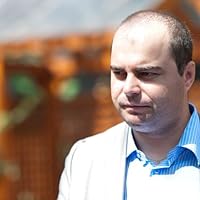
Orbán: Europe's New Strongman, by Paul Lendvai, is an account of the rise and politics of Victor Orban, authoritarian Prime Minister of Hungary. Hungary is a nominally democratic nation within the European Union, so Orban's policies of centralisation have been particularly interesting, comparable to events in neighbouring Poland. Orban has mimicked other authoritarian states like Russia and Singapore, taking control of politics by stacking committees, the judiciary and the like with key allies and cronies. He has utilized nationalistic rhetoric to stoke populism in Hungary, supported by the refugee crisis in Europe. He is an interesting figure for sure, and one to watch as Hungary slides into something akin to a quasi-authoritarian state.
Orban was born in Communist Hungary, into a poor rural family. He went to school in a relatively new facility, making friends with what would eventually become his key allies during his younger years. Orban was prevalent in Socialist Youth Leagues, seeking reform within Hungary, and participated in speeches after the Iron Curtain fell, and Hungary began to move toward democracy. He created Fidesz, at the time a youth party for younger politicians around this time. However, as the years went on Orban began to turn to more conservative and right wing ideologies. This is the party Fidesz has become today. He seems to have turned toward more authoritarian principles slowly, and once he achieved power in the mid-2000's, began to cement his control over every aspect of Hungary's political sphere. He has stacked the legislative and judiciary with loyalists, allowing him effective control over policy creation. This has led to his increasing use of policy to cement authority; he has put allies in charge of organizations and committee's as far flung as Hungary's Supreme Court, and minor sport's colleges.
Fidesz is a right wing conservative party, nominally within a democratic Hungary. However, the state is beginning to mirror such places as Turkey and Russia, with authoritarian leaders in technically democratic states. His power is derived both from his personal charisma and political acumen, allowing him two consecutive majorities in Hungary's Parliament, as well as his tightening control on politics, the media, and foreign observers within Hungary. Hungary is increasingly being seen as an authoritarian state, and certainly, along with Poland and Turkey, marks a backslide in democratic institutions being experienced in Eastern Europe.
Lendvai has written an interesting and concise account of Orban's government. As a political exile, Lendvai's account is certainly biased, to the point where he uses some nasty adjectives to describe Orban. This adds an element of the amateur to the book, making Lendvai's claims seem as if they lack credibility, and are personally motivated. This does detract from the overall quality of the book unfortunately. However, this is still a good account of Orban, and certainly one of the few available in the West. Worth a read for those interested in the topic, or who wish to read more on modern Hungarian politics.