

What do you think?

Babilônia: A Mesopotâmia e o nascimento da civilização
Uma narrativa fascinante sobre o início da civilização tal como a conhecemos hoje
Em Babilônia, Paul Kriwaczek conta a história da antiga Mesopotâmia, desde as primeiras povoações, em torno de 5400 a.C., até a chegada dos persas no século VI a.C. O autor faz a crônica da ascensão e queda do poder dinástico no reino babilônico durante esse período e analisa suas numerosas inovações e invenções materiais, sociais e culturais.
O povo da Mesopotâmia lançou as bases do que hoje conhecemos como civilização – com o nascimento da escrita, do estado centralizado, da divisão do trabalho, da religião organizada, da matemática e da lei, entre muitas outras coisas fundamentais que nos servem até hoje. Nas cidades que construíram se desenrolou metade da história humana.
No cerne da magistral narrativa de Kriwaczek está a glória da Babilônia — "o portal dos deuses" —, que teve seu apogeu no reinado do soberano amorita Hamurábi, que unificou a cidade entre 1800 e 1750 a.C. Embora o poder babilônico viesse a crescer e depois declinar nos séculos seguintes, a Babilônia preservou sua importância como centro cultural, religioso e político por mais de 4 mil anos.
Fascinante e abrangente, o livro de Kriwaczek vem preencher uma lacuna na bibliografia sobre o mundo antigo – e, ao revelar o esplendor da Mesopotâmia e da Babilônia, ele descreve o início da nossa própria civilização.
"O autor tece uma combinação vívida de política, história, mito e cultura, baseado nu-ma pesquisa sólida e atualizada." The Independent
Em Babilônia, Paul Kriwaczek conta a história da antiga Mesopotâmia, desde as primeiras povoações, em torno de 5400 a.C., até a chegada dos persas no século VI a.C. O autor faz a crônica da ascensão e queda do poder dinástico no reino babilônico durante esse período e analisa suas numerosas inovações e invenções materiais, sociais e culturais.
O povo da Mesopotâmia lançou as bases do que hoje conhecemos como civilização – com o nascimento da escrita, do estado centralizado, da divisão do trabalho, da religião organizada, da matemática e da lei, entre muitas outras coisas fundamentais que nos servem até hoje. Nas cidades que construíram se desenrolou metade da história humana.
No cerne da magistral narrativa de Kriwaczek está a glória da Babilônia — "o portal dos deuses" —, que teve seu apogeu no reinado do soberano amorita Hamurábi, que unificou a cidade entre 1800 e 1750 a.C. Embora o poder babilônico viesse a crescer e depois declinar nos séculos seguintes, a Babilônia preservou sua importância como centro cultural, religioso e político por mais de 4 mil anos.
Fascinante e abrangente, o livro de Kriwaczek vem preencher uma lacuna na bibliografia sobre o mundo antigo – e, ao revelar o esplendor da Mesopotâmia e da Babilônia, ele descreve o início da nossa própria civilização.
"O autor tece uma combinação vívida de política, história, mito e cultura, baseado nu-ma pesquisa sólida e atualizada." The Independent
308 pages, Kindle Edition
First published July 1, 2010
About the author
Paul Kriwaczek
5 books65 followersPaul Kriwaczek was a British historian and television producer. In 1970 he joined the BBC full-time and wrote, produced and directed for twenty-five years. A former head of Central Asian Affairs at the BBC World Service, he was fluent in eight languages, including Farsi, Pashto, Urdu, Hindi and Nepalese.
Ratings & Reviews
Friends & Following
Create a free account to discover what your friends think of this book!
Community Reviews
Displaying 1 - 30 of 399 reviews

Read
May 11, 2022A good introduction to Mesopotamian history, but it comes with some caveats. Look for instance at this: “Into this relatively uniform, mostly undifferentiated, largely homogeneous world of subsistence farmers and peasant hamlets, the idea of civilization was born: in a single place, at a single time. From there and from then the concept spread at remarkable speed to conquer the world.”. Now look, such a text makes my hair stand on end: Kriwaczek is talking about the southern Mesopotamian city of Eridu, which he presents as the place where everything started 5,000 years ago. This is ridiculous of course. Eridu certainly was a remarkable place where the urbanist revolution and the active application of writing is very demonstrable on the basis of archaeological finds. But at the same time there were many other places in present-day southern Iraq where similar historical developments took place. And besides, all this was preceded by several millennia, in the wider area called the Fertile Crescent, where increasingly complex forms of agriculture (and irrigation), artisanal production, urbanization, and trade developed. Also, the portrayal of Eridu as the center from which the rest of the world learned about civilization is completely out of the loop, and in a way western-centrist. It is one of the great weaknesses of this book. Kriwaczek even claims that Mesopotamia is the beginning of everything, an “explosion of creativity” to which Western civilization (there’s that centrism again) has barely added anything.
And Kriwaczek engages in other exaggerations, such as his stress on the great continuity in the very long history of Mesopotamia: “Throughout all that time (…) Mesopotamia preserved a single civilization, using one unique system of writing, cuneiform, from beginning to end; and with a single, continuously evolving literary, artistic, iconographic, mathematical, scientific, and religious tradition.” Now, there certainly is a remarkable continuity, but within that long span of almost 3 millennia there also is quite a bit of evolution and diversity. I think the author here wanted to be a little too didactic. Take, for instance, his depiction of the period of the Third Dynasty of Ur (2100-2000 bce) as an outright communist regime. This not only is absurdly anachronistic, but this way he also ignores the distortion that plagues the source material of all Mesopotamian history (namely the quantitative over-representation of the extensive bureaucratic archives of palaces and temples). Just one other default: his presentation of Hebrew monotheism as a logical continuation of a trend that already started on the Assyrian-Babylonian side is controversial to say the least (based on a single hypothetical study).
And yet there are also curiously positive aspects to Kriwaczek's coarse brush. Repeatedly, his bold statements can be called enticing. His view of the development of culture and civilization as an eternal, dynamic struggle between conservatives and progressives, for example, is quite inspiring: “The actual story would have to allow for the everlasting conflict between progressives and conservatives, between the forward and backward looking, between those who propose 'let's do something new' and those who think 'the old ways are best', those who say 'let's improve this' and those who think 'if it ain't broke, don't fix it'. No great shift in culture ever took place without such a contest.”
In the same vein, I also appreciated the insight of the drastic step that was the development of a real empire: “Now you are no longer leader merely of your own people but of a mixed multitude. To take that step demands a new way of seeing yourself, one that underplays your particular origin and your service to your particular god, and that makes much more of your individual and personal qualities, irrespective of your original language or culture. To be an emperor, in other words, is to be out on your own, no longer among your own kind. That demands a certain kind of heroic self-sufficiency.”
And Kriwaczek also made it clear to me how the production of bronze weaponry started not only a military, but also a social and cultural revolution, namely through the emergence of heroic heroism: “Armed with swords, warriors no longer form an indistinguishable mass, but each stands out as an individual fighter, placing himself a pace or so from his opponent and, rather than grappling hand to hand, or laying about him like a wild beast with club or axe, he skillfully trades precisely aimed and calculated thrusts, parries, lunges and ripostes. Fighting like this can be, and long has been, treated as an art with its own aesthetic.”
As such, for the first time, the individual came to the fore as a decisive element in the ins and outs of human life: “The age of Sargon and Naram-Sin switched the focus to the human world, and introduced a new conception of the meaning of the universe: one that made people rather than gods the principal subjects of the Mesopotamian story. Humanity was now in control. Men – and women – became rulers of their own destiny. To be sure, people were still pious, still presented sacrifices to the temples, offered the libations, performed the rites, invoked the gods' names at every opportunity. But the piety of the age now had a quite different flavor.”
Finally, there is Kriwaczek's fundamental consideration of the phenomenon of human civilization. He rightly states that it was based on a form of hubris from the start: “This was a revolutionary moment in human history. The incomers were consciously aiming at nothing less than changing the world. They were the very first to adopt the principle that has driven progress and advancement throughout history, and still motivates most of us in modern times: the conviction that it is humanity's right, its mission and its destiny to transform and improve on nature and become her master.” As Kriwaczek rightly writes, this form of hubris now threatens humanity itself.
All in all, therefore, this is a thoroughly grounded book, but one with both enticing and undue views.
And Kriwaczek engages in other exaggerations, such as his stress on the great continuity in the very long history of Mesopotamia: “Throughout all that time (…) Mesopotamia preserved a single civilization, using one unique system of writing, cuneiform, from beginning to end; and with a single, continuously evolving literary, artistic, iconographic, mathematical, scientific, and religious tradition.” Now, there certainly is a remarkable continuity, but within that long span of almost 3 millennia there also is quite a bit of evolution and diversity. I think the author here wanted to be a little too didactic. Take, for instance, his depiction of the period of the Third Dynasty of Ur (2100-2000 bce) as an outright communist regime. This not only is absurdly anachronistic, but this way he also ignores the distortion that plagues the source material of all Mesopotamian history (namely the quantitative over-representation of the extensive bureaucratic archives of palaces and temples). Just one other default: his presentation of Hebrew monotheism as a logical continuation of a trend that already started on the Assyrian-Babylonian side is controversial to say the least (based on a single hypothetical study).
And yet there are also curiously positive aspects to Kriwaczek's coarse brush. Repeatedly, his bold statements can be called enticing. His view of the development of culture and civilization as an eternal, dynamic struggle between conservatives and progressives, for example, is quite inspiring: “The actual story would have to allow for the everlasting conflict between progressives and conservatives, between the forward and backward looking, between those who propose 'let's do something new' and those who think 'the old ways are best', those who say 'let's improve this' and those who think 'if it ain't broke, don't fix it'. No great shift in culture ever took place without such a contest.”
In the same vein, I also appreciated the insight of the drastic step that was the development of a real empire: “Now you are no longer leader merely of your own people but of a mixed multitude. To take that step demands a new way of seeing yourself, one that underplays your particular origin and your service to your particular god, and that makes much more of your individual and personal qualities, irrespective of your original language or culture. To be an emperor, in other words, is to be out on your own, no longer among your own kind. That demands a certain kind of heroic self-sufficiency.”
And Kriwaczek also made it clear to me how the production of bronze weaponry started not only a military, but also a social and cultural revolution, namely through the emergence of heroic heroism: “Armed with swords, warriors no longer form an indistinguishable mass, but each stands out as an individual fighter, placing himself a pace or so from his opponent and, rather than grappling hand to hand, or laying about him like a wild beast with club or axe, he skillfully trades precisely aimed and calculated thrusts, parries, lunges and ripostes. Fighting like this can be, and long has been, treated as an art with its own aesthetic.”
As such, for the first time, the individual came to the fore as a decisive element in the ins and outs of human life: “The age of Sargon and Naram-Sin switched the focus to the human world, and introduced a new conception of the meaning of the universe: one that made people rather than gods the principal subjects of the Mesopotamian story. Humanity was now in control. Men – and women – became rulers of their own destiny. To be sure, people were still pious, still presented sacrifices to the temples, offered the libations, performed the rites, invoked the gods' names at every opportunity. But the piety of the age now had a quite different flavor.”
Finally, there is Kriwaczek's fundamental consideration of the phenomenon of human civilization. He rightly states that it was based on a form of hubris from the start: “This was a revolutionary moment in human history. The incomers were consciously aiming at nothing less than changing the world. They were the very first to adopt the principle that has driven progress and advancement throughout history, and still motivates most of us in modern times: the conviction that it is humanity's right, its mission and its destiny to transform and improve on nature and become her master.” As Kriwaczek rightly writes, this form of hubris now threatens humanity itself.
All in all, therefore, this is a thoroughly grounded book, but one with both enticing and undue views.

July 23, 2012
This is excellent history, going into detail to show aspects of the culture of the people, but also covering a grand sweep of history covering almost 5000 years. Kriwaczek shows the rise and fall of the power centers of Mesopotamia, from Uruk, with the earliest writing, to the final fall of Babylon in 539 BC to the Persians.
There was a lot about Mesopotamia I did not know.I think most people know more about Egypt, Greece, Rome... And much of what we know comes from the Bible.I think some have heard of the great lawgiver Hammurabi and the mythical hero Gilgamesh. And the Empire of Ashur which we call "Assyria."
Lord Byron wrote: "The Assyrian came down like the wolf on the fold, And his cohorts were gleaming in purple and gold." As the author points out, the Assyrians built the first modern military machine, disciplined and well-organized. They were the first iron army, with iron swords and iron spear blades, against which the bronze weaponry of their enemies offered no contest. Kriwaczek also mentions they had yet another great invention: the army boot. As he writes,"..the boots were knee-high leather footwear, thick-soled, hobnailed...which made it possible for the first time to fight on any terrain however rough or wet...in any season, winter or summer. This was the first all-weather, all-year army." Sandal-wearing Israelites and other enemies did not have much of a chance against them.
The above is the reason I like the book. Well-written - and it tells me a lot of things I didn't know....
There was a lot about Mesopotamia I did not know.I think most people know more about Egypt, Greece, Rome... And much of what we know comes from the Bible.I think some have heard of the great lawgiver Hammurabi and the mythical hero Gilgamesh. And the Empire of Ashur which we call "Assyria."
Lord Byron wrote: "The Assyrian came down like the wolf on the fold, And his cohorts were gleaming in purple and gold." As the author points out, the Assyrians built the first modern military machine, disciplined and well-organized. They were the first iron army, with iron swords and iron spear blades, against which the bronze weaponry of their enemies offered no contest. Kriwaczek also mentions they had yet another great invention: the army boot. As he writes,"..the boots were knee-high leather footwear, thick-soled, hobnailed...which made it possible for the first time to fight on any terrain however rough or wet...in any season, winter or summer. This was the first all-weather, all-year army." Sandal-wearing Israelites and other enemies did not have much of a chance against them.
The above is the reason I like the book. Well-written - and it tells me a lot of things I didn't know....

May 11, 2022
I have to admit that at first I was skeptical about this book. Kriwaczek is regularly cited in other studies for his original views, but with his profile as a television producer I feared the worst. I previously had bad experiences with his colleagues Richard Miles (Ancient Worlds: The Search for the Origins of Western Civilization) and Michael Wood (In Search Of The First Civilizations). Indeed, occasionally this book contains passages that needlessly turn history into a dramatic narrative, and it represents some evolutions too simplistically. The author also follows the organic model of civilization, going from birth, to rise and bloom, ending with fall, which is strange so many years after Spengler and Toynbee. But at the same time, this book certainly is thoroughly researched, and it contains a number of views that are indeed stimulating. So, in the end a bit of mixed feelings. Rating 2.5 stars. A more detailed review in my History Account on Goodreads: https://www.goodreads.com/review/show...

May 2, 2018
The subject of Babylon is only touched upon on the last 80 pages of the book , it mostly focuses in Mesopotamia and how city culture evolved there and the reasons that made it so. It also goes to explain the Sumerian Empire , the Assyrian Empire, the Old Babylonian Empire and finally the Neo Babylonian Empire (the one made famous by the bible). It was a very interesting book and satisfies my thirst for knowledge about Babylon , even though I would have wished that the book would focus more on the city itself . I would recommend this book to anyone who wants to know more about the emergence of civilization on Mesopotamia as well as a curiosity on the development of Babylon as the center of a powerful empire.
June 6, 2024
**به روزرسانی یادداشتها
«به خدا قسم که تمام اینها خواست خودش بود. این تصمیم حاضر و آماده از جانب خدا رسید و نقش ما در آن تقریبن صفر بود.»
«من ماموریتی از جانب خدا دارم. خدا به من گفت که برو و در افغانستان با تروریستها بجنگ و من این کار را کردم. بعد گفت به عراق برو و به ستم در آنجا پایان بده و باز من به این دستور عمل کردم.»
اولی را احتمالن صدام حسین در توجیه حمله به کویت گفته و دومی هم صحبتهای جرج بوش پسر است خطاب به اعضای تشکیلات خودگردان فلسطین (قبل از این که بگوید سومین ماموریت الاهیاش برقراری صلح در خاورمیانه و بین آنها و اسرائیلیهاست).
پاول کریواچک، تاریخنگار بریتانیایی، کتاب را با این نقل قولها شروع میکند تا بگوید با وجود گذشت چند هزار سال، آدمیزاد هنوز تا حد زیادی از همان ابزارهایی استفاده میکند که نخستین شاهنشاهیهای دنیا بر پایهی آنها بوده؛ مشروعیت بر اساس ارتباط زمین و آسمان.
----------
کتاب – که متاسفانه ترجمه نشده – با زبان روان و شیرینش تاریخ فشردهی بینالنهرین یا میانرودان را از دوران پارینهسنگی تا نابودی آخرین تمدن مستقل میانرودانی (یعنی امپراتوری آشوری نو) برای خواننده غیرمتخصص روایت میکند. سوال اول این است که اصلن چرا؟ این سوال را میتوان دربارهی هر اثر تاریخی یا ادبی کلاسیک دیگر هم پرسید، اما تاریخ ۵۰۰۰ تا ۲۵۰۰ سال پیش واقعن شباهتی با امروزِ ما دارد؟
از بسیاری جهات بله. داستان فقط پیدایش شهر، سیستمهای آبیاری و زهکشی، چرخ، لاجورد مصنوعی و تولید انبوه ظروف سفالی نیست و به اختراع خط و ریاضیات محدود نمیشود. نه تنها رد پای تورات و حماسههای یونانی (دو سنت اصلی سازنده جهان غرب) را را به وضوح در میانرودان میتوان دید، بلکه وجود تقابل اولین نمونههای اقتصاد بازار و مرکزگرای دولتی در این منطقه شگفتیآور است. اما فراتر از همهی اینها، همانطور که کریواچک در فصل آغازین میگوید، مهم نیست که چقدر زمان سپری شده. انسان مدرن در دولتهای سکولار هم به بهانههای مختلف خودش را در آینهی اسطوره میبیند. سومریها در اولین نسخهها از فهرست شاهان، نخستین نمونه تاریخنگاری در دنیای باستان، دربارهی پیدایش اِریدو – اولین شهر تاریخ در جنوب عراق امروزی – نوشتهاند «وقتی فرمانروایی از آسمان به زمین آمد» و یا زمانی که سایهی خدا بر زمین افتاد. و این سایه کشیده و کشیده میشود تا برسد به محمدرضا پهلوی که خود را ادامهدهندهی راه کوروش میدید و صدام که بُختالنصر، شاه بابل را عربی عراقی میدانست که با ایرانیان و یهودیها میجنگد.
----------
اول – پایان دوران نوسنگی و انقلاب شهری (قبل ۴۰۰۰ ق.م)
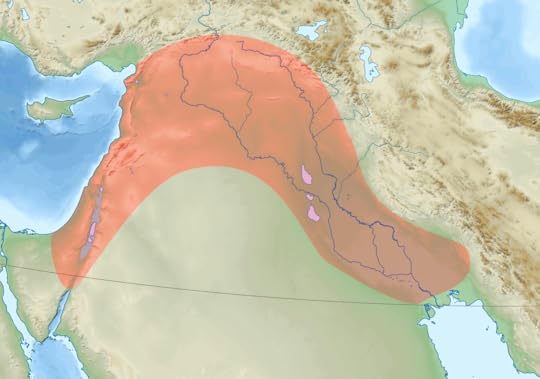
منطقهی هست در خاورمیانه به نام هلال حاصلخیز که از دامنههای غربی زاگرس شروع میشود و میرود به شمال غرب تا سرچشمههای دجله و فرات در ترکیه و بعد آرام به سمت جنوب غربی پایین میآید تا برسد به فلسطین. اهمیت تاریخیاش این است که خاک آبرفتی و حوضهی آبریز دجله و فرات در این ناحیه اولین نقاط شهری را در خودش جای داده. اما چرا اینجا؟ اگر «هر جا که آب هست آبادانی هم هست»، مناطق با عرض جغرافیایی بالاتر و پربارانتر مثل قفقاز و آناتولی، استعداد بیشتری برای کشاورزی و جذب جمعیت داشتهاند، اما گهوارهی تمدن در نقاط خشکتری شکل گرفته. نویسنده این را میگذارد کنار انقلاب قبلی یعنی تبدیل انسان شکارچی-گردآورنده به یکجانشین و میگوید گرچه نظریات زیست محیطی، اقتصادی و تکاملی به بخشی از حقیقت این انقلابها اشاره میکنند، اما جدال مرکزی در همهی اینها بین انسانهای محافظهکار و رادیکال بوده، یا دقیقتر، بین جنبههای تغییرهراس و تحولخواه درون هر انسان. جایی که باران زیاد دارد میتواند برای هزاران سال پذیرای نوعی زندگی قبیلهای باشد. کشاورزی خودکفا و منابع زیاد در دسترس همه، زمینهی تغییر را میخشکاند. در هلال حاصلخیز اما باران چندانی نمیبارد و کشاورزی بر پایهی طغیانهای فصلی رودخانهای شکل میگیرد. نیاز به برنامهریزی مرکزی هست و تقسیم کار. اینجاست که یک اندیشهی انقلابی فرصت تسلط پیدا میکند و برای همیشه نظم طبیعی چیزها را به هم میزند.
ظهور اولین خدایان
اِنکی، اولین خدای سومری. خدای پیشرفت و تمدن و دانش که از هورهای جنوب عراق و در اولین شهر تاریخ ، اِریدو بیرون آمد و «مِه» یا بنیانهای اجتماعی، دینی و فناوری را برای انسانها به ارمغان آورد.
اینانا، اولین الههی عشق. الهه باکره/مادر/فاحشه. اهمیت سومی به خاطر نیاز طبیعی جوامع به تولید مثل در آن زمان.
دوم – شهر گیلگمش، سلطهی معبد (۴۰۰۰ تا ۳۰۰۰ ق.م)
اوروک، مقر گیلگمش و اولین پایتخت سیاسی. بنظر میرسد برخلاف بسیاری از جوامع باستانی، دسترسی به معبد و باغهای اطرافش برای عموم مردم آزاد بوده. اولین نمونههای تولید انبوه (کاسههای گلی یک شکل و بدون تزئینات).
مفهوم هومو لودنس یا انسان بازیگوش. اینکه بخش اعظمی از اختراعات و اکتشافات، نه لزومن از نیازهای مادی، بلکه از سر کنجکاوی و بازیگوشی بوده. نمونهی لاجورد: نوع طبیعی این سنگ قیمتی تنها در بَدَخشان افغانستان امروزی وجود دارد. راههای تجاری در ۵۰۰۰ سال پیش آنقدر گسترده بودهاند که سومریها نه تنها لاجورد را از جواهرات مهمشان میدانستند، که نوع مصنوعی آن را هم اختراع کردند.
اختراع خط در اواخر دورهی اوروک. شیفتگی بیش از حد سومریها به نوشتن (نوشتههای باقیمانده از آن زمان حتا از برخی دورههای امپراتوری روم هم بیشتر است) تا جایی که بسیاری از افراد غیرمهم به محض پیدا کردن فرصت اسم خودشان را هر جایی که میتوانستند مینوشتند.
خط میخی اول برای زبان سومری استفاده میشد و بعد اَکَدی. سومری یک زبان جداافتاده و بدون همخانواده بود، اما اکدی از خانوادهی زبانهای سامی و جد بزرگ آرامی و عبری و عربی. نظام نوشتاری مشترک اما باعث میشد این دو گروه و در ادامه بابلیها و آشوریها برای نزدیک به ۲۵۰۰ سال ارتباطات فرهنگی و سیاسی خود را حفظ کنند. تمدنهای اطراف به تدریج نوشتار الفبایی را برای زبانهای آرامی و فینقی و فارسی باستان به کار گرفتند، اما نوشتار میانرودان تا انتها لوگوگرافیک ماند.
خط میخی چطور رمزگشایی شد؟ به کمک کتیبههای چند زبانه.
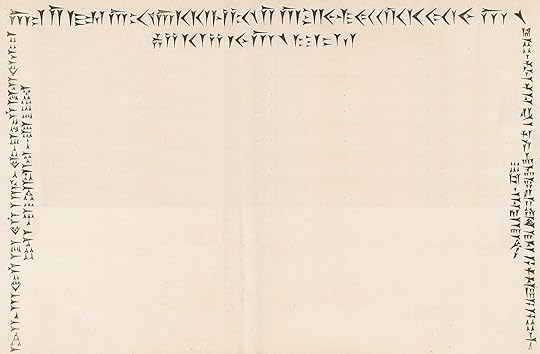
سه کتیبه یکسان به خطوط میخی فارسی، بابلی و عیلامی در تخت جمشید
سوم – سیل
سقوط اوروک. دلایل بیرونی مثل خشک سالی و حملات دشمن، دلایل درونی مثل از دست رفتن مشروعیت بین مردم. نه به شکل امروزی، بلکه در ذهن. مردم دیگر به ایدههای قدیمی باور نداشتند، چرا که زمینها توان کشت بیشتر و بیشتر برای این جمعیت افزاینده رو نداشت و حاکمان با خشونت کشاورزان را مجبور به کشت بیشتر میکردند. تا این که سیل آمد.
با وجود شواهدی تاریخی از سیلهای بزرگ در دوران باستان، سیل ممکن است اشارهی دقیق به یک حادثهی طبیعی خاص نباشد، بلکه زمانی باشه که مردم تصمیم گرفتند بزنند زیر میز و از آنجا به بعد سیر تاریخ بینالنهرین عوض شد.
چهارم – دوران سلسلهای اولیه سومر (۳۰۰۰ تا ۲۳۰۰ ق.م)
اولین نشانهها از بروز نظام بازار و طبقاتی در شکلی بسیار ابتدایی اما متفاوت با دوران معبد. اهمیت جو و آبجو! به عنوان بخشی از حقوق.
***بقیه یادداشتها پاک شدهاند***
پنجم – امپراتوری اکد (۲۳۰۰ تا ۲۲۰۰ ق.م)
ششم – رنسانس سومر (۲۱۰۰ تا ۲۰۰۰ ق.م)
هفتم – بابل قدیم (۱۹۰۰ تا ۱۶۰۰ ق.م)
هشتم – امپراتوری آشور (۱۸۰۰ تا ۷۰۰ ق.م)
«به خدا قسم که تمام اینها خواست خودش بود. این تصمیم حاضر و آماده از جانب خدا رسید و نقش ما در آن تقریبن صفر بود.»
«من ماموریتی از جانب خدا دارم. خدا به من گفت که برو و در افغانستان با تروریستها بجنگ و من این کار را کردم. بعد گفت به عراق برو و به ستم در آنجا پایان بده و باز من به این دستور عمل کردم.»
اولی را احتمالن صدام حسین در توجیه حمله به کویت گفته و دومی هم صحبتهای جرج بوش پسر است خطاب به اعضای تشکیلات خودگردان فلسطین (قبل از این که بگوید سومین ماموریت الاهیاش برقراری صلح در خاورمیانه و بین آنها و اسرائیلیهاست).
پاول کریواچک، تاریخنگار بریتانیایی، کتاب را با این نقل قولها شروع میکند تا بگوید با وجود گذشت چند هزار سال، آدمیزاد هنوز تا حد زیادی از همان ابزارهایی استفاده میکند که نخستین شاهنشاهیهای دنیا بر پایهی آنها بوده؛ مشروعیت بر اساس ارتباط زمین و آسمان.
----------
کتاب – که متاسفانه ترجمه نشده – با زبان روان و شیرینش تاریخ فشردهی بینالنهرین یا میانرودان را از دوران پارینهسنگی تا نابودی آخرین تمدن مستقل میانرودانی (یعنی امپراتوری آشوری نو) برای خواننده غیرمتخصص روایت میکند. سوال اول این است که اصلن چرا؟ این سوال را میتوان دربارهی هر اثر تاریخی یا ادبی کلاسیک دیگر هم پرسید، اما تاریخ ۵۰۰۰ تا ۲۵۰۰ سال پیش واقعن شباهتی با امروزِ ما دارد؟
از بسیاری جهات بله. داستان فقط پیدایش شهر، سیستمهای آبیاری و زهکشی، چرخ، لاجورد مصنوعی و تولید انبوه ظروف سفالی نیست و به اختراع خط و ریاضیات محدود نمیشود. نه تنها رد پای تورات و حماسههای یونانی (دو سنت اصلی سازنده جهان غرب) را را به وضوح در میانرودان میتوان دید، بلکه وجود تقابل اولین نمونههای اقتصاد بازار و مرکزگرای دولتی در این منطقه شگفتیآور است. اما فراتر از همهی اینها، همانطور که کریواچک در فصل آغازین میگوید، مهم نیست که چقدر زمان سپری شده. انسان مدرن در دولتهای سکولار هم به بهانههای مختلف خودش را در آینهی اسطوره میبیند. سومریها در اولین نسخهها از فهرست شاهان، نخستین نمونه تاریخنگاری در دنیای باستان، دربارهی پیدایش اِریدو – اولین شهر تاریخ در جنوب عراق امروزی – نوشتهاند «وقتی فرمانروایی از آسمان به زمین آمد» و یا زمانی که سایهی خدا بر زمین افتاد. و این سایه کشیده و کشیده میشود تا برسد به محمدرضا پهلوی که خود را ادامهدهندهی راه کوروش میدید و صدام که بُختالنصر، شاه بابل را عربی عراقی میدانست که با ایرانیان و یهودیها میجنگد.
----------
اول – پایان دوران نوسنگی و انقلاب شهری (قبل ۴۰۰۰ ق.م)
منطقهی هست در خاورمیانه به نام هلال حاصلخیز که از دامنههای غربی زاگرس شروع میشود و میرود به شمال غرب تا سرچشمههای دجله و فرات در ترکیه و بعد آرام به سمت جنوب غربی پایین میآید تا برسد به فلسطین. اهمیت تاریخیاش این است که خاک آبرفتی و حوضهی آبریز دجله و فرات در این ناحیه اولین نقاط شهری را در خودش جای داده. اما چرا اینجا؟ اگر «هر جا که آب هست آبادانی هم هست»، مناطق با عرض جغرافیایی بالاتر و پربارانتر مثل قفقاز و آناتولی، استعداد بیشتری برای کشاورزی و جذب جمعیت داشتهاند، اما گهوارهی تمدن در نقاط خشکتری شکل گرفته. نویسنده این را میگذارد کنار انقلاب قبلی یعنی تبدیل انسان شکارچی-گردآورنده به یکجانشین و میگوید گرچه نظریات زیست محیطی، اقتصادی و تکاملی به بخشی از حقیقت این انقلابها اشاره میکنند، اما جدال مرکزی در همهی اینها بین انسانهای محافظهکار و رادیکال بوده، یا دقیقتر، بین جنبههای تغییرهراس و تحولخواه درون هر انسان. جایی که باران زیاد دارد میتواند برای هزاران سال پذیرای نوعی زندگی قبیلهای باشد. کشاورزی خودکفا و منابع زیاد در دسترس همه، زمینهی تغییر را میخشکاند. در هلال حاصلخیز اما باران چندانی نمیبارد و کشاورزی بر پایهی طغیانهای فصلی رودخانهای شکل میگیرد. نیاز به برنامهریزی مرکزی هست و تقسیم کار. اینجاست که یک اندیشهی انقلابی فرصت تسلط پیدا میکند و برای همیشه نظم طبیعی چیزها را به هم میزند.
ظهور اولین خدایان
اِنکی، اولین خدای سومری. خدای پیشرفت و تمدن و دانش که از هورهای جنوب عراق و در اولین شهر تاریخ ، اِریدو بیرون آمد و «مِه» یا بنیانهای اجتماعی، دینی و فناوری را برای انسانها به ارمغان آورد.
اینانا، اولین الههی عشق. الهه باکره/مادر/فاحشه. اهمیت سومی به خاطر نیاز طبیعی جوامع به تولید مثل در آن زمان.
دوم – شهر گیلگمش، سلطهی معبد (۴۰۰۰ تا ۳۰۰۰ ق.م)
اوروک، مقر گیلگمش و اولین پایتخت سیاسی. بنظر میرسد برخلاف بسیاری از جوامع باستانی، دسترسی به معبد و باغهای اطرافش برای عموم مردم آزاد بوده. اولین نمونههای تولید انبوه (کاسههای گلی یک شکل و بدون تزئینات).
مفهوم هومو لودنس یا انسان بازیگوش. اینکه بخش اعظمی از اختراعات و اکتشافات، نه لزومن از نیازهای مادی، بلکه از سر کنجکاوی و بازیگوشی بوده. نمونهی لاجورد: نوع طبیعی این سنگ قیمتی تنها در بَدَخشان افغانستان امروزی وجود دارد. راههای تجاری در ۵۰۰۰ سال پیش آنقدر گسترده بودهاند که سومریها نه تنها لاجورد را از جواهرات مهمشان میدانستند، که نوع مصنوعی آن را هم اختراع کردند.
اختراع خط در اواخر دورهی اوروک. شیفتگی بیش از حد سومریها به نوشتن (نوشتههای باقیمانده از آن زمان حتا از برخی دورههای امپراتوری روم هم بیشتر است) تا جایی که بسیاری از افراد غیرمهم به محض پیدا کردن فرصت اسم خودشان را هر جایی که میتوانستند مینوشتند.
خط میخی اول برای زبان سومری استفاده میشد و بعد اَکَدی. سومری یک زبان جداافتاده و بدون همخانواده بود، اما اکدی از خانوادهی زبانهای سامی و جد بزرگ آرامی و عبری و عربی. نظام نوشتاری مشترک اما باعث میشد این دو گروه و در ادامه بابلیها و آشوریها برای نزدیک به ۲۵۰۰ سال ارتباطات فرهنگی و سیاسی خود را حفظ کنند. تمدنهای اطراف به تدریج نوشتار الفبایی را برای زبانهای آرامی و فینقی و فارسی باستان به کار گرفتند، اما نوشتار میانرودان تا انتها لوگوگرافیک ماند.
خط میخی چطور رمزگشایی شد؟ به کمک کتیبههای چند زبانه.
سه کتیبه یکسان به خطوط میخی فارسی، بابلی و عیلامی در تخت جمشید
سوم – سیل
سقوط اوروک. دلایل بیرونی مثل خشک سالی و حملات دشمن، دلایل درونی مثل از دست رفتن مشروعیت بین مردم. نه به شکل امروزی، بلکه در ذهن. مردم دیگر به ایدههای قدیمی باور نداشتند، چرا که زمینها توان کشت بیشتر و بیشتر برای این جمعیت افزاینده رو نداشت و حاکمان با خشونت کشاورزان را مجبور به کشت بیشتر میکردند. تا این که سیل آمد.
با وجود شواهدی تاریخی از سیلهای بزرگ در دوران باستان، سیل ممکن است اشارهی دقیق به یک حادثهی طبیعی خاص نباشد، بلکه زمانی باشه که مردم تصمیم گرفتند بزنند زیر میز و از آنجا به بعد سیر تاریخ بینالنهرین عوض شد.
چهارم – دوران سلسلهای اولیه سومر (۳۰۰۰ تا ۲۳۰۰ ق.م)
اولین نشانهها از بروز نظام بازار و طبقاتی در شکلی بسیار ابتدایی اما متفاوت با دوران معبد. اهمیت جو و آبجو! به عنوان بخشی از حقوق.
***بقیه یادداشتها پاک شدهاند***
پنجم – امپراتوری اکد (۲۳۰۰ تا ۲۲۰۰ ق.م)
ششم – رنسانس سومر (۲۱۰۰ تا ۲۰۰۰ ق.م)
هفتم – بابل قدیم (۱۹۰۰ تا ۱۶۰۰ ق.م)
هشتم – امپراتوری آشور (۱۸۰۰ تا ۷۰۰ ق.م)

January 18, 2021
Kriwaczek is one of the finest tour guides you could wish for. He combines interesting casual banter with gripping narration and great research. He brings things alive, and both the wonders and horrors he portrays are almost unforgettable. For example, he explains that our first written record about veiling of women comes from the warlords of Assyria in about 1100 BCE, and we may be surprised that their rules set two contradictory standards: one for powerful women, and another for the rest. High-level wives or daughters of ruling families were required by law to veil themselves from public gaze, but poor women, slaves, concubines, or prostitutes were forbidden to appear covered. The penalties if they did so were daunting: “A non-noble women who appears veiled must have her clothing taken, be flogged 50 times with staves, and have pitch [molten tar] poured on her head. Slave girls caught wearing veils should have their clothing taken and have their ears cut off” (Middle Assyrian Law).
Clearly, ordinary women had to be stopped from attempting to impersonate superior women. But how could such laws be enforced? Would morality police inspect women with veils, and punish those who were unworthy to wear them? Actually, it was worse than that. King Tiglath-Pilesar I threatened any man who failed to report unmerited veiling as follows: “If a gentleman has seen a harlot veiled and has let her go without bringing her to the place of tribunal, they shall flog that gentleman 50 times with staves; they shall pierce his ears, thread them with cord, and tie it at his back. He shall do work for the king for one full month” (Ashur legal tablets, Kriwaczek, p. 226).
Clearly, ordinary women had to be stopped from attempting to impersonate superior women. But how could such laws be enforced? Would morality police inspect women with veils, and punish those who were unworthy to wear them? Actually, it was worse than that. King Tiglath-Pilesar I threatened any man who failed to report unmerited veiling as follows: “If a gentleman has seen a harlot veiled and has let her go without bringing her to the place of tribunal, they shall flog that gentleman 50 times with staves; they shall pierce his ears, thread them with cord, and tie it at his back. He shall do work for the king for one full month” (Ashur legal tablets, Kriwaczek, p. 226).

August 19, 2025
Engaging and Enlightening
Paul Kriwaczek’s Babylon is amazing! I learned so much in an engaging way.
I was wowed by his attention to detail and for his links ( in the ebook) to his original sources.
I have been very interested in ancient history and have wanted to make a study of it but I am thankful to Kriwacek for all his hard work because it would take me a lifetime to read and study all of his resources. There are a few of his recommendations that I will read but I was delighted to learn from this robust body of work!
Everything from kings letters to a child’s cuneiform tablets, cooking, building, worship, and the list goes on. It’s an awesome book!
Paul Kriwaczek’s Babylon is amazing! I learned so much in an engaging way.
I was wowed by his attention to detail and for his links ( in the ebook) to his original sources.
I have been very interested in ancient history and have wanted to make a study of it but I am thankful to Kriwacek for all his hard work because it would take me a lifetime to read and study all of his resources. There are a few of his recommendations that I will read but I was delighted to learn from this robust body of work!
Everything from kings letters to a child’s cuneiform tablets, cooking, building, worship, and the list goes on. It’s an awesome book!

May 26, 2018
My overriding thought upon finishing this book is that I would best describe it as a popular history version of Gwendolyn Leick’s Mesopotamia. That’s neither praise nor criticism – it really depends on what you prefer as a reader. Academic histories are more accurate, more credible, and more detailed, great for if you really want to dig deep into a subject and get facts; but the downside to them is that they often cram in the kind of technical data that goes beyond what an average reader will want to know, making their language dry, sometimes turning them into a chore to read. Popular histories know when to hold back on a level of detail that is unnecessary for the majority of its readers (those wanting to know all the nitty gritty will go to the academic texts) and have more of an engaging flair in their writing, holding interest; but sometimes they can be too broad, misunderstand the subject or get their facts downright wrong.
I personally didn’t spot any howling errors in Kriwaczek’s book, and his style was certainly engaging. I particularly enjoyed his evocative descriptions of imaginary scenes from when these ancient cities were at their height – and yes, this is fictional, but plausibly so, and holds value in helping the modern reader to understand ancient time and place. I definitely think that the hobbyist or the newcomer will get a lot out of this book, and I’d be happy to recommend it to my friends. The book is smoothly written and easy to read.
However, the one annoyance, for me, was Kriwaczek’s frequent tangents which had no relevance to the topic. He often compares ancient with modern. Sometimes the comparison is apt, and a useful tool for explaining to the newcomer what was going on. Other times the comparison really is not appropriate at all, and potentially misleading. Other times Kriwaczek just seems to plain ramble; one such incident which stood out to me was his discussion of temple ritual. He makes a comment that perhaps, in some way, temple rituals are like stage plays, with a planned sequence of actions and all the players knowing the roles they are to perform. He goes from that into what play is (as in, fun, not the stage show), and then musing upon whether 19th century pursuit of science counts as playing, and how pretty much everything that adults do is playing and for fun. Okay. Well, sure, the freedom of adulthood is frequently spent on doing fun things we enjoy, and for many people the ideal is getting a job that they love and thus doesn’t feel like a chore to them… but aren’t we supposed to be talking about ancient Mesopotamian temple rituals here? I really wanted to drag Kriwaczek back to the point whenever he went off on a tangent, and I have to admit that towards the end of the book whenever he did this my eyes skimmed over the paragraph until he returned to ancient Mesopotamia. But hey, what slightly irritated me might be enjoyed by the non-historian reader who needs a modern reference point to understand ancient concepts for the first time; they might find it a welcome help.
8 out of 10

June 27, 2012
The Land Between the Rivers is the literal translation of Mesopotamia. It has a magical sound to it, with overtones of fairy tale to my ears. In my fourth grade geography book, there was a map of the Fertile Crescent and I used to stare at it and dream of fantastic palaces and kings and queens and treasures. Now I'm an old lady, but I still love great stories, and Paul Kriwacsek has some really great ones, with the added gratuity that these are all true. Four thousand years of history is a lot to stuff in one book, but he manages to tell the stories clearly and with flair.
The narrative starts slowly, but so did civilization. It begins in Eridu in the marshes that were then called Apsu. Eridu may have started as a holy shrine that nomadic peoples visited periodically. Then some found good reasons to stay year round and something we could call a city began. In the fullness of time, this happened to several places in the Land Between the Rivers. The climate was slightly milder and a bit wetter then, and of course, the rivers were a source of agricultural power. It was possible to turn that power into another type of power and a type of leader arose that the people called Lugal, quite literally "Big Man". Big Men could afford to have servants, retainers and warriors on the payroll. So the story begins and proceeds at a measured pace through to inventions that created the world that we know, such as the plough, the brewer's vat, looms for textiles, dams for irrigation and flood control, the potters' wheel, pictographic writing, oven fired bricks and the sail boat. All of these were born in Mesopotamia. The Gods smiled on the land; Enki, the god of the Earth and the sweet waters that made it fertile, Inanna, the goddess who represented a very earthy view of sex, love, childbirth and marriage; accompanied by the small spirits that lived in the hills, waterways and deserts and the tutelary gods of the cities.
My dreams of kings and queens and treasures were true as well. Diadems of gold and lapis lazuli and turquoise and carnelian were worn by queens such as Pu-Abbi of Ur, who was interred with dozens of her ladies and men servants, as well as oxen, carts and their drivers. All apparently died calmly and without resistance, to be discovered in 1928 by an amazed Englishman named Leonard Wooley. Pu-Abbi was one of the earlier queens, but my favorite is the Lady Abba-Guppi,(is THAT a name!) who was one of the last Assyrian queens. She was the mother of the King the Bible calls Nabonidus. She lived, according to her grave inscriptions, to be 104 years old and was said to have retained her vigor and mental capacities to the very end. (You go, girl!) Her grieving son buried her in "fine woolens and precious stones and perfumed oils." Obviously queens require kings and the first and possibly the greatest in legend is Sargon the Great. His name was actually Sharru-Kina, which means "Legitimate King". He arose from obscurity to become the founder of the first real Empire in History. Later kings revered his memory and some took his name in the hope that they would also have his skill and luck. Kriwaczek tells us their stories and more, giving us what we know of the Sumerian, Babylonian and Assyrian man in the street as well as the shape of their society. Babylon and Ur and Nineveh live again in these pages.
I would recommend this to anyone with an interest in archaeology, Middle Eastern history, Biblical History or the rise of civilization. I would also say it would appeal to anybody who dreams over their history or geography books as I did.
The narrative starts slowly, but so did civilization. It begins in Eridu in the marshes that were then called Apsu. Eridu may have started as a holy shrine that nomadic peoples visited periodically. Then some found good reasons to stay year round and something we could call a city began. In the fullness of time, this happened to several places in the Land Between the Rivers. The climate was slightly milder and a bit wetter then, and of course, the rivers were a source of agricultural power. It was possible to turn that power into another type of power and a type of leader arose that the people called Lugal, quite literally "Big Man". Big Men could afford to have servants, retainers and warriors on the payroll. So the story begins and proceeds at a measured pace through to inventions that created the world that we know, such as the plough, the brewer's vat, looms for textiles, dams for irrigation and flood control, the potters' wheel, pictographic writing, oven fired bricks and the sail boat. All of these were born in Mesopotamia. The Gods smiled on the land; Enki, the god of the Earth and the sweet waters that made it fertile, Inanna, the goddess who represented a very earthy view of sex, love, childbirth and marriage; accompanied by the small spirits that lived in the hills, waterways and deserts and the tutelary gods of the cities.
My dreams of kings and queens and treasures were true as well. Diadems of gold and lapis lazuli and turquoise and carnelian were worn by queens such as Pu-Abbi of Ur, who was interred with dozens of her ladies and men servants, as well as oxen, carts and their drivers. All apparently died calmly and without resistance, to be discovered in 1928 by an amazed Englishman named Leonard Wooley. Pu-Abbi was one of the earlier queens, but my favorite is the Lady Abba-Guppi,(is THAT a name!) who was one of the last Assyrian queens. She was the mother of the King the Bible calls Nabonidus. She lived, according to her grave inscriptions, to be 104 years old and was said to have retained her vigor and mental capacities to the very end. (You go, girl!) Her grieving son buried her in "fine woolens and precious stones and perfumed oils." Obviously queens require kings and the first and possibly the greatest in legend is Sargon the Great. His name was actually Sharru-Kina, which means "Legitimate King". He arose from obscurity to become the founder of the first real Empire in History. Later kings revered his memory and some took his name in the hope that they would also have his skill and luck. Kriwaczek tells us their stories and more, giving us what we know of the Sumerian, Babylonian and Assyrian man in the street as well as the shape of their society. Babylon and Ur and Nineveh live again in these pages.
I would recommend this to anyone with an interest in archaeology, Middle Eastern history, Biblical History or the rise of civilization. I would also say it would appeal to anybody who dreams over their history or geography books as I did.
April 6, 2026
Somehow lately I'm on a "I should have looked up the author before getting the book" streak:
lectures on AI by a philosopher, a book on Proto-Indo-European by a journalist, and now this -- a book on Mesopotamian history by a British TV producer.
Nevertheless, I don't regret spending time on Babylon: Mesopotamia and the Birth of Civilization. Paul Kriwaczek might not be a professional historian, but neither is he an author who writes about any subject as long as his agent thinks the book would sell. His interest in Mesopotamian history is profound and of long standing, and his knowledge goes far beyond scratching the surface. He is passionate about Sumer and knows how to tell a good story.
Some of his original interpretations of Sumerian history were interesting and thought-provoking (for example, his comparison of Stalin with the rulers from the Third Dynasty of Ur), others seemed illogical and... How shall I put it? Anthropomorphism is attributing human emotions and behaviors to animals or other non-human entities. Is there a word for projecting modern views and values onto ancient times and peoples? ChatGPT suggests presentism, and it's even in the dictionary. Wikipedia's article on Presentism (historical analysis) mentions "fallacy of nunc pro tunc";). So, Paul Kriwatzek claiming Sumerians had some special affinity to the idea of progress and did this or that with the future progress in mind -- that's presentism, in my opinion.
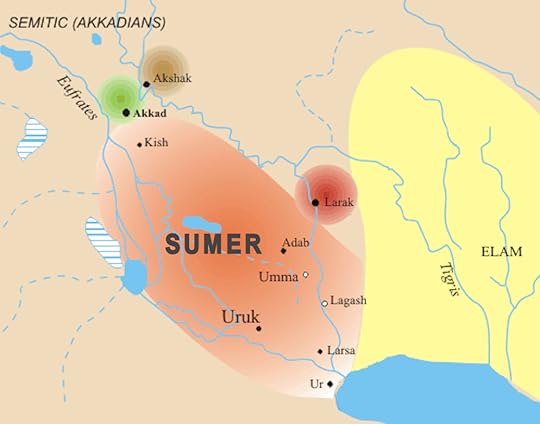
The map of Lagash. (Image credit: ca:Imatge:Umma2350.png, CC BY-SA 3.0 , via Wikimedia Commons)
Upon finishing, I still don't have an ordered and well-structured picture of Sumerian history in my head, but that's mainly my own fault. By the way, I liked the detailed discussion of further reading at the end of the book.
P.S. I've just discovered I bought another book by Paul Kriwaczek on audible, ages ago: Yiddish Civilisation: The Rise and Fall of a Forgotten Nation . Judging by these two titles, he had a thing for civilizations. Or maybe his publisher did. Anyway, hope to read it sometime...
lectures on AI by a philosopher, a book on Proto-Indo-European by a journalist, and now this -- a book on Mesopotamian history by a British TV producer.
Nevertheless, I don't regret spending time on Babylon: Mesopotamia and the Birth of Civilization. Paul Kriwaczek might not be a professional historian, but neither is he an author who writes about any subject as long as his agent thinks the book would sell. His interest in Mesopotamian history is profound and of long standing, and his knowledge goes far beyond scratching the surface. He is passionate about Sumer and knows how to tell a good story.
Some of his original interpretations of Sumerian history were interesting and thought-provoking (for example, his comparison of Stalin with the rulers from the Third Dynasty of Ur), others seemed illogical and... How shall I put it? Anthropomorphism is attributing human emotions and behaviors to animals or other non-human entities. Is there a word for projecting modern views and values onto ancient times and peoples? ChatGPT suggests presentism, and it's even in the dictionary. Wikipedia's article on Presentism (historical analysis) mentions "fallacy of nunc pro tunc";). So, Paul Kriwatzek claiming Sumerians had some special affinity to the idea of progress and did this or that with the future progress in mind -- that's presentism, in my opinion.
The map of Lagash. (Image credit: ca:Imatge:Umma2350.png, CC BY-SA 3.0 , via Wikimedia Commons)
Upon finishing, I still don't have an ordered and well-structured picture of Sumerian history in my head, but that's mainly my own fault. By the way, I liked the detailed discussion of further reading at the end of the book.
P.S. I've just discovered I bought another book by Paul Kriwaczek on audible, ages ago: Yiddish Civilisation: The Rise and Fall of a Forgotten Nation . Judging by these two titles, he had a thing for civilizations. Or maybe his publisher did. Anyway, hope to read it sometime...

July 4, 2018
Bullet Review:
Absolutely fantastic - I learned so much (though I am glad to have read Gwendolyn Leick’s book first!). Once again, when I got to the end of the Mesopotamian era, I was sad. What mysteries of this world still lurk, waiting to be found?
That said, sometimes the author makes weird tangents to modern day (the really out of place one was the analysis of “play”). Some were better than others; some made you want to say “Get on with it!” But again, this is pretty minor in comparison of the wealth of knowledge I’ve absorbed.
Absolutely fantastic - I learned so much (though I am glad to have read Gwendolyn Leick’s book first!). Once again, when I got to the end of the Mesopotamian era, I was sad. What mysteries of this world still lurk, waiting to be found?
That said, sometimes the author makes weird tangents to modern day (the really out of place one was the analysis of “play”). Some were better than others; some made you want to say “Get on with it!” But again, this is pretty minor in comparison of the wealth of knowledge I’ve absorbed.

May 5, 2025
A great overview of Babylon from the beginning to the end. Well done with a fantastic intro.

May 29, 2026
This is an intriguing, expertly written and well constructed history book. The subject is big. Kriwaczek successfully covers the history of Mesopotamian civilization over the course of thousands of years. I found that in the author’s able hands, what could have been a dry subject, was very readable and gripping. The book is also full of insights and musing about civilization, cities, empires, our present times, and humanity in general.
The Mesopotamian region is the home of humanity’s earliest civilization. Thus, the book begins many thousands of years before the common era, beginning with hunter gatherers who eventually settled into villages and then formed cities. Over the millennia, various empires rose and fell and sometimes rose and fell a second or third time. Between the empires the various city states warred with each other. This profusion of empires and cultures can easily become overwhelming in a treader’s mind. The author mostly avoids confusion by laying everything out in chronological order and taking his time. With that, I would have appreciated a graphical timeline within the book. Among the empires covered are the Akkadian, Ur, multiple Assyrian and Babylonian powers and more. The book covers vast stretches of time encompassing thousands of years before the common era. One thing that helps archeologists, historians and other scholars was the fact that these societies had writing in the form of cuneiform.
As the origin of so much of human civilization, this is a vitally important history. Kriwaczek does a superb job at handling this account. This is an excellent read for anyone interested in the history of ancient civilization.
The Mesopotamian region is the home of humanity’s earliest civilization. Thus, the book begins many thousands of years before the common era, beginning with hunter gatherers who eventually settled into villages and then formed cities. Over the millennia, various empires rose and fell and sometimes rose and fell a second or third time. Between the empires the various city states warred with each other. This profusion of empires and cultures can easily become overwhelming in a treader’s mind. The author mostly avoids confusion by laying everything out in chronological order and taking his time. With that, I would have appreciated a graphical timeline within the book. Among the empires covered are the Akkadian, Ur, multiple Assyrian and Babylonian powers and more. The book covers vast stretches of time encompassing thousands of years before the common era. One thing that helps archeologists, historians and other scholars was the fact that these societies had writing in the form of cuneiform.
As the origin of so much of human civilization, this is a vitally important history. Kriwaczek does a superb job at handling this account. This is an excellent read for anyone interested in the history of ancient civilization.

September 16, 2019
I originally picked this up because I wanted to learn more about Babylon, given its prominence in Scripture and its potential to be major inspiration for my own world-building. Unfortunately, this just didn't do it for me. Somehow it managed to be both boring and annoying - boring because it was mostly concerned with prehistory or very early history, and thus there isn't that much to talk about, and annoying because the author tried to fill in the gaps with his own (or similarly-minded colleagues') opinions, revealing that he has a very low view of Scripture. I know that's probably to be expected, but he seemed to enjoy reminding the reader of this every couple of pages - and it got ridiculous after a while, to the point that he was claiming that Solomon's wealth wasn't really his, but was really reflective of an Assyrian king's. History, especially really old history, is dependent on its interpreter - and Kriwaczek just isn't a good interpreter, at least not for someone who takes the biblical record seriously.

April 2, 2022
Apesar do título, “Babilónia”, o livro de 2010, foca-se verdadeiramente no subtítulo, a “Mesopotamia and the Birth of Civilization”. Paul Kriwaczek inicia o historiar com o império Sumério, passa ao Acádio, chegando ao Assírio e por fim Babilónia. A ideia do foco em Babilónia terá que ver com a representação do fim dos grandes impérios da Mesopotâmia que deram origem não apenas a uma das primeiras grandes civilizações, mas mais importante do que isso, porque deram origem à civilização em que ainda hoje vivemos. Kriwaczek, fala numa espécie de primeira metade da História, até ao final de Babilónia (1894-332 a.C.), e uma segunda metade, aquela que agora vivemos. E por estarmos a aproximar-nos, em número de anos, no sentido oposto, da extensão dessa primeira metade, vislumbra a tragédia, apontando o momento atual como de declínio já aceite e interiorizado por nós.
...
...continuar a ler no VI: https://virtual-illusion.blogspot.com...
...
...continuar a ler no VI: https://virtual-illusion.blogspot.com...

May 8, 2024
A good overview of the early Mesopotamian culture, though only a small part of the book focuses on the actual city of Babylon. The author does often stray into modern day comparisons, especially with the Soviet empire, but this can be passed over by the reader. I recommend this book to those who want to understand the broad overview of the fertile crescent civilization at a more popular level.

September 3, 2017
'Babylon: Mesopotamia And The Birth Of Civilization' by Paul Kriwaczek
Has anyone ever stopped you in the street, their hair dishevelled, left hand waving frantically at something you can’t see, a wild look in their eyes as they sputter out the words “I’ve had it with all these thousand page historical text books, tell me, what is your go-to book on ancient Mesopotamia? I need to know!”
Well, if that ever happened to me, I’d open up my bag and pull out my now well read copy of ‘Babylon’ - after I stepped back several paces of course.
Why should you read this book?
Why wouldn’t you want to?! Is a more honest question. To read about the history of humanity itself as it proudly walked out of the Paleolithic age and then had its teeth handed to it by a decision to shift to agriculture in the Neolithic age (seriously, our average height went into free fall and life expectancy also dropped severely due to poor diet). Eventually we got our act together and seriously started to consider this ‘urban city’ thing. Because people, generally, like other people and like to do stuff with each other.
Paul Kriwaczek’s knowledge on the subject of 3000 years of history, and of its archeology, is impressive. His telling of it quite enticing. You’ll find plenty of references and inferences made to link Mesopotamian history to today’s life. Some people might not like this, but I find the best historians make history come to life and that is done, to some extent, by telling stories –not fibs or lies but the structural form of a story, to place a picture in your mind.
There’s still plenty of the dry stuff, heraldry of Kings etc (or more interestingly –how the very nature of ‘King’ came to be). Also Ishtar, if you’ve ever seen the Ishtar Gates in Berlin, there’s a bit of an origin story to her in this book.
While the book clocks in at only 281 pages, there is plenty of references at the back to direct you to further study if you’d like. In fact, the author makes it abundantly clear that his text is just a short opening to what is a fascinating part of history. He’s sharing a passion that appealed to the amateur historian in me and that I hope appeals to you.
If you like history, were always curious on the origin of written language or just want to impress the girls/guys with your knowledge of 24th Century BC, King Urukagina and why he was such a stand-up guy (let's face it, that's some kick-ass dating conversation right there), you should check out this book.
I’d lend you my copy, but I gave it to this really weird person who asked me for a recommendation on the street.
4.5 stars.
Has anyone ever stopped you in the street, their hair dishevelled, left hand waving frantically at something you can’t see, a wild look in their eyes as they sputter out the words “I’ve had it with all these thousand page historical text books, tell me, what is your go-to book on ancient Mesopotamia? I need to know!”
Well, if that ever happened to me, I’d open up my bag and pull out my now well read copy of ‘Babylon’ - after I stepped back several paces of course.
Why should you read this book?
Why wouldn’t you want to?! Is a more honest question. To read about the history of humanity itself as it proudly walked out of the Paleolithic age and then had its teeth handed to it by a decision to shift to agriculture in the Neolithic age (seriously, our average height went into free fall and life expectancy also dropped severely due to poor diet). Eventually we got our act together and seriously started to consider this ‘urban city’ thing. Because people, generally, like other people and like to do stuff with each other.
Paul Kriwaczek’s knowledge on the subject of 3000 years of history, and of its archeology, is impressive. His telling of it quite enticing. You’ll find plenty of references and inferences made to link Mesopotamian history to today’s life. Some people might not like this, but I find the best historians make history come to life and that is done, to some extent, by telling stories –not fibs or lies but the structural form of a story, to place a picture in your mind.
There’s still plenty of the dry stuff, heraldry of Kings etc (or more interestingly –how the very nature of ‘King’ came to be). Also Ishtar, if you’ve ever seen the Ishtar Gates in Berlin, there’s a bit of an origin story to her in this book.
While the book clocks in at only 281 pages, there is plenty of references at the back to direct you to further study if you’d like. In fact, the author makes it abundantly clear that his text is just a short opening to what is a fascinating part of history. He’s sharing a passion that appealed to the amateur historian in me and that I hope appeals to you.
If you like history, were always curious on the origin of written language or just want to impress the girls/guys with your knowledge of 24th Century BC, King Urukagina and why he was such a stand-up guy (let's face it, that's some kick-ass dating conversation right there), you should check out this book.
I’d lend you my copy, but I gave it to this really weird person who asked me for a recommendation on the street.
4.5 stars.

April 3, 2014
A very good book about the history of Mesopotamia, the people, the rulers, religion, trade and much more. Also a good book end to Kriwaczek's book: In Search of Zarathurstra, a very fine book that reads like a historical travelogue.

April 11, 2018
Please read The Ancient Near East: A Very Short Introduction by Amanda Podany instead.
This starts off well enough with an engaging overview of the first settlements at Eridu and Uruk and with a good summary of the origins of writing. After that, things go downhill. The chronology was never very clear, and if I hadn't already read that VSI, I would have had a hard time following this. The jarring writing style doesn't help either. Kriwaczek has jammed his sentences so full of qualifying phrases that he has to use almost as many commas as Henry James. Even worse, he is incapable of discussing anything without comparing it to Stalin or British India or Mao or whatever. Meanwhile, important figures like Ashurnasirpal don't even get a single mention. He also devotes a lot of space to disabusing the reader of the Bible-based distorted impressions of these societies that he assumes we all hold. He should have presented the facts plainly and allowed the reader to draw comparisons or grapple with their Judeo-Christian baggage on their own time.
This starts off well enough with an engaging overview of the first settlements at Eridu and Uruk and with a good summary of the origins of writing. After that, things go downhill. The chronology was never very clear, and if I hadn't already read that VSI, I would have had a hard time following this. The jarring writing style doesn't help either. Kriwaczek has jammed his sentences so full of qualifying phrases that he has to use almost as many commas as Henry James. Even worse, he is incapable of discussing anything without comparing it to Stalin or British India or Mao or whatever. Meanwhile, important figures like Ashurnasirpal don't even get a single mention. He also devotes a lot of space to disabusing the reader of the Bible-based distorted impressions of these societies that he assumes we all hold. He should have presented the facts plainly and allowed the reader to draw comparisons or grapple with their Judeo-Christian baggage on their own time.

December 9, 2025
Sargon of Akkad is such a famous and familiar name that it is the Youtube moniker of one of the most significant figures of the English Alt Right. But it is Sargon’s daughter, the High Priestess Enheduana, who really caught my attention here:
“A cylinder seal shows the great lady herself, dressed in a pleated woolen gown and engaged in her religious duties, standing behind a naked shaven-headed priest who is pouring a libation...She raises her right hand in a devotional gesture. The expression on her face, shown in profile, is stern. Her nose is fleshy…”
Enheduana comes alive too in items such as a lapis lazuli cylinder seal inscribed as property of her personal hairdresser, but most of all in the extraordinary collection of liturgical cuneiform texts discovered in the Temple ruins. Kriwaczek laments the shortcomings of translation which mean the depth of allusion is impossible to reproduce. Nevertheless the texts give us glimpses into the character of Enheduana herself (no shrinking violet, and someone of immense power and real talent). The after life of these liturgical texts finds echoes in the Psalms of the Hebrew Bible and even – faintly and indirectly – into contemporay Christian hymnology.
When the Persian King Cyrus the Great conquered Babylon in 540 BC he made sure to safeguard the city’s irreplaceable cultural antiquities by placing guards around them, which earned him the respect and admiration of the Babylonians. It is painful to recall the disastrous vandalism which accompanied the 21st century fall of a later Iraqi regime. This alone illustrates the moral gulf between Cyrus and the leaders of the modern West.
Although the story of Bablyon is a fascinating one, it also has its melancholy aspects when we recall the sand blown ruins and the magnificence that is no more. But, in the inevitable cycle of splendour and decay, Kriwaczek reminds us that what was true for Bablyon is also true for the times we live in:
“Decline, collapse and destruction always presages some kind of rebirth.”
“A cylinder seal shows the great lady herself, dressed in a pleated woolen gown and engaged in her religious duties, standing behind a naked shaven-headed priest who is pouring a libation...She raises her right hand in a devotional gesture. The expression on her face, shown in profile, is stern. Her nose is fleshy…”
Enheduana comes alive too in items such as a lapis lazuli cylinder seal inscribed as property of her personal hairdresser, but most of all in the extraordinary collection of liturgical cuneiform texts discovered in the Temple ruins. Kriwaczek laments the shortcomings of translation which mean the depth of allusion is impossible to reproduce. Nevertheless the texts give us glimpses into the character of Enheduana herself (no shrinking violet, and someone of immense power and real talent). The after life of these liturgical texts finds echoes in the Psalms of the Hebrew Bible and even – faintly and indirectly – into contemporay Christian hymnology.
When the Persian King Cyrus the Great conquered Babylon in 540 BC he made sure to safeguard the city’s irreplaceable cultural antiquities by placing guards around them, which earned him the respect and admiration of the Babylonians. It is painful to recall the disastrous vandalism which accompanied the 21st century fall of a later Iraqi regime. This alone illustrates the moral gulf between Cyrus and the leaders of the modern West.
Although the story of Bablyon is a fascinating one, it also has its melancholy aspects when we recall the sand blown ruins and the magnificence that is no more. But, in the inevitable cycle of splendour and decay, Kriwaczek reminds us that what was true for Bablyon is also true for the times we live in:
“Decline, collapse and destruction always presages some kind of rebirth.”

May 22, 2020
http://www.bookwormblues.net/2020/05/...
I’ve been rather interested in ancient civilizations recently, mostly due to the fact that I know absolutely nothing about ancient civilizations. It’s a hard thing to learn a lot about. So much of humanity in its various forms existed before the advent of writing, and while archeology can help us understand what happened way back when, plenty of things impact how much we have left, like time, wars, civilization, etc.
However, there is enough left, and enough educated people around to parse out theories from the ruins, and inform the rest of us how society might have been, and how it likely evolved. There are still gaps, however, and any good author worth their salt will tell readers when they are filling in gaps with information they are guessing based on (insert clues here).
That being said, there is so much to go over regarding ancient civilizations, and so much still left unknown that it makes the entire process of reading about it an interesting game of Clue, I think.
The Fertile Crescent is really where it all began, from social groups, to sedentary farming, the first domestication of animals, writing, accounting and so much more. It all happened there, spread throughout the area via trade routes. It was those trade routes that first introduced far-flung iron age and prior civilizations to all these neat advancements going on in Sumer, for example. It was trade, largely, that was responsible for the sharing of ideas, for the flex and flux of different lifestyles, for the sharing of gods and religions, and social strata. Ultimately, for humanity’s advancement. Trade was kind of like the internet of the ancient world.
The narrative starts rather slow, but it quickly picks up speed as more things are known, and societies become more evolved. “Mesopotamia” literally translates to “the land between the rivers” which has a really delightful ring to it. At the time, the area was a bit marshier, the weather a bit wetter and cooler. The rivers (Tigris and Euphrates) were agricultural powerhouses, which made the landscape the perfect place to settle in and put down roots. Farming was developed, and eventually people figured out that they didn’t have to wander all over all the time, so a shrine at a place called Eridu (then called Apsu) became a place where people stuck around all year, and from then, the first small settlement was born, which eventually turned into the first real village and then city.
From there, the “big man” arose, who was really the first incarnation of what we recognize as a king. He was a person in power who was allowed to have servants and slaves, who basically directed operations and was put in charge of protecting the welfare and well-being of the people he lorded over. Religion sprang up. Enki, the god of the waters, and Inanna, the goddess of love, sex, and marriage. They were worshiped along with smaller gods of specific waterways, hills, cities, and towns. Inventions were thrown into the mix, like the potter’s wheel, the sails of ships, the brewers vat, and the ability to control and change the course of waters with dams and what have you.
Trade over vast distances, often for rare stones to adorn temples and religious artifacts required these people to send out goods from these cities, to far flung Iron Age civilizations. This fostered the exchange of advancements. Accounting had to be developed so these Big Men could keep track of what was going out, and what was coming in. Writing, first as pictographs, and then a cuneiform, was invented as a way to keep records. This was often the first exchange between advanced civilizations and these Iron Age individuals, and this exchange of ideas really was what fostered other civilizations in areas of the fertile crescent to rise up and make their own towns, and their own religions, writing, Big Men, and what have you. Furthermore, trade was really what inspired such things as the domestication of the camel, which helped these people trading travel long distances, with more supplies, and less effort.
I found the discussions about mass sacrifice to be especially fascinating. Burial tombs of the first queens and kings, their bodies adorned with fine diadems and stones, interred alongside their servants have been found.
If you’re into the Bible, you can’t get away from it here. It takes a bit of time for society to get that evolved, but you’ll likely recognize some names and people that are discussed in this book. The archology and scientific study of these civilizations and their evolution actually gave these people who seem to live “so long ago” they’ve lost all their humanity and become all but myth, into real living, breathing people. It’s easy to see how their culture, evolution, and location all impacted their actions, thoughts, and deeds. For good or ill, this book made these ancient people, PEOPLE, living and breathing, with blood in their veins and thumping hearts.
It was really interesting how much of ancient life can be known, or at least guessed at by the cues we still have left, and the records made on things found over time, and the author did a fantastic job at taking readers through not just how life might have been, but likely how these unfolding societies impacted the understanding of the world, how humans interacted and understood the natural order, and how all of that formed a building block for everything that came next.
Absolutely fantastic, illuminating book for anyone interested in archology and ancient civilizations.
I’ve been rather interested in ancient civilizations recently, mostly due to the fact that I know absolutely nothing about ancient civilizations. It’s a hard thing to learn a lot about. So much of humanity in its various forms existed before the advent of writing, and while archeology can help us understand what happened way back when, plenty of things impact how much we have left, like time, wars, civilization, etc.
However, there is enough left, and enough educated people around to parse out theories from the ruins, and inform the rest of us how society might have been, and how it likely evolved. There are still gaps, however, and any good author worth their salt will tell readers when they are filling in gaps with information they are guessing based on (insert clues here).
That being said, there is so much to go over regarding ancient civilizations, and so much still left unknown that it makes the entire process of reading about it an interesting game of Clue, I think.
The Fertile Crescent is really where it all began, from social groups, to sedentary farming, the first domestication of animals, writing, accounting and so much more. It all happened there, spread throughout the area via trade routes. It was those trade routes that first introduced far-flung iron age and prior civilizations to all these neat advancements going on in Sumer, for example. It was trade, largely, that was responsible for the sharing of ideas, for the flex and flux of different lifestyles, for the sharing of gods and religions, and social strata. Ultimately, for humanity’s advancement. Trade was kind of like the internet of the ancient world.
The narrative starts rather slow, but it quickly picks up speed as more things are known, and societies become more evolved. “Mesopotamia” literally translates to “the land between the rivers” which has a really delightful ring to it. At the time, the area was a bit marshier, the weather a bit wetter and cooler. The rivers (Tigris and Euphrates) were agricultural powerhouses, which made the landscape the perfect place to settle in and put down roots. Farming was developed, and eventually people figured out that they didn’t have to wander all over all the time, so a shrine at a place called Eridu (then called Apsu) became a place where people stuck around all year, and from then, the first small settlement was born, which eventually turned into the first real village and then city.
From there, the “big man” arose, who was really the first incarnation of what we recognize as a king. He was a person in power who was allowed to have servants and slaves, who basically directed operations and was put in charge of protecting the welfare and well-being of the people he lorded over. Religion sprang up. Enki, the god of the waters, and Inanna, the goddess of love, sex, and marriage. They were worshiped along with smaller gods of specific waterways, hills, cities, and towns. Inventions were thrown into the mix, like the potter’s wheel, the sails of ships, the brewers vat, and the ability to control and change the course of waters with dams and what have you.
Trade over vast distances, often for rare stones to adorn temples and religious artifacts required these people to send out goods from these cities, to far flung Iron Age civilizations. This fostered the exchange of advancements. Accounting had to be developed so these Big Men could keep track of what was going out, and what was coming in. Writing, first as pictographs, and then a cuneiform, was invented as a way to keep records. This was often the first exchange between advanced civilizations and these Iron Age individuals, and this exchange of ideas really was what fostered other civilizations in areas of the fertile crescent to rise up and make their own towns, and their own religions, writing, Big Men, and what have you. Furthermore, trade was really what inspired such things as the domestication of the camel, which helped these people trading travel long distances, with more supplies, and less effort.
I found the discussions about mass sacrifice to be especially fascinating. Burial tombs of the first queens and kings, their bodies adorned with fine diadems and stones, interred alongside their servants have been found.
If you’re into the Bible, you can’t get away from it here. It takes a bit of time for society to get that evolved, but you’ll likely recognize some names and people that are discussed in this book. The archology and scientific study of these civilizations and their evolution actually gave these people who seem to live “so long ago” they’ve lost all their humanity and become all but myth, into real living, breathing people. It’s easy to see how their culture, evolution, and location all impacted their actions, thoughts, and deeds. For good or ill, this book made these ancient people, PEOPLE, living and breathing, with blood in their veins and thumping hearts.
It was really interesting how much of ancient life can be known, or at least guessed at by the cues we still have left, and the records made on things found over time, and the author did a fantastic job at taking readers through not just how life might have been, but likely how these unfolding societies impacted the understanding of the world, how humans interacted and understood the natural order, and how all of that formed a building block for everything that came next.
Absolutely fantastic, illuminating book for anyone interested in archology and ancient civilizations.

July 8, 2020
Fills out the evidence with speculative analogies to today.

August 1, 2017
Not that long ago, I abandoned Gwendolyn Leick’s book Mesopotamia because of the overwrought sentences and the weird, unsourced assertions, like this:
“Perhaps the fountains and pools in Middle Eastern buildings of much later centuries retain a faint memory of the old lagoon in the very south of Mesopotamia.”
And yet, I pick this up, and in the second chapter…:
“Remembered too was the Apsu, the sacred lake from which [a god] emerged, referenced by a basin of fresh water installed in every later Mesopotamian temple — and perhaps also, long after, still remember in the Wudu, or washing, pool of the Islamic mosque and maybe even in the baptismal font of the Christian church.”
There’s no source in the further reading for this. I know that much of what we think we know about Mesopotamia must be speculative, but this repeated assertion leaves me with so many questions. It’s not my area, really, but I can’t help but want to point out that fresh water is easy to conceptualise as sacred because it’s so necessary to human life. By this point in the book, maybe two solid archaeological finds have been referenced, along with a handful of later texts. In the same way, Krizwaczek links the Virgin Mary to the goddess Inanna via Inanna’s symbol of the cow shed:
“The Queen of Heaven of the Christian church would one day give birth to her baby saviour in a distant but direct descendant of the mother-goddess’s cow-byre.”
This feels more like imaginative recreation than history. It’s all very pretty to read, but I’m wary of these links. English literature makes such claims of links between literature which the authors never thought of themselves; sometimes the link is elegant and pretty and makes sense, and yet means absolutely nothing, because it wasn’t actually really made in the author’s mind. So too, perhaps, with religion. I’d at least like to see some solid references; even popular history has room for sources and referencing, even if in a supplementary chapter 90% of readers don’t look at.
The book is pleasant enough to read, but marred by the fact that I don’t know how much credence to give to any of it.
Reviewed for The Bibliophibian.
“Perhaps the fountains and pools in Middle Eastern buildings of much later centuries retain a faint memory of the old lagoon in the very south of Mesopotamia.”
And yet, I pick this up, and in the second chapter…:
“Remembered too was the Apsu, the sacred lake from which [a god] emerged, referenced by a basin of fresh water installed in every later Mesopotamian temple — and perhaps also, long after, still remember in the Wudu, or washing, pool of the Islamic mosque and maybe even in the baptismal font of the Christian church.”
There’s no source in the further reading for this. I know that much of what we think we know about Mesopotamia must be speculative, but this repeated assertion leaves me with so many questions. It’s not my area, really, but I can’t help but want to point out that fresh water is easy to conceptualise as sacred because it’s so necessary to human life. By this point in the book, maybe two solid archaeological finds have been referenced, along with a handful of later texts. In the same way, Krizwaczek links the Virgin Mary to the goddess Inanna via Inanna’s symbol of the cow shed:
“The Queen of Heaven of the Christian church would one day give birth to her baby saviour in a distant but direct descendant of the mother-goddess’s cow-byre.”
This feels more like imaginative recreation than history. It’s all very pretty to read, but I’m wary of these links. English literature makes such claims of links between literature which the authors never thought of themselves; sometimes the link is elegant and pretty and makes sense, and yet means absolutely nothing, because it wasn’t actually really made in the author’s mind. So too, perhaps, with religion. I’d at least like to see some solid references; even popular history has room for sources and referencing, even if in a supplementary chapter 90% of readers don’t look at.
The book is pleasant enough to read, but marred by the fact that I don’t know how much credence to give to any of it.
Reviewed for The Bibliophibian.

September 16, 2020
This is a short book, and I would have rated it more highly were it not for the stultifying, academic prose that so often makes the most interesting subject matter hard going. I liked the content very much. It's pretty basic information but important to understanding the Middle East and the evolution of religions. Some GR reviewers commented that there was too much prehistory, too much myth, and not enough "real" history. I don't agree. Historians must begin with prehistory; the myths and tales are told by human beings, and the author puts these elements together effectively. I could not help but think of James Michener's enormous historical novel, The Source, which I first read decades ago in the early 1970s and where I first encountered (enjoyably) a great deal of the material presented here by Kriwaczek. In my experience, good historical fiction inevitably has led me to explore further.

July 18, 2026
In Babylon: Mesopotamia and the Birth of Civilization, by Paul Kriwaczek we are told about ½ of human history. All of it in and about the so called Fertile Crescent and into the plains of what is now mostly Iran. All of this taking place beginning 8,000 years ago and ending well before the birth of Christ. Think on this, all of human history, ok maybe just all of recorded human history.
These kinds of dramatic, declarative statements go toward understanding what the author is and is attempting to do. He is a Doctor, of Dentistry. He has serious credentials as an enthusiast of the history and culture of which he writes. He is multi-lingual and has lived in this part of the world He is an award winning BBC Televising producer. What he has written has validity, but the reader should be alert. Some times simple declarative statements can create clarity and open doors to new ways of thinking. Sometimes they can be typical television dramatics to keep the show moving forward, at the expense of more complicated and more complete discussions of what a more scholarly, and less Euro-eccentric point of view would explain. In other words, you may need to be an alert and aware reader.
If we are to be fair, Kriwaczek makes a somewhat complete survey of six thousand years of complicated social and cultural history in just under 285 pages. This much material in this many pages requires shading of details and some degree of over generalizations. Virtually all of his direct knowledge of the people and places is due to the relative indestructibility of the, that is the clay record. To write in cuneiform meant carving ideograms into clay, often clay cubes. These cubes have been recovered by the thousands and by a genius effort they are translatable. The vast majority of them record various book keeping type transaction with much of the history written by , and for various, usually senior government officials. Reading these documents must necessarily favor a view of this world slanted away from the daily life of the barely or completely illiterate larger populace. This may be part of why this work seems to place so much emphasis on the centrality of government. There are conclusions about several of the cultures, and the great Babylonia itself as being some version of a centralized, communistic dictatorship. Some form of Stalinism, with the party leader varying from a better general to a less arbitrary center, around whom all else depended. Maybe so, but just that, maybe.
The intended audience for Babylon could be anyone with a passing interest in this generally breezed over portion of a western civilization class. Indeed, an advanced students of this history may find the author’s, television style troublesome. As with any book, what you bring to it, how readily you accept and how carefully you consider will determine how much you learn. As can be the case with any book like this one, the best result is if you come away hoping to learn more. I intend to follow up. I also see other Paul Kriwaczek titles, I am like to take up.
These kinds of dramatic, declarative statements go toward understanding what the author is and is attempting to do. He is a Doctor, of Dentistry. He has serious credentials as an enthusiast of the history and culture of which he writes. He is multi-lingual and has lived in this part of the world He is an award winning BBC Televising producer. What he has written has validity, but the reader should be alert. Some times simple declarative statements can create clarity and open doors to new ways of thinking. Sometimes they can be typical television dramatics to keep the show moving forward, at the expense of more complicated and more complete discussions of what a more scholarly, and less Euro-eccentric point of view would explain. In other words, you may need to be an alert and aware reader.
If we are to be fair, Kriwaczek makes a somewhat complete survey of six thousand years of complicated social and cultural history in just under 285 pages. This much material in this many pages requires shading of details and some degree of over generalizations. Virtually all of his direct knowledge of the people and places is due to the relative indestructibility of the, that is the clay record. To write in cuneiform meant carving ideograms into clay, often clay cubes. These cubes have been recovered by the thousands and by a genius effort they are translatable. The vast majority of them record various book keeping type transaction with much of the history written by , and for various, usually senior government officials. Reading these documents must necessarily favor a view of this world slanted away from the daily life of the barely or completely illiterate larger populace. This may be part of why this work seems to place so much emphasis on the centrality of government. There are conclusions about several of the cultures, and the great Babylonia itself as being some version of a centralized, communistic dictatorship. Some form of Stalinism, with the party leader varying from a better general to a less arbitrary center, around whom all else depended. Maybe so, but just that, maybe.
The intended audience for Babylon could be anyone with a passing interest in this generally breezed over portion of a western civilization class. Indeed, an advanced students of this history may find the author’s, television style troublesome. As with any book, what you bring to it, how readily you accept and how carefully you consider will determine how much you learn. As can be the case with any book like this one, the best result is if you come away hoping to learn more. I intend to follow up. I also see other Paul Kriwaczek titles, I am like to take up.

September 20, 2012
What actually attracted me to this book at the library was its cover: those blue and ochre Gates of Ishtar that I saw in a Berlin museum some years ago. It's a powerhouse of information. I had to persevere to finish it, however, in that some of the research prompted me to delve deeper into the history of the Fertile Crescent. I had to have some background beyond my undergrad degree in the fine arts. Kriwaczek raised as many questions as he answered. He also dispelled numerous myths including the one that the Assyrians were the most savage warriors of all time. I also learned that the alphabet as we know it was "...the brainwave of expatriate Semitic workers resident in Egypt early in the second millennium BCE. Inspired by the pictographic Egyptian writing system...they dreamt up a shorthand to use with their own language" (p. 247).
Early in my reading of this excellent history, I began taking notes. I knew I'd need to refer to them to be able to assimilate all the facts. Kriwaczek believes that the last centuries of Assyrian and neo-Babylonian rule are reminiscent of our own times. We cannot deny that civilization as we know it shows signs of a loss of confidence in the future. Can we use the past to inform the future? "We know that the way of life of the second half of all history, based as it is upon the unrestricted exploitation of the earth's resources, is not forever sustainable" (p. 281). Provocative and compelling, this is most informative research but a challenge for the lay reader.
Early in my reading of this excellent history, I began taking notes. I knew I'd need to refer to them to be able to assimilate all the facts. Kriwaczek believes that the last centuries of Assyrian and neo-Babylonian rule are reminiscent of our own times. We cannot deny that civilization as we know it shows signs of a loss of confidence in the future. Can we use the past to inform the future? "We know that the way of life of the second half of all history, based as it is upon the unrestricted exploitation of the earth's resources, is not forever sustainable" (p. 281). Provocative and compelling, this is most informative research but a challenge for the lay reader.

July 7, 2023
Unfortunately not quite what I was hoping for. To be fair, there aren't a lot of books about Mesopotamia written for a general audience so I appreciate the effort, but part of the problem is there's a lot we just don't know. The author remedies this by frequently veering into speculation, but the book itself was heavy on his own musings and light historical insights about subject matter. He also makes many sweeping statements about certain things being "the first" and "the beginning" which I'm always suspicious of and sometimes simply aren't true. For example he touts Eridu as "the first true city" even though there were other similar settlements at the time and, well, define "true city." He also makes many distinctions between "civilization" and "barbarians" which problematic concepts in themselves.

June 10, 2019
Wonderful popular primer on Mesopotamia that leaves you with a proper impression on all the major civilizations from 3,000 BCE (ish) until the Persian takeover by Cyrus in the 5th century BCE.
Sumerians, Akkadians, Babylonians, Assyrians, NEO-Babylonians... I feel like I got a pretty good handle on all of 'em, whereas before I couldn't go beyond "Uhhh... Mesopotamia... fertile crescent... bible say Babylonians bad... Assyrians aggressive??"
Recommended and accessible!
Sumerians, Akkadians, Babylonians, Assyrians, NEO-Babylonians... I feel like I got a pretty good handle on all of 'em, whereas before I couldn't go beyond "Uhhh... Mesopotamia... fertile crescent... bible say Babylonians bad... Assyrians aggressive??"
Recommended and accessible!

December 30, 2015
This is one of the most enjoyable non-fiction books that I've read in years. The author covers both the sweep of history across four thousand years and more of Mesopotamian culture and the fascinating details of daily life, such as arguments between husband and wife, or the day-to-day chores of a farmer. Most of all, he successfully shows both how the civilisations of Mesopotamia, as they rose and fell in succession, differed greatly from our own viewpoint on the world while also contributing but by bit to the world we have inherited. (My personal favourite anecdote being King Shulgi of Ur's invention of ultra-distance running.) If you have any interest at all in this part of the world, or in the grey area between myth and history, make it your business to read this.

April 7, 2019
2.5 Stars
The best parts of this book are when Kriwaczek brings narrative to the leaders and events of Mesopotamian history. However, there is just utterly too much fluff and comparisons to modern day that make the book a slog to read at times. The information is sound, but as soon as you get to a section which starts strong and paints an image in your mind about this ancient civilization which started so many concepts that we have today, it gets taken down very quickly by his sometimes odd references to modern history and his need to explain, in detail, every method that goes into researching Mesopotamia and who found it all first and why their word is important or not important. It just got a little tiring.
The best parts of this book are when Kriwaczek brings narrative to the leaders and events of Mesopotamian history. However, there is just utterly too much fluff and comparisons to modern day that make the book a slog to read at times. The information is sound, but as soon as you get to a section which starts strong and paints an image in your mind about this ancient civilization which started so many concepts that we have today, it gets taken down very quickly by his sometimes odd references to modern history and his need to explain, in detail, every method that goes into researching Mesopotamia and who found it all first and why their word is important or not important. It just got a little tiring.
Displaying 1 - 30 of 399 reviews