Jump to ratings and reviews
Rate this book

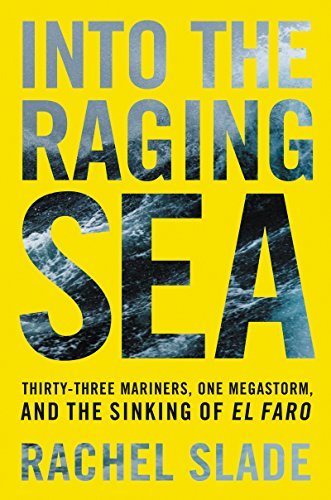
Into the Raging Sea: Thirty-Three Mariners, One Megastorm, and the Sinking of El Faro

Rate this book
On October 1, 2015, Hurricane Joaquin barreled into the Bermuda Triangle and swallowed the container ship El Faro whole, resulting in the worst American shipping disaster in thirty-five years. No one could fathom how a vessel equipped with satellite communications, a sophisticated navigation system, and cutting-edge weather forecasting could suddenly vanish—until now.

Relying on hundreds of exclusive interviews with family members and maritime experts, as well as the words of the crew members themselves—whose conversations were captured by the ship’s data recorder—journalist Rachel Slade unravels the mystery of the sinking of El Faro. As she recounts the final twenty-four hours onboard, Slade vividly depicts the officers’ anguish and fear as they struggled to carry out Captain Michael Davidson’s increasingly bizarre commands, which, they knew, would steer them straight into the eye of the storm. Taking a hard look at America's aging merchant marine fleet, Slade also reveals the truth about modern shipping—a cut-throat industry plagued by razor-thin profits and ever more violent hurricanes fueled by global warming.

A richly reported account of a singular tragedy, Into the Raging Sea takes us into the heart of an age-old American industry, casting new light on the hardworking men and women who paid the ultimate price in the name of profit.

416 pages, ebook

First published May 1, 2018

893 people are currently reading
4850 people want to read

About the author

Rachel Slade

4 books58 followers

Ratings & Reviews

What do you think?
Rate this book

Friends & Following

Create a free account to discover what your friends think of this book!

Community Reviews

5 stars
2,153 (42%)
4 stars
2,047 (40%)
3 stars
662 (13%)
2 stars
121 (2%)
1 star
43 (<1%)
Displaying 1 - 30 of 608 reviews
Profile Image for Matt.
1,052 reviews31.1k followers
March 22, 2020
“Over the radio, [Captain Michael] Davidson told his crew to throw their rafts in the water and get off the ship. But how could they even walk out onto the deck in those winds, let alone deploy a life raft? Everything – people, rafts, life suits – would be whipped away by [Hurricane] Joaquin and into the waves, or thrown back against the ship’s steel hull to be crushed. The air was solid with salt and water. You couldn’t breathe out there. The crew probably crowded around the door leading to the second deck watching in horror the hellish world beyond through a porthole. Their survival instincts kept them there, huddled together… El Faro rolled farther into the wind, exhausted by the fight, until her deck edge dipped into the brine. Superheated Caribbean waters beckoned her in. The ship’s floors turned to the sky and became walls, her walls became ceilings. She was going gently into the eternal night of the deep ocean…”
- Rachel Slade, Into the Raging Sea

Federal law requires me to mention The Perfect Storm whenever discussing a nonfiction book on a deadly disaster. So, being a law-abiding citizen, that’s where I’ll start.

In Sebastian Junger’s classic account of the sinking of the fishing vessel Andrea Gail, he writes of the Falcon, a ship lost off the Georges Bank in 1896. The ship had lost its cable, its rudder, and it was leaking. Knowing she was condemned, a seaman aboard the Falcon tried to get off a final message, tucked into a corked bottle. As Junger narrates:

One of the Falcon’s crew must have wedged himself against a bunk in the fo’c’sle and written furiously beneath the heaving light of a storm lantern. This was the end, and everyone on the boat would have known it. How do men act on a sinking ship? Do they hold each other? Do they pass around the whisky? Do they cry? This man wrote; he put down on a scrap of paper the last moments of twenty men in this world. Then he corked the bottle and threw it overboard. There’s not a chance in hell, he must have thought. And then he went below again. He breathed in deep. He tried to calm himself. He readied himself for the first shock of sea…


I’ve always loved this passage, because it really captures the haunting nature of a disaster on the ocean, so far from help you might as well be in outer space. For hundreds of years, to be lost on high seas meant to be lost to the world. It meant dying without a trace. It meant dying without the people who loved you ever being certain that you were gone. Ships disappeared into the vastness, swallowed whole. Men left home and never returned. There’s a reason that the platforms atop New England houses were called widow’s walks. A plane can crash without survivors, but typically there is wreckage, a final resting place. For much of human history, that was not true when it came to the vessels plying the earth’s waters.

On October 1, 2015, the SS El Faro sank in the Bahamas. None of the crew of thirty-three men and women survived. In days past, this would have been another of countless maritime mysteries.

But this sinking had a twist. The El Faro had a voyage data recorder (VDR) installed on her bridge. Like the cockpit voice recorder in a doomed airliner, the VDR captured conversations that took place in the most important part of a ship. Unlike most CVRs, however, El Faro’s VDR didn’t just capture the final thirty minutes of the disaster; it captured twenty-six hours of conversation over the course of El Faro’s final voyage. These conversations were painstakingly transcribed and made available to the public. In very real terms, then, we know more about the command decisions that led to El Faro’s sinking than we know about the Titanic, which left 705 eyewitnesses to tell the tale (including the helmsman on the bridge when the she hit ice; the lookout who spotted the berg; and the second, third, fourth, and fifth officers of the deck).

And it’s important to know about those command decisions, because the El Faro sinking is a bit unimaginable. How, in this day and age, with GPS in our pockets, can a ship like the El Faro sail directly into the eyewall of a Category 3 hurricane?

Rachel Slade answers that question as best as possible, in her sometimes thrilling, sometimes frustrating account of the El Faro.

Slade grabs your attention immediately, in the first chapter, which consists almost solely of a transcription of Captain Michael Davidson’s excruciating call to shore, to speak with his company’s (TOTE Maritime) designated representative. Instead of getting right through to this so-called “Qualified Individual,” Davidson is left repeating information to a call center operator, as though he has just phoned in to contest a credit card charge. All this while his ship was dying beneath his feet.

Right after this heart-stopping beginning (and really, this story is so dramatic, it does not need a middleman; I suggest reading the transcripts), Slade cuts away, taking us to Jacksonville, Florida, before the El Faro sets sail. This is a narrative style that she employs throughout Into the Raging Sea. She will have a chapter on the El Faro, counting down the hours, the minutes, the seconds, as a monster storm erupts, and the ship sails right at it; then, just as the tension is starting to tighten, she will interrupt the main flow of the story for a cutaway chapter on various topics, such as the design of the El Faro, the corporate structure of TOTE Maritime, a primer on the Jones Act, or a biographical sketch of Captain Davidson. Eventually, right before the El Faro sinks, she leaves the ship entirely to cover the aftermath of the sinking, including the efforts to find the ship in water 15,000 feet deep. Only near the very end does Slade put us back on the bridge to recount the last act.

I knew exactly what Slade was trying to do with this fractured chronology, and frankly, I think it worked pretty well. The shipboard scenes are so powerful, so potent, often told in the participants’ actual, recorded words, that it becomes too much to read all at once. The chapters away from the ship actually give you time to breathe, while also allowing Slade to give the sinking a fuller context. It is also an exercise in dramatic manipulation that any creative writing instructor would endorse.

Unfortunately, the cutaway chapters are often a mixed-bag. At times, Slade seems to be trying to prove how much research she did, and how many people she talked to. There is a lack of focus, of organization, that makes things unnecessarily convoluted. Instead of tackling a subject in a coherent manner, she tends towards an oblique approach. When discussing globalization, for instance, she first forces the reader to endure her observations about doomsday preppers. What’s the connection? I don’t know or care. My mind sort of wandered off, along with the storyline.

Another bothersome point: Slade tells us things she has no way of knowing. We have the voices of the crew, but that is audio alone. Nevertheless, Slade writes with certainty about Danielle Randolph’s bouncing ponytail, or another crewmembers “sullen” look, or how a third crew member ran his hands through his hair. How is she deriving this? I am okay with a bit of artistic license extrapolated from the audio. But if that’s the case, she should explain her method. There are no notes here, and Slade never divulges her process.

While I’m complaining, I feel compelled to mention that I found over half a dozen grammatical mistakes. (Ever visit the Sunshine Sate? I hear it’s beautiful!). This makes me furious. If publishing is dying, it’s because it has shot itself in the foot. Seriously, Harper Collins, you charge $27.99 for this, and no one, literally no one, proofed it? I’ll do it for free, if you send me the manuscript. (Also, I got annoyed that Coast Guard wasn’t treated as a proper noun. I’m not entirely sure I’m right, but it looked really weird un-capitalized).

That said, the good far outweighs the bad. Slade has a real knack for taking concepts and explaining them in a coherent manner for laypeople. For example, her interview with shipbuilder John Glanfield does a fine job of illustrating the concept of downflooding angle, and the role that played in El Faro’s demise. Though it is not always perfectly organized, she covers a lot of ground, from climate change to deep-sea recovery to the Coast Guard-NTSB hearings. I appreciated the all-angles approach.

This book didn’t quite have the extra special literary quality that I found in The Perfect Storm or in Robert Frump’s Until the Sea Shall Free Them (about the eerily similar Marine Electric sinking). In other words, this never gave me the chills. Still, Slade’s writing can be quite propulsive, especially a top-notch sequence on the Coast Guard’s Rescue Swimmers.

She is also refreshingly blunt in her assessments. It is perhaps not surprising that she takes TOTE Maritime to task for its penny pinching and corner cutting. After all, the corporation, which exists inside another corporation, which was swallowed by a different corporation, and digested by a separate corporation, worked very hard to squeeze every last mile out of El Faro, all while refusing to update her safety features. (El Faro had open lifeboats. Like on the Titanic. Look at the pictures – they are the same! Remember the movie Captain Phillips? Those watertight, unsinkable capsules? Yeah, those might have helped). She is very hard on Captain Davidson, who misread his weather forecasts (which relied on extremely old data), ignored his own senses, and disregarded the crew who tried to tell him they were heading straight for Joaquin’s eyewall. It is difficult to write ill of the dead, especially so near in time. I think Slade did a good job in being evenhanded.

Disasters are typically the sum of many mistakes, some large, others small; some long term, others instantaneous. By taking such a sweeping look at the El Faro sinking, Slade demonstrates there was no single cause. It was TOTE’s fault, for their aging, leaky, steam-propelled ship, which had Titanic’s lifeboats. It was the fault of a heating earth, which created an unpredictable and violent super-storm. It was the fault of Captain Davidson, whose every command was based on a faulty premise.

But you don’t read a story like this just to point fingers and lay blame. You read it because there are humans involved, fighting like hell for their lives. That’s what strikes me the most about the loss of El Faro, the thing I can’t get out of my mind. It’s an image of Captain Davidson on that hopelessly slanting deck, knowing he’d screwed up, knowing that he’d made the mistake that would be his epitaph, knowing he was likely about to die. There he is, amid the howling winds and the crashing waves and the unending darkness, with his life measurable in minutes, telling one of his men that he would not leave him.
Profile Image for Brenda.
1,516 reviews67 followers
May 9, 2018
This is very expertly researched and accounts for every bit of the varying events that caused the sinking of the El Faro.

In short, the company TOTE fucked over their crew by having out of date software and hardware. Captain Davidson was more focused on his own career than getting safely to Puerto Rico. Danielle and Schultz were worried about coming on too strong. In short, bad business practice and poor communication between the ranks doomed the ship from the get-go.

The author did a great job of explaining the industry and then drawing that into the narrative. It’s an easy book to read, and I appreciate the author’s effort to include as much as possible.
Profile Image for Namera [The Literary Invertebrate].
1,432 reviews3,757 followers
January 29, 2022
Nonfiction Book of the Month: January

One of my New Year's resolutions is to read a nonfiction book every month. This one came onto my radar through a slightly circuitous route. I'm a relatively frequent visitor to the Unresolved Mysteries subreddit, which deals with true crime; an author often recommended on there is former pilot William Langewiesche, who's written some AMAZING articles about aviation disasters. As soon as I'd read my first article from him, I devoured all his work, which includes two articles on maritime disasters - the catastrophic sinking of the Estonia in 1994 and the loss of the El Faro in 2015.

I ended up going back to the subreddit to ask for more writers like Langewiesche, specifically citing his El Faro article as an example. Someone recommended this book, which also deals with the sinking, but of course in a much more protracted way. An unprecedented 26 hours of conversation was recovered from the ship's Voyage Data Recorder (VDR), enabling Rachel Slade to reconstruct the last moves and motivations of the crew - particularly the doomed captain, Michael Davidson.

While I can't fault Slade's attention to detail, I must say the book's structure wasn't my favourite. We open with a distress call from Davidson to shore, then rewind to the earlier days - fine. But in between each chapter of narrative, she intersperses chapters on things like the history of the Coast Guard or the process of hurricanes, which made for a kind of choppy reading experience. Some of these asides made for valuable context, but others were boring and kind of unnecessary; we really didn't need such a detailed history of the shipbuilding company which made the El Faro. I would have traded that for a map of the Bahamas area where the ship went down, because I can't be the only one with a less-than-stellar grasp on lower East Coast geography.

Slade's style also comes across as a bit flatly journalistic, compared to Langewiesche, whose actual articles are more vivid. But I did appreciate the extensive backgrounds we got on the main crew players - Davidson, the second mate Danielle, chief engineer Rich, and more. I also learnt that Danielle was apparently sexually harassed by Davidson, which was both infuriating and entirely predictable. Langewiesche doesn't mention that (unless he had interviewed Danielle's friends, I doubt he would know) and it was a bit sad to come away from the book feeling more disillusioned with the captain, with whom I'd been trying to be a little more sympathetic.

I should note, though, that Slade does her best to present the captain as he is - a nuanced man, like most of us, not fundamentally bad or stupid. Even Danielle, who reportedly told her friends she 'loathed' him, takes pity on him near the end, offering to stay on the bridge with him as the inevitability of their fate inches closer. Overall Davidson probably does have to take the lion's share of the blame for the sinking: he wilfully ignored weather forecasts which contradicted forecasts he preferred, he ignored repeated warnings from his officers, and was missing from the bridge during the first crucial hours of the crisis. At the same time, he was under a lot of stress about his job security, he had previously been chastised by the shipowner TOTE for playing it safe, and TOTE itself had removed so many safety measures as to be almost negligent.

I would have liked a little more detail about the immediate aftermath of the sinking. Obviously, this is after the microphones cut out, so we don't know what happened. But did the crew manage to use the lifeboats at all? They were open, so useless in a storm, but the question remains. Only one body was ever found, dressed in an immersion suit; unfortunately it was lost before identification could be made. Is there speculation about the location of the bodies? Shouldn't more have floated to the surface?

The last words on the recordings, appositely, are Davidson's. We hear him trying to comfort a petrified crew member and force him to abandon the sinking ship. He's yelling, "It's time to come this way!"

Blog Pinterest Bookstagram

description
56 reviews
September 7, 2020
A tragic and compelling story marred in the telling by the author’s insistence on weaving her personal politics throughout the narrative.
Profile Image for Becky.
887 reviews149 followers
February 9, 2021
I read so so many books about shipwrecks for someone that is completely landlocked. Theyre my true crime. This is one of my favorites. I frankly don't understand the many low ratings, but after reading them, many seem rather meritless to me. Slade was clearly critical of everyone, discussing the politics of the day was particularly critical to understanding the role socioeconomic play in crew relations, the company and the captain (as well as her other commanding officers) all made critically poor choices, and at each step I felt Slade enumerated those well. *shrug*. It was an utterly compelling read and I'm desperately sorry for the loss of thirty-three marines and the families that will miss them.
Profile Image for Kirsti.
2,928 reviews127 followers
August 8, 2018
Important story, amateurishly told. The author had access to recordings of conversations on the bridge, which is great, but she made up thoughts and emotions to go along with those conversations. There's no way she could have known what a crew member was thinking or feeling. The book is also studded with clichés and grammatical errors.
867 reviews15 followers
June 26, 2018
Clusterfuck. Oh my. This book will make you angry. The anger will increase as you move along, when you get to the details of the hearings that took place in the aftermath of the disaster you will be outraged. I wanted to throw the book through a window.

The book, however, for me, was only so so. It’s likely the issue is just my ability to take a book like this. It has to be investigatory. It can’t be a story only. The author provides great detail. I just could not enjoy reading this. I grew up in coastal New England, I grew up with men like those on the ship, I have friends who worked in the Merchant Marine, my children have friends who have gone to the merchant academies in the last few years. This hits home.

The Captain, Davidson, an experienced mariner, is certainly deserving of much of the blame. His unwillingness to listen to his subordinates, even though he was clearly operating under corporate pressures, was the major factor that led to his mistakes

Another factor that needs to be examined is the break in the shipping industry ( and probably many others) between those that embrace all the technological advances and those that are uncomfortable with them, and thus, use them only as much as absolutely necessary and never comfortably. Captain Davidson was on a ship that did not have updated weather technology. He used a forecast from a company that provided visual plot points. He could have, should have used a plotting system, it would have been more correct Nd would also have been more current. The weather detail he received was normally old, in this case due to error, was more behind than normal, and, to top it off, the storm was so erratic that even the National Hurricane Center struggled to forecast it.

But the villain, if there is a villain, ( and there is in case your wondering ) is the shipping company TOTE enterprises. Using forty year old ships that were due to be replaced for the Jacksonville to Puerto Rico run the El Faro and it’s sister ship provided lifeblood to the Puerto Rican economy. The management structure of the company was uninvolved, disassociated from the daily operation of the ships. The company, as most large conglomerates these days focused on one thing, money. Nothing else. Safety, security, employees, this all became not just secondary but much lower than that.

There is too much to tell for a review. People should have gone to jail and they are not all at the bottom of the ocean. An indictment of American shipping, one that could inevitably be republished with a detailed look at almost any other industry as well.
943 reviews83 followers
April 12, 2018
Received as an ARC via my employer Barnes & Noble. Started 4-9-18. Finished 4-12-18. Investigative journalism at its best. Will keep you involved from beginning to end like a good fiction book but it's all true. The sinking of this cargo ship and the deaths of its crew could have been avoided but for the ignorance, apathy, greed, and emotional instability of the parties involved. This book should be used as a textbook in all maritime academies in the world. It would also help to have it be read by every CEO in the world, but of course that will never happen. Being in a position of power doesn't mean you know everything that you need to know. Caused me to swear out loud at the guilty parties described at the end of this story--a visceral reaction.
Profile Image for Simon.
15 reviews49 followers
September 1, 2021
Author sucks you in with her political opinions on topics about gun control, racism, and her issues with doomsday preppers, some of which don't even have anything to do with the story. She talks about "vulture capitalists", "...imperial US" and went so far as to make outlandish remarks such as "...president Trump's white supremacist leanings." The story itself would've been pretty intriguing had it not continuously veered off course with the author's own political opinions.
Profile Image for Scott  Hitchcock.
796 reviews261 followers
November 30, 2018
3.5*'s

A lot more social commentary than most of the books I've read in this genre. This book tackles corporate avarice, global warming, outdated legislature and other topics which all played into the demise of these 33 souls. The sea doesn't suffer mistakes lightly.
Profile Image for Joy D.
3,128 reviews329 followers
April 16, 2025
Into the Raging Sea is a well-researched and powerfully written account of one of the worst American maritime disasters in decades. The book chronicles the final voyage of the container ship El Faro, which sank near the Bahamas during Hurricane Joaquin on October 1, 2015, claiming the lives of all 33 crew members. Slade reconstructs the ship's final hours using the recovered voice data recorder, allowing readers to experience the conversations and decisions that ultimately led to tragedy.

In breaks between these conversations, Slade provides minibiographies of key crew members, particularly Captain Michael Davidson, whose decision-making comes under intense scrutiny. She examines the corporate culture at TOTE Maritime, revealing how economic pressures and outdated equipment (not to mention old-style open lifeboats) contributed to the disaster. The book serves as both a gripping disaster narrative and an indictment of the modern shipping industry. Slade highlights how cost-cutting measures and the prioritization of schedules created the conditions for disaster. The ending is heartbreaking. Recommended to readers interested in maritime journeys, analysis of disasters, or corporate ethics (or lack thereof).
Profile Image for Craig.
293 reviews4 followers
June 14, 2018
A fascinating story. I'm just not thrilled with the way it was told. The author is far from objective in her reporting. It is clear she believes the shipping company was to blame in this tragedy. So the question: Is this a fact-based documentary or an editorial? And there is a bit too much license taken in some spots. We're told that the crew's conversations are often hard to decipher. Yet along with their words (accuracy of which is not disputed) we're often told what the speaker is thinking and feeling at the time. There is no possible source for this information. It's made up. I am also suspicious of one source in the story - the"crewing manager." This person is never identified by name. Why not? For the sake of credibility the reasons why the crewing manager is not identified have to be stated clearly, even if it's that the source didn't want to be named. And what would been the harm or extra cost to include some diagrams of the ship so us drylanders could understand one is built?
Profile Image for Zachary.
418 reviews2 followers
April 1, 2018
This is a fascinating account of the sinking of El Faro, a 700+ ft shipping vessel in 2015. The book delves into modern shipping, the history of ship building, and the pressures of capitalism without ever neglecting the human stories. The recovery of the ship's audio recordings takes readers into the bridge on the last day before the sinking. This is a good book.
Profile Image for Patrick SG.
397 reviews7 followers
May 20, 2018
An excellent and harrowing account of the loss of a ship with 33 people aboard during Hurricane Joaquin in 2015. For those who wondered how a ship could have deliberately moved into the path of a tropical system like this the book provides the answer.

Unlike the classic "The Perfect Storm," which this book might be compared to, the author of this book has access to a valuable resource - more than 25 hours of recordings made on the bridge of the ships officers conversations. Much like an airliner's black box, the device recorded conversations of those steaming into harms way, and it makes for harrowing reading. Particularly moving are the last minutes of the ship's life as the captain urges the frozen-in-fear helmsman to move toward him and potential safety.

The book is divided in two parts. The first alternates the events aboard leading up to the ship's contact with the storm with chapters that paint a picture of key crew members and a history of merchant shipping in the U.S. and the importance of seaborne commerce that escapes most people. The second half details the search for the ship, it's black box, and the hearings to determine the cause. The book shows how a series of events, over years, and on the part of many parties - the government, the shipping company and the captain and crew - contributed to this tragedy.

The only shortcoming of this book - in its electronic format - is the lack of a map that would be helpful in tracking the course of the ship and the storm. The print version provides this in endpapers, but it's lacking in the ebook version.
Profile Image for Sam Klemens.
253 reviews34 followers
June 22, 2018
It absolutely boggles the mind that this book is so well rated. It's horribly written. Rachel uses every hackneyed, cliched phrase and metaphor known to Christendom. It's like she Googled 50 most over-used cliches and made an effort to use each twice. The book is not logically laid out and more than once she spends several pages describing something that she described, poorly, one hundred pages ago!

She goes off onto weird tangents about the past of some of these characters and comes to weird conclusions. For example, she lifts the only female on the bridge up to an elevated status, as if the fact that shipping frustrates her romantic life somehow outweighs the fact that she was bad at her job and reported their location incorrectly on the brink of a storm.

I have to be honest, I didn't finish this book. Halfway through I promised myself I would because I wanted to get a feeling for what makes an atrocious book so smelly. But I couldn't do it. It's just too poorly written. That I finished 75% of it I consider heroic. If you enjoy good literature, if you admire competent writers, reading this is like having your eyeballs scooped out with a spoon.

Please, Rachel, please don't write another book.
Profile Image for LeeAnne.
295 reviews205 followers
August 13, 2019
That part of this book based on the transcripts from the data recorder, the hearings, and the stories told by family members of the victims was excellent. Unfortunately, the author ruins this story with her longwinded self-important lectures that push and preach her political opinions. She bloviates for pages and pages about elected presidents, republicans vs democrats, unions, regulations, maritime medical insurance, corporate greed, global warming, etc, etc... How on earth a writer can turn such a gripping, heartbreaking story into a dry, meandering bore is beyond me, but this author managed to do it. I recommend looking online to read the transcripts of the last few hours of the sailors on this doomed cargo ship and skip the long sermons that fill this book.
1 review
January 29, 2021
I was enjoying the book until the author referred to president Donald Trump as a white supremacist.I find this statement to be overtly racist and highly offensive. The book was supposed to be about Mariners, ships and hurricanes. I did not expect political woke-speed. I am considering never ordering another book through kindle.
Profile Image for Darrell McCauley.
219 reviews14 followers
February 1, 2020
Into the Raging Sea by Rachel Slade describes the sinking of the El Faro, a cargo ship, in October 2014 when it sailed into the eye of a Caribbean hurricane. Thirty-three died. The NTSB concluded that the Captain's decisions and the shipping company's poor safety oversight led to the sinking.

Beginning with a positive description of a St. John's BAR pilot and the role of piloting, this docu-drama/investigative report took a hard left turn into commentary. The authored viewed racism, gun rights, sexism, and even President Trump (who was not inaugurated as President until 2017, years later) as factors in the tragedy. The author even tap dances around ridiculing Christians in multiple chapters. Publication of Into the Raging Sea "workbooks" suggests that this book may be used to promote views to students.

With significant editing, a revised edition could confine the commentary to politics, NOAA & USCG funding, and legislation like the Jones Act. I would still disagree with the author's viewpoint but could do so without disgust. More focus and clarity on the facts of the ship's design and modifications over the years would balance opinion with facts. Otherwise, I would never recommend this book.

About the reviewer: Dr. McCauley designs navigation systems for ship pilots and has worked in the maritime industry for 15 years.
Profile Image for David Holoman.
187 reviews2 followers
July 22, 2018
Four starts minus one:

The fact research, assembly, and presentation of this event are very well done. The prose is work-person-like and not likely to catch the attention of the Pulitzer gang or similar. The story itself is absolutely compelling: how an american vessel can be lost in peacetime in essentially domestic waters in the 21st century. I tore right through it.

The author gets out of her depth quickly when attempting analysis rather than reporting.

However the book is seriously flawed. As an episode that had everything to do with geographic position over time of multiple items, the book needs maps, I would say about 10. It has a grand total of one, and that one displays the hurricane as a single point on the map . As an expository piece on people and equipment, the book would benefit greatly from photographs, I would say about 20 would do it. The book has a grand total of ZERO.

Now why would that be? With one additional opinion-- that the epilogue/wrap up/closing thoughts section was absolutely pitiful-- the situation suggests a book that was rushed to market maybe to beat a competitor?

Anyway, a good read.


Profile Image for Tonstant Weader.
1,285 reviews84 followers
May 18, 2018
Shipping is dangerous work and ships run aground, capsize, founder, or sink nearly every day. Some of these tragedies, though, capture the imagination and inspire writers to explore the reasons for their loss and to find some deeper meaning. The sinking of El Faro in Hurrican Joaquin on October 1, 2015, is just such a storm and has already inspired at least three books so far. Rachel Slade’s Into the Raging Sea seeks to do more than tell the story of the loss of El Faro and its thirty-three crew members, she seeks to place it in the context of shifts in global trade, economic trends, and global warming. This makes for an absorbing and important narrative.

Slade looks at several factors that led to the disaster. Most obviously, global climate change has warmed the ocean, creating more violent storms and far more damaging hurricanes. Climate-change deniers in Congress have underfunded the National Weather Service and the National Oceanic and Atmospheric Administration because they are too afraid of climate science to fund good weather science. It’s very important for climate-change deniers that no one understands weather and climate are not the same, because then they could not bring snowballs into the House of Representatives to expose their ignorance.

She also looks at the leadership of El Faro, the captain, engineers, and officers. Certainly, it seems clear that Captain Davidson made several errors in judgment. He was unaware that his preferred weather update, a graphical representation of the weather, was several hours behind the National Weather Service whose update was textual and required being plotted by hand on their charts. He was responding to weather reports nine hours out of date and like many people, where there was a conflict in reports, he went with the report he liked best. He was also unreceptive to his subordinates advancing their concerns and concerned more about pleasing the on-shore executives than anyone else. He had recently been overlooked for a promotion and was resentful.

She considers the design of El Faro which is the most fascinating part in that the ship was retrofitted a few times to adapt to changing shipping trends without thinking carefully enough about how those changes affect the ship’s balance and seaworthiness. They were allowed again and again to take on more cargo, allowing the ship to rest lower and lower in the water without noticing that the vents on the side allow water in and are much lower. If you have a three-inch glass and it’s got a vent at two inches, the water does not wait to reach three inches before beginning to fill the glass.

Then she looks at management at TOTE, the company who owned El Faro. A more feckless bunch would be hard to find. It’s like they all watched “Wall Street” and though Gecko was the hero, not the villain. They fire the most experienced to replace them with cheaper and younger workers. They have someone unqualified to be an engineer on a ship overseeing all the ships. Their lead contact for ships at sea travels without leaving someone in charge. Sadly, because maritime law is heavily biased toward shipowners, they can cast all the blame on the captain.

There’s more, nonexistent inspections or next-to-worthless inspections. Like Wall Street, most maritime regulation and inspection is carried out by an organization created, funded, and in service to the shipowners. As in other industries, global trade patterns, outsourcing, and trends in labor have weakened the power of labor to advocate for safety. So many factors come together and you begin to wonder why there have not been more tragedies.


Rachel Slade does a great job of writing a compelling narrative that grabs your interest immediately. She is good at short character sketches, but her real strength is explaining the many unseen factors that led to disaster. In capturing the many historical and global trends that influenced decisions on the ship’s design, redesign, management, and maintenance, she is masterful.

I think she sometimes reaches unsupported conclusions when describing people’s character, particularly the women who are involved. For example, the crewing manager comes in for some serious criticism and the kind of gendered gossip that women in leadership often attract. However, her most significant act was ensuring Captain Davidson didn’t get promoted to the new ships. Considering his performance on El Faro, that sounds like a good decision to me. The other woman also came in for some of the same sort of commentary from men who worked with her, that she was scattered and forgetful and of course, rumored to have gotten her job because she filed a sexual harassment claim. But, of the officers on the bridge, she seemed to be more aware than anyone they were in danger and did more than anyone to point it out to the captain. If he had been willing to listen to her and if other officers had backed her up better, they would have changed course. Perhaps because Slade is also a woman, she didn’t want to seem partial, so she accepted the criticisms of these women even though they fit into the pattern of criticism women who seek jobs in men’s space always get. I think she should have taken more care to put those criticisms in the voice of the people who gave them, rather than in the author’s voice. That brings me to my second criticism. She tells us what people are thinking. Well, we know what they are doing and saying, but we can’t know their thoughts and motivations.

Lastly, I wish she had provided endnotes or footnotes. She lists her main sources, but she made some assertions that I would like to check, for example, that Florida is the most racist state. It sure could be and I assume she made that assertion based on the number of lynchings in Florida, but I don’t know because it is not sourced. There are other state’s that can make that claim based on other rationales. For example, my own state of Oregon prohibited Black people from owning land or a business or signing a contract in the state. Iowa and Indiana required black people to post a bond that would equal $15,000 in today’s dollars just to enter the state.

These are minor complaints when stacked against the scope of her research and the quality of her analysis. This is a fascinating story about a tragedy that could have been avoided and identitifies problems that probably guarantee it will happen again.

I received an ARC of Into the Raging Sea from the publisher through a Shelf Awareness drawing.

Into the Raging Sea at Harper Collins
Rachel Slade interview at 98.9 WCLZ


★★★★
https://tonstantweaderreviews.wordpre...
Profile Image for Bianca.
42 reviews12 followers
February 20, 2021
Interesting facts I discovered on google while reading this book:
Named hurricanes when they form over the North atlantic, central north pacific and eastern north pacific; they always rotate counterclockwise. Hurricanes happen twice as often in the northern hemisphere as cyclones or typhoons do in the southern hemisphere.

Named cyclones when they form over the south pacific and Indian Ocean; they always rotate clockwise.

Named typhoons when they develop in the Northwest pacific; they rotate either clockwise or counterclockwise (depending on whether the were formed in the northern or southern hemisphere).
This difference in rotation comes from the Coriolis effect; and without going into a long and detailed scientific rambling (make no mistake, I'm in over my head already here) I can tell you this: if you want to avoid hurricanes, cyclones or typhoons then the equator is the safest place to be. The Coriolis effect has no power there so they can't develop.
(Side note: I just told my partner all this and he already knew all about it and was completely nonplussed so it just occurred to me that I could be the only person who actually didn't already have a grasp on this whole phenomenon! But it's my review and I found it interesting so I'm leaving it)

I also read that here in Australia we call them willy-willys which is a bold faced lie. I've been through several cyclones in my time and never once has anyone called one a willy willy. A willy willy is a little dust storm or whirlwind kicking up dust! If you've ever seen the destruction a cyclone causes then you know the term willy willy just doesn't cut it.

Anyway now to the actual review: this is a good book. The author has clearly done her research and spoken with a lot of people regarding all aspects of the El Faro and her crew. The last few hours of transcript recorded on the ship make for emotional reading; I really feel for the lives lost and the family and friends left behind.

It appears a lot of the blame for the loss of El Faro and her crew is placed at the feet of Captain Michael Davidson but I think that TOTE management should bear a lot of the blame. This book really shows what happens when companies favour penny pinching and making money at all costs over safety, integrity and staff experience. They had virtually no clear cut policies and procedures, no real safety plans (nothing regarding hurricanes anyway) and no clear leadership or points of contact for Captains or crews to defer to (and don't even get me started on the ships maintenance or those damn life rafts). Obviously life at sea is no joke and when things go bad, they can go really bad but TOTE management obviously missed that memo.

There are a few chapters that go into the nitty gritty of shipping & politics in America which is mostly ok but sometimes I found myself skimming some of those parts, although I did like the history of Sun Ship, ship building and a few other bits and pieces of shipping history.

A solid read; recommended for those who like reading about cyclones (or hurricanes: choose your hemisphere), shipwrecks or just non fiction in general. However keep in mind that there were no survivors on El Faro so there's no winners or happy ending here. A truly sad story but very interesting.

RIP El Faro 33
Profile Image for Madeline.
684 reviews63 followers
August 5, 2018
I love reading about the ocean and boat disasters (I love boats and airplanes...), and I remember when this boat sank, so I was eager to learn more. However, while I was reading this, I would tell people about it, and I was surprised at how many people had completely forgotten this had occurred! So I suppose it's for the best that Slade has written this gorgeous book to keep the memory of El Faro alive, and emphasize the problems with the United States shipping industry. I heard Slade speak about this book on the New York Times Book Review podcast, and her passion for this story was palpable, both in her interview and in this book. She makes what some may consider a dry topic compelling and heartbreaking, offering a glimpse into both the human side of the story, and the industry environment that led to such a disaster. Slade has poured so much time into researching this disaster, coming at it from every angle, and I felt that she left no stone unturned. This is an amazing account of the El Faro disaster, and offers a lot for us to learn from. 
Profile Image for  Bon.
1,349 reviews198 followers
July 24, 2023
A well done depiction of a disaster that seems impossible to have happened in 2015. Slade had chapters of historical context, maritime law, mentioned climate change and conservative interests affecting how bad the hurricane seasons are getting, tons of useful contextual background. Lots of focus on the families left behind and the emotional wreckage, too - very sad but well written.
Profile Image for  Olivermagnus.
2,476 reviews65 followers
February 29, 2020
Shortly before dawn on Thursday, October 1, 2015, an American merchant captain named Michael Davidson sailed a 790-foot U.S.-flagged cargo ship, El Faro, into the eye of a Category 3 hurricane near the the Bahama Islands.

This book was a riveting sea story of a horrible disaster. Many readers will enjoy it purely for that reason, but it's so much more. It details the struggles and challenges faced by mariners making a living on the sea, and the impact our society has on people when it makes decisions and laws based on economics, without also considering safety as equally important.

I was completely oblivious to the difficulties and risks facing the men and women who deliver our goods across the sea. The chapters alternate between the crew profiles and the more dry statistics of the ship, computer systems, and history of sea shipping. But I did find that history much more interesting than I expected I would.

I found this book to be a gripping narrative of a cargo ship’s tragic voyage. This is a well written book, and when the author sticks to the main narrative is quite compelling. I prefer not to have to read every author's political opinion, so I could have done with less social commentary. However, it's full of fascinating detail for anyone remotely interested in ships or shipping.


1347

Profile Image for Joanne.
854 reviews94 followers
October 16, 2020
In October 2015, the container ship El Faro sailed into hurricane Joaquin. Joaquin grew into one of the worst storms in the history of Atlantic weather. 33 lives were gone in instant.

Rachel Slade, an investigative journalist, took on a story that should have held me captive. I love non-fiction, and this type of book is one of my favorite genres. Instead, I found myself finishing it only out of respect for the families who lost their love ones in this disaster.
here's why:

Instead of sticking to the meat of the story, Slade wander's off into the history of, not just container shipping, but all ships. She meanders in weather and wind, where in IMO, she did not have the knowledge to go and so had some weather geek help her. I am not a science person, and frankly neither she is. It is too bad, because this book could have been, should have been at least 4 stars from me. Had she only done what she does best, and tell the story of the men and women aboard that ship.

The author has not totally alienated me. Should she write another book, I would give her another chance. If you are a science person, you may like this more than I.
20 reviews
April 23, 2025
A pathetically judgmental and presumptuous book. I was a student at Maine Maritime Academy when El faro sank. I remember very well the emotions of the people who were best friends with former students who were onboard El Faro when it sank. I shipped out for 5 years. I'm very familiar with the ways of the Merchant Marine and I can say with confidence that a mass of what the Author includes in the book is either exaggerated, irrelevant to the event, or flatly false.

Example 1: She portrays Captain Davidson as a total failure because he was passed over for "promotion" to the new TOTE LNG ships. As a captain on a large ship like El Faro, he had already very nearly reached the pinnacle of accomplishment for the maritime world. There was probably many highly qualified applicants for the new ships.

Example 2: Portraying ships Captain as a lackluster job. Literally indicating that ships Captains make as much money as police officers. This is laughably false. I have never known of a company to pay less than $250,000 a year to Captains. In the following paragraph she indicates that TOTE's captains make $150,000 a year. First of all, police officers in Maine (Where Davidson lived) don't make half that. Second, I would bet anything that his salary was significantly higher than that.
Profile Image for Mrtruscott.
245 reviews13 followers
February 24, 2019
Not my usual reading, but I read an excerpt in Vanity Fair and was completely knocked out by the author’s ability to make me see the crew of El Faro, feel like I knew them without being all corny/Hollywood about it — and I could envision the boat, the towering stacks of containers, imagine the terrific power of the sea. 33 people on a 700+foot boat vs. hurricane.

I’d never given much thought to the importance of shipping in the global economy, even though I see containers leaving the Port of Seattle on our streets and highways every day. That’s changed.

The heartbreaking story of El Faro is also a cautionary tale about corporate malfeasance, the perils of putting numbers guys in charge when lives are on the line. Add in rapidly warming oceans....and this was a heartbreaking and terrifying book.
Profile Image for Stephanie.
10 reviews
June 16, 2019
In a book full of highly technical and detailed jargon, I feel it would have been helpful to include diagrams or illustrations. For example an illustration of the El Faro. Photographs of the crew or at least main players would have also been welcome.

In addition, I found Slade’s writing style to be a bit ‘clunky’. Her transitions between the history (Jone’s Act, history of the Coast Guard etc.) and the more immediate story of the El Faro were often jarring. While I agree that much of the background was necessary, stylistically it could have been handled better. Finally, I feel that her inclusion of her own political inclinations were unnecessary and simply laying out the circumstances and allowing the reader to come to their own conclusions would have been more effective.

Profile Image for Melanie Johnson.
764 reviews31 followers
September 16, 2018
I don’t usually like “boat, sea-faring, arrrr” kind of books; however, this was fascinating! A true story about the El Faro that sailed out of Jacksonville headed to Puerto Rico in the midst of a storm that they knew nothing about. It was heartbreaking but also super interesting. I learned a lot about the shipping industry (which most of take for granted), a lot about the Coast Guard and about the types of people that run these ships and love the sea.
Personally, my husband and I boat around Jacksonville and are always in awe of these big ships when we are able to see one up close. Now I will have a different perspective!
Profile Image for Clay S.
32 reviews3 followers
April 19, 2023
Actually, I only made it halfway through. This book could not hold my attention. Although it was a little interesting to learn about commercial shipping, of which I know almost nothing before this book. The Author's attempt to introduce us to the real-life characters and connect with them fell flat. Halfway through I no longer had any interest in the people or the story of this terrible tragedy.
Displaying 1 - 30 of 608 reviews

Can't find what you're looking for?

Get help and learn more about the design.