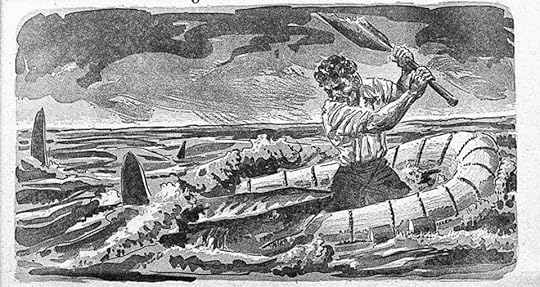
Translated by Randolf Hogan. In 1955, Garcia Marquez was working for El Espectador, a newspaper in Bogota, when in February of that year eight crew members of the Caldas, a Colombian destroyer, were washed overboard and disappeared. Ten days later one of them turned up, barely alive, on a deserted beach in northern Colombia. This book, which originally appeared as a series of newspaper articles, is Garcia Marquez's account of that sailor's ordeal.
Gabriel José de la Concordia García Márquez was a Colombian novelist, short-story writer, screenwriter and journalist. García Márquez, familiarly known as "Gabo" in his native country, was considered one of the most significant authors of the 20th century. In 1982, he was awarded the Nobel Prize in Literature.
He studied at the University of Bogotá and later worked as a reporter for the Colombian newspaper El Espectador and as a foreign correspondent in Rome, Paris, Barcelona, Caracas, and New York. He wrote many acclaimed non-fiction works and short stories, but is best-known for his novels, such as One Hundred Years of Solitude (1967) and Love in the Time of Cholera (1985). His works have achieved significant critical acclaim and widespread commercial success, most notably for popularizing a literary style labeled as magical realism, which uses magical elements and events in order to explain real experiences. Some of his works are set in a fictional village called Macondo, and most of them express the theme of solitude.
Having previously written shorter fiction and screenplays, García Márquez sequestered himself away in his Mexico City home for an extended period of time to complete his novel Cien años de soledad, or One Hundred Years of Solitude, published in 1967. The author drew international acclaim for the work, which ultimately sold tens of millions of copies worldwide. García Márquez is credited with helping introduce an array of readers to magical realism, a genre that combines more conventional storytelling forms with vivid, layers of fantasy.
Another one of his novels, El amor en los tiempos del cólera (1985), or Love in the Time of Cholera, drew a large global audience as well. The work was partially based on his parents' courtship and was adapted into a 2007 film starring Javier Bardem. García Márquez wrote seven novels during his life, with additional titles that include El general en su laberinto (1989), or The General in His Labyrinth, and Del amor y otros demonios (1994), or Of Love and Other Demons.
1955, Caribbean Sea. Twenty years old soldier Luis Alejandro Velasco is part of the crew on board destroyer Caldas, traveling from the United States to Colombia. His life unexpectedly turning when a giant wave sent him and several of his mates flying to the sea, where he remained lost with little hope of being rescued.
A wondrous tale of survival based on true events, of how Velasco managed to survive lost at sea without food or water, in a poor state raft. Finally getting to safety when he reached beach shores ten days later, barely alive. A grand personality in his time, Velasco’s later life as much bleak as this fantastic tale, that launched Gabriel Garcia Marquez into stardom, and exile.
Another all-time classic by the immortal Gabo. A book probably every kid in Argentina had to read it at some point in school. After re-skimming it again decades later I can say that, although highly memorable, this is not one of my most favs of Marquez. Still, I’ll never forget how Velasco ; the two encounters with the seagulls were both endearing and tearing. and also I'll never be able forget how he tried
----------------------------------------------- PERSONAL NOTE: [1955] [172p] [Classics] [Almost Recommendable] -----------------------------------------------
1955, Mar del Caribe. El soldado Luis Alejandro Velasco de veinte años es parte de la tripulación del ARC Caldas, viajando desde Estados Unidos a Colombia. Su vida inesperadamente dando un vuelco cuando una ola gigante lo manda volando a él y varios de sus compañeros al mar, donde permanece perdido con poca esperanza de ser rescatado.
Una maravillosa historia de supervivencia basada en eventos reales, sobre cómo Velasco logró sobrevivir perdido en alta mar sin comida ni agua, en una balsa en pobre estado. Finalmente llegando a seguridad cuando alcanzó la costa de la playa diez días después, apenas vivo. Una gran personalidad de su época, la vida de Velasco luego del incidente tan sombría como este relato fantástico, que lanzó a Gabriel García Márquez al estrellato, y exilio.
Otro clásico de todos los tiempos por el inmortal Gabo. Un libro que probablemente todo niño en Argentina tuvo que leer en algún momento en el colegio. Después de revisarlo décadas después puedo decir que, aunque altamente memorable, este no es uno de mis más preferidos de Márquez. Igual, nunca voy a olvidar como Velasco ; los dos encuentros con las gaviotas fueron enternecedores y desgarradores, y tampoco jamás podría olvidar como él trató
----------------------------------------------- NOTA PERSONAL: [1955] [172p] [Clásicos] [Casi Recomendable] -----------------------------------------------
The full title is The Story of a Shipwrecked Sailor: Who Drifted on a Liferaft for Ten Days Without Food or Water, Was Proclaimed a National Hero, Kissed by Beauty Queens, Made Rich Through Publicity, and Then Spurned by the Government and Forgotten for All Time, which pretty much sums up the story.
The story of Luis Alejandro Velasco is one of intense survival, as he was flung overboard from the destroyer Caldas with seven of his fellow seamen on February 28, 1955. The ship was traveling from Mobile, Alabama, in the United States, where it had docked for repairs, to the Colombian port of Cartagena, where it arrived two hours after the tragedy. After four days, the search was abandoned and the lost sailors were officially declared dead. Velasco, however, found a raft and remained on the open sea without food and without hope. After drifting with sea currents for ten days, an emaciated Velasco arrives with his raft on a coast that he later discovers to be Colombia. He is received first with affection and later with military honors and much money from publicity agencies.
The story on El Espectador
Yet, Luis Alejandro Velasco carried a secret within himself.
"...I asked Luis Alejandro Velasco to describe the storm that caused the disaster. Aware that his statement was worth its weight in gold, he answered with a smile, “There was no storm.” It was true: the weather bureau confirmed that it had been another clear and mild February in the Caribbean."
-Gabriel García Márquez in the foreword to the book.
The truth, unpublished until then, was that the destroyer was loaded with contraband. Not being able to withstand the weight of its cargo, the ship tossed in windy seas and dropped its ill-secured cargo and eight of its seamen into the sea. Knowing that it was illegal to transport cargo on a destroyer, the journalists were in a dilemma, as Colombia was under the military and social dictatorship of General Gustavo Rojas Pinilla and the press was heavily censored.
The story, divided into installments, ran for fourteen days. The government denied that the destroyer was loaded with contraband. To back up the story, a special supplement was published one week after the publication of the series, containing photographic proof.
"Behind the groups of friends on the high seas one could see the boxes of contraband merchandise and even, unmistakably, the factory labels. The dictatorship countered the blow with a series of drastic reprisals that would result, months later, in the shutdown of the newspaper."
The aftermath
Luis Alejandro Velasco never recanted a word of the story, resulting in his having to leave the Navy and began to work in the private sector, starting with a job in a bus company. He eventually settled into work as a commercial agent in an insurance company in Bogotá. When Gabriel García Márquez published the story fifteen years later — in 1970 — in the book Relato de un Náufrago, he generously ceded the author's rights and royalties to Velasco. In 1983, Velasco sued for translation rights to the book and lost. In the last week of his life, he apologized to García Márquez for the lawsuit. He died in Bogotá on August 2, 2000, aged 66.
"The morning was crystal clear. There couldn't be any doubt that the land was real. All the frustrated joys of the previous days - the planes, the lights of the ships, the sea gulls, the changing color of the sea - instantly came alive again at the sight of land."
The Story of a Shipwrecked Sailor by Gabriel García Márquez is the tale of Luis Alejandro Velasco's ten days on a life raft after being washed overboard while serving as a crew member aboard the Caldas, a Colombian destroyer ship in the Caribbean Sea.
Velasco's life and death story makes for quite the saga. Equally dramatic, as it turned out, is the story behind the story as told by Gabriel García Márquez, a twenty-eight-year-old journalist at the time. As Gabriel reports, back in 1955 when he was given the assignment to work with Luis Alejandro Velasco, it was as if he had been given a time bomb. The reason relates to the ill-secured cargo aboard the Caldas, including refrigerators, washing machines, and TV sets. It was highly illegal to transport contraband cargo on a destroyer. When a violent wind kicked up out at sea, the cargo and eight sailors, Velasco among them, were washed overboard. As Gabriel recounts, “Clearly, the account, like the destroyer, was loaded with an ill-secured moral and political cargo that we hadn't foreseen.”
But there was good news. Young Gabriel relates that Velasco had “an exceptional instinct for the art of narrative, an astonishing memory and ability to synthesize, and enough uncultivated dignity to be able to laugh at his own heroism.” In twenty daily six hour sessions, the pair put together a rip-roarding tale printed in fourteen installments of the Bogotá daily newspaper, El Espectator. People would line up at the newsstands eager to read the next installment. The circulation of El Espectator soared.
The tale itself is short and can be read in an afternoon. Here are several snips from the sailor's yarn along with my words.
“I confess that the movie also made an impression on me....I wasn't afraid, for an instructor had shown us how to fend for ourselves in the event of a shipwreck. Nonetheless, the uneasiness I felt the night we saw The Caine Mutiny wasn't normal.”
While in Mobile, Alabama, just a few days before the Caldas would set to sea, Velasco and his mates went to the theater to see the famous film. For Velasco, it wasn't events on the ship that made a deep impression, but rather the violent storm. Ah, a foreshadowing of catastrophe, recounted with all the dramatic flair we've come to expect from Gabriel García Márquez. There was good reason everyone lined up at the newsstands to read all about what would happen next to Velasco.
“A second later, about a hundred meters away, the ship surged up between the waves, gushing water from all sides like a submarine. It was only then that I realized I had fallen overboard.”
This part of the story makes for intense, high drama. Velasco swims, grabs hold of a crate and then finally pulls himself up on a life raft. Only a few meters away, his mates are shouting to one another, trying to stay afloat. It seems to him odd that none of his mates could reach any of the other life rafts. Velasco tries desperately to rescue one of his mates but the waves are rough, very rough. He keeps searching the sea, hoping beyond hope that someone, anyone, would surface soon. After ten minutes (Velasco is still wearing his watch), he's devastated. He realizes he's alone, alone on his life raft with no food or water.
“The wind died down by four in the afternoon. Since I could see nothing but water and sky, since I had no points of reference, more than two hours had passed before I realized that the raft was moving.”
Velasco figures in the next hour or two or three he'll see planes searching the sea. But there are no planes. Times passes, the minutes seem like hours, the hours seem like days. The sun goes down and night falls. Velasco tries to keep calm, even when the sharks arrive at five the next evening. We read, “A shark fin inspires terror because one knows how voracious the beast is. But in fact, nothing appears more innocuous than a shark fin.”
We're right there with Velasco over the course of the next nine days as he deals with the terrors of the sea and the terror of his own mind and ravaged body. What a tale. Pick up the Vintage International edition expertly translated by Randolph Hogan and read all about it.
Photo of the type of Luis Alejandro Velasco's life raft.
It is been ten years since I set foot on sea as you guess am really scared of, I didn’t try learn to swim and almost drowned twice trying to show off my nonexistent swimming prowess to people, I don’t try to aboard any ship and if I tried I must make sure I have my life saving jacket near me so when things go wrong which they don’t happen but seeing my jacket calms me down The story tells what it means to be stranded in sea where there is no water or food for ten days and survive Our story begins when a Colombian navy Caldas sails from mobile Alabama in February 1955 where they docked in the port for repairs for the last 8 months The 7 sailors with our hero Luis Alejandro Valasco used most of the time going to movies with their American girl friends or went to bar to drink whiskey and start brawls, However after watching the movie Caine Mutiny the 8 sailors feelings became uneasy not like they knew what will happen to them but what will they do if they were caught in a situation like they saw in the movie. The ship has started to shake in febuary 27 at 10 pm until 11:30 but after few minutes the ship was capsized and some of the sailors who were on the roof have fallen overboard. What happens after that can be hard for anyone to think about, as Luis who found a raft started to move the toward remaining three survivors of his shipmates it become futile as he watched them helplessly drown as the waves was getting bigger. After that is ten days of struggle against nature where he fights off sharks for a fish where he falls overboard twice but thankfully at the time there were no sharks around, he fights off extreme hunger and thirst and even catches a bird but the sight of flesh makes him feel nauseas and eventually he throws it to the hungry who accompanied him amazing story of endurance and surviving
The Story of a Shipwrecked Sailor was a riveting story written by Gabriel Garcia Marquez while working for a Bogotá, Colombia newspaper, El Espectador, when it was reported that eight crew members of the Caldas, a Colombian destroyer, were washed overboard and disappeared on February 28, 1955. The Caldas was sailing from Mobile, Alabama to Cartagena, Colombia when the mishap occurred. However, ten days later one of the Colombian sailors, Luis Alejandro Velasco, turned up half-dead on a deserted beach in northern Colombia. This book is the reconstruction of his experiences as told to Gabriel Garcia Marquez about his ordeal surviving without food or water drifting on a life raft at sea.
As Gabriel Garcia Marquez says of the fantastic story of survival, "It was so detailed and exciting that my only concern was finding readers who would believe it. Not solely for that reason but also because it seemed fitting, we agreed that the story would be written in the first person and signed by him. This is the first time my name has appeared in connection with the text."
Read: June 2022 Gabriel Garcia-Marquez, age unknown
The Story of a Shipwrecked Sailor, as told to Gabriel Garcia-Marquez by Luis Alejandro Velasco. AKA "Lucky Luis" (Not actually)
The ten word review: Gull sushi is probably never going to be a thing.
I didn’t have high expectations for this book. After all, it was written in 1955 when Gabriel Garcia-Marquez was a 28 year old newspaperman, years before he became famous, before he had what it takes to grow a proper mustache. It smacked of that feeling that his handlers might be scraping the barrel here to make a buck. This is reiterated in the forward he wrote, which closes, “I have not reread this story in fifteen years. It seems worthy of publication but I never quite understood the usefulness of publishing it. I find it depressing that the publishers are not so much interested in the merit of the story as in the name of the author, which, much to my sorrow, is also that of a fashionable writer. If it is now published in the form of a book, that is because I agreed without thinking about it very much, and I am not a man to go back on his word.” (Imagine the publisher’s reaction knowing they have to include this!)
Setting any preconceptions and the author’s own discomfort aside, this is a competently told piece of straight forward non-fiction: realism, of course, without the flourishes or magic realism and flights of fancy of his prose later on. Make that, more than competently told. And it’s a pretty riveting tale.
A Columbian Navy ship, dangerously overloaded with illegal, poorly secured contraband, lists in high seas. Several sailors are washed aboard and all but one drowns. (The book of course is that single survivor’s story, as told to GGM, and the scandal caused so much embarrassment the government shut down his newspaper).
For ten days he drifts in a raft, suffering hunger, thirst, heat and cold, hallucinations, depression … Oh and –surprise, surprise— sharks! (Oh, you were expecting sharks? Huh, so was I.) He tries to gnaw his shoes, his belt (too tough—the sailor later became wealthy from shoe-endorsement ads, no kidding.) Chews some business cards, slowly, as if they were gum. “My jaws hurt … but I felt stronger and more optimistic … I could feel a tiny piece of mashed-up cardboard move all the way down to my stomach, and from that moment on I felt I could be saved, that I wouldn’t be destroyed by the sharks.” Every evening sharks haunt his raft in voracious packs, chasing fish, bumping into the raft, trying to overturn it …
“Enough! I'm tired of these m-fucking sharks in this m-fucking raft!” (Well, it’s not in the book per se, but I feel pretty confident he said it.)
Okay, be warned the rest of this might be a spoiler, but I’d like to note a few details. Otherwise, I’ll forget them. This fellow somehow survived ten days without water and almost no moisture at all from food. Just two bites of a fish, a bit of floating tree branch, and a gull he killed and tasted but was too disgusting to get down.
“It’s easy to say that after five days of hunger you can eat anything. But though you may be starving, you still feel nauseated by a mess of warm, bloody feathers with a strong odor of raw fish and of mange… I put a sliver of the thigh in my mouth … but unable to get over my repugnance, I spit out the piece of flesh and kept still for a long time, with the revolting hash of bloody feathers and bones in my hand.”
On the seventh day, the sharks (remember them?) chase a fish that jumps into his raft. Food! “I managed to tear off the first mouthful … and chewed with disgust …” but he only gets to the second mouthful when a shark steals back his fish and --just to be extra-mean-- bites in half the single oar he has left to paddle his raft hundreds of miles across the ocean.
The raft overturns. Because he had thought it a good idea to tie himself to the raft with his belt, he nearly drowns, upside down in the sea, trapped. He manages to hold his breath long enough to free himself and struggle back onto the raft. Good thing at least, it's a time of day when the sharks are not around to munch on him. Lucky Luis, they call him. And when at last he spies land, it’s too rocky and dangerous to land his raft, so after ten days without food or water, he summons the strength to swim two kilometers to shore.
Oh my. I do hope the cruise we’re planning on goes nothing like this.
Due to being trolled by other goodreads users regarding my review I originally wrote three years ago for this book, I have permanently removed my upload for the foreseeable future. Please think before going after a book reviewer and criticising who they are as a reader. If you genuinely wish to hear my thoughts, feel free to send me a private message. Thanks.
Think of a writer who can make you smile, happy and laugh with just the title of his work or with its prologue written in four short pages. I have one, and only one: Gabriel Joselito de la Concordia Garcia Marquez. And it is here, where he didn't tell his own story, but the story of another, written in the first-person narrative but in GG Marquez's hand, sort of like "The Autobiography of Alice B. Toklas" by Gertrude Stein.
The title you see from the image of this book here at GR is not complete as it has a sub-title which sort of serves as an appetizer to this memorable dainty little dish. I reads:
"who drifted on a life raft for ten days without food or water, was proclaimed a national hero, kissed by beauty queens, made rich through publicity, and then spurned by the government and forgotten for all time"
Flip over a leaf and you'll have the prologue I was referring to which GG Marquez entitled "The Story of This Story." In his honor, as he had passed away only yesterday, and as his soul may still be here to witness this small sacrifice I am making in his name, and as this prologue made me laugh several times, I am reproducing it here in all its glory:
"February 28, 1955, brought news that eight crew members of the destroyer Caldas, of the Colombian Navy, had fallen overboard and disappeared during a storm in the Caribbean Sea. The ship was traveling from Mobile, Alabama, in the United States, where it had docked for repairs, to the Colombian port of Cartagena, where it arrived two hours after the tragedy. A search for the seamen began immediately, with the cooperation of the U.S. Panama Canal Authority, which performs such functions as military control and other humanitarian deeds in the southern Caribbean. After four days, the search was abandoned and the lost sailors were officially declared dead. A week later, however, one of them turned up half dead on a deserted beach in northern Colombia, having survived ten days without food or water on a drifting life raft. His name was Luis Alejandro Velasco. This book is a journalistic reconstruction of what he told me, as it was published one month after the disaster in the Bogota daily El Espectador.
"What neither the sailor nor I knew when we tried to reconstruct his adventure minute by minute was that our exhaustive digging would lead us to a new adventure that caused a certain stir in the nation and cost him his honor, and could have cost me my skin. At that time Colombia was under the military and social dictatorship of General Gustavo Rojas Pinilla, whose two most memorable feats were the killing of students in the center of the capital when the Army broke up a peaceful demonstration with bullets, and the assassination by the secret police of an undetermined number of Sunday bullfight fans who had booed the dictator's daughter at the bullring. The press was censored, and the daily problem for opposition newspapers was finding politically germ-free stories with which to entertain their readers. At El Espectador, those in charge of that estimable confectionary work were Guillermo Cano, director; Jose Salgar, editor-in-chief, and I, staff reporter. None of us was over thirty.
"When Luis Alejandro Velasco showed up of his own accord to ask how much we would pay him for his story, we took it for what it was: a rehash. The armed forces had sequestered him for several weeks in a naval hospital, and he had been allowed to talk only with reporters favorable to the regime and with one opposition journalist who had disguised himself as a doctor. His story had been told piecemeal many times, had been pawed over and perverted, and readers seemed fed up with a hero who had rented himself out to advertise watches (because his watch hadn't even slowed down during the storm); who appeared in shoe advertisements (because his shoes were so sturdy that he hadn't been able to tear them apart to eat them); and who had performed many other publicity stunts. He had been decorated, he had made patriotic speeches on radio, he had been displayed on television as an example to future generations, and he had toured the country amid bouquets and fanfares, signing autographs and being kissed by beauty queens. He had amassed a small fortune. If he was now coming to us without our having invited him, after we had tried so hard to reach him earlier, it was likely that he no longer had much to tell, that he was capable of inventing anything for money, and that the government had very clearly defined the limits of what he could say. We sent him away. But on a hunch, Guillermo Cano caught up with him on the stairway, accepted the deal, and placed him in my hands. It wa as if he had given me a time bomb.
"My first surprise was that this solidly built twenty-year-old, who looked more like a trumpet player than a national hero, had an exceptional instinct for the art of narrative, an astonishing memory and ability to synthesize, and enough uncultivated dignity to be able to laugh at his own heroism. In twenty daily sessions, each lasting six hours, during which I took notes and sprang trick questions on him to expose contradictions, we put together an accurate and concise account of his ten days at sea. It was so detailed and so exciting that my only concern was finding readers who would believe it. Not solely for that reason but also because it seemed fitting, we agreed that the story would be written in the first person and signed by him. This is the first time my name has appeared in connection with the text.
"The second, and more important, surprise occurred during the fourth day of work, when I asked Luis Alejandro Velasco to describe the storm that caused the disaster. Aware that his statement was worth its weight in gold, he answered with a smile, 'There was no storm.' It was true: the weather bureau confirmed that it had been another clear and mild February in the Caribbean. The truth, never published until then, was that the ship, tossed violently by the wind in heay seas, had spilled its ill-secured cargo and the eight sailors overboard. This revelation meant that three serious offenses had been committed: first, it was illegal to transport cargo on a destroyer; second, the overweight prevented the ship from maneuvering to rescue the sailors; and third, the cargo was contraband--refrigerators, television sets, and washing machines. Clearly, the account, like the destroyer, was loaded with an ill-secured moral and political cargo that we hadn't foreseen.
"The story, divided into installments, ran for fourteen consecutive days. At first the government applauded the literary consecration of its hero. Later, when the truth began to emerge, it would have been politically dishonest to halt publication of the series: the paper's circulation had almost doubled, and readers scrambled in front of the building to buy back issues in order to collect the entire series. The dictatorship, in accordance with a tradition typical of Colombian governments, satisfied itself by patching up the truth with rhetoric: in solemn statement, it denied that the destroyer had been loaded with contraband goods. Looking for a way to substantiate our charges, we asked Luis Alejandro Velasco for a list of his fellow crewmen who owned cameras. Although many of them were vacationing in various parts of the country, we managed to find them and buy the photographs they had taken during their voyage. One week after the publication of the series, the complete story appeared in a special supplement illustrated with the sailors' photographs. Behind the groups of friends on the high seas one could see the boxes of contraband merchandise and even, unmistakably, the factory labels. The dictatorship countered the blow with a series of drastic reprisals that would result, months later, in the shutdown of the newspaper. Despite the pressure, the threats, and the most seductive attempts at bribery, Luis Alejandro Velasco did not recant a word of his story. He had to leave the Navy, the only career he had, and disappeared into the oblivion of everyday life. After two years the dictatorship collapsed and Colombia fell to the mercy of other regimes that were better dressed but not much more just, while in Paris I began my nomadic and somewhat nostalgic exile that in certain ways also resembles a drifting raft. No one heard anything more about that lone sailor until a few months later, when a wandering journalist found him seated behind a desk at a bus company. I have seen the photograph taken of him then: he had grown older and heavier, and looked as if life had passed through him, leaving behind the serene aura of a hero who had had the courage to dynamite his own statue.
"I have not reread this story in fifteen years. It seems worthy of publication, but I have never quite understood the usefulness of publishing it. I find it depressing that the publishers are not so much interested in the merit of the story as in the name of the author, which, much to my sorrow, is also that of a fashionable writer. If it is now published in the form of a book, that is because I agreed without thinking about it very much, and I am not a man to go back on his word.
So... here's some background, I recently got a collection of numerous Gabriel García Márquez books very cheaply - so in this year (2007) I'll be looking to try and take a long look at the work of a well known and liked writer whom I don't really like! My first foray is this retelling of shipwrecked sailor by Gabriel García Márquez. An exploration akin to the likes of Defoe and Golding, into shipwrecking, solitude and the possible reversion to primitiveness. ... and mentioning those other writers underlines my view, that this lacked an interesting story, mayhaps because it's based on fact?
Huge waves in the Caribbean Sea hurl some illegal cargo overboard a Colombian Destroyer, taking ten navy with them.
A sole survivor manages to reach a life raft while his mates are not so fortunate.
The tale is an account of this living witness. Hailed as a hero, the survivor just wants to tell the real story. A story that involves all the typical lost at sea scenarios - thirst, hunger, hallucinations, bad decisions, luck and most of all lots of sharks.
The story tells the feelings of hope and despair, determination and resignation and other thoughts that mess with the mind when deprived of food and water.
I enjoyed this book. I sped through it. It was well written and all however there were a few elements I would liked to have found out about, such as the rough size/type of the sharks and what if any efforts were attempted to rescue the men lost at sea. What was the extent of the censorship of the story?
I would recommend this to anyone who enjoys survival stories.
Continuing my accidental trend of novellas featuring sailors & seamen. (Hemingway's The Old Man and the Sea, John Steinbeck's The Pearl...)
Been meaning to read GGM for ages, but a mammoth novel can be intimidating. So when I saw this slim volume on the shelf, I picked it up. Discovering in the introduction that this was actually a true story that the author covered during his time at a Colombian newspaper, serialized in 14 parts, I was initially disappointed that this wasn't a whole-cloth creation as I'd assumed; certainly this would prove less compelling than the fiction novels he's gained such acclaim for.
How wrong I was.
This may be only a short novella, but it's gripping, harrowing, and at times gut-wrenching in its terror. The account of this one man's 10 days at sea, unprotected from the elements, devoid of food and water, at the mercy of the shark-infested ocean ... It's ruthless, and so vivid that I was forced to go online and verify that yes, this IS actually a true story and not something made up.
The final chapter is entitled "My Heroism Consisted of Not Letting Myself Die." Wow.
১৯৫৫সালের ২৮শে ফেব্রুয়ারী কলম্বিয়া নৌবাহিনীর এক জাহাজ ক্যালড্যাস ক্যারিবীয় সমুদ্রে ঝড়ের কবলে পড়ে। ৯জন নাবিকের মধ্যে একজন শুধু জীবিত ফিরেছিলো। তার সাক্ষাৎকারের উপর ভিত্তি করে লেখা হয় এই বই। বইয়ের সবচেয়ে মনোমুগ্ধকর দিকটা হলো লুইসের বেচে ফেরার অদম্য মনোবল, যেখানে অন্য আটজনকে চোখের সামনে নির্মম ভাবে মরতে দেখেছে। দশদিন যাবত খোলা সমুদ্রে হাঙ্গরদের মাঝে থেকে, মাছ শিকার করে, এমনকি জুতা কামড়ে নিজের অস্তিত্ব রক্ষা করে গিয়েছে। বইয়ের শেষের দিকে তো এরকম অভিজ্ঞতার সারসংক্ষেপ হিসাবে বলেই বসলেন, "Even if I pay a million dollars, I will not go on a sea expedition."
আর এই লেখকের লেখা পড়ে আমি তো লেখকের ফ্যান হয়ে গেলাম। সম্পূর্ণ ভিন্নধাঁচের লেখনী। একটা নর্মাল বিষয়কেও বেশ ঘুড়িয়ে পেচিয়ে, আগ্রহ জাগিয়ে তারপর ছাড়ে। মনে হচ্ছিলো লুইসের মুখ থেকে তার সমুদ্র যাত্রা শুনছি।৷
This was absolutely incredible. Although told by Marquez, he makes it clear in the foreword that he is just the writer here. This story is Luis Alejandro Velasco's alone. His story of survival is one to behold and truly captures the immensity of the human spirit and will to survive. His hallucinations are both terrifying and heartwarming to read about; his struggle to capture a seagull and fish to eat; the ever-circling sharks who promptly arrived at 5pm every evening, and the winds that more than once upended the raft, in one instance with him tied beneath it. I found it really hard to put this book down and so I wholeheartedly recommend it.
"The Story of a Shipwrecked Sailor" is an ideal book for all readers that like the stories of survival and adventure (the same as me! ;D). It's a short book but written by the excellence of Gabriel García Márquez. For me, it has been a great reference book for the writing of my own novel, Lights on the Sea. I recommend The Story of a Shipwrecked to everyone, especially the one who want to discover Gabriel García Márquez amazing writing
Spanish version: Diario de un náufrago es un libro ideal para todos los lectores aficionados a los relatos de supervivencia, viajes y aventuras. Es un libro corto pero escrito con la excelencia con que Márquez cuenta las historias. Para mí ha sido un libro de referencia para la escritura de mi primera novela, Luces en el Mar. Recomiendo Diario de un Náufrago a todo el mundo, especialmente a todos aquellos que quieran descubrir la manavisosa manera con qué Gabriel García Márquez escribe.
আমি এই জিনিসটা বিলিভ করি যে জিজিএম এর বই বুঝার মত মস্তিষ্ক আমার নাই!!! আল্লাহর রহমতে একটা বই পাইলাম যেটা আমি পড়ে বুঝছি। তো বইটা পড়ে অনুভুতি কি? ওহ মাই গড উনি অ্যাডভেঞ্চার টাইপ বই লিখছেন!!!! আমি তো ভাবছিলাম কঠিন কঠিন বইয়ের নাম উইথ কঠিন জিনিসপাতি ছাড়া উনি কিছু লিখেন না । মাত্র ১০৬পেজের পিচ্চি বই । অনুবাদ করার পর যেটা হয়ে গেছে ৭০ পেজের ততোধিক পিচ্চি। ঝড়রে কবলে পড়ে ডেস্ট্রয়ার থেকে পড়ে গেছে কয়েক জন নাবিক যাদের ভিতরে গল্প কথক কোন রকমে নিজেকে এক লাইফ বোটে তুলতে পেরেছে । এরপরের ১০টা দিন তার জন্য বেঁচে থাকার চরমতম পরীক্ষা। এই পরীক্ষা কঠিন করার জন্য হাংগরের দল সব অনেক কিছু । ১০দিনের পরীক্ষা শেষে সে কূলে ফিরে বীর বনে যায়। নিজের স্বাভাবিক জীবনে ফিরে দেখতে পায় ১০ দিনের সংগ্রাম তার জন্য বেশ লাভই এনেছে।!!! যে ঘড়ি তার হাতে ছিল সেটার জন্য ঘড়ি কোম্পানী থেকে টাকা পয়সা। যে জুতা খেয়েছিল সেটার জন্যও জুতা কোম্পানী টাকা পয়সা দিচ্ছে। গল্পটা সত্য ঘটনার উপরে। জিজিএম তখন সাংবাদিক এই নাবিককে খুজে বের করে তিনি তার সাক্ষাৎকার নিয়ে অনেক পরে গল্পটা লিখেন।
This is probably García Márquez's most gripping work. From the blazing sun and predatory sharks he captures Velasco's survival and solitude, clinging to a life raft and without food or water, and then rising up spiritually stronger during the ten days on the open sea with a sheer will to live. Velasco's story ran into issues with the government, and it never got the chance to be told fully. Once declared a national hero, I don't blame Velasco for sucking up all the attention, with appearance fees and commercial endorsements and what not.. One of those 'against all the odds' stories that while short was really well told.
Era un poco más de medianoche. Tomé el libro en mis manos (Relato de un náufrago), lo hojeé y me senté en mi sofá de cuero marrón. Quería algo de beber. Miré a mi alrededor. Vi una botella de vino tinto, que me llamaba como una sirena. Dejé el libro en la mesa de cristal a mi lado, me levanté y me dirigí a la botella de vino. La abrí. Llené mi vaso con su contenido. Empecé a leer el libro. Al principio, había una nota del autor, del gran Gabriel García Márquez. Citaré algunos extractos: “La noticia surgió el 29 de febrero de 1955, cuando ocho miembros de la tripulación del destructor Caldas, perteneciente a la Armada colombiana, cayeron al agua y desaparecieron a causa de una tormenta en el mar Caribe”… “Después de cuatro días, se abandonaron todos los esfuerzos, y los marineros desaparecidos fueron declarados muertos. Una semana después, uno de ellos fue encontrado medio muerto en una playa desierta del norte de Colombia. El superviviente, un hombre llamado Luis Alejandro Velasco, vagaba en el mar con una balsa, sin comida y sin agua. Este libro es una reconstrucción periodística de lo que me contó, y fue publicado en El Espectador de Bogotá, un mes después del desastre… ”
La historia me pareció muy interesante. Aunque hace años que dejé de fumar, confieso que me apetecía fumar un cigarrillo. Me dirigí hacia el dormitorio donde dormía mi amiga. Siempre deja su paquete de cigarrillos en la mesita de noche. Lo tomé... Como un ladrón en medio de la noche. Volví a mi sofá de cuero. Fui a sentarme. Pero me arrepentí. Primero tuve que abrir la ventana, unos centímetros, para que saliera el humo del cigarrillo. Lo hice. Luego encendí el cigarrillo. Tomé un sorbo de mi vino. Excelente. Cuando el cigarrillo se acababa y el vaso empezó a vaciarse, me estaba preguntando... ¿A quién pertenece esta historia? ¿ A Luis Alejandro Velasco o… a Gabriel García Márquez? ¿A quién debo juzgar en mi valoración?... ¿En mi reseña? Apagué el cigarrillo en el cenicero. Iba a juzgarlos a ambos. El primero vivió esta trágica historia como náufrago, se la contó a Gabriel con varios elementos de ficción con los que la enriqueció, y el segundo la estructuró y desarrolló, para transmitirla al público lector.
02:27 La lectura había terminado. Me dejó un muy buen sabor. He vivido la historia con el náufrago. Sin duda se lo atribuyo a Gabriel García Márquez, que, como gran narrador, consiguió cautivarme y hacer que leyera el libro en casi dos horas. Por supuesto, es obvio, y por las palabras del autor, que Luis Alejandro Velasco, también poseía un don narrativo bastante inusual, potenciado por la habilidad compositiva. Este libro me llevó a historias salvajes, llenas de tiburones, de hambre humana, de sed, de la voluntad del hombre de sobrevivir, en una balsa, en el mar. Puedo decir que me sacó de mi zona de confort. Cerré el libro, Me recosté en mi sofá de cuero marrón y encendí la televisión. Me sentía afortunado en mi comodidad...
This is a journalistic reconstruction of what happened on a clear calm early 1955 morning on a destroyer traveling from Mobile, Ala. to Cartagena, Columbia, when eight sailors were suddenly swept overboard and the lone survivor thereafter battled overwhelming odds during more than 10 days at sea. Published in serial form in a local Bogota newspaper later that year, the straightforward narrative account contains little of the flow and rhythms of Marquez's later dancing prose. Only the entire title:
The Story of a Shipwrecked Sailor who drifted on a life raft for ten days without food or water, was proclaimed a national hero, kissed by beauty queens, made rich through publicity, and then spurned by the government and forgotten for all time
is evocative of the more familiar mature Marquez style, but his fans may appreciate this early journalistic piece as prelude to his later short stories and novels.
This book is a fascinating true story of survival. In 1955, eight crew members of the destroyer Caldas were swept into the Caribbean Sea. The sole survivor, Luis Alejandro Belasco, told the true version of the events to Marquez, causing great scandal at the time. Luis Alejandro Velasco survived for 10 days in the raft after being hurled overboard his ship. He battled for his own life and survival in those 10 days, and by the time he found the land, he had endured a period of challenges. Overall, an interesting read. At times I thought of the movie called CASTAWAY where Tom Hanks was stranded on an island with a volleyball.
One of GGM's retelling of a real life event. A sailor and 7 colleagues are washed overboard from an overloaded destroyer. He is the only sailor and survives for ten days without food or water. Initially a hero he is disparaged by the military dictator government who became embarrassed by the condition of the destroyer and its contraband cargo. Even though you know the guy is going to survive it is an exciting story of an event that no one would want to experience.
The actual title is nearly as long as the text : THE STORY OF A SHIPWRECKED SAILOR WHO DRIFTED ON A LIFE RAFT FOR TEN DAYS WITHOUT FOOD OR WATER, WAS PROCLAIMED A NATIONAL HERO, KISSED BY BEAUTY QUEENS, MADE RICH THROUGH PUBLICITY, AND THEN SPURNED BY THE GOVERNMENT AND FORGOTTEN FOR ALL TIME.
So, looking for a short, well crafted tale of survival ? Gabriel Garcia Marquez's non-fiction 1st person narrative is a perfect example. Almost.
The problem ? The way the book is edited. Specifically, The Vintage International 1986 paperback edition.
The story as originally serialized in the Bogota daily paper El Espectador over a 14 day period is translated into English in just over 100 pages. It's well written. But it is the 'confectionery' version. What the government allowed staff reporter Gabriel Marquez to publish. 'Fit for public consumption' in a totalitarian country. What really happened, the good stuff, is at the front of the book in the first 5 pages labeled "The Story of This Story."
Solving the problem is easy : DO NOT READ THE FIRST 5 PAGES UNTIL YOU'VE READ THE REST OF THE BOOK. You will spend more moments being a happy, well informed reader. Not like me, a confirmed hater of book editors* in general.
Webster's All American Dictionary: IDIOT: noun ; term used to describe someone who acts in a way that lacks intelligence, common sense or rationality ; synonymous with nincompoop. > see also ~ editor(s), book.
Se notaba hasta a sus tempranos 20 años que GGM tenía un genio. Dicho genio lo llevó a ser desterrado a una tempranísima edad con un cuentito de menos de 200 páginas. Y años más tarde, a ganar el premio de literatura más prestigioso de la tierra.
Me recordó mucho al éxito de los últimos años de Life of Pi (Vida de Pi), y al más clásico Old Man and the Sea (El viejo y el mar.) Y a pesar de que las historias de naufragios y aventuras marinas son miles, GGM le dió su propia personalidad a la historia, al convertir al personaje en alguien memorable y con un manejo del lenguaje único en su obra.
Lo que siempre me pregunto con este tipo de historias (que sí pasaron en la vida real), es qué tanta parte de lo que leí fue propio del autor y qué tanta fue del que vivió la historia.
Y además, aquí uno ve como madura y crece con respecto a la literatura. Este libro no es ni por mucho el más famoso de García Márquez, pero igual lo disfrute inmensamente (¡y eso que era para el colegio!). Cuando leí 100 años de soledad hace unos años atrás recuerdo que no me causó ninguna impresión en especial. Seguramente, volviendo a leerlo sería una experiencia mucho más rica, por lo que soy feliz con el hecho de que nadie en Chile pasa por cuarto medio sin haberlo leído.
(When you feel close to death, your instinct for self-preservation grows stronger). . . . (In agony, a fish can jump higher and farther than it otherwise can). . . (Hunger is bearable when you have no hope of food).
I loved this book. Garcia Marquez puts us in the sailor's drama for all those days at sea. catching and eating the seagull was amazingly told. Great read.
It is with a heavy heart that I announce my decision to abandon my lifelong dream of being adrift on a raft for 10 days on the brink of death. It just sounds too uncomfortable.
Written first as a newspaper series, later compiled into book form when GGM became famous, this is a straightforward account of a sailor's survival for ten days on a lifeboat in the Caribbean. How much is GGM and how much the sailor is hard to know, but it's well written and engaging and kept my attention all the way through.
GGM could have written the text on the back of a cereal box and I'd probably still like reading it.
After finishing a 700 pages of a brick The Amazing Adventures of Kavalier & Clay I picked this up from my 'to read' pile, solely because I needed a thinnest book before moving onto another. You know, like palette cleanser. Sorbet that comes in between fancy course meal, or that pink pickled ginger on the side of a sushi plate.
It turned out the palette cleanser tasted better than the fancy big plate I just finished. The story was originally a series of newspaper column back in 1955. Then a young journalist, Marquez, spent significant number of days interviewing the sailor. Apparently Colombian citizens flocked to the newsstand to read this cliffhanger. I can see why. Just about 100 pages in large font. No frills. Just straight forward first person account. But every detail is so rich and so real. I felt I lived through the 10 days on the raft with this accidental hero.
Though going through so much to survive, the sailor, toward the end, mentions there is nothing heroic about his experiences. Which reminded me I did not love The Old Man and the Sea when I first read it. It was just too macho and too heroic. This was, for me, the real Old Man and the Sea (well, he was only 20 years old, but still). (PS: did you love The Old Man...? Don't hate me. Book experiences are all very personal.)