It's important to know from the start that this book is written by a community market in Seattle, so the focus is on the types of foods that you'd get there -- organic seasonal produce, grass fed beef and the occasional more exotic ingredient like hibiscus flowers. It's also written for that type of customer -- rather affluent and looking to cook sophisticated meals with foods that are on trend, so to speak.
I've been cooking from scratch for 30 years and I definitely cook by the season here, but there were not many recipes that I bookmarked to try myself. I cook for a large family and frequently for friends who happen to be here at supper time, and I tend towards frugal, healthy, kid-friendly, and simple (but pretty huge spreads). I also cook vegetarian and gluten free, and while there were a fair amount of recipes that could be easily made gluten free (or were already), this is not really a cookbook for vegetarians and definitely isn't for vegans. Tossing in a few token vegan recipes between recipes for leg of lamb and prime rib doesn't really cater to the vegan audience -- though it does work well for a standard omnivore who wants to have a couple of vegan recipes to cook for others.
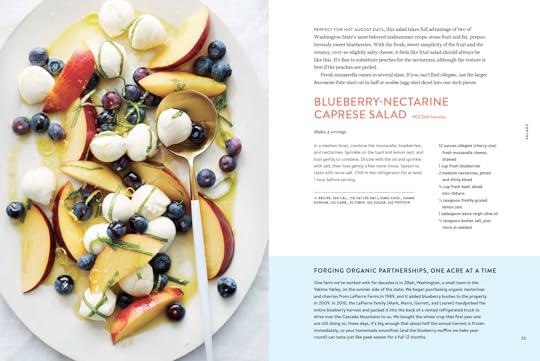
There were lots of gorgeous color photos (maybe one for every third recipe?) but I sometimes found them a bit misleading for the purpose of food styling. For instance, the roasted cherry tomatoes are shown in a pool of olive oil with herbs sprinkled on them, even though the actual recipe calls for only a tablespoon of oil and no herbs. It did make the dish look fabulous, but doesn't necessarily represent what the finished dish will actually look like -- especially for an inexperienced cook.
The book is health conscious, in the most fashionable ways at the moment. Dietary advice is constantly changing (eggs are bad, fat is bad, carbs are bad, soy is bad, wheat is bad, low-fat is bad... eat more eggs, coconut oil and butter will save you... eat lots of grains, all grains are bad, eat whole grains...) and it definitely represents the "in" nutritional advice of our time (choose grass fed beef, whole dairy, more exotic grains, non-GMO foods, herbs like turmeric, etc.). For the record, I agree with most of this advice, but I also know that every decade sees pretty different changes when it comes to what everybody decides is healthy and cookbooks with dietary advice never age as well as we think they will at the time.
There were some sections I liked in the book, especially the basic "formula" for how to make things like energy bars and marinades (first use this kind of ingredient, then some of this kind of ingredient...).
I also appreciated that it included nutritional information for each recipe. They are a little sneaky in this, though -- they recommend whole fat dairy in the book itself but they say in the nutritional section that it's calculated with reduced fat dairy ingredients. So if you cook with whole fat dairy the way they suggest, the calorie and fat counts will be higher than they say.
Many cookbooks provide some sort of symbol on recipes that are gluten free, quick, vegan, etc. This one does not, so you'll need to skim each recipe to see if it meets any dietary needs your family has.
Overall, this is a gorgeous book and will be good for a wide audience, but it isn't my type of cooking from scratch. I cook simple things from scratch -- buns, mashed potatoes, soups, curries, veggie burgers, etc. In our family we grind our own gluten free grains and cook things like pasta from scratch, with a combination of healthy grains and starches. We do more hard core cooking from scratch too, doing things like processing acorns into acorn flour and canning elderberry juice for elderberry lemonade and elderberry meringue pie. We tend to use what we can find in our own garden or in the wild, not what we can buy in an upscale urban food co-op. I thought by "cooking from scratch" would mean more in terms of making basic foods (breads, buns, mayo, salad dressing, cake, sauces, spice mixes, etc.) but this is mainly just recipes for specific dishes from scratch where you go to the market with an ingredient list in hand. So while it's a beautiful book that will please many folks, it wasn't particularly inspiring for me personally.
RECIPE EXAMPLES: Stir fried cabbage with fried eggs, warm grapefruit with honey and ginger, tiger mountain turkey chili, asparagus vichyssoise, grilled corn salad with goat cheese, preserved lemon with anchovies and fennel, fennel and basil lasagne, roasted leg of lamb stuffed with roasted herbs and garlic, grass-fed prime rib with fresh herbs, halibut with ginger-rhubarb sauce, sherried leek and chanterelle gravy, oven roasted caponata, emmer farro with tangerines and persimmons, spicy tofu and spelt, quinoa enchilada bake, grilled plum and nectarine salsa, mango and avocado fresh rolls, lentil and walnut pate, hibiscus tea concentrate, cold brewed coffee, mango lassi, kimchi bloody mary, avocado brownies, plum hand pies and cherry balsamic upside down cake.
The book will be available in Kindle or paperback, and is set to be released September 18, 2018.
I was able to read a temporary digital ARC of this book for the purpose of review.