

What do you think?

Tales of the Jedi
Star Wars: Tales of the Jedi, Vol. 1: The Golden Age of the Sith
Marka Ragnos ruled the galaxy with an iron fist. He was the Dark Lord of the Sith -- the most powerful of the most powerful. But now he is dead. And two innocent hyperspace explorers, Gav and Jori Daragon, may follow suit if they get caught between the factions fighting to fill the Dark Lord void.
144 pages, Paperback
First published September 10, 1997
About the author
Kevin J. Anderson
1,093 books3,190 followersYes, I have a lot of books, and if this is your first visit to my amazon author page, it can be a little overwhelming. If you are new to my work, let me recommend a few titles as good places to start. I love my Dan Shamble, Zombie P.I. series, humorous horror/mysteries, which begin with DEATH WARMED OVER. My steampunk fantasy adventures, CLOCKWORK ANGELS and CLOCKWORK LIVES, written with Neil Peart, legendary drummer from Rush, are two of my very favorite novels ever. And my magnum opus, the science fiction epic The Saga of Seven Suns, begins with HIDDEN EMPIRE. After you've tried those, I hope you'll check out some of my other series.
I have written spin-off novels for Star Wars, StarCraft, Titan A.E., and The X-Files, and I'm the co-author of the Dune prequels. My original works include the Saga of Seven Suns series and the Nebula Award-nominated Assemblers of Infinity. I have also written several comic books including the Dark Horse Star Wars collection Tales of the Jedi written in collaboration with Tom Veitch, Predator titles (also for Dark Horse), and X-Files titles for Topps.
I serve as a judge in the Writers of the Future contest.
My wife is author Rebecca Moesta. We currently reside near Monument, Colorado.
I have written spin-off novels for Star Wars, StarCraft, Titan A.E., and The X-Files, and I'm the co-author of the Dune prequels. My original works include the Saga of Seven Suns series and the Nebula Award-nominated Assemblers of Infinity. I have also written several comic books including the Dark Horse Star Wars collection Tales of the Jedi written in collaboration with Tom Veitch, Predator titles (also for Dark Horse), and X-Files titles for Topps.
I serve as a judge in the Writers of the Future contest.
My wife is author Rebecca Moesta. We currently reside near Monument, Colorado.
Ratings & Reviews
Friends & Following
Create a free account to discover what your friends think of this book!
Community Reviews
Displaying 1 - 30 of 76 reviews

March 11, 2017
I always worry when I read a Star Wars story from long before the main storyline I have grown up with, it will be too different and I won't like it (and that has happened before). Luckily, that was not the case this time.
This graphic novel was great! It is the earliest graphic novel in the Star Wars Legends timeline. For those who are unaware, the Legends timeline are the stories that were declared unconnected to the main storylines in the movies. While there will be familiar themes and characters, there may be events or plot points that don't mesh with the universe of the movies.
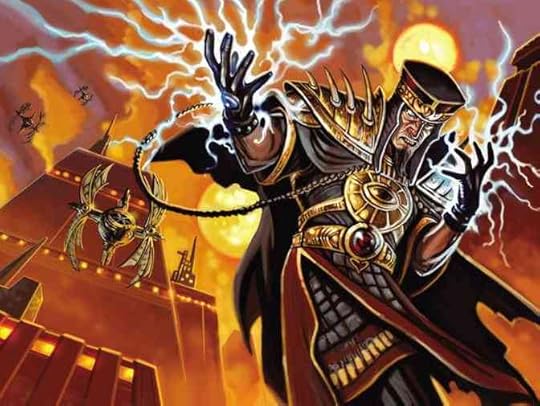
I thought the story and the artwork were great! I was drawn in after a few pages and now find myself comfortable with this time period in the overall storyline. I even recognized at least one name found in the Lost Tribe of the Sith Stories.
Hardcore Star Wars fans and Graphic Novel buffs, you cannot go wrong here!
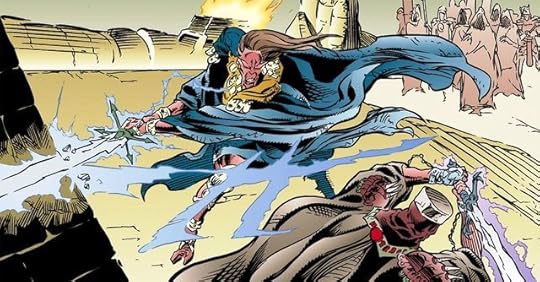
This graphic novel was great! It is the earliest graphic novel in the Star Wars Legends timeline. For those who are unaware, the Legends timeline are the stories that were declared unconnected to the main storylines in the movies. While there will be familiar themes and characters, there may be events or plot points that don't mesh with the universe of the movies.
I thought the story and the artwork were great! I was drawn in after a few pages and now find myself comfortable with this time period in the overall storyline. I even recognized at least one name found in the Lost Tribe of the Sith Stories.
Hardcore Star Wars fans and Graphic Novel buffs, you cannot go wrong here!

July 26, 2018
In preparation for my yearly playthrough of KOTOR I and II, I felt it apropos to reread the comics that set the stage for their stories. As much as I enjoyed them in my youth – upon a sequential read, Golden Age of the Sith is even more evidently riddled with all the intrinsic flaws of the Star Wars universe no matter how positive any of its own personal positives may be. With little room for complexity let alone nuance – Golden Age of the Sith is merely another good ol’ fashioned Good Vs. Evil tale with merely a different panoply of cosmetic choices.
On prima facie, these visual choices are stupendous. The details are strong enough to keep your attention and stronger still to reward a more investigative assessment of a lingering eye or two. Firmly binding the universe of Star Wars with an unmistakably Ancient Egyptian veneer, great choices were made to bind what we know, with the new that will be presented. Yet, for all the pleasant eye-candy; no sleight against the eyes can cover a multitude of sins in the narrative department.
We’ve got our protagonists: Gav and Jori Daragon. The progeny of soon to be murdered semi-altruistic interstellar merchants who just happened to be in the wrong laser-blasting environ at the wrong time. Their penury can only worsen as their final asset the StarBreaker 12 is taken in by a competitor and drastic measures are to be taken. Somewhat predictably yet, no entirely unenjoyably – desperate measures toward lucre bring them toward Sith space with the most random of hyperspace coordinates chosen.
From here on out, the tale devolves into its irritatingly simplistic, inertial morality with heaping helpings of comic book muck. While there are definitely some cool parts, by and large its merely more of the same sans a much needed helping of charm and an overwhelmingly large dose of faux history. So when everything is wrapped with (kind of) a pretty pink bow at the end, I couldn’t have been even less surprised.
Add sugar to taste.
On prima facie, these visual choices are stupendous. The details are strong enough to keep your attention and stronger still to reward a more investigative assessment of a lingering eye or two. Firmly binding the universe of Star Wars with an unmistakably Ancient Egyptian veneer, great choices were made to bind what we know, with the new that will be presented. Yet, for all the pleasant eye-candy; no sleight against the eyes can cover a multitude of sins in the narrative department.
We’ve got our protagonists: Gav and Jori Daragon. The progeny of soon to be murdered semi-altruistic interstellar merchants who just happened to be in the wrong laser-blasting environ at the wrong time. Their penury can only worsen as their final asset the StarBreaker 12 is taken in by a competitor and drastic measures are to be taken. Somewhat predictably yet, no entirely unenjoyably – desperate measures toward lucre bring them toward Sith space with the most random of hyperspace coordinates chosen.
From here on out, the tale devolves into its irritatingly simplistic, inertial morality with heaping helpings of comic book muck. While there are definitely some cool parts, by and large its merely more of the same sans a much needed helping of charm and an overwhelmingly large dose of faux history. So when everything is wrapped with (kind of) a pretty pink bow at the end, I couldn’t have been even less surprised.
Add sugar to taste.

April 24, 2022
It was ok.
What can I say? It was ok because I'm biased towards Star Wars stories?
If you wanna read this, then prepare, for the 2 main characters are the most naive, dumb human beings you've ever met in your life. They are the reason everything bad happens and they don't even know it. They're so stupid and oblivious to what happens around them that they're the ones who accidentally set race wars in motion and it's not even interesting or fun to read. Half the time you just cringe and try to convince yourself that they're not adult humans and they're newborn babies making decisions like that because you have to convince yourself somehow with what just happened and find it logical.
So, to sum up. Main characters trying to survive after a tragic loss, and they do dumb things throughout the series. Gav and Jori Daragon are dumber than Jar Jar Binks.
What can I say? It was ok because I'm biased towards Star Wars stories?
If you wanna read this, then prepare, for the 2 main characters are the most naive, dumb human beings you've ever met in your life. They are the reason everything bad happens and they don't even know it. They're so stupid and oblivious to what happens around them that they're the ones who accidentally set race wars in motion and it's not even interesting or fun to read. Half the time you just cringe and try to convince yourself that they're not adult humans and they're newborn babies making decisions like that because you have to convince yourself somehow with what just happened and find it logical.
So, to sum up. Main characters trying to survive after a tragic loss, and they do dumb things throughout the series. Gav and Jori Daragon are dumber than Jar Jar Binks.

May 16, 2024
Fabula spoko, fajnie zarysowany glowny złol, zakończenie sprawia, ze chce sie siegnac po nastepna część, chociaz glowni bohaterowie totalnie bez wyrazu i jakos nie nabralem ochoty by im kibicowac.
Zastanawia mnie tylko jedno: co to za kreska xD dlaczego wszystko ma jakis taki owadzi charakter (statki przypominaja wielkie robale) xD ludzkie postacie szkaradne, tak samo obce rasy, Odan-Urr wyglada komicznie (jak on w ogole jest w stanie mowic???) tla bardzo umowne, no slabo to wyglada i tylko sithowie daja rade i jakos ratuja komiks przed graficzną katastrofą.
Fajnie było sobie sięgnąć po inspirację pod setting mojego ukochanego kotorka, ale ta kreska....
Zastanawia mnie tylko jedno: co to za kreska xD dlaczego wszystko ma jakis taki owadzi charakter (statki przypominaja wielkie robale) xD ludzkie postacie szkaradne, tak samo obce rasy, Odan-Urr wyglada komicznie (jak on w ogole jest w stanie mowic???) tla bardzo umowne, no slabo to wyglada i tylko sithowie daja rade i jakos ratuja komiks przed graficzną katastrofą.
Fajnie było sobie sięgnąć po inspirację pod setting mojego ukochanego kotorka, ale ta kreska....

October 23, 2016
After writing The Sith War, Kevin J. Anderson wrote two prequel story arcs for the Tales of the Jedi Comic book series. The first of these two arcs was Golden Age of the Sith, taking place 5,000 years before Luke Skywalker was born and 1,000 years before the time of Ulic Qel-Droma. Up until Star Wars: Dawn of the Jedi came out, along with the tie-in novel Into the Void, Golden Age of the Sith was the earliest story to take place in the Star Wars timeline.
I have been waiting for Redemption to come in the mail, but my friend lent me a copy of Golden Age of the Sith. Because Golden Age of the Sith actually came out first, I decided to read and review this one first.
Golden Age of the Sith is the best volume that I have read of Tales of the Jedi by far. The volumes have steadily improved over time, but this took the series to the next level. I enjoyed Tales of the Jedi: The Collection and Dark Lords of the Sith as guilty pleasures, but they both suffered badly from sub-par artwork, underdeveloped characters, and extremely clunky writing that fell back on obnoxious and excessive narration. The Sith War was ok, but nothing great.
This is the first time that Tales of the Jedi became truly great for me, and not just a dated guilty pleasure. In all honesty, you could read this and skip the other volumes- while it has easter eggs from the main story arc focusing on Ulic Qel-Droma, this prequel largely tells its own story. Speaking of which...
THE STORY: Gav and Jori Daragon are siblings from the Koros System (which would be called the Empress Teta System by the time of Ulic Qel-Droma) who make a living exploring hyperspace to find new routes. However, after their parents are killed in the Unification Wars orchestrated by Empress Teta herself, Gav and Jori fall on hard times, and stack up a debt to Aarrba the Hutt that they are unable to pay. They escape the Koros System after stealing back the "Starbreaker 12", their personal ship, punch in random hyperspace coordinates, and jump to lightspeed.
The siblings end up reaching the sith homeworld of Korriban, where the Sith Lord Marka Ragnos has just died, to be replaced by two young and ambitious sith lords named Naga Sadow and Ludo Kressh. Gav and Jori just want to go home, but Naga Sadow has other plans.
THE BAD: The comic starts out a little choppy, falling back on the excessive narration that plagued the other volumes.
The storytelling is also unfocused, in that the story arc starts out about Gav and Jori Daragon but then it becomes more about Naga Sadow and Ludo Kressh. It feels a little bit like Revan in that it takes until the very end for all the subplots to connect.
THE GOOD: The improvements made from the previously written story arcs in Tales of the Jedi feels like Light and Day.
The characters are much more interesting than they previously were before. Gav and Jori have a great dynamic. There was some pretty good banter between the two and I felt scared for them when they were stuck in their predicaments with Aarrba the Hutt and Naga Sadow. Speaking of which, Naga Sadow is the best character the series has had to offer so far. I like how devious and cunning he is but also an interesting character in that I didn't manage to predict what he was going to do next.
The artwork is really good too. The action could have been done better, but there is lots of detail in the characters and most of the backgrounds and a vivid and beautiful color scheme to support it. This is absolutely the best artwork i have seen from the series.
The main storyline may have been unfocused, but the subplots were both really good, and they come together excellently at the end. The first part is character focused and we get a touching story about Gav and Jori, and then we get political intrigue when we reach Korriban and start fleshing out Naga Sadow and Ludo Kressh. I also really liked the dynamic between Gav and Jori and Naga Sadow and the manipulation that took place. Finally, the cliffhanger at the end left me at the edge of my seat.
The worldbuilding is also pretty interesting, in that we get to see a young Odan Urr before he becomes a great jedi master during Ulic Qel-Droma's time and the Koros system before it becomes the Empress Teta System. We also get to see a different looking Korriban than what we saw in Dark Lords of the Sith and The Sith War, as well as our very first look at Ziost, a planet that plays an important role in SWTOR.
The writing is far better than it has ever been. The beginning was a bit choppy with the narration but by the end it was almost nonexistent. Anderson also toned back the dialogue bubbles and let the visuals tell the story on their own. In other words, it felt like what a comic book should be- minimal text boxes (and it should be dialogue if its more than one word), so all we need is the pictures in every panel.
THE CONCLUSION: Golden Age of the Sith was a very pleasant surprise. The previous volumes were clunky and dated, but this one hasn't aged that badly. You could actually read this one without reading the other volumes centered on Ulic Qel Droma and get a very interesting look at the ancient galaxy, still told in that same fairy tale style that the other volumes were told in (only done much better). For those of you that are turned off by the term "prequel" because of George Lucas' infamous film trilogy, this is proof that not all prequels are bad. If you can find a copy, I'd give this a read.
I have been waiting for Redemption to come in the mail, but my friend lent me a copy of Golden Age of the Sith. Because Golden Age of the Sith actually came out first, I decided to read and review this one first.
Golden Age of the Sith is the best volume that I have read of Tales of the Jedi by far. The volumes have steadily improved over time, but this took the series to the next level. I enjoyed Tales of the Jedi: The Collection and Dark Lords of the Sith as guilty pleasures, but they both suffered badly from sub-par artwork, underdeveloped characters, and extremely clunky writing that fell back on obnoxious and excessive narration. The Sith War was ok, but nothing great.
This is the first time that Tales of the Jedi became truly great for me, and not just a dated guilty pleasure. In all honesty, you could read this and skip the other volumes- while it has easter eggs from the main story arc focusing on Ulic Qel-Droma, this prequel largely tells its own story. Speaking of which...
THE STORY: Gav and Jori Daragon are siblings from the Koros System (which would be called the Empress Teta System by the time of Ulic Qel-Droma) who make a living exploring hyperspace to find new routes. However, after their parents are killed in the Unification Wars orchestrated by Empress Teta herself, Gav and Jori fall on hard times, and stack up a debt to Aarrba the Hutt that they are unable to pay. They escape the Koros System after stealing back the "Starbreaker 12", their personal ship, punch in random hyperspace coordinates, and jump to lightspeed.
The siblings end up reaching the sith homeworld of Korriban, where the Sith Lord Marka Ragnos has just died, to be replaced by two young and ambitious sith lords named Naga Sadow and Ludo Kressh. Gav and Jori just want to go home, but Naga Sadow has other plans.
THE BAD: The comic starts out a little choppy, falling back on the excessive narration that plagued the other volumes.
The storytelling is also unfocused, in that the story arc starts out about Gav and Jori Daragon but then it becomes more about Naga Sadow and Ludo Kressh. It feels a little bit like Revan in that it takes until the very end for all the subplots to connect.
THE GOOD: The improvements made from the previously written story arcs in Tales of the Jedi feels like Light and Day.
The characters are much more interesting than they previously were before. Gav and Jori have a great dynamic. There was some pretty good banter between the two and I felt scared for them when they were stuck in their predicaments with Aarrba the Hutt and Naga Sadow. Speaking of which, Naga Sadow is the best character the series has had to offer so far. I like how devious and cunning he is but also an interesting character in that I didn't manage to predict what he was going to do next.
The artwork is really good too. The action could have been done better, but there is lots of detail in the characters and most of the backgrounds and a vivid and beautiful color scheme to support it. This is absolutely the best artwork i have seen from the series.
The main storyline may have been unfocused, but the subplots were both really good, and they come together excellently at the end. The first part is character focused and we get a touching story about Gav and Jori, and then we get political intrigue when we reach Korriban and start fleshing out Naga Sadow and Ludo Kressh. I also really liked the dynamic between Gav and Jori and Naga Sadow and the manipulation that took place. Finally, the cliffhanger at the end left me at the edge of my seat.
The worldbuilding is also pretty interesting, in that we get to see a young Odan Urr before he becomes a great jedi master during Ulic Qel-Droma's time and the Koros system before it becomes the Empress Teta System. We also get to see a different looking Korriban than what we saw in Dark Lords of the Sith and The Sith War, as well as our very first look at Ziost, a planet that plays an important role in SWTOR.
The writing is far better than it has ever been. The beginning was a bit choppy with the narration but by the end it was almost nonexistent. Anderson also toned back the dialogue bubbles and let the visuals tell the story on their own. In other words, it felt like what a comic book should be- minimal text boxes (and it should be dialogue if its more than one word), so all we need is the pictures in every panel.
THE CONCLUSION: Golden Age of the Sith was a very pleasant surprise. The previous volumes were clunky and dated, but this one hasn't aged that badly. You could actually read this one without reading the other volumes centered on Ulic Qel Droma and get a very interesting look at the ancient galaxy, still told in that same fairy tale style that the other volumes were told in (only done much better). For those of you that are turned off by the term "prequel" because of George Lucas' infamous film trilogy, this is proof that not all prequels are bad. If you can find a copy, I'd give this a read.
September 9, 2024
Giga fajny mocny wstęp, ale nie rozumiem pewnej rzeczy z związanej z genetyką i to mnie trapi

December 11, 2024
Interesting but not amazing. Definitely a set-up story and it very much feels that way. I will be interested to see if my opinion changes when I finish the other storylines in this series

November 19, 2019
A wonderful tale from the times of the Old Republic. Taking place several thousand years before the rise of the Empire, this is the tale of the Ancient Sith.
On Korriban, the Sith homeworld, Marka Ragnos has died. He was the last Dark Lord and now the lesser lords vie for power. The two leading lords are Ludo Kressh and Naga Sadow. Ludo is conservative and reveres the ritualistic old ways, while Naga wishes to expand the Sith Empire.
We also meet Odan Urr, who at this point is a young Jedi. Urr is very fond of studying the old histories. He stumbles on a shocking discovery- the Dark Jedi who were exiled weren't dead, they had become something else.
We find that the Dark Jedi who were exiled during the Great Schism, the war between practioners of the light and dark sides, had moved into unknown space and found the native force sensitive Sith species. Over time and interbreeding the Dark Jedi and Sith became one and the same.
As this is going on, two spoiled brat siblings stumble onto Sith space and inadvertently gives away the location and existence of the Republic. A war breaks out between the followers of Kressh and Sadow for supremacy.
Odan Urr senses a grave disturbance in the force and tries to warn the Republic. The Sith are coming.
A great tale from the Golden Age of the Sith Empire. The artwork is actually quite good, considering the time, and the story is amazing. Forget the modern nonsense that is trying to be passed off for Star Wars. Certainly ignore Kylo Ren. This is what the Sith are like. This is real Star Wars.
A classic that should be a must read for any Star Wars fan.
On Korriban, the Sith homeworld, Marka Ragnos has died. He was the last Dark Lord and now the lesser lords vie for power. The two leading lords are Ludo Kressh and Naga Sadow. Ludo is conservative and reveres the ritualistic old ways, while Naga wishes to expand the Sith Empire.
We also meet Odan Urr, who at this point is a young Jedi. Urr is very fond of studying the old histories. He stumbles on a shocking discovery- the Dark Jedi who were exiled weren't dead, they had become something else.
We find that the Dark Jedi who were exiled during the Great Schism, the war between practioners of the light and dark sides, had moved into unknown space and found the native force sensitive Sith species. Over time and interbreeding the Dark Jedi and Sith became one and the same.
As this is going on, two spoiled brat siblings stumble onto Sith space and inadvertently gives away the location and existence of the Republic. A war breaks out between the followers of Kressh and Sadow for supremacy.
Odan Urr senses a grave disturbance in the force and tries to warn the Republic. The Sith are coming.
A great tale from the Golden Age of the Sith Empire. The artwork is actually quite good, considering the time, and the story is amazing. Forget the modern nonsense that is trying to be passed off for Star Wars. Certainly ignore Kylo Ren. This is what the Sith are like. This is real Star Wars.
A classic that should be a must read for any Star Wars fan.

September 28, 2023
Re-read. Perhaps not as awesome as I remember, b/c my whole understanding and enjoyment of the Wars universe, in retrospect, has become grounded in this; and after a few decades of pondering in the background over its implications, that has come to set the bar pretty high. In the years since I first made acquintance of Jori, Gav, Aarba and Odan-Urr, my taste in artwork has also narrowed to leave this a ways outside of my favourite type of graphical esthetics.
All that being said, I once more enjoyed it immensely! Especially the overall atmosphere; and the setting & art direction, and culture, of the Sith Empire. Yes, I may not be as impressed now as I was a quarter-century ago, but this still is the epitome of Wars entertainment for me.
All that being said, I once more enjoyed it immensely! Especially the overall atmosphere; and the setting & art direction, and culture, of the Sith Empire. Yes, I may not be as impressed now as I was a quarter-century ago, but this still is the epitome of Wars entertainment for me.

January 10, 2012
L'histoire de cette bande dessinée se passe 5000 ans avant les événements qui ont mené à la destruction de la première Death Star. Gav et Jori Daragon se retrouvent orphelin après une guerre qui a tué leurs parents. Ils devient donc navigateurs et essaient de trouver des nouvelles routes dans l'hyperespace pour gagner leur vie. Cependant, une de leur route qui était trop risqué leur cause des graves ennuis avec celui qui l'a acheté et doivent quitter leur planète en vitesse et se retrouvent par hasard sur la planète Korriban. Cette planète est celle de l'origine des Sith. Deux factions, celle de Naga Sadow et celle de Ludo Kressh se combattent pour être à la tête de l'empire Sith. Sadow utilisera donc les deux nouveaux arrivant pour créer une peur d'une invasion de la République pour convaincre les autres Sith de se joindre à lui dans une politique d'expansion de l'empire.
Pour le positif, j'ai bien aimé de voire la race originale de Sith et de connaître leur origine. J'ai aussi aimé voir comment vivaient et quels étaient les coutumes des premiers Sith et des premiers Jedi. De plus, c'est bien de voir que tout ne tourne pas toujours autour des Skywalker.
Pour le négatif, je n'aime pas beaucoup les dessins dans cette BD. Je crois que ça aurait pu être bien mieux. De plus, je n'aime pas le look greco-romain dans l'habillement des personnages. Je trouve que ça ne marche pas dans une histoire comme Star Wars, même si l'histoire se passe plusieurs milliers d'années avant les évènements des films. En plus, les vaisseaux sont vraiment affreux.
Pour ce qui est de l'histoire, c'est plutôt ordinaire. Je crois qu'il y avait place à vraiment mieux.
Pour le positif, j'ai bien aimé de voire la race originale de Sith et de connaître leur origine. J'ai aussi aimé voir comment vivaient et quels étaient les coutumes des premiers Sith et des premiers Jedi. De plus, c'est bien de voir que tout ne tourne pas toujours autour des Skywalker.
Pour le négatif, je n'aime pas beaucoup les dessins dans cette BD. Je crois que ça aurait pu être bien mieux. De plus, je n'aime pas le look greco-romain dans l'habillement des personnages. Je trouve que ça ne marche pas dans une histoire comme Star Wars, même si l'histoire se passe plusieurs milliers d'années avant les évènements des films. En plus, les vaisseaux sont vraiment affreux.
Pour ce qui est de l'histoire, c'est plutôt ordinaire. Je crois qu'il y avait place à vraiment mieux.

January 17, 2011
Golden Age of the Sith is the earliest fiction work in the Star Wars Universe to date, and my personality is such that I always like to start at the beginning. I'm a fan of the movies, have a read a number of books, but wouldn't call myself a "study" of the universe... and from that perspective I found GAOTS to be interesting but not superb.
I imagine it has to be hard to backup almost 5,000 years from an established storyline in a vibrant "world" filled with familiar characters. Also, this wasn't the first precursory work, so some might get more of a kick out of it when they've read other stories that stem from this history. But what they've done in Golden Age of the Sith is a lot of fun and really starts to get interesting by the end.
The artwork is very good throughout, and I appreciated the difficult task of moving backwards technologically 5,000 years. It's a balancing act to show something old, but not so old it wouldn't advance enough to work by the time of Star Wars & The Battle of Yavin. Well done especially in that regard.
To be fair, getting a storyline going is a difficult task in a comic book form, as room for exposition is limited and all new, unfamiliar characters are presented. What I AM excited for after reading GAOTS is the next series and how the events continue to unfold. This story is not complete by any means, and it's fun to be on the journey.
I imagine it has to be hard to backup almost 5,000 years from an established storyline in a vibrant "world" filled with familiar characters. Also, this wasn't the first precursory work, so some might get more of a kick out of it when they've read other stories that stem from this history. But what they've done in Golden Age of the Sith is a lot of fun and really starts to get interesting by the end.
The artwork is very good throughout, and I appreciated the difficult task of moving backwards technologically 5,000 years. It's a balancing act to show something old, but not so old it wouldn't advance enough to work by the time of Star Wars & The Battle of Yavin. Well done especially in that regard.
To be fair, getting a storyline going is a difficult task in a comic book form, as room for exposition is limited and all new, unfamiliar characters are presented. What I AM excited for after reading GAOTS is the next series and how the events continue to unfold. This story is not complete by any means, and it's fun to be on the journey.
August 23, 2013
I have to say, I enjoyed this story more than I thought I would have. The story itself was on focused on a brother and sister named Gav and Jori Daragon who are hyperspace navigators. While getting exploring they stumble upon the planet Korriban and get captured by Sith Lords.
It was really interesting to finally read the story on the infamous Naga Sadow that is so often referenced in stories as well as Ludo Kressh. Also, though he is dead in the story, Marka Ragnos is also heavily referred to. You really get a better understanding of the ancient Sith and the Sith in general. Also, you get to find out more about the mysterious Massassi that built the Temples on Yavin 4 in “A New Hope.” I also liked how we gain more insight to the Jedi as well during this time, such as the power packs that lightsabers have to be hooked up to. I would imagine fighting with those would be difficult.
Also, it was cool to see that the symbol for the “Old Republic” era (sometimes referred to as the “Sith Era”) is from this story. It’s the symbol that is placed on Naga Sadow’s forehead as a sign of power. Very cool, and a very interesting story all together. I look forward to rereading this in the future.
It was really interesting to finally read the story on the infamous Naga Sadow that is so often referenced in stories as well as Ludo Kressh. Also, though he is dead in the story, Marka Ragnos is also heavily referred to. You really get a better understanding of the ancient Sith and the Sith in general. Also, you get to find out more about the mysterious Massassi that built the Temples on Yavin 4 in “A New Hope.” I also liked how we gain more insight to the Jedi as well during this time, such as the power packs that lightsabers have to be hooked up to. I would imagine fighting with those would be difficult.
Also, it was cool to see that the symbol for the “Old Republic” era (sometimes referred to as the “Sith Era”) is from this story. It’s the symbol that is placed on Naga Sadow’s forehead as a sign of power. Very cool, and a very interesting story all together. I look forward to rereading this in the future.

January 11, 2015
Jedi VS Sith, eso es lo que trata Star Wars, pero ¿de dónde salió dicha disputa? La Luz contra La Oscuridad. Ambos de origen Jedi, unos estudiosos de la luz, otros de la oscuridad. Enfrentados, y desterrados aquellos oscuros. Llegados al planeta de los Sith, a quien esclavizaron y a algunos enseñaron sus oscuras practicas. Ahí empieza esta primera trama, La República y los Jedi de la Luz sumergidos en la pasada confianza, mientras muy lejos un par de hermanos (con gran potencial de Fuerza en ellos, pero nada estudiosos en su ciencia) escapan de su mala suerte y llegan a un punto en el universo fuera de los alcances de La República, justo en el momento en que el ultimo Dark Lord de los Sith (Jedi de la Oscuridad) ha muerto y sus posibles sucesores se disputen su lugar, uno queriendo preservar la grandeza de los Señores Sith y el otro conservar la pasividad en la cual habitaban desde su destierro...dando paso las primeras guerras entre La República y sus Jedis contra El Imperio y sus Sith.
Genial inicio de la Era de la Antigua República del Universo Expandido de Star Wars.
Genial inicio de la Era de la Antigua República del Universo Expandido de Star Wars.

January 17, 2016
History of the Sith Empire. Tells how exiled Jedi interbred with a race from another galaxy to become the scourge of the Jedi. Interesting tale set 5000+ years before the Star Wars movies. Has a very ancient feel to it, but the Sith Lords definitely feel right. Good for those wanting a detailed history to the Star Wars saga. Casual readers may find the lack of recognizable characters off-putting.

September 10, 2013
This was awful. It honestly feels like the head writer for the old Adam West TV show wrote this book. It was badly exposited, and clumsily executed. It even feels a little like fan fiction written by an angstless high school student. I would avoid this book.
November 4, 2015
A huge step up from the previous Tales of the Jedi comics. The art looks decent and there's actually a coherent plot and character who really do things and work towards specific goals with reasonable motivations. Not a great comic, but something that is actually enjoyable to read.

August 29, 2017
You know that emoji that has the guy/girl shrugging? That's pretty much how I felt after finishing Anderson's Golden Age of the Sith, basically an image equivalent with a very mediocre uttering of "meh".
I get what Golden Age of the Sith stands for, and it's relative importance in the Star Wars legends line. I also understand it's significance among fans, the historical aspects it entails in both fiction and general Star Wars lore, and, even though I found it fairly boring and Star Wars in name only, can see why it's still such a popular series and one that brought Dark Horse to the forefront of comic book publishing back in the 90's.
Still though, that's not really an excuse for an otherwise lackluster and uninspired Star Wars storyline. Yes, there's some history of the Sith, but that's about it. In and of themselves, the Sith aren't anything special in this storyline. They're really just badly drawn, badly executed antagonists to the Old Republic, and could have basically been any species of non human ancestry. Anderson tries to give them a backstory and tries to make them the bad ass dark Jedis that they're supposed to regarded as, but I found them to be cookie-cutter representations of all baddies in the Star Wars universe, and really quite confusing. Both of the Siths fighting for power looked the same, had incredibly similar names and had no real distinguishing features to tell them apart. Illustrations from Gosset and Woch didn't help much either; although not entirely their fault, line work and coloring was simply not up to par with modern day standards and left many scenes looking like previous ones.
I admit that a large part of the reason I wasn't a big fan of The Golden Age is because, quite simply, I'm not really a follower of the Old Republic storylines. I'm all for the history of the Star Wars universe, seeing past the fight of the Rebels against Palpatine's Imperial Alliance, but going back 20,000 plus years to storylines that even Lucas himself didn't come up with, isn't exactly my cup of tea. I suppose if this ancient history was written better or had more creativity to it, I might be more willing to jump on that bandwagon, however, The Golden Age wasn't that. In a way, I can kind of understand why Disney came through and cut out 90% of the stuff from the canon, moving it over to the more fan-fiction-esque and speculative Legends line. Yes, there is still some decent stuff to be found in the cast off works, but Anderson's Golden Age of the Sith, unfortunately isn't one of those. Being a fan of the Star Wars franchise (and a more recent convert to the literature and graphic novel side of things), reading this particular comic might not be "essential", though it's good example of how crazy and "out there" the series can get. Doesn't mean it's all that great though.
I get what Golden Age of the Sith stands for, and it's relative importance in the Star Wars legends line. I also understand it's significance among fans, the historical aspects it entails in both fiction and general Star Wars lore, and, even though I found it fairly boring and Star Wars in name only, can see why it's still such a popular series and one that brought Dark Horse to the forefront of comic book publishing back in the 90's.
Still though, that's not really an excuse for an otherwise lackluster and uninspired Star Wars storyline. Yes, there's some history of the Sith, but that's about it. In and of themselves, the Sith aren't anything special in this storyline. They're really just badly drawn, badly executed antagonists to the Old Republic, and could have basically been any species of non human ancestry. Anderson tries to give them a backstory and tries to make them the bad ass dark Jedis that they're supposed to regarded as, but I found them to be cookie-cutter representations of all baddies in the Star Wars universe, and really quite confusing. Both of the Siths fighting for power looked the same, had incredibly similar names and had no real distinguishing features to tell them apart. Illustrations from Gosset and Woch didn't help much either; although not entirely their fault, line work and coloring was simply not up to par with modern day standards and left many scenes looking like previous ones.
I admit that a large part of the reason I wasn't a big fan of The Golden Age is because, quite simply, I'm not really a follower of the Old Republic storylines. I'm all for the history of the Star Wars universe, seeing past the fight of the Rebels against Palpatine's Imperial Alliance, but going back 20,000 plus years to storylines that even Lucas himself didn't come up with, isn't exactly my cup of tea. I suppose if this ancient history was written better or had more creativity to it, I might be more willing to jump on that bandwagon, however, The Golden Age wasn't that. In a way, I can kind of understand why Disney came through and cut out 90% of the stuff from the canon, moving it over to the more fan-fiction-esque and speculative Legends line. Yes, there is still some decent stuff to be found in the cast off works, but Anderson's Golden Age of the Sith, unfortunately isn't one of those. Being a fan of the Star Wars franchise (and a more recent convert to the literature and graphic novel side of things), reading this particular comic might not be "essential", though it's good example of how crazy and "out there" the series can get. Doesn't mean it's all that great though.
November 23, 2025
This was actually a lot better than I expected. Set 5,000 years before the original trilogy, Golden Age of the Sith delivers a really cool serving of Star Wars mythology that manages to feel both entirely fresh and authentically Star Wars despite having very few familiar elements.
The characters are a major strength. From the Sith lords to the bumbling sibling duo of Gav and Jori Daragon, everyone feels unique yet perfectly fitting within the Star Wars galaxy. Kevin J. Anderson demonstrates real skill when leaning into the mythological side of the Sith and their culture—his worldbuilding here is genuinely impressive. My only complaint on the character front is that the Jedi didn't really get a chance to shine yet.
The art really nails the unique feel of the setting. I wasn't sold on the preview volume #0's art style, but once the series properly starts, the visuals work beautifully to establish this ancient era as something distinct. That said, action sequences were often difficult to follow, which occasionally pulled me out of the story.
The series does rely heavily on exposition, but given the amount of unfamiliar ground it needs to cover, this feels understandable rather than lazy. And yes, it ends on a cliffhanger leading into The Fall of the Sith Empire, which naturally has me excited to continue.
Kevin J. Anderson has a questionable reputation in some corners of the fandom, but I find he's very strong when exploring the mythological aspects of Star Wars lore. If you're interested in the deeper history of the Sith and don't mind heavy worldbuilding, this is absolutely worth your time.
The characters are a major strength. From the Sith lords to the bumbling sibling duo of Gav and Jori Daragon, everyone feels unique yet perfectly fitting within the Star Wars galaxy. Kevin J. Anderson demonstrates real skill when leaning into the mythological side of the Sith and their culture—his worldbuilding here is genuinely impressive. My only complaint on the character front is that the Jedi didn't really get a chance to shine yet.
The art really nails the unique feel of the setting. I wasn't sold on the preview volume #0's art style, but once the series properly starts, the visuals work beautifully to establish this ancient era as something distinct. That said, action sequences were often difficult to follow, which occasionally pulled me out of the story.
The series does rely heavily on exposition, but given the amount of unfamiliar ground it needs to cover, this feels understandable rather than lazy. And yes, it ends on a cliffhanger leading into The Fall of the Sith Empire, which naturally has me excited to continue.
Kevin J. Anderson has a questionable reputation in some corners of the fandom, but I find he's very strong when exploring the mythological aspects of Star Wars lore. If you're interested in the deeper history of the Sith and don't mind heavy worldbuilding, this is absolutely worth your time.
December 2, 2019
I read this volume almost 19 years ago for the first time and I have to say that the story aged very well.
What made Star Wars appealing to me is that it was story of good vs evil plain and simple. This was universe where one could find sterile environments like various Imperial battleships but also grim, frontier and underworld culture made of various shady characters, smugglers and criminals. It is very vibrant world setting and Darkhorse made significant contribution to the lore and overall world building, both visually and story wise.
In Tales of the Jedi we are presented with mix of technological and magical - very techno-barbarian style of the early Republic, pioneers and warlords fighting to achieve their goals and carve their bloody place in history.
In this book we follow two siblings, brother and sister, as they accidentally come across the ancient Sith Empire. Unknowingly they will bring this malevolent force to the Republic's very doorstep while learning about their true selves in the process.
Art is great, few issues are a little off for my taste but in overall it is very well illustrated graphic novel.
Recommended to all fans of Star Wars and good SF/Fantasy story.
What made Star Wars appealing to me is that it was story of good vs evil plain and simple. This was universe where one could find sterile environments like various Imperial battleships but also grim, frontier and underworld culture made of various shady characters, smugglers and criminals. It is very vibrant world setting and Darkhorse made significant contribution to the lore and overall world building, both visually and story wise.
In Tales of the Jedi we are presented with mix of technological and magical - very techno-barbarian style of the early Republic, pioneers and warlords fighting to achieve their goals and carve their bloody place in history.
In this book we follow two siblings, brother and sister, as they accidentally come across the ancient Sith Empire. Unknowingly they will bring this malevolent force to the Republic's very doorstep while learning about their true selves in the process.
Art is great, few issues are a little off for my taste but in overall it is very well illustrated graphic novel.
Recommended to all fans of Star Wars and good SF/Fantasy story.

May 25, 2021
INHALT:
In diesem zeitlich gesehen ersten Comic der Jedi-Chroniken verfolgen wir die Geschehnisse rund um die beiden Geschwister Gav und Jori Daragon. Die beiden sind machtsensitiv, aber haben sich gegen die Ausbildung als Jedi entschieden. Sie geraten durch Umwege in die Fänge von Naga Sadow, einem Sith. Dieser steht im Wettstreit mit Ludo Kressh. Sie beide buhlen um die soeben frei gewordene Position als Sith Lord. Zwischen diesen Fronten stolpern die Geschwister ins Geschehen und wissen noch nicht, welche Bedrohung Sadow für die Jedi sein wird. Lediglich ein Jedi-Schüler namens Odan-Urr sieht die verhängnisvollen Geschehnisse voraus.
Mehr möchte ich gar nicht verraten, um nichts zu spoilern.
SCHREIBSTIL:
Der Zeichenstil hat mir erst nicht so sehr gefallen, wurde aber im Verlaufe der Geschichte immer besser. Ähnlich des ersten Bandes der vorherigen Comic-Reihe, fehlt mir bei diesem hier ein wenig mehr Tiefe und Information. Es wurde alles eher oberflächlich behandelt und hier und da mit coolen Sprüchen unterlegt. Besonders gut fand ich allerdings, dass ich mehr über Naga Sadow erfahren habe, welcher auch im zweiten Roman Erwähnung findet.
Der Schreibstil war leider etwas flach und substanzlos, wenn man einige Charaktere betrachtete. Es bleibt zu hoffen, dass es bei den Folgebänden eine Besserung gibt.
FAZIT:
Ich bin selbst noch ganz überrascht, das ich mal Star-Wars-Comics in der Hand halte. Wer hätte das gedacht? Auf jeden Fall hat mich dieser Comic nicht ganz überzeugen können. Ich hatte mir etwas anderes erwartet, denn die Grundidee ist wirklich klasse. Vielleicht wird das Potential aber wieder in den Nachfolgern ausgeschöpft.
Alles in allem eine solide und unterhaltsame Geschichte, mit aber teils blassen Hauptcharakteren. Es fehlte etwas an Substanz, weswegen der Comic für mich nur durchschnittlich bleibt.

May 21, 2026
(FYI I tend to only review one book per series, unless I want to change my scoring by 0.50 or more of a star. -- I tend not to read reviews until after I read a book, so I go in with an open mind.)
I'm finally going through my physical tv, film etc. tie in library owned book list, to add more older basic reviews. If I liked a book enough to keep then they are at the least a 3 star.
3.5*
First time read the author's work?: No
Will you be reading more?: Yes
Would you recommend?: Yes
------------
How I rate Stars: 5* = I loved (must read all I can find by the author)
4* = I really enjoyed (got to read all the series and try other books by the author).
3* = I enjoyed (I will continue to read the series)
or
3* = Good book just not my thing (I realised I don't like the genre or picked up a kids book to review in error.)
All of the above scores means I would recommend them!
-
2* = it was okay (I might give the next book in the series a try, to see if that was better IMHO.)
1* = Disliked
Note: adding these basic 'reviews' after finding out that some people see the stars differently than I do - hoping this clarifies how I feel about the book. :-)
I'm finally going through my physical tv, film etc. tie in library owned book list, to add more older basic reviews. If I liked a book enough to keep then they are at the least a 3 star.
3.5*
First time read the author's work?: No
Will you be reading more?: Yes
Would you recommend?: Yes
------------
How I rate Stars: 5* = I loved (must read all I can find by the author)
4* = I really enjoyed (got to read all the series and try other books by the author).
3* = I enjoyed (I will continue to read the series)
or
3* = Good book just not my thing (I realised I don't like the genre or picked up a kids book to review in error.)
All of the above scores means I would recommend them!
-
2* = it was okay (I might give the next book in the series a try, to see if that was better IMHO.)
1* = Disliked
Note: adding these basic 'reviews' after finding out that some people see the stars differently than I do - hoping this clarifies how I feel about the book. :-)

August 18, 2018
This is the very first story of the Old Republic era we get to see, and i am surprised that the series' name is Golden Age of the Sith, since the age it describes is a hard time for the Sith, with the death of their Dark Lord and the whole civil war between Ludo Kressh and Naga Sadow and their supporters. I liked Gav and Jori but after their introduction i was expecting to see more of them, they had a key role in all this but most of the time they were barely trying to stay alive. One of the thing that i found hilariously amazing was that Simus dude, beheaded in battle trying to become Dark Lord and surviving as a head in a jar, never seen anything like this in the SW universe, i liked the idea! Too bad he couldn't survive Naga Sadow tho..
This entire review has been hidden because of spoilers.
October 17, 2021
3.5 ⭐/5⭐ Na tu dobu docela fajn komiksový kousek. Docela slušná a neodfláklá kresba, i jiné prostředí a jiné technologie trochu stylizované steampunkem a Egyptem. Plus ještě originální nápady. Scénář ujde, i když je tam občas moc popisů, což je o komiksů trošku blbý, když mají k dispozici kresbu. Co mi ale hodně vadilo byly dost naivní hlavní postavy, což se projeví na konci. Tady bylo poznat, že lidem, co to tvořili trochu došel plyn. Jinak je to ale docela fajn devadesátková Star Wars věc, kterou mohu doporučit s mnohem lepším svědomím, než Dark empire. Navíc miluju prostředí Old republic, takže proto asi ta půlka hvězdy navíc ⭐❤️.

October 23, 2022
There's not much nuance to be found here, it's a simple story of good vs bad, and naive and slightly stupid hero's, with conniving and power-hungry villains. But honestly, would you want anything else from 90's Star Wars comic?
It was interesting to read about the dangers and failures of the discovery of hyperspace links, and the politics of the Sith empire was also strangely compelling. It's easy to see how this series inspires so many Star Wars fans.
As for the art, it's unremarkable and serviceable. It's aged pretty well visually but was still unmistakably 90's, with some very dated costume choices.
It was interesting to read about the dangers and failures of the discovery of hyperspace links, and the politics of the Sith empire was also strangely compelling. It's easy to see how this series inspires so many Star Wars fans.
As for the art, it's unremarkable and serviceable. It's aged pretty well visually but was still unmistakably 90's, with some very dated costume choices.

May 23, 2026
So this is the second set of stories I’m consuming in my OCD mood to complete Star Wars in chronological order.
It’s 5000 BBY, the dark Jedi have split and turned into the Sith (a name they have taken from a species they dominated) and have hidden themselves away from the republic.
And that’s where we find our story. Two young siblings strong in the force (though not Jedi) find them and war follows.
I liked how this series tried to show a difference in technology from the Star Wars we knew, however subtle it was.
The main characters were not particularly interesting but the story around the Sith and their origins was really cool!
Solid read.
It’s 5000 BBY, the dark Jedi have split and turned into the Sith (a name they have taken from a species they dominated) and have hidden themselves away from the republic.
And that’s where we find our story. Two young siblings strong in the force (though not Jedi) find them and war follows.
I liked how this series tried to show a difference in technology from the Star Wars we knew, however subtle it was.
The main characters were not particularly interesting but the story around the Sith and their origins was really cool!
Solid read.

August 17, 2013
Star Wars Legends Project #5
Background: Tales of the Jedi: The Golden Age of the Sith was released in six issues during the final months of 1996 through February of 1997, and the trade paperback came out in August of 1997. It was written by Kevin J. Anderson and pencilled by Dario Carrasco Jr. Anderson is an extremely prolific author, with several dozen novels to his credit, and a wide array of entries into the Star Wars Expanded Universe. There was a time during the mid- to late-1990s when Anderson seemed to have a finger in just about every Star Wars pie. He wrote The Jedi Academy Trilogy and the stand-alone novel Darksaber, co-wrote the 14-book Young Jedi Knights series with his wife, Rebecca Moesta, authored most of the Tales of the Jedi story arcs and the one-off comic Leviathan, edited the three short-story collections produced as tie-ins to the original trilogy films, and produced a number of Star Wars reference books. He's done work in a variety of franchises, and he eventually moved on to muck around in the Dune universe with Frank Herbert's son, Brian. Carrasco drew three of the Tales of the Jedi arcs alongside Anderson's writing, and they also collaborated on Jedi Academy: Leviathan.
The Golden Age of the Sith takes place 5,000 years before the Battle of Yavin (so, 20,000 years after the Dawn of the Jedi stuff). The Jedi are established as roaming protectors of the Galactic Republic, but much of the galaxy remains unexplored, and lightsabers require a belt-mounted battery pack as a power source. Aside from Sith, humans, and a Hutt, there aren't any recognizable alien species, and although Coruscant makes a brief appearance, most of the story is set on brand-new worlds. The whole thing is working very hard to be "Star Wars ancient history."
Summary: Orphaned during the final conflict of the Unification Wars in the Koros system, siblings Gav and Jori Daragon eke out a meager existence as hyperspace explorers, hoping to stumble across a profitable trade route that will erase their financial woes. Unfortunately, their credit lines have run dry, and they can't pay for the repairs to their ship, Starbreaker 12 (what happened to the other 11?). Driven to desperation, the pair steal back Starbreaker 12 and recklessly jump to hyperspace after punching in a random set of coordinates. Their last-ditch gamble lands them in the midst of the powerful Sith Empire, which has been cut-off from the rest of the galaxy for millenia, just waiting for an opportunity like this to appear: the chance at a whole new frontier of worlds to plunder and enslave!
Review: I'm just going to say, I don't hate Kevin J. Anderson the way a lot of readers do. Maybe that will change as I re-read his work now that I'm a bit older. I'll admit, he is a bit of a bad-idea machine, and he has a lot of trouble with internal consistency, but he isn't bad at crafting the written word, and his ideas are bold, even when they're terrible. At least, that's what I recall of his books. Unfortunately, the only really bold ideas in this comic seem to have come from Carrasco, through the art. I'm not overfond of some of the creature design, and a lot of the color schemes, but the overall style on display in the architecture, dress, and ship design is a spectacular vision of Star Wars several thousand years before the movies. And I really dug it.
I didn't care much for the heroes, either the bland Jedi characters (so many authors seem to have trouble writing a Jedi character who has a personality) or the somewhat doofy Daragon siblings, but I did enjoy the cutthroat political wrangling among the would-be Dark Lords of the Sith. Had the story spent more time exploring them and their empire (you know, like the title promises), this would have been a much stronger offering. It starts off quite strong, but by the halfway point, it suddenly becomes clear that this isn't going anywhere by the end. Instead, it's really just a long set-up for the next arc in the series. It doesn't stand up particularly well on its own, and leaves every single thread dangling by the end.
I do look forward to the follow-up, Fall of the Sith Empire, mostly to see what the evil Lord Naga Sadow has up his sleeve next. Oh, and can I just say how much I hate that the heroes' surname is one letter off of "Dragon" and the villain's is one letter off of "Shadow." I find that incredibly distracting (and I read the name "Gav" as "Gay" half the time because of the way the "v" was written). Just name them what you obviously wanted to name them, for crying out loud. And while I'm on this general subject, there were several really obvious typos that I stumbled across, which seems sloppy when all of your words are being hand-lettered. So, the upshot is that this is a fairly mediocre effort that fills in a key spot in the timeline with a few interesting elements and a visually-arresting style. You could do worse.
C
Background: Tales of the Jedi: The Golden Age of the Sith was released in six issues during the final months of 1996 through February of 1997, and the trade paperback came out in August of 1997. It was written by Kevin J. Anderson and pencilled by Dario Carrasco Jr. Anderson is an extremely prolific author, with several dozen novels to his credit, and a wide array of entries into the Star Wars Expanded Universe. There was a time during the mid- to late-1990s when Anderson seemed to have a finger in just about every Star Wars pie. He wrote The Jedi Academy Trilogy and the stand-alone novel Darksaber, co-wrote the 14-book Young Jedi Knights series with his wife, Rebecca Moesta, authored most of the Tales of the Jedi story arcs and the one-off comic Leviathan, edited the three short-story collections produced as tie-ins to the original trilogy films, and produced a number of Star Wars reference books. He's done work in a variety of franchises, and he eventually moved on to muck around in the Dune universe with Frank Herbert's son, Brian. Carrasco drew three of the Tales of the Jedi arcs alongside Anderson's writing, and they also collaborated on Jedi Academy: Leviathan.
The Golden Age of the Sith takes place 5,000 years before the Battle of Yavin (so, 20,000 years after the Dawn of the Jedi stuff). The Jedi are established as roaming protectors of the Galactic Republic, but much of the galaxy remains unexplored, and lightsabers require a belt-mounted battery pack as a power source. Aside from Sith, humans, and a Hutt, there aren't any recognizable alien species, and although Coruscant makes a brief appearance, most of the story is set on brand-new worlds. The whole thing is working very hard to be "Star Wars ancient history."
Summary: Orphaned during the final conflict of the Unification Wars in the Koros system, siblings Gav and Jori Daragon eke out a meager existence as hyperspace explorers, hoping to stumble across a profitable trade route that will erase their financial woes. Unfortunately, their credit lines have run dry, and they can't pay for the repairs to their ship, Starbreaker 12 (what happened to the other 11?). Driven to desperation, the pair steal back Starbreaker 12 and recklessly jump to hyperspace after punching in a random set of coordinates. Their last-ditch gamble lands them in the midst of the powerful Sith Empire, which has been cut-off from the rest of the galaxy for millenia, just waiting for an opportunity like this to appear: the chance at a whole new frontier of worlds to plunder and enslave!
Review: I'm just going to say, I don't hate Kevin J. Anderson the way a lot of readers do. Maybe that will change as I re-read his work now that I'm a bit older. I'll admit, he is a bit of a bad-idea machine, and he has a lot of trouble with internal consistency, but he isn't bad at crafting the written word, and his ideas are bold, even when they're terrible. At least, that's what I recall of his books. Unfortunately, the only really bold ideas in this comic seem to have come from Carrasco, through the art. I'm not overfond of some of the creature design, and a lot of the color schemes, but the overall style on display in the architecture, dress, and ship design is a spectacular vision of Star Wars several thousand years before the movies. And I really dug it.
I didn't care much for the heroes, either the bland Jedi characters (so many authors seem to have trouble writing a Jedi character who has a personality) or the somewhat doofy Daragon siblings, but I did enjoy the cutthroat political wrangling among the would-be Dark Lords of the Sith. Had the story spent more time exploring them and their empire (you know, like the title promises), this would have been a much stronger offering. It starts off quite strong, but by the halfway point, it suddenly becomes clear that this isn't going anywhere by the end. Instead, it's really just a long set-up for the next arc in the series. It doesn't stand up particularly well on its own, and leaves every single thread dangling by the end.
I do look forward to the follow-up, Fall of the Sith Empire, mostly to see what the evil Lord Naga Sadow has up his sleeve next. Oh, and can I just say how much I hate that the heroes' surname is one letter off of "Dragon" and the villain's is one letter off of "Shadow." I find that incredibly distracting (and I read the name "Gav" as "Gay" half the time because of the way the "v" was written). Just name them what you obviously wanted to name them, for crying out loud. And while I'm on this general subject, there were several really obvious typos that I stumbled across, which seems sloppy when all of your words are being hand-lettered. So, the upshot is that this is a fairly mediocre effort that fills in a key spot in the timeline with a few interesting elements and a visually-arresting style. You could do worse.
C

January 24, 2024
A fascinating tale of the ancient Jedi and the origins of the Sith. Kevin J Anderson is at his best here creating likable characters, competent villains, and a compelling plot that begs you to turn one more page. Stunning illustrations take into account the advanced technology while making it look dated compared to the more contemporary films. Adding a nautical and medieval aesthetic makes for a unique world that is both extremely ancient and definitively Star Wars. This is the pinnacle of storytelling in a galaxy far, far away.
February 20, 2020
I'd give it a 6/10.
I'm a big fan of Star Wars, and the Old Republic era in particular. I got introduced to this era by the video game Knights of the Old Republic, a classic.
Now this story is as generic as they come. The art is subpar. There's nothing really interesting in it, no good dialogues, nothing to set it apart. The only thing it has it going for it is that it is Star Wars.
I'd only recommend it to die hard Star Wars fans.
I'm a big fan of Star Wars, and the Old Republic era in particular. I got introduced to this era by the video game Knights of the Old Republic, a classic.
Now this story is as generic as they come. The art is subpar. There's nothing really interesting in it, no good dialogues, nothing to set it apart. The only thing it has it going for it is that it is Star Wars.
I'd only recommend it to die hard Star Wars fans.

August 17, 2026
This was super interesting - I really liked the concept of the people who mapped the hyperspace routes with great danger to themselves. Plus, seeing the Sith as a race is fascinating. And I like the Jedi guy - I'm excited to learn more about him. I really wish I'd been able to finish the Dawn of the Jedi trilogy first, though - I'm curious if there's much connecting tissue between them.
Side note, but I like the art style with this.
Side note, but I like the art style with this.
August 13, 2017
I'm currently reading the Legends EU in chronological order but was skipping the comics. I asked in a forum group I'm part of how important the comics and turns out it is very.
Definitely an older style of comics with the text boxes but the story is incredible and is great to add more visual aspects on the names and worlds mentioned in the novels.
Definitely an older style of comics with the text boxes but the story is incredible and is great to add more visual aspects on the names and worlds mentioned in the novels.
Displaying 1 - 30 of 76 reviews