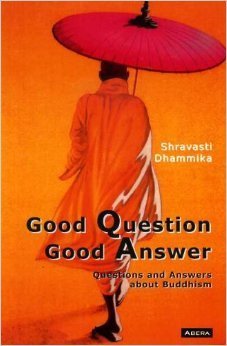
"Some religions believe that compassion or love(the two are very similar) is the most important spiritual quality but they fail to give any attention to wisdom. The result is that you can end up being a good-hearted fool, a very kind person but with little or no understanding."
"...wisdom is to keep an open mind rather than being close-minded, listening to other points of view rather than being bigoted; to carefully examine facts that contradict our beliefs, rather than burying our heads in the sand, to be objective rather than prejudiced, to take time about forming opinions and beliefs rather than just accepting the first and most emotional thing that is offered to us. To always be ready to change our beliefs when facts that contradict them are presented to us, that is wisdom."
Even though I still cannot fully get behind the idea of rebirth, and the "electromagnetic wave" explanation (which wasn't exactly as nuanced or scientifically convincing as the text claimed it is) of consciousness, the moral foundations of buddhism fascinates me still, and I do believe it to be the kindest, most peaceful, and accepting set of morals to live by, complimented with the exercise of meditation which is, also explained in the book, actually used by psychologists for mental psychological healing. The open-mindedness and kindness towards everyone of any background really took me by surprise, as I thought all religions were bigoted by nature.
The explanation of the universe without a need for god is undeniably fascinating for the time the ideology was born in, and surprisingly in line with modern science as well. There is a mindset of optimistic skepticism in everything, and searching for truth and yet keeping a kind heart for every good-willed opinion. The duality of humans making good and bad intertwined are also ingrained in the religion, not making any human act wholly good or wholly bad.
These few paragraphs above I quoted from the book were what affected me the most positively, and perhaps the purely anecdotal proofs for reincarnation was the weakest attempt at making this belief seem scientific.
"Think of being like radio waves. The radio waves, which are not made up of words and music but energy at different frequencies, are transmitted, move through space, are attracted to and picked up by the receiver from where they are broadcast as words and music. It is similar with the mind. At death, mental energy moves through space, is attracted to and picked up by the fertilized egg. As the embryo grows, it centers itself in the brain from where it later 'broadcasts' itself as the new personality."
This is hardly convincing.
It is a proven fact that the brain does release electromagnetic waves at different frequencies but there isn't any further proved information yet that the human personality itself is the electromagnetic energy. That would be suggesting that consciousness itself operates as light does in space, as forms of particles that moves both as particles and energy. Also there is no proof yet to think that the egg cell works as a transceiver to such transmissions... But again, I don't think many research was made into this particular hypothesis.
But perhaps as science says, not every phenomena can be explained in our lifetimes, and some may never be explained. So sometimes just experiencing to understand might be the best course of action.