

What do you think?
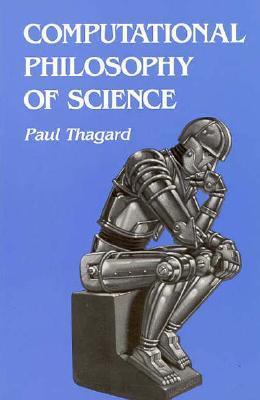
Computational Philosophy of Science
By applying research in artificial intelligence to problems in the philosophy of science, Paul Thagard develops an exciting new approach to the study of scientific reasoning. This approach uses computational ideas to shed light on how scientific theories are discovered, evaluated, and used in explanations. Thagard describes a detailed computational model of problem solving and discovery that provides a conceptually rich yet rigorous alternative to accounts of scientific knowledge based on formal logic, and he uses it to illuminate such topics as the nature of concepts, hypothesis formation, analogy, and theory justification. Paul Thagard is Professor of Philosophy at the University of Waterloo.
256 pages, Paperback
First published January 1, 1988
Ratings & Reviews
Friends & Following
Create a free account to discover what your friends think of this book!
Community Reviews
Displaying 1 - 3 of 3 reviews

March 22, 2021
an application of the computational model of problem solving and discovery from artificial intelligence (as it was understood in the 1980s) to the study of scientific knowledge

March 5, 2024
"Thagard describes a detailed computational model of problem solving and discovery that provides a conceptually rich yet rigorous alternative to accounts of scientific knowledge based on formal logic, and he uses it to illuminate such topics as the nature of concepts, hypothesis formation, analogy, and theory justification."
basically a puffed up fraud making the most absurd shallow and grandious claims for basically a computer model of the game CLUE.
.........
All you have to do add a strangely worded premise or leave one out, and you can basically get all the bias you like, or even worse - garbage in - garbage out
.........
nothing more than programming a fancy version of the game CLUE
get 17 propositions
E5 Calderwood changed his story several times
E8 Dotson said Olgivie is a liar
E3 Calderwood said that he saw a patrol car pull over a Volkswagen like Knott's near I-15
E9 Anderson and Schwartz saw scatches on Peyer's dace the night of the killing
E14 Bloodstains found on Knott's clothes matched Peyer's blood
sighs
Hypothesis that peyer is guilty
proposition-3 fibers from Peyer's uniform were transferred to knott
proposition-1 Payer killed Knott
proposition-7 Peyer had a bloody nightstick
proposition-8 Anderson was having personal problems when first interrogated
Hypotheses that Peyer is innocent
proposition-18 Peter is a good man
proposition-16 Martin lied
proposition-17 Anderson was mistaken about the nightstick
proposition-15 Payer's scratches came from a fence
proposition-14 Ogilvie lied
proposition-14A Ogilvie is a liar
proposition-13 The six fibers flated around in the police evidence room
proposition-11 someone other than Peyer killed Knott
proposition-12 Calderwood made his story up
I think anyone can see how stilted and artificial this is
and how adding the right proposition or leaving out the right proposition
can just have something fall apart
toss in some probabilities with some chemistry and you can get some inflated pomp about hypotheses for and against Lavoisier or Coprernicus
and then add in all the promise of 'machine learning'
And then magically Colossus: The Forbin Project and chatgpt will solve everything flawlessly
...........
everything reeks of buzzwords and empty promises in search of fame and funding
sadly he's now trying to go on youtube and going after low-hanging fruit like is astrology a psudeo-science, or writing hit job book reviews on Jordan Peterson, with reviews of Thagaard being dishonest or even possibly lying, with people asking if he's capable of very good reading comprehension.
Here's a part of the brutal review on Thagard's errors
.......
........
The funny thing is that I quoted Thagard in my piece.
I dismissed him offhandedly because he was dismissive of Peterson, but upon reflection, I’ve come to realize that isn’t enough.
While there’s certainly a correlation between dismissiveness and bad arguments, that’s not why Thagard’s argument is bad.
Unfortunately, I didn’t realize that until my second read-through of his piece, “Jordan Peterson’s Flimsy Philosophy of Life.”
So, if I want to show that Thagard is wrong, I have to take him seriously.
So, without further ado, Paul Thagard is wrong about Jordan Peterson because he doesn’t know how to read... in the literary theory sense of the phrase.
After reading 12 Rules for Life, I would argue that Peterson’s thesis is that “understanding the deeper meanings present in myth can improve your life and make you happy.”
It’s a philosophical conclusion, but it’s deeply grounded in literary theory.
Paul Thagard doesn’t get archetypes.
Or, at least, he doesn’t understand the fundamental difference between reading scripture in a literalistic sense and reading it in a literary sense where one is looking for underlying meaning.
“But philosophers since Plato have recognized many problems with basing ethics on religion.”
What’s particularly interesting about this is that Thagard seems to be locked into the state of mind that there are only two ways to approach religion, which happen to be the ones we discussed earlier. In his eyes, you can either apply “comfirmational-instructional” or “disconfirmational” theories.
Thagard finds the fact that Peterson isn’t applying disconfirmational theory a serious problem.
This reveals his total ignorance of literary theory.
Worse, Thargard seems to miss the breadth of stories that Peterson uses in his arguments.
Religious myths are only a subset of the stories he examines.
After seeing how many works Peterson considers, it’s hard to escape the conclusion that Thagard’s stance is reductionist.
At our least generous, we have to wonder if Thagard actually read Peterson’s book.
But, Thagard literally says “Peterson’s answer looks to religion.”
That claim is at least misleading, but it may be more accurate to say that it’s outright false.
.........

December 7, 2013
Instead of being about the computational philosophy of science, this book describes a data definition language and corresponding computer program for problem solving, but, as far as I can tell, neither are useful for anything. /Extremely/ contrived examples are used to showcase the power of the system, but the correlations drawn are completely arbitrary and would be indistinguishable from noise in a real application.
Displaying 1 - 3 of 3 reviews