"Bob Hicok is a spectrum... I’d love to see an MRI of his brain while he’s writing, as the neurons show us what’s possible, how a human can be a thought leader, taking us into the future… Hicok interrogates the world with mercy and wit and style and intelligence and modest swag. He’s one of America’s favorites―and to make the reader want to share the poet’s reality fulfills poetry’s finest aspiration." ― Washington Independent Review of Books "In his ninth collection, Hicok navigates a world bereft of empathy and kindness, leading by example with a charm and emotional intelligence that speaks to a deep insight into the human condition… Mixing cleverness with tenderness, Hicok demonstrates how to be a beacon of light in the darkest of settings." ― Publishers Weekly Bob Hicok’s tenth collection of poetry, Hold , moves nimbly between childlike revelry and serious introspection. While confronting the rampant hypocrisies of the American collective unconscious, Hicok is guided by his deep and tender sense of whimsy and humility. Pointing to the natural world as a mirror through which to rediscover human beauty, he pauses to unapologetically celebrate the wonder of living at all. From "About the size of it": . . . my breath shuttling in and out, as if it can’ t decide between stay and go, the little bird long gone by the time I realize the sun has set and it will soon feel like my father was never here, which is no big deal compared to the erasures the world endures and offers every day, except this one is mine Bob Hicok teaches at Virginia Tech University and is the author of ten collections, including Animal Soul, This Clumsy Living , Elegy Owed , and Sex & Love & . He is the recipient of two fellowships from the National Endowment for the Arts and the Guggenheim Foundation, respectively.
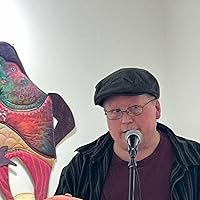
Bob Hicok was born in 1960. His most recent collection, This Clumsy Living (University of Pittsburgh Press, 2007), was awarded the 2008 Bobbitt Prize from the Library of Congress. His other books are Insomnia Diary (Pitt, 2004), Animal Soul (Invisible Cities Press, 2001),a finalist for the National Book Critics Circle Award, Plus Shipping (BOA, 1998), and The Legend of Light (University of Wisconsin, 1995), which received the Felix Pollak Prize in Poetry and was named a 1997 ALA Booklist Notable Book of the Year. A recipient of three Pushcart Prizes, Guggenheim and two NEA Fellowships, his poetry has been selected for inclusion in five volumes of Best American Poetry.
Hicok writes poems that value speech and storytelling, that revel in the material offered by pop culture, and that deny categories such as "academic" or "narrative." As Elizabeth Gaffney wrote for the New York Times Book Review: "Each of Mr. Hicok's poems is marked by the exalted moderation of his voice—erudition without pretension, wisdom without pontification, honesty devoid of confessional melodrama. . . . His judicious eye imbues even the dreadful with beauty and meaning."
Hicok has worked as an automotive die designer and a computer system administrator, and is currently an Associate Professor of English at Virginia Tech in Blacksburg.
Reading the poems in Bob Hicok’s fine collection HOLD can be like watching a skater go out as close as possible to the point above the water where the ice thins and is likely to break. This can be harrowing, but you end up wanting to applaud. His “Waiting is the hardest part of waiting” has this startlingly frank conclusion:
…………….. if you get my meaning, let me know, because I’m lost.
Readers and critics who insist that poetry must steer clear of politics and social issues will not be happy with Hicok, but he clearly doesn’t give a damn. Here’s his “Poem ending with a murder/suicide”:
It’s interesting to me there’s a minimum but no maximum wage. One without the other seems like pants without legs or love without someone to love. So what are the groups — people who want no minimum or maximum wage; people who want a minimum but no maximum wage; people who want a minimum and maximum wage; and people who want to eat. A minimum wage of twenty bucks an houris roughly eight hundred a week, or forty grand a year, or 1.6 million in a life. There’s your maximum wage — 1.6 millions a year. If you earn in a year what I earn in my entire life, you deserve the right to be happy about it in a gated community where you don’t have to be ashamed of the dance of your joy. I deserve the right to put heirloom tomatoes in the salad now and then. Such as when my kid got her cast off and her hand looked fine, like it intended to go on waving at moonlight and birds. And I never thought about it but slipped the insurance card out of my wallet and slid it over. And the car started the first time for the drive home to our little bungalow that needs a new paint job but that’ll happen this summer, right before we go to a lake for a few says and I open a beer one night and think, I have a place in whatever this is. Then listen to the stars saying nothing in peace or what passes for peace is a mystery to me, not unlike who’s behind the universe or why so many people in unions voted for people who wanted to kill unions, but we did and they died, unions died. Now where on Earth am I supposed to send the flowers?
That’s followed by “The South is where I live now,” which deals with America’s ongoing, irresolvable Civil War .
Hicok can also be exquisitely personal. Here’s his “Encore,” with its goosepimple-inducing conclusion:
ENCORE
At the rehab center late night when my father presses the call button, someone hurries in and shuts it off, thus maintaining their quick-response rate, but leaves without helping him pee, he tells me in a whisper on the best spring day of the year so far, of the century: I could have picked two hundred million snowdrops on the way in had I the patience and a doll’s fingers. He’s afraid
of angering the staff and has learned to pee on himself with dignity. It’s all
in the not-crying. In imagining
he’s a chunk of wind the next day while his penis is being washed and he can’t feel it, just a sock with a hole in it. I’m afraid
of the future. That I’ll need a gun
to help me out of the jam of having a body. Is what I’m thinking
while holding his hand, while believing there’s nothing to be done
about the weight of the night on his chest, except to lift him and carry him home and give him back to his own bed to live and die in, as he and my mother gave me to the sun all those years a go to run under and end up here, not knowing what to do about the rumor that part of us goes on after the heart’s last sigh, other than applaud the possibility as I would a woman standing up from a piano after the gazelles of her ha ads have stopped running, the music over but not the chance for more music if we clap enough that she believes how desperate we are and that only she can save us.
That one should start showing up in the anthologies beginning now.
Hicok in a prose poem about an artist/lover at work: “Her face scrunched while she worked. She looked like a rose struggling to bloom. I get that way kneading bread.”
Without fail, Hicok can return to us from the far edge of the skatable ice and be content with the simple and abundant quotidian. He can be wonderfully funny, and — I always have to point this out about a poet if it’s true — he doesn’t seem to have the slightest interest in creating work for academic literaturists to puzzle over and theorize about. There’s a welcome clarity and amiability in this book all the way through.
Some of the political poems were really powerful and resonant, some were disappointingly glib and superficial. And my dude, congrats on "genuinely adoring the scent of [your] wife's vagina," but I'm not sure that merits mention here.
That was an autobiographical dream you didn't have, headstone inscriptions provide clues, the exact coordinates ping off silhouette cell towers, directing the poet to where his ego is billboard visible.
Loved his work in "Elegy Owed" but this one just felt a little flat to me. There are a lot of poems that feel sort of... impersonal, I guess. For instance, some poems regarding a friend's gay wedding, tutoring a refugee, and an acquaintance with breast cancer all feel like mining someone else's life for content, which would be fine, except that Hicok then tries to make all those subjects personal, and that's where it starts to feel a little disingenuous. If nothing else, there are still some really good moments where Hicok's trademark barrage of imagery shines.
I've always been a huge Hicok fan, but this collection did not hit as hard as his work usually does. The first half of poems were great, but something happened in the second half of the book that totally turned me off. The political poems weren't poetry, just word vomit. Hicok and I even agree on most issues, but the poems were so lazy why even write them? Here's an example of what I can't believe even made it to print:
"I don't think it's my biz whether my jizz ultimately becomes a tot or not"
Hicok is best as a kind of spiritual and emotional miniaturist, plumbing the microcosm of the human heart and the intimacy of relationships. He is also a wonderful poet of midwesterness. And he pulls off something that is so rare it is fantastical: the celebration of *marital* eroticism. But when, in this collection, he veers into the political--as any poet must today--the wheels fall off. The result is the poetic equivalent of MSNBC. The allusivity is gone.
Overview The substantive aspects of this collection are found primarily in the brief existential interludes. This is the kind of book someone with a wine cellar (and plenty of literary laurels to rest on) would write. Hicok is aware of his limitations- and even references them, half-apologizing and joking with the reader about the silly nature of words, or ideas that pop into his poems. The worst poems in Hold are like bad tweets, or embarrassing Facebook posts, which is never a good sign. Of the 62 poems, I think Hicok could have distilled them down into a focused chapbook about half the length where nothing of value would be lost.
For a book to be great, I need to walk away changed, stunned, or feeling like the themes will inevitably find some corner-office within my brain and keep working overtime, into the midnight hours. To be glib, Hold had no hold on me.
But it might on you. _______________________
Notes on Content If this were a movie, it would be rated: R
Content generally suitable for a beginner-to-intermediate adult poetry reader who is comfortable with erotic metaphors and other mature content. There's a slur on the fifth page, sexual metaphors throughout, references to the Holocaust, white supremacy, and violence.
Vocab is quite approachable, not overly academic. Topical references may hit harder for someone born pre-1990, or perhaps Gen-X, but many poems work even without that cultural context, and sometimes directly explain unusual ideas or concepts in a silly, metatextual way. _______________________
Microcosm Poem One that typifies that book, the voice, content, or style. Gives you a sense of what you are in for. The "world" of the collection encapsulated in one single package. If you don't really like this one, you may not be up for the rest.
"Poof" - pg. 85 This poem appears late in the collection but serves as a great example of Hicok at his best, and typifies what many of the other poems try to achieve. "Poof" is simple, essentially just about a small conversation at a party, but it highlights the earnest tone, the dichotomy of mature references (e.g. Sisyphus) and nostalgia for childlike innocence that color the rest of the collection. The better poems in Hold are similarly focused, and go down easy.
_______________________ Tangential Notes One of my morbid habits when reading a book of poetry published more than 5 years ago is to look at the list of publications the poems previously appeared in, to check how many are now defunct.
On that note, RIP Green Mountains Review, you had a good 36 year run before the budget cuts at Vermont State University whirled your way.
Hicok takes you for a wild ride with his poems and always deposits you somewhere insightful at the end. About 3/4 of the poems in this collection blew my mind. The other 1/4 took stream-of-conscious wacky in the nonsense direction—or maybe I just didn't get them. (One of the women in my book group said, "I think he's just getting stoned and then writing poetry." Pretty apt. But I'm still trying to work out whether I think that's a bad thing.) I particularly like the poems that touch on the current political climate. Hicok frames the pain of this moment in history in ways that feel like poetry, not like a rant, which is hard to do.
I am very, very glad I read this collection of poems. I read a previous collection by the poet, but I know they didn’t hit me nearly as hard or as directly as these did. He writes as a white man of his experience of race and racism - and does not try to inhabit another skin, but completely his own. He writes of many things - his marriage, his life, his world. It is a stunning collection. I loved it. It made me think and feel again and again and again.
I was talking to a friend about his feeling that poets get worse over time, that when they approach old age they run out of things to say, or become too wistful. I don’t know if I agree, but I do know that I fully believe Bob Hicok will never feel old to me. Every new book of his I read makes me believe in the power of poetry, humor, tinged goofiness.
Presto del inglés la conclusión: "Not my cup of tea". 🚫🫖🤭Hicok sacrifica la lírica por la política. Para mí, personalmente, ambas intenciones no pueden coexistir. Cuando leo poesía, busco una mirada, un deseo, una pregunta, una construcción de formas insólitas; no una columna de opinión, independientemente de cuál sea esta.
The first things you notice about Hicok's work is how funny, self-referential and pop-culture savvy it is. But he's also profound in a sly way, with just one turn of phrase turning the whole poem on its head. I'll definitely be seeking out more of his work.
A powerful and playful collection covering social justice, white privilege, and broader topics. At times funny at times poignant. Dichotomy Lobotomy is a prize.