What is the fate of the world as we know it? Tsunamis, earthquakes, volcanoes, hurricanes, pandemics, cosmic radiation, gamma bursts from space, colliding comets, and asteroids—these things used to worry us from time to time, but now they have become the background noise of our culture. Are natural calamities indeed more probable, and more frequent, than they were? Are things getting worse? Are the boundaries between natural and human-caused calamities blurring? Are we part of the problem? If so, what can we do about it? In The End, award-winning writer Marq de Villiers examines these questions at a time when there is an urgent need to understand the perils that confront us, to act in such a way as best we can for the inevitable disasters when they come. We can do nothing about some natural calamities, but about others we can do a great deal. De Villiers helps us understand which is which, and lays out some provocative ideas for mitigating the damage all such calamities can inflict on us and our world. The End is a brilliant and challenging look at what lies ahead, and at what we can do to influence our future.
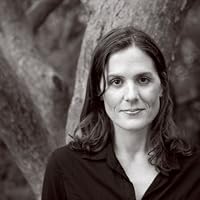
Born in South Africa, Marq de Villiers is a veteran Canadian journalist and the author of thirteen books on exploration, history, politics, and travel, including Water: The Fate of Our Most Precious Resource (winner of the Governor General's Award for Non-Fiction). He has worked as a foreign correspondent in Moscow and through Eastern Europe and spent many years as editor and then publisher of Toronto Life magazine. More recently he was editorial director of WHERE Magazines International. He lives in Port Medway, Nova Scotia. [Penguin Canada]
"The Lord gave Noah the rainbow sign. No more water, the fire next time."
There's a lot of interesting information here marred, as others have noted, by some very distracted editing. De Villiers got a lot of the numbers confused, but his depiction of the dangers our planet faces from the forces of nature within, on, and beyond the earth is right on. Combining a historical perspective with analysis and extrapolation to the future, de Villiers makes it clear that within the lifetime of most people living today, the earth will suffer some horrendous catastrophe. So stay tuned.
De Villiers begins with "Doomsday as a State of Mind" (Chapter One, Part One). He mentions ancient myths (most cultures have a flood story), the "Left Behind" Rapture of some fundamentalist Christians, the "doomsday clock" of the Bulletin of Atomic Scientists, the pronouncements of Royal Astronomer Sir Martin Rees (see my review of "Our Final Hour: A Scientist's Warning: How Terror, Error, and Environmental Disaster Threaten Humankind's Future in This Century" at Amazon), the intriguing Bayes's theorem-based "Doomsday Argument" (see pages 16-17), etc., making it clear that "The end of the world is always nigh." (p 10).
He didn't mention Chicken Little, but I will. The sky really is falling, or something is falling out the sky or will, and the earth will open up and swallow people and things and/or shake us senseless, or the earth will belch and fill the sky with soot and ash, darkening the planet into a long winter not seen since the days of the dinosaurs, and/or a rock the size of Manhattan will smack into the planet with the force of a few million atomic bombs, etc. The really scary thing about all this is IT WILL HAPPEN.
At least that is the impression I got from reading de Villiers's strangely non-sensational prose. Compared to Bill McGuire's tone in A Guide to the End of the World: Everything You Never Wanted to Know (see my review at Amazon) de Villiers is downright matter of fact. And why not? Most of the really horrendous horrors to come fall into the category of "we didn't see it coming, and there was nothing we could have done about it anyway," (the caldera at Yellowstone National Park blowing its top--and what a top it will be is an example) and, yes, some or a lot of the living will envy the dead.
In Part Two, de Villiers provides a "Context" for understanding just what has happened and what will happen to our beloved planet as he reprises ice ages and mass extinctions. In Part Three he gives a catastrophe by catastrophe rundown on specifically what has and will happen: Near Earth Objects, comets and asteroids, becoming fused earth objects; earthquakes; volcanoes; poisonous emissions and noxious gases; tsunamis traveling at over 500 miles an hour; various floods; cyclones and tornadoes, plagues and pandemics. In Part Four de Villiers looks at humans making things worse and examines what can be done.
If any of this should depress you, consider this: given a long enough view not only are we all dead, but so is the planet even if we have to wait five billion years for the sun to swell and explode. What is more, even if we somehow avoid that fate by traveling to distant worlds, it is unlikely that we could dodge or shield ourselves from all the gamma ray emitting stars or the supernovae lurking about. Finally, even fi we avoided all cosmic calamities, the heat death of the universe would eventually do us in.
So let's take the whimsical view of Robert Frost in his poem, "Fire and Ice":
Some say the world will end in fire, Some say in ice. From what I've tasted of desire I hold with those who favor fire. But if it had to perish twice, I think I know enough of hate To say that for destruction ice Is also great And would suffice.
--Dennis Littrell, author of the mystery novel, “Teddy and Teri”
This book was originally published by Viking Canada as "Dangerous World". It was then published in the United States as "The End", with all metric units of measurement converted to US customary units, but with some errors. I glanced at "The End" at a public library, and happened to notice an outrageous claim about the 1816 Tambora eruption. I suspected there was error in the conversion of units for the US edition. I procured a used copy of the Canadian "Dangerous World", and was able to make the following comparison:
Canadian "Dangerous World", page 154:
"The noise was heard more than 1,500 kilometers away, and about 150 cubic kilometers of rock was hurled into the sky, reducing the height of the mountain itself by 1,280 meters".
"The annual temperatures recorded at Yale for 1816 showed temperatures a full 7 degrees Celsius below the norm."
US "The End", page 154:
"The noise was heard more than 900 miles away, and about 36 cubic miles of rock was hurled into the sky, reducing the height of the mountain itself by 4,200 feet."
"The annual temperatures recorded at Yale for 1816 showed temperatures 44.6 degrees Fahrenheit below the norm".
The first sentence is translated correctly. In the second sentence, though 7 degrees Celsius is 44.6 degrees Fahrenheit, 7 degrees Celsius below the norm is 12.6 degrees Fahrenheit below the norm. A similar error appears on page 156.
The table on page 110 has some severe errors. The Canadian edition correctly cites NASA data (metric) for current impact risks from comets and asteroids. But the table in the US edition lists, for example, that a diameter of 140 meters is 87 miles!
There may be more errors in "The End", but I am not going to read it.
I certainly support the right of private publishers in the US to publish with units of measurements of their choosing. But even if translated correctly, a US consumer of typical scientific literacy ought not to need US customary units. Given the outrageous errors in the US edition, I strongly recommend against reading it. Oddly, Time Magazine gave "The End" a positive review.
By the way, the book "Tales of the Earth" reproduces a graph from Stommel and Stommel (1983) that shows 1816 Yale temperatures to be 7 degrees Fahrenheit below the norm, so the Canadian edition may be erroneous in its claim of "7 degrees Celsius below the norm".
This starts off looking at geological history of our planet, then moves into discussing various natural disasters and manmade issues that can potentially end human life (asteroids, earthquakes, tsunamis, volcanoes, floods, tornadoes, pandemics, and more). (Note that this was published in 2008, so well before COVID-19.)
I started reading this, then had to switch to the automated/computerized reading of it. I am pretty sure I would have enjoyed this more if I’d been able to read it all the way through. As it was, with the computerized reading of it, I wasn’t able to focus. I caught bits and pieces of interesting information, but had a hard time catching the overall picture.
“Tsunamis, earthquakes, volcanoes, hurricanes, pandemics, cosmic radiation, gamma bursts from space, colliding comets, and asteroids – these catastrophic events have become a common part of our culture. Are natural calamities now more probable, and more frequent? Are things getting worse? Are we part of the problem? If so, what can we do about it?”
This is the Amazon description of this book. I can’t remember why I read it. I might have just grabbed it off the shelf at the public library. Actually, I think I was attempting to do reasonable research on global warming, but when you are at a small public library in the Jersey burbs, you have to roll with whatever you find on the shelf. So this book is definitely questionable, scientifically, at least according to reviewers. But I liked reading it. Did you know about the lake in Africa that emits poisonous fumes and has, in the past, wiped out everyone living on its shore while they slept? Also, I did not realize that the Chesapeake Bay area down the eastern seaboard toward the Outer Banks was probably created by a giant asteroid that struck the earth a long time ago. Could happen again, couldn’t it? Titillating to those who are apocalyptically prone. I don’t think I am, but I did finish the book.
This book goes through and describes all the different catastrophes that might lead to our peril; earthquakes, tornadoes, asteroids, nuclear bombs , etc..., and gives a history of what's happened in the past, and what mistakes were made. It finishes up as a precaution to protect our environment,even though it's already repeatedly told us, we're all doomed. On of his points is, if nothing else population density will lead to a lot of human suffering, and even if welearn to better conserve resources, it won't even matter, because population continues to grow exponentially. I've read a lot of books in this vain. Scientific and pessimistic, but realistic.I'm not sure what I get out of them, but I don't think I'm turning into a paranoid recluse or anything. I feel like thinking about the fragility of life makes me appreciate it more, and helps me put things in better perspective.
Fed my love of apocalypse porn, science and unusual earth events. Plus I learned some stuff.
de Villiers is a good storyteller, and he leads you into the science of what might kill us through a human perspective.
Volcanoes, tsunamis, earthquakes, plague, mandmade catastrophes. They're all there. But I like that he brings reason to the table to understand both our fragility and our longevity.
What a joyful read! A nice overview of what could cause our demise, but not the sort of catastrophe nut, spreading fear and paranoia. It's more sort of an ecological take on the problem, viewing our near future troubles and ways to deal with it. There's a lot of references, and I really enjoyed the scientific rational tone of the book, with no new age crap or end times lunacy.
Knowledge is the beginning of any path leading to solutions to the problems we face. Collectively as humans, and even as the greater collection of all life on our planet, we face challenges from both our own mistakes and the natural world. This book addresses both. Though it is a little dated, 2007, most of the information is still accurate. A very good read.
I wouldn't exactly say I enjoyed this book - it gave me the overwhelming feeling time and time again that humanity is doomed one way or another - but it gave me the information I needed in a straightforward yet not entirely unhumourous manner, so... yay?
Very good. More academic than expected, but a good book to put disasters into perspective - looking at all the things we can't do anything about and the things that we can.
Not real impressed. It was very dry in many parts. Expected much more new info. Read like a condensed textbook in many places. Wasn't what I thought it was going to be.
An interesting "what-if" book of Doomsday scenarios, but- as is all too common in the "science" writing of today- de Villiers chooses to give "equal time" to absolutely preposterous ideas such as warmer oceans don't mean more and stronger hurricanes and cyclones. Which is on par w/ "ideas" such as the world is flat, and other such "revisionist" pathological notions of the world's idiots...
A good read, but, alas, potentially dangerous and poisonous to debate in the wrong hands, as the worst apologists for business-as-usual climatology will find plenty of "evidence" for their absurdities...