

What do you think?

Un beau ténébreux
Rayon : Roman Editeur : José Corti Date de parution : 1992 Description : In-12, 258 pages, broché, occasion, très bon état. Envois quotidiens du mardi au samedi. Les commandes sont adressées sous enveloppes bulles. Photos supplémentaires de l'ouvrage sur simple demande. Réponses aux questions dans les 12h00. Librairie Le Piano-Livre. Merci. Référence catalogue X13181. Please let us know if you have any questions. Thanks
257 pages, Paperback
First published January 1, 1945
About the author
Julien Gracq
65 books188 followersJulien Gracq (27 July 1910 – 22 December 2007), born Louis Poirier in St.-Florent-le-Vieil, in the French "département" of Maine-et-Loire, was a French writer. He wrote novels, criticism, a play, and poetry.
Gracq first studied in Paris at the Lycée Henri IV, where he earned his baccalauréat. He then entered the École Normale Supérieure in 1930, later studying at the École libre des sciences politiques.
In 1932, he read André Breton's Nadja, which deeply influenced him. His first novel, The Castle of Argol is dedicated to that surrealist writer, to whom he devoted a whole book in 1948.
Gracq first studied in Paris at the Lycée Henri IV, where he earned his baccalauréat. He then entered the École Normale Supérieure in 1930, later studying at the École libre des sciences politiques.
In 1932, he read André Breton's Nadja, which deeply influenced him. His first novel, The Castle of Argol is dedicated to that surrealist writer, to whom he devoted a whole book in 1948.
Ratings & Reviews
Friends & Following
Create a free account to discover what your friends think of this book!
Community Reviews
Displaying 1 - 30 of 37 reviews

July 23, 2022
A fashionable seaside resort… A comfortable hotel… Happy and delightful summer holidays by the sea…
But one bright morning A Dark Stranger arrives and the summer turns into a fanciful phantasmagoria… He is an irresistible smasher… He is magnetic… He is mysterious… He is a center of attention… Everyone falls for him…
Now the atmosphere becomes solemnly theatrical… Days are full of anxiety and incomprehensible uncertainty… At nights hotel guests dream odd dreams…
The stranger meanwhile remains cold and aloof… He is indifferent to everything and everyone… He seems to be obsessed with fatality and death…
Death is a herald of eternity.
There are enough people here now for you to feel the jostle; a makeshift state of mind sets in in this little holiday world. Seen from my window this morning, Jacques tacking off for a swim. Every day there’s an early bustling from his room above me – the way you walk into the wardroom unselfconsciously, laugh loudly with that bold upside-down intimacy of bunkmates.
But one bright morning A Dark Stranger arrives and the summer turns into a fanciful phantasmagoria… He is an irresistible smasher… He is magnetic… He is mysterious… He is a center of attention… Everyone falls for him…
Leaning out I saw Christel just below me, also with her elbows on her balcony, staring at the beach. I’m sure, absolutely certain, that it was him she was looking for – him, always one of those thousands of black dots, temptation and perpetual torture for eyes…
Now the atmosphere becomes solemnly theatrical… Days are full of anxiety and incomprehensible uncertainty… At nights hotel guests dream odd dreams…
The labyrinth gets larger, leads me astray; sometimes double doors eject me into the street, sometimes, like a drowning man catches sight of land before he goes under again, the moment I feel lost I unexpectedly pass back through part of the theatre with its fervent ocean rumblings. My despair grows…
The stranger meanwhile remains cold and aloof… He is indifferent to everything and everyone… He seems to be obsessed with fatality and death…
You think you hear stealthy footsteps walking through this book, emptied in great spadefuls like the graveyard in Hamlet – where the echoes are richer, purer, as in a series of empty rooms where you distinctly hear dry twigs cracking underfoot on the icy winter path. Something’s coming: what a surprise! Is it Death? It’s just death.
Death is a herald of eternity.

August 25, 2022
Possibly the slowest of Gracq’s slow-burn novels (debatable, but it felt that way to me), A Dark Stranger preceded The Opposing Shore and A Balcony in the Forest but shares with those two later novels the narrative structure of a protracted period of suspenseful waiting adorned with Gracq’s lush—almost smothering at times—descriptions of the natural world. It’s as if his characters are sleepwalking or submerged underwater. Usually this unique facet of Gracq’s prose appeals to me, but in this case I didn’t care for the narrator whose journal entries we are reading for much of the book. I found him to be mostly flat, almost like a cipher. I don’t know if any of this related to the translation or not. Gracq mentioned once that he wished for his work to come across as so quintessentially French as to remain untranslatable. Regardless of this wish, I’ve not found issue with any of the other translations I’ve read of his books. The substance of these journal entries also did not ring true—who copies long circuitous conversations verbatim into their diary unless they have a voice recorder and then transcribes them to the page? I wasn’t buying it. I also didn’t care for the other characters—all rather bland leisure-class types who can afford to lounge around a hotel not only all summer long but also well into autumn. The mystery at the heart of the book was not particularly hard to discern, nor did I care to see how it would all turn out. I will say that the last 50 pages or so did go a long way in redeeming the many pages that came before, but I’m on the fence as to whether they ultimately changed how I feel about the book. Particularly in the last 20 pages I saw glimpses of the Gracq-ian elements that I hold close, especially where he probes the edges that can blur between dreams and waking life. I just wish it hadn’t been such a struggle to get there. (3 stars rounded up from 2.5 since he wrote this while in a POW camp.)

May 4, 2012
Gracq's grasp of psychological landscapes brushes otherwise ordinary settings and interactions with the marvelous. A Dark Stranger moves in a lavishly described trance state, and the desolate vacation beaches of the Breton coast form a perfect surrealist backdrop. Of course, nothing here is entirely ordinary either. The fascination at the heart of the book is simultaneously a kind of dread, and there's simultaneously a universal explanation for this, a few proximal ones based around real contemporary figures, as well as the more inescapable one given by history: this novel of interwar leisure was written while the French Gracq was starving in a WWII POW camp in Germany, victim of the war to end all quiet interludes. Despite what I said above, Gracq wasn't official surrealist group member, but he's plainly affiliated, brushing against their themes, and he can effortlessly express the dreamscapes and metaphysics lurking beneath the otherwise plausibly "realistic", sometimes in a more intelligible and interesting way than the proper contemporaneous surrealists. The characters all speak in stylized monologues (and in essentially the same voice) and the prose has a baroqueness that takes a little digesting (and yes, even when it's ostensibly spoken by a character), but none of this bothers me a bit in light of the sheer feel of the novel.
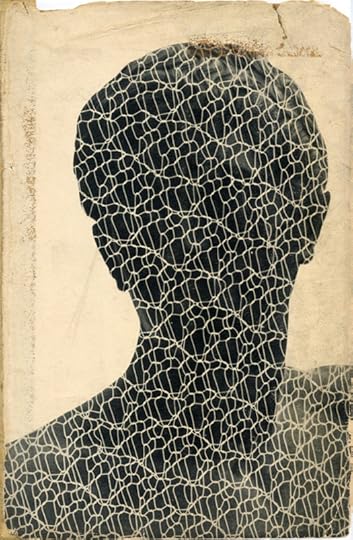
(Original 1951 New Directions cover by designer Gertrude Huston)
(Original 1951 New Directions cover by designer Gertrude Huston)

November 18, 2019
Απαιτητικό βιβλίο. Αν δεν το διαβάσεις δυο φορές, χάνεις.

July 22, 2015
Merits a second reading. I have a feeling I might have missed some of the allusions whose threads were lost in the subtext.
Reading this novel, with its wealth of metaphors and allegories, I felt transported into Gracq's surreal world, very dream-like with a sense of impending doom. A neglected gem indeed.
Reading this novel, with its wealth of metaphors and allegories, I felt transported into Gracq's surreal world, very dream-like with a sense of impending doom. A neglected gem indeed.

October 22, 2021
Απαιτητικό βιβλιο. Θέλει συγκέντρωση αλλιώς το χάνεις. Πολλές αναφορές σε σημαντικά βιβλία. Γοητευτικό, μυστηριώδες και δυνατος επίλογος.
April 23, 2026
ou comment envelopper chaque mot de la mort

November 8, 2023
“Holiday surprise and a bright one at that
It's a holiday to last even though we spent the last year
In a dream, in a dream”—Olivia Tremor Control
I must’ve read a different book than my confrères. I can see the attraction, but it is just Gracq very idly, meanderingly masturbating for a few hundred pages. With a feather. ¡No tengo tiempo! Fuck: ridiculously perfected sculpture disguised as sentence—as ‘prose’—that reads as light through yonder…just doesn’t impress me much these days. Put to use beyond wallpapering over what is an effectively straw frame? Im all in. But reading Gracq stroke his quill in an attempt to curry Breton, and just make prettypretty in the meantime, is a younger man’s game than mine.
I have no ‘requirements’ of a novel. I don’t need linearity, arch, denouement, even plot. I would like, and it’s a lot, to feel that my reading is accomplishing more than further inflating the prosaist’s balloon. Gracq would go on to write fantastic novels; here he substantiates that he can write with complexity and high style. These are not definitionally synonymous.
“Remember the beliefs we had back then?
Said we'd never change our minds
But all went thin again
All our dreams were just dirty plans
Well please, please
Don't you ever change your mind on me”
—Olivia Tremor Control
It's a holiday to last even though we spent the last year
In a dream, in a dream”—Olivia Tremor Control
I must’ve read a different book than my confrères. I can see the attraction, but it is just Gracq very idly, meanderingly masturbating for a few hundred pages. With a feather. ¡No tengo tiempo! Fuck: ridiculously perfected sculpture disguised as sentence—as ‘prose’—that reads as light through yonder…just doesn’t impress me much these days. Put to use beyond wallpapering over what is an effectively straw frame? Im all in. But reading Gracq stroke his quill in an attempt to curry Breton, and just make prettypretty in the meantime, is a younger man’s game than mine.
I have no ‘requirements’ of a novel. I don’t need linearity, arch, denouement, even plot. I would like, and it’s a lot, to feel that my reading is accomplishing more than further inflating the prosaist’s balloon. Gracq would go on to write fantastic novels; here he substantiates that he can write with complexity and high style. These are not definitionally synonymous.
“Remember the beliefs we had back then?
Said we'd never change our minds
But all went thin again
All our dreams were just dirty plans
Well please, please
Don't you ever change your mind on me”
—Olivia Tremor Control

July 1, 2017
"I've always regarded the pine as a tragic tree. The harsh, violent twists of its branches, the stiff foliage, those tiny sword knots in place of leaves which are reproduced so miraculously in Chinese engravings, not the slightest concession to the softness of flora, a style more in keeping with hard stony ground, gunflint, a scorched existence, something charred, like the embodiment of some primitive notion of love: barren, exhausting, relentless--
But love to me is a pallet
stuffed with pins."
But love to me is a pallet
stuffed with pins."

November 30, 2019
4.5. Ενα βιβλίο που αν χάσεις μια λέξη καταρρέει η αφήγηση. ανάγνωση υψίστης απόλαυσης. Απαιτητικότατο.

January 29, 2023
There is something there, but one hundred pages of never ending sentences, virtuoso nature descriptions alternating with eccentric monologues and more or less artificial characters just made me too drunk to keep reading.

July 5, 2011
There were moments where I truly loved this book with its flashes of beautiful prose and places where time ceases to exist that intrigued me. It followers a group of wealthy vacationers collected in a sleepy beach resort on the north coast of France between the wars. The author does a delightful job in capturing the almost stifling calm and leisure that surrounds them. However, by doing so, the book tends to drag, sometimes drawing the reader too deeply into the mood. The mysterious Allan character, which is meant to be the driving force of the novel, was often times not nearly as compelling as he probably should have been. It is also one of those books that leaves so much unsaid and inferred. As a matter of preference, it is not my favorite style of story telling, though I can appreciate the effort when done well. My problem with its implementation in this novel is that there wasn't enough else going on to drive the narrative. Another element that distracted me was the presentation of conversations. In the rare scenes of long conversation, the author would delve solely into the two speaking voices, allowing any sense of place or action to disappear.
The ending is pretty masterful. It certainly redeemed an uneasiness that I felt through the last third of the book. It offers a profound look at the romantic hero. The book also serves as a document for the period between the wars, the haunting horror of the first and the pending horror of the second. Though well written, it simply wasn't my kind of book. I'd imagine fans of Hemmingway enjoying this novel...unfortunately, I'm not.
The ending is pretty masterful. It certainly redeemed an uneasiness that I felt through the last third of the book. It offers a profound look at the romantic hero. The book also serves as a document for the period between the wars, the haunting horror of the first and the pending horror of the second. Though well written, it simply wasn't my kind of book. I'd imagine fans of Hemmingway enjoying this novel...unfortunately, I'm not.

November 12, 2008
julien gracq's second novel was called UN BEAU TENEBREUX and, according to this, was written in two spurts: in 1940 and 1942. it was published in 1945 and brought out in english in 1950 by new directions with this beautiful, word-less cover. gracq, who died in 2007 was considered at the time of his death the "last of the great universal writers".
a somewhat plodding story about a ubermensch-wannabe who corrupts a crowd of european archetypes summering at a beachside resort, this novel is probably not the one that makes gracq's reputation. but despite its flawed structure and some truly awful melodramatic scenes, there are still stunning examples of an elaborate, beautiful style studded with breath-catching insights.
here's this gem on victor hugo's taking issue with dante on his architecture of hell: "whereas Dante imagined the circles of his Inferno as gradually decreasing their spirals as they descended, like conical pits of ant-lions, towards the final well 'where Satan weeps with six eyes', Hugo, with a strange inversion of this image, sent his circles down in ever-widening spirals, to leave the imagination in a maelstrom, a vertigo, a vast mist-enveloped dissolution into the darkness" (p. 54).
can you grok it?!
a somewhat plodding story about a ubermensch-wannabe who corrupts a crowd of european archetypes summering at a beachside resort, this novel is probably not the one that makes gracq's reputation. but despite its flawed structure and some truly awful melodramatic scenes, there are still stunning examples of an elaborate, beautiful style studded with breath-catching insights.
here's this gem on victor hugo's taking issue with dante on his architecture of hell: "whereas Dante imagined the circles of his Inferno as gradually decreasing their spirals as they descended, like conical pits of ant-lions, towards the final well 'where Satan weeps with six eyes', Hugo, with a strange inversion of this image, sent his circles down in ever-widening spirals, to leave the imagination in a maelstrom, a vertigo, a vast mist-enveloped dissolution into the darkness" (p. 54).
can you grok it?!

November 16, 2010
After the awesome Opposing Shore and the very good Balcony in the Forrest, I had the highest expectations about this one and I was somewhat disappointed as in Chateau d'Argol - here a large part may be the translation which reads very "jerky", not like Julien Gracq of the other 3 novels; and this one is his second and while written at least partially as a POW in a German camp, the reviews of the French edition do not mention this scattering.
so the prose only so-so for once (the other 3 Gracq novels I read are all beautifully written), the characters and action are indeed relatively interesting and the novel builds toward a powerful climax, but here i clearly missed the beautiful style of the author
so the prose only so-so for once (the other 3 Gracq novels I read are all beautifully written), the characters and action are indeed relatively interesting and the novel builds toward a powerful climax, but here i clearly missed the beautiful style of the author

January 31, 2022
3,5⭐
Juste parce que la fin est grandiose, mais j'ai trouvé difficile de naviguer dans le livre: la langue est parfois trop précieuse et les références obscures.. C'est dommage parce que le développement des personnages et la déduction de la Bretagne et sa météo changeante, en constant mouvement et pourtant immobile est vraiment touchante parfois. Globalement je suis resté assez insensible au livre, alors que j'en avais de grosseq attentes...
Juste parce que la fin est grandiose, mais j'ai trouvé difficile de naviguer dans le livre: la langue est parfois trop précieuse et les références obscures.. C'est dommage parce que le développement des personnages et la déduction de la Bretagne et sa météo changeante, en constant mouvement et pourtant immobile est vraiment touchante parfois. Globalement je suis resté assez insensible au livre, alors que j'en avais de grosseq attentes...

February 28, 2017
It’s always a throw of the dice to choose a book purely on the basis of an attractive binding. It didn’t go well with Una vita. ‘A Dark Stranger’ is better than that, but still doesn’t live up to its beautiful Pushkin Press cover. Given the similarity in setting (hotel), theme (hotel-based interpersonal melodrama), and publisher (Pushkin), I was expecting something akin to Stefan Zweig. Gracq, it turns out, is a very different sort of writer. His characters spend their holiday time becoming obsessed with each other for no apparent reason, brooding about mortality, and having maddeningly oblique conversations. I theorised at various points that the five main characters were spies, were all sleeping with each other, or were spirits trapped in purgatory. A case could be made for each, I believe. Nothing much happens except beach walks, golf, and a bit of dancing until the last twenty or so pages, yet there is a pervasive sense of doom and angst. A striking aspect of this is its timelessness. There are no markers to situate the narrative more specifically than the first half of the twentieth century. The main characters’ pre-holiday lives are mentioned only rarely. Are they are staying at a Hotel California-esque supernatural establishment? Quite possibly.
It took me much longer than I expected to finish this book, mostly because I found the dialogue almost insufferably pretentious in its allusiveness. The sheer inability of characters to say anything remotely clearly was positively awe-inspiring. I could have enjoyed it had there been some inklings of humour. The florid, metaphorical style worked much better in descriptive passages, though. An example of dialogue:
They are discussing a picnic that Irene organised. Yes, a picnic. An example of description:
Amid this flood of unironic hyper-gothic Romanticism, the single moment of self-awareness from Gerard the narrator was perhaps my favourite part of the whole book:
This seemed like the central theme of the book to me: hotel guests creating an artificial web of drama and intrigue because their holidays are deathly boring. Only French writers produce novels about this heavy duty ennui; it’s heading in the direction of Camus’ The Stranger. The effort required to read ‘A Dark Stranger’ was akin to wading through treacle, yet it was not without rewards. Also, the translator’s note was sensibly placed at the end, which I appreciate.
It took me much longer than I expected to finish this book, mostly because I found the dialogue almost insufferably pretentious in its allusiveness. The sheer inability of characters to say anything remotely clearly was positively awe-inspiring. I could have enjoyed it had there been some inklings of humour. The florid, metaphorical style worked much better in descriptive passages, though. An example of dialogue:
"Maybe. So let’s assume Irene is an intrepid experimenter, not even afraid that there might an explosion. You’ll agree that’s exactly how we make discoveries."
Something in his voice made me think he was applying this last expression to himself in particular.
"My dear Henri, what some people call an innocent taste for experiments, others have sometimes called ‘tempting fate’. The Church doesn’t have a great liking for alchemists. Although what did they do if not investigate basic attractions? What a lovely temptation, so straightforward! Mix fire and water, salt and sulphur. That’s how you cheerfully cast out demons. Yet I’m sure what guided them was just an unbridled appetite for universal friendship."
"All these polite chemical metaphors of yours make Irene sound like some kind of procurer, You’re being pretty harsh, Gerard."
"But don’t you think that one way or another everyone would like to be a procurer. Putting two substances, two people together and seeing if they explode or mix. It’s quite natural."
"And perhaps perverse."
"Nature is perverse! The human race is perverse! Luckily. It’s how things get done. It’s how people meet, and every opportunity, everything new comes from that. How could things and individuals make contact, enrich each other, without perverting them, without diverting them from the safe, well-trodden path, without new ideas? Whether that’s the work of the devil or not, agree on everything else. The devil is a diversion - he’s always oblique."
For a moment Henri was lost in thought.
They are discussing a picnic that Irene organised. Yes, a picnic. An example of description:
He turned back to the darkened room. A moonbeam slipped across the glowing parquet floor like a piece of silk. Somewhere in the darkness a clock ticked away the seconds. The extraordinary stillness of the moon sucked the life out of this dark sombre room through the windows, as an embalmer drains a skull through the nostrils, replacing the warm breath of life with pure icy ether - effortlessly merging the empty room with the dark grottos of the enchanted garden.
Amid this flood of unironic hyper-gothic Romanticism, the single moment of self-awareness from Gerard the narrator was perhaps my favourite part of the whole book:
It’s amazing to think just how far you can involve someone in a situation, even the most repellent, the most thankless, just by persuading them of the decisive importance of their participation could have. Personal advantage probably counts for little in motivating people - but their ever-alert dramatic instinct, now there’s a motive that virtually never fails to respond to an appeal. Perhaps people are always vaguely dreaming of giving a star performance some day or other.
This seemed like the central theme of the book to me: hotel guests creating an artificial web of drama and intrigue because their holidays are deathly boring. Only French writers produce novels about this heavy duty ennui; it’s heading in the direction of Camus’ The Stranger. The effort required to read ‘A Dark Stranger’ was akin to wading through treacle, yet it was not without rewards. Also, the translator’s note was sensibly placed at the end, which I appreciate.

September 22, 2022
Not his best. His strengths are in his prose and his hypnotic descriptiveness, and his weaknesses are his stiff, "philosophical" dialogue and thinly drawn characters. This leans too heavily on the latter at the expense of the former.
August 30, 2025
Comme souvent avec Gracq ce ne sont pas l'histoire ou les personnages qui plaisent mais des images, des descriptions qui marquent. un style inimitable.

June 4, 2015
Une histoire bien décevante. Écrit comme un journal intime intégrant des dialogues, le récit est langoureux : on suit les actions (ou plutôt les non-actions) de personnages qui se retrouvent tous en vacances dans le même hôtel. Le narrateur principal est assez mystérieux, voire inquiétant. Les personnages se veulent spirituels, pris dans la tourmente des intrigues amoureuses et des passions humaines, mais ça ne m'a pas accroché du tout. Le tout finit de façon mélodramatique. C'était pathétique. Dommage!
February 5, 2017
This was almost a surrealist novel, very dreamlike with strong lyrical language. Not a novel of ideas but more a novel of feelings. It reminds me of a dreamy pre-cursor to Robbe-Grillet Maison de Rendezvous, and very near the feel of de Chirico's Hebdomeros. I want to read more Gracq.

August 30, 2024
A strange book. Published in 1945, this French novel follows a group of young(ish) people staying at a resort on a beach in Brittany, lingering well past the end of the season. The dark stranger of the title is a wealthy but mournful man, who is closely attached to a beautiful woman named Dolores (meaning 'sorrow'). Without saying anything of his plans, the set with which he interacts slowly comes to accept the fact that he has come there to end his life.
There are some passing references to war but while the time is never stated, it is accepted that the story is set in the 1920's, between the two wars. Nevertheless, the end of WWII must have had a profound impact on the subject matter. The afterward states that Julien Gracq wrote the novel during his own internment in a prison camp.
A strange book in the vein of young Werther and I wouldn't reread it, however Gracq writes like a poet and some of this writing is quite unexpected and beautiful. On the flip side, I often had to go back and start a sentence or paragraph again because they take so many zips and turns.
There are some passing references to war but while the time is never stated, it is accepted that the story is set in the 1920's, between the two wars. Nevertheless, the end of WWII must have had a profound impact on the subject matter. The afterward states that Julien Gracq wrote the novel during his own internment in a prison camp.
A strange book in the vein of young Werther and I wouldn't reread it, however Gracq writes like a poet and some of this writing is quite unexpected and beautiful. On the flip side, I often had to go back and start a sentence or paragraph again because they take so many zips and turns.

May 14, 2026
"Now you can see what you've never stopped looking at."
A Dark Stranger. Not Dark Stranger. This distinction is important.
Gracq's writing is absolutely exquisite - and the translator, Christopher Moncrief, deserves praise as well, especially for understanding what should be explained to the audience and what shouldn't. Gracq masterfully weaves a story about a dark stranger, Allan Murchison, who stays with a wealthy group at a seaside hotel. The group is both enthralled and repelled by him. Could it be that he's an impending harbinger of doom? Or is he just a simple man with a simple, final task that reminds the others of past and forthcoming death? You really don't know until the final pages.
So why the 4.5 stars? I didn't like how Irene was written. I agree with Moncief's feelings in the end notes - is it misogyny? Possibly. I can't tell based off of one book. Other than that though, I absolutely loved A Dark Stranger and will seek out more of Julien Gracq's work in the future.
A Dark Stranger. Not Dark Stranger. This distinction is important.
Gracq's writing is absolutely exquisite - and the translator, Christopher Moncrief, deserves praise as well, especially for understanding what should be explained to the audience and what shouldn't. Gracq masterfully weaves a story about a dark stranger, Allan Murchison, who stays with a wealthy group at a seaside hotel. The group is both enthralled and repelled by him. Could it be that he's an impending harbinger of doom? Or is he just a simple man with a simple, final task that reminds the others of past and forthcoming death? You really don't know until the final pages.
So why the 4.5 stars? I didn't like how Irene was written. I agree with Moncief's feelings in the end notes - is it misogyny? Possibly. I can't tell based off of one book. Other than that though, I absolutely loved A Dark Stranger and will seek out more of Julien Gracq's work in the future.
June 30, 2023
Un monde clos de personnages et l'arrivée dans être qui va polariser cette microsociete. Un style alusif et qui n'impose pas une vérité pour au contraire vagabonder dans des analyses complexes. Il faut se laisser porter par des phrases qui visent moins un but que de décrire un état mental.


June 27, 2017
re-read is in order

September 4, 2017
Pretty bad book to be honest. One or two decent scenes but mostly just awful boring descriptions of nothing

February 28, 2021
Quite gripping intense atmospheric fiction, written in translation. Strikingly good. Recommended.
May 21, 2021
Les descriptions sont le point fort, les personnages le point faible, la narration en journal devient pénible mais le changement à la fin le rattrape largement

March 5, 2017
Die lediglich zwei vergebenen Sterne spiegeln einen ganz persönlichen und momentanen Eindruck wider und es wird sicherlich interessant sein, das Buch mit etwas zeitlichem Abstand und in einem anderen Setting - beispielsweise während eines langen Sommerurlaubs - noch einmal zu lesen. Weder die Konstruktion, noch die relative Handlungsarmut des Romans oder das Fehlen von Identifikationsfiguren waren Ausschlag gebend für meine begrenzte Freude beim erstmaligen Lesen. Es war Gracqs 'Schreibe', die mir als zu sehr vom Wollen des Autors, eine kunstvolle Sprache zu schaffen, durchdrungen erschien: in den vielfach in Rezensionen gepriesenen Landschaftsbeschreibungen schichtet er Metapher auf Metapher, die Dialoge zwischen den Protagonisten (bzw. vielmehr ihre aneinander adressierten Monologe) sind artifiziell und damit leblos. Dem Roman ist es nicht gelungen, mich in die gleichzeitig von Langeweile und Zeitlosigkeit geprägte Atmosphäre eines langen französischen Sommers an der bretonischen Küste zu versetzen und mir das komplexe Netzwerk der Beziehungen zwischen den Protagonisten lebendig werden zu lassen.

May 4, 2021
On a lu bien mieux de Gracq, et dans l'ensemble on s'ennui. Son style s'embourbe assez rapidement dans les plages bretonnes, et ce qui est aurait pu devenir un petit théâtre-joyau de personnages extravagants en pleine remise en question devient vite un pêlemêle sans grand intérêt.
Displaying 1 - 30 of 37 reviews