

What do you think?

Anxiety: The Missing Stage of Grief: A Revolutionary Approach to Understanding and Healing the Impact of Loss
With this groundbreaking book, discover the critical connections between anxiety and grief—and learn practical strategies for healing, based on the Kübler-Ross stages model.
If you're suffering from anxiety but not sure why, or if you're struggling with loss and looking for solace, The Missing Stage of Grief offers help and answers. As grief expert Claire Bidwell Smith discovered in her own life—and in her practice with her therapy clients—significant loss and unresolved grief are primary underpinnings of anxiety.
Using research and real life stories, Smith breaks down the physiology of anxiety, providing a concrete explanation that will help you heal. Starting with the basics questions—“What is anxiety?” and “What is grief?” and moving to concrete approaches such as making amends, taking charge, and retraining your brain, Anxiety takes a big step beyond Elisabeth Kübler-Ross's widely accepted five stages to unpack everything from our age-old fears about mortality to the bare vulnerability a loss can make us feel.
With concrete tools and coping strategies for panic attacks, getting a handle on anxious thoughts, and more, Smith bridges these two emotions in a way that is deeply empathetic and profoundly practical.
If you're suffering from anxiety but not sure why, or if you're struggling with loss and looking for solace, The Missing Stage of Grief offers help and answers. As grief expert Claire Bidwell Smith discovered in her own life—and in her practice with her therapy clients—significant loss and unresolved grief are primary underpinnings of anxiety.
Using research and real life stories, Smith breaks down the physiology of anxiety, providing a concrete explanation that will help you heal. Starting with the basics questions—“What is anxiety?” and “What is grief?” and moving to concrete approaches such as making amends, taking charge, and retraining your brain, Anxiety takes a big step beyond Elisabeth Kübler-Ross's widely accepted five stages to unpack everything from our age-old fears about mortality to the bare vulnerability a loss can make us feel.
With concrete tools and coping strategies for panic attacks, getting a handle on anxious thoughts, and more, Smith bridges these two emotions in a way that is deeply empathetic and profoundly practical.
257 pages, Kindle Edition
First published September 25, 2018
About the author
Claire Bidwell Smith
6 books270 followersClaire Bidwell Smith lives in Los Angeles. She is the author of the books The Rules of Inheritance (Penguin 2012), and After This (Penguin, 2015). Claire works in private practice as a therapist specializing in grief.
The Rules of Inheritance, a Barnes & Noble Discover Pick and a Books for a Better Life nominee, has been published in 17 countries and is currently being turned into a film.
Claire received a BA in creative writing from The New School and a MA in clinical psychology from Antioch University. She has written for many publications including The Huffington Post, Salon.com, Slate, BlackBook Magazine and Chicago Public Radio. Her background includes travel and food writing, working for nonprofits like Dave Eggers’ literacy center 826LA, and bereavement counseling for hospice.
The Rules of Inheritance, a Barnes & Noble Discover Pick and a Books for a Better Life nominee, has been published in 17 countries and is currently being turned into a film.
Claire received a BA in creative writing from The New School and a MA in clinical psychology from Antioch University. She has written for many publications including The Huffington Post, Salon.com, Slate, BlackBook Magazine and Chicago Public Radio. Her background includes travel and food writing, working for nonprofits like Dave Eggers’ literacy center 826LA, and bereavement counseling for hospice.
Ratings & Reviews
Friends & Following
Create a free account to discover what your friends think of this book!
Community Reviews
Displaying 1 - 30 of 140 reviews

December 12, 2018
"Grief is a very isolating experience. Until you’ve actually lost someone close to you, there is no way to comprehend the enormity of the experience."
"As a society, we are bad at grief. We don’t honor it, and we don’t give it space."
I lost my dad suddenly and unexpectedly in 2011. Prior to his death, I was a pretty carefree, easy-going person but after losing him I became highly anxious, prone to excessive worrying and easily agitated. I lived with a deep sense of uneasiness, convinced it was only a matter of time before I lost everyone else too. I never made the connection between my father's death and my emotional state until I saw an Instagram post featuring a photo of this book. As I read the title, it was as if a light bulb went off in my head. Anxiety: The Missing Stage of Grief. Of course.
This book was eye-opening, insightful and helpful. If you have lost someone dear to you, it is worth a read.
"As a society, we are bad at grief. We don’t honor it, and we don’t give it space."
I lost my dad suddenly and unexpectedly in 2011. Prior to his death, I was a pretty carefree, easy-going person but after losing him I became highly anxious, prone to excessive worrying and easily agitated. I lived with a deep sense of uneasiness, convinced it was only a matter of time before I lost everyone else too. I never made the connection between my father's death and my emotional state until I saw an Instagram post featuring a photo of this book. As I read the title, it was as if a light bulb went off in my head. Anxiety: The Missing Stage of Grief. Of course.
This book was eye-opening, insightful and helpful. If you have lost someone dear to you, it is worth a read.
September 14, 2018
An interesting look at how anxiety sneaks into our lives particularly during grief. While the book focuses mainly on grief from loss of a significant person in your life, it does touch on anxiety from childhood trauma as well. The author lost her parents after high school, became a hospice grief councellor and is a therapist, so I appreciated her vast knowledge about grief and the many different ways people deal with loss. The chapters are organized well and the examples from clients really helped my brain question if I was doing any of the same things. It’s written with a lot of compassion which makes it easier to continue to move forward. I’m guessing that if you’re fresh in grief it may take a while to digest it all because there is a lot to work on throughout.
It’s nice that it’s self help so there are actual solutions in the entire book. There are ways to help yourself rewrite a story you may be stuck in. Ways to release the grief and anxiety, ways to explore your grief and really experience it and not stuff it down. Does this replace talk therapy and grief guidance? Yes for some. But it’s a great companion book for others and it will help you understand how grief and anxiety affect all areas of your life. I will keep and read again as needed since grief is one of those things that comes in stages (after the loss of my best friend for me and my aging parents are most likely next). Here’s hoping this book helps to ease both your pain, grief and anxiety.
It’s nice that it’s self help so there are actual solutions in the entire book. There are ways to help yourself rewrite a story you may be stuck in. Ways to release the grief and anxiety, ways to explore your grief and really experience it and not stuff it down. Does this replace talk therapy and grief guidance? Yes for some. But it’s a great companion book for others and it will help you understand how grief and anxiety affect all areas of your life. I will keep and read again as needed since grief is one of those things that comes in stages (after the loss of my best friend for me and my aging parents are most likely next). Here’s hoping this book helps to ease both your pain, grief and anxiety.

January 30, 2020
I had a diagnosed anxiety disorder BEFORE mom got sick and died. I noticed after she died that all of my symptoms, so carefully managed for years, suddenly exploded. While cutting caffeine out of my diet, regular exercise, time, etc., all helped, my anxiety has felt out of control for awhile.
I decided to pick this up and see if it had any helpful tips. It's not ground-breaking, but I found certain exercises to be incredibly helpful. Mom's 5th death anniversary came around and on my evening walk, I did the activity where I picture her in my mind and talked to her, said I forgave her, hoped she'd forgive me. I said thank you, I love you, and goodbye to that time of my life.
Something changed in me at that moment. I think I was able to let go of those years, to wish them goodbye with love and forgiveness and to look forward. I agreed with the author, there are some things that aren't serving me anymore, and I need to learn how to let those things go and live.
As the author suggested, I'm going to work on living in the present, as this moment is all that really exists.
I decided to pick this up and see if it had any helpful tips. It's not ground-breaking, but I found certain exercises to be incredibly helpful. Mom's 5th death anniversary came around and on my evening walk, I did the activity where I picture her in my mind and talked to her, said I forgave her, hoped she'd forgive me. I said thank you, I love you, and goodbye to that time of my life.
Something changed in me at that moment. I think I was able to let go of those years, to wish them goodbye with love and forgiveness and to look forward. I agreed with the author, there are some things that aren't serving me anymore, and I need to learn how to let those things go and live.
As the author suggested, I'm going to work on living in the present, as this moment is all that really exists.

December 18, 2018
I developed anxiety a couple of years after losing my sister. I have read several books on grief and a few others on anxiety, but never found one before that combined the two topics. As I read this book, I thought about my anxiety in the context of grief for the first time and had several revelations that have helped to explain things I was struggling to understand. Although this book is probably aimed at people who are earlier in their grief than I am, I found that I could still apply much of it to myself. Also, reading it reinforced to me how helpful a lot of the ways I dealt with my grief were, and explained why. I found additional suggestions that I had not thought of, but will try going forward.
Overall, this book was extremely helpful to me, partly because it helped me clearly see that my anxiety was brought on by grief. The assessment of grief-related anxiety was particularly eye-opening for me. I wish this book had been around in 2011, but am glad to have found it now and thankful to the author for writing such an important book on a topic that gets far too little attention.
Overall, this book was extremely helpful to me, partly because it helped me clearly see that my anxiety was brought on by grief. The assessment of grief-related anxiety was particularly eye-opening for me. I wish this book had been around in 2011, but am glad to have found it now and thankful to the author for writing such an important book on a topic that gets far too little attention.

July 25, 2023
4.5 stars
This was a well-researched and well-written book that tackles the difficult subject of death and dying. She recognizes that our culture is terrible at dealing with this topic and has dedicated her career to helping others get through the process in a better way than the typical "shove your feelings down/get over it" approach that is so (unfortunately) common.
This was a well-researched and well-written book that tackles the difficult subject of death and dying. She recognizes that our culture is terrible at dealing with this topic and has dedicated her career to helping others get through the process in a better way than the typical "shove your feelings down/get over it" approach that is so (unfortunately) common.

September 15, 2020
I found this a well-written book, easy to follow with some practical advices. The idea is that anxiety is another piece in grief, which the author has observed in her practice.
If you have dealt (or are still dealing) with grief on one hand or if you are potentially dealing with anxiety, this book might be helpful for you. I am bringing a few quotes below.
If you have dealt (or are still dealing) with grief on one hand or if you are potentially dealing with anxiety, this book might be helpful for you. I am bringing a few quotes below.
Losing someone we love is so deeply painful that we often turn away from the feelings rather than letting them course through us. But when we choose to push away difficult emotions, they don’t just disappear; they simply fester beneath the surface, causing anger, frustration, and… anxiety.
Grappling with anxiety is like driving a car on an icy road. When the car begins to skid, you need to turn with it in order to gain control rather than trying to veer away.
Grief is a very isolating experience. Until you’ve actually lost someone close to you, there is no way to comprehend the enormity of the experience.
I couldn’t help but notice how much emphasis is placed on bringing people into this world when we make such little effort to ferry people out.
Simply put, our culture has no idea how to face death. Even now, children are shielded from it, given vague explanations, kept home from funerals and memorial services. Our current workplaces give us maybe a week off after a significant family member dies, and we are expected to move on and “get back to normal” very quickly.
So it’s no wonder, given those messages throughout our lives, that when it comes time to actually face death—to die ourselves or to help someone else enter that phase—we have no idea how to do it.
the five stages were originally written for people who were dying, not people who were grieving, and because of this the stages don’t organically fit the emotions that a person experiences following a loss.
And most of all, I believe that the part of the grieving process that can bring the most healing is when we can find ways to stay connected to our loved ones rather than feeling like we have to let go of them.
In grief, we must walk a path of fire and pain, of deep sadness and crippling anxiety, in order to get to the other side, to a place where we can experience the beauty life has to offer and to find a renewed appreciation for our time here.
We will never get over the death of someone we love, but we can learn to live with it.
anxiety is often kept hidden by most of the people afflicted. In fact, it can actually be quite easy for you to mask your symptoms and go about your regular life while experiencing this very real struggle.
So what exactly is anxiety? At its core, anxiety is fear of something, real or imagined. Specifically, anxiety comes from fear-based thoughts about things that are not necessarily occurring in the present moment or that may never occur. Anxiety is intrinsically linked to our physiology. You may have a physical pain or sensation that then generates a fear-based thought or memory. Or you may have a fear-based thought that generates a physical sensation.
Worry is the mind’s expression of anxiety. When we find ourselves worrying incessantly about things beyond our control, that is when we need to take steps to calm the mind.
When feelings of fear become very intense or come on suddenly and feel overwhelming, without any specific cause, this is called panic. Your fear reaction, at both low levels of anxiety and high levels of panic, is experienced in the body by very real physical sensations.
suppressing fear and panic often leads to even more pronounced anxiety.
After the death of a loved one, many of the fears that run through your mind can be perceived as more of a threat than before the loss. You have witnessed someone die, and now that inevitability is more real than ever before in your life. So when you have a fear-based thought about that person’s death, or about your own mortality, or a worry about losing someone else, your body and mind are reacting stronger than before you experienced loss.
The intense amount of emotions that come with grief can also heighten your sense of fear and danger.
One of the things I find most fascinating about anxiety is that it can become addictive. Worrying about something can make a person feel as though they are doing something proactive about their specific fear, when really they are just perpetuating a heightened state of alert that keeps them in an anxious state. Choosing to remain in a hypervigilant state rather than adopting a relaxed state can make you feel like you won’t be prepared for the thing you are most afraid of, but that is not true.
At its most basic, anxiety is the sense of fear. These fears can be real or imagined. Your fears can be about something in the past, the present, or the future.
In fact, so many people put pressure on themselves to move quickly through the grief that they end up suppressing most of the major emotions described here.
What sets grief-related anxiety apart from generalized anxiety is that there is a very specific trigger for the fear-based thoughts. They are stemming directly from the experience of loss.
grief is a reflection of our relationships. The deeper and more complex the grief, the deeper and more intense the relationship was, good or bad. And it is the exploring of that relationship, that love or that complexity, that helps us understand more about where the anxiety is coming from. Every person’s grief is completely unique because so are their relationships.
If we do not do the work to explore the issues left behind in the wake of loss, they do not simply go away.
Anxiety is simply an expression of scary or painful thoughts and feelings.
The reality is that you will grieve forever. You will not “get over” the loss of a loved one; you will learn to live with it. You will heal and you will rebuild yourself around the loss you have suffered. You will be whole again but you will never be the same. Nor should you be the same nor would you want to. —DR. ELISABETH KÜBLER-ROSS
What is interesting to me about the five stages is that Kübler-Ross originally intended them to be applied to patients who were dying, not patients who were grieving.
The famed five stages simply don’t work as smoothly when applied to a person who is grieving. To be fair, Kübler-Ross later went on to note that she regretted writing the stages in a way that was misunderstood, and she explained that the stages were not meant to be a linear and predictable progression. But it was too late—the model had already been swept away and adopted by Western culture at large. Even today, you can find the five stages everywhere you look, from jokes on late-night television about newly elected political candidates to social media posts about housewives trying to give up wine.
Because grief is so painful, we tend to be more private about it, seeking consultation with therapists and reading books about it. In general, we are not privy to the grief processes of the people around us, so when it happens to us, we can often feel as though we have no role models for how to grieve, no framework with which to go about the process.
Grief-related anxiety is most often a result of trying to suppress or avoid the strong emotions that come with loss.
Anger is a quick way to push away sadness. It’s always easier to be mad than it is to feel pain.
Going through a loss can make you feel like no one around you understands you anymore, and this can cause you to withdraw and also to feel lonely. Seeking out support groups or spending time with people who are also grieving your loss is recommended.
when we push away grief, the result is often a mounting sense of anxiety.
Being able to tell our story has an enormous impact on our healing process and almost always serves to decrease anxiety.
Telling stories is one of the most essential ways we learn about ourselves and our world.
Figuring out how to talk about our experiences of loss is vital. When we look at them as stories, we can see that they have a beginning, a middle, and an end. The beginning of a story paints a scene and brings the listener into the world being described. The middle of a story is usually composed of the most action and conflict—the characters come up against challenges and attempt to overcome them. Sometimes they fail and sometimes they succeed. And the end of the story contains some kind of resolution.
In On Grief and Grieving, Kübler-Ross and coauthor David Kessler acknowledge the need we have to share our stories with family and friends. “When someone is telling you their story over and over, they are trying to figure something out. There has to be a missing piece or they too would be bored. Rather than rolling our eyes and saying ‘there she goes again,’ ask questions about parts that don’t connect.”
According to Kübler-Ross, “You must get it out. Grief must be witnessed to be healed. Grief shared is grief abated. Tell your tale, because it reinforces that your loss mattered.”
It is not at all unusual for people to either commence or perpetuate unhealthy relationships following a loss, but these relationships can also become one of the largest sources of angst and anxiety.
CBT is a short-term, goal-oriented treatment that uses a practical approach to change thought patterns and behavior that impact a person’s emotional well-being. It is one of the predominant treatment methods for anxiety.
The core of CBT addresses the idea that the way we think directly affects how we feel, so changing the way we think can help change how we feel.
Studies have shown that anxious thinking happens in less than half a second. It happens so quickly that most of us do not even realize our brains our processing a threat.
In cognitive therapy, the real shifts occur when we become aware of our exaggerated anxious thoughts and take steps to change them into normal thoughts.
anxiety and panic arise from fear-based thoughts rather than an actual physical threat. Anxiety is the feeling that something is wrong rather than there actually being something in the room with you that is physical distressing. It’s the fear of getting cancer, or of experiencing more loss, instead of something that is actually happening in the moment, such as a home intruder. This is why learning how to observe our thoughts, rather than reacting to them, is the key to gaining control of your anxiety.

April 21, 2022
I lost my father earlier this year and have been unable to read since. This book helped me break that cycle, it is a good tool to lay out the grief process for those completely oblivious to it; it helped me understand the gravity of the process and know what resources are available to accompany me. I found the regular anxiety checks repetitive and annoying but perhaps this is because I was listening to the audio version and unable to skip them as I would have reading a book. For those who know they will embark on a reading journey about grief, I’m sure there are more resourceful and sophisticated books out there, but if it is one book that you will read like in my case, this one would definitely be an excellent choice.

April 19, 2020
Thank you so much Netgalley, publishers and author for letting me read this ARC book. I lost my dad the day after Christmas and I have had a VERY difficult time healing from his loss. I already had anxiety but the end of his life and his death added to it tremendously and I went down a very dark path after he died.
I feel that I was meant to read this book. I recently got a kindle (again) and discovered netgalley. This book came across the options and I was immediately approved. It helped me more than I know how to put into words.
I took the authors advice and read this book slowly. I went chapter by chapter, taking notes and doing everything she told me. As a Psychology major myself I agreed with a lot that she mentioned. I love how she included many doctors input and clips from others books on the same subject. None of it contradicted what she said but sometimes said things in another way or had a little bit to add.
I am quite particular about books of this nature due to my education but this is a WONDERFUL book that I do believe will help many people. Reading this book has given me healing in a way that I was not able to reach on my own and although I know I still have a way to go, I'm doing better than I was before I started chapter one.
Thank you again and I hope that many others will read this and find it helpful in their time of need.
I feel that I was meant to read this book. I recently got a kindle (again) and discovered netgalley. This book came across the options and I was immediately approved. It helped me more than I know how to put into words.
I took the authors advice and read this book slowly. I went chapter by chapter, taking notes and doing everything she told me. As a Psychology major myself I agreed with a lot that she mentioned. I love how she included many doctors input and clips from others books on the same subject. None of it contradicted what she said but sometimes said things in another way or had a little bit to add.
I am quite particular about books of this nature due to my education but this is a WONDERFUL book that I do believe will help many people. Reading this book has given me healing in a way that I was not able to reach on my own and although I know I still have a way to go, I'm doing better than I was before I started chapter one.
Thank you again and I hope that many others will read this and find it helpful in their time of need.

January 17, 2021
If i were brand new to the relationship between grief and anxiety as somatic experiences that require release, then this book would be perfect for me. Except im not. so a lot of the information felt repetitive at times. However, if you’re new to making the connection between anxiety and grief, then this book will be very informative.
i would be curious to see how this book is updated in light of the pandemic to reflect the reality of national/global grief. I imagine the frame will become a little less individualist, develop a systems analysis of how grief and anxiety are politically produced, and trouble the notion of “good death” in light of the necro& biopolitics of a viral pandemic. Maybe then the example stories will become less white and heteronormative. I have to question, or look askance, at a book about grief and anxiety that somehow ignores the political moment it was produced in (2018).
Overall, i just needed different things from this book as someone whose been grieving and
anxious since childhood, but it’s all gotta start somewhere i suppose.
i would be curious to see how this book is updated in light of the pandemic to reflect the reality of national/global grief. I imagine the frame will become a little less individualist, develop a systems analysis of how grief and anxiety are politically produced, and trouble the notion of “good death” in light of the necro& biopolitics of a viral pandemic. Maybe then the example stories will become less white and heteronormative. I have to question, or look askance, at a book about grief and anxiety that somehow ignores the political moment it was produced in (2018).
Overall, i just needed different things from this book as someone whose been grieving and
anxious since childhood, but it’s all gotta start somewhere i suppose.

February 1, 2021
I highly recommend this book to anyone dealing with grief and anxiety. I lost my father a few months ago and after a while, I began to have panic attacks, which I had never had before. I had never experienced anxiety like that in my life and I knew I needed help. Someone recommended me this book and I thought it wouldn’t hurt.
Claire guided me through a lot of emotions that I hadn’t dealt with and it helped tremendously. I still experience anxiety, but it is much more manageable. I of course still plan on doing counseling, but this book gave me very helpful tools.
Also, the tips about panic attacks were sooo helpful. If I have one, I use the tips she gave me and it doesn’t get nearly as bad.
Claire guided me through a lot of emotions that I hadn’t dealt with and it helped tremendously. I still experience anxiety, but it is much more manageable. I of course still plan on doing counseling, but this book gave me very helpful tools.
Also, the tips about panic attacks were sooo helpful. If I have one, I use the tips she gave me and it doesn’t get nearly as bad.

November 5, 2019
I learned a lot from this book. I'm grateful it was recommended to me.

August 2, 2019
Find my full review here: https://bound2books.co/2019/08/09/anx...
When my father died in 2011, my whole world was flipped on its head. I have spent most of my 20s coming to terms with death, loss, and grief, and this is also evidenced in the types of books I have read throughout this time. This can be seen in my reviews of fiction works as well as nonfiction works.
My father died a few days before Christmas when I was 24, and suddenly everything had changed. I began to worry that other people around me would get sick and die. That my father’s cancer would spread to the bodies of the people I loved; that it could spread to my body. I imagined myself dying of my father’s disease, and the pain it would cause the people around me. I was angry at the world for taking him from me. I found comfort in nothing. My father, my friend, was gone and there was nothing anyone could do or say that would make it okay. I had to find a way to get on with things.
I worried more than I do today, but I still worry about his death. I wonder if he was in pain (nurses and doctors have assured me this is not the case); if he felt loved and helped in his last days; if me being with him at the end was enough for him; did I protect him from as much hurt as I could; was I enough for him? These thoughts would swim in my head and I had no way to even articulate half of them. I had no way to define what I was feeling, and I feared above all else, that what I was feeling was completely abnormal.
I wasn’t able to sleep. I had nightmare after nightmare of my father’s death— me sitting in the room with him as he takes his last breath. Over and over and over on repeat, these moments would repeat like some sick torture program. I could only find comfort in sleeping whilst holding a small angel figure that my father had given me. I wore it for months after he died.
As time went on, I was able to process my grief slowly. It felt like I was coming out of a coma: I could suddenly see things a bit more clearly and recognise the world around me again. Although, to say that one day I woke up and everything was totally fine and back to normal would be a total lie.
Grief is not something to get over, and it is something you have to learn to carry with you. It will intrinsically change who you are, and learning to know that that is okay can be daunting and comforting.
I wanted to preface this book review with my own experiences of grief because I don’t want grief to be a taboo. I want people to openly talk about loss and love, and everything that comes with losing someone close to you. Chances are that you are reading this review because you have also experienced loss, so I want to let you know you are not alone.
Claire Bidwell-Smith’s book Anxiety: The Missing Stage of Grief intrigued me. I had never heard anyone talk about anxiety in relation to grief before, and I was not sure how anxiety and grief went together. Although, after reading Bidwell-Smith’s books, I realised a lot of the feelings I had after my father’s death could be described as anxiety. Bidwell-Smith says that “worry is the mind’s expression of anxiety.” Continuous thoughts about the loss, sleeplessness, constant worry and concern for other’s health and safety, and my mind not letting go of my father’s death where all signs of anxiety. When I started to read Bidwell-Smith’s book, I thought I didn’t have problems with anxiety. Anxiety is panic attacks and obsessive worrying and overthinking until you hyperventilate. And while I didn’t have extreme forms of anxiety or anxiety that lasted for years, it was something I experienced with my grief.
What are grief and anxiety when they come together? Anxiety grief, which is anxiety brought on by the loss of a loved one, has slightly different defining features than ‘normal’ anxiety. As Bidwell-Smith defines it, you might have a pre-occupation with the death, guilt surrounding the death, and regrets. You might feel extreme anger and have more bouts of anger than you normally would. You might have a constant worry about your health and the health of others around you (usually linked with how the loved-one died). These are just some of the ways that anxiety grief looks different to ‘normal’ grief. The subject matter changes how it manifests, and the obsessions and worries stem from the loss. Depending on the death, whether it is sudden or drawn out over time will also change the way you feel. Sudden deaths might leave you with more regrets, for example.
Grief, and therefore, anxiety relating to grief, are dealt with privately. People rarely reach out to others. Most people do not want to talk about death or loss, and many people deep in grief and loss do not always seek help. Often people are in denial about their loss.
Bidwell-Smith offers excellent advice about how to find people to talk to about grief from seeing grief therapists, finding a grief support group, journalling and writing, and exploring your own spirituality. Bidwell-Smith encourages people not to let grief control their lives or the memories of their lost loved ones. Reclaim your loss, celebrate the relationship you had with the person, remember them, and reconnect with them in your own way. Owning your grief means it does not control you.
Complex grief, grief that goes on for an extended period of time as it is roughly defined, implies that all grief is complex. Something that Bidwell-Smith herself insists on throughout her book which is something I also wholly agree with: grief is never simple. Grief has no timeline and it can subside and manifest again in the strangest ways. This is something I can attest to, and I am sure many others can as well. And Bidwell-Smith suggests this is entirely normal. The idea that grief has five stages and ends with acceptance was first coined for patients with terminal illnesses who would experience an ‘end’. If you want my unsolicited advice, get comfortable with your grief, it isn’t going anywhere.
Bidwell-Smith offers many tools to help with your loss, whether your loss is recent or years in the past. Writing has been one of the most amazing things for my grief. I have written about my personal loss here on this blog, I have journaled through my loss, and I have also often spoken to my Dad in my head when I needed to get things off my chest. You don’t need to be an amazing writer, and your goal is not a necessarily a publication, rather you should be looking to find ways to externalise your grief process in constructive ways.
Another way that has helped me has been embracing death. Learning about dying and the human body, different religious rituals around death, reading memoirs and books written by people who have experienced loss, and learning about how cancer manifests in the body have all helped me along with my ‘journey’ (I hate that word, but I feel like it is the only one that fits).
Bidwell-Smith’s book is a useful tool for anyone experiencing loss. Your anxiety doesn’t have to be full-blown panic attacks where you feel dizzy and nauseous before you do something about it. If there is one thing this book will teach you, it is that what you are experiencing is completely normal. And in knowing you are not alone, you already feel like you have a community of people behind you.
What self-help books are you reading this summer? As always, share the reading love.
When my father died in 2011, my whole world was flipped on its head. I have spent most of my 20s coming to terms with death, loss, and grief, and this is also evidenced in the types of books I have read throughout this time. This can be seen in my reviews of fiction works as well as nonfiction works.
My father died a few days before Christmas when I was 24, and suddenly everything had changed. I began to worry that other people around me would get sick and die. That my father’s cancer would spread to the bodies of the people I loved; that it could spread to my body. I imagined myself dying of my father’s disease, and the pain it would cause the people around me. I was angry at the world for taking him from me. I found comfort in nothing. My father, my friend, was gone and there was nothing anyone could do or say that would make it okay. I had to find a way to get on with things.
I worried more than I do today, but I still worry about his death. I wonder if he was in pain (nurses and doctors have assured me this is not the case); if he felt loved and helped in his last days; if me being with him at the end was enough for him; did I protect him from as much hurt as I could; was I enough for him? These thoughts would swim in my head and I had no way to even articulate half of them. I had no way to define what I was feeling, and I feared above all else, that what I was feeling was completely abnormal.
I wasn’t able to sleep. I had nightmare after nightmare of my father’s death— me sitting in the room with him as he takes his last breath. Over and over and over on repeat, these moments would repeat like some sick torture program. I could only find comfort in sleeping whilst holding a small angel figure that my father had given me. I wore it for months after he died.
As time went on, I was able to process my grief slowly. It felt like I was coming out of a coma: I could suddenly see things a bit more clearly and recognise the world around me again. Although, to say that one day I woke up and everything was totally fine and back to normal would be a total lie.
Grief is not something to get over, and it is something you have to learn to carry with you. It will intrinsically change who you are, and learning to know that that is okay can be daunting and comforting.
I wanted to preface this book review with my own experiences of grief because I don’t want grief to be a taboo. I want people to openly talk about loss and love, and everything that comes with losing someone close to you. Chances are that you are reading this review because you have also experienced loss, so I want to let you know you are not alone.
Claire Bidwell-Smith’s book Anxiety: The Missing Stage of Grief intrigued me. I had never heard anyone talk about anxiety in relation to grief before, and I was not sure how anxiety and grief went together. Although, after reading Bidwell-Smith’s books, I realised a lot of the feelings I had after my father’s death could be described as anxiety. Bidwell-Smith says that “worry is the mind’s expression of anxiety.” Continuous thoughts about the loss, sleeplessness, constant worry and concern for other’s health and safety, and my mind not letting go of my father’s death where all signs of anxiety. When I started to read Bidwell-Smith’s book, I thought I didn’t have problems with anxiety. Anxiety is panic attacks and obsessive worrying and overthinking until you hyperventilate. And while I didn’t have extreme forms of anxiety or anxiety that lasted for years, it was something I experienced with my grief.
What are grief and anxiety when they come together? Anxiety grief, which is anxiety brought on by the loss of a loved one, has slightly different defining features than ‘normal’ anxiety. As Bidwell-Smith defines it, you might have a pre-occupation with the death, guilt surrounding the death, and regrets. You might feel extreme anger and have more bouts of anger than you normally would. You might have a constant worry about your health and the health of others around you (usually linked with how the loved-one died). These are just some of the ways that anxiety grief looks different to ‘normal’ grief. The subject matter changes how it manifests, and the obsessions and worries stem from the loss. Depending on the death, whether it is sudden or drawn out over time will also change the way you feel. Sudden deaths might leave you with more regrets, for example.
Grief, and therefore, anxiety relating to grief, are dealt with privately. People rarely reach out to others. Most people do not want to talk about death or loss, and many people deep in grief and loss do not always seek help. Often people are in denial about their loss.
Bidwell-Smith offers excellent advice about how to find people to talk to about grief from seeing grief therapists, finding a grief support group, journalling and writing, and exploring your own spirituality. Bidwell-Smith encourages people not to let grief control their lives or the memories of their lost loved ones. Reclaim your loss, celebrate the relationship you had with the person, remember them, and reconnect with them in your own way. Owning your grief means it does not control you.
Complex grief, grief that goes on for an extended period of time as it is roughly defined, implies that all grief is complex. Something that Bidwell-Smith herself insists on throughout her book which is something I also wholly agree with: grief is never simple. Grief has no timeline and it can subside and manifest again in the strangest ways. This is something I can attest to, and I am sure many others can as well. And Bidwell-Smith suggests this is entirely normal. The idea that grief has five stages and ends with acceptance was first coined for patients with terminal illnesses who would experience an ‘end’. If you want my unsolicited advice, get comfortable with your grief, it isn’t going anywhere.
Bidwell-Smith offers many tools to help with your loss, whether your loss is recent or years in the past. Writing has been one of the most amazing things for my grief. I have written about my personal loss here on this blog, I have journaled through my loss, and I have also often spoken to my Dad in my head when I needed to get things off my chest. You don’t need to be an amazing writer, and your goal is not a necessarily a publication, rather you should be looking to find ways to externalise your grief process in constructive ways.
Another way that has helped me has been embracing death. Learning about dying and the human body, different religious rituals around death, reading memoirs and books written by people who have experienced loss, and learning about how cancer manifests in the body have all helped me along with my ‘journey’ (I hate that word, but I feel like it is the only one that fits).
Bidwell-Smith’s book is a useful tool for anyone experiencing loss. Your anxiety doesn’t have to be full-blown panic attacks where you feel dizzy and nauseous before you do something about it. If there is one thing this book will teach you, it is that what you are experiencing is completely normal. And in knowing you are not alone, you already feel like you have a community of people behind you.
What self-help books are you reading this summer? As always, share the reading love.

May 17, 2024
Helpful resource. Some chapters were better than others - I struggled with the author’s focus on the “stages” system for thinking about grief, and also struggled a bit with how much this book seemed to focus more on anticipatory loss than sudden loss. Otherwise, I’m glad I read it and glad this resource exists.

October 1, 2025
Anxiety and panic attacks were not normal for me. Over 15 years ago, when I was in the hospital with my premature firstborn, as she was in the NICU, there was one evening I struggled with a panic attack, and my sister helped me through. Since COVID, though, I have found myself prone to anxiety. There are known triggers like my hormones dictating when I’m more prone to high levels of anxiety and the physical indicators that go alongside, but other times it feels like a low-grade normal aspect of life. For a season I sought medication after exercise and other remedies were not sufficient to manage things.
This year I’ve been making intentional efforts to read from my existing library, and this was an audiobook I’d acquired when it was free; when I was reminded of this title on my shelf, as I feel another resurgence of anxiety, I felt it was a suitable time to dwell on it.
The premise – that anxiety is the “missing stage of grief” – is intriguing, and I can absolutely see through-lines of how this could be the case. The author is a death-and-dying counselor, and I can recognize the correlation of anxiety after physical loss, but there is a case to be made that grieving what our lives and the world used to be can be breeding grounds for anxiety as well.
So in that spirit, I approached this title. Some chapters had more relevant information than others, but I knew that would be the case going into it, so I approached it in order to learn some overall information and to file away new and useful coping techniques when possible.
===================================
Read-from-my-own-library challenge: 25/25
This year I’ve been making intentional efforts to read from my existing library, and this was an audiobook I’d acquired when it was free; when I was reminded of this title on my shelf, as I feel another resurgence of anxiety, I felt it was a suitable time to dwell on it.
The premise – that anxiety is the “missing stage of grief” – is intriguing, and I can absolutely see through-lines of how this could be the case. The author is a death-and-dying counselor, and I can recognize the correlation of anxiety after physical loss, but there is a case to be made that grieving what our lives and the world used to be can be breeding grounds for anxiety as well.
So in that spirit, I approached this title. Some chapters had more relevant information than others, but I knew that would be the case going into it, so I approached it in order to learn some overall information and to file away new and useful coping techniques when possible.
===================================
Read-from-my-own-library challenge: 25/25

August 25, 2026
Bought this book in a yard sale about 3 years ago, 3 years after my mother's death, simply because it had the word grief in the title.
Fast forward 3 years later and it feels like I'm always finding something to worry about, getting agitated and jittery at the slightest inconvenience, snapping for the silliest reasons, and always imagining worst case scenarios.
I was starting to worry about all the worrying(!) when I found this on my shelf and it clicked for me. This is it. This is why everything feels so catastrophic.
I may not be experiencing panic attacks or the clinical definition of anxiety, but it sure feels like it's about to happen. I am thankfully very aware and analytic of my own thoughts and feelings, so I feel like I've been doing a lot of what the author suggests.
How does anybody grieve without becoming anxious? I don't know. Maybe it would have been different had it been 1% expected.
I know one thing, I may not be healed yet, but at least this book reaffirmed the connection I was making in my head. And knowing is the first step to healing.
Fast forward 3 years later and it feels like I'm always finding something to worry about, getting agitated and jittery at the slightest inconvenience, snapping for the silliest reasons, and always imagining worst case scenarios.
I was starting to worry about all the worrying(!) when I found this on my shelf and it clicked for me. This is it. This is why everything feels so catastrophic.
I may not be experiencing panic attacks or the clinical definition of anxiety, but it sure feels like it's about to happen. I am thankfully very aware and analytic of my own thoughts and feelings, so I feel like I've been doing a lot of what the author suggests.
How does anybody grieve without becoming anxious? I don't know. Maybe it would have been different had it been 1% expected.
I know one thing, I may not be healed yet, but at least this book reaffirmed the connection I was making in my head. And knowing is the first step to healing.
December 21, 2020
This book is fantastic. It is a toolkit for those who have lost someone they love(a week ago or two decades ago) and are anywhere between lost /sinking/flailing and doing okay but seeking better. I think this book is both for those who have anxiety related to their grief and those who do not. Her thesis in my opinion is that our American culture largely emphasizes getting past our grief and essentially forgetting our loved ones when a healthier approach is to evolve our relationship with them and stay connected to them. I couldn’t agree more. I bought five copies of this book to give to people. Just a wonderful book.

March 30, 2023
This is the best grief book I have read so far. I appreciate the many techniques given to overcome anxiety and how it relates to grief. The author is a therapist and specializes in grief with experience in hospice. She also dealt with struggles of anxiety after losing her Mother. My favorite technique given was to write a letter to your loved one to feel a sense of closure after a sudden loss. Also to write down the first thing that comes to mind when you think of yourself and how you are feeling, then asking yourself, "Do I truly believed this?" I also like she talked about our own mortality and how to overcome anxiety with that as well.
October 27, 2019
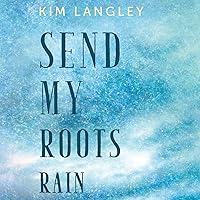
Highly recommended. I read boat loads of books on Grief, both while I was caring for my parents and while writing my own book on grief published in 2019. This book really does provide a missing piece. Well I was writing send my roots rain, I interviewed dozens of people, both Grievers and chaplains hospice workers therapist and even people who know a lot about grief confided to me that they were surprised how much anxiety they felt when they were going through grief themselves. People talked about waking up at night, having panic attacks, and getting a Frizzle of anxiety every time the phone rang. Yet this was rarely mentioned in grief books. I especially recommend is for caregivers and helping professionals oh, but if you are one of those Grievers who has felt at times like you were losing your mind oh, you will find Kindred Spirits here.

September 25, 2025
Grief is messy and hard and lasts so much longer than we think. "As a society, we are bad at grief. We don’t honor it, and we don’t give it space."
I really enjoyed placing thought on how anxiety and grief go hand in hand and cheer one another on. As an anxious person who has struggled immensely with grief in the last year, being able to identify when they played into one another hit home whilst reading this.
I really enjoyed placing thought on how anxiety and grief go hand in hand and cheer one another on. As an anxious person who has struggled immensely with grief in the last year, being able to identify when they played into one another hit home whilst reading this.

February 12, 2020
I wish I would have had a resource like this after my sister died. It was the first time in my life I had really encountered severe anxiety and I felt blindsided by it. I now work as a therapist and would definitely recommend this book as a resource for clients grieving the loss of a loved one.

March 19, 2021
It always feels weird to say I “enjoyed” grief books because they are hard to read, but this one was really helpful and I definitely recommend it to anyone who is grieving, anxious, or both.
February 14, 2024
Excellent

June 25, 2024
Ten stars. I've read a lot of books on grief in the past year. They were all helpful, but this one was the best
September 3, 2024
This book was very insightful. Definitely has some very useful information that I will be applying to my own journey. Not an easy read.

Want to Read
June 16, 2025referenced in “Armchair Expert with Dax Shephard” episode Alanis Morissette
November 6, 2025
Read this for work (obviously) but it was really good if you’re into learning about grief and anxiety like I am 😅

April 18, 2025
grief is a reflection of love <3

September 16, 2026
★★★★★ 5/5 stars
This really helped me after my mother died back in February. I was dealing with unbelievable anxiety afterwards & this was like a God send. Grief and death is something we will unfortunately all face at some point. I think everyone, whether they’ve lost someone yet or not, should read this book or a book similar to it, it really helped me not only understand grief but normalize everything I was going through. Definitely a 5 star read. Anyone with anxiety should read this too.
This really helped me after my mother died back in February. I was dealing with unbelievable anxiety afterwards & this was like a God send. Grief and death is something we will unfortunately all face at some point. I think everyone, whether they’ve lost someone yet or not, should read this book or a book similar to it, it really helped me not only understand grief but normalize everything I was going through. Definitely a 5 star read. Anyone with anxiety should read this too.

June 10, 2019
I’m glad to have picked up this book a second time. Originally I thought that because it was geared toward those grieving a death, that it wouldn’t be relevant for me. But it turns out, death may not feel so different other sudden, traumatic losses of significant life relationships (in my case, an unexpected divorce). I feel like I gleaned helpful insights from this book. Would recommend paired with The Art of Swedish Death Cleaning.

December 4, 2022
I recognize that this book has a majority of four and five star reviews, but I found this book frustrating to read as a clinician. This was published in 2018 and props up an outdated and flawed model of grief and grieving under the guise of meeting people where they are.
Chapter 3 lays out a few of the problems inherent to using the five stages of grief as a model:
1. Kübler-Ross intended the model to only speak to the experience of the terminally ill and not to describe the experience of grief writ large, leading to confusion when the model is applied that way.
2. The cultural expectation that an individual progress in a linear fashion through the five stages of grief, rather than the actual up and down, back and forth of emotions that individuals experience. This often leads to a focus by the bereaved on the notion that they are “grieving incorrectly”.
3. It is old scholarship and we have more effective models (Attig and Workman’s models are named in the book) that break out of the stage model.
Chapter 3 then hand waves these concerns away because the stage model is pervasive in our culture and just needs to have an extra stage added. The author then proceeds to explain that anxiety fits into the stage model and exactly where in a linear fashion that new stage should sit in the model. Within a few pages of identifying the problem, we are straight back into compounding the notion that grief is a linear process.
I struggle with the idea that simply because a model is pervasive and a common touchstone culturally that we just need to bend that model until it works. If it doesn’t work, why not throw it away and find the models that do work? Why not confront the ineffective model and educate on the more effective and easier to explain models like Stroebe and Schutt’s dual process model or Neimeyer’s adaptive grieving?
Chapter 3 lays out a few of the problems inherent to using the five stages of grief as a model:
1. Kübler-Ross intended the model to only speak to the experience of the terminally ill and not to describe the experience of grief writ large, leading to confusion when the model is applied that way.
2. The cultural expectation that an individual progress in a linear fashion through the five stages of grief, rather than the actual up and down, back and forth of emotions that individuals experience. This often leads to a focus by the bereaved on the notion that they are “grieving incorrectly”.
3. It is old scholarship and we have more effective models (Attig and Workman’s models are named in the book) that break out of the stage model.
Chapter 3 then hand waves these concerns away because the stage model is pervasive in our culture and just needs to have an extra stage added. The author then proceeds to explain that anxiety fits into the stage model and exactly where in a linear fashion that new stage should sit in the model. Within a few pages of identifying the problem, we are straight back into compounding the notion that grief is a linear process.
I struggle with the idea that simply because a model is pervasive and a common touchstone culturally that we just need to bend that model until it works. If it doesn’t work, why not throw it away and find the models that do work? Why not confront the ineffective model and educate on the more effective and easier to explain models like Stroebe and Schutt’s dual process model or Neimeyer’s adaptive grieving?
Displaying 1 - 30 of 140 reviews