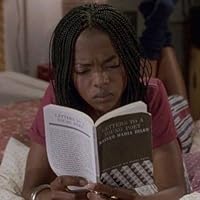
I read this book for my ASL class and I am so glad I had to. I learned so much and the author is great. I hope to read more books by him in the future.
"Join Mark Drolsbaugh in his fascinating journey from hearing toddler… to hard of hearing child… to deaf adolescent… and ultimately, to culturally Deaf adult. The struggle to find one’s place in the deaf community is challenging, as Drolsbaugh finds, yet there is one interesting twist: both his parents are also deaf. Even though the deaf community has always been there for him, right under his nose, Drolsbaugh takes the unbeaten path and goes on a zany, lifelong search… to become Deaf Again."
I read this for my second ASL class and it was enlightening to see the everyday struggles a Deaf person may face— us hearing folks may "know," but we don't really know. The crazy stories Drolsbaugh shares are entertaining and informative, inconceivable and jaw-dropping (like the time his mom gave birth to him and the epidural wasn't actually in her back like they thought it was, and when they finally listened to her screams of pain and administered anesthesia, the machine was broken and they were accidentally suffocating her. It's a good thing they *untied* one of her hands so she could sign that she couldn't breathe. Oops!). Overall this was a quick and insightful read with lots of wild stories and good advice. One problem I had with it was the writing. There were a lot of sentences with exclamation marks! And then there would be a period. Maybe two. But then there would be another exclamation again! I kind of felt like this was written for kids, but honestly, I think this is a good book for kids to read. Anyway, I have a report on this book that I urgently need to get back to, but the Goodreads review was more important.
This book was required for one of my ASL classes in college, but I really enjoyed reading it! The writing style is a little rough and sometimes jumps around or is repetitive, but I loved that the message was all about becoming a part of Deaf culture. It was really all about accepting Deafness, joining Deaf culture, and being proud of being deaf. Mark wrote a very eye opening story with aspect of Deaf culture and ASL that I never would have thought about before.
I picked up this book since it is a Deaf Culture requirement read for my ASL I class that I am taking. I absolutely loved this book not only for the insights into this culture, but it felt like part of the book modeled my own experiences. I felt like someone had written my own childhood story.
My mother never told me I was born hard of hearing, this was cause she despised labels. She always said that I was born with an old persons hearing. Marks story deals with alot of frustrations he's had to face cause of his own hearing, they are the same feelings I've had but have never been able to put into words.
I highly recommend this book to any and everyone. If you yourself is hard of hearing or you know someone who is or you know someone who is deaf or you are just curious about the deaf world!
I wish I wasn’t in such a hurry to finish this book (literally finished it the morning I was supposed to turn in my paper for it lol…) but I did genuinely enjoy reading about Drolsbaugh’s experience, and him finding his identity as a Deaf person. It blows my mind how completely ableist society has been (and still is), and I found myself asking, “why would anyone think that??” numerous times while reading this book. The simple answer is that people think Deaf individuals are “missing out” on a “hearing world” all because they can’t hear. Wrong! Everyone experiences the world differently, and it’s amazing how much Deaf people can accomplish when given the proper resources and environment as they develop. As a psych major myself, I was surprised at the amount of psychological info Drolsbaugh included, but I learned a thing or two that I hadn’t learned in my previous psych classes. Had this not been an assigned reading for my ASL2 class, I probably wouldn’t have picked it up on my own and read it but… I definitely am glad that I had the opportunity to. Seeing Drolsbaugh’s growth throughout the pages put me on a rollercoaster of emotions, but it was definitely a story that I felt fortunate enough to read about. I can only hope that other Deaf individuals go through a similar path as Drolsbaugh and find their pride in the Deaf community/culture, and their identity as a Deaf person as a whole!
"Als das pseudo-hörende Kind, das sich vor so vielen Jahren daran gewöhnt hatte, von anderen Leuten abhängig zu sein, in der Menge verloren zu gehen und Grenzen zu akzeptieren, die andere oder auch es selber sich setzte, hätte ich noch vor zehn Jahren etwas derartiges niemals für möglich gehalten. Heute stehe ich auf meinen eigenen Füßen. Ja, was mich angeht, gibt es so etwas wie Deaf Pride. Dieser Stolz existiert, und er ist der Funke, der mein Leben verändert hat"
Jeder der mit gehörlosen Menschen arbeitet oder gehörlose Verwandte hat, sollte dieses Buch lesen. So ein guter Erfahrungsbericht. Ich bin durch ein Karussell der Gefühle gegangen, hatte Tränen in den Augen: An einigen Stellen aufgrund von Frustration und Trauer und an einigen Stellen vor Lachen. Trotz, dass ich schon viel über das Thema weiß konnte ich viel aus seinen Erfahrungen entnehmen. Dies empfand ich als sehr wertvoll.
Very powerful, I can’t stop thinking about how inaccessible our culture is to anyone other than the most able-bodied, able-minded white man. What an important message in such a fun and chatty package.
This book is fabulous! From the perspective of a man born hearing to deaf parents, who became deaf as a child, then realized what being Deaf (w/a capital D) is all about as an adult; this book offers the perfect guide into the world of deaf culture. Also, as the author has matured and seen more sides to the many issues facing the deaf and hard of hearing world, he offers great insight and arguments on subjects from signing vs. oralism, to Cochlear Implants. Even if you are not an ASL student, or don't even know someone that is deaf, I recommend this book as a great read anyway!
I enjoyed this book from the start of Mark Drolsbaugh life to the start of his child's life. Really puts in perspective the amount of influence parents can have on a child and the fact that there is still heavy stigma against thoses who identify as Deaf. Overall the main take away is to make sure you respect others and that ASL is such a beautiful langauge and the Deaf community is just as beautiful. I recommend this book to thoses who want to read how important finding your identity is or rediscover it as well. My emoji review lol🤨🤔😨😊😊🤟🤟
Drolsbaugh's views on religion were my most interesting takeaway: his insulation from dogma by virtue of being Deaf facilitated a more personal navigation of the world's major belief systems. In addition to this, I learned that it's crucial to note that Dinner Table Syndrome can be prevented by engaging with the Deaf community. 4 out of 5 properly-received diaper shipments.
Drolsbaugh's writing is excruciating. Although I did learn a thing or two, I have no doubt that I could have learned far more from any number of other books about deafness.
One of the hardest fights a deaf man has to fight is to live in a world where every single day someone is trying to make him hear.
As opposed to overcoming deafness, this book expresses the joys of finding deafness.
An old Zen saying applies here: Empty your cup so that it may be filled. Deafness emptied my cup.
Nearly every weekend I would find myself in the same predicament: My college friends would stop by on Friday night, raving about a great party I couldn't afford to miss. I'd politely decline, citing my responsibilities a work the next day. They, in turn, would cite my responsibilities as a beer-chugging party animal.
At that age, children are naturally egocentric; I couldn't help but think that the other kids were receiving the same warped input as I was. I didn't really believe at the time that something might be seriously wrong with me.
When hearing parents (in my case, grandparents) first learn that their child is deaf, it can be very overwhelming. It is a shock, a tremendous shock, and it sets off a reaction that is similar to the stage of grief (shock, denial, anger, depression, the whole works). The difference is, they are not grieving a dead person. They are grieving for someone who is very much alive, and in the process can greatly influence that person.
Unbeknownst to them, the mixed message I received was, "We love you, but deafness is a horrible condition. You've got to be fixed." What are the psychological implications of such a message? To me, it meant I had to deny who I really was, and that somehow I had to pretend that I could hear. It meant I had to brown-nose hearing paper, act like them, act like I understood them, and remove myself from anything associated with deafness. In other words, sign language was verboten. I was told not to sign and I respectfully complied.
How can you blame people for wanting what they truly believe is best for you?
No matter what I say, the question always remains: How could a deaf child be surrounded by so much deafness in his family and not internalize it as part of his own identity?
It's hard to answer questions you don't understand.
The teachers were not content with just answers; they wanted more questions.
Whether amusing or annoying, we owe it to our children to answer as many of their whys as possible. When we take the time to do this, children internalize crucial information. This greatly enhances their overall development in terms of thought processing and general knowledge acquisition.
Many sounds are next to impossible to decipher no matter where they originate. For example, 'b', 'p', and 'm' look virtually identical from a lip-reading assessment. If Ben is one of the men who got a new pen, it's going to take me awhile to figure it out. If Mark went to the park, or if mom is the bomb, I'm scratching my head. Is that Matt at bat, or is it Pat? Pass the aspirin, please.
Human interaction is a blessing; it is such a waste to discriminate.
I was deaf. I grew up with a blank slate that allowed me to see things from a more neutral perspective. In other words, deafness emptied my cup. Thanks to deafness I can see the different religions simply as they are, without any bias. It has helped me learn so much about people--both the good and the bad--and I literally thank God for deafness.
If these were the twilight years, why shouldn't they enjoy every minute of it?
I was close, but never equal.
Eventually I got a part-time job as a supermarket clerk. It was okay, nothing fancy. To me, it was the end of the road. Since this job was not that bad for a deaf guy, I made it my career goal. Maybe someday I could manage the general merchandise department, who knows. Even if that never happened, I was still doing pretty good--because, everybody, sing along with me: Not bad for a deaf guy.
I realized I could routinely accomplish what I had once thought was impossible.
But the martial arts had succeeded in teaching me a valuable lesson; I learned that when we bear down and put our minds to it, we can accomplish anything.
Remember, we're talking about a naïve deaf kid who still had a lot of growing up to do. The words girls, beach, keg party, and bear bong still held a lot more appeal than, say, it's time to start thinking about what you want to do with your life.
We were forever young, at least until we hit twenty-one.
Couldn't these people just leave me alone? Couldn't they stop poking around in my ears? Although I never really spoke up when I was younger, deep down inside I always wished that people would stop obsessing over my ears. I simply wanted them to appreciate me, the whole person. Couldn't they stop trying to fix me and just accept me for who I was? That was all I ever wanted.
You've passively accepted everything that's ever happened to you. You didn't have a choice. You were alone in the hearing world, but it's not like that here. At Gallaudet you can be anything you want. You can speak up for yourself. -Vijay
I realized that in the hearing world, I'd grown accustomed to the futility of it all. Namely sit down and shut up; wear your hearing aid; never mind, it's not important; I'll tell you later, just do what your teacher says.
I didn't know what I was missing--that's what I now tell everyone who argues against my belief that deaf children should have the opportunity to interact with others like themselves. I have had many non-culturally deaf people tell me that they are doing great in the hearing world, getting by on oralism and never signing, and that they are happy and successful doing so. I, too, was once like that. I was proud of my status as the only deaf graduate of GFS; I was proud of my job at the supermarket; I was proud of my ability to interact with hearing people quite well. And I just didn't know what I was missing.
I often zoned out. I was a space cadet, and a frequent flyer at that.
We learn how to live life, the most important lesson of all.
Never be satisfied; strive for more. -Ms. Childs
There are countless wonders in this world, and countless ways to enjoy them.
Let us enjoy what we can, and don't worry about what we can't. I feel that we're better off celebrating our differences instead of imposing our values onto each other.
The cure for deafness is our deaf children... Tolerance and understanding are the best lessons we can teach our children... -Chris deHahn
Deafness is a disability that is so unique, its very nature causes a culture to emerge from it.
I can't emphasize enough how much it means to have a sense of belonging. People need to realize that there's a big difference between "fitting in" and "belonging." Fitting in is something I did when I immersed myself in the hearing world. Fitting in requires effort. It's exhausting and you can also argue that it's not really genuine because to one degree or the other, it involves trying to win other people's approval. Belonging, on the other hand, is a far more rewarding phenomenon where you can kick back, be yourself, and know you are accepted.
really a (2.6 ⭐️) but we’ll stick to a 2 star rating
I read this book for my sign language class and I absolutely hated every second of it. I came into this book really excited because the book I read in my ASL1 class was really good, I thought this would be the same. Boy was i wrong!
I feel like this book could have been a blog post and not a full book. It was very convoluted and filled with little stories that didn’t matter. This guys parents are absent and awful. He tries to play it off but they’re just not good people, the same goes for his grandparents. Anyways, I can yap on forever on why this book was a big stinker. This book felt like when an older person talks on and on about their childhood and the story is supposed to have a moral and conclusion but it’s just not getting there and you really don’t care what they’re talking about but you are sat next to them for the whole dinner and the only way you can escape is by going to the bathroom.
I really enjoyed most of this book, but for some reason the last few chapters were tough for me to get through. It became a disclaimer of "I'm not here to say how what the perfect was to be deaf is" which is a great message, but didn't require so much time. The book is the author's experience of struggling at a mainstream school and eventually immersing himself into Deaf culture and ASL. It was really interesting to read of his hearing relatives and deaf parents pushing so hard for him to be a part of the hearing world via surgeries and hearing aids. It was pretty heartbreaking to read about all of the difficulties that deaf people facing when trying to receive education and trying to socialize when they are the only deaf person amongst a group of hearing people. I feel encouraged to pursue learning and implementing more ASL into my life so for that alone I liked this book a lot.
Read for my ASL class. It was a rather challenging look at how oralism in schools went on to affect the Deaf children of Deaf parents even after total communication was being offered. It was interesting and at times sad to read about the author’s early life uncomfortably trying to straddle the hearing and Deaf communities (mostly due to pressure from hearing family and his Deaf parents’ past experiences in their own education). There were missed opportunities that made me feel frustrated for him, and yet, like all of us, each of those challenges and experiences came together to make him exactly who he is and made it all the sweeter when he found a place a belonging with the Deaf community in adulthood.
The author certainly isn't going to give you lovely words here. The writing style is a little rough, but is written in biography style. This is good since the author is very arrogant with his way is the right way. He does admit that there are as many different deaf people as there are deaf people and no one way is right. He gives a rant on Cochlier ear implants, but the age of the book may represent an old technology. Not saying this is the solution for all, but it is for some. And there needs to be acceptance in any community for people that do want to try that.
While I had to read this book for my ASL class, I genuinely looked forward to the weeks it was assigned as reading. I really enjoyed learning more about deaf culture through Drolsbaugh's anecdotes. More importantly, I think he provides a lot of good insight to the discrimination deaf people face that I'm sure a lot of hearing people don't think about. I know there were a lot of things that I was completely unaware of as a hearing person, so I'm thankful I read this book. I would honestly recommend this book to anyone outside of required class reading.
This book for required reading for my ASL class at university but I have to say I seriously enjoyed it! Though it is not the most eloquent writing, it is real and honest. I’ve read a couple of books before dealing with Deaf cultural or involving deaf characters but ever a nonfiction autobiography. I definitely feel like this story changed my perspective and has motivated me even more to learn ASL!
I’m a hearing student in an ASL Interpreter Training Program and new to learning about deaf culture. I so enjoyed learning more about deaf culture in general, but specifically through the lens of Mark’s perspective as someone with post-lingual hearing loss who was late in claiming his Deaf identity. This book covers a lot about the importance of language and acquiring it at a young age, as well as an expiration of identity itself. Great read.
Drolsbaugh gives a deaf perspective that everyone can learn from. For hearing, it gives you an idea of what it's like for some of the community you're so curious about. For deaf, it provides an experiance that you might relate to on a personal level. For both, it provides a humorous outlook on the life of Mark Drolsbaugh told in autobiographical format and the story he tells is intriguing, informative and an all-around great read.
A compelling true story. The author does an amazing job at making the deaf experience accessible to those who do not have any knowledge about it. The writing is simple but thorough and communicates ideas and history excellently. Highly recommend it to hearing individuals who have deaf family members especially.
This gave me an insight into Deaf culture that I never would have learned otherwise. I thought it was really cool!
Two personal notes: 1) Mark Drolsbaugh and his wife remind me of my parents (my dad is a psychologist and my mom is a teacher). 2) I'm autistic and I could relate a little too much to what Mark Drolsbaugh called "social bluffing".
This was a required reading for my ASL 1 class. Brought a lot of interesting perspective from a person who experienced the loss of his hearing and had to accept his deafness and then gain an appreciation for deaf culture. It's insightful and informative, but a little unorganized and difficult to find themes or cohesion within a chapter at times.
I read this for my ASL 101 class and I am so glad we did! I went in to the course expecting to just learn the language, but we have been doing a much deeper dive on the culture, which I absolutely love. Growing up hard of hearing meant that I could relate to some of what Drolsbaugh described in this book, or at least I knew some people who did.
I had to read this book for class. It gave some good insights into Deaf culture and issues that deaf individuals face. However, the author is really not interesting enough to write an autobiography. It also felt extremely preachy, which got old pretty quickly.
Another book I read during college. Mark is born hearing but slowly becomes deaf during adolescence. Even though both his parents are also deaf, he struggles to find his own identity and place in deaf culture.
However, the information in this book is so eye opening. I have learned so much about Deaf issues and the Deaf community. Really glad I randomly picked this book up.