

What do you think?
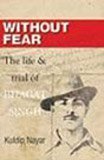
Without Fear: The Life and Trial of Bhagat Singh
Bhagat Singh 1907-31) lived at a time when India's freedom struggle was beginning to flag and when Mahatma Gandhi's non-violent, passive resistance to partial liberation was beginning to test the patience of the people. In this bestselling book, now published with a modern, contemporary look, Kuldip Nayar takes a close look at the man behind the his beliefs, his intellectual leanings, his dreams and his despair. The book explains for the first time why Hans Raj Vohra turned approver and betrayed Bhagat Singh, and throws new light on Sukhdev, whose loyalties have been questioned by some historians. But most of all it puts in perspective Bhagat Singh's use of violence, so strongly condemned by Gandhi and many others as being extremist.
264 pages, Hardcover
First published October 30, 2007
Ratings & Reviews
Friends & Following
Create a free account to discover what your friends think of this book!
Community Reviews
Displaying 1 - 30 of 108 reviews

March 21, 2026
There is no crime that Britain has not committed in India. Deliberate misrule has reduced us to paupers, has ‘bled us white’. As a race and a people we stand dishonoured and outraged. Do people still expect us to forget and to forgive? We shall have our revenge – a people’s righteous revenge on the tyrant. Let cowards fall back and cringe for compromise and peace. We ask not for mercy and we give no quarter. Ours is a war to the end – to Victory or Death.
~ Bhagwati Charan Vohra, in, 'The Philosophy of the Bomb'
This very much also summarizes the fearless nature of the revolutionaries, who for the sake of
complete independence, for the sake of ringing the death knell of capitalism and class distinction and privileges, for the sake of thwarting the colonialists, for the sake of a pluralistic society, were ready to give their lives for their cause.
The critical thinking and cognizance shown by Bhagat Singh and all other revolutionaries is simply formidable. These men, at a tender age (22-23) were capable of such ideas and fearlessness and that too nearly a century ago. Bow my head to thee!
3.85 rounded to 4 stars
~ Bhagwati Charan Vohra, in, 'The Philosophy of the Bomb'
This very much also summarizes the fearless nature of the revolutionaries, who for the sake of
complete independence, for the sake of ringing the death knell of capitalism and class distinction and privileges, for the sake of thwarting the colonialists, for the sake of a pluralistic society, were ready to give their lives for their cause.
The critical thinking and cognizance shown by Bhagat Singh and all other revolutionaries is simply formidable. These men, at a tender age (22-23) were capable of such ideas and fearlessness and that too nearly a century ago. Bow my head to thee!
3.85 rounded to 4 stars

May 31, 2023
23 Years in a Storm…
Preamble:
--What prevents Indian revolutionary Bhagat Singh’s biography from reaching the level of Che (I Embrace You with All My Revolutionary Fervor: Letters 1947-1967) or Frederick Douglass (My Bondage and My Freedom) is Singh was executed at the age of 23.
--Thus, this was an abbreviated life caught in a storm. It’s difficult to capture and evaluate this context in the format of a book, in contrast to academic works where the author has the privileged time and armchair safety/hindsight to synthesize many lifetimes.
…Indeed, it took a final prison sentence for Singh to have the time/space to dive into his own critical research, and according to this biography Singh wrote 4 books whose manuscripts were lost!
i) The History of the Revolutionary Movement in India
ii) The Ideal of Socialism
iii) Autobiography
iv) At the Door of Death
Highlights:
--Let’s start with Vijay Prashad’s quip critiquing the supposed “globalization” of intellectual theory, where all the theory comes from the Global North, while the Global South is expected to only produce guerilla manuals. It’s crucial to uncover the “organic intellectuals” on the front lines of struggles; “new intellectuals” must use their privileged time/space/access to synthesize and amplify these voices and thoughts (I unpack Vijay’s lecture on this in critiquing The Old is Dying and the New Cannot Be Born: From Progressive Neoliberalism to Trump and Beyond).
…We glimpse the maturation of Singh from the fragmented ideas collected to contextualize his actions (once again, I don’t find the biography format ideal for systematic analysis):
1) Strategy: Reformism (political democracy) vs. Radicalism (economic democracy):
--Foundational to the transition away from reformism (ex. liberal charity) is structural analysis beyond mere surface appearances:
2) Tactics: Compromise vs. Terrorism vs. Revolution:
--The storm of life forced much more attention on short-term actions (tactics). Singh represented a radical flank effect (see How to Blow Up a Pipeline) to try and push the mainstream nationalist reformists (Gandhi/Nehru) away from coopting itself under contradictions (ex. Gandhi supporting Dominion Status; for the big picture, see the end of The Darker Nations: A People's History of the Third World).
--Thus, we have the expected push-pull relationship, where at times there were productive synthesis (Singh’s youth momentum invigorating Gandhi’s salt march; Singh using hunger strikes in prison, apparently setting the world record of 116 days!) while other times there were conflicts (Gandhi’s public appeals to call off the prisoner’s revolutionary movement without consulting with them).
--On the latter conflicts, I find the debate focuses (too much?) on the tactic of violence:
i) One pole is Gandhi’s dogmatic “non-violence”: when used for all circumstances, this can lead to sacrificial invitation of opposing violence, with the most extreme example being Gandhi’s infamous interview response on how the Jews should have resisted Hitler:
ii) I would not say Singh represents the extremes of the other pole: violence. The biography suggests Singh spent much time unpacking the contradictions of violence (still, the biographical format is lacking), trying to distinguish terrorism (target = anger/revenge against individuals, rather than against the establishment/system; effects = aggravating violence/fear, rather than nurturing social transformation):
Preamble:
--What prevents Indian revolutionary Bhagat Singh’s biography from reaching the level of Che (I Embrace You with All My Revolutionary Fervor: Letters 1947-1967) or Frederick Douglass (My Bondage and My Freedom) is Singh was executed at the age of 23.
--Thus, this was an abbreviated life caught in a storm. It’s difficult to capture and evaluate this context in the format of a book, in contrast to academic works where the author has the privileged time and armchair safety/hindsight to synthesize many lifetimes.
…Indeed, it took a final prison sentence for Singh to have the time/space to dive into his own critical research, and according to this biography Singh wrote 4 books whose manuscripts were lost!
i) The History of the Revolutionary Movement in India
ii) The Ideal of Socialism
iii) Autobiography
iv) At the Door of Death
Highlights:
--Let’s start with Vijay Prashad’s quip critiquing the supposed “globalization” of intellectual theory, where all the theory comes from the Global North, while the Global South is expected to only produce guerilla manuals. It’s crucial to uncover the “organic intellectuals” on the front lines of struggles; “new intellectuals” must use their privileged time/space/access to synthesize and amplify these voices and thoughts (I unpack Vijay’s lecture on this in critiquing The Old is Dying and the New Cannot Be Born: From Progressive Neoliberalism to Trump and Beyond).
…We glimpse the maturation of Singh from the fragmented ideas collected to contextualize his actions (once again, I don’t find the biography format ideal for systematic analysis):
1) Strategy: Reformism (political democracy) vs. Radicalism (economic democracy):
--Foundational to the transition away from reformism (ex. liberal charity) is structural analysis beyond mere surface appearances:
When I give food to the poor, they call me a saint....Seeking root causes leads to radicalism, esp. Marxist critiques of capitalism and Leninist critiques of imperialism. The young (by age, but less so by experience) Singh recognized how reformist “political democracy” preserves colonial India’s institutional structures; it might replace some official British representation with domestic representation and a new flag (British wealth/financial/corporate influence runs deeper), but it does not sufficiently challenge the colonial legacy of divide-and-rule inequities:
When I ask why the poor have no food, they call me a communist.
-Dom Helder Camara
Democracy was theoretically a system of political and legal equality. But in concrete and practical terms, it was inadequate. There could be no equality in politics and before the law as long as there were glaring economic inequalities. So long as the ruling class controlled jobs and the press and the schools of the country and all organs of public opinion; so long as it monopolized all trained public functionaries and disposed of unlimited funds to influence elections; so long as laws were made by the ruling class; so long as lawyers, who were private practitioners, sold their expertise to the highest bidder and litigation was exclusive and costly, there would be only nominal equality before the law. So the revolutionaries believed and talked. [Emphasis added]”--Had Singh lived longer (or at least his manuscripts survived), long-term/structural strategy is where such a radical would shine, while reformists like Gandhi would be exposed for their limitations. We can consider The Doctor and the Saint: The Ambedkar - Gandhi Debate.
2) Tactics: Compromise vs. Terrorism vs. Revolution:
--The storm of life forced much more attention on short-term actions (tactics). Singh represented a radical flank effect (see How to Blow Up a Pipeline) to try and push the mainstream nationalist reformists (Gandhi/Nehru) away from coopting itself under contradictions (ex. Gandhi supporting Dominion Status; for the big picture, see the end of The Darker Nations: A People's History of the Third World).
--Thus, we have the expected push-pull relationship, where at times there were productive synthesis (Singh’s youth momentum invigorating Gandhi’s salt march; Singh using hunger strikes in prison, apparently setting the world record of 116 days!) while other times there were conflicts (Gandhi’s public appeals to call off the prisoner’s revolutionary movement without consulting with them).
--On the latter conflicts, I find the debate focuses (too much?) on the tactic of violence:
i) One pole is Gandhi’s dogmatic “non-violence”: when used for all circumstances, this can lead to sacrificial invitation of opposing violence, with the most extreme example being Gandhi’s infamous interview response on how the Jews should have resisted Hitler:
Hitler killed five million [sic] Jews. It is the greatest crime of our time. But the Jews should have offered themselves to the butcher’s knife. They should have thrown themselves into the sea from cliffs.....It would have aroused the world and the people of Germany.... As it is they succumbed anyway in their millions.…In directly critiquing Singh’s “revolutionary murder”, Gandhi insisted as “hard facts” that such actions demoralised the people”, have no place in “Indian tradition”, and seems to just dismiss Singh’s popularity by insisting the “efficacy of the opposite method, i.e. non-violence”.
ii) I would not say Singh represents the extremes of the other pole: violence. The biography suggests Singh spent much time unpacking the contradictions of violence (still, the biographical format is lacking), trying to distinguish terrorism (target = anger/revenge against individuals, rather than against the establishment/system; effects = aggravating violence/fear, rather than nurturing social transformation):
[The revolutionaries of Bengal] had discarded what they termed ‘anarchism’, or the path of the bomb and the gun. They felt it was possible to fight for socialism through the mobilization of the masses. […]
Das did not, however, agree to teach Bhagat Singh how to make a bomb [to throw in the Assembly Hall courtroom, “away from the seated members”; “Our sole purpose was to make the deaf hear and give the heedless a timely warning”]. His party had abandoned ‘acts of individual terrorism’, as he put it, and he, for one, refused to violate the party discipline. However, Das changed his mind when he was convinced that the killing of top British officials would instil a sense of bravery in the youth and make them participate in revolutionary activities. He noted the panic that had gripped the British after a couple of killings. The old placid situation had undergone a sea-change. […]
Bhagat Singh rejected the idea [for him to escape after throwing the bomb]. He said that it was time that words were spoken. Nothing had ever remained of any revolution but what was rife in the conscience of the masses. Words alone could do that. The rulers must be put in the dock. The court should be used as a forum to propagate revolutionary patriotic ideas and to awaken the people’s fervour for freedom. The public must clearly understand and appreciate the motives of the revolutionaries.
If the motive was not considered, said Bhagat Singh, then, ‘Jesus Christ would appear to be a man responsible for creating disturbances, violating peace and preaching revolt and would be considered a dangerous personality in the language of the law. But we worship him.’ […]
Bhagat Singh believed that oppression should evoke feelings of retaliation, not mere protest [a related perspective: “protest” is restricted to appealing to the current power structure. The alternative is “direct action”, to act as if you were already free and face the consequences; however, violence is still a major debate, from its morality i.e. when is it “self-defence”, to its consequences for the movement]. Violence was a catharsis for the oppressed. It was a cleansing force. It freed the subjugated from their inferiority complex, their despair. It made them fearless and restored their self-respect. It was a phase, an inevitable phase of the revolution. [The biographer sure is channeling Fanon; emphases added].

April 13, 2015
I am not ashamed to admit that I'm afraid of death. It suffocates me when I encounter it around me. Even a bird dangling from the jaws of a jubilant dog depresses me, let alone the knowledge of people dying in my family.
The issue with my fear is that I can't ever win it. In the fight between me and death I will always have to bow down. But, to me, it is a matter of how I will surrender rather than when. If I am being taken, I want to be at peace with it. I want to be in control. That is how I'll be satisfied and not die with a painful heartache.
The troubling part of this fear is that it grows with time. I constantly feel like I'm not happy. There are so many faces smiling at me and yet this feeling gnaws at me. I always keep pondering over how I can make sure I leave something substantial behind me. Even if it touches one life, I feel I'll have fulfilled my purpose.
Today is the year I'm turning twenty-three. This is also the year that I read a book about a man who was happy when he kissed the rope that was going to hang him to death when he was only twenty-three. And all the time I was reading it I had this question burning in my head, 'How could he do it?'
It'll be safe to record here that I found the answer to this question even before I finished reading the book. I found it in the ideas expressed by him. He was clear and honest about what he wanted to do and he knew his death would be a milestone. Obviously he underestimated the importance of it because here's a guy of his age writing about him eighty-four years after his final plan kicked off!
Bhagat Singh, the name that would sent a small shiver down your spine once you read the book cover to cover, was a revolutionary with one ambition. It wasn't freeing India from the tyranny of the British. That was only a small idea contained in his larger vision. He wanted to make India independent. He suspected that even though the British left the country in peace, it still wouldn't be able to keep both its feet on the ground.
He had an incessant hunger for knowledge. It is astounding how much he read even when he was in the middle of a hunger strike holed up in a prison. What kind of man gains an upper-hand over such distressing conditions and find time to read, think and write down their ideas when there's hopelessness around them? That in the age when the youth in today's India is struggling to take another examination that will get them a mind-numbing degree.
It felt gratifying when I learned that Bhagat Singh was an atheist. Imagine the courage it takes to believe that your death, which is only a few months away, will be the end of you. Religion provides relief with the belief that your soul lives on even after your physical body ceases to exist. This is the cake for revolutionaries who are afraid of death. But what cake did our hero have? How could he do it?
Perhaps this is the greatest of mystery that binds me to his story. How could he be so certain that his death will be the best thing to happen to his cause? And when he found a way to be sure, how did he bring himself around to actually do it?
Without Fear tells the story of the green mile- Bhagat Singh's walk from the freedom to bomb assemblies to to the gallows that silence him. Throughout the book there is a eerie silence. I read it with my teeth grinding against each other. I could feel my rage surging through me. And I kept asking myself time to time, 'Could I have done this?'
I think it became easier for him once he made peace with his priorities. Though, it would be insulting to try to understand him, I would really like to believe that he was one of us. Someone who wanted something so bad that he could end his life to achieve it. He'd like to burn it in the face of the humanity that would survive him and show them how it's done. He'd really, really love having the last word.
But, again, this assessment could be wrong because he transcends hate, love or anger. He is a revolutionary and he couldn't spare such feelings. That would dumb him down to a terrorist who is driven by vengeance and not logic.
It is an educational exercise to study this man. If you read his thoughts penned down himself, you'd start wondering if you really like Gandhi's idea of non-violence. The strength in his belief makes you doubt if there is a right side to the never-ending debate of violence versus non-violence. That is the power of logic. It makes you pick sides ensuring that you never turn. It brings out your true self and spells it out for you.
I think if it's highly recommended in our society to read the autobiography of Mahatma Gandhi, it must be equally vital to read a book on any of the revolutionaries. That is the true way to find your freedom.
Coming back to me, I think I'll read more about what Bhagat Singh has written, instead of reading about him. I want to find how I will ever find something that'll make me smile as I go down. That is the true way to find my liberation.
The issue with my fear is that I can't ever win it. In the fight between me and death I will always have to bow down. But, to me, it is a matter of how I will surrender rather than when. If I am being taken, I want to be at peace with it. I want to be in control. That is how I'll be satisfied and not die with a painful heartache.
The troubling part of this fear is that it grows with time. I constantly feel like I'm not happy. There are so many faces smiling at me and yet this feeling gnaws at me. I always keep pondering over how I can make sure I leave something substantial behind me. Even if it touches one life, I feel I'll have fulfilled my purpose.
Today is the year I'm turning twenty-three. This is also the year that I read a book about a man who was happy when he kissed the rope that was going to hang him to death when he was only twenty-three. And all the time I was reading it I had this question burning in my head, 'How could he do it?'
It'll be safe to record here that I found the answer to this question even before I finished reading the book. I found it in the ideas expressed by him. He was clear and honest about what he wanted to do and he knew his death would be a milestone. Obviously he underestimated the importance of it because here's a guy of his age writing about him eighty-four years after his final plan kicked off!
Bhagat Singh, the name that would sent a small shiver down your spine once you read the book cover to cover, was a revolutionary with one ambition. It wasn't freeing India from the tyranny of the British. That was only a small idea contained in his larger vision. He wanted to make India independent. He suspected that even though the British left the country in peace, it still wouldn't be able to keep both its feet on the ground.
He had an incessant hunger for knowledge. It is astounding how much he read even when he was in the middle of a hunger strike holed up in a prison. What kind of man gains an upper-hand over such distressing conditions and find time to read, think and write down their ideas when there's hopelessness around them? That in the age when the youth in today's India is struggling to take another examination that will get them a mind-numbing degree.
It felt gratifying when I learned that Bhagat Singh was an atheist. Imagine the courage it takes to believe that your death, which is only a few months away, will be the end of you. Religion provides relief with the belief that your soul lives on even after your physical body ceases to exist. This is the cake for revolutionaries who are afraid of death. But what cake did our hero have? How could he do it?
Perhaps this is the greatest of mystery that binds me to his story. How could he be so certain that his death will be the best thing to happen to his cause? And when he found a way to be sure, how did he bring himself around to actually do it?
Without Fear tells the story of the green mile- Bhagat Singh's walk from the freedom to bomb assemblies to to the gallows that silence him. Throughout the book there is a eerie silence. I read it with my teeth grinding against each other. I could feel my rage surging through me. And I kept asking myself time to time, 'Could I have done this?'
I think it became easier for him once he made peace with his priorities. Though, it would be insulting to try to understand him, I would really like to believe that he was one of us. Someone who wanted something so bad that he could end his life to achieve it. He'd like to burn it in the face of the humanity that would survive him and show them how it's done. He'd really, really love having the last word.
But, again, this assessment could be wrong because he transcends hate, love or anger. He is a revolutionary and he couldn't spare such feelings. That would dumb him down to a terrorist who is driven by vengeance and not logic.
It is an educational exercise to study this man. If you read his thoughts penned down himself, you'd start wondering if you really like Gandhi's idea of non-violence. The strength in his belief makes you doubt if there is a right side to the never-ending debate of violence versus non-violence. That is the power of logic. It makes you pick sides ensuring that you never turn. It brings out your true self and spells it out for you.
I think if it's highly recommended in our society to read the autobiography of Mahatma Gandhi, it must be equally vital to read a book on any of the revolutionaries. That is the true way to find your freedom.
Coming back to me, I think I'll read more about what Bhagat Singh has written, instead of reading about him. I want to find how I will ever find something that'll make me smile as I go down. That is the true way to find my liberation.
April 16, 2020
“If Gandhi was the sun on the political sky of India, Bhagat Singh was the star that had risen from the depths of darkness.”
If one were to ask any history enthusiast who the most popular Indian freedom fighter is after the Mahatma, they’d most probably answer Bhagat Singh. This popularity is due to three words that the author has used to describe him in the book – ‘romantic idealist revolutionary’. Revolution was an idée fixe for him. It would be near impossible to find a character similar to Bhagat Singh in modern history, who at the young age of 23 (1907-31) grew into an intellectual revolutionary, and used the medium of guns and brains to shatter the British supremacy. This he did with the ‘Philosophy of the Bomb’.
Kuldip Nayar does a fastidious job in extracting the nitty-gritties of Bhagat Singh’s life. There are moments where a reader would find oneself in awe with revelations that are almost mind boggling. The public perception of Bhagat Singh, particularly amongst the youth, is so related to guns and blazes, that it becomes difficult to fathom a romantic in him. This, the author, narrates through an apparent romantic fascination that Bhagat Singh had with Bhagwati Charan’s wife Durga Devi.
Lahore Conspiracy Case is what led to Bhagat Singh, Shivaram Rajguru and Sukhdev Thapar’s hanging on 23 March, 1931. The trial was nothing but a ‘rigmarole of justice’. The constant cries of ‘Long Live Revolution’ (Inquilab Zindabad) and ‘Down with Imperialism’ adored the tribunal courts every time the prisoners walked in. Even today, these cries bring goose bumps to quite a many.
Very few would know the fact that Bhagat Singh had surpassed the 97-day world record for hunger strikes in October 1929, set by an Irish revolutionary, with a 116-day strike cum fast against the harsh treatment meted out to them (political prisoners) and to better the conditions in jail. Surprisingly, this he did following the footsteps of a man he found quixotic and vainglorious, Mohandas Karamchand Gandhi - satyagraha along ahimsa.
Two major highlights of the book were Bhagat Singh’s relationship with Gandhi and the correspondence between Hans Raj Vohra and Sukhdev’s brother much later after India gained independence. Gandhi rebuked the revolutionaries through ‘The Cult of the Bomb’ describing how disconsolate he was with them. HR Vohra along with Jai Gopal and three others, had turned approvers during the trial despite being deeply involved in the conspiracy that led to the death of J.P. Saunder’s, the DySP of Lahore, which took place in retaliation to Lala Lajpath Rai’s death. Though his justification can never be digested, his letters speak volumes on the complicated thought processes of his contemporaries as revolution is no soft-hearted man’s game.
One may find this book a little too short, particularly for those who are besotted with him. It is difficult to describe the cult that Bhagat Singh began but certainly, revolution may be ‘anti-God but is certainly not anti-man’. It’s a must read for those who’d love to explore a man of several hues. A legend who may rightly be described as, taking cue from how Nehru described Gandhiji, ‘the greatest apostle of revolution in the world’.
Ramit Chennithala
17 April 2020
If one were to ask any history enthusiast who the most popular Indian freedom fighter is after the Mahatma, they’d most probably answer Bhagat Singh. This popularity is due to three words that the author has used to describe him in the book – ‘romantic idealist revolutionary’. Revolution was an idée fixe for him. It would be near impossible to find a character similar to Bhagat Singh in modern history, who at the young age of 23 (1907-31) grew into an intellectual revolutionary, and used the medium of guns and brains to shatter the British supremacy. This he did with the ‘Philosophy of the Bomb’.
Kuldip Nayar does a fastidious job in extracting the nitty-gritties of Bhagat Singh’s life. There are moments where a reader would find oneself in awe with revelations that are almost mind boggling. The public perception of Bhagat Singh, particularly amongst the youth, is so related to guns and blazes, that it becomes difficult to fathom a romantic in him. This, the author, narrates through an apparent romantic fascination that Bhagat Singh had with Bhagwati Charan’s wife Durga Devi.
Lahore Conspiracy Case is what led to Bhagat Singh, Shivaram Rajguru and Sukhdev Thapar’s hanging on 23 March, 1931. The trial was nothing but a ‘rigmarole of justice’. The constant cries of ‘Long Live Revolution’ (Inquilab Zindabad) and ‘Down with Imperialism’ adored the tribunal courts every time the prisoners walked in. Even today, these cries bring goose bumps to quite a many.
Very few would know the fact that Bhagat Singh had surpassed the 97-day world record for hunger strikes in October 1929, set by an Irish revolutionary, with a 116-day strike cum fast against the harsh treatment meted out to them (political prisoners) and to better the conditions in jail. Surprisingly, this he did following the footsteps of a man he found quixotic and vainglorious, Mohandas Karamchand Gandhi - satyagraha along ahimsa.
Two major highlights of the book were Bhagat Singh’s relationship with Gandhi and the correspondence between Hans Raj Vohra and Sukhdev’s brother much later after India gained independence. Gandhi rebuked the revolutionaries through ‘The Cult of the Bomb’ describing how disconsolate he was with them. HR Vohra along with Jai Gopal and three others, had turned approvers during the trial despite being deeply involved in the conspiracy that led to the death of J.P. Saunder’s, the DySP of Lahore, which took place in retaliation to Lala Lajpath Rai’s death. Though his justification can never be digested, his letters speak volumes on the complicated thought processes of his contemporaries as revolution is no soft-hearted man’s game.
One may find this book a little too short, particularly for those who are besotted with him. It is difficult to describe the cult that Bhagat Singh began but certainly, revolution may be ‘anti-God but is certainly not anti-man’. It’s a must read for those who’d love to explore a man of several hues. A legend who may rightly be described as, taking cue from how Nehru described Gandhiji, ‘the greatest apostle of revolution in the world’.
Ramit Chennithala
17 April 2020

August 10, 2014
This book had much potential but does not do justice to the one of the greatest revolutionaries this country has seen. No or minimal background is given about the other comrades and the author gets repetitive more than once. The trial of the Lahore conspiracy case takes up most of the book. It does provide some insight though on the thoughts of the great man that was Bhagat Singh. He was a very different person than most people today make him out to be. A voracious reader, not necessarily a supporter of violence, a staunch atheist, non believer in religion and a communist, I wonder what the India of today would make of a modern day Bhagat Singh.

January 8, 2022
“Jis dhaj se koi maqtal mein gaya Woh shaan salaamat rehti hai,
Yeh jaan to aani jaani hai Is jaan ki koi baat naheen”
There are many books on this subject. Some have jail diaries of the man and some have collection of his letters. This book is kind of mixture. Written by eminent journalist of India Mr. Kuldeep Nayyar, this book gives a balanced view of his life, vision and thoughts.
In foreword Mr. Nayyar discuss the difference between a revolutionary and terrorist. I found it quite engaging and thought provoking. It starts from the Lahore central Jail where the man is going to be hanged. And ends with the letter exchange between Hans Raj Vohra(Co-worker of Bhagat Singh and later turned informer of Britishers) and Mathura Das(Brother of Sukhdev). In 240 pages Author covers many letter exchanges, excerpts of Bhagat Singh’s diary and the details of Lahore conspiracy case trials.
I found writing good but sometime it seemed like news-paper reporting. Since Kuldeep Nayyar was a journalist so it is quite Understandable.
Detailed review - https://aankharipanna.wordpress.com/2...
Yeh jaan to aani jaani hai Is jaan ki koi baat naheen”
There are many books on this subject. Some have jail diaries of the man and some have collection of his letters. This book is kind of mixture. Written by eminent journalist of India Mr. Kuldeep Nayyar, this book gives a balanced view of his life, vision and thoughts.
In foreword Mr. Nayyar discuss the difference between a revolutionary and terrorist. I found it quite engaging and thought provoking. It starts from the Lahore central Jail where the man is going to be hanged. And ends with the letter exchange between Hans Raj Vohra(Co-worker of Bhagat Singh and later turned informer of Britishers) and Mathura Das(Brother of Sukhdev). In 240 pages Author covers many letter exchanges, excerpts of Bhagat Singh’s diary and the details of Lahore conspiracy case trials.
I found writing good but sometime it seemed like news-paper reporting. Since Kuldeep Nayyar was a journalist so it is quite Understandable.
Detailed review - https://aankharipanna.wordpress.com/2...
August 15, 2018
Firstly I would like to pay respects to Kuldip Nayar who passed away today. May his soul rest in peace. It's a coincidence that I found time today to write the review of his book "Without Fear - The life and trial of Bhagat Singh." I read about him few days ago and developed great respect for his career in public life.
I remember there was a huge controversy over an NCERT text book of 5th standard where Bhagat Singh is mentioned as a revolutionary terrorist. If there is any doubt in people's mind I suggest they read this book to understand what Bhagat Singh saw himself as and how he distinguishes a revolutionary from a terrorist.
Kuldip Nayar has written this book around the Lahore conspiracy case and the courtroom drama that eventually led the three great martyrs to the gallows. But what I found most interesting is the thought process of the great man. Often we have read in bits and pieces of his life, saw in movies (Bhagat Singh, Rang de basanti), but without actually understanding the man's thoughts we will do a great disservice to his legacy.
He said he needed to study, so he can gain knowledge and wisdom, so he can argue or defend objectively, to educate himself and others. His following of lenin and Marx, believing socialism was the best bet for India, his views on violence needed in a revolution, his differences with Mahatma Gandhi and the Indian national congress, how he thought his death will bring the masses together ready to fight the British are well chronicled by the author. Fascinating aspect is the account of Hans Raj Vohra and why he became an approver against the revolutionary members in prison.
I was also exposed to the concept of dialectical materialism, the acquisitive society, what it means by utopia etc.
Excellent read and fortunately during the week leading upto the 72nd independence day. Kuldip has written with great precision and excellent narrative. You often feel you are standing right there in every scene and you can feel the intensity and the tension. The letters by bhagat singh and the other supporting facts lend great support to the author's arguments.
I thoroughly enjoyed the book and I feel in a day and age where independence day and republic day have been reduced to mere holidays, where political motives drive the narrative, honest account of Indian legends via books such as this needs to be read and understood. My grandfather was a freedom fighter and although he never associated with the revolutionaries he had great respect for their courage and conviction that their way will bring independence.
I remember there was a huge controversy over an NCERT text book of 5th standard where Bhagat Singh is mentioned as a revolutionary terrorist. If there is any doubt in people's mind I suggest they read this book to understand what Bhagat Singh saw himself as and how he distinguishes a revolutionary from a terrorist.
Kuldip Nayar has written this book around the Lahore conspiracy case and the courtroom drama that eventually led the three great martyrs to the gallows. But what I found most interesting is the thought process of the great man. Often we have read in bits and pieces of his life, saw in movies (Bhagat Singh, Rang de basanti), but without actually understanding the man's thoughts we will do a great disservice to his legacy.
He said he needed to study, so he can gain knowledge and wisdom, so he can argue or defend objectively, to educate himself and others. His following of lenin and Marx, believing socialism was the best bet for India, his views on violence needed in a revolution, his differences with Mahatma Gandhi and the Indian national congress, how he thought his death will bring the masses together ready to fight the British are well chronicled by the author. Fascinating aspect is the account of Hans Raj Vohra and why he became an approver against the revolutionary members in prison.
I was also exposed to the concept of dialectical materialism, the acquisitive society, what it means by utopia etc.
Excellent read and fortunately during the week leading upto the 72nd independence day. Kuldip has written with great precision and excellent narrative. You often feel you are standing right there in every scene and you can feel the intensity and the tension. The letters by bhagat singh and the other supporting facts lend great support to the author's arguments.
I thoroughly enjoyed the book and I feel in a day and age where independence day and republic day have been reduced to mere holidays, where political motives drive the narrative, honest account of Indian legends via books such as this needs to be read and understood. My grandfather was a freedom fighter and although he never associated with the revolutionaries he had great respect for their courage and conviction that their way will bring independence.

February 6, 2021
4/5
What I liked about Bhagat Singh after reading this book was how a MAN of 20 years old (and at the time of 1920s) had a mind as Bhagat Singh had.
I had heard about Bhagat Singh before during my school days. We used to write essays about him and that's it! Reading him now makes me realize his character in a more detailed manner.
This book talks about,
1) Bhagat Singh (Revolutionaries) Vs Gandhi
2) The innocence of Bhagat Singh
3) Hunger Strike Case and the Lahore Conspiracy Case
4) Betrayer's Story and the Mystery of Sukhdev
5) Extra Annexures (which were excellent)
and more...
The above 5 were the ones where I had most of my attention span. I got intrigued by the relationship between Bhagat Singh and Durga Devi and; how Sukhdev triggered Bhagat Singh because of that; And Bhagat Singh's reaction to that.
At that moment, Bhagat Singh felt like a Gentleman to me. This part described a fair state of misogynism of 1920s men and how Bhagat Singh differed from them all.
I can't help Bhagat Singh to compare with Don Vito Corleone. Not in the negative aspect but in the aspect of how he reasons with people and the principle he followed.
I got so emotional during Bhagat Singh's last visit to his family!
Bhagat Singh was a guy who fought not only for the freedom of our country from a foreign rule but also fought against the inequalities and disgusting practices (in the name of religion and culture) Indians had at that time. This aspect of him was the one that made me like him more.
What I liked about Bhagat Singh after reading this book was how a MAN of 20 years old (and at the time of 1920s) had a mind as Bhagat Singh had.
I had heard about Bhagat Singh before during my school days. We used to write essays about him and that's it! Reading him now makes me realize his character in a more detailed manner.
This book talks about,
1) Bhagat Singh (Revolutionaries) Vs Gandhi
2) The innocence of Bhagat Singh
3) Hunger Strike Case and the Lahore Conspiracy Case
4) Betrayer's Story and the Mystery of Sukhdev
5) Extra Annexures (which were excellent)
and more...
The above 5 were the ones where I had most of my attention span. I got intrigued by the relationship between Bhagat Singh and Durga Devi and; how Sukhdev triggered Bhagat Singh because of that; And Bhagat Singh's reaction to that.
At that moment, Bhagat Singh felt like a Gentleman to me. This part described a fair state of misogynism of 1920s men and how Bhagat Singh differed from them all.
I can't help Bhagat Singh to compare with Don Vito Corleone. Not in the negative aspect but in the aspect of how he reasons with people and the principle he followed.
I got so emotional during Bhagat Singh's last visit to his family!
Bhagat Singh was a guy who fought not only for the freedom of our country from a foreign rule but also fought against the inequalities and disgusting practices (in the name of religion and culture) Indians had at that time. This aspect of him was the one that made me like him more.

July 18, 2018
It consumes you right from the very beginning till the last page. This heroic tail is exceptionally marvelous. Gripping to be exact. Writing style of the author is amazing as always. It carries you back very easily to about nine decades from now.
April 21, 2025
A poignant book about one of India's most revered freedom fighter- Bhagat Singh. I have always had the utmost adoration for Bhagat Singh. Very few are gifted with such patriotism as he had.
"Without Fear" brings to light the ideologies of Bhagat Singh, and why he believed in revolution. It exposes the buried truths about his life and beliefs. It shows the struggle India faced when under the British Raj. It highlights the cruelty that the British unflinchingly inflicted upon the millions of innocent Indians.
The price of Bharat's azadi was heavy. Yet, it did not stop our fighters from paying them. This is a resilient example of what happens when people are denied their basic right- Swaraj. When the British stripped India of her people the revolts and the struggles which spanned the course of our freedom struggle, showed that Indians are not one to take the bullets lying down. We fought back, with as much fervor as a tiger on the prowl.
Bhagat Singh was a revolutionary who inspired millions of Indians to fight for their land. He faced Death with open arms and a smiling face. His death prodded the Indians to get up and struggle.
In our times, we should take his and many others' death as an inspiration to strive towards a better future. One where Indians are free, and are not constricted by the chains of greed, hatred, jealousy, and lust.
It is our duty to honour our martyrs at all times. Hold them in your heart, bow your head, and believe that you will work towards a better future for India, for she is the one raised you.
Jai Hind!
"Without Fear" brings to light the ideologies of Bhagat Singh, and why he believed in revolution. It exposes the buried truths about his life and beliefs. It shows the struggle India faced when under the British Raj. It highlights the cruelty that the British unflinchingly inflicted upon the millions of innocent Indians.
The price of Bharat's azadi was heavy. Yet, it did not stop our fighters from paying them. This is a resilient example of what happens when people are denied their basic right- Swaraj. When the British stripped India of her people the revolts and the struggles which spanned the course of our freedom struggle, showed that Indians are not one to take the bullets lying down. We fought back, with as much fervor as a tiger on the prowl.
Bhagat Singh was a revolutionary who inspired millions of Indians to fight for their land. He faced Death with open arms and a smiling face. His death prodded the Indians to get up and struggle.
In our times, we should take his and many others' death as an inspiration to strive towards a better future. One where Indians are free, and are not constricted by the chains of greed, hatred, jealousy, and lust.
It is our duty to honour our martyrs at all times. Hold them in your heart, bow your head, and believe that you will work towards a better future for India, for she is the one raised you.
Jai Hind!
March 9, 2023
Amazing Journey to the legend's life.
October 8, 2017
Shaheed bhagat singh is an icon who continues to inspire not only the young but also the young at heart through his fearlessness and the intensity of his moral rectitude.Kuldip nayar has thus promptly chosen the title ‘without fear’ for his work, based on the life of the revolutionary jewel who had to dedicate his life at the tender age of 33 to the cause of revolution.
The book however is not a peep into the life of bhagat singh alone,it equally emphasizes the contribution of sukhdev and rajguru to the institution. Bhagat always looked up to his family for strength and inspiration(his father kishen singh and uncle ajit singh were renowned activists and revolutionaries),but sukhdev had only an uncle and a brother to call his own, and rajguru was an orphan.in the twilight of their lives after bhagat’s family had come to visit him one last time, he walks back to his cell to find his comrades despondent as they didn’t have anyone to come and see them.sukhdev had infact been the hrsa's mastermind and rajguru the most respected youth leader.The second half of the book gives an insight into the arguments between sukhdev and the prosecution witnesses,he had vehemently dismissed the entire procedure as a sham trial and had convinced his comrades to abstain from the redundant proceedings.He had written close to 255 comments during certain instances in the record of the trial he had maintained.the letters published verbatim give a deep cognizance into how well read and clear these firebrand revolutionaries were.Bhagat had even envisioned the effects partition could could create 20 years before the actual event.he was also satisfied with nothing other than complete cut off from british rule.
Comparisons can easily be drawn between the way these great souls had given up their lives to the jain ritual of sallekhana wherein the monk gradually gives up all forms of worldly enjoyments (inclusive of food)and finally attains moksha freeing himself from the cycle of rebirth.Through this way one attains the mettle to overcome the fear of death,but in their case the only difference being these 3 daredevils were still not ready to give up their ideology until the very end.Leaders like gandhi were the brain of the freedom movement ,but these young leaders were the heart and blood of it. Gandhi openly disagreed with the ideology of the revolutionaries saying ahimsa was always one step above ,but these men proved him wrong in the most dignified manner, all the while maintaining the respect towards him as the seniormost leader.Bhagat singh , jatin das and b.k dutt fasted for 116 days in jail entering into the guinness book of records bettering gandhi in his own forte.Their herculean accomplishment bore out to the whole world that what they stood for was something much beyond the attempts of appraisal the moderates resorted to. This was what set them apart from terrorists,their war wasn’t against people ,but against preset ideals.bhagat singh was a voracious reader and books were his close companions during his last days, when asked he had any last wish before being hanged he just asked for enough time for him to finish a chapter of a book he was currently reading.perhaps he was preparing himself for a happy ending.
There is only going to be one winner in the fight with death.The difference just lies in how we surrender to it than when we surrender and no one knew it better .Bhagat forbade his parents from filing a mercy petition saying if he wanted escape he could have done it right after throwing the bomb in the assembly . He wanted to do much more with this life than that.He wanted his life to be a symbol, a reservoir of energy from where his successors could imbibe the courage to oust the foreign rule in their motherland.True to this , the quit india movement was launched during this phase, when the whole country was imbibed in a state of resentment and mourning over the loss of their dear sons, and this was the primary reason why it was a big success.The magnanimity of his efforts were never fully acknowledged simply because there wasn’t a mahatma bhagat singh or a public holiday commemorating Bhagat Singh Jayanti. The fact that the political leaders took no efforts to recover 4 of the books he wrote during his jail tenure is a pointer to the grim fact that the leaders then were no different from what they are now.He was clear and honest about what he wanted to do and he knew his death would be a milestone, but he slightly underrated himself that way as here there is a guy writing about him some 8 decades after his martyrdom.Viva revolution!
The book however is not a peep into the life of bhagat singh alone,it equally emphasizes the contribution of sukhdev and rajguru to the institution. Bhagat always looked up to his family for strength and inspiration(his father kishen singh and uncle ajit singh were renowned activists and revolutionaries),but sukhdev had only an uncle and a brother to call his own, and rajguru was an orphan.in the twilight of their lives after bhagat’s family had come to visit him one last time, he walks back to his cell to find his comrades despondent as they didn’t have anyone to come and see them.sukhdev had infact been the hrsa's mastermind and rajguru the most respected youth leader.The second half of the book gives an insight into the arguments between sukhdev and the prosecution witnesses,he had vehemently dismissed the entire procedure as a sham trial and had convinced his comrades to abstain from the redundant proceedings.He had written close to 255 comments during certain instances in the record of the trial he had maintained.the letters published verbatim give a deep cognizance into how well read and clear these firebrand revolutionaries were.Bhagat had even envisioned the effects partition could could create 20 years before the actual event.he was also satisfied with nothing other than complete cut off from british rule.
Comparisons can easily be drawn between the way these great souls had given up their lives to the jain ritual of sallekhana wherein the monk gradually gives up all forms of worldly enjoyments (inclusive of food)and finally attains moksha freeing himself from the cycle of rebirth.Through this way one attains the mettle to overcome the fear of death,but in their case the only difference being these 3 daredevils were still not ready to give up their ideology until the very end.Leaders like gandhi were the brain of the freedom movement ,but these young leaders were the heart and blood of it. Gandhi openly disagreed with the ideology of the revolutionaries saying ahimsa was always one step above ,but these men proved him wrong in the most dignified manner, all the while maintaining the respect towards him as the seniormost leader.Bhagat singh , jatin das and b.k dutt fasted for 116 days in jail entering into the guinness book of records bettering gandhi in his own forte.Their herculean accomplishment bore out to the whole world that what they stood for was something much beyond the attempts of appraisal the moderates resorted to. This was what set them apart from terrorists,their war wasn’t against people ,but against preset ideals.bhagat singh was a voracious reader and books were his close companions during his last days, when asked he had any last wish before being hanged he just asked for enough time for him to finish a chapter of a book he was currently reading.perhaps he was preparing himself for a happy ending.
There is only going to be one winner in the fight with death.The difference just lies in how we surrender to it than when we surrender and no one knew it better .Bhagat forbade his parents from filing a mercy petition saying if he wanted escape he could have done it right after throwing the bomb in the assembly . He wanted to do much more with this life than that.He wanted his life to be a symbol, a reservoir of energy from where his successors could imbibe the courage to oust the foreign rule in their motherland.True to this , the quit india movement was launched during this phase, when the whole country was imbibed in a state of resentment and mourning over the loss of their dear sons, and this was the primary reason why it was a big success.The magnanimity of his efforts were never fully acknowledged simply because there wasn’t a mahatma bhagat singh or a public holiday commemorating Bhagat Singh Jayanti. The fact that the political leaders took no efforts to recover 4 of the books he wrote during his jail tenure is a pointer to the grim fact that the leaders then were no different from what they are now.He was clear and honest about what he wanted to do and he knew his death would be a milestone, but he slightly underrated himself that way as here there is a guy writing about him some 8 decades after his martyrdom.Viva revolution!

June 1, 2018
Like the varied country India is, its freedom struggle consisted of many streams, distinct in form and content from each other. School textbooks and government propaganda on the independence movement harp on a lone strand among them – Gandhi’s nonviolence. This is certainly not astonishing as the Nehru dynasty ruled or influenced the country’s administration for most of the seven decades it was independent. Nehru was Gandhi’s loyal protégé who was hoisted onto the leadership of an unwilling Congress in session at Lahore in 1929 as its president. The very first thing Congress governments did after independence was to sanitize the history of the freedom movement by purging elements hostile to Congress’ ideology and Nehru’s detractors from the chronicles of the country’s fight against the British. Bhagat Singh, whose great self-sacrifice on the altar of the country’s honour is mentioned in a bare paragraph in most of the officially approved accounts. Many books on the martyrdom of Bhagat Singh and his comrades found the light of day only in the last few decades. Singh’s trajectory sparked violence and death. They were not reluctant to kill their enemies and were not afraid to lay down their lives for the cause. Kuldip Nayar is a world-renowned journalist who has made this excellent volume that tells the history of Bhagat Singh’s life and trial.
Nayar portrays Bhagat Singh as a brave and committed nobleman of integrity. Though he was born in a family of zamindars (landlords), he was deeply influenced by the hard toil and pitiable living conditions of his neighbours. His conversion to atheism was deeply rooted, considering the fact that he was just 23 when he died. Singh’s courage is exemplified by an incident on the day he was hanged and narrated touchingly in the book. When his lawyer visited him to ascertain his last wish according to procedure, Singh enquired whether he had brought the book ‘The Revolutionary Lenin’ requested in an earlier meeting. As soon as the book was handed over to him, Singh started reading it with great interest and absorption, even though he was scheduled to be hanged a few hours later. Seeing Bhagat Singh’s portrait with a European hat and clean shaved chin, many people are confused as to his religion. It is incongruous to enquire about the religion of an atheist, but Bhagat Singh was born a Sikh. He had cut off his hair and shaved off the beard as part of the plan of disguise to assassinate the police chief of Lahore.
Though at loggerheads with each other, Bhagat Singh’s Hindustan Socialist Republican Association supported mass actions initiated by Congress. When the Simon Commission was blockaded at Lahore railway station, the police baton-charged the protesters in which the widely respected politician Lala Lajpat Rai was seriously injured when J A Scott, the superintendent of police personally rained blows on his head. He died a few days later which unleashed a huge wave of resentment. Singh and his associates wanted to avenge Rai by killing Scott, but the man tasked with identifying the officer mistook Saunders, his deputy, for him and the assailants killed the wrong man. It was for this murder that Bhagat Singh, Shivram Hari Rajguru and Sukhdev Thapar were handed the capital punishment. Around the same time, the Central Assembly at Delhi was contemplating two draconian regulations. The Public Safety bill was designed to empower the government to detain anyone without trial, while the Trade Disputes bill was meant to deter labour unions from organizing strikes, particularly in Bombay. Bhagat Singh and B K Dutt threw bombs on the assembly floor in protest against the bills, while taking special care not to cause injury to anyone. The assembly claimed many Indian members like Motilal Nehru, Jinnah, N C Kelkar and M R Jayakar among its members. Singh and Dutt were arrested on the spot and later implicated in the Lahore assassination also. Many accomplices turned approvers and the prosecution’s mainstay was the evidence given by them.
Nayar brings out Singh’s outrage at Gandhi’s passive, nonviolent struggle in detail. However, the jailed revolutionaries adopted Mahatma’s tried and tested program of hunger strike to demand improved facilities in the prison such as better food and living conditions, a special ward for political prisoners and parity with European prisoners lodged there. While all of Gandhi’s hunger strikes ended conveniently before it seriously threatened the leader’s health, the revolutionaries were not so lucky. Jatindra Nath Das died of starvation. Singh and others escaped this fate as they bowed to a Congress committee resolution to call off the protest on the 116th day.
A prominent part of the book is dedicated to cover Bhagat Singh’s trial, in which the author unfortunately shakes off his reputation for critical thinking and follows it with as much patriotism as is seen in a young initiate. Nayar accuses the court and its proceedings to be a sham. However, this is to be understood in conjunction with the numerous petty objections raised by the accused that were solely crafted to obstruct and hinder the smooth functioning of the court. Reading out loud a message of felicitation on Lenin Day (21 Jan 1930) in open court was just one of the charades. Many a times they declined the summons and didn’t even come to the court. Rai Sahib Pandit Sri Kishen, a first class magistrate, was assigned to try the case at first. Seeing him ineffectual, the government transferred the proceedings to a tribunal consisting of three high court judges Coldstream, Agha Haidar and J C Hilton without any right to appeal except to the Privy Council. It was also given powers to deal with willful obstruction and to dispense with the presence of the accused. This was necessary as the visitors too often shouted in open court. The police once beat up the accused when they refused to be removed as ordered by Justice Coldstream. The prisoners then declined to attend the proceedings of the court until he was removed. The government complied with this strange demand and Coldstream was asked to go on long leave. J K Tapp was appointed in his place and Justice Haidar was replaced by another Indian judge, Abdul Qadir.
Gandhi and the Congress coldshouldered the demands to save Bhagat Singh and other accused by failing to intervene with the viceroy to commute their death sentence to transportation for life. The viceroy was anxious to ensure Gandhi’s participation in the Second Round Table scheduled later that year in 1931 and the government’s compulsions were amply visible in the concessions it granted as part of the Gandhi-Irwin Pact signed on 5 Mar 1931, just 18 days before Singh was hanged. It was surely in Gandhi’s power to save the lives of the trio, but his half-hearted presentation of their case convinced Lord Irwin where his real sympathies lay. In fact, it was said that Gandhi requested the viceroy to execute the sentence before the planned Congress session in Karachi towards the end of March 1931 in an effort to forestall a possible demand from the delegates to seek commutation of the sentence as a precondition to the pact being ratified. If Singh was already hanged, Gandhi could preempt his detractors with a fait accompli. However, we should not lose sight of the substance behind the Mahatma’s reticence. A daring plan was being hatched by the revolutionaries to rescue Bhagat Singh from jail, but it failed when the bomb went off during a dry run, killing the leader of the assault then and there. The comrades had planted a remote-controlled bomb on the Viceroy’s Special train which again failed to cause him any injury. There was an assassination attempt on Khan Bahadur Abdul Aziz, the superintendent in charge of the investigation. These violent episodes might have forced Gandhi’s hand when he requested the viceroy to commute the sentence only because public opinion ‘rightly or wrongly’ demanded it and internal peace was likely to be promoted by it. It failed to break the ice with the British and the three patriots were hanged on Mar 23, 1931. Nayar reproduces Gandhi’s letter to Irwin.
However wholeheartedly the Indian people support the patriotic fervor of Bhagat Singh, the emphasis on violence against political opponents stirs the imagination of modern-day separatists too. Nayar tells about a letter received from Harjinder Singh and Sukhjinder Singh, who were awaiting their execution for assassinating General A S Vaidya for directing the military operation on Harmandir Sahib codenamed Blue Star. They claimed their operation to be on par with what Bhagat Singh had done against the British. The author clearly demarcates the meaning of the word ‘terrorist’ from ‘revolutionary’ in no uncertain terms. Lines from Urdu couplets and poems are given at the beginning of each chapter. Not providing a translation of these verses excludes a good section of the readers not conversant in that language from appreciating its message. The book casts some doubt on the motives of Sukhdev Thapar who was hanged along with Singh. He is accused of deliberately suggesting Singh’s name in the planning stages with the vile motive to get him killed. A few letters from Hans Raj Vohra, the approver in the case, to Sukhdev’s brother accuses the martyr of revealing crucial information to the police. The book also includes three excellent essays written by Bhagat Singh titled ‘Why I am an Atheist?’, ‘The Philosophy of the Bomb’ as a reply to Gandhi’s advocacy of nonviolence and ‘To the Young Political Workers’. These articles open a window to Singh’s sharp and critical mind.
The book is highly recommended.
Nayar portrays Bhagat Singh as a brave and committed nobleman of integrity. Though he was born in a family of zamindars (landlords), he was deeply influenced by the hard toil and pitiable living conditions of his neighbours. His conversion to atheism was deeply rooted, considering the fact that he was just 23 when he died. Singh’s courage is exemplified by an incident on the day he was hanged and narrated touchingly in the book. When his lawyer visited him to ascertain his last wish according to procedure, Singh enquired whether he had brought the book ‘The Revolutionary Lenin’ requested in an earlier meeting. As soon as the book was handed over to him, Singh started reading it with great interest and absorption, even though he was scheduled to be hanged a few hours later. Seeing Bhagat Singh’s portrait with a European hat and clean shaved chin, many people are confused as to his religion. It is incongruous to enquire about the religion of an atheist, but Bhagat Singh was born a Sikh. He had cut off his hair and shaved off the beard as part of the plan of disguise to assassinate the police chief of Lahore.
Though at loggerheads with each other, Bhagat Singh’s Hindustan Socialist Republican Association supported mass actions initiated by Congress. When the Simon Commission was blockaded at Lahore railway station, the police baton-charged the protesters in which the widely respected politician Lala Lajpat Rai was seriously injured when J A Scott, the superintendent of police personally rained blows on his head. He died a few days later which unleashed a huge wave of resentment. Singh and his associates wanted to avenge Rai by killing Scott, but the man tasked with identifying the officer mistook Saunders, his deputy, for him and the assailants killed the wrong man. It was for this murder that Bhagat Singh, Shivram Hari Rajguru and Sukhdev Thapar were handed the capital punishment. Around the same time, the Central Assembly at Delhi was contemplating two draconian regulations. The Public Safety bill was designed to empower the government to detain anyone without trial, while the Trade Disputes bill was meant to deter labour unions from organizing strikes, particularly in Bombay. Bhagat Singh and B K Dutt threw bombs on the assembly floor in protest against the bills, while taking special care not to cause injury to anyone. The assembly claimed many Indian members like Motilal Nehru, Jinnah, N C Kelkar and M R Jayakar among its members. Singh and Dutt were arrested on the spot and later implicated in the Lahore assassination also. Many accomplices turned approvers and the prosecution’s mainstay was the evidence given by them.
Nayar brings out Singh’s outrage at Gandhi’s passive, nonviolent struggle in detail. However, the jailed revolutionaries adopted Mahatma’s tried and tested program of hunger strike to demand improved facilities in the prison such as better food and living conditions, a special ward for political prisoners and parity with European prisoners lodged there. While all of Gandhi’s hunger strikes ended conveniently before it seriously threatened the leader’s health, the revolutionaries were not so lucky. Jatindra Nath Das died of starvation. Singh and others escaped this fate as they bowed to a Congress committee resolution to call off the protest on the 116th day.
A prominent part of the book is dedicated to cover Bhagat Singh’s trial, in which the author unfortunately shakes off his reputation for critical thinking and follows it with as much patriotism as is seen in a young initiate. Nayar accuses the court and its proceedings to be a sham. However, this is to be understood in conjunction with the numerous petty objections raised by the accused that were solely crafted to obstruct and hinder the smooth functioning of the court. Reading out loud a message of felicitation on Lenin Day (21 Jan 1930) in open court was just one of the charades. Many a times they declined the summons and didn’t even come to the court. Rai Sahib Pandit Sri Kishen, a first class magistrate, was assigned to try the case at first. Seeing him ineffectual, the government transferred the proceedings to a tribunal consisting of three high court judges Coldstream, Agha Haidar and J C Hilton without any right to appeal except to the Privy Council. It was also given powers to deal with willful obstruction and to dispense with the presence of the accused. This was necessary as the visitors too often shouted in open court. The police once beat up the accused when they refused to be removed as ordered by Justice Coldstream. The prisoners then declined to attend the proceedings of the court until he was removed. The government complied with this strange demand and Coldstream was asked to go on long leave. J K Tapp was appointed in his place and Justice Haidar was replaced by another Indian judge, Abdul Qadir.
Gandhi and the Congress coldshouldered the demands to save Bhagat Singh and other accused by failing to intervene with the viceroy to commute their death sentence to transportation for life. The viceroy was anxious to ensure Gandhi’s participation in the Second Round Table scheduled later that year in 1931 and the government’s compulsions were amply visible in the concessions it granted as part of the Gandhi-Irwin Pact signed on 5 Mar 1931, just 18 days before Singh was hanged. It was surely in Gandhi’s power to save the lives of the trio, but his half-hearted presentation of their case convinced Lord Irwin where his real sympathies lay. In fact, it was said that Gandhi requested the viceroy to execute the sentence before the planned Congress session in Karachi towards the end of March 1931 in an effort to forestall a possible demand from the delegates to seek commutation of the sentence as a precondition to the pact being ratified. If Singh was already hanged, Gandhi could preempt his detractors with a fait accompli. However, we should not lose sight of the substance behind the Mahatma’s reticence. A daring plan was being hatched by the revolutionaries to rescue Bhagat Singh from jail, but it failed when the bomb went off during a dry run, killing the leader of the assault then and there. The comrades had planted a remote-controlled bomb on the Viceroy’s Special train which again failed to cause him any injury. There was an assassination attempt on Khan Bahadur Abdul Aziz, the superintendent in charge of the investigation. These violent episodes might have forced Gandhi’s hand when he requested the viceroy to commute the sentence only because public opinion ‘rightly or wrongly’ demanded it and internal peace was likely to be promoted by it. It failed to break the ice with the British and the three patriots were hanged on Mar 23, 1931. Nayar reproduces Gandhi’s letter to Irwin.
However wholeheartedly the Indian people support the patriotic fervor of Bhagat Singh, the emphasis on violence against political opponents stirs the imagination of modern-day separatists too. Nayar tells about a letter received from Harjinder Singh and Sukhjinder Singh, who were awaiting their execution for assassinating General A S Vaidya for directing the military operation on Harmandir Sahib codenamed Blue Star. They claimed their operation to be on par with what Bhagat Singh had done against the British. The author clearly demarcates the meaning of the word ‘terrorist’ from ‘revolutionary’ in no uncertain terms. Lines from Urdu couplets and poems are given at the beginning of each chapter. Not providing a translation of these verses excludes a good section of the readers not conversant in that language from appreciating its message. The book casts some doubt on the motives of Sukhdev Thapar who was hanged along with Singh. He is accused of deliberately suggesting Singh’s name in the planning stages with the vile motive to get him killed. A few letters from Hans Raj Vohra, the approver in the case, to Sukhdev’s brother accuses the martyr of revealing crucial information to the police. The book also includes three excellent essays written by Bhagat Singh titled ‘Why I am an Atheist?’, ‘The Philosophy of the Bomb’ as a reply to Gandhi’s advocacy of nonviolence and ‘To the Young Political Workers’. These articles open a window to Singh’s sharp and critical mind.
The book is highly recommended.
December 24, 2019
Binge reading the quarter of draft, made me go through the Saga once again after reading few of the accounts of 'Jail Diary' and 'Lahore Conspiracy Case'. Tribute to one of the greatest revolutionary and fighter of freedom, this book helped me understand more about him and the associates. Still the diabolical acts of the rulers shock me and the courageous acts of these few men amaze me to the core and compell to think of what made them so brave to achieve the martyrdom at the young age of 23.
Where many other congressmen were struggling for Dominion Status, they called for Total Independence which later became the tool for Congress as well. When leaders like Lajpat Rai wanted a division, and called him infused irresponsible miltant, he otherwise stood with him against Simon commission and moreover avenged his death. Did everything righteously, never losing the path of principles.
Since the childhood, I've been trying to dig in deep to understand Singh's psyche and it would be an achievement to adhere even a small percentage of his attributes.
You will still be alive in few, each drop of blood will keep boiling in the generations to come. Hailing Kartar Singh Saraba, Swaran Singh, Ajit Singh and Kishen Singh ji.
#BhagatSingh #WithoutFear
Where many other congressmen were struggling for Dominion Status, they called for Total Independence which later became the tool for Congress as well. When leaders like Lajpat Rai wanted a division, and called him infused irresponsible miltant, he otherwise stood with him against Simon commission and moreover avenged his death. Did everything righteously, never losing the path of principles.
Since the childhood, I've been trying to dig in deep to understand Singh's psyche and it would be an achievement to adhere even a small percentage of his attributes.
You will still be alive in few, each drop of blood will keep boiling in the generations to come. Hailing Kartar Singh Saraba, Swaran Singh, Ajit Singh and Kishen Singh ji.
#BhagatSingh #WithoutFear
September 17, 2017
It's a wonderful book that revives the memories of a national hero.It was quite depressing to read how manuscripts of four books written by Bhagat Singh in jail was lost and our mainstream leaders at that time made no effort to recover them or get them published.Leaders (including gandhi and nehru) at that time seem no different from politicians of today.The neglect of families of revolutionaries is equally disheartening.Though I try not to get brainwashed by a literary work but after reading this it is difficult for me to get rid of feelings of anguish and loss.
June 9, 2014
At times it brought tears to my eyes specially the time when Bhagat Singh met his family for the last time and when all three heroes were hanged, but I really was expecting much more from the book.. probably a feeling of inspiration. Though one good thing which this book did is to prepare a platform for me and I sure would love to learn more about the life and ideology of the biggest legend of India. "Long live the revolution"
August 29, 2008
I liked this book. Got to know more abt Sardaar Bhagat Singh. And the real letters from him were very rare. Must read for all who value the independence. I was also a bit depressed abt the role Gandhi played.
Read
November 3, 2016Whatever anyone may think: I would salute him ...mahaatma bhagat singh.
Must read. At least.
Must read. At least.
March 11, 2017
The first name that come to mind when hear the word revolutionary

May 11, 2024
● पुस्तक – शहीद
● लेखक – कुलदीप नय्यर
● अनुवाद – भगवान दातार
● साहित्यप्रकार – चरित्र / अनुवादित
● पृष्ठसंख्या – २४६
● प्रकाशक– रोहन प्रकाशन
● आवृत्ती – ०५ वी । प्रथम आवृत्ती - २०१५
● पुस्तक परिचय – विक्रम चौधरी
● मूल्यांकन - ⭐⭐⭐⭐⭐
शहीद.. हा शब्द कानावर जरी पडला तरी आपल्याला सगळ्यात आधी आठवतात ते शहीद भगत सिंग.. हिंसा की अहिंसा? आस्तिक की नास्तिक? क्षमायाचना की निर्भेड वृत्ती? भगत सिंग यांच्या व्यक्तिमत्वाचे असे एक ना अनेक पैलू उलगडण्याच्या यशस्वी प्रयत्न लेखकाने केला आहे..
भगत सिंग यांच्या ‛ज्वलंत क्रांतिकारक’ या प्रतिमेमागच्या माणसाचा शोध म्हणजे हे पुस्तक..
कुलदीप नय्यर यांच्या ‛Without Fear’ या पुस्तकाचा हा मराठी अनुवाद भगवान दातार यांनी तितक्याच ताकतीने केला आहे. भारतीय स्वातंत्र्यलढ्यातील सर्वात महत्त्वाच्या अश्या क्रांतिकारकाच्या जीवनावर मराठी मध्ये उपलब्ध असणारे हे सर्वात महत्त्वाचे पुस्तक आहे. हे पुस्तक भगतसिंग यांच्या जीवनावर केंद्रित असले, तरी लेखकाने त्यांच्या संशोधन आणि कथन कौशल्याद्वारे, भगतसिंग यांच्या स्वातंत्र्याच्या लढ्याचा भाग बनलेल्या इतर अनेक महत्त्वाच्या पात्रांचाही योग्य तपशीलात या पुस्तकात समावेश केला आहे.
हे पुस्तक लिहिण्यामागची कुलदीप नय्यर यांची प्रेरणा म्हणजे त्यांना आलेलं एक पत्र.. ज्यात भारतीय लष्करप्रमुखाची हत्त्या करणाऱ्या हरजिंदर आणि सुखजिंदर सिंग यांनी लेखकाला “भगत सिंग यांनी लाला लजपतराय यांच्या मृत्यूचा सूड घेतला तर आम्ही सुवर्ण मंदिरात लष्कर घुसवणाऱ्या लष्कर प्रमुखाची हत्या केली..तुम्ही भगत सिंग यांचा गौरव करता आणि आम्हाला दहशतवादी का म्हणता? असा एक प्रश्न विचारला होता.. याच प्रश्नाचं उत्तर देताना क्रांतिकारी आणि दहशतवादी यांतील मूलभूत फरक स्पष्ट करण्याऱ्या आणि क्रांतिकारकांच्या भूमिकेला न्याय देणाऱ्यां पुस्तकाची गरज लेखकाला जाणवली..
दहशतवाद म्हणजे ‛सूड भावननेतून उगवलेली एक हिंसक कृती’ तर क्रांती म्हणजे ‛सकळ समाजाच्या कल्याणासाठी आणि सामाजिक विचारसरणीच्या प्रगतीसाठी केलेला त्याग.’ हा तात्विक फरक लेखकाने भगतसिंग यांच्या विचारसरणीला अनुसरून स्पष्ट केला आहे..
२३ मार्च १९३१ म्हणजे भगत सिंग, सुखदेव थापर आणि शिवराम राजगुरू यांनी स्वातंत्र्याच्या धगधगत्या अग्निकुंडात स्वतःची आहुती दिली तो दिवस..पुस्तकाची सुरुवात याच दिवशी, लाहोर येथील मध्यवर्ती तुरूंगातून होते.
२८ सप्टेंबर १९०७ रोजी भगतसिंग यांच्या जन्मापासून ते १९१९ मधील जालियनवाला बागची घटना आणि त्या घटनेचे भगतसिंग यांच्या मनावर उमटलेले प्रतिसाद, लाहोरमधील त्यांचे महाविद्यालयीन दिवस, नौजवान भारत सभेत सामील होण्यापर्यंत आणि त्यानंतर १९२७ मधील काकोरी प्रकरण आणि सायमन कमिशनपर्यंत अनेक महत्त्वाच्या घटनांचा या पुस्तकात समावेश आहे. तसेच १९२८ मध्ये स्कॉटची हत्या ते लाहोर कट खटला आणि त्यांचे तुरुंगातील क्रांतीचे दिवस ते २३ मार्च १९३१ रोजी शहीद राजगुरू आणि शहीद सुखदेव थापर या दोन दिग्गजांसह फासावर जाण्याच्या प्रत्येक घटनेचे तपशील लेखकाने अभ्यासून पुराव्यानिशी मांडलेले आहेत.
पुस्तकातील सर्वात आकर्षक पैलूंपैकी एक म्हणजे नय्यर यांनी भगतसिंग यांचे ‛एक बहुआयामी व्यक्तिमत्व’ म्हणून केलेलं चित्रण.. जे केवळ एक क्रांतिकारक शहीद नव्हते.
संशोधक वृत्ती आणि अंतर्दृष्टीपूर्ण विश्लेषणाद्वारे, नय्यर यांनी भगतसिंगची बौद्धिक उत्क्रांती, त्यांच्यावर वैचारिक प्रभाव पाडणाऱ्या गोष्टी आणि स्वातंत्र्याच्या कारणाशी त्यांची अटळ बांधिलकी यांचा शोध घेतला. समाजवादी साहित्याशी त्यांची ओळख ते ब्रिटीश वसाहतवादी राजवटीविरुद्धच्या त्याच्या धाडसी कृत्यांपर्यंत, नय्यर यांनी भगतसिंग यांचे एक ‛ विचारवंत, रणनीतिकार आणि दूरदर्शी’ असे व्यक्तिमत्त्व रेखाटले आहे.
तसेच लेखकाने १९व्या शतकातील जटिल सामाजिक-राजकीय परिस्थितीचा अभ्यास करून भगतसिंग यांच्या क्रांतिकारी आवेशाला चालना देणारे, अन्याय आणि असमानता यांसारखे घटक अधोरेखित केले आहेत.
शहीद भगतसिंग यांच्या बलिदानाला १०० वर्षे उलटून गेली तरीही, भगतसिंग हे धैर्य, प्रतिकार, वैचारिक लढा, बलिदानाचे प्रतीक आणि मनातील अंधकाराला चिरून जाणारी मशाल म्हणून आजही आपल्या मनात तेवत आहेत. त्यांची ही प्रतिमा भारतीयांच्या पिढ्यांना चांगल्या, अधिक न्याय्य व समता असणाऱ्या समाजासाठी प्रयत्न करण्याची प्रेरणा देते. नय्यर यांचे पुस्तक भगतसिंग यांच्या कालातीत आदर्शांचे आणि स्वातंत्र्य, समता आणि सामाजिक न्यायासाठी चालू असलेल्या लढ्यात त्यांच्या चिरस्थायी वारशाचे स्मरण करून देणारे आहे..
सरतेशेवटी जगदंबा प्रसाद मिश्र 'हितैषी' यांनी लिहिलेलं, शहीद भगत सिंग, शहीद शिवराम राजगुरू आणि शहीद सुखदेव थापर यांचं आवडतं स्वातंत्रगीत, जे त्यांनी बलिदानाच्या वेदीवर जाताना गायिले होते..
कभी वह दिन भी आयेगा
के जब आझाद हम होंगे
ये अपना आसमान होगा
शहिदोंकी चिताओंपर
लगेंगे हर बार मेले
वतन पर मरने वालों का
यहीं नाम-ओ-निशान होगा..!!
क्रांती चिरायू होवो..!!
©पुस्तकायन
● लेखक – कुलदीप नय्यर
● अनुवाद – भगवान दातार
● साहित्यप्रकार – चरित्र / अनुवादित
● पृष्ठसंख्या – २४६
● प्रकाशक– रोहन प्रकाशन
● आवृत्ती – ०५ वी । प्रथम आवृत्ती - २०१५
● पुस्तक परिचय – विक्रम चौधरी
● मूल्यांकन - ⭐⭐⭐⭐⭐
शहीद.. हा शब्द कानावर जरी पडला तरी आपल्याला सगळ्यात आधी आठवतात ते शहीद भगत सिंग.. हिंसा की अहिंसा? आस्तिक की नास्तिक? क्षमायाचना की निर्भेड वृत्ती? भगत सिंग यांच्या व्यक्तिमत्वाचे असे एक ना अनेक पैलू उलगडण्याच्या यशस्वी प्रयत्न लेखकाने केला आहे..
भगत सिंग यांच्या ‛ज्वलंत क्रांतिकारक’ या प्रतिमेमागच्या माणसाचा शोध म्हणजे हे पुस्तक..
कुलदीप नय्यर यांच्या ‛Without Fear’ या पुस्तकाचा हा मराठी अनुवाद भगवान दातार यांनी तितक्याच ताकतीने केला आहे. भारतीय स्वातंत्र्यलढ्यातील सर्वात महत्त्वाच्या अश्या क्रांतिकारकाच्या जीवनावर मराठी मध्ये उपलब्ध असणारे हे सर्वात महत्त्वाचे पुस्तक आहे. हे पुस्तक भगतसिंग यांच्या जीवनावर केंद्रित असले, तरी लेखकाने त्यांच्या संशोधन आणि कथन कौशल्याद्वारे, भगतसिंग यांच्या स्वातंत्र्याच्या लढ्याचा भाग बनलेल्या इतर अनेक महत्त्वाच्या पात्रांचाही योग्य तपशीलात या पुस्तकात समावेश केला आहे.
हे पुस्तक लिहिण्यामागची कुलदीप नय्यर यांची प्रेरणा म्हणजे त्यांना आलेलं एक पत्र.. ज्यात भारतीय लष्करप्रमुखाची हत्त्या करणाऱ्या हरजिंदर आणि सुखजिंदर सिंग यांनी लेखकाला “भगत सिंग यांनी लाला लजपतराय यांच्या मृत्यूचा सूड घेतला तर आम्ही सुवर्ण मंदिरात लष्कर घुसवणाऱ्या लष्कर प्रमुखाची हत्या केली..तुम्ही भगत सिंग यांचा गौरव करता आणि आम्हाला दहशतवादी का म्हणता? असा एक प्रश्न विचारला होता.. याच प्रश्नाचं उत्तर देताना क्रांतिकारी आणि दहशतवादी यांतील मूलभूत फरक स्पष्ट करण्याऱ्या आणि क्रांतिकारकांच्या भूमिकेला न्याय देणाऱ्यां पुस्तकाची गरज लेखकाला जाणवली..
दहशतवाद म्हणजे ‛सूड भावननेतून उगवलेली एक हिंसक कृती’ तर क्रांती म्हणजे ‛सकळ समाजाच्या कल्याणासाठी आणि सामाजिक विचारसरणीच्या प्रगतीसाठी केलेला त्याग.’ हा तात्विक फरक लेखकाने भगतसिंग यांच्या विचारसरणीला अनुसरून स्पष्ट केला आहे..
२३ मार्च १९३१ म्हणजे भगत सिंग, सुखदेव थापर आणि शिवराम राजगुरू यांनी स्वातंत्र्याच्या धगधगत्या अग्निकुंडात स्वतःची आहुती दिली तो दिवस..पुस्तकाची सुरुवात याच दिवशी, लाहोर येथील मध्यवर्ती तुरूंगातून होते.
२८ सप्टेंबर १९०७ रोजी भगतसिंग यांच्या जन्मापासून ते १९१९ मधील जालियनवाला बागची घटना आणि त्या घटनेचे भगतसिंग यांच्या मनावर उमटलेले प्रतिसाद, लाहोरमधील त्यांचे महाविद्यालयीन दिवस, नौजवान भारत सभेत सामील होण्यापर्यंत आणि त्यानंतर १९२७ मधील काकोरी प्रकरण आणि सायमन कमिशनपर्यंत अनेक महत्त्वाच्या घटनांचा या पुस्तकात समावेश आहे. तसेच १९२८ मध्ये स्कॉटची हत्या ते लाहोर कट खटला आणि त्यांचे तुरुंगातील क्रांतीचे दिवस ते २३ मार्च १९३१ रोजी शहीद राजगुरू आणि शहीद सुखदेव थापर या दोन दिग्गजांसह फासावर जाण्याच्या प्रत्येक घटनेचे तपशील लेखकाने अभ्यासून पुराव्यानिशी मांडलेले आहेत.
पुस्तकातील सर्वात आकर्षक पैलूंपैकी एक म्हणजे नय्यर यांनी भगतसिंग यांचे ‛एक बहुआयामी व्यक्तिमत्व’ म्हणून केलेलं चित्रण.. जे केवळ एक क्रांतिकारक शहीद नव्हते.
संशोधक वृत्ती आणि अंतर्दृष्टीपूर्ण विश्लेषणाद्वारे, नय्यर यांनी भगतसिंगची बौद्धिक उत्क्रांती, त्यांच्यावर वैचारिक प्रभाव पाडणाऱ्या गोष्टी आणि स्वातंत्र्याच्या कारणाशी त्यांची अटळ बांधिलकी यांचा शोध घेतला. समाजवादी साहित्याशी त्यांची ओळख ते ब्रिटीश वसाहतवादी राजवटीविरुद्धच्या त्याच्या धाडसी कृत्यांपर्यंत, नय्यर यांनी भगतसिंग यांचे एक ‛ विचारवंत, रणनीतिकार आणि दूरदर्शी’ असे व्यक्तिमत्त्व रेखाटले आहे.
तसेच लेखकाने १९व्या शतकातील जटिल सामाजिक-राजकीय परिस्थितीचा अभ्यास करून भगतसिंग यांच्या क्रांतिकारी आवेशाला चालना देणारे, अन्याय आणि असमानता यांसारखे घटक अधोरेखित केले आहेत.
शहीद भगतसिंग यांच्या बलिदानाला १०० वर्षे उलटून गेली तरीही, भगतसिंग हे धैर्य, प्रतिकार, वैचारिक लढा, बलिदानाचे प्रतीक आणि मनातील अंधकाराला चिरून जाणारी मशाल म्हणून आजही आपल्या मनात तेवत आहेत. त्यांची ही प्रतिमा भारतीयांच्या पिढ्यांना चांगल्या, अधिक न्याय्य व समता असणाऱ्या समाजासाठी प्रयत्न करण्याची प्रेरणा देते. नय्यर यांचे पुस्तक भगतसिंग यांच्या कालातीत आदर्शांचे आणि स्वातंत्र्य, समता आणि सामाजिक न्यायासाठी चालू असलेल्या लढ्यात त्यांच्या चिरस्थायी वारशाचे स्मरण करून देणारे आहे..
सरतेशेवटी जगदंबा प्रसाद मिश्र 'हितैषी' यांनी लिहिलेलं, शहीद भगत सिंग, शहीद शिवराम राजगुरू आणि शहीद सुखदेव थापर यांचं आवडतं स्वातंत्रगीत, जे त्यांनी बलिदानाच्या वेदीवर जाताना गायिले होते..
कभी वह दिन भी आयेगा
के जब आझाद हम होंगे
ये अपना आसमान होगा
शहिदोंकी चिताओंपर
लगेंगे हर बार मेले
वतन पर मरने वालों का
यहीं नाम-ओ-निशान होगा..!!
क्रांती चिरायू होवो..!!
©पुस्तकायन

June 7, 2025
Kuldip Nayar’s Without Fear: The Life and Trial of Bhagat Singh is a compelling and earnest attempt to reintroduce one of India’s most iconic revolutionaries to a new generation of readers. Bhagat Singh—often reduced to a romanticized symbol of martyrdom—is instead portrayed here as a deeply intellectual, ideologically driven and fiercely modern thinker. Nayar’s work serves not just as a biography, but also as a political and philosophical exploration of a young man who embraced death as a consequence of his commitment to revolution.
From a biographical standpoint, Without Fear is accessible and emotionally engaging but not entirely comprehensive. Nayar charts Bhagat Singh’s life with clarity—from his early influences in Punjab’s politically charged atmosphere, to the ideological radicalization under the tutelage of revolutionaries like Ram Prasad Bismil and Sachindranath Sanyal, and finally to the trial and execution that immortalized him. The book is particularly strong in tracing Bhagat Singh’s transformation from a nationalist to a self-proclaimed Marxist revolutionary.
However, the biography leans more toward a narrative-driven account rather than a rigorous academic excavation. Compared to more exhaustive biographies like Chaman Lal’s or works by historians such as Malwinder Jit Singh Waraich, Nayar’s approach lacks archival depth. Many complex episodes—like his intellectual debates with contemporaries or the organizational evolution of the Hindustan Socialist Republican Association (HSRA)—are touched upon rather than fully unpacked.
That said, Nayar’s strength lies in his ability to humanize Singh—not just as a freedom fighter, but as a young man in ideological evolution, a lover of poetry, and a strategic thinker.
⸻
Bhagat Singh’s Views on Communism and Lenin
One of the most important contributions of Without Fear is its attention to Bhagat Singh’s political ideology—especially his embrace of communism and his reverence for Lenin.
Nayar makes it clear that Singh was not simply an impulsive revolutionary seeking vengeance for Jallianwala Bagh or Lala Lajpat Rai. Instead, Bhagat Singh’s readings of Marx, Engels, and Lenin played a profound role in shaping his vision of revolution—not merely as a political uprising, but as a complete socio-economic transformation of India.
Singh’s admiration for Lenin was not abstract. On the day he threw non-lethal bombs in the Central Legislative Assembly (April 8, 1929), he carried a copy of Lenin’s works. During his prison letters and writings—including the iconic Why I am an Atheist—he made frequent references to Lenin and communism as the only path to true emancipation. Singh believed that India’s freedom from British rule was only one step; the larger goal was the dismantling of exploitation and class oppression through socialist revolution.
Nayar faithfully records Singh’s attempt to infuse Marxist theory into the Indian revolutionary movement, distinguishing himself from other contemporaries who were primarily driven by nationalist fervor without a clear socio-economic program.
However, one could argue that Without Fear does not go far enough in analyzing the nuances of Singh’s Marxism—his engagement with anarchism, his shift from individual terrorism to mass mobilization, or how he reconciled revolutionary violence with Marxist dialectics. These are areas where the book offers breadcrumbs but not full analysis.

September 15, 2026
During the CJP protests in New Delhi this year, the name of Shaheed Bhagat Singh came to the fore with the mention of HSRA and slogans like Inqilab Zindabad. I was drawn toward this seminal work by Kuldip Nayar through the discussions online. The book is obviously brilliant and well-written. It brought me to tears at multiple occasions. I tried to understand the patriotism of a young man and his compatriots who left everything for their motherland. I tried to take a look at the psyche that took on the might of the British Empire single-handedly and understand how it must feel to stand against the flow. Those times had a different reality than ours. Revolting against the oppressors was not the most obvious or correct choice to those people. Chandrashekhar Azad, Bhagat Singh, Rajguru and Sukhdev were all termed terrorists. They were considered far-left and violent and too dangerous for the so-called civilized society of those times. Today's India hangs their posters in the drawing rooms and worships them like deities but back in the day, they were hanged, in a hurried manner, for their "crimes" with a botched up investigation that reeked of ill-intention. In the book, there is also a mention of the counter-force to Bhagat Singh viz. the great Mahatma Gandhi.
The book does not shy away from taking potshots at Gandhi's methods of non-violence and passive resistance. It is clear from the book that both Bhagat Singh and Gandhi were men of pride. Both had their methods but the basic fabric was that of an undaunted spirit. Gandhi is shown as someone who thought it possible that the British would show mercy and would leave India through a bloodless revolution. He believed in a basic goodwill of the white man while Bhagat Singh, who had lived a completely different life, had a completely different belief system. The author clearly agreed with Bhagat Singh and didn't care for Gandhian Satyagraha and what-not.
This book is good for a deeper understanding into Bhagat Singh's philosophy of the bomb and why he subscribed to it. It is also a great reminder of how India maintained its dignity as a nation, as one people through the brave acts of a fistful of young men. These men were and will always be our saving grace.
The book does not shy away from taking potshots at Gandhi's methods of non-violence and passive resistance. It is clear from the book that both Bhagat Singh and Gandhi were men of pride. Both had their methods but the basic fabric was that of an undaunted spirit. Gandhi is shown as someone who thought it possible that the British would show mercy and would leave India through a bloodless revolution. He believed in a basic goodwill of the white man while Bhagat Singh, who had lived a completely different life, had a completely different belief system. The author clearly agreed with Bhagat Singh and didn't care for Gandhian Satyagraha and what-not.
This book is good for a deeper understanding into Bhagat Singh's philosophy of the bomb and why he subscribed to it. It is also a great reminder of how India maintained its dignity as a nation, as one people through the brave acts of a fistful of young men. These men were and will always be our saving grace.

November 12, 2020
It’s a great book by the author, Kuldip Nayar, who passed a couple of years ago. The book centers on the Lahore conspiracy case. It would have been great had the author been able to share something unknown on the early life of Bhagat Singh one of the most loved, respected & honored freedom fighter of India.
Coming to Shaheed Bhagat Singh any amount of words would fall short about this great freedom fighter. The most wonderstruck I feel is on the level of maturity and thought clarity he had at such an early age (in his teens). He talked clearly on the concept and need of class-less society in those times. And how correct he was on power getting transferred from British to Congress will be a threat to nation development. One particular nature of his inspired me the most was how well read he was, well-aware on the revolutions (of Russia, France, US etc) to poems by great poets and so on. And how during his last few months in jail only thing he did was read books and copied quotes from them that inspired him. I truly hope the four books written by Bhagat Singh in jail, someday gets undiscovered somehow. The fearlessness and embraceable idea he and his comrades had about death because it will fuel the revolution is truly inspiring. I guess the times like those manufactured youth like them. He and his fellows were possibly the first ones to sell the idea of Poorna-Swaraj to the masses with full force. It’s thought provoking that how many year of India’s freedom got preponed as Congress had to the forcefully adopt the idea of Poorna-Swaraj, because the masses were connecting to Bhagat Singh’s idea more than that of Congresses need, dominion-status.
The books also talks about the crimes and hypocrisy the British did for which they are yet to share an apology to India.
I also searched about how life had been for the three government approvers and found this link - https://www.tribuneindia.com/news/arc... (please judge yourself on its authenticity).
"Long live the revolution"
Coming to Shaheed Bhagat Singh any amount of words would fall short about this great freedom fighter. The most wonderstruck I feel is on the level of maturity and thought clarity he had at such an early age (in his teens). He talked clearly on the concept and need of class-less society in those times. And how correct he was on power getting transferred from British to Congress will be a threat to nation development. One particular nature of his inspired me the most was how well read he was, well-aware on the revolutions (of Russia, France, US etc) to poems by great poets and so on. And how during his last few months in jail only thing he did was read books and copied quotes from them that inspired him. I truly hope the four books written by Bhagat Singh in jail, someday gets undiscovered somehow. The fearlessness and embraceable idea he and his comrades had about death because it will fuel the revolution is truly inspiring. I guess the times like those manufactured youth like them. He and his fellows were possibly the first ones to sell the idea of Poorna-Swaraj to the masses with full force. It’s thought provoking that how many year of India’s freedom got preponed as Congress had to the forcefully adopt the idea of Poorna-Swaraj, because the masses were connecting to Bhagat Singh’s idea more than that of Congresses need, dominion-status.
The books also talks about the crimes and hypocrisy the British did for which they are yet to share an apology to India.
I also searched about how life had been for the three government approvers and found this link - https://www.tribuneindia.com/news/arc... (please judge yourself on its authenticity).
"Long live the revolution"
October 3, 2021
I am embarrassed to say that I knew very little about Bhagat Singh beyond what I had encountered in school textbooks. Textbooks really cannot give any significant historical figures any justice but in Bhagat Singh's particular case, it did him a great injustice as it focuses purely on his revolutionary actions and his death rather than focusing on his thoughts, ideas and intentions. As a result I had not understood the legend and significance of Bhagat Singh and his comrades in the story of India's fight for independence.
This book is short but well researched and impactful. It is an easy read and like an earlier critical reviewer mentioned, it tends to be repetitive at times. And yet, perhaps because I was such a blank slate, the repetition served me well because it made me reflect on the points that Nayak himself seemed to revolve around... points such as the role of the revolutionary in trying to raise mass awareness and inspire Indian youth.
I also am grateful that Nayak presented the story of Hans Raj Vohra (Bhagat Singh's comrade who flipped and turned witness against him in the case that ultimately resulted in his hanging). It is easy to judge a man a traitor especially when compared to one as passionate and fearless as Bhagat Singh. But Nayak treats him as objectively as possible and made me think about how easy it is for us, lying in our comfortable beds, to pass judgment on a 17 or 18 year old who was in an impossible situation. What would we have done in their place our late teens and early twenties. Hans Raj Vohra seems like an average human compared to the extraordinary Rajguru and Bhagat Singh... just average, not overly cowardly or anything.
This book is short but well researched and impactful. It is an easy read and like an earlier critical reviewer mentioned, it tends to be repetitive at times. And yet, perhaps because I was such a blank slate, the repetition served me well because it made me reflect on the points that Nayak himself seemed to revolve around... points such as the role of the revolutionary in trying to raise mass awareness and inspire Indian youth.
I also am grateful that Nayak presented the story of Hans Raj Vohra (Bhagat Singh's comrade who flipped and turned witness against him in the case that ultimately resulted in his hanging). It is easy to judge a man a traitor especially when compared to one as passionate and fearless as Bhagat Singh. But Nayak treats him as objectively as possible and made me think about how easy it is for us, lying in our comfortable beds, to pass judgment on a 17 or 18 year old who was in an impossible situation. What would we have done in their place our late teens and early twenties. Hans Raj Vohra seems like an average human compared to the extraordinary Rajguru and Bhagat Singh... just average, not overly cowardly or anything.
October 6, 2019
I was not expecting to have such an intense face-off with history. For starters, Bhagat Singh was a socialist. HSRA was hardcore socialist org that wanted free India to be a socialist. The 1917 Russian revolution might have to do something with that.
This book is at the top of investigative journalism, about right up there with Dongri to Dubai. It is like a tenured judge, who explores all the perspectives of stakeholders, but doesn't hesitate from making a harsh judgment. Going through the book, you will realize that so many great men had walked on this Earth. Bhagat Singh was undoubtedly a jewel that India lost. His letters and writings only let us steal a glimpse at his intellectual brilliance. Hans Raj Vohra, the man who turned on his fellow comrades, paid for his sins.
I searched relentlessly of his fate, even when I was midway through the book. But even google was running short of data. Thank god, the writer included his fate at the end. Cherry on the cake for me. True bliss.
I am thankful for the writer for referencing the relevant letters and articles. It in itself must have been an uphill task, gathering all the evidence.
Good journalism, though the writing could have been structured better.
Still manages to do justice to the paragon of revolutionaries.
This book is at the top of investigative journalism, about right up there with Dongri to Dubai. It is like a tenured judge, who explores all the perspectives of stakeholders, but doesn't hesitate from making a harsh judgment. Going through the book, you will realize that so many great men had walked on this Earth. Bhagat Singh was undoubtedly a jewel that India lost. His letters and writings only let us steal a glimpse at his intellectual brilliance. Hans Raj Vohra, the man who turned on his fellow comrades, paid for his sins.
I searched relentlessly of his fate, even when I was midway through the book. But even google was running short of data. Thank god, the writer included his fate at the end. Cherry on the cake for me. True bliss.
I am thankful for the writer for referencing the relevant letters and articles. It in itself must have been an uphill task, gathering all the evidence.
Good journalism, though the writing could have been structured better.
Still manages to do justice to the paragon of revolutionaries.

November 27, 2020
An incredibly detailed and elaborate account of the Lahore conspiracy case along with insights into Bhagat Singh's political ideology, thought process and his vision of independent India. His fight wasn't just against the British government but the disparity in the society; Englishmen were just a fragment of it. Also, there are many unknown things mentioned which would come as a shock to many people like record 116-day long hunger strike demanding better conditions for the political prisoners, his love for Anarchism and Marxism, opposition to senseless violence and more. With heavily influenced by the likes of Lenin, Marx and even Bakunin, he aimed for an egalitarian and Socialist society which is reflected in every idea of his - from worker's right to the idea of personal love, yes you read that right, personal love! There are a few events, which I personally believe, were skipped through very quickly by the writer. Little more background on Bhagat Singh and his Comrades would have been better because the sudden introduction of some characters right before some event seems kind of filmy. India is light years away from where Bhagat Singh would have wanted it to be but the ideas of Comrade Bhagat Singh lives on. I bow to thee, Comrade.

April 25, 2019
Kabhi woh din bhi ayega
Ke jab azad hum honge
Yeh apni hi zamin hogi
Yeh apna aasman hoga
Shahidon ki chitaon par
Lagenge har baar mele
Watan par marne walon ka
Yahi nam-o-nishan hoga
Sarfaroshi ki tamanna ab hamari dil mein hai
Dekhna hai zor kitna bazu-ekatil mein hai...
Waqt ane de bata deinge tujhe eh asman
Ham abhi se kya batain, kya hamare dil mein hai.
Unbelievable people Bhagat Singh Sukhdev and Rajguru. Such exemplary thought and vision for a free India at a young age is quite amazing.I read the book without fear by Kuldip Nayar. It gives the details about the trial of Bhagat Singh and his comrades before their hanging. They live up beyond the title of the book. I sometimes realize people with such courage and passion towards our nation existed. I feel proud and motivated after reading the book. I will recommend it to people who wants to get into the trials and hardships they faced during their struggle in jail. The book left few questions lingering in my mind. Was MK Gandhi in a position to stop their execution, What happened to HSRA after Sukhdev was caught by police and many more.
Ke jab azad hum honge
Yeh apni hi zamin hogi
Yeh apna aasman hoga
Shahidon ki chitaon par
Lagenge har baar mele
Watan par marne walon ka
Yahi nam-o-nishan hoga
Sarfaroshi ki tamanna ab hamari dil mein hai
Dekhna hai zor kitna bazu-ekatil mein hai...
Waqt ane de bata deinge tujhe eh asman
Ham abhi se kya batain, kya hamare dil mein hai.
Unbelievable people Bhagat Singh Sukhdev and Rajguru. Such exemplary thought and vision for a free India at a young age is quite amazing.I read the book without fear by Kuldip Nayar. It gives the details about the trial of Bhagat Singh and his comrades before their hanging. They live up beyond the title of the book. I sometimes realize people with such courage and passion towards our nation existed. I feel proud and motivated after reading the book. I will recommend it to people who wants to get into the trials and hardships they faced during their struggle in jail. The book left few questions lingering in my mind. Was MK Gandhi in a position to stop their execution, What happened to HSRA after Sukhdev was caught by police and many more.
February 7, 2025
Have you ever wondered what might have happened if Bhagat Singh had lived until our independence and beyond? This thought-provoking idea has always fascinated me. After reading most of his works, I turned to Without Fear by Kuldeep Nayar to gain deeper insight into Bhagat Singh’s character, his courtroom trial, and—most importantly—the events surrounding his execution.
Was his hanging truly inevitable? Could it have been averted? The book makes it clear that the British Government was resolute in its decision, and not even Mahatma Gandhi could have saved him. Yet, Without Fear offers much more than a historical account of his death. It reveals how the testimonies of Jai Gopal and Hansraj Vohra contributed to the case against him, and it sheds light on the human side of Bhagat Singh, particularly his deep love for his family.
The author also beautifully portrays the final days of his comrades, leaving me in awe of their courage to face death in their early twenties without an iota of fear or anxiety. I thoroughly enjoyed this book—it deepened my understanding of the sacrifices made by our great martyrs. Highly recommended!
Was his hanging truly inevitable? Could it have been averted? The book makes it clear that the British Government was resolute in its decision, and not even Mahatma Gandhi could have saved him. Yet, Without Fear offers much more than a historical account of his death. It reveals how the testimonies of Jai Gopal and Hansraj Vohra contributed to the case against him, and it sheds light on the human side of Bhagat Singh, particularly his deep love for his family.
The author also beautifully portrays the final days of his comrades, leaving me in awe of their courage to face death in their early twenties without an iota of fear or anxiety. I thoroughly enjoyed this book—it deepened my understanding of the sacrifices made by our great martyrs. Highly recommended!

May 26, 2018
What comes to your mind when you think about death? What must have come to the mind of a 23 year old who knew his time has come? It is one scary thought for anyone. I couldn't get this thought out of my head the whole while I was reading this book.
This book, though doesn't give much what is not already known to a moderately read history person, is a well written account of the lives of the revolutionary. A history book can get boring for a layman if it plunges too much into details. Kuldip Nayar has tried his best to give it a fresh perspective. There is no doubt that he has researched as deeply as he could and put forward an account of the trial that went about which led to the hanging of our favourite martyr. Patriotism fills your heart at times when you are reading this and you are forced to put yourself in the shoes of these revolutionaries and think what must be their situation. Still, I'll say that this is a light and must read for all who are even a tad bit interested in our history.
This book, though doesn't give much what is not already known to a moderately read history person, is a well written account of the lives of the revolutionary. A history book can get boring for a layman if it plunges too much into details. Kuldip Nayar has tried his best to give it a fresh perspective. There is no doubt that he has researched as deeply as he could and put forward an account of the trial that went about which led to the hanging of our favourite martyr. Patriotism fills your heart at times when you are reading this and you are forced to put yourself in the shoes of these revolutionaries and think what must be their situation. Still, I'll say that this is a light and must read for all who are even a tad bit interested in our history.

May 13, 2023
A phenomenal effort by the author. Although any book written on such an extraordinary man is bound to be outstanding, the author painstakingly combines data through research with creative storytelling to weave a narrative which does much justice to one of the greatest intellectuals of the 20th century who, sadly, is gravely misunderstood in popular discourse ["...he is only a young man who went to the gallows fearlessly. His remarkable mind has been eclipsed", to quote writer and Nehru commentator Purushottam Agrawal].
The book also includes several of BS's writings that are very crucial in understanding his psyche and vision for the world. There are also letters/writings/quotations of other contemporaries that help draw a human picture of Bhagat Singh as well as help understand his times via. multiple lenses.
The book also includes several of BS's writings that are very crucial in understanding his psyche and vision for the world. There are also letters/writings/quotations of other contemporaries that help draw a human picture of Bhagat Singh as well as help understand his times via. multiple lenses.
Displaying 1 - 30 of 108 reviews