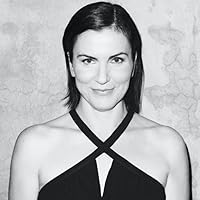
“For me, the essence of documentary photography has always been to do with evidence.” ―Susan Meiselas A member of Magnum Photos since 1976, Susan Meiselas became known for her work in the conflict zones of Central America in the 1970s and '80s and for the strength of her color photography. Covering many subjects and countries, from war to human-rights issues and from cultural identity to the sex industry, Meiselas uses photography, film, video and sometimes archive material, as she relentlessly explores and develops narratives integrating the participation of her subjects in her works. Meiselas constantly questions the photographic process and her role as witness. Presenting a selection of works from the 1970s through the present day, Susan Mediations retraces her trajectory from the 1970s to the present. Published to accompany a major traveling retrospective of the photographer’s work, it features an illustrious list of contributors that includes Ariella Azoulay, Eduardo Cadava and Kristin Lubben, among others. Susan Meiselas (born 1948) studied at Sarah Lawrence College and Harvard University, taking up photography in the early 1970s. She is credited with being one of the first to work with color in documentary photography, a controversial decision when she was shooting the conflict in Nicaragua in the late 1970s. Meiselas joined Magnum Photos in 1976 and has worked as a freelance photographer since then.
Susan Meiselas is a documentary photographer based in New York. She is the author of Carnival Strippers (1976), Nicaragua (1981), Kurdistan: In the Shadow of History (1997), Pandora’s Box (2001), Encounters with the Dani (2003) Prince Street Girls (2016), A Room Of Their Own (2017), Tar Beach (2020), and Carnival Strippers Revisited (2022).
Meiselas is well known for her documentation of human rights issues in Latin America. Her photographs are included in North American and international collections. In 1992 she was made a MacArthur Fellow and received a Guggenheim Fellowship (2015). Most recently, she received the first Women in Motion Award from Kering and the Rencontres d’Arles (2019), the Deutsche Börse Photography Foundation Prize (2019), and the Erich Salomon Award of the German Society for Photography (2022). Mediations, a survey exhibition of her work from the 1970s to present was initiated by the Jeu de Paume in Paris and traveled to Fundació Antoni Tàpies, the San Francisco Museum of Modern Art, and the Instituto Moreira Salles in São Paulo, among others.
Meiselas has been the President of the Magnum Foundation since 2007, with a mission to expand diversity and creativity in documentary photography.
Meiselas's work seems at first very diverse in its subject matter, but gradually some profound constants seem at work throughout her oeuvre.
She first made a splash with her series "Carnival Strippers", in the early 1970s. The photos caused something of a controversy with the Steinham-led first wave of feminists as the pictures definitely seem to imply a level of agency on the part of the strippers. The women Meiselas shows us are definitely getting exploited on some level, but there is actually more to them than mere victims, and this vision did not accord with the ideological framing of feminism's first wave. There are some images that definitely imply a level of camaraderie between the dancers and male managers, and even the drooling, male audience members seem not so much like victimizers than people socially deprived of any more fulfilling and genuine intimacy.
Meiselas also interviewed the dancers and maintained correspondence, sometimes for decades. Through the photographer, new connections were made between dancers in different troupes and communities were formed.
Meiselas would ultimately become known best as a war photographer, documenting people's struggles against brutal US proxy regimes in El Salvador and Nicaragua. An image of a revolutionary on the offensive, Molotov Man, would become an icon of Latin American conflict in the '80s and was used as a propaganda image by both the left and the right. Meiselas would reconfront the image, interrogating the ways in which her own imagery had become a kind of mythos of an era, and making documentaries on the lives of her subjects after she had captured their forms.
Meiselas's next major project was her book, "Kurdistan" in which she combined found photographs of dispersed Kurdish families with her own pictures of unmarked mass graves of Kurds in Iraq. Ultimately, Meiselas saw Kurdishness as a community made impossible by the gyrations of history. Her book was attempt to reconstruct community from the perspective of an outsider.
Meiselas's most recent work on display concerned a refuge for abused women in the UK. Through montages of still video images, fragments of the women's stories become known to us.
By the end of the exhibit, Meiselas's work seemed to be constantly striving to bring people together, not just in the sense of introducing subjects to each other or representing worlds for the viewer, but of bringing fragments together not into a whole but rather into... a more inclusive set of fragments. It also ultimately seemed deeply feminist, if not of the self-pitying variety. Rather, it seeks to both create and affirm a visual space for women to reveal themselves.
In a nutshell, Susan Meiselas: Mediations is a series of essays deconstructing the work of photojournalist Susan Meiselas by various art commentators and curators on the occasion of Meiselas’ retrospective exhibitions in Barcelona, Paris, and San Francisco. As such, there is a certain amount of navel gazing where the essayists find profound continuity and deep constructed meaning in images & sequences that were in all likelihood completely spontaneous and opportunistic. This is not necessarily a criticism, just a warning, for it is important for photographers to have a view of how their work is comprehended by sophisticated audiences. Also, uncounted decisions go into the making of a photograph, even one that is spontaneous, and the photographer projects both conscious and unconscious aesthetic preconceptions in that instant. Sometimes these influences are best revealed not by the photographer herself, but by skilled commentators. I believe that is the purpose of Mediations. In his essay, Eduardo Cadava makes this plain: “…we always carry our history with us, of how are [sic “our”] eyes are composed of everything we have seen, and of how it is only through these mediations that we can begin to see at all.” (p. 66)
Nevertheless, it’s still pretty heavy reading, but if you wade through the art world jargon, this is an enriching and thoughtful commentary on the work of an outstanding documentarian.
I found this book in a shop, quickly looked through it and recognised one of Meiselas photos from Nicaragua. I knew that she is a Magnum photographer so I just bought the book without knowing much about Meiselas' work. That fact made the book a little difficult to read. It basically is a reflection on 4 decades of photographic and journalistic work. Other people who know much more about her work comment on it. If you do not know much about the work she has done it can at times be difficult to understand what the commentators are talking about. This is why I can only rate this book with 3 stars
Nevertheless it becomes clear that Meiselas has produced some remarkable, thoughtful and humane work, tackling issues such as feminism, domestic violence, war and social justice in general. I am definitely inclined to find out more about her personally and about her work after reading this book.
I really loved Susan Meiselas’ Mediations. It provides a wonderful overview of her career, development as a photographer, and efforts to rebalance the power dynamics between photographer and subject. I particularly enjoyed the essay by Eduardo Cadava, which manages to be both personal and theoretical. Recommend.
The visual presentations in this book are phenomenal.
The text is so-so. These are a collection of essays about Susan's work, and if you are 1) not familiar with all of her pieces already, or 2) not familiar with art criticism, a lot of this might go over your head. It did for me! But overall I still liked this book just because of the amazing visuals, including Susan's photos as well as images of the exhibitions, images of notebooks, magazine covers, etc.