

What do you think?

Northland: A 4,000-Mile Journey Along America's Forgotten Border
A quest to rediscover America’s other border—the fascinating but little-known northern one.
America’s northern border is the world’s longest international boundary, yet it remains obscure even to Americans. The northern border was America’s primary border for centuries—much of the early history of the United States took place there—and to the tens of millions who live and work near the line, the region even has its own name: the northland,
Travel writer Porter Fox spent three years exploring 4,000 miles of the border between Maine and Washington, traveling by canoe, freighter, car, and foot. In Northland, he blends a deeply reported and beautifully written story of the region’s history with a riveting account of his travels. Setting out from the easternmost point in the mainland United States, Fox follows explorer Samuel de Champlain’s adventures across the Northeast; recounts the rise and fall of the timber, iron, and rail industries; crosses the Great Lakes on a freighter; tracks America’s fur traders through the Boundary Waters; and traces the forty-ninth parallel from Minnesota to the Pacific Ocean.
America’s northern border is the world’s longest international boundary, yet it remains obscure even to Americans. The northern border was America’s primary border for centuries—much of the early history of the United States took place there—and to the tens of millions who live and work near the line, the region even has its own name: the northland,
Travel writer Porter Fox spent three years exploring 4,000 miles of the border between Maine and Washington, traveling by canoe, freighter, car, and foot. In Northland, he blends a deeply reported and beautifully written story of the region’s history with a riveting account of his travels. Setting out from the easternmost point in the mainland United States, Fox follows explorer Samuel de Champlain’s adventures across the Northeast; recounts the rise and fall of the timber, iron, and rail industries; crosses the Great Lakes on a freighter; tracks America’s fur traders through the Boundary Waters; and traces the forty-ninth parallel from Minnesota to the Pacific Ocean.
264 pages, Kindle Edition
First published July 3, 2018
About the author
Porter Fox
6 books66 followersPorter Fox was born in New York and raised on the coast of Maine. His book Northland, about travels along the U.S.-Canada border, will be published by W.W. Norton in July, 2018. He lives, writes, teaches and edits the award-winning literary travel writing journal Nowhere in Brooklyn, NY. He graduated with an MFA in fiction from The New School in 2004 and teaches at Columbia University School of the Arts. His fiction, essays and nonfiction have been published in The New York Times Magazine, The Believer, Outside, Men’s Journal, National Geographic Adventure, Powder, TheNewYorker.com, TheParisReview.com, Salon.com, Narrative, The Literary Review, Northwest Review, Third Coast and Conjunctions, among others. In 2013 he published DEEP: The Story of Skiing and the Future of Snow. The book was featured on the cover of The New York Times Sunday Review and in both the U.S. Senate and House of Representatives. Fox has been anthologized in The Best American Travel Writing, nominated for two Pushcart Prizes and was a finalist for the 2009 Robert Olen Butler Fiction Prize. He was a 2016 MacDowell Colony fellow and a recipient of MacDowell’s Calderwood Foundation Art of Nonfiction Grant. He won a Western Press Association Maggie in 2014 for a two-part feature about climate change. He has written and edited scripts for Roger Corman and several documentary filmmakers. He recently completed his first collection of short stories and an anthology of short fiction with poet Larry Fagin. He is a member of the Miss Rockaway Armada and Swimming Cities art collectives in New York and collaborated on installations on the Mississippi and Hudson rivers, Venice Biennale (2009), Mass MoCA (2008) and New York City’s Anonymous Gallery (2009).
Ratings & Reviews
Friends & Following
Create a free account to discover what your friends think of this book!
Community Reviews
Displaying 1 - 30 of 360 reviews

Read
September 4, 2023I was getting a monstrous inferiority complex reading this and had to abandon it before my self-esteem was crushed completely. I mean,
--I've never had a classic New England name like 'Porter'
--Nor a Mayflower-esque family name like Fox
--And Jesus Christ, the guy looks like a gene-spliced lab-generated phenotype for the L.L. Bean catalog:
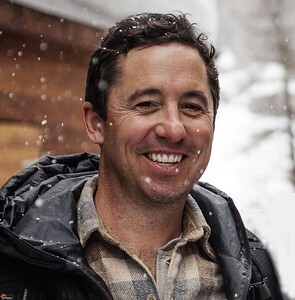
--Nor have I ever had a job as a writer / editor for manly essays about spending time in the woods
--And I haven't ever decided to just pack up and leave the job one day so that I could spend a few months canoeing upstream from my backyard in Maine all the way to Puget Sound, carrying the canoe on my head across the Great Plains and the Rockies, or whatever he did.
What finally did me in was an incident a couple weeks into his trip. He's a friendly guy, telling the story as if around a campfire:
Sigh.
--I've never had a classic New England name like 'Porter'
--Nor a Mayflower-esque family name like Fox
--And Jesus Christ, the guy looks like a gene-spliced lab-generated phenotype for the L.L. Bean catalog:
--Nor have I ever had a job as a writer / editor for manly essays about spending time in the woods
--And I haven't ever decided to just pack up and leave the job one day so that I could spend a few months canoeing upstream from my backyard in Maine all the way to Puget Sound, carrying the canoe on my head across the Great Plains and the Rockies, or whatever he did.
What finally did me in was an incident a couple weeks into his trip. He's a friendly guy, telling the story as if around a campfire:
"You know how sometimes you're motoring across the lake and you run into a beaver or something and the damn thing shears off the cotter pin holding your propeller in place?"Sorry, Mr. Fox, I have not had that experience.
"Well, anyway, there I was, sixteen miles from the closest road, darkness closing in, and my propeller's dangling loose. I had to build a fire real quick out of whatever I could find lying around, and then I had an idea -- what if I carve a new cotter pin out of the antenna on my emergency LORAN system? But I didn't have the right tool, so I had to..."Enough. I'm outta there. I'll take my wounded pride down to the gym and lift some weights, where I'll realize 70% of the clientele are women working in Sales and Marketing, and that at least half of them could kick my ass.
Sigh.
August 3, 2018
The books isn't BAD, BUT it could have been so much better. I think the project got away from the author. It became too much for him--understandably so, he's literally trying to "cover" 4,000 miles, countless cultures, sub-cultures, diverse groups of native peoples, 300 years of history including the very strange present day, geography, ecology, etc. When I first heard about this book before it came out I was expecting something similar in length and depth to Ian Frazier's "Travels in Siberia" which is around 500-600 pages. "Northland" is barely 230 pages.
It starts out very strong; Fox is a good writer no doubt, but he starts to slog in the middle--it seems like he's not sure what he wants to say or where he wants to go with his journey and his book. Thematically it's all over the place with seemingly no rhyme or reason why he spends more time on one topic and not another. Chapters end abruptly, he's in and out of some places, introducing us to characters that may only last a few paragraphs.
Towards the end it seems like he's racing to finish--not only his three year journey (he doesn't do it continuously: he will go some place and then fly back home and then head back out again, which makes the flow of the narrative uninspired and lackluster and kind of saps the initial vitality out of his project) but also the book. One would expect a big chapter(s) on the Pacific Northwest but it's the shortest with almost nothing. He gets to the Pacific Ocean and, boom, the end. Really? We started with such a lovely exploration of small towns in Maine wasting away in decay but we don't get anything remotely similar on the other end of our country. Seems there could have been a great comparison/contrast to the areas around Seattle. I think he just wanted to turn in the manuscript and move on to his next project, which is a shame and disappointment to the great subject that he chose.
I hope someone else takes back up this worthy project and is able to devote more time, thought, energy, research, and loving writer's talent to it. Maybe Ian Frazier is interested?
It starts out very strong; Fox is a good writer no doubt, but he starts to slog in the middle--it seems like he's not sure what he wants to say or where he wants to go with his journey and his book. Thematically it's all over the place with seemingly no rhyme or reason why he spends more time on one topic and not another. Chapters end abruptly, he's in and out of some places, introducing us to characters that may only last a few paragraphs.
Towards the end it seems like he's racing to finish--not only his three year journey (he doesn't do it continuously: he will go some place and then fly back home and then head back out again, which makes the flow of the narrative uninspired and lackluster and kind of saps the initial vitality out of his project) but also the book. One would expect a big chapter(s) on the Pacific Northwest but it's the shortest with almost nothing. He gets to the Pacific Ocean and, boom, the end. Really? We started with such a lovely exploration of small towns in Maine wasting away in decay but we don't get anything remotely similar on the other end of our country. Seems there could have been a great comparison/contrast to the areas around Seattle. I think he just wanted to turn in the manuscript and move on to his next project, which is a shame and disappointment to the great subject that he chose.
I hope someone else takes back up this worthy project and is able to devote more time, thought, energy, research, and loving writer's talent to it. Maybe Ian Frazier is interested?
July 22, 2018
This was an easy read, but it was really a quick journey to disappointment. The framework is a series of vignettes as the author alights on various parts of the Canadian-American border -- the Ste Croix river, the Great Lakes (via a Canadian laker), the Grand Portage/Quetico region, central North Dakota (100 miles from the actual border), Glacier National Park, and finally the Peace Arch between Washington state and British Columbia. The vignettes are spliced with little bits of history -- Champlain, La Salle, Lewis and Clark, David Thompson, and these make up most of what one could call Canadian content. The author argues for the unusual or unique character of the American side of the frontier, compared to the rest of the United States to the south, but we are left guessing whether it shares any characteristics with the Canadian, apart from swamps, lodges and swift-flowing rivers. The author calls his book a journey along a "forgotten border." The author does warn of terrorist dangers, and that the Canadian border poses a greater menace in that category than the Mexican frontier. Because his focus is American, he does not consider the flow of firearms from south to north, and the danger that poses to Canadians, some of whom would like to take up Donald Trump's suggestion, to build a wall along the border, and make Trump pay for it. After reading the book, I decided it was really a "half-forgotten" border -- missing the northern half. Americans seeking an understanding of the border, how it functions, what it divides, will come away almost as uninformed as when they started. Canadians, I suspect, will simply be irritated.
August 12, 2018
As someone who has spent time in the Northeast, Great Lakes and Northwest, I find it intriguing to read them all grouped together as the Northland. I learned a lot about the start of the Boundary Waters. Most importantly, the end chapter with more reading intrigues the most, starting with “Champlain’s Dream.” And I am insanely jealous of a freighter ride across the Great Lakes. If you want to learn more about the U.S.-Canada border, how it was defined, how it has changed since 2001 and how it is now, check this book out. It has some beautiful passages about nature as well as concise history lessons.

March 21, 2020
Northland is a book betrayed by its cover and its title, tantalizing readers with the image of a solo paddler backdropped by a stand of trees, and notions of a "4,000-mile journey". You pick it up, hoping for a deep dive into the lonely landscapes of the northern US. Its pages, instead, blend a bit of history with a superficial road trip through border country.
In a typical moment of bombast, Fox writes "I was 2500 miles from home, 1500 from the Pacific. It was fall again, and getting cold. The last miles were not going to be easy. Montana, Idaho and Washington are home to some of the tallest peaks on the continent, scattered across remote wildernesses, rainforests, alluvial planes, and a matrix of lake and river systems. I would be driving and camping the whole way. The weather forecast predicted a hard frost by the end of the week. I needed to make it to the coast before the first snow." [my emphasis]
After this, he condenses nearly half of the border country into two chapters, to be explored by automobile and arm-chair history, with a couple of hikes for flavor. Where are the remote wildernesses? The alluvial planes? And what's with the note of dramatic foreboding at the end? This is the 21st century, and automobiles have been crossing the Cascade range in style since at least the completion of Interstate 90 in 1956. Maybe Fox was worried the fog on his windshield would obscure the view of America's rich northern wilds.
In the end, Fox put his time into reading about the history of our northern border and its communities, talked with some interesting folks while on a long vacation, and cruised across the country. To pick all the nits, even his canoe was motorized. Fair, considering the streams he traveled, but not what was advertised.
As travel writing, Northland isn't bad. It just lacks depth. His time at the Standing Rock pipeline protests is interesting, and the Native American perspectives on the border are sometimes enlightening. Would I recommend it, though? Nah.
In a typical moment of bombast, Fox writes "I was 2500 miles from home, 1500 from the Pacific. It was fall again, and getting cold. The last miles were not going to be easy. Montana, Idaho and Washington are home to some of the tallest peaks on the continent, scattered across remote wildernesses, rainforests, alluvial planes, and a matrix of lake and river systems. I would be driving and camping the whole way. The weather forecast predicted a hard frost by the end of the week. I needed to make it to the coast before the first snow." [my emphasis]
After this, he condenses nearly half of the border country into two chapters, to be explored by automobile and arm-chair history, with a couple of hikes for flavor. Where are the remote wildernesses? The alluvial planes? And what's with the note of dramatic foreboding at the end? This is the 21st century, and automobiles have been crossing the Cascade range in style since at least the completion of Interstate 90 in 1956. Maybe Fox was worried the fog on his windshield would obscure the view of America's rich northern wilds.
In the end, Fox put his time into reading about the history of our northern border and its communities, talked with some interesting folks while on a long vacation, and cruised across the country. To pick all the nits, even his canoe was motorized. Fair, considering the streams he traveled, but not what was advertised.
As travel writing, Northland isn't bad. It just lacks depth. His time at the Standing Rock pipeline protests is interesting, and the Native American perspectives on the border are sometimes enlightening. Would I recommend it, though? Nah.

August 27, 2018
A very interesting read in the travel mode: taking a journey east to west along the US border with Canada. I found his prose style to be excellent and he does a great job of weaving the actual narrative of the trip to the history of the areas he travels through. There were many things I learned and was not aware of regarding these areas, both current and historically. If you enjoy books that take you on a journey, this is one to try.

March 19, 2018
(Note: I received an advanced electronic copy of this book from NetGalley)
The pages of this travelogue will fly by fast for readers as they follow the author along on an informatively enjoyable journey from Maine to Washington state through the US’s northern border, a fascinating boundary land that has become seemingly forgotten in this day and age.
The pages of this travelogue will fly by fast for readers as they follow the author along on an informatively enjoyable journey from Maine to Washington state through the US’s northern border, a fascinating boundary land that has become seemingly forgotten in this day and age.
July 10, 2018
I really enjoyed this adventure with historical info. I read along with my tablet on Google Earth to follow along and get a better feel for the territory being traveled.

July 30, 2018
Fascinating book, but difficult to classify -- it is part adventure story, part travelogue, part history, part political commentary. The author undertook a voyage of discovery: to trace (most) of the border between the United States and Canada. I was impressed by the vividness of his descriptions, especially of the people and various localized cultures he encountered in his travels. Along the way, there are character studies/mini biographies of some of the most prominent historical figures associated with various locations; Samuel de Champlain and railroad tycoon James J. Hill stood out particularly for me. One small criticism: I believe the maps could have (and should have) been better, or, at least, more extensive. Not all the place names mentioned in the text are to be found in the accompanying maps. (I admit: this is something of a bugbear of mine...) -- Although Fox does not explicitly set out to make political statements, those passages in the book that have to do with the interactions between white settlers and indigenous Native Americans pack a particular wallop, and one can draw one's own conclusions. (The tragedy continues...)
April 1, 2019
Really enjoyed it but it kind of just ends.

December 14, 2018
It is heading into the dead of winter! Want to read a book that will make you want to camp with every fibre of your being? What if that book also gave you a history lesson using beautiful language? Yes?
*Northland* follows Porter Fox's journey along the border separating Canada and the US, from Maine to Washington, by foot, canoe, and car, camping throughout. It's a love song to the landscapes and cultures he encounters alone the way. The book has a decidedly American slant, but much of the history applies to Canada as well. Fox also includes some Indigenous histories as well, though not as much as I'd hoped, and with a decidedly rosey take on interactions between early European explorers and fur traders, and the many Indigenous cultures they encountered. Fox is stronger when discussing pipelines and other current affairs issues affecting Indigenous lives along the border.
On the whole, the book is a love song to the land more than anything else, and will appeal to anyone who loves outdoors memoirs, especially those that frame their narratives with cultural and historical context.
*Northland* follows Porter Fox's journey along the border separating Canada and the US, from Maine to Washington, by foot, canoe, and car, camping throughout. It's a love song to the landscapes and cultures he encounters alone the way. The book has a decidedly American slant, but much of the history applies to Canada as well. Fox also includes some Indigenous histories as well, though not as much as I'd hoped, and with a decidedly rosey take on interactions between early European explorers and fur traders, and the many Indigenous cultures they encountered. Fox is stronger when discussing pipelines and other current affairs issues affecting Indigenous lives along the border.
On the whole, the book is a love song to the land more than anything else, and will appeal to anyone who loves outdoors memoirs, especially those that frame their narratives with cultural and historical context.

July 25, 2018
The concept is that this guy's gonna travel from east to west along the entire U.S./Candian border and tell us what's on either side as he goes. It is indeed a long, remote and mostly forgotten border and he uncovers many interesting and worthwhile facts and stories along the way, but he gets so sidetracked by history and treaties and land disputes that he seems to forget the "forgotten border" and a great idea finally slides off course short of the intended objective. Still, to the author's credit, you can learn a lot about American/Northland geography here and about the history that shapes people and borders.

July 31, 2018
There is a lot of interesting information here. It has big digressions into the history of Native Americans and modern issues like DAPL.
I expected something more like William Least Heat Moon’s River Horse or even Blue Highways.
I wish the book veered more into the lives and encounters with people on his journey and it ends up being a lot more sterile than I had hoped for a travelogue. He deals almost entirely with the US and almost nothing at all with the Canadian perspective.
I expected something more like William Least Heat Moon’s River Horse or even Blue Highways.
I wish the book veered more into the lives and encounters with people on his journey and it ends up being a lot more sterile than I had hoped for a travelogue. He deals almost entirely with the US and almost nothing at all with the Canadian perspective.

May 8, 2019
Favorite passage: "In the meantime, La Salle and two men walked 250 miles through three feet of snow - with a single bag of cornmeal to sustain them - to Fort Frontenac to resupply. Historians have speculated that La Salle's near demonic energy could have been a symptom of mental illness."

March 17, 2022
Porter Fox's Northland is pretty good. The writing is easy to read and interesting. I can seamlessly traverse through 30+ pages in a sitting without realizing how little time had passed. I loved the historical context embedded throughout his narrative, focusing on Native American lives, politics, and history unfolding through current events he investigated.
That being said, I wasn't particularly excited to read this book. It wasn't overly exciting or disappointing: a good middle ground. Fox's writing is technically strong. The imagery is beautiful, but I never reached that emotional connection with the narrative. I wish I heard more of his personal reflections or more evidently pushed for an overarching theme or message. The US-Canadian border is a complicated place. He taught me that, but I think the pathos could have been further developed.
It was really interesting, though, reading about his experiences traveling through places that I grew up in. Hearing his experience and the historical context about the rivers and lakes that I was basically in my backyard was really interesting. I am slowly developing a deeper appreciation and love for the place that raised me, helped by the content of this book (but then I remember Buffalo winters and all that appreciation turns temporary, haha).
Overall, this book is a good explorative piece. If you are interested in history, this is more the book for you. If you are interested in travel narratives or nature-based stories, this book is alright, but not the strongest execution in that genre.
That being said, I wasn't particularly excited to read this book. It wasn't overly exciting or disappointing: a good middle ground. Fox's writing is technically strong. The imagery is beautiful, but I never reached that emotional connection with the narrative. I wish I heard more of his personal reflections or more evidently pushed for an overarching theme or message. The US-Canadian border is a complicated place. He taught me that, but I think the pathos could have been further developed.
It was really interesting, though, reading about his experiences traveling through places that I grew up in. Hearing his experience and the historical context about the rivers and lakes that I was basically in my backyard was really interesting. I am slowly developing a deeper appreciation and love for the place that raised me, helped by the content of this book (but then I remember Buffalo winters and all that appreciation turns temporary, haha).
Overall, this book is a good explorative piece. If you are interested in history, this is more the book for you. If you are interested in travel narratives or nature-based stories, this book is alright, but not the strongest execution in that genre.

June 16, 2018
Readable nonfiction on the US's northern border. Perfect blend of history and geography. Highly recommend for readers of travelogues and history.

May 14, 2022
I listened to the audiobook. The narrator was engaging and easy to listen to; I would definitely consider listening to more books with this narrator.
This sounded interesting to me-- I have lived in a US-Canadian border state (3 different states) almost my whole life, I can see parts of Canada from my house and from most points around town, and there are some interesting bits of international history associated with my current region.
This is a big miss. The author doesn't "[spend] three years exploring" the border-- he makes a couple of day trips and a few multi-day excursions, but it's a very small total amount of time. As a result, the author doesn't so much "travel" the border as stop in and cross over at a few places, with big areas between stops.
While the history of the border is interesting, it's very one-sided. The history of northern settlements was largely missing from my school lessons on US colonies, so that part was very informative. However, the only history worth including happens in the East-- the book is 81% done before crossing the eastern Montana border. In Idaho, the author never gets farther north than Coeur d'Alene, and never gets farther west than Blaine, Washington, calling the water there the "Pacific Ocean"-- technically true, but every Washingtonian makes the distinction between the Sound, the Straits, and the (actual) Ocean. By not heading any farther west, the author misses the Islands and therefore the Pig War. Despite spending a fair amount of time on the Northwest Angle (MN), he completely ignores Point Roberts (WA)-- which is in the same position of being a US town accessible only by water or via Canada. I'm getting very tired of the West getting short shrift in history, nature, parks, and other books. First Nations and Indigenous tribes from the Olympic Peninsula and Vancouver Island frequently crossed the Strait. The proximity of Vancouver Island facilitated smuggling during Prohibition, and while Washington towns engaged in blackouts at night during WWII, cities directly across the water on the island kept their lights on, lighting the way.
Readers who are predominately interested in eastern colonization will find a lot of material. Everyone west of Central time zone can go suck a lemon, apparently.
This sounded interesting to me-- I have lived in a US-Canadian border state (3 different states) almost my whole life, I can see parts of Canada from my house and from most points around town, and there are some interesting bits of international history associated with my current region.
This is a big miss. The author doesn't "[spend] three years exploring" the border-- he makes a couple of day trips and a few multi-day excursions, but it's a very small total amount of time. As a result, the author doesn't so much "travel" the border as stop in and cross over at a few places, with big areas between stops.
While the history of the border is interesting, it's very one-sided. The history of northern settlements was largely missing from my school lessons on US colonies, so that part was very informative. However, the only history worth including happens in the East-- the book is 81% done before crossing the eastern Montana border. In Idaho, the author never gets farther north than Coeur d'Alene, and never gets farther west than Blaine, Washington, calling the water there the "Pacific Ocean"-- technically true, but every Washingtonian makes the distinction between the Sound, the Straits, and the (actual) Ocean. By not heading any farther west, the author misses the Islands and therefore the Pig War. Despite spending a fair amount of time on the Northwest Angle (MN), he completely ignores Point Roberts (WA)-- which is in the same position of being a US town accessible only by water or via Canada. I'm getting very tired of the West getting short shrift in history, nature, parks, and other books. First Nations and Indigenous tribes from the Olympic Peninsula and Vancouver Island frequently crossed the Strait. The proximity of Vancouver Island facilitated smuggling during Prohibition, and while Washington towns engaged in blackouts at night during WWII, cities directly across the water on the island kept their lights on, lighting the way.
Readers who are predominately interested in eastern colonization will find a lot of material. Everyone west of Central time zone can go suck a lemon, apparently.
September 3, 2019
This is one book I truly didn't want to end! Porter Fox's expedition along the 4,000-mile-long northern border of the U.S. is so much more than a travelogue, it's a modern-day pioneer's journal that chronicles exploration of the land, the history and the cultures that have existed for centuries if not millennia along the "northland." With his backpack, canoe, maps and an assortment of books, Fox sets out for the Hi-Line for an unforgettable engaging journey that thrills as much as it entertains!
Having grown up in the east-coast "borderland," Fox begins his journey in Lubec, Maine, and via canoe, on foot, freighter and automobile, he traverses the northern border from sea to shining sea. Along the way, he retraces hundreds of years of courageous and treacherous adventures of our earliest pioneers who defined and shaped our land from Champlain's expeditions in the northeast to the "sweet-water seas," to the "voyageurs" who plied the Boundary Waters of Minnesota, to the sacred lands of the "seven fires" and continuing along the 49th parallel to Peach Arch Border Crossing, Washington -- 4,000 miles of captivating accounts of his experiences while immersing the reader with his vivid poetic prose of the changing landscapes along the way. Throughout the book, I felt like I was there alongside this intrepid explorer.
Overall, this book is THE consummate reference guide to the "Northland," both past and present, deeply researched and also contains an invaluable index that I referenced throughout my reading. For all those armchair explorers, modern-day pioneers, I highly recommend this engaging memoir that hearkens back to the days of the world's greatest explorers!
Having grown up in the east-coast "borderland," Fox begins his journey in Lubec, Maine, and via canoe, on foot, freighter and automobile, he traverses the northern border from sea to shining sea. Along the way, he retraces hundreds of years of courageous and treacherous adventures of our earliest pioneers who defined and shaped our land from Champlain's expeditions in the northeast to the "sweet-water seas," to the "voyageurs" who plied the Boundary Waters of Minnesota, to the sacred lands of the "seven fires" and continuing along the 49th parallel to Peach Arch Border Crossing, Washington -- 4,000 miles of captivating accounts of his experiences while immersing the reader with his vivid poetic prose of the changing landscapes along the way. Throughout the book, I felt like I was there alongside this intrepid explorer.
Overall, this book is THE consummate reference guide to the "Northland," both past and present, deeply researched and also contains an invaluable index that I referenced throughout my reading. For all those armchair explorers, modern-day pioneers, I highly recommend this engaging memoir that hearkens back to the days of the world's greatest explorers!

October 18, 2018
Wonderful little book that can be read in an evening. The narrative about the creation of the USA-Canadian international border is the story of the birth, creation and exploration of the United States. Well written up until the "Medicine Line".
My only complaint is that he covered the last 800 to 1000 miles westward far too quickly. There is plenty more about the "Medicine Line" extending from western North Dakota to the Pacific worthy of discussion. A whole chapter could have been expended on the exploration and conquest of the northern border of the State of Washington and the San Juan Islands and the indigenous people who inhabited the area west of the Idaho-Montana border. Fascinating stuff there.
All in all, a great book, well worth the time.
My only complaint is that he covered the last 800 to 1000 miles westward far too quickly. There is plenty more about the "Medicine Line" extending from western North Dakota to the Pacific worthy of discussion. A whole chapter could have been expended on the exploration and conquest of the northern border of the State of Washington and the San Juan Islands and the indigenous people who inhabited the area west of the Idaho-Montana border. Fascinating stuff there.
All in all, a great book, well worth the time.
November 24, 2018
After finishing a 1993 book about a trip along the US-Mexico border as the first book in my book pile, it seems appropriate that the last book was a more recent trip along the US-Canada border. Porter Fox writes it in 5 episodic segments beginning with canoeing along the Maine-New Brunswick border, then riding a freighter across the Great Lakes, canoeing once again in Minnesota's Boundary Waters, visiting the DAPL protests in North Dakota and finishing with a drive near the 49th Parallel in Montana, Idaho, and Washington. Brings out both the history of this long border and issues along it very well.

January 8, 2019
I enjoyed this trip across the northern border. Good mix of history, politics, current events and human interest stories. Learned lots of little tidbits.

October 9, 2021
This book is, indeed, about the Northland, and Fox is one of the most vivid writers I have read. I felt myself reaching out for the gunwales as he guided his canoe through a lake squall, I added the Boundary Waters to my bucked list as Fox explored them with an experienced guide. Fox knows how to set a scene, and his writing immerses the reader in the natural surroundings.
This book is not, however, about "a 4,000-mile journey along America's Forgotten Border."
It begins that way, canoeing up the St. Croix River that separates Maine and New Brunswick and meandering up towards the crest of Maine. Fox boards a freighter for a slow cruise through the Great Lakes, from Montreal, down the St. Lawrence River, through lakes, Erie, Huron, and Superior, all the way to Thunder Bay. He explores the boundary waters with a guide. With his insights onto regional history and environmental factors, I learned a lot about places I, myself, have visited, as well as others I have dreamed of.
But, as many other reviewers on this site have commented, the western half of the borderland is a wash. To Fox's credit, this is a hard place to get to--I did a road trip this summer along the "High Line" (US Highway 2), and I know just how difficult it can be just to get there, much less give shape to a vast, superficial border--as if anyone could split the Great Plains, the Rockies, or the Cascades in half with a line drawn in London.
Besides history, Fox covers political changes since 9/11. Yes, even the northern border has heightened security, and an innocent canoer or defiant Native American faces harassment anywhere along the border. I really felt for the resort in Minnesota's Northwest Angle (a US sliver of Canada separated from the mainland by the Lake of the Woods) who faced border regulations daily, just to get back and forth to school.
The first half of this book was worth the price of buying it. But if the 49th Parallel is the border that strikes your fancy, it might be better to look elsewhere.
This book is not, however, about "a 4,000-mile journey along America's Forgotten Border."
It begins that way, canoeing up the St. Croix River that separates Maine and New Brunswick and meandering up towards the crest of Maine. Fox boards a freighter for a slow cruise through the Great Lakes, from Montreal, down the St. Lawrence River, through lakes, Erie, Huron, and Superior, all the way to Thunder Bay. He explores the boundary waters with a guide. With his insights onto regional history and environmental factors, I learned a lot about places I, myself, have visited, as well as others I have dreamed of.
But, as many other reviewers on this site have commented, the western half of the borderland is a wash. To Fox's credit, this is a hard place to get to--I did a road trip this summer along the "High Line" (US Highway 2), and I know just how difficult it can be just to get there, much less give shape to a vast, superficial border--as if anyone could split the Great Plains, the Rockies, or the Cascades in half with a line drawn in London.
Besides history, Fox covers political changes since 9/11. Yes, even the northern border has heightened security, and an innocent canoer or defiant Native American faces harassment anywhere along the border. I really felt for the resort in Minnesota's Northwest Angle (a US sliver of Canada separated from the mainland by the Lake of the Woods) who faced border regulations daily, just to get back and forth to school.
The first half of this book was worth the price of buying it. But if the 49th Parallel is the border that strikes your fancy, it might be better to look elsewhere.

August 12, 2018
Northland recounts Porter Fox's intermittent east to west three year journey along America's northern border with Canada by foot, canoe, automobile, and Great Lakes freighter. Throughout Fox presents the history of the region dating back to the original Native American tribes, the French and Indian Wars, the several US attempts to invade Canada, the Louisiana Purchase, and the opening of the Far West by wagon train and railroads. Nor does he neglect environmental issues and the ecology of the region. While it could be dreadfully dull, Fox works the history into the tail of his trip as he journeys through remote regions unknown to most North Americans.
In the Eastern portions Fox follows the routes originally blazed by Champlain, La Salle and the French fur traders and voyageurs. The Great Lakes segment, which he traverses in a freighter hauling grain and iron ore, delves into the economy of the region and how water transport was essential to opening the Midwest to commercial activity such as steel making. The next segment depicts canoeing and portaging through Minnesota's boundary Waters. (Don't try it without a guide.) In the far west he discusses the US Cavalry's wars with Crazy Horse and the Sioux and Blackfeet tribes and the current conflict over the DX pipeline. The far west and Pacific get relatively short shrift. I suspect a deadline was approaching. Post 9/11 border security is described throughout.
While this could have devolved into a tome, it is an entertaining and relatively short read about an area few of us have heard much about much less visited.
In the Eastern portions Fox follows the routes originally blazed by Champlain, La Salle and the French fur traders and voyageurs. The Great Lakes segment, which he traverses in a freighter hauling grain and iron ore, delves into the economy of the region and how water transport was essential to opening the Midwest to commercial activity such as steel making. The next segment depicts canoeing and portaging through Minnesota's boundary Waters. (Don't try it without a guide.) In the far west he discusses the US Cavalry's wars with Crazy Horse and the Sioux and Blackfeet tribes and the current conflict over the DX pipeline. The far west and Pacific get relatively short shrift. I suspect a deadline was approaching. Post 9/11 border security is described throughout.
While this could have devolved into a tome, it is an entertaining and relatively short read about an area few of us have heard much about much less visited.

January 18, 2021
I picked up Northland: A 4,000-Mile Journey Along America's Forgotten Border by Porter Fox based on the description of retracing the travels of early explorers and fur traders along the northern border of today's America with Canada. This journey covers what is still some very isolated and rugged terrain today starting at the easternmost point of the United States and then heading generally west along the border. The author's account of his observations was interesting and informative as he headed out and he shared much of the current inhabitants lives while tying it to the historical aspects of the surrounding territory. This pattern repeated itself as he proceeded west along the planned route. Once he reached the midwest it seemed to get bogged down as he covered the conditions of some of the Indian tribes, environmental activists, and some more political, rather than historical, themes. The further west he went, the less detail is provided as was the case in the beginning of the book; it could have easily been twice the length if the latter part of the journey were covered in the same amount of detail as in the beginning in the east.

August 18, 2018
Telling the history from the 1500s to the present of the Native settlements and the U.S., British, and French (not necessarily in that order) occupation and imperialization of North America, including determining the border between the U.S. and Canada, this great read has many more proper nouns than I’ll ever remember. What I will remember is the mood evoked during the good times and the struggles and the bloodshed. Especially tender for me are the stories of Standing Rock. A few weeks before moving from Oregon, I voted with our presbytery to send a letter of support with friends headed there. They were there during the 2016 bitter winter that he describes in the book. “A private security firm working for ETP (the company behind the Dakota pipeline) with experience in Iraq and Afghanistan, unleashed attack dogs on unarmed men, women, and children ...” The original pipeline route crossed the Missouri upstream of Bismarck, which threatened to pollute the state capital’s water suppply given the history of pipeline spills in the U.S. 61,000 people live in the city; 92% of them are white. So, engineers moved the crossing 30 miles south, directly upstream of Standing Rock’s primary source of drinking water.

November 9, 2021
This book sorta made me homesick. It’s cozy, it’s soothing, and it was just an overall pleasant read. It covers history, geography, geology, demography, and present day social issues in the US-Canadian border region starting in some town on the Maine coast I can’t remember the name of all the way to Peace Arch Park in WA. I’ve taken about this same trip on hwy 2 across the US and spent a lot of time in these regions so it was nice to be mildly to intermediately familiar with the places being written about. Could be a bit confusing or overwhelming without that knowledge or a map on hand. I loved the part focusing on the Great Lakes and this chump got to ride around on a freighter. So jealous. Really loved the boundary waters part…gonna start planning my canoe trip now. Just lovely. Took one star off cause I thought he could have written more and been less vague. This is a massive region to cover with so much to write about and he did it all in a relatively short book.

May 14, 2020
I'm not sure this lived up to the blurb on the cover, but at first, it was a very good travel narrative. A little natural history but not nearly as much as I desired. A good bit of human history mixed in with his day-to-day adventures.
Oddly, toward the end I felt unmotivated to continue. That might have been the result of his lengthy pause of the journey (not in time but in narrative) to write in great detail (and with great feeling) about the current situation of the American Indians along the western border with Canada. Current events is fascinating and can make up a whole book by itself, but it wasn't what I signed up for and didn't flow well with what I'd been reading for the first half of the book.
Sometimes a writer has to follow his heart. I get that. But it disappointed.
Oddly, toward the end I felt unmotivated to continue. That might have been the result of his lengthy pause of the journey (not in time but in narrative) to write in great detail (and with great feeling) about the current situation of the American Indians along the western border with Canada. Current events is fascinating and can make up a whole book by itself, but it wasn't what I signed up for and didn't flow well with what I'd been reading for the first half of the book.
Sometimes a writer has to follow his heart. I get that. But it disappointed.

September 10, 2020
I picked up the audiobook version of Porter Fox’s Northland as I’d just visited Minnesota’s Boundary Waters Canoe Area Wilderness and was headed to Voyageurs National Park.
The subject matter was as relevant as it could possibly be, and yet I still felt this book lulled and dragged in multiple areas. I guess I’d hoped for a richer, deeper account of the borderlands, rather than a light-footed sprinkling of historical and current events. Nonetheless, I learned a few things from reading the book, and it was a quick and easy read.
The subject matter was as relevant as it could possibly be, and yet I still felt this book lulled and dragged in multiple areas. I guess I’d hoped for a richer, deeper account of the borderlands, rather than a light-footed sprinkling of historical and current events. Nonetheless, I learned a few things from reading the book, and it was a quick and easy read.

September 22, 2020
I thought a lot about what I thought about this book in the end. I had read the NYT magazine version of the St. Lawrence Seaway trip and loved it. The integration of the historical narratives — with the totally understandable focus on colonists and Native Americans — really enriched it. That sensibility ultimately made me appreciate the overall effect, despite the book’s journalistic ticks.
And it really made me want to go hiking, kayaking, and generally exploring the many parts of Northland I’ve yet to see.
And it really made me want to go hiking, kayaking, and generally exploring the many parts of Northland I’ve yet to see.
October 11, 2020
As much a history book as at is an outdoors/travel book. It goes deep into the exploration of the area that is now the US/Canada border by Europeans and the resulting hundred plus years of disputes between native tribes and among European settlers to lay claim to it. I learned a ton about treaties, the fur trade, and small wars and boundary lands that I haven't spent enough time visiting. It of course makes you want to spend some time in part of the country that is easy to miss. It gets a bit deep and technical at times, but it is interesting and moves at a reasonable pace.
Displaying 1 - 30 of 360 reviews