

What do you think?
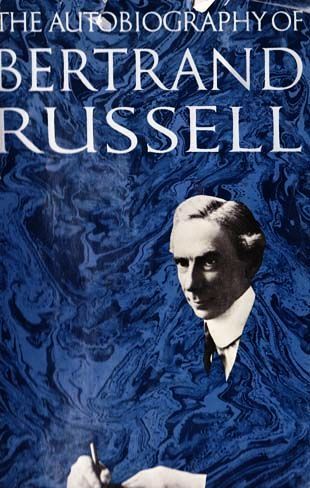
The Autobiography of Bertrand Russell 1: 1872-1914
First British edition of Volume 1 of Bertrand Russell's autobiography, covering 1872 to 1914 -- the early years before World War I. In this introduction to his life, he describes a Victorian and Edwardian world that was dashed to pieces in World War I -- a secure and fascinating society people by illustrious politicians, great philosophers, and eccentric relatives. Illustrated with black and white photos. 230 pages.
376 pages, Hardcover
First published January 1, 1967
About the author
Bertrand Russell
1,460 books7,514 followersBertrand Arthur William Russell, 3rd Earl Russell, OM, FRS, was a Welsh philosopher, historian, logician, mathematician, advocate for social reform, pacifist, and prominent rationalist. Although he was usually regarded as English, as he spent the majority of his life in England, he was born in Wales, where he also died.
He was awarded the Nobel Prize in Literature in 1950 "in recognition of his varied and significant writings in which he champions humanitarian ideals and freedom of thought."
He was awarded the Nobel Prize in Literature in 1950 "in recognition of his varied and significant writings in which he champions humanitarian ideals and freedom of thought."
Ratings & Reviews
Friends & Following
Create a free account to discover what your friends think of this book!
Community Reviews
Displaying 1 - 23 of 23 reviews
August 4, 2026
Born into a wealthy and privileged British political family, Bertrand Russell still turned out intelligent if often irresponsible. This first volume of his autobiography dwells on his passion for philosophy, uninhibited sex life, student years and young don st Cambridge, and vast circle of friends from Prime Ministers to mad mathematicians. The great wonder of his autobiography is that Russell never holds back on any aspect of his life, be it infidelity to his first wife (there would be many, many more), low opinion of Harvard, or upper class twits, of whom he knew plenty. These are the confessions of a man who decided very early on that life has no meaning, and was determined to extract the juice from it without becoming a sybarite. It is the structure of the book that raises problems. Russell should more honestly have labeled this volume EARLY LIFE AND LETTERS. Half the pages are consumed with reproductions of his correspondence with and from the greats, starting with his family and ending with a nice note from the father of Norbert Wiener, future creator of cybernetics, soliciting his help. Only in his brief, occasional footnotes does Russell say how he feels about these people and their importance to him, fifty years later. Did Bertie ever meet anyone whose friendship he did not value? Only his bullying brother Frank, it seems.
Russell tells us in his preamble that he dedicated his life to three worthy goals: The search for love; an attempt to discover, by joining mathematics to philosophy, what is knowable; and the amelioration of human suffering. Only slowly and in a jerky fashion did he arrive at each, with decidedly mixed results in all three. His relations with his family were marked by bouts of devotion and rebellion, and his multiple marriages and mistresses gave him only temporary relief from a devastating loneliness that plagued him from childhood until the end of his life in 1970. The search for knowledge was really an effort to attain certainty through numbers, and in one of the last letters reprinted here he rightly guessed that the young German under his wing at Cambridge on the eve of World War I, Ludwig Wittgenstein, was about to rock his philosophical views. His dedication to economic and social reforms, female suffrage, free trade, an anti-war stance, though not yet full pacifism, led him into a fitful and in these early years, unfruitful foray into politics. Russell sadly confesses that like his collaborator on PRINCIPIA MATHEMATICA, Alfred North Whitehead, he feared for his sanity and several times contemplated suicide. Perhaps only a great man could be so unsure of himself.
Russel was born in 1872 the grandson of former Prime Minister John Russell, First Earl of Russell, though his older half-crazed brother inherited the title. The memory of the family home, Pembroke Lodge, and his grandfather's legacy of Liberal politics in the guise of noblesse oblige hangs heavy over Russell in these pages. For the rest of his life he never tired of reminding people that Earl Russell had been a contemporary of George Washington and interlocutor of Napoleon. The American and French revolutions were to him family affairs. Lord Russell's inattention and inactivity during the Irish potato famine goes unmentioned in these memoirs. The death of both his parents during his childhood left him in the care of the Earl and his stout wife, the Countess Russell. "Granny" lay atop or close by every decision Bertie made during his first three decades, from marriage to grudgingly accepting a minor diplomatic post in Paris to please her in old age. His mother's family, the Stanleys, combined Scottish Presbyterianism, eccentricity, and possible madness, though young Bertie enjoyed their rows. The death of his grandfather and Frank's frequent absences at school strengthened young Russell's conviction he had been set apart to fulfill a family tradition of service to the public, although not which kind. Russell takes his privileged position for granted; indeed he never quite seems to think he had one. Didn't everyone in Victorian England have tutors at home, foregoing formal education? Weren't all free to protest for Irish Home Rule and against the Boer War?
The childhood of Bertie left a deep mark on the man. He was an extremely lonely and shy boy who had lost both parents, his giant of a grandfather, and seen his brother gone MIA. In their place there stood a domineering grandmother, by turns loved, feared, worshiped, and resented by the boy. Though neither Russell nor I are fans of Freudian psychoanalysis, it's not hard to see in this fraught relationship the embryo of his life-long yearning and withdrawal from the other women in his life. Denied paternal love and having no intellectual peers, Bertrand retreated to the family study for long periods of contemplation of mathematics taught to him by tutors and philosophy, which he taught himself. At the age of fifteen he came to the conclusion that the world showed every evidence of determinism and that only a monist, pantheistic God could lay behind it. From there it was but a short jump to agnosticism and the denial of physical immortality. This discovery did not liberate him, but only made his estrangement from his family, Granny and the Stanleys, more painful. "How I wish I could believe in my people's God", he wrote in an early diary entry. This secular godson of John Stuart Mill was a born skeptic and in his teens the lonesome rebel and iconoclast had sprouted wings.
The other education of Bertrand Russell came by way of the stimulating and heady company that constantly streamed into Pembroke Lodge. Poets, philosophers, historians, and above all politicians came knocking at the Russell door. When your family leases property from the Archbishop of Canterbury, how can you not think yourself important? Bertie has no memory of Mill and not much use for utilitarianism, yet having a philosopher and economist as a godparent would turn the heads of most people. Casually, Russell mentions Mr. Gladstone stopping by for tea one afternoon at the invitation of Granny, and giving young Bertie a stern look. Imagine hearing of the Irish Question at around the time when you started to bathe yourself. Not that Bertie was in any way partisan. He tells us how later in life he shared a picnic lunch with the hapless Conservative Arthur Balfour, whom Russell rightly calls small in personal and political matters, without ever mentioning that Balfour was the Prime Minister at the time. Bertie became convinced that the ruling class of England consisted of a small circle of friends, and the momentous events during the tumultuous following years, Finian agitation, the Boer War, the numerous international crises leading up to World War I, confirmed that view. These men consulted each other in dealing with national problems and no one else. A seat in Parliament was a stepping stone into the establishment without a politician caring much what his constituents thought. Bertrand either had to join that class in some official capacity, diplomat, Member of Parliament, or opt for the life of the mind.
Young Russell lay astride that generational divide between Victorian and Edwardian young men. Politics did not mark one generation from the other so much as attitude. The Victorians were self-confident, imperious, like the Queen herself, and paid homage to the Church of England without believing in any of its tenets. Darwin had toppled God but not the C of E. A certain prudery and sense of guilt pervaded their view of sex. Russell tells us he was a virgin until marriage, and sought same in women. The Edwardians were hellions without turning rebel. Their battle front was the bedroom and the editorial office, not in politics. A calculated move away from parental, or in Russell's case, grand-parental authority was permitted though not encouraged. A respect for elders and modest distance from family still took precedence, and public scandal was to be avoided. Bertie, for example, knew the powerful Marquess of Queensbury but makes no mention of his son or Oscar Wilde. In politics Russell remained loyal to his Liberal heritage and the empire even when thrown for a spin by British misconduct against the Boers in South Africa; of the African natives he took no notice.
That such a youth should not have grown up spoiled was due primarily to the interest in math his tutors inculcated in him, and how his own thoughts on religion led him down the path of idealist philosophy. The place for such a precocious and moral thinker was Cambridge and its intellectual tradition of rigor in all things. He worked hard prepping up for the entrance exams in mathematics, only to find upon arrival that some four-fifths of his peers were gentlemen coasting along life until their families landed them a job upon graduation. One notable exception was the pair of Keynes père et fils. The Cambridge Professor and father taught Russell that economics and moral philosophy went hand in hand. The son, graduating with a degree in mathematics from the university when Russell got there, imparted a more important lesson: Philosophy is no intellectual joie d'esprit of the idle rich. The man of great thought is morally bound to engage in public debates. Russell credits Keynes the Younger with rescuing Britain from economic catastrophe after two world wars. He understood the economic consequences of peace could be worse than those of war if wealth was not redistributed to the lower classes. Bertie's other intellectual godfather at Cambridge was G.E. Moore. Moore was a case of a bland exterior disguising both inner turmoil and philosophic genius. No platonic heaven for him; only a constant inquiry into what could be judged real. These two intellectual giants inveigled Bertie into joining the creme de la creme of Cambridge minds, the society of the Apostles, about which Russell keeps the appropriate secrecy. Russell, torn between economics, mathematics, and philosophy, finally chose to marry the last two in his head and discard, though not ignore, "the dismal science." The young Cambridge lecturer was soon attracting the better students to his classes on math and logic, along with invitations to speak in America. Typically, for one sealed tight inside academia, Russell recalls Harvard, William James, George Santayana, and next to nothing of the country and its people.
The divided soul inside Russell, one half yearning for love and the other for philosophical knowledge found its first great test in his proposal of marriage to the American Quaker Alys Smith when the two were in their early twenties. Shy, plainspoken, and filled with a moral call to improve the world, Alys embodied the contradictions of young women of her faith in the late Victorian age. She urged personal freedom for women and at times counseled other girls to defy their parents. At the same time, she was in awe of her own father and never went anywhere unchaperoned. Alys was by no stretch an intellectual but possessed a keen and highly moral mind. Russell, with a half-hearted commitment to female emancipation---he supported suffrage by way of the Liberal Party, not the suffragettes and Mrs. Pankhurst---appreciated these features, and Alys's quiet demeanor might be just the thing to complement his admittedly selfish desire to be left alone with mathematical problems. This was destined to be a marriage of silences. A great obstacle to the engagement was Granny, who furiously objected to Alys's social standing and religion. Russell pacified her by agreeing to accept a drudge diplomatic job in Paris that would keep him busy, and away from Alys, while the Dowager Countess slipped into her dotage. His letters to a British female companion in the City of Lights indicate Russell, in his first year of marriage, already enjoyed a life far from home and wife. His true passion and Penelope of existence was setting mathematics on a logical foundation. Only one man at Cambridge could partner up with Russell in this Herculean task, Alfred North Whitehead, already a philosophical star on campus when Bertrand arrived. PRINCIPIA MATHEMATICA consumed close to a decade of their lives on a work only these two could understand at first and took a psychological toll of immeasurable size. When it was finished both men were world famous in their domain, and, Russell confesses, probably useless in philosophy thereafter.
A highly articulate man in tongue and print, Russell cannot fully explain to the reader why his marriage to Alys gradually failed. In one of those epiphanies so common in Russell's life, he simply stopped loving her one day. There followed an affair with the wife of a Liberal political friend, Philip Morrell, the beautiful and troubled Lady Ottoline Morrell. Their first attraction was purely physical, involving a hilarious search for a prophylactic, the "French Letter" of British adulterers, and then flowered into an affair and correspondence, which Russell does not reproduce, of over three thousand letters. The triad of politics, literature, and sex remained a hardy perennial for the rest of Russell's long life. The timid Alys lunged at him when she discovered the liaison while Russell stood sang froid. Caught between two fires, a wife who refused to grant him a divorce and mistress tied to her husband, Russell pursued what Anais Nin dubbed "mediocre affairs" with London society ladies and across the Pond with a young American girl whose father hosted him for a night. Alas, poor Bertie, this nubile conquest paid him back by landing in England and turning into a zealous groupie and stalker until the day she went mad. All this might just be fodder for tabloid gossip, except that to Russell it proved the hypocrisy of marriage on two continents and the need to reform modern views of sexual morality. Seldom has a philosopher's sex life provided so much material for his writings.
The AUTOBIOGRAPHY ends with faraway rumblings from the Balkans in 1914 that would eradicate the world Russell and his peers had taken for granted. That world required fixture through political action, and Russell moved after 1900 from a "pro-imperialist" position to condemning all wars as immoral. British politics was still mired in the thinking of old men with an outdated code of ethics. After failing to win a constituency for the Liberals in a hotly contested election Russell was offered a safe seat by the party, provided he passed their "catechism", reproduced for us:
Are you a member of the Church of England?
No.
Are we to understand you are an agnostic?
Yes.
Would you be willing to attend church occasionally?
No.
Would it come out that you are an agnostic?
Yes. It probably would come out.
His failure to trot behind political liars and nincompoops cost Russell any chance at election by any party and that did not entirely displease him. On the eve of war he took comfort in being a gadfly, and one of the most notorious men in England. He was also one of the most gifted. PRINCIPIA MATHEMATICA enjoyed a worshipful following among mathematicians, with Georg Cantor calling its co-author "the only man who understood Set Theory". Russell, God's lonely man, his love life in shambles and the Pembroke Lodge clan gone by death or dispersal, lay confidently poised for the Storm and Stress ahead, the rise of Wittgenstein and the bloody death of Liberal England in Flanders. One comfort and lesson he offers his readers in bidding farewell to his first volume of memoirs: Trust in the past. The ones you loved, grandfather and Granny, Alys, Lady Ottoline, will abide forever in memory, and the classics will never disappoint; his friendship with Gilbert Murray gave him a lifetime of joy. For such a revolutionary figure, that is quite the pleasant adieu.
Russell tells us in his preamble that he dedicated his life to three worthy goals: The search for love; an attempt to discover, by joining mathematics to philosophy, what is knowable; and the amelioration of human suffering. Only slowly and in a jerky fashion did he arrive at each, with decidedly mixed results in all three. His relations with his family were marked by bouts of devotion and rebellion, and his multiple marriages and mistresses gave him only temporary relief from a devastating loneliness that plagued him from childhood until the end of his life in 1970. The search for knowledge was really an effort to attain certainty through numbers, and in one of the last letters reprinted here he rightly guessed that the young German under his wing at Cambridge on the eve of World War I, Ludwig Wittgenstein, was about to rock his philosophical views. His dedication to economic and social reforms, female suffrage, free trade, an anti-war stance, though not yet full pacifism, led him into a fitful and in these early years, unfruitful foray into politics. Russell sadly confesses that like his collaborator on PRINCIPIA MATHEMATICA, Alfred North Whitehead, he feared for his sanity and several times contemplated suicide. Perhaps only a great man could be so unsure of himself.
Russel was born in 1872 the grandson of former Prime Minister John Russell, First Earl of Russell, though his older half-crazed brother inherited the title. The memory of the family home, Pembroke Lodge, and his grandfather's legacy of Liberal politics in the guise of noblesse oblige hangs heavy over Russell in these pages. For the rest of his life he never tired of reminding people that Earl Russell had been a contemporary of George Washington and interlocutor of Napoleon. The American and French revolutions were to him family affairs. Lord Russell's inattention and inactivity during the Irish potato famine goes unmentioned in these memoirs. The death of both his parents during his childhood left him in the care of the Earl and his stout wife, the Countess Russell. "Granny" lay atop or close by every decision Bertie made during his first three decades, from marriage to grudgingly accepting a minor diplomatic post in Paris to please her in old age. His mother's family, the Stanleys, combined Scottish Presbyterianism, eccentricity, and possible madness, though young Bertie enjoyed their rows. The death of his grandfather and Frank's frequent absences at school strengthened young Russell's conviction he had been set apart to fulfill a family tradition of service to the public, although not which kind. Russell takes his privileged position for granted; indeed he never quite seems to think he had one. Didn't everyone in Victorian England have tutors at home, foregoing formal education? Weren't all free to protest for Irish Home Rule and against the Boer War?
The childhood of Bertie left a deep mark on the man. He was an extremely lonely and shy boy who had lost both parents, his giant of a grandfather, and seen his brother gone MIA. In their place there stood a domineering grandmother, by turns loved, feared, worshiped, and resented by the boy. Though neither Russell nor I are fans of Freudian psychoanalysis, it's not hard to see in this fraught relationship the embryo of his life-long yearning and withdrawal from the other women in his life. Denied paternal love and having no intellectual peers, Bertrand retreated to the family study for long periods of contemplation of mathematics taught to him by tutors and philosophy, which he taught himself. At the age of fifteen he came to the conclusion that the world showed every evidence of determinism and that only a monist, pantheistic God could lay behind it. From there it was but a short jump to agnosticism and the denial of physical immortality. This discovery did not liberate him, but only made his estrangement from his family, Granny and the Stanleys, more painful. "How I wish I could believe in my people's God", he wrote in an early diary entry. This secular godson of John Stuart Mill was a born skeptic and in his teens the lonesome rebel and iconoclast had sprouted wings.
The other education of Bertrand Russell came by way of the stimulating and heady company that constantly streamed into Pembroke Lodge. Poets, philosophers, historians, and above all politicians came knocking at the Russell door. When your family leases property from the Archbishop of Canterbury, how can you not think yourself important? Bertie has no memory of Mill and not much use for utilitarianism, yet having a philosopher and economist as a godparent would turn the heads of most people. Casually, Russell mentions Mr. Gladstone stopping by for tea one afternoon at the invitation of Granny, and giving young Bertie a stern look. Imagine hearing of the Irish Question at around the time when you started to bathe yourself. Not that Bertie was in any way partisan. He tells us how later in life he shared a picnic lunch with the hapless Conservative Arthur Balfour, whom Russell rightly calls small in personal and political matters, without ever mentioning that Balfour was the Prime Minister at the time. Bertie became convinced that the ruling class of England consisted of a small circle of friends, and the momentous events during the tumultuous following years, Finian agitation, the Boer War, the numerous international crises leading up to World War I, confirmed that view. These men consulted each other in dealing with national problems and no one else. A seat in Parliament was a stepping stone into the establishment without a politician caring much what his constituents thought. Bertrand either had to join that class in some official capacity, diplomat, Member of Parliament, or opt for the life of the mind.
Young Russell lay astride that generational divide between Victorian and Edwardian young men. Politics did not mark one generation from the other so much as attitude. The Victorians were self-confident, imperious, like the Queen herself, and paid homage to the Church of England without believing in any of its tenets. Darwin had toppled God but not the C of E. A certain prudery and sense of guilt pervaded their view of sex. Russell tells us he was a virgin until marriage, and sought same in women. The Edwardians were hellions without turning rebel. Their battle front was the bedroom and the editorial office, not in politics. A calculated move away from parental, or in Russell's case, grand-parental authority was permitted though not encouraged. A respect for elders and modest distance from family still took precedence, and public scandal was to be avoided. Bertie, for example, knew the powerful Marquess of Queensbury but makes no mention of his son or Oscar Wilde. In politics Russell remained loyal to his Liberal heritage and the empire even when thrown for a spin by British misconduct against the Boers in South Africa; of the African natives he took no notice.
That such a youth should not have grown up spoiled was due primarily to the interest in math his tutors inculcated in him, and how his own thoughts on religion led him down the path of idealist philosophy. The place for such a precocious and moral thinker was Cambridge and its intellectual tradition of rigor in all things. He worked hard prepping up for the entrance exams in mathematics, only to find upon arrival that some four-fifths of his peers were gentlemen coasting along life until their families landed them a job upon graduation. One notable exception was the pair of Keynes père et fils. The Cambridge Professor and father taught Russell that economics and moral philosophy went hand in hand. The son, graduating with a degree in mathematics from the university when Russell got there, imparted a more important lesson: Philosophy is no intellectual joie d'esprit of the idle rich. The man of great thought is morally bound to engage in public debates. Russell credits Keynes the Younger with rescuing Britain from economic catastrophe after two world wars. He understood the economic consequences of peace could be worse than those of war if wealth was not redistributed to the lower classes. Bertie's other intellectual godfather at Cambridge was G.E. Moore. Moore was a case of a bland exterior disguising both inner turmoil and philosophic genius. No platonic heaven for him; only a constant inquiry into what could be judged real. These two intellectual giants inveigled Bertie into joining the creme de la creme of Cambridge minds, the society of the Apostles, about which Russell keeps the appropriate secrecy. Russell, torn between economics, mathematics, and philosophy, finally chose to marry the last two in his head and discard, though not ignore, "the dismal science." The young Cambridge lecturer was soon attracting the better students to his classes on math and logic, along with invitations to speak in America. Typically, for one sealed tight inside academia, Russell recalls Harvard, William James, George Santayana, and next to nothing of the country and its people.
The divided soul inside Russell, one half yearning for love and the other for philosophical knowledge found its first great test in his proposal of marriage to the American Quaker Alys Smith when the two were in their early twenties. Shy, plainspoken, and filled with a moral call to improve the world, Alys embodied the contradictions of young women of her faith in the late Victorian age. She urged personal freedom for women and at times counseled other girls to defy their parents. At the same time, she was in awe of her own father and never went anywhere unchaperoned. Alys was by no stretch an intellectual but possessed a keen and highly moral mind. Russell, with a half-hearted commitment to female emancipation---he supported suffrage by way of the Liberal Party, not the suffragettes and Mrs. Pankhurst---appreciated these features, and Alys's quiet demeanor might be just the thing to complement his admittedly selfish desire to be left alone with mathematical problems. This was destined to be a marriage of silences. A great obstacle to the engagement was Granny, who furiously objected to Alys's social standing and religion. Russell pacified her by agreeing to accept a drudge diplomatic job in Paris that would keep him busy, and away from Alys, while the Dowager Countess slipped into her dotage. His letters to a British female companion in the City of Lights indicate Russell, in his first year of marriage, already enjoyed a life far from home and wife. His true passion and Penelope of existence was setting mathematics on a logical foundation. Only one man at Cambridge could partner up with Russell in this Herculean task, Alfred North Whitehead, already a philosophical star on campus when Bertrand arrived. PRINCIPIA MATHEMATICA consumed close to a decade of their lives on a work only these two could understand at first and took a psychological toll of immeasurable size. When it was finished both men were world famous in their domain, and, Russell confesses, probably useless in philosophy thereafter.
A highly articulate man in tongue and print, Russell cannot fully explain to the reader why his marriage to Alys gradually failed. In one of those epiphanies so common in Russell's life, he simply stopped loving her one day. There followed an affair with the wife of a Liberal political friend, Philip Morrell, the beautiful and troubled Lady Ottoline Morrell. Their first attraction was purely physical, involving a hilarious search for a prophylactic, the "French Letter" of British adulterers, and then flowered into an affair and correspondence, which Russell does not reproduce, of over three thousand letters. The triad of politics, literature, and sex remained a hardy perennial for the rest of Russell's long life. The timid Alys lunged at him when she discovered the liaison while Russell stood sang froid. Caught between two fires, a wife who refused to grant him a divorce and mistress tied to her husband, Russell pursued what Anais Nin dubbed "mediocre affairs" with London society ladies and across the Pond with a young American girl whose father hosted him for a night. Alas, poor Bertie, this nubile conquest paid him back by landing in England and turning into a zealous groupie and stalker until the day she went mad. All this might just be fodder for tabloid gossip, except that to Russell it proved the hypocrisy of marriage on two continents and the need to reform modern views of sexual morality. Seldom has a philosopher's sex life provided so much material for his writings.
The AUTOBIOGRAPHY ends with faraway rumblings from the Balkans in 1914 that would eradicate the world Russell and his peers had taken for granted. That world required fixture through political action, and Russell moved after 1900 from a "pro-imperialist" position to condemning all wars as immoral. British politics was still mired in the thinking of old men with an outdated code of ethics. After failing to win a constituency for the Liberals in a hotly contested election Russell was offered a safe seat by the party, provided he passed their "catechism", reproduced for us:
Are you a member of the Church of England?
No.
Are we to understand you are an agnostic?
Yes.
Would you be willing to attend church occasionally?
No.
Would it come out that you are an agnostic?
Yes. It probably would come out.
His failure to trot behind political liars and nincompoops cost Russell any chance at election by any party and that did not entirely displease him. On the eve of war he took comfort in being a gadfly, and one of the most notorious men in England. He was also one of the most gifted. PRINCIPIA MATHEMATICA enjoyed a worshipful following among mathematicians, with Georg Cantor calling its co-author "the only man who understood Set Theory". Russell, God's lonely man, his love life in shambles and the Pembroke Lodge clan gone by death or dispersal, lay confidently poised for the Storm and Stress ahead, the rise of Wittgenstein and the bloody death of Liberal England in Flanders. One comfort and lesson he offers his readers in bidding farewell to his first volume of memoirs: Trust in the past. The ones you loved, grandfather and Granny, Alys, Lady Ottoline, will abide forever in memory, and the classics will never disappoint; his friendship with Gilbert Murray gave him a lifetime of joy. For such a revolutionary figure, that is quite the pleasant adieu.

February 15, 2025
মাত্র ১২ বছর বয়সে প্রথম যৌনতাকে আবিষ্কার করেন বার্ট্রান্ড রাসেল। তার এক ইঁচড়েপাকা বন্ধু ও বাসার এক কিশোর গৃহকর্মী এক্ষেত্রে তাকে নারী-পুরুষ সম্পর্কের বিস্তারিত বুঝিয়ে বলে। এরপর কিশোর রাসেলের মগজে যৌনতা নিয়ে অলীক কল্পনা কাজ করতে থাকে। সারাদিন তার একটাই চিন্তা। তা হলো যৌনতা। দিনরাত তিনি ও তার সমমনা কয়েকজন মিলে শুধু যৌনতা নিয়েই কথা বলতেন। নারীদেহ কিশোর রাসেলকে চরমভাবে আকর্ষিত করতে থাকে। একপর্যায়ে বাসার তরুণী গৃহকর্মীকে রাজি করান রাসেল। তাকে বাসার গোপন কক্ষে নিয়ে চুমু দেন ও জড়িয়ে ধরেন। তখন রাসেলের বয়স মাত্র ১৫ বছর। পরিণত বয়সে আত্মজীবনী লিখেছেন মনীষী বার্ট্রান্ড রাসেল। সেখানে নিজের কিশোরবেলার 'কদর্য' ঘটনাকে গোপন করার চেষ্টা করেনি। অসম্ভব সততা নিয়ে লিখেছেন। এখানেই বোধহয় রাসেলের আত্মজীবনীর সার্থকতা। তিনি নিজের জীবনের অপ্রিয় ঘটনাগুলোকে এড়িয়ে যাননি। আত্মজীবনীর প্রথম খণ্ডে রাসেলের জন্ম থেকে ১৯১৪ সাল পর্যন্ত ঘটনাবলি স্থান পেয়েছে।
একসময় রাসেল আবিষ্কার করলেন যৌনতাই জগতের সবকিছু নয়। চরম হতাশা তাকে গ্রাস করল। সিদ্ধান্ত নিয়েছিলেন নিজেকে শেষ করে দেবেন। তখন তার বয়স ২২ বছর। কিন্তু গণিতের প্রতি ভালোবাসা তাকে আত্মহননের পথ বেছে নিতে দেয়নি। এরপর গণিত নিয়ে তার গবেষণা ও পড়াশোনার বর্ণনা। বাকিদের সঙ্গে তা নিয়ে পত্রালাপের বিবরণ পাতার পর পাতা রয়েছে। সেগুলো আমাকে বিরক্ত করেছে।
রাসেলের জীবনে ভালোবাসার মানুষের কখনো অভাব হয়নি। তার প্রথম স্ত্রী এলিসের সঙ্গে পরিচয় ও তা গভীর সম্পর্কে রূপ নেওয়ার পূর্ণ বিবরণ রাসেল দিয়েছেন। এলিসকে লেখা তার চিঠিগুলো নিয়ে উল্লেখ করেছেন। বোঝা যায় এলিসকে নিয়ে গভীরভাবে ভালোবাসতেন। বিয়ে ও যৌনতা নিয়েও খোলামেলা লিখেছেন রাসেল। রক্ষণশীল, আদতে ভণ্ড সমাজের বাসিন্দা হয়ে এই বিবরণ পড়তে অস্বস্তিবোধ করিনি - একথা বললে অসত্য বলা হবে।
প্রথম স্ত্রী এলিসের সঙ্গে নয় বছর ছিলেন রাসেল। একদিন আবিষ্কার করলেন এলিসের প্রতি তার কোনো ভালোবাসা অবশিষ্ট নেই। কোনো অনুভূতিই কাজ করছে না এলিসের জন্য। বরং এলিসের খামতিগুলো চোখে পড়বে বড়ো করে। এলিসের মা অর্থাৎ রাসেলের শাশুড়ির দোষত্রুটিগুলোও এখন আর চোখ এড়িয়ে যাচ্ছে না। উল্টো বড়ো হয়ে দেখা দিচ্ছে। তাই রাসেল মনেপ্রাণে বিচ্ছেদ চাইছিলেন এলিসের সঙ্গে।
এলিস ও রাসেল আলাদা থাকেন। আনুষ্ঠানিক বিবাহবিচ্ছেদ হয়নি তখনো। লেবার পার্টির নির্বাচনি প্রচারণায় গিয়ে দুই সন্তানের জননী অসামান্য রূপসী অটোলিনের সঙ্গে পরিচয় হলো রাসেলের। তাতেই মজেই গেলেন তিনি। অটোলিনের স্বামী ও সংসার আছে। রাসেলেরও স্ত্রী আছে। এই নিয়ে এক ধরনের জটিলতা তৈরি হয়।
এলিসের সঙ্গে বিচ্ছেদের পরপরই অটোলিনকে গ্রহণ করেননি রাসেল। এক গ্রিস রমণীর সঙ্গে কিছুটা ঘনিষ্ঠতা জন্মে। তবে তা গাঢ় হয়নি।
রাসেলের দাদা ব্রিটেনের প্রধানমন্ত্রী ছিলেন। তিনি অত্যন্ত অভিজাত পরিবারের সন্তান। তার বাবা হাউস অফ লর্ডসের সদস্য ছিলেন। জন্মনিয়ন্ত্রণের পক্ষে সংসদে কথা বলায় তার সংসদসদস্য চলে যায়। অন্যদিকে, রাসেলের দাদা-দাদি ছিলেন অত্যন্ত রক্ষণশীল। বাবা-মায়ের ছায়ায় বড়ো হওয়ার আগেই তারা মারা যান। রাসেলের বেড়ে ওঠা বেশ অন্যরকম। দাদি ও ফুপুরা চাইতেন তিনিও রক্ষণশীল হয়ে বেড়ে উঠুন। অথচ পিতার মর্জি ছিল রাসেলকে উদারবাদী হিসেবে তৈরি করার। সবমিলিয়ে রাসেলের শৈশব ও কৈশোরের বিভিন্ন ঘটনাই তার মনন গঠনে ভূমিকা রাখে। বার্ট্রান্ড রাসেলকে বুঝতে হলে তার বেড়ে ওঠাকে উপলব্ধি করার জরুরি।
আত্মজীবনী হিসেবে সুখপাঠ্য নয়। অনেক অদরকারি ঘটনায় ভরা। বিশেষ করে, চিঠিগুলো। তবুও বার্ট্রান্ড রাসেলের সততা তার আত্মকথাকে অন্যরকম উচ্চতায় নিয়ে গেছে।
একসময় রাসেল আবিষ্কার করলেন যৌনতাই জগতের সবকিছু নয়। চরম হতাশা তাকে গ্রাস করল। সিদ্ধান্ত নিয়েছিলেন নিজেকে শেষ করে দেবেন। তখন তার বয়স ২২ বছর। কিন্তু গণিতের প্রতি ভালোবাসা তাকে আত্মহননের পথ বেছে নিতে দেয়নি। এরপর গণিত নিয়ে তার গবেষণা ও পড়াশোনার বর্ণনা। বাকিদের সঙ্গে তা নিয়ে পত্রালাপের বিবরণ পাতার পর পাতা রয়েছে। সেগুলো আমাকে বিরক্ত করেছে।
রাসেলের জীবনে ভালোবাসার মানুষের কখনো অভাব হয়নি। তার প্রথম স্ত্রী এলিসের সঙ্গে পরিচয় ও তা গভীর সম্পর্কে রূপ নেওয়ার পূর্ণ বিবরণ রাসেল দিয়েছেন। এলিসকে লেখা তার চিঠিগুলো নিয়ে উল্লেখ করেছেন। বোঝা যায় এলিসকে নিয়ে গভীরভাবে ভালোবাসতেন। বিয়ে ও যৌনতা নিয়েও খোলামেলা লিখেছেন রাসেল। রক্ষণশীল, আদতে ভণ্ড সমাজের বাসিন্দা হয়ে এই বিবরণ পড়তে অস্বস্তিবোধ করিনি - একথা বললে অসত্য বলা হবে।
প্রথম স্ত্রী এলিসের সঙ্গে নয় বছর ছিলেন রাসেল। একদিন আবিষ্কার করলেন এলিসের প্রতি তার কোনো ভালোবাসা অবশিষ্ট নেই। কোনো অনুভূতিই কাজ করছে না এলিসের জন্য। বরং এলিসের খামতিগুলো চোখে পড়বে বড়ো করে। এলিসের মা অর্থাৎ রাসেলের শাশুড়ির দোষত্রুটিগুলোও এখন আর চোখ এড়িয়ে যাচ্ছে না। উল্টো বড়ো হয়ে দেখা দিচ্ছে। তাই রাসেল মনেপ্রাণে বিচ্ছেদ চাইছিলেন এলিসের সঙ্গে।
এলিস ও রাসেল আলাদা থাকেন। আনুষ্ঠানিক বিবাহবিচ্ছেদ হয়নি তখনো। লেবার পার্টির নির্বাচনি প্রচারণায় গিয়ে দুই সন্তানের জননী অসামান্য রূপসী অটোলিনের সঙ্গে পরিচয় হলো রাসেলের। তাতেই মজেই গেলেন তিনি। অটোলিনের স্বামী ও সংসার আছে। রাসেলেরও স্ত্রী আছে। এই নিয়ে এক ধরনের জটিলতা তৈরি হয়।
এলিসের সঙ্গে বিচ্ছেদের পরপরই অটোলিনকে গ্রহণ করেননি রাসেল। এক গ্রিস রমণীর সঙ্গে কিছুটা ঘনিষ্ঠতা জন্মে। তবে তা গাঢ় হয়নি।
রাসেলের দাদা ব্রিটেনের প্রধানমন্ত্রী ছিলেন। তিনি অত্যন্ত অভিজাত পরিবারের সন্তান। তার বাবা হাউস অফ লর্ডসের সদস্য ছিলেন। জন্মনিয়ন্ত্রণের পক্ষে সংসদে কথা বলায় তার সংসদসদস্য চলে যায়। অন্যদিকে, রাসেলের দাদা-দাদি ছিলেন অত্যন্ত রক্ষণশীল। বাবা-মায়ের ছায়ায় বড়ো হওয়ার আগেই তারা মারা যান। রাসেলের বেড়ে ওঠা বেশ অন্যরকম। দাদি ও ফুপুরা চাইতেন তিনিও রক্ষণশীল হয়ে বেড়ে উঠুন। অথচ পিতার মর্জি ছিল রাসেলকে উদারবাদী হিসেবে তৈরি করার। সবমিলিয়ে রাসেলের শৈশব ও কৈশোরের বিভিন্ন ঘটনাই তার মনন গঠনে ভূমিকা রাখে। বার্ট্রান্ড রাসেলকে বুঝতে হলে তার বেড়ে ওঠাকে উপলব্ধি করার জরুরি।
আত্মজীবনী হিসেবে সুখপাঠ্য নয়। অনেক অদরকারি ঘটনায় ভরা। বিশেষ করে, চিঠিগুলো। তবুও বার্ট্রান্ড রাসেলের সততা তার আত্মকথাকে অন্যরকম উচ্চতায় নিয়ে গেছে।
September 10, 2008
Great for BR fans. At times hilarious and at others intimate, BR's first-hand observations of those around him are priceless, and his ruminations on religion, philosophy, and mathematics are penetrating and absorbing. In marked contrast, I found some of his letters - especially the love letters - to be tedious and stilted.

May 13, 2015
Quotes:
Three passions, simple but overwhelmingly strong, have governed my life: the longing for love, the search for knowledge, and unbearable pity for the suffering of mankind.
I long to alleviate the evil, but I cannot, and I too suffer.
Throughout the long period of religious doubt, I had been rendered very unhappy by the gradual loss of belief, but when the process was completed, I found to my surprise that I was quite glad to be done with the whole subject.
I do hate having such peculiar opinions because either I must keep them bottled up or else people are horrified at my skepticism, which is as bad with people one cares for as remaining bottled up.
The fact is, Americans are unspeakably lazy about everything but their business: to cover their laziness, they invent a pessimism, and say things can’t be improved.
The loneliness of the human soul is unendurable; nothing can penetrate it except the highest intensity of the sort of love that religious teachers have preached; whatever does not spring from this motive is harmful, or at best useless; it follows that war is wrong, that a public school education is abominable, that the use of force is to be deprecated, and that in human relations one should penetrate to the core of loneliness in each person and speak to that.
Each of us is an Atlas to the world of his own ideals, and the poet, more than anyone else, lightens the burden for weary shoulders.
Writing is the outlet to feelings which are all but overmastering, and are yet mastered.
The continuity of life, the weight of tradition, the great eternal procession of youth and age and death, seem to be lost in the bustling approach of the future which dominates American life.
If one wants uncommon experiences, a little renunciation, a little performance of duty, will give one far more unusual sensations than all the fine free passion in the universe.
People can tell one nothing more interesting than their own feeling towards life.
The facing of the world alone, without one’s familiar refuge, is the beginning of wisdom and courage.
The world is too serious a place, at times, for the barriers of reserve and good manners.
When I see people who desire money or fame or power, I find it hard to imagine what must be the emotional emptiness of their lives, that can leave room for such trivial things.
Human comradeship seems to grow more intimate and more tender from the sense that we are all exiles on an inhospitable shore.

February 15, 2015
As literature, this doesn't rate high on my list. As slightly amusing history, it was OK. I found some of his early chapters about his youth kind of entertaining. I am always amused by people who call themselves socialists (and yes, I know its a slightly different meaning a hundred years ago), while they live on their trust funds on their uncle Lord so and so's estate. Not that I would turn down that life of leisure if it was presented to me. I'm vastly more jealous than offended. Interesting snapshot of upperclass life at that time. Does that still exist for anyone? I doubt it. Can't really recommend, certainly not a page turner.

October 4, 2015
An extremely funny book. Can't wait for the next volume!

March 8, 2017
I’ve long been in awe of some of Russell’s writing, and was intrigued to hear this book recommended in an excellent course on Victorian England: I had not thought of Russell as a Victorian, although his childhood certainly fell in that period. I am enjoying working my way through these volumes as much as I had hoped from the tidbits mentioned in the course… and its recommendation of Eminent Victorians, along with Russell’s own in this volume, have led me on a side trip to devour that.

Read
November 27, 2017No se como puntuar esta autobiografía, las partes narrativas son mayormente interesantes (Russell es muy sincero y algo desordenado), pero intercala gran cantidad de correspondencia enviada o recibida en bloques que rompen la narración y a mí me distraen. Algunas cartas me resultan interesantes pero la mayoría no...Es posible que este no fuera el libro adecuado en este momento para mi.

February 17, 2013
B. Russell is a sassy man but most unfortunately a huge portion of this is simply letters. While interesting at first, it became dreadfully dull

April 23, 2013
vol 1. Outstanding and poetic too.

June 25, 2026
I admire Russell as a man very much. His prose and the rational bent of his mind is very appealing. I am most shocked, however, at his free and frank exposition of free love and how open he is about his affairs (even naming his partners). I skipped the letters. They not only hamper the flow of the book, but are not worth the effort of a casual reader.
Reviewed in this volume are his childhood which has happy, and his adolescence which was very isolated. After the death of his parents he moved to live with his Puritanical grandparents. They shaped his character and made him a bit of a prig, in his own words, but in the end, he recanted their conservative attitude to life. He read a lot and his discovery of Euclid was a passionate experience akin to first love. At Cambridge, he made friends for the first time. He especially admired G.E. Moore. He got engaged to his first wife, married her, and then one day, on a bicycle ride, realised that he did not love her. They continued to live together for ten odd years. He reviews his change in mind from being a Liberal Imperialist to being a Pacifist. He reviews his work with Whitehead on Principia Mathematica which was part of his endeavour to create a lasting monument for posterity. He also reviews his unique connection to Joseph Conrad, whom he felt a profound bond with, notwithstanding the dark cast of the latter's mind.
The prologue to the autobiography proper is one of the profoundest summations of a life I have read, made profounder due to its brevity. I quote it in full:
Reviewed in this volume are his childhood which has happy, and his adolescence which was very isolated. After the death of his parents he moved to live with his Puritanical grandparents. They shaped his character and made him a bit of a prig, in his own words, but in the end, he recanted their conservative attitude to life. He read a lot and his discovery of Euclid was a passionate experience akin to first love. At Cambridge, he made friends for the first time. He especially admired G.E. Moore. He got engaged to his first wife, married her, and then one day, on a bicycle ride, realised that he did not love her. They continued to live together for ten odd years. He reviews his change in mind from being a Liberal Imperialist to being a Pacifist. He reviews his work with Whitehead on Principia Mathematica which was part of his endeavour to create a lasting monument for posterity. He also reviews his unique connection to Joseph Conrad, whom he felt a profound bond with, notwithstanding the dark cast of the latter's mind.
The prologue to the autobiography proper is one of the profoundest summations of a life I have read, made profounder due to its brevity. I quote it in full:
Three passions, simple but overwhelmingly strong, have governed my life: the longing for love, the search for knowledge, and unbearable pity for the suffering of mankind. These passions, like great winds, have blown me hither and thither, in a wayward course, over a great ocean of anguish, reaching to the very verge of despair.
I have sought love, first, because it brings ecstasy - ecstasy so great that I would often have sacrificed all the rest of life for a few hours of this joy. I have sought it, next, because it relieves loneliness--that terrible loneliness in which one shivering consciousness looks over the rim of the world into the cold unfathomable lifeless abyss. I have sought it finally, because in the union of love I have seen, in a mystic miniature, the prefiguring vision of the heaven that saints and poets have imagined. This is what I sought, and though it might seem too good for human life, this is what--at last--I have found.
With equal passion I have sought knowledge. I have wished to understand the hearts of men. I have wished to know why the stars shine. And I have tried to apprehend the Pythagorean power by which number holds sway above the flux. A little of this, but not much, I have achieved.
Love and knowledge, so far as they were possible, led upward toward the heavens. But always pity brought me back to earth. Echoes of cries of pain reverberate in my heart. Children in famine, victims tortured by oppressors, helpless old people a burden to their sons, and the whole world of loneliness, poverty, and pain make a mockery of what human life should be. I long to alleviate this evil, but I cannot, and I too suffer.
This has been my life. I have found it worth living, and would gladly live it again if the chance were offered me.

June 7, 2025
I enjoyed this book immensely! I started it a bit on a whim—I ended up grabbing this book from one of my many book piles quite spontaneously to bring to school as my “back-up book” in case I finished the other book I was reading (which I did, and thus I was given the chance to start this)—but was drawn deeply into it very quickly. I was never bored, and I found the prose-style extremely engaging, eloquent, loquacious, and beautiful. Russell was, at turns, lucid, witty, intelligent, insightful, humorous, snobby, and ridiculous. He put to words some things I’d thought vaguely of but never been able to clarify. It was fascinating to read his development from a small child to an adult and his evolving philosophy—also, his relationships with various intellectuals, some still quite renowned names today, such as Rabindranath Tagore, Joseph Conrad, and William James. I only wish there was a Part II, as I feel this ended a bit abruptly, and I want to know more about Russell’s life! On second thought, maybe this is only the first part? I’ll have to look into it. Update: Yes, it seems this is only the first of three parts!!! I definitely will be reading the next two volumes!!!

December 8, 2025
Autobiographie I: 1872–1914
Dieser erste Band führt in die scheinbar fest gefügte viktorianische und edwardianische Welt ein, die Russell als intellektuelles Wunderkind kurz vor der kollektiven Selbstzerstörung Europas erlebte. In seinem Umfeld begegnen sich prominente Politiker, die bedeutendsten Philosophen der Zeit und eine Vielzahl exzentrischer Verwandter – eine eigentümliche Mischung aus britischer Hochintelligenz und skurrilem Adel, der das Drama im privaten Salon kultivierte. Entstanden ist eine ebenso faszinierende wie melancholische Lebenschronik, die im Jahr 1914 abrupt endet: genau dort, wo die „sichere und faszinierende Gesellschaft“ der Vernunft dem Ersten Weltkrieg unterlag.
Dieser erste Band führt in die scheinbar fest gefügte viktorianische und edwardianische Welt ein, die Russell als intellektuelles Wunderkind kurz vor der kollektiven Selbstzerstörung Europas erlebte. In seinem Umfeld begegnen sich prominente Politiker, die bedeutendsten Philosophen der Zeit und eine Vielzahl exzentrischer Verwandter – eine eigentümliche Mischung aus britischer Hochintelligenz und skurrilem Adel, der das Drama im privaten Salon kultivierte. Entstanden ist eine ebenso faszinierende wie melancholische Lebenschronik, die im Jahr 1914 abrupt endet: genau dort, wo die „sichere und faszinierende Gesellschaft“ der Vernunft dem Ersten Weltkrieg unterlag.

July 30, 2026
This whole series of books is unexpected. You expect lots of maths and deep philosophy, first hand accounts of his experience with knowledge and Cambridge and the Nobel prize (later book) but it’s not so much that. It seems he’s left all the complex maths and philosophy to the tens of other books he’s written and is covering here the narrower space of his life. I still enjoyed it for the historical perspectives - the World Wars, travelling by boat, glimpses into an interest in mathematics, some of the letters are interesting too (but there are way to many, the book should have Letters in the subtitle). He does surprise you both with his ability to be introspective on pacifism and the nature of humanity but then you’re surprised when he gives unemotional accounts too.
June 14, 2023
Interesting but, I think, limited, and made difficult by the passing of time. It focuses on relationships rather than intellectual development - although there is enough of this to be worthwhile - and many of the people he knew are no longer sufficiently well remembered to make reading this without constant reference to other sources a bit meaningless. Also, he includes selections of letters, sometimes to and from people not otherwise mentioned in the book. Who, for example, was Lucy Martin Donnelly? Google reveals that she was head of English at Bryn Mawr, but he expects us to know this so, apart from the correspondence, she isn't mentioned in the text.
January 6, 2023
It's 3 1/2 rather than 3...or 4.
The reason it's not more is that 'autobiography' must here be understood in its specific context: Russell tells you very little about personal things, or rather, he keeps a lot unsaid. Fair enough, really, he's left a lot of writings that you can read for that perhaps. So this is both frustrating at times, and wonderfully interesting at others...
The reason it's not more is that 'autobiography' must here be understood in its specific context: Russell tells you very little about personal things, or rather, he keeps a lot unsaid. Fair enough, really, he's left a lot of writings that you can read for that perhaps. So this is both frustrating at times, and wonderfully interesting at others...

January 29, 2024
Keen intelligence, honesty, wisdom and occasional flashes of wit combine to render this not-too-dramatic life story somewhat lively and mildly enjoyable. Russell's first person narrative is, alas, interspersed with letter after letter, each of which is more boring and irrelevant than the last. I started skipping over them halfway through and hereby give you permission to ignore them entirely.

December 11, 2020
Meh. I love Russell’s philosophy but this felt rather haphazard and didn’t really dig into anything. I didn’t even find the copious letters (which were not placed in any sort of order or context) to be all that interesting.

February 5, 2026
didn't know he was cool like that. would trust him with my plants tbh
August 5, 2024
THE FIRST VOLUME OF THE RENOWNED PHILOSOPHER'S AUTOBIOGRAPHY
Bertrand Arthur William Russell (1872-1970) was a British philosopher, logician, mathematician, and social critic, who also won the Nobel Prize for Literature in 1950; the other volumes of his autobiography are 'The Autobiography Of Bertrand Russell: 1914-1944' and 'The Autobiography of Bertrand Russell: 1944-1969.'
He began this 1951 book with the statement, "Three passions, simple but overwhelmingly strong, have governed my life: the longing for love, the search for knowledge, and unbearable pity for the suffering of mankind... I have sought love, first, because it brings ecstasy... [and] because in the union of love I have seen, in a mystic miniature, the prefiguring vision of the heaven that saints and poets have imagined." (Pg. 3)
He recalls that as his older brother was tutoring him in Euclid, Russell was "disappointed that he started with axioms. At first I refused to accept them unless my brother could offer me some reason for doing so, but he said, 'If you don't accept them we cannot go on,' and as I wished to go on, I reluctantly admitted them pro tem. The doubt as to the premises of mathematics which I felt at that moment remained with me, and determined the course of my mathematical work." (Pg. 40)
He observes, "The [1900 International Congress of Philosophy] Congress was a turning point in my intellectual life, because I there met Peano... in the space of a few weeks, I discovered what appeared to be definitive answer to the problems which had baffled me for years... I was introducing a new mathematical technique, by which regions formerly abandoned to the vagueness of philosophers were conquered for the precision of exact formulae. Intellectually, the month of September 1900 was the highest point of my life." (Pg. 232-233)
Interestingly, he records what can only be described as a mystical experience he had in 1901: "Suddenly the ground seemed to give way beneath me, and I found myself in quite another region. Within five minutes I went through some such reflections as the following: the loneliness of the human soul is unendurable; nothing can penetrate it except the highest intensity of the sort of love that religious teachers have preached; whatever does not spring from this motive is harmful, or at best useless... At the end of those five minutes, I had become a completely different person. For a time, a sort of mystic illumination possessed me... The mystic insight which I then imagined myself to possess has largely faded... But something of what I thought I saw in that moment has remained always with me..." (Pg. 234-235)
He admits, "The strain of unhappiness combined with very severe intellectual work, in the years from 1902 to 1910, was very great. At the time I wondered whether I should ever come out at the other end of the tunnel in which I seemed to be... in the end the work was finished, but my intellect never quite recovered from the strain. I have been ever since definitely less capable of dealing with difficult abstractions than I was before. This is part, though by no means the whole, of the reason for the change in the nature of my work." (Pg. 244-245)
He wrote (perhaps surprisingly, to some readers) to Gilbert Murray on December 12, 1902, "From heaven we may return to our fellow-creatures, not try to make our heaven here among them; we ought to love our neighbor through the love of God, or else our love is too mundane. At least so it seems to me. But the coldness of my own doctrine is repellent to me; except at moments when the love of God glows brightly." (Pg. 260)
Russell was one of the greatest intellectuals and public figures of the 20th century; his story is essential reading for anyone interested in philosophy, mathematics, politics, and modern history.
Bertrand Arthur William Russell (1872-1970) was a British philosopher, logician, mathematician, and social critic, who also won the Nobel Prize for Literature in 1950; the other volumes of his autobiography are 'The Autobiography Of Bertrand Russell: 1914-1944' and 'The Autobiography of Bertrand Russell: 1944-1969.'
He began this 1951 book with the statement, "Three passions, simple but overwhelmingly strong, have governed my life: the longing for love, the search for knowledge, and unbearable pity for the suffering of mankind... I have sought love, first, because it brings ecstasy... [and] because in the union of love I have seen, in a mystic miniature, the prefiguring vision of the heaven that saints and poets have imagined." (Pg. 3)
He recalls that as his older brother was tutoring him in Euclid, Russell was "disappointed that he started with axioms. At first I refused to accept them unless my brother could offer me some reason for doing so, but he said, 'If you don't accept them we cannot go on,' and as I wished to go on, I reluctantly admitted them pro tem. The doubt as to the premises of mathematics which I felt at that moment remained with me, and determined the course of my mathematical work." (Pg. 40)
He observes, "The [1900 International Congress of Philosophy] Congress was a turning point in my intellectual life, because I there met Peano... in the space of a few weeks, I discovered what appeared to be definitive answer to the problems which had baffled me for years... I was introducing a new mathematical technique, by which regions formerly abandoned to the vagueness of philosophers were conquered for the precision of exact formulae. Intellectually, the month of September 1900 was the highest point of my life." (Pg. 232-233)
Interestingly, he records what can only be described as a mystical experience he had in 1901: "Suddenly the ground seemed to give way beneath me, and I found myself in quite another region. Within five minutes I went through some such reflections as the following: the loneliness of the human soul is unendurable; nothing can penetrate it except the highest intensity of the sort of love that religious teachers have preached; whatever does not spring from this motive is harmful, or at best useless... At the end of those five minutes, I had become a completely different person. For a time, a sort of mystic illumination possessed me... The mystic insight which I then imagined myself to possess has largely faded... But something of what I thought I saw in that moment has remained always with me..." (Pg. 234-235)
He admits, "The strain of unhappiness combined with very severe intellectual work, in the years from 1902 to 1910, was very great. At the time I wondered whether I should ever come out at the other end of the tunnel in which I seemed to be... in the end the work was finished, but my intellect never quite recovered from the strain. I have been ever since definitely less capable of dealing with difficult abstractions than I was before. This is part, though by no means the whole, of the reason for the change in the nature of my work." (Pg. 244-245)
He wrote (perhaps surprisingly, to some readers) to Gilbert Murray on December 12, 1902, "From heaven we may return to our fellow-creatures, not try to make our heaven here among them; we ought to love our neighbor through the love of God, or else our love is too mundane. At least so it seems to me. But the coldness of my own doctrine is repellent to me; except at moments when the love of God glows brightly." (Pg. 260)
Russell was one of the greatest intellectuals and public figures of the 20th century; his story is essential reading for anyone interested in philosophy, mathematics, politics, and modern history.

April 26, 2024
A remarkable philosopher and nobleman. He is quite frank about his youth and the events that led up to his protest of the Great War.

January 19, 2020
Russell’s lucid style seen in his non-fiction theses is seen in his autobiography as well. It is a life worth knowing. The guy knew Einstein, Cantor, Conrad, William James, Santayana, TS Eliot, DH Lawrence, HG Wells, GB Shaw, Norbert Weiner, John Maynard Keynes on a first name basis. His autobiography has to be interesting. The section with the letters was a bit dull but every now and then you see some of Russell’s letters and the quotes in there are absolutely riveting and were worth waiting for. Here are a few favorites:
Human nature, at least my nature, is invariably optimistic in regard to itself.
It is the great reward of losing youth that one finds oneself able to be of use.
(To others).
When I see people who desire money or fame or power, I find it hard to imagine what must be the emotional emptiness of their lives, that can leave room for such trivial things.
Sunshine is very agreeable, but fogs and mists have effects which sunshine can never attain to.
Religion and art both, it seems to me, are attempts to humanize the universe.
The splendour of human life, I feel sure, is greater to those who are not dazzled by the divine radiance; and human comradeship seems to grow more intimate and more tender from the sense that we are all exiles on an inhospitable shore.
To know people well is to know their tragedy: it is usually the central thing about which their lives are built. And I suppose if they did not live most of the time in the things of the moment, they would not be able to go on.
But although I do not think philosophy itself will give anything of human interest, I think a philosophical training enables one to get richer experiences, and to make more use of those that one does get.
Human nature, at least my nature, is invariably optimistic in regard to itself.
It is the great reward of losing youth that one finds oneself able to be of use.
(To others).
When I see people who desire money or fame or power, I find it hard to imagine what must be the emotional emptiness of their lives, that can leave room for such trivial things.
Sunshine is very agreeable, but fogs and mists have effects which sunshine can never attain to.
Religion and art both, it seems to me, are attempts to humanize the universe.
The splendour of human life, I feel sure, is greater to those who are not dazzled by the divine radiance; and human comradeship seems to grow more intimate and more tender from the sense that we are all exiles on an inhospitable shore.
To know people well is to know their tragedy: it is usually the central thing about which their lives are built. And I suppose if they did not live most of the time in the things of the moment, they would not be able to go on.
But although I do not think philosophy itself will give anything of human interest, I think a philosophical training enables one to get richer experiences, and to make more use of those that one does get.

March 29, 2026
“In all this I found myself closely in agreement with [Conrad]. In our very first meeting, we talked with continually increasing intimacy. We seemed to sink through layer after layer of what was superficial, till gradually both reached the central fire. It was an experience unlike any other I have known.”
Displaying 1 - 23 of 23 reviews