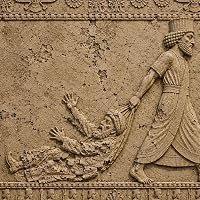
Army Stings Clinging King
You can read a lot of books about Ethiopia, many very good. Similarly, you can read many studies of tyranny, studies of the worst of that ilk like Hitler, Stalin, Mao, Idi Amin, Franco, Pol Pot, Trujillo, Duvalier,and dozens more. Perhaps you've read Garcia-Marquez' "The Autumn of the Patriarch". Kapuscinski's amazing, deeply ironic book on Haile Selassie, last emperor of Ethiopia, bears more than a little resemblance to that latter volume. In fact, it's hard to believe that Kapuscinski was not influenced by that novel, which came out only three years before THE EMPEROR. Whatever the case, in this short book, the famous Polish journalist captures the psychology of tyranny and the tyrannized better than almost any other book I know. It also captures the mood in the capital as the Ethiopian Revolution was breaking out. The author claims to have ferreted out the last surviving officials in the palace and royal administration in Addis Ababa with the help of an elderly former official in the Ministry of Information. THE EMPEROR is a kind of collage of their testimony as to what went on in the palace, about the psychology of those who worked or made appeals there. It is heavily larded with Kapuscinski's own words, and own insights into how things had happened. These in turn must have developed from his experiences and observations in communist Poland, but he never mentions that (he wanted to keep on working). Though the book is ostensibly about Ethiopia, it can be read as a study of absolutism and its evils. A kind of black humor suffuses the pages. Haile Selassie is referred to as Venerable, Benevolent, Worthy, Unrivaled, Distinguished, Exalted, Noble, August, and many more titles as in "His Most Unparalled Majesty"---all tongue in cheek, and probably not uttered by the informants. In addition to the political dimension in the period 1964-74 as the Ethiopian monarchy slowly broke down, it helps to explain why the Ethiopian famine, so well-known in those years, was totally avoidable and a product of bad and indifferent government, not of nature. Haile Selassie had risen to power through a coup in 1916, gotten himself crowned Emperor in 1930, and then come to the attention of the world when the Italians invaded his country in 1935. He became a 'valiant fighter for freedom' and even a demi-god for the Rastafarian religion, named in his honor (he was called Ras Tafari before he was crowned.) However, in his own land, Haile Selassie was nothing if not an autocrat, sitting on top of a very oppressive structure of feudal landlords, conservative church officials, and bureaucrats. THE EMPEROR tells of his manipulative style, and his slow fall.
I also read a political history of Ethiopia up to 1964. Though it was far longer than the present work, it lacked the power, insight, and descriptive richness of THE EMPEROR, which may not be so strong on particular details. This is one of the best political works I have ever read. See for yourself !