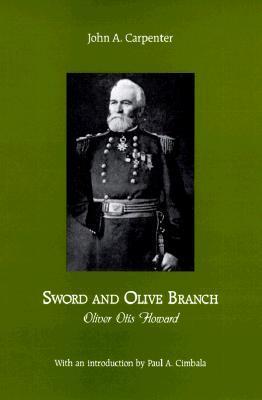
Oliver Otis Howard devoted his life to the service of his country, both as a distinguished army officer in two wars and as the founder of two universities. Oliver Otis Howard was a graduate of Bowdoin College and of West Point. Being reared in a pious New England (Maine) atmosphere gave him a deep sense of obligation to lead a Christian life, for the good of others and for the development of his own best self. He was often disturbed by the conflict presented him in his dual career in peace and war.General Howard's strong sense of duty to his country brought about his distinguished career of command during the Civil War-at the Battle of Chancellorsville, itself a disappointing rout, and at Gettysburg, where he recovered any reputation the earlier defeat might have lost him. Under General Sherman, in the Atlanta campaign, and as a leader of the Army of the Tennessee he won special distinction. In total, Howard fought at the First Bull Run, Fair Oaks (where severe wounds forced the amputation of his right arm), Second Bull Run, Fredericksburg, Chancellorsville, and Gettysburg.The same strong sense of duty made him accept the commission of the Freedmen's Bureau and the promotion of African-American education. Following his service in the Nez Perce Campaign of 1877 he was superintendent of West Point and the founder of Lincoln Memorial University. His greatest service to education, however, was as founder and president of Howard University, where his name and career are held in honor.
I purchased this book several years ago for a project on the post-Civil War era. Now that I've finally read it, I found it to be a kind of classic biography of a 19th century figure. Howard's life was pretty remarkable and Carpenter did a nice job of not trying to over-sell the subject matter. There's much more storytelling and narrative than over-the-top analysis. It makes for an enjoyable read but with plenty of relevant source material.
I found myself wondering if Howard had any faults. I wouldn't say the book was hagiographic, but it did seem to often side with Howard in the many disagreements he had with other leaders. I found the post-war service in the West to be particularly interesting. It is in that era that I think Carpenter could have done a bit more to be critical of Howard's perspectives.
That said, this is a good book for 19th century scholars and buffs to enjoy. I can't see assigning it for any specific courses, but it certainly deserves a spot in a library of folks interested in the Civil War, Reconstruction, and the late 19th century.