Originally published in 1935, this novel--staged as a drawing-room comedy--centers on an encounter between Alexa, a celebrated English writer, and her rival, Anne, and their discussion about their mutual lover, Lord Shorne, and his redoubtable mother
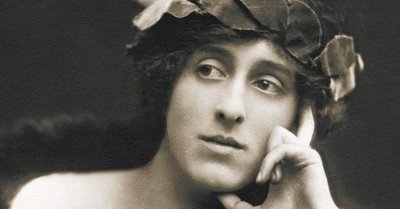
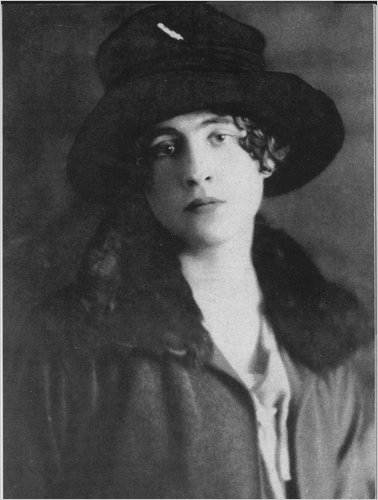
Violet Trefusis does not forgive. Violet Trefusis does not forget. And God forbid anyone who leaves her, metaphorically speaking at least, at the altar.
Backstory
For those not up on the Trefusis-Sackville-West affair of the late 1910s, here's a quick run-through: Violet and Vita had known each other since childhood, and ended up restarting a romantic relationship (first begun in their teens) towards the end of the Great War. However, it seemed doomed from the start; the two women's personalities clashed on more than one occasion, jealousy and passion mixed in together culminated in a bit of a showdown in a Parisian hotel in 1920 involving both of their husbands, who had legged it over the Channel in a hired plane an attempt to stop the women running away together. And, sufficed to say, it worked. Vita went back to her husband, leaving Violet with a spouse who despised her as equally as she despised him, and whom she mourned very little after his death from TB in 1928.
Review
This novella is considered by critics to be Violet Trefusis's "revenge" on Vita Sackville-West. And they're not far wrong. The character of Lord John Shorne is very evidently based on Vita:
A sombre beauty was born in his eye, strayed down to his too full lips, and reappeared in his classical cleft chin. There was a sort of languid grace about him, a latent fire, which turned this picture of idleness into a figure of rhetoric. His Latin descent - his mother was Italian - showed more clearly in photographs than in real life, where the setting and circle to which he belonged prevented him from looking foreign, making any suggestion of it improbable and even shocking. John himself, with unconscious mimicry, tried to look even taller and more languid still. But the South claimed its own: away from his usual surroundings, he became his true self and wore a beatific smile.
Vita's own mother was half-Spanish, and the relationship between mother and daughter could at times become fraught, especially towards the end of Lady Sackville's life, as her moods could go from lavishly praising Vita to publicly criticizing her; the character of Lady Shorne, a manipulative woman obsessed with flaunting her wealth (if I'm not mistaken, Vita had used her as a model for the aristocratic ladies depicted in her 1930 novel The Edwardians), though something of a caricature, may not, upon closer inspection, be too far from the truth.
Alexa Harrowby-Quince, on the other hand, is a rather spiteful representation of Virginia Woolf, whom Violet had met in 1932 in the hope that the Hogarth Press would publish her new novel Tandem, and which forms the basis of the story; Alexa plans a meeting with Lord John's former lover, Anne Lindell (representing Trefusis, who, not unsurprisingly, comes off rather well in comparison to everyone else) to discover if Anne could still be considered a rival in John's affections. Alexa is in her early 30s, a successful writer, and a virgin. She also spends a lot of time fretting over her personal appearance and perceived lack of feminine wiles - Victoria Glendinning (Vita Sackville-West's biographer) sums up Trefusis's bitterness better in her introduction:
It is not an exact portrait; Alexa has none of Virginia Woolf's acid wit and seems chiefly preoccupied by her rather superficial romantic needs. Violet, who in spite of her intelligence lived on her emotions and her instinctive shrewdness, was unable or unwilling to suggest any real intellectual capacity in Alexa. If, as I believe, her aim was to demythologize both Vita and Virginia, she certainly succeeded with Virginia.
It cannot be denied that Violet Trefusis has a way with words, if also a tendency to get a little flowery and overly romanticised even in trivial matters; there are numerous references and quotations pertaining to famous works of literature and art of an earlier period that modern audiences would be unlikely to grasp, though I did appreciate the scene in which Alexa compares Anne to a "fox cub", itself a sly allusion to Woolf's description of the Princess Sasha (based on Trefusis) in her 1928 novel Orlando. In the end, Alexa is left feeling enlightened and strangely grateful by Anne's visit, and Anne in her turn gets her own back on Lord John in her own rather laid-back fashion, as Trefusis would no doubt have loved to have done in that Paris hotel back in 1920. Whether or not Vita or Virginia actually read the book is unknown, though they were aware of its existence. I'll leave it up to Victoria Glendinning to conclude this review, as she appears to share my feelings on this novella:
Vita during the war told Violet that she was an "unexploded bomb" - that is, someone to be treated warily and kept at a distance. In effect, Violet's "unexploded bomb" was Broderie Anglaise. It packs no very great charge, but it's sophisticated explosion alters the landscape, if only a little.
In a bookshop, the cover of this book lured me first. And when I read that it was a fictionialised account of Violet-Vita-Virginia love triangle, I realised I should read this. I grabbed a copy and contemplated reading it over the last month. Now, with the end of the year coming close, the book beckoned me and I gave in. The story opens with an English woman who resembles a man taunting her lover about the woman he has in waiting in Rome where he's off to. She is miffed at the thought of his liaisons. It is at this moment she gets a call that her literary agent is bringing a guest, a writer who lives in France. As the guest makes an entry, the two women confront each other and the man who ties them together with a terrible family history that has wrecked their lives. The compactness of the story is what stood out. Trefusis, in Bray's translation, embodies the charm and elegance to tell an allegorical tale of love, history and devotion gone wrong. At first, I did not know who was who in the story. I loved the story for what it was. Howevermuch heterosexual in nature. In the introduction when I learnt that the English woman represents Virginia Woolf, the visiting lady Violet Trefusis, and the male lover Vita-Sackville, I understood the allegory. The tension and the concealments between the lovers was stunningly done. The dialogues were sharp with a need to be precise and convey the internal claustrophobia in the lives of the characters. This suffocation favourably portrayed the general exhaustion queer women feel with the heteropatriarchal structures that constrain them, and the jagged terrain of their relationship with one another. Whether you choose it for its allegory, or the themes, I will recommend this little book wholeheartedly more so for the story. The deliciously enjoyable story it tells of a love triangle within 120 pages!
I’ve now read three fictionalisations of Virginia Woolf: EM Forster’s ‘Howard’s End’; Michael Cunningham’s ‘The Hours’; and now Violet Trefusis’s ‘Broderie Anglaise’.
Violet isn’t in the same literary league as the other two (let alone Virginia herself or Vita Sackville-West), but she is the third point in the Woolf/Sackville-West/Trefusis love triangle and therefore her account is of interest.
She clearly has an axe to grind and expertly disses West (and her overbearing mother) and more subtly Woolf, who she takes as the point of view character in this short novella.
In her brilliant introduction to this edition Victoria Glendinning suggests Trefusis was ‘unable or unwilling to suggest any real intellectual capacity in Alexa’ [Virginia]. However, emotionally the two writers, and the characters in their respective books (a fictionalisation of Violet occurs in Wool’s ‘Orlando’), do connect in suggestive ways.
Both writers reach for the same image to describe Violet - ‘fox cub’. Whilst oblivious except on the most superficial level to Woolf’s genius Trefusis ruthlessly pinpoint’s Virginia’s actual insecurities as a woman.
The writers met each other once, in Bloomsbury - the occasion was ostensibly to discuss Violet’s literary career. The meeting was clearly momentous for both, inspiring as it did the central incident in this novel for Violet. Glendinning notes all Virginia’s letters mentioning the meeting: but also points out the rather strange and notable total absence of mention in this obsessive diarist’s diaries. I think that’s rather suggestive that the subtext of Anne and Alexa’s meeting in this novel played out in some mysterious and possibly diffuse way in the real meeting between Virginia and Violet. Whatever, Glendinning notes that this same year saw the end of the West/Woolf passionate involvement.
Glendinning’s summation is brilliant and deserves to be quoted at length: ‘Vita during the war told Violet she was an “unexploded bomb” - that is, someone to be treated warily and kept at a distance. In effect, Violet’s “unexploded bomb” was Broderie Anglaise. It packs no very great charge, but its sophisticated explosion alters the landscape, if only a little.’
A not-very-good psychological novel. The idea is quite good – the meeting of two women, one of the past and one of the present, who conduct an exchange about their involvement with a lord – but someone like Henry James would have done it much, much better.
Rather, the book is most interesting as a clear roman a clef about these famous women – Vita Sackville-West as Lord Shorne, Virginia Woolf as Alexa, Violet herself as Anne, Lady Sackville as Lady Shorne – and how it contributes to the legendary story of Vita and Violet's grande passion. Violet's lingering emotional involvement with Vita, both negative and positive, and jealousy of Virginia, somewhat feverishly built up in her mind, can be seen in this novel and it's also a tit for tat response to Virginia's basing the Russian princess in Orlando on Violet when she did not even personally know Violet. In both senses, it is a bit of a revenge novel as well as a defence, and it simply kills me to think of how it was actually published, in France, when the personages mentioned were alive, yet none of them knew of it.
A rather odd book, when you know that the unappealing character of Anne is supposed to be a self-portrait. The story takes place during the fateful afternoon when Alexa, who is deeply in love with John, meets John's former fiancée Anne, whose revelations shatter Alexa's esteem for John. For years Alexa believed that Anne had ditched John, and being a rather insecure bluestocking, she imagined that Anne was an extraordinary woman who would always keep the first place in John's heart. What she discovers is that in fact, John chickened out of marrying Anne because his commandeering mother wanted to keep him under her thumb - and succeeded only too easily. What's interesting is that all along Alexa had suspected John of being a weakling, but rather enjoyed being in a dependent position towards him. Her conversation with Anne allows her to admit to herself what she knew about John deep down. Although Trefusis isn't as deep as Proust (not by a long chalk), she has some good insights and this rather brief tale of one woman being empowered by another is not without merit.
Not bad. Is Violet Trefusis telling us about her lesbian or friendship relations with Vita Sackville West. Let's say this is just the other side of the mirror. It portrays well Violet herself. What she tells of is previous to Vita's affair with Virginia Woolf. By the way, we learn a tad about the Edwardians society they were part of. Interesting short book.
Broderie Anglaise by Violet Trefusis is the fictionalized portrayal of a love affair between the author and Vita Sackville-West. Trefusis was an English writer and socialite. She is chiefly remembered for her lengthy affair with the poet Vita Sackville-West, which the two women continued after their respective marriages to men. Trefusis wrote novels and nonfiction works, both in English and French. This novel was published in French in 1935. It has only recently been translated into English.
I started reading Virginia Woolf, which led me to Vita Sackville-West and she has taken me to Violet Trefusis. The Vita Sackville-West -- Virginia Woolf affair is well known, but before that affair, Vita took to Violet Trefusis in a relationship that lasted a lifetime. Vita wrote about her affair with Violet in her book Challenge and later in her journal which was published by her youngest son as Portrait of a Marriage. There are, of course too, the letters Violet send to Vita but the letters Vita send back were all destroyed by Violet's husband, Denys. Vita's and Virginia Woolf's relationship has been preserved in letters and diaries which have all been published. Broderie Anglaise is Violet's version of events and her characterizations of the people involved. John Shorne is Vita, safely taking a more socially acceptable male form. Lady Shrone is Victoria Sackville-West played out in hyperbole. Alexa is Virginia Woolf who Anne (Violet) is meeting. An actual meeting Virginia and Violet did take place in real life.
This book would probably be of little interest or value to a reader not familiar with the setting who might simply dismiss it as a mediocre novel. There is nothing stellar about the writing or the story -- Two women who competed for the same man, who was controlled by his mother. The story comes to mean more when the characters are known. If anyone has read Portrait of a Marriage or the letters Violet wrote to Vita, the story and it characterizations become clear. Violet was a very emotional person and it is reflected in her letters in the form of passion and mocking when her passion was not returned. Broderie Anglaise is Violet's last bit of bitterness and revenge on both Vita and Virginia Woolf. Vita and Violet remained friends for life but things never returned to the passion of the earlier years. That is perhaps one reason this book was not published in English until recently. Nigel Nicholson (Vita's son) waited until both Vita and Violet had died before publishing Portrait of a Marriage perhaps this was Violet's thinking in keep the book in French, although Vita did speak French. Their affair in Challenge was fictionalized and there too Vita played the male role, but it also remained unpublished for fifty years for fear of a scandal.
For those interested in Vita Sackville-West this book does hold some value. Trefusis has shown in her letters just how emotionally driven she was and it reflects well in this novel as the characters outside of Anne (Violet) are but caricatures of their real selves. Violet could hold a grudge and it shows. It would seem that she believed that she and Vita should have been together and it was those surrounding Vita poisoned their relationship. Broderie Anglaise is perhaps better viewed as a study of Violet Trefusis’ psyche than as a novel.
For me reading the first few pages of this book was like being submerged in a very cold swimming pool - "ouch, these depictions of Alexa (Virginia Woolf) and John (Vita Sackville-West) are rather harsh", I thought - but after about ten pages I began to be hooked and more happily acclimatised to the pool/novel. Yes, Violet Trefusis seems to go pretty much full tilt on the attack, but after Virginia Woolf's novel 'Orlando', which included what could be regarded as a thinly veiled character assassination of Violet Trefusis, I imagine Trefusis thought her quarry fair game.
Surprisingly I think Alexa emerges as the more fully rounded character compared to John - surprising considering I expected the insight into John/Vita to be deeper in the light of the past relationship between Trefusis and Sackville-West. Lady Shorne/Sackville (John/Vita's mother) gets the worst of it in terms of satirical damage - she is described as somewhat crazed.
On the whole though, I prefer writing by Violet Trefusis when it is more restrained and subtle in its irony. This is one of her earlier works and shows promise, but is not, I think, her best work.
Self-indulgent sapphic drama about some of my favourite writers? Immensely enjoyable. This was a super quick read, and in my heart deserves more than three stars. However, John/Vita and Anne/Violet weren't the focus I'd thought they'd be, instead, Trefusis opts to centre everything on Alexa (Virginia.) And what a scathing centrepiece her characterisation is; I'd probably only recommend this to someone very interested in the love triangle that is Virginia, Vita, and Violet.
The dialogue and writing were crisp and the existence of this story is extremely important to the overall landscape of Violet's life. However, the wish fulfillment of Woolf recognising Violet's literary talents alongside the truth of Vita's cowardice and betrayal (whether true or not) struggles to not seem flat and jarring in the structure. It's a shame.
This entire review has been hidden because of spoilers.