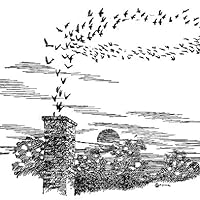
Botanical encounters in the trees that walk, a leaf as big as an awning, a plant that dances. This Atlas invites the reader to tour the farthest reaches of the rainforest in search of exotic—poetic—plant life. Guided in these botanical encounters by Francis Hallé, who has spent forty years in pursuit of the strange and beautiful plant specimens of the rainforest, the reader discovers a plant with just one solitary, monumental leaf; an invasive hyacinth; a tree that walks; a parasitic laurel; and a dancing vine. Further explorations reveal the Rafflesia arnoldii , the biggest flower in the world, with a crown of stamens and pistils the color of rotten meat that exude the stench of garbage in the summer sun; underground trees with leaves that form a carpet on the ground above them; and the biggest tree in Africa, which can reach seventy meters (more tha 200 feet) in height, with a four-meter (about 13 feet) diameter. Hallé's drawings, many in color, provide a witty accompaniment. Like any good tour guide, Hallé tells stories to illustrate his facts. Readers learn about, among other things, Queen Victoria's rubber tree; legends of the moabi tree (for example, that powder from the bark confers invisibility); a flower that absorbs energy from a tree; plants that imitate other plants; a tree that rains; and a fern that clones itself. Hallé's drawings represent an investment in time that returns a dividend of wonder more satisfying than the ephemeral thrill afforded by the photograph. The Atlas of Poetic Botany allows us to be amazed by forms of life that seem as strange as visitors from another planet.
Diciamo che l'oggetto libro (un gioiellino) supera il contenuto del libro stesso. In questo atlante, sono raccolti una serie di fun facts sulle foreste tropicali, che afferiscono in larga parte alla categoria “alberi da record”, rendendo le schede un po’ ripetitive, a fronte dell’incanto che si intuisce celare la flora di queste aree geografiche. Gli identikit delle singole piante sono abbastanza scarni, con descrizioni appena accennate, e ne è messo in risalto, più che altro, l'aspetto curioso. Ecco, il contenuto è un po' povero. Sono cento pagine striminzite e sembra che la CE abbia fatto di tutto per guadagnare spazio (margini ed interlinee molto ampie, reiterazioni di autocitazioni a mezza pagina, …). Peccato, perché l'idea dei disegni del botanico è deliziosa ed il mondo delle piante tropicali è davvero strabiliante.
Un très beau livre qui au-delà des illustrations se savoure petit à petit même si on a envi de tout lire d'une traite. Francis Hallé nous raconte les curiosités végétales de la flore des tropiques, exemple après exemple, beaucoup d'arbres, quelques lianes et un peu de fleurs, qui s'adaptent de manière étonnante, évoluent en lien avec un animal, et questionnent encore souvent les scientifiques. C'est fascinant, très doux à lire et en même temps émerge la savoureuse sensation qu'il reste tant à découvrir.
Achei que seria melhor. O livro é bonito. As ilustrações são interessantes. O autor é um botânico francês falando de plantas tropicais com características fora do comum. Achei colonialista demais, pouco poético ou filosófico. Acabou sendo uma coleção de curiosidades sobre plantas.
Written by a French botanist, this is an awe-inspiring catalogue of plants that seem to belong in the realm of science fiction, but actually coexist with us now here on Earth. There's plants that are clonal forests (tree ferns), plants that seem to 'walk' by shooting new roots and pruning old roots in the water's direction (mangroves). There's partial carnivores that send out sticky leaves or ordinary leaves, depending on nutritional need. There's floating aquariums that raise insects in their watery roots, only to be inferred to consume them later. There's the dancing plants of China, that seem to wave their leaves to music; single-leaved plants; and plants, like Boliqua, or mimic plant, that send out leaves in the shape and look of its host plant. They're amazing proof of the biodiversity of the plant realms.
Un libro con un concetto molto bello - la poesia e la botanica messe insieme -, che si rivela facile da leggere e molto piacevole. Ci fa incuriosire su tante piante e la bellezza immensa della natura. Poi, ogni descrizione di una piante è accompagnata di disegni, a volte colorati. Anche se questi disegni sono un ottimo complemento, io ho dovuto cercare sempre le foto di ogni pianta.
Alcune delle piante che mi hanno ispirato di più sono:
. Hevea brasiliensis, seringua o l'albero della gomma - quando ferita, la pianta perde un lattice dal quale il seringueiro ricava il caucciù. . Microcoelia caespitosa, un'orchidea senza foglie - le sue radici diventano verdi, perché la clorofila appare, solo quando piove. . Eucalyptus perriniana, l'albero della gomma delle nevi, l'albero che non riesce a perdere le foglie. . Barteria fistulosa, l'albero dell'adultera - come dice il nome, questa pianta è legata a una tradizione di punizione delle donne, e solo delle donne, ovviamente... però c'è anche una simbiosi molto interessante, una delle tante presenti in questo libro, tra pianta e formiche. . Guzmania lingulata, l'acquario sospeso. . Ocotea foetens, garoé o l'albero fontana - si somiglia al alloro ed è capace di raccogliere l'acqua della nebia. . Victoria amazonica, la ninfea gigante che ispirò l'architetto - Paxton, giardiniere e costruttore di serre, si è accorto che le sue foglie potevano reggere il peso di un bambino, e fu anche promosso ad architetto e incaricato di costruire il Crystal Palace. . Ficus - che non sapevo già fossero sorprendenti, ma non così possenti e variegati, come il fico strangolatore e Ficus religiosa.
Challenge: Springathon May 2022 - A book to savor that encourages one to draw rather than photograph nature as experienced in order to appreciate each detail of what is enjoyed and observed. Both narrative and illustrations are by the author, a lifelong botanist, from a family of agronomists and botanists specializing in tropical plants. Organized for plant exuberance, adaptation, behavior, coevolution, and singularity, plants that amaze are written about with wonder. Although sometimes a bit confusing or contradictory in the narrative, this book is wonder filled. Would be on my coffee table to be read again and again. Translated from the French by Eric Butler.
This book caught my attention because the title was intriguing. I can say that I am glad I bought and read it, as it is filled with little tidbits of trivia as well as the descriptions and drawings of the plants being discussed. While I was unaware of the author's pedigree, the book is great for those interested in unusual plants, some of which are common in botanical gardens, though the gardens' information plaques generally don't give as much information on why such plants are unusual.
Want to see some unusual plants? Well, this isn't quite the right book for that because the pictures are all very basic sketches. But the descriptions and science were really brilliantly done and inspired me to do more research. Most of the plants in this book are trees, but the author is pretty excited about all kinds of plants, especially the ones we don't typically see in Europe and North America. The enthusiasm is catching.
Libro interessante e carino, soprattutto per alcuni contenuti finali dove abbiamo dei bellissimi esempi di coevoluzioni tra animali e piante e singolarità biologiche che ispirano narazioni particolari e interessanti. Purtroppo di poetica stretta non ha molto e anche la botanica è molto spiccia, ciònondimeno è consigliata una lettura per cultura personale
Splendida raccolta di brevi descrizioni di piante molto particolari, le più originali a cui si possa pensare, presenti soprattutto nelle zone tropicali dei vari continenti. Il modo in cui sono descritte è coinvolgente, stimolante e i disegni permettono di immaginarle, lasciando spazio a ricerche e approfondimenti. Molto pregevole, libro meraviglioso!
Carino ma scritto in modo spesso noioso e ripetitivo. Per una persona che si interessa di botanica molte informazioni erano piuttosto comuni, quindi mi aspettavo che fosse quantomeno poetico (titolo fuorviante?). Ecco, poetico decisamente no. Ho molto gradito i cenni storici e le illustrazioni
Who knew it would be a French botanist who would restore my sense of the deep-seated wonder of the world? This beautiful book is a cool, tickly poultice for the soul.
Felt a bit drier than Atlas of Poetic Zoology and didn't have as beautiful art. But there were a ton of cool plants I learned about so it was still pretty good.
Line drawings of tropical plants with brief essays on what makes them compelling to the author. Dr Halle is a world renowned botanist and has conducted research in the tropics for decades. Superb!