

What do you think?

After Kathy Acker: A Literary Biography (Semiotext
The first authorized biography of postmodernism's literary hero, Kathy Acker.
Acker's life was a fable; and to describe the confusion and love and conflicting agendas behind these memorials would be to sketch an apocryphal allegory of an artistic life in the late twentieth century. It is girls from which stories begin, she wrote in her last notebook. And like other lives, but unlike most fables, it was created through means both within and beyond her control.
-- from After Kathy Acker
Rich girl, street punk, lost girl and icon... scholar, stripper, victim, and media-whore: The late Kathy Acker's legend and writings are wrapped in mythologies, created mostly by Acker herself. Twenty years after her death, Acker's legend has faded, making her writing more legible.
In this first, fully authorized, biography, Chris Kraus approaches Acker both as a writer and as a member of the artistic communities from which she emerged. At once forensic and intimate, After Kathy Acker traces the extreme discipline and literary strategies Acker used to develop her work, and the contradictions she longed to embody. Using exhaustive archival research and ongoing conversations with mutual colleagues and friends, Kraus charts Acker's movement through some of the late twentieth century's most significant artistic enterprises.
Beginning in her mid-teens, Acker lived her ideal of the Great Writer as Cultural Hero, and as Kraus argues, she may well have been the only female writer to succeed in assuming this role. She died of untreated cancer at an alternative clinic in Tijuana when she was fifty years old, but the real pathos of Acker's life may have been in the fact that by then she'd already outlived her ideal.
Acker's life was a fable; and to describe the confusion and love and conflicting agendas behind these memorials would be to sketch an apocryphal allegory of an artistic life in the late twentieth century. It is girls from which stories begin, she wrote in her last notebook. And like other lives, but unlike most fables, it was created through means both within and beyond her control.
-- from After Kathy Acker
Rich girl, street punk, lost girl and icon... scholar, stripper, victim, and media-whore: The late Kathy Acker's legend and writings are wrapped in mythologies, created mostly by Acker herself. Twenty years after her death, Acker's legend has faded, making her writing more legible.
In this first, fully authorized, biography, Chris Kraus approaches Acker both as a writer and as a member of the artistic communities from which she emerged. At once forensic and intimate, After Kathy Acker traces the extreme discipline and literary strategies Acker used to develop her work, and the contradictions she longed to embody. Using exhaustive archival research and ongoing conversations with mutual colleagues and friends, Kraus charts Acker's movement through some of the late twentieth century's most significant artistic enterprises.
Beginning in her mid-teens, Acker lived her ideal of the Great Writer as Cultural Hero, and as Kraus argues, she may well have been the only female writer to succeed in assuming this role. She died of untreated cancer at an alternative clinic in Tijuana when she was fifty years old, but the real pathos of Acker's life may have been in the fact that by then she'd already outlived her ideal.
352 pages, Paperback
First published August 18, 2017
About the author
Chris Kraus
81 books969 followersChris Kraus is a writer and critic. She studied acting and spent almost two decades making performances and experimental films in New York before moving to Los Angeles where she began writing. Her novels include Aliens & Anorexia, I Love Dick, Torpor, and Summer of Hate. She has published three books of cultural criticism—Video Green: Los Angeles Art and the Triumph of Nothingness, Where Art Belongs, and Social Practices. I Love Dick was adapted for television and her literary biography After Kathy Acker was published by Semiotext(e) and Penguin Press. A former Guggenheim Fellow, Kraus held the Mary Routt Chair of Writing at Scripps College in 2019 and was Writer-in-Residence at ArtCenter College between 2020–2024. She has written for various magazines and has been a coeditor of the independent press Semiotext(e) since 1990. Her work has been praised for its damning intelligence, vulnerability, and dazzling speed and has been translated into seventeen languages. She lives in Los Angeles.
Ratings & Reviews
Friends & Following
Create a free account to discover what your friends think of this book!
Community Reviews
Displaying 1 - 30 of 114 reviews

November 1, 2017
THE MOST IMPORTANT BAD WRITER OF THE 1980s (© some anonymous wag)

I don’t like Kathy Acker any more than you do but you gotta admit she was pretty interesting. If ever any writer decided she was a writer because she wanted to be one, it was Kathy Acker. She wrote things she called novels and were for want of a better word accepted to be novels but she never bothered with such jejune matters as plot, character, lucidity, sense, good taste, humour, consistency or asking herself why anyone would ever want to read this self-adoring blather. In consequence she got some eye-watering reviews, from which our jovial biographer Chris Kraus selects these gems, all from the reviews of Empire of the Senseless (1988) :
Nasty and cantankerous, it is unredeemed by a moment’s wit… Kathy Acker’s new line in post-punk fiction is petulant, otiose, maudlin, sentimental, undisciplined and incoherent (The Independent)
Amateurish drawings and a cast of transvestites, junkies, gay bikers, mutants and brutal policemen, with its emphasis on used needles, blood and feces, leather, discarded condoms, tattoos, pleasureless sex, incest and dreams of brutality… a very dated work (The Guardian)
She has simply turned up the volume on a senseless, not to say meaningless, sequence of lurid images, randomly juxtaposed… Acker’s volume knob is now on max, but there’s no record on the turntable : that excruciating noise is just the needle screeching across the rubber mat (The Observer)
The New Musical Express (previously quite a supporter of KA) said
Empire trails its Acker-patented sub-Burroughs pseudo-Theatre-of-Cruelty entrails from page to page, a wounded lame dog of a novel that makes up for in gratuitous nonsense what it lacks in originality
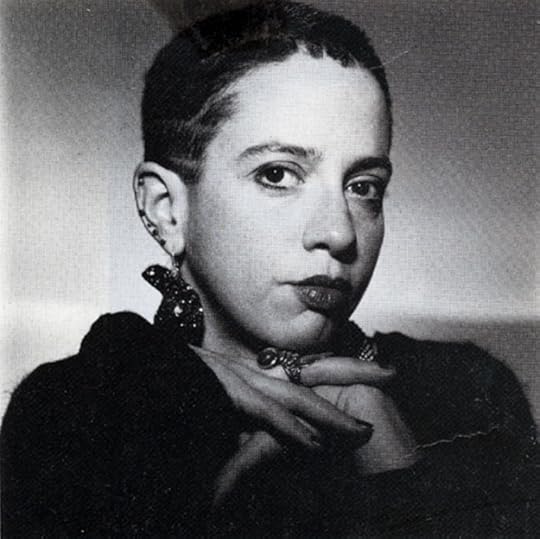
KATHICON
She was a poor little rich girl punk poet princess who you have to kind of admire for sticking to her lifelong religion of hating everything mainstream and loving everything underground, countercultural and angry. Let’s just take her first long work, The Childlike Life of the Black Tarantula by The Black Tarantula (1973).
In this novel she began her lifelong method of plagiarising other books, which she called “appropriations”. She got a book on famous female criminals of the 18th century and simply transposed the accounts from third person to first person. She interspersed that material with her dream diary ramblings and then she sent out each chapter as it was finished (with NO rewriting, NO second thoughts, another lifelong rule) by mail to 600 people in the NYC art world. (She got this mailing list from another artist). I mean, fair play, that’s quite radical.
A CONCEPTUAL LEAP
KA’s aggressive defenestration of plot and character and so forth and her insistence that such fictional basics just do not relate any more to how life is experienced by the majority of people, and, moreover, are the products of patriarchy, turns her books into unreadable verbiage for me. (She even hated Donald Barthelme.) But it does remind me of the abstract artists of the 1910s and 20s and later. They said their paintings were no longer OF something, they were now THE THING ITSELF. You are no longer to contemplate a representation of something else when you look at a painting, you are to contemplate the painting itself. It’s not of anything, it’s it.
Whether you think that’s a good thing or just another brick in the wall is a discussion for a different day.
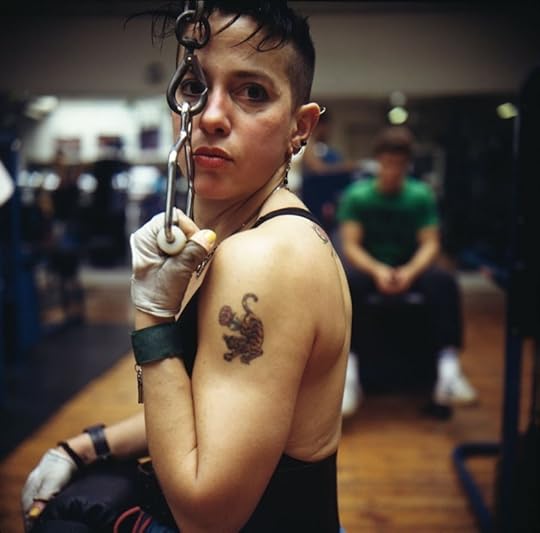
A MONSTER CALLS
This biography is so warts ‘n’ all that by page 200 there are pretty much nothing but warts. Kathy Acker is revealed to be a true egomaniac. Barry Miles (William Burrough’s biographer) gives an account of Kathy in London in 1983. Barry and his wife invite Kathy to stay with them while she finds her own place.
Shortly after moving in with us, we introduced her to Peter Wollen and they began an affair – in our living room. [Peter’s wife Laura Mulvey] was unaware of what was happening. Because of this their affair was conducted entirely in our flat. It was an intense, loud affair and it meant that Rosemary and I couldn’t use our living room and they were either necking or fucking or having the kind of intense conversation other people cannot join into.
Even when he was not there she would choose to do yoga in the middle of the room when we had friends over, never wash up the dishes, and possibly worst of all, fill the flat with the smell of patchouli oil… I remember one day rosemary ran screaming from the flat, yelling she couldn’t stand it any more. Kathy was unaware that anything might be amiss.
Someone else with a similar tale :
I’d be working in an office at a fairly low level and Kathy would ring my work number. And if Kathy wanted to talk, she wanted to talk. And that could be ninety minutes. She had no concept of the fact that if you were working in an office and you had a boss and you were taking a ninety-minute personal phone call without someone having died, you were gonna get into trouble
ACKERLITES
Yes, there were fans of Kathy, lots of them, for a while. One comedian described them as Ackerlites. Here’s one British voice:
Suddenly, here is this astonishing American woman, incredibly glamorous and punky, kind of street. But obviously at the same time talking an intellectual language that in London was like being from another planet. She was suddenly connecting the idea of being a writer to all of these points in the subculture. And then points in critical theory, which none of us had ever heard of

THIS BIOGRAPHY
Well, yes, it does often descend into a horrible interchangeable list of Kathy’s constant compulsive moving from place to place and from sex partner to sex partner, you would need a large Excel spreadsheet to keep track, but it’s a nice very readable account of a strange person, a famously “difficult” woman and throws a lot of light on whatever the countercultural literary world was in New York and London from the 70s to the 90s.
Maybe I could ask Chris Kraus to consider Andrea Dworkin for her next project?
I don’t like Kathy Acker any more than you do but you gotta admit she was pretty interesting. If ever any writer decided she was a writer because she wanted to be one, it was Kathy Acker. She wrote things she called novels and were for want of a better word accepted to be novels but she never bothered with such jejune matters as plot, character, lucidity, sense, good taste, humour, consistency or asking herself why anyone would ever want to read this self-adoring blather. In consequence she got some eye-watering reviews, from which our jovial biographer Chris Kraus selects these gems, all from the reviews of Empire of the Senseless (1988) :
Nasty and cantankerous, it is unredeemed by a moment’s wit… Kathy Acker’s new line in post-punk fiction is petulant, otiose, maudlin, sentimental, undisciplined and incoherent (The Independent)
Amateurish drawings and a cast of transvestites, junkies, gay bikers, mutants and brutal policemen, with its emphasis on used needles, blood and feces, leather, discarded condoms, tattoos, pleasureless sex, incest and dreams of brutality… a very dated work (The Guardian)
She has simply turned up the volume on a senseless, not to say meaningless, sequence of lurid images, randomly juxtaposed… Acker’s volume knob is now on max, but there’s no record on the turntable : that excruciating noise is just the needle screeching across the rubber mat (The Observer)
The New Musical Express (previously quite a supporter of KA) said
Empire trails its Acker-patented sub-Burroughs pseudo-Theatre-of-Cruelty entrails from page to page, a wounded lame dog of a novel that makes up for in gratuitous nonsense what it lacks in originality
KATHICON
She was a poor little rich girl punk poet princess who you have to kind of admire for sticking to her lifelong religion of hating everything mainstream and loving everything underground, countercultural and angry. Let’s just take her first long work, The Childlike Life of the Black Tarantula by The Black Tarantula (1973).
In this novel she began her lifelong method of plagiarising other books, which she called “appropriations”. She got a book on famous female criminals of the 18th century and simply transposed the accounts from third person to first person. She interspersed that material with her dream diary ramblings and then she sent out each chapter as it was finished (with NO rewriting, NO second thoughts, another lifelong rule) by mail to 600 people in the NYC art world. (She got this mailing list from another artist). I mean, fair play, that’s quite radical.
A CONCEPTUAL LEAP
KA’s aggressive defenestration of plot and character and so forth and her insistence that such fictional basics just do not relate any more to how life is experienced by the majority of people, and, moreover, are the products of patriarchy, turns her books into unreadable verbiage for me. (She even hated Donald Barthelme.) But it does remind me of the abstract artists of the 1910s and 20s and later. They said their paintings were no longer OF something, they were now THE THING ITSELF. You are no longer to contemplate a representation of something else when you look at a painting, you are to contemplate the painting itself. It’s not of anything, it’s it.
Whether you think that’s a good thing or just another brick in the wall is a discussion for a different day.
A MONSTER CALLS
This biography is so warts ‘n’ all that by page 200 there are pretty much nothing but warts. Kathy Acker is revealed to be a true egomaniac. Barry Miles (William Burrough’s biographer) gives an account of Kathy in London in 1983. Barry and his wife invite Kathy to stay with them while she finds her own place.
Shortly after moving in with us, we introduced her to Peter Wollen and they began an affair – in our living room. [Peter’s wife Laura Mulvey] was unaware of what was happening. Because of this their affair was conducted entirely in our flat. It was an intense, loud affair and it meant that Rosemary and I couldn’t use our living room and they were either necking or fucking or having the kind of intense conversation other people cannot join into.
Even when he was not there she would choose to do yoga in the middle of the room when we had friends over, never wash up the dishes, and possibly worst of all, fill the flat with the smell of patchouli oil… I remember one day rosemary ran screaming from the flat, yelling she couldn’t stand it any more. Kathy was unaware that anything might be amiss.
Someone else with a similar tale :
I’d be working in an office at a fairly low level and Kathy would ring my work number. And if Kathy wanted to talk, she wanted to talk. And that could be ninety minutes. She had no concept of the fact that if you were working in an office and you had a boss and you were taking a ninety-minute personal phone call without someone having died, you were gonna get into trouble
ACKERLITES
Yes, there were fans of Kathy, lots of them, for a while. One comedian described them as Ackerlites. Here’s one British voice:
Suddenly, here is this astonishing American woman, incredibly glamorous and punky, kind of street. But obviously at the same time talking an intellectual language that in London was like being from another planet. She was suddenly connecting the idea of being a writer to all of these points in the subculture. And then points in critical theory, which none of us had ever heard of
THIS BIOGRAPHY
Well, yes, it does often descend into a horrible interchangeable list of Kathy’s constant compulsive moving from place to place and from sex partner to sex partner, you would need a large Excel spreadsheet to keep track, but it’s a nice very readable account of a strange person, a famously “difficult” woman and throws a lot of light on whatever the countercultural literary world was in New York and London from the 70s to the 90s.
Maybe I could ask Chris Kraus to consider Andrea Dworkin for her next project?

September 16, 2017
A deeply unsettling account of a talented but tortured artist. Kathy Acker described as a fashionable post-punk feminist novelist lived her life in extremes. Never shy in her attack on society with her unabashed sexuality her writing drips with energy, raw and powerful, sexually explicit, violent and uncensored. She aggressively and actively pursues fame and notoriety, aligning with people latching on to them, then spitting them out when they no longer serve a purpose. This was an intense read. Kathy was a true avant garde persona, her image provocative and polarising. This biography is littered which much of Kathy's writing to get a full clear picture of her artistry. A must read for true Kathy aficionados but could be a chore to sit through if not familiar or interested in her work.
Thanks to the publisher and Netgalley for my advanced readers copy.
Thanks to the publisher and Netgalley for my advanced readers copy.

October 23, 2017
"...she consistently sought situations that would result in disruptive intensity for all parties involved. (...) Yet, like the rest of her writing and her life, her vulnerability was highly strategic. Pursuing a charged state of grace, Acker knew, in some sense, exactly what she was doing. To pretend otherwise is to discount the crazed courage and breadth of her work."
Kathy Acker was the first woman who not only deliberately set out to become an icon of the avantgarde literary scene, she actually succeeded in securing a place for herself next to her heroes William S. Burroughs and Jean Genet. This biography by Chris Kraus is incredibly well-researched and large parts are intricate attempts to interpret Acker's texts in the light of the author's personal experiences and convictions. And not only did Kraus investigate Acker's adventures from today's standpoint, she was herself part of the scene she describes, and her ex-husband Sylvère Lotringer (who features in her roman à clef I Love Dick) even had a three-year affair with Acker before he met Kraus.
Despite this close personal connection (which is not explicitly discussed in the book), Kraus is rather successful in walking the line between keeping her distance and empathizing with her protagonist. Known to be intense and volatile, Acker was often a challenging character to keep up with, even for her family and friends. Throughout her career (and frequently in her private life), Acker pursued a concept of radical subjectivity. She created her own myth, "a position from which to write", as Kraus puts it: "(...) the lies weren't literal lies, but more a system of magical thought" and "(...) the greatest strength and weakness in all of Acker's writing lies in its exclusion of all viepoints except for that of the narrator."
One of her most important topics which is present in all of her writing is the female body and female sexuality: "She came to believe that sexuality formed the essence of selfhood, and she wrote about this over and over again." Sex with men and women, her work in a live sex show and in porn, BDSM, tattoos, piercings, PID infections, abortions etc. - unsurprisingly, much of her work did not fail to shock, and her classic Blood and Guts in High School was even banned in West Germany for being pornographic (it's not banned anymore though).
Acker's style was deeply influenced by Burroughs cut-up technique, a literary counterpart to Jackson Pollock's drip paintings, and the technique of textual appropriation, meaning that she used other literary texts, intersected them with her own writing or overwrote and shifted them in elaborate pastiches. For those Germans out there: When Helene Hegemann was involved in a huge plagiarism scandal some years ago concerning her novel Axolotl Roadkill (English translation available), she said that her model had been Kathy Acker.
Acker's reason for working with appropriations still sounds fiercely postmodern: "I write by using other written texts, rather than by expressing ´reality´, which is what most novelists do. Our reality now, which occurs so much through the media, is other texts."
Kraus' research is impressive, her literary interpretations sound very convincing, but after reading the book, Acker still seems to be an enigma - which might not be Kraus' fault, but an accurate depiction of a fragmented, often contradictory character.
Kathy Acker died twenty years ago at age 50 from breast cancer.
Kathy Acker was the first woman who not only deliberately set out to become an icon of the avantgarde literary scene, she actually succeeded in securing a place for herself next to her heroes William S. Burroughs and Jean Genet. This biography by Chris Kraus is incredibly well-researched and large parts are intricate attempts to interpret Acker's texts in the light of the author's personal experiences and convictions. And not only did Kraus investigate Acker's adventures from today's standpoint, she was herself part of the scene she describes, and her ex-husband Sylvère Lotringer (who features in her roman à clef I Love Dick) even had a three-year affair with Acker before he met Kraus.
Despite this close personal connection (which is not explicitly discussed in the book), Kraus is rather successful in walking the line between keeping her distance and empathizing with her protagonist. Known to be intense and volatile, Acker was often a challenging character to keep up with, even for her family and friends. Throughout her career (and frequently in her private life), Acker pursued a concept of radical subjectivity. She created her own myth, "a position from which to write", as Kraus puts it: "(...) the lies weren't literal lies, but more a system of magical thought" and "(...) the greatest strength and weakness in all of Acker's writing lies in its exclusion of all viepoints except for that of the narrator."
One of her most important topics which is present in all of her writing is the female body and female sexuality: "She came to believe that sexuality formed the essence of selfhood, and she wrote about this over and over again." Sex with men and women, her work in a live sex show and in porn, BDSM, tattoos, piercings, PID infections, abortions etc. - unsurprisingly, much of her work did not fail to shock, and her classic Blood and Guts in High School was even banned in West Germany for being pornographic (it's not banned anymore though).
Acker's style was deeply influenced by Burroughs cut-up technique, a literary counterpart to Jackson Pollock's drip paintings, and the technique of textual appropriation, meaning that she used other literary texts, intersected them with her own writing or overwrote and shifted them in elaborate pastiches. For those Germans out there: When Helene Hegemann was involved in a huge plagiarism scandal some years ago concerning her novel Axolotl Roadkill (English translation available), she said that her model had been Kathy Acker.
Acker's reason for working with appropriations still sounds fiercely postmodern: "I write by using other written texts, rather than by expressing ´reality´, which is what most novelists do. Our reality now, which occurs so much through the media, is other texts."
Kraus' research is impressive, her literary interpretations sound very convincing, but after reading the book, Acker still seems to be an enigma - which might not be Kraus' fault, but an accurate depiction of a fragmented, often contradictory character.
Kathy Acker died twenty years ago at age 50 from breast cancer.

September 18, 2017
HMMMMM. I AM AT A LOSS FOR HOW TO RATE THIS AND ALSO NOT ENTIRELY CONVINCED CHRIS KRAUS SHOULD HAVE BEEN THE ONE TO WRITE THIS BOOK???

July 27, 2017
"I could've been Kathy. Kathy could've been me."
This is as much a compendium of Acker's writings as it is a biography, and Kraus has pulled together a vast amount of material from the archives and from personal interviews to supplement the texts. Together we're given, appropriately enough, a kind of collage of Acker: fragmented, contradictory, intelligent, sleazy at times, that mix of high and street culture, of literary sensibility and counter-culture that suffuses through Acker's thought and work.
Acker herself remains an enfant terrible, though the concerns of her texts (narrative structure, identity, sexuality, gender and writing) are increasingly mainstream. With its vibrant depiction of the 1960s/1970s New York art scene through to the more stable 1990s when Acker refused treatment for breast cancer, this is a fine and fitting tribute to an artist who constantly pushed herself, pushed boundaries and helped to reconfigure what a text might be.
Thanks to Penguin for an ARC via NetGalley.
This is as much a compendium of Acker's writings as it is a biography, and Kraus has pulled together a vast amount of material from the archives and from personal interviews to supplement the texts. Together we're given, appropriately enough, a kind of collage of Acker: fragmented, contradictory, intelligent, sleazy at times, that mix of high and street culture, of literary sensibility and counter-culture that suffuses through Acker's thought and work.
Acker herself remains an enfant terrible, though the concerns of her texts (narrative structure, identity, sexuality, gender and writing) are increasingly mainstream. With its vibrant depiction of the 1960s/1970s New York art scene through to the more stable 1990s when Acker refused treatment for breast cancer, this is a fine and fitting tribute to an artist who constantly pushed herself, pushed boundaries and helped to reconfigure what a text might be.
Thanks to Penguin for an ARC via NetGalley.

July 19, 2017
My review is now up at 4Columns. Here's an excerpt:
http://4columns.org/milks-m/after-kat...
"“Why shouldn’t writing be everything?” Acker asked in a letter to poet Bernadette Mayer in 1974. From early on, Acker was a graphomaniac: she wrote dutifully, obsessively, documenting her dreams, fantasies, and daily life in journals, notebooks, and diaries, and subsequently inserting this archive of female experience into those areas of literature and theory she felt had left it out. Poring over what’s left of Acker’s papers—at times the record drops off—to parse the gaps between her life and her work, Kraus offers a fascinating study of how Acker bent and exploited her life in her art. The book is a portrait of an “I” and the ways in which Acker mythologized it. "
http://4columns.org/milks-m/after-kat...
"“Why shouldn’t writing be everything?” Acker asked in a letter to poet Bernadette Mayer in 1974. From early on, Acker was a graphomaniac: she wrote dutifully, obsessively, documenting her dreams, fantasies, and daily life in journals, notebooks, and diaries, and subsequently inserting this archive of female experience into those areas of literature and theory she felt had left it out. Poring over what’s left of Acker’s papers—at times the record drops off—to parse the gaps between her life and her work, Kraus offers a fascinating study of how Acker bent and exploited her life in her art. The book is a portrait of an “I” and the ways in which Acker mythologized it. "

February 19, 2019
Kathy Acker is inarguably one of the most important writers of the 20th Century - to whom, as Kraus points out in the final pages of this book, the current wave of "discursive first-person" writing (autofiction, Nelson, etc.) is deeply indebted. After Kathy Acker - part hagiography, part literary criticism - lives up to its hype as a roaring motorcycle tearing through Acker's life, both real and imagined. AKA delivers us a compelling portrait of our troubled, talented pirate-saint - doing for Acker something that has rarely been done for female writers: canonizing her as the countercultural literary hero - alongside Burroughs, Kerouac, etc. - she tried so hard to become.
That said, the book is full of curious omissions. Of course it's the job of both the biographer and the critic to edit an artist's life, to make strategic choices about representation, but some of the gaps are puzzling. We hear nothing about Acker's late-in-life interview of the Spice Girls (which purely on the level of dish deserved mention), but more importantly: Kraus never lets on her own relationship with the punk-poet. For the casual reader who isn't familiar with the large cast of literatti populating this book, it wouldn't be obvious that Acker's longtime lover Sylvere Lotringer was married to Kraus for ten years during the writing of the book, for example. The two - Acker and Kraus - clearly moved in the same circles, but you'd never know that from the text of After Kathy Acker. Kraus is conspicuously absent.
That said, the book is full of curious omissions. Of course it's the job of both the biographer and the critic to edit an artist's life, to make strategic choices about representation, but some of the gaps are puzzling. We hear nothing about Acker's late-in-life interview of the Spice Girls (which purely on the level of dish deserved mention), but more importantly: Kraus never lets on her own relationship with the punk-poet. For the casual reader who isn't familiar with the large cast of literatti populating this book, it wouldn't be obvious that Acker's longtime lover Sylvere Lotringer was married to Kraus for ten years during the writing of the book, for example. The two - Acker and Kraus - clearly moved in the same circles, but you'd never know that from the text of After Kathy Acker. Kraus is conspicuously absent.

October 19, 2022
The unconventionality of this biography matches the subject. Kraus doesn't begin with the beginning of Acker's life, but at the chaotic end when her ashes are meant to be spread. (This doesn't go quite according to plan.) Family matters, allowed a line here and there throughout, are largely segregated to somewhere 200+ pages in. What a fine set of choices.
Kraus likes some of Acker's works and, perhaps, this and that year and dimension of Acker's life, but clearly doesn't feel obliged to approve of her subjects's aesthetic or lifestyle choices. "Her reasoning here wasn't flawless," she says, and variations of that, less baldly stated, occur here and there. Kraus states that "Demonology doesn't lend itself to a continuous read, but the book is compelling in other ways," and negative and positive reviews of other Acker works are quoted.
What comes across most is melancholia, on the part of the whole book, where Acker's words (when they are her words and not appropriations of other works) are deemed poison: "When [a particular author] proposed asking her for a blurb for his new Serpent's Tail book, his editor told him not to use Acker. Whatever she wrote would put people off because she was unpopular." Close to the end of her life, Acker writes "I can't bear to see what I've become."
The mood of this bio is in keeping with the emotional gamut of Acker's texts. There's always a sorrow present, an uneasiness with how things are, an unhappy soul that will never know peace, and disappointment. Whatever one feels about Acker -- poser? thief? punk? inventor? liberator? more than one of those things as well as other descriptors? -- the things she did reward Kraus' attention, and this biography rewards ours.
Kraus likes some of Acker's works and, perhaps, this and that year and dimension of Acker's life, but clearly doesn't feel obliged to approve of her subjects's aesthetic or lifestyle choices. "Her reasoning here wasn't flawless," she says, and variations of that, less baldly stated, occur here and there. Kraus states that "Demonology doesn't lend itself to a continuous read, but the book is compelling in other ways," and negative and positive reviews of other Acker works are quoted.
What comes across most is melancholia, on the part of the whole book, where Acker's words (when they are her words and not appropriations of other works) are deemed poison: "When [a particular author] proposed asking her for a blurb for his new Serpent's Tail book, his editor told him not to use Acker. Whatever she wrote would put people off because she was unpopular." Close to the end of her life, Acker writes "I can't bear to see what I've become."
The mood of this bio is in keeping with the emotional gamut of Acker's texts. There's always a sorrow present, an uneasiness with how things are, an unhappy soul that will never know peace, and disappointment. Whatever one feels about Acker -- poser? thief? punk? inventor? liberator? more than one of those things as well as other descriptors? -- the things she did reward Kraus' attention, and this biography rewards ours.

July 26, 2017
Kathy Acker lived a colourful life. She was a writer, a dreamer, and modern day women. She travelled. Kathy married and divorced twice. She had a great range of friends and lovers. She was a notorious fiction writer both in her books, and life. Kathy died at the age of 50 after a battle with cancer.
This book is a Biography of her life. There were some ups and downs. Kathy wasn't a sheep, and she was happy to colour outside the lines. She lived her life how she wanted and held her head high.
This is an interesting read, and the author Chris Kraus tries to keep to the facts (which I'm guessing was difficult as not even Kathy herself told the whole truth).
I enjoyed this book. I just would have liked to have seen some pictures.
4 stars out of 5. *ARC via Netgalley*
This book is a Biography of her life. There were some ups and downs. Kathy wasn't a sheep, and she was happy to colour outside the lines. She lived her life how she wanted and held her head high.
This is an interesting read, and the author Chris Kraus tries to keep to the facts (which I'm guessing was difficult as not even Kathy herself told the whole truth).
I enjoyed this book. I just would have liked to have seen some pictures.
4 stars out of 5. *ARC via Netgalley*

December 3, 2017
I adore Acker, and will cling to anything about her, but wow, Chris Kraus should not have been the person to write this book. Aside from personal and professional conflicts of interest, the style including verbatim repetition of previously written sentences, and at least half of the word count consisting of extracts from Acker's works and correspondence, seemed like an ill-conceived attempt to mimic Acker's appropriative style.
But, to my pleasure, at least half of the word count consists of extracts from Acker's works and correspondence, which was just wonderful.
But, to my pleasure, at least half of the word count consists of extracts from Acker's works and correspondence, which was just wonderful.
January 20, 2025
This is my first Kraus, and though this is a compelling biography in general, I'm going to guess that this may not be the best place to start with Kraus's work. I'll get to what I mean in a moment.
First some praise: Kathy Acker is insanely interesting to me for her interest in appropriating writers like Hawthorne, Cervantes, Sheldon and many others. Her explorations of sexuality and gender put her leagues ahead of theorists like Butler, Sedgwick and Halberstam who were just starting to gain traction toward the end of Acker's life. For all of these accolades, I find what I've read of Acker's work to be deeply unpleasant, to the point of inaccessibility. Her ideas are engaging, yet getting past the funnel of rage, appropriation, and anti-narrative structure is for me a challenge.
So, Kraus's biography has done a remarkable job of making Acker accessible, clear, and (Do I dare?) relatable. Acker was driven by the desire to be perceived as a self-made writer, coming from nowhere and being singular in the extreme. I can vibe with that: I have felt the same drive for independence and isolation for a lot of my adult life, though I more openly defer to pragmatism and companionship (because I've accepted that I'm not a battleship) when the chips are down.
Now, some critique: It's my understanding that Kraus is known for her criticism and autofiction. There was an episode of (what I believe to be) this autofiction in her Acker bio that took me out of the reading experience: when describing Acker's difficulties as a student, the narrative voice launches into a poem reflecting on the sordid details of Acker's frustrations and then excuses itself to watch an episode of Wolf Hall (strange choice, but pop off, sis). In these moments that defy form, I don't know that Kraus's intentionality here strengthened the work as a whole.
But, these moments are few and far between. If you want to get closer to Acker as a writer, then Kraus's biography is indispensable. Kraus's interview with Michael Silverblatt for KCRW's Bookworm was also eye-opening in terms of Kraus's relationship to the material.
First some praise: Kathy Acker is insanely interesting to me for her interest in appropriating writers like Hawthorne, Cervantes, Sheldon and many others. Her explorations of sexuality and gender put her leagues ahead of theorists like Butler, Sedgwick and Halberstam who were just starting to gain traction toward the end of Acker's life. For all of these accolades, I find what I've read of Acker's work to be deeply unpleasant, to the point of inaccessibility. Her ideas are engaging, yet getting past the funnel of rage, appropriation, and anti-narrative structure is for me a challenge.
So, Kraus's biography has done a remarkable job of making Acker accessible, clear, and (Do I dare?) relatable. Acker was driven by the desire to be perceived as a self-made writer, coming from nowhere and being singular in the extreme. I can vibe with that: I have felt the same drive for independence and isolation for a lot of my adult life, though I more openly defer to pragmatism and companionship (because I've accepted that I'm not a battleship) when the chips are down.
Now, some critique: It's my understanding that Kraus is known for her criticism and autofiction. There was an episode of (what I believe to be) this autofiction in her Acker bio that took me out of the reading experience: when describing Acker's difficulties as a student, the narrative voice launches into a poem reflecting on the sordid details of Acker's frustrations and then excuses itself to watch an episode of Wolf Hall (strange choice, but pop off, sis). In these moments that defy form, I don't know that Kraus's intentionality here strengthened the work as a whole.
But, these moments are few and far between. If you want to get closer to Acker as a writer, then Kraus's biography is indispensable. Kraus's interview with Michael Silverblatt for KCRW's Bookworm was also eye-opening in terms of Kraus's relationship to the material.
September 25, 2017
I knew this book would give me the yips and I was right. I read it anyway. Quickly.

June 14, 2022
Ehrlich gesagt habe ich Kathy Acker vor dem Buch noch nicht gekannt. Leider kam sie hier auch nicht sonderlich sympathisch rüber, eher egozentrisch und toxisch. Die Bewertung ihrer Person tut hier im Review aber erstmal nichts zu Sache. Chris Kraus kann nichts dafür, wie nicht-sozial Acker war. Dafür kann Kraus etwas für die Rezeption dieser feministischen Schriftstellerin. Die Erzählweise war leider etwas durcheinander, ich hätte mir einen stringenteren Faden durch die Timeline gewünscht. Es muss eine immense Arbeit gewesen sein alle damaligen Bekannten Ackers zu kontaktieren, ihre Aufzeichnungen durchzuforsten, zusätzlich zu den Archiven. Das spiegelt sich auch in den Quellenangaben wieder, die positiv zu erwähnen sind.
Tldr; ich habe mich durch diese Biographie gequält und kam einfach nicht voran.
Tldr; ich habe mich durch diese Biographie gequält und kam einfach nicht voran.

Read
October 9, 2017I tried reading my mum's boot sale copy of Kathy Acker in my teens, and never really got on with it. Never read any Kraus before at all, though I hear good things about I Love Dick. So to be honest I don’t entirely know why I requested this from Netgalley. I suppose on some level that same urge which saw me attempting Blood and Guts in High School - the sense that this transgressive figure really seemed like she should be my thing, and maybe the life would click where the work initially hadn’t? And to some extent I suppose that worked. Reading this, I was reminded repeatedly of Warhol - another prickly figure who made themselves an icon, and whose work I find trying, while being fairly sure it's important if only for what it inspired and enabled. I mean, if nothing else it’s good that in Acker we have a writer who openly admitted to masturbating while she worked, because there are sure as Hell plenty where one merely suspects it. And certain scenes linger in the memory – not least Acker’s funeral, where the same awful charlatan who’d encouraged her to believe she was cancer-free had the effrontery to hand out his business cards to her outraged friends. But the most abiding impression is of a profoundly narcissistic person. Not just the radical, appropriative egocentrism of her writing – I can see how that felt bold and liberating at the time, while also understanding exactly why one wag christened her “the most important bad writer of the ‘80s”. But more than that, in her relations with friends and lovers, her repeated and genuine outrage when people’s lives had the temerity not to revolve around her. Her tendency, during her sofa-surfing periods, to be the absolute house-guest from Hell. The combination of this monstrous self-regard, with periods spent living hand-to-mouth despite a reasonably upscale upbringing, at times suggested nothing so much as Lumpy Space Princess gone punk. The similarity extending even to a succession of Brads because, contrary to her image as some sort of lesbian pirate-biker queen, most of Acker’s significant relationships seem to have been with men – ideally ones who were married or otherwise unavailable, to increase the chance of the whole thing turning into a massive drama and ending badly. And then even when she does inherit enough from a rich relative that it should have solved her problems, Acker still manages to reprise the dangerously careless spending habits of the family she spent so long kicking against.
Kraus and her researchers have definitely done their footwork here, tracking down anyone who seems liable to shed light on Acker, and it’s interesting the variation in their response. The husband who gave Acker the surname expresses surprise that there's still enough interest in her work to merit a biography (and for all the disaster of their relationship, that does seem an especially cruel cut), whereas from the likes of Roz Kaveney and Neil Gaiman there seems to be a certain fondness beneath the exasperation. One particularly interesting detail is that they've combed the likely magazines to have carried the apology Acker was supposedly forced to make for appropriating sections from one of Harold Robbins’ bestsellers – forgetting that, unlike many of the writers she remixed in similar fashion, he was still alive and in copyright. And none of the publications had any sign of it, making Acker’s annoyance at the philistines who failed to appreciate her project even more suspect. That was the incident which pushed her away from London, where she’d been re-enacting the same trajectory more often seen with indie and alternative bands at least back to Blondie; make a cult success of yourself in the States, then become a biggish deal in the UK, then use that capital and momentum to head back to America once the Brits start tiring of you. And there is something in that comparison; one interviewee suggests that Acker was the first to unite those who read with those who listened to music, which is patently absurd, but if she was certainly not the first such figure, she was probably the biggest rock star writer in a couple of pop culture generations.
It’s interesting that, despite having written about it elsewhere, Kraus here largely steers clear of mentioning her own overlap with Acker – moving in the same circles, sharing lovers &c. Perhaps in part a deliberate contrast to the way that Acker’s own books would always foreground the author’s own experience, even down to reworking the literary canon to make it all about her? At times I wondered whether an author with more distance might, notwithstanding a certain platitude I’ve always thought idiotic, have understood less but forgiven more. Really, I think I’m hoping Janet Malcolm will make Kraus on Acker the subject of one of her big, illuminating essays about biographers and their subjects. And I think possibly I would have been happier waiting for that than reading this.
Kraus and her researchers have definitely done their footwork here, tracking down anyone who seems liable to shed light on Acker, and it’s interesting the variation in their response. The husband who gave Acker the surname expresses surprise that there's still enough interest in her work to merit a biography (and for all the disaster of their relationship, that does seem an especially cruel cut), whereas from the likes of Roz Kaveney and Neil Gaiman there seems to be a certain fondness beneath the exasperation. One particularly interesting detail is that they've combed the likely magazines to have carried the apology Acker was supposedly forced to make for appropriating sections from one of Harold Robbins’ bestsellers – forgetting that, unlike many of the writers she remixed in similar fashion, he was still alive and in copyright. And none of the publications had any sign of it, making Acker’s annoyance at the philistines who failed to appreciate her project even more suspect. That was the incident which pushed her away from London, where she’d been re-enacting the same trajectory more often seen with indie and alternative bands at least back to Blondie; make a cult success of yourself in the States, then become a biggish deal in the UK, then use that capital and momentum to head back to America once the Brits start tiring of you. And there is something in that comparison; one interviewee suggests that Acker was the first to unite those who read with those who listened to music, which is patently absurd, but if she was certainly not the first such figure, she was probably the biggest rock star writer in a couple of pop culture generations.
It’s interesting that, despite having written about it elsewhere, Kraus here largely steers clear of mentioning her own overlap with Acker – moving in the same circles, sharing lovers &c. Perhaps in part a deliberate contrast to the way that Acker’s own books would always foreground the author’s own experience, even down to reworking the literary canon to make it all about her? At times I wondered whether an author with more distance might, notwithstanding a certain platitude I’ve always thought idiotic, have understood less but forgiven more. Really, I think I’m hoping Janet Malcolm will make Kraus on Acker the subject of one of her big, illuminating essays about biographers and their subjects. And I think possibly I would have been happier waiting for that than reading this.

March 11, 2018
So many feelings about this book...
First of all, it's really, really well written--and by the perfect person to write it. Chris Kraus is my favorite contemporary writer. And who else but Kraus would be qualified to present the life and works of Kathy Acker? Set the cultural stage of the era, depict and understand the people who surrounded Acker, assess the work both lauded but more often despised by the critical establishment? It seems like a rare moment in which one working writer of such obvious talent would take the time to work in a genre--literary biography--so dominated by journalistic critics. (Nothing against them, except how can they ever completely empathize with artists who know their every word is a manifesto and that just such critics as they will despise or laud the work based on aesthetic preconceptions over which an artist has no control and can only rage against in the work itself?) If only for that this is a book of rare worth.
After Acker also touched me personally as I've been reading Acker for some 35 years now without ever having really assessed or examined exactly what I think of her body of work as a whole--looking at my shelves I see that I own every book she ever published except the graphic novel and one of the two volumes of essays--and I also note that I acquired each and read it as it was published. I even own three in hardcover first editions, two signed, attesting to my faithfulness to Acker's aesthetic project and my pre-academic, early '80s employment in a bookstore. Although she's older than me, I must cop to a pretty strong sense of identification due to the cultural milieu of punk rock (with which I grew up and from which she hijacked her visual style--or maybe vice-versa), the cities in which we both lived (San Francisco, NYC, her London me Florence), and my admiration for the literary experiments blowing away the modernist novel as I came of age, attended university, and began making my own way in the literary world as a writer of (as yet unpublished--but soon) novels. (The early short stories are out there people--read 'em!)
Besides all that personal/historical baggage, having begun writing a novel recently myself attacking what I see as the new fascist misinformation state, I had turned to Acker and Ballard as stylistic models that I feel paved the way formally for the only road that fiction can take at this particular historical moment to help dig our Anglo-European culture out of the morass of misinformation, fear, and fascism into which politics are once again dragging us. So After Acker has come out--was perhaps produced as a reaction to the same situation that I'm reacting too--at just the right time to be of great use to me in re-assessing and hopefully moving forward with work in the same general vein. Boom. Synchronicity without the catchy tune or flashy Godly and Creme video.
My assessment is that Kathy Acker is one of the most important writers, if not the most important writer, that the U.S.A. produced in the second half of the last century. There are other good and great writers, writers maybe I like better, but none more important formally. Her work redefined the form of a novel--as did the Nouveau roman and OuLiPo groups in France, Ballard in Atrocity Exhibition, and a handful of lone misfits in the U.S.A.--Gaddis, Selby, Gass, Barth, Pynchon, Vollman, etc. But only Acker's contribution, in my opinion, is historically proleptic rather than some form of re-assessment and re-adjustment of Modernism. Acker's writing, to me, is the future ripped out of the heart of the past rather than the present written from some artist's perspicacious sense of originality because of how well they've understood the aesthetics of the past. Not that I don't greatly admire all of the authors I just mentioned, I do; but Acker represents for me the only way out of what Joyce called "The nightmare of history," (Jut as Joyce's own work pointed those other authors above in their direction.)
I just stepped away from the computer for a few moments to poop and took My Mother: Demonolgy with me. Sitting there, I read these words: "Nothing will prevent me, neither close attention nor the desire to be exact, from writing words that sing." Every negative review and hatchet job that "the maggots that crawl on the corpse of literature" (Hemingway) gave Acker are a testament to the subversive power of her project, of her utterly transgressive art. It's time to get hip to ourselves. The future is female.
First of all, it's really, really well written--and by the perfect person to write it. Chris Kraus is my favorite contemporary writer. And who else but Kraus would be qualified to present the life and works of Kathy Acker? Set the cultural stage of the era, depict and understand the people who surrounded Acker, assess the work both lauded but more often despised by the critical establishment? It seems like a rare moment in which one working writer of such obvious talent would take the time to work in a genre--literary biography--so dominated by journalistic critics. (Nothing against them, except how can they ever completely empathize with artists who know their every word is a manifesto and that just such critics as they will despise or laud the work based on aesthetic preconceptions over which an artist has no control and can only rage against in the work itself?) If only for that this is a book of rare worth.
After Acker also touched me personally as I've been reading Acker for some 35 years now without ever having really assessed or examined exactly what I think of her body of work as a whole--looking at my shelves I see that I own every book she ever published except the graphic novel and one of the two volumes of essays--and I also note that I acquired each and read it as it was published. I even own three in hardcover first editions, two signed, attesting to my faithfulness to Acker's aesthetic project and my pre-academic, early '80s employment in a bookstore. Although she's older than me, I must cop to a pretty strong sense of identification due to the cultural milieu of punk rock (with which I grew up and from which she hijacked her visual style--or maybe vice-versa), the cities in which we both lived (San Francisco, NYC, her London me Florence), and my admiration for the literary experiments blowing away the modernist novel as I came of age, attended university, and began making my own way in the literary world as a writer of (as yet unpublished--but soon) novels. (The early short stories are out there people--read 'em!)
Besides all that personal/historical baggage, having begun writing a novel recently myself attacking what I see as the new fascist misinformation state, I had turned to Acker and Ballard as stylistic models that I feel paved the way formally for the only road that fiction can take at this particular historical moment to help dig our Anglo-European culture out of the morass of misinformation, fear, and fascism into which politics are once again dragging us. So After Acker has come out--was perhaps produced as a reaction to the same situation that I'm reacting too--at just the right time to be of great use to me in re-assessing and hopefully moving forward with work in the same general vein. Boom. Synchronicity without the catchy tune or flashy Godly and Creme video.
My assessment is that Kathy Acker is one of the most important writers, if not the most important writer, that the U.S.A. produced in the second half of the last century. There are other good and great writers, writers maybe I like better, but none more important formally. Her work redefined the form of a novel--as did the Nouveau roman and OuLiPo groups in France, Ballard in Atrocity Exhibition, and a handful of lone misfits in the U.S.A.--Gaddis, Selby, Gass, Barth, Pynchon, Vollman, etc. But only Acker's contribution, in my opinion, is historically proleptic rather than some form of re-assessment and re-adjustment of Modernism. Acker's writing, to me, is the future ripped out of the heart of the past rather than the present written from some artist's perspicacious sense of originality because of how well they've understood the aesthetics of the past. Not that I don't greatly admire all of the authors I just mentioned, I do; but Acker represents for me the only way out of what Joyce called "The nightmare of history," (Jut as Joyce's own work pointed those other authors above in their direction.)
I just stepped away from the computer for a few moments to poop and took My Mother: Demonolgy with me. Sitting there, I read these words: "Nothing will prevent me, neither close attention nor the desire to be exact, from writing words that sing." Every negative review and hatchet job that "the maggots that crawl on the corpse of literature" (Hemingway) gave Acker are a testament to the subversive power of her project, of her utterly transgressive art. It's time to get hip to ourselves. The future is female.

May 8, 2018
best biography I’ve read in ages. one of the best things I’ve read in a minute. informs a lot about “I love dick” which I previously wrote off as indulgent - I “get it” now

September 12, 2017
Super engaging. I couldn't put this down; nor finish it quickly enough.
Acker seems to have lived a deliberate life. Once she decided she was going to be a writer, she lived as if writing, reading, sex, going to the gym, and fame were all that mattered. This couldn't have been easy. And she made 'mistakes', including the miscalculation of thinking astrology and chinese herbs would cure her of metastatic breast cancer, but she also went 50 years without ever really having 'a job' and by interacting with people almost exclusively on her terms. She ate what she wanted, had sex with whoever she wanted, lived wherever she wanted. Her decisions seemed based on what would be interesting rather than what would be easy.
She eventually ran into the problem of her personal fame eclipsing her work.
The book also works as a profile of the New York '70s art and literature scene. Acker wrote, maybe compulsively, about her real-life relationships. Repurposing correspondences and naming names. Kraus sort by extension does the same. She also points out that Acker’s process would not fly using the mores of today's literary culture (see HTMLGIANT discussion of Janey Smith/Steven Trull's attempts at art).
Finally, the book definitely made me want to read I Love Dick. Kraus is a little sneaky in the role of biographer. She doesn't explicitly say it but she was part of Acker's world. (Acker and Kraus' eventual husband, Sylvère Lotringer, were together.) And the tone occasionally dips into straight-up gossip (which I found pretty fun).
Acker seems to have lived a deliberate life. Once she decided she was going to be a writer, she lived as if writing, reading, sex, going to the gym, and fame were all that mattered. This couldn't have been easy. And she made 'mistakes', including the miscalculation of thinking astrology and chinese herbs would cure her of metastatic breast cancer, but she also went 50 years without ever really having 'a job' and by interacting with people almost exclusively on her terms. She ate what she wanted, had sex with whoever she wanted, lived wherever she wanted. Her decisions seemed based on what would be interesting rather than what would be easy.
She eventually ran into the problem of her personal fame eclipsing her work.
The book also works as a profile of the New York '70s art and literature scene. Acker wrote, maybe compulsively, about her real-life relationships. Repurposing correspondences and naming names. Kraus sort by extension does the same. She also points out that Acker’s process would not fly using the mores of today's literary culture (see HTMLGIANT discussion of Janey Smith/Steven Trull's attempts at art).
Finally, the book definitely made me want to read I Love Dick. Kraus is a little sneaky in the role of biographer. She doesn't explicitly say it but she was part of Acker's world. (Acker and Kraus' eventual husband, Sylvère Lotringer, were together.) And the tone occasionally dips into straight-up gossip (which I found pretty fun).

August 9, 2017
This is a mightily impressive biography of punk poet, essayist and controversial novelist, Kathy Acker. Chris Kraus, who admits to feeling a sense of kinship with Kathy, has pulled together a huge amount of material, from interviews with Kathy's friends and lovers, and her private letters to excerpts from across her output to piece together a thorough, revealing but also touching account of this remarkable woman.
What I liked most is how Chris, despite her sympathies, is able to capture Kathy in all her complexities, including that heady mix of raw honesty and self-serving white lies about her life and background that she somehow managed to weave together to create the myth she so desperately craved about her life. To be seen to be a writer and a creative artist was almost as important to Kathy as actually being one.
Chris also explores Kathy's sexuality without any hint of sensationalism. So much of Kathy's complex love-hate relationship with herself and others is caught up in this, and also offers a clear glimpse into the complexities of female sex and sexuality, even in a generation that thought it was breaking free from all societal repressions.
A great book for this eintersted in the creative art scene of Ast and West coast America in the 70s and 80s, and also for those wishing to explore female representation and the politics of self-expression. This is easily going to become the definitive work on Kathy.
What I liked most is how Chris, despite her sympathies, is able to capture Kathy in all her complexities, including that heady mix of raw honesty and self-serving white lies about her life and background that she somehow managed to weave together to create the myth she so desperately craved about her life. To be seen to be a writer and a creative artist was almost as important to Kathy as actually being one.
Chris also explores Kathy's sexuality without any hint of sensationalism. So much of Kathy's complex love-hate relationship with herself and others is caught up in this, and also offers a clear glimpse into the complexities of female sex and sexuality, even in a generation that thought it was breaking free from all societal repressions.
A great book for this eintersted in the creative art scene of Ast and West coast America in the 70s and 80s, and also for those wishing to explore female representation and the politics of self-expression. This is easily going to become the definitive work on Kathy.

October 18, 2017
Oh, this was really tricky. I really wanted to love this book, I was interested in Kathy Acker, I had heard about her over the years and thought her cool and edgy. I chose this book from Netgalley when I was in a reading slump and thought I'd try something a bit different and I often choose a celebrity biography when I'm in that space, for a bit of fun. I've been trying to get this book read for ages, and I keep putting it aside and then trying again. This book made me feel really sad. Kathy Acker would have been a person who really irritated me if I'd known her. She was obviously very interesting and clever and outrageous, but her lack of care for the people around her, she seemed to alienate and dismiss anybody who challenged her would have made me angry. I just really felt that she was tortured and that people who act out like she did (and admittedly I only read half the book due to frustration with her) bring trouble upon themselves. Overall my enjoyment of the book was coloured by the way I felt about Kathy. If you were someone who loved Kathy, I'm sure this would be a great read.
I also had some problems with the structure of the book, the flicking around from place to place and time period to time period frustrated me.
I also had some problems with the structure of the book, the flicking around from place to place and time period to time period frustrated me.

August 23, 2017
After Kathy Acker is a biography of the writer and cultural icon, as told often through the words of her friends and lovers as well as her own writings. Kraus approaches the task accepting the difficulty of fact and fiction, the stories Acker created about herself and the difficulty of telling what is “truth”. What follows is a biography that combines gossip and personal anecdote with comments about Kathy Acker’s writing, charting her life up until her untimely death from cancer.
The book has clearly been carefully researched and written with passion about its subject, though it is more likely to appeal to existing fans than newcomers to Acker’s work. As someone who has only read one of her books, it was an interesting read, but not as engaging as if I could have understood better the connections between her life and her writings. At times the book becomes a who’s who of the avant garde art and literary scenes of the 70s, 80s, and 90s, though it is not always a bad thing as it shows the range of people Acker knew. Ultimately, it is clearly a well written and engaging biography, though Acker’s work itself probably won’t appeal to everybody.
The book has clearly been carefully researched and written with passion about its subject, though it is more likely to appeal to existing fans than newcomers to Acker’s work. As someone who has only read one of her books, it was an interesting read, but not as engaging as if I could have understood better the connections between her life and her writings. At times the book becomes a who’s who of the avant garde art and literary scenes of the 70s, 80s, and 90s, though it is not always a bad thing as it shows the range of people Acker knew. Ultimately, it is clearly a well written and engaging biography, though Acker’s work itself probably won’t appeal to everybody.
September 13, 2017
Interesting how Acker was so wounded by her changing fortunes in terms of the literary world's reception of her, and credit to Kraus for spending a good portion of the book talking about how integral her work was to a younger generation whose worlds extended beyond the downtown art scene.
I go back and forth on Kraus as a writer (I loved A&A but whenever she talks real estate and economics I am 100% out of there) but this was really deft, streamlined, and nuanced. Her reading of Acker's work, which can be so overwhelming when looked at en masse, is really good.
I wonder if when Kraus is talking about Acker's importance being rediscovered by a younger gen. does it rhyme in a lot of ways with what's happened with I Love Dick. I dunno.
I go back and forth on Kraus as a writer (I loved A&A but whenever she talks real estate and economics I am 100% out of there) but this was really deft, streamlined, and nuanced. Her reading of Acker's work, which can be so overwhelming when looked at en masse, is really good.
I wonder if when Kraus is talking about Acker's importance being rediscovered by a younger gen. does it rhyme in a lot of ways with what's happened with I Love Dick. I dunno.

December 9, 2017
I don't read biographies or literary criticism but goddamn this book is something special. Sheila Heti's blurb calls it "a gossiphy, anti-mythic artist biography" and that is really the perfect summation. Chris Krause diligently examines the fiction, myths, and fables Kathy Acker built of herself, intermixed with passages from Acker's published works and voluminous correspondence.

January 6, 2018
I can imagine no writer better suited to the task of being Kathy Acker’s biographer than Kris Kraus. An unsettling, contradictory and deeply moving portrait of one of literature’s most infamously ‘difficult’ women, as written by one of literature’s most infamously ‘difficult’ women. Thank you both for your radical, intelligent, and wildly uncompromising commitment to reimagining what text can be.

December 16, 2017
a ridiculously good read in which I found inspiration + life advice

January 24, 2018
I really enjoyed this book, especially its thorough research and deft integration of so much research and other primary source material into a very enjoyable read.

February 23, 2018
so grateful for this book which has given me much pleasure & inspiration lately. & for Kathy Acker. & for Chris Kraus. & for art & writers & deracinated women par excellence.

March 13, 2018
This was difficult. Almost felt like listening to a super long gossip story. Still love ya forever, Chris Kraus.
April 4, 2026
My first Chris Kraus book.
Judging from the way this is written, it seemed like Kraus knew Acker only distantly due to mutual connections in the New York City literary/art spheres, so there does seem to be a lack of sentiment when recounting her life, which makes sense I guess.
However, she does approach Acker with empathy, at times holding her accountable, other times acknowledging the child in need of intellectual validation under the rough facade Acker tended to use to throw people off that trail.
I think in a lot of ways, she was incredible. I love her brazenness, her curiosity—mixed in with a little social obliviousness—that led to a lot of the weird and wonderful encounters in her life, her breathtaking tactlessness when talking about sex and death…
But in many other ways, I found her pursuits of new ways of writing and expression to be dated, in that they read, to me, as a product of the pretentious “1970s post-structuralist, reinventing the wheel, over-intellectualised, high concept/low delivery” school of thought that still permeates in contemporary art. And that, to me, is uninteresting. I do believe that there’s merit in shit being readable or even understandable.
That being said, I found Acker to be more interesting than the image that she got stuck with as a post punk 1980s countercultural icon. She was more complex than that, for sure, and Kraus does a good job on highlighting those complexities before shit starts going sideways with Acker’s tattoos being shown on the covers of glossy London mags. I think there was a lot here that shows how this image was limited in relaying who Acker really was.
To me, Acker was a woman who was equal parts confident and insecure, shallow and kind, intellectual but threatened by intellect. Right up to the end of her life was a constant search for identity, the willingness to try new things and meet new people, to push things further. There was also the fascination with—and admittedly, over reliance on—love and being loved (specifically by men) that I think read as some of the more honest parts about her work. Especially as her explorations began in the backdrop of the 1970s sexual liberation movement, where sex was transactional with no expectations of reciprocity or responsibility, I’m sure Acker had a lot of hang ups as it pertained to what sex could yield for her, emotionally. But again, she also probably just genuinely really liked sex.
I think she was just a contradictory person like a lot of us, but perhaps braver than a lot of us as well.
Judging from the way this is written, it seemed like Kraus knew Acker only distantly due to mutual connections in the New York City literary/art spheres, so there does seem to be a lack of sentiment when recounting her life, which makes sense I guess.
However, she does approach Acker with empathy, at times holding her accountable, other times acknowledging the child in need of intellectual validation under the rough facade Acker tended to use to throw people off that trail.
I think in a lot of ways, she was incredible. I love her brazenness, her curiosity—mixed in with a little social obliviousness—that led to a lot of the weird and wonderful encounters in her life, her breathtaking tactlessness when talking about sex and death…
But in many other ways, I found her pursuits of new ways of writing and expression to be dated, in that they read, to me, as a product of the pretentious “1970s post-structuralist, reinventing the wheel, over-intellectualised, high concept/low delivery” school of thought that still permeates in contemporary art. And that, to me, is uninteresting. I do believe that there’s merit in shit being readable or even understandable.
That being said, I found Acker to be more interesting than the image that she got stuck with as a post punk 1980s countercultural icon. She was more complex than that, for sure, and Kraus does a good job on highlighting those complexities before shit starts going sideways with Acker’s tattoos being shown on the covers of glossy London mags. I think there was a lot here that shows how this image was limited in relaying who Acker really was.
To me, Acker was a woman who was equal parts confident and insecure, shallow and kind, intellectual but threatened by intellect. Right up to the end of her life was a constant search for identity, the willingness to try new things and meet new people, to push things further. There was also the fascination with—and admittedly, over reliance on—love and being loved (specifically by men) that I think read as some of the more honest parts about her work. Especially as her explorations began in the backdrop of the 1970s sexual liberation movement, where sex was transactional with no expectations of reciprocity or responsibility, I’m sure Acker had a lot of hang ups as it pertained to what sex could yield for her, emotionally. But again, she also probably just genuinely really liked sex.
I think she was just a contradictory person like a lot of us, but perhaps braver than a lot of us as well.
Read
November 23, 2023i read this so voraciously and like a gossip magazine!! which feels about right. i love kathy acker and i am so repelled by her. wow. i found out about this book from a dodie bellamy book i think where she was talking about chris kraus writing about kathy acker scathingly and this was definitely scathing in some ways which was why it was FUN and i liked all the mentions of sylvere bc then i was like oh haha hi chris. i do wonder about chris vacanting herself from the narrative tho.... but yeah i love being in this literary web. and it's crazy how kathy was so enmeshed in sooooo many circles like everyone from william burroughs to neil gaiman to bob gluck and idk why i just listed men there but also like jeanette winterson and bernadette mayer and so many more. i feel like reading abt kathy and new narrative more generally is opening my eyes up to the interconnectedness of the writing world and how a lot of the authors i love influence and steal from each other in so many ways.
best part of this book was learning more abt the cut up form and how she literally just steals pages upon pages of people's work and everyone was like sure ok lol
and also she is just SUCH an extreme figure that is so overbearing but also so inspiring. she wrote so much in so many forms and all her relationships were about text and literature and she was so dedicated to her writing and to literary theory and to reading and i guess i just hadn't gotten insight into a writer who was so devoured by her writing before
anyway i will be thinking about kathy a lot now probably
best part of this book was learning more abt the cut up form and how she literally just steals pages upon pages of people's work and everyone was like sure ok lol
and also she is just SUCH an extreme figure that is so overbearing but also so inspiring. she wrote so much in so many forms and all her relationships were about text and literature and she was so dedicated to her writing and to literary theory and to reading and i guess i just hadn't gotten insight into a writer who was so devoured by her writing before
anyway i will be thinking about kathy a lot now probably

Read
January 2, 2024First book of 2024 the year of gossip the year of gossip as literature and the year of sending zines of writing around so very apt. I find myself a little disappointed by this book which I expected to feel more raunchy, more gossipy, more intimate than it did. It read very similarly to the new McBride bio of Kathy that I read a few months ago. Maybe i would have felt more like it was gossipy if I hadn’t already read the McBride but I’m not sure
Anyway I just don’t think the fact that Chris Kraus wrote it was very relevant aside from that maybe she was able to get more detailed info because of her personal relationships with some of the people mentioned. I felt like she avoided a lot of the tender spots, like I wanted to hear more from her as a person rather than a biographer. More about Kathy & Sylveres relationship. Clearly Chris Kraus respects Kathy a lot but I expected, from the way that this book is talked about & I Love Dick which I loved so much, it to be more dishy and harder hitting. I want to know peoples personal feelings and interactions with Kathy
Obviously a solid biography though & I appreciated the long quoting from her personal journals and letters. I need a complete letters of Kathy Acker to be published
Anyway I just don’t think the fact that Chris Kraus wrote it was very relevant aside from that maybe she was able to get more detailed info because of her personal relationships with some of the people mentioned. I felt like she avoided a lot of the tender spots, like I wanted to hear more from her as a person rather than a biographer. More about Kathy & Sylveres relationship. Clearly Chris Kraus respects Kathy a lot but I expected, from the way that this book is talked about & I Love Dick which I loved so much, it to be more dishy and harder hitting. I want to know peoples personal feelings and interactions with Kathy
Obviously a solid biography though & I appreciated the long quoting from her personal journals and letters. I need a complete letters of Kathy Acker to be published
Displaying 1 - 30 of 114 reviews