Jump to ratings and reviews
Rate this book

The Lake on Fire

Rate this book
The Lake on Fire is an epic narrative that begins among 19th-century Jewish immigrants on a failing Wisconsin farm.

Dazzled by the lore of the American dream, Chaya and her strange, brilliant, young brother Asher stow away to Chicago; what they discover there, however, is a Gilded Age as empty a facade as the beautiful Columbian Exposition luring thousands to Lake Michigan's shore. The pair scrapes together a meager living--Chaya in a cigar factory; Asher, roaming the city and stealing books and jewelry to share with the poor, until they find different paths of escape. An examination of family, love, and revolution, this profound tale resonates eerily with today's current events and tumultuous social landscape.

The Lake on Fire is robust, gleaming, and grimy all at once, proving that celebrated author Rosellen Brown is back with a story as luminous as ever.

349 pages, Paperback

First published October 16, 2018

157 people are currently reading
1167 people want to read

About the author

Rosellen Brown

47 books46 followers
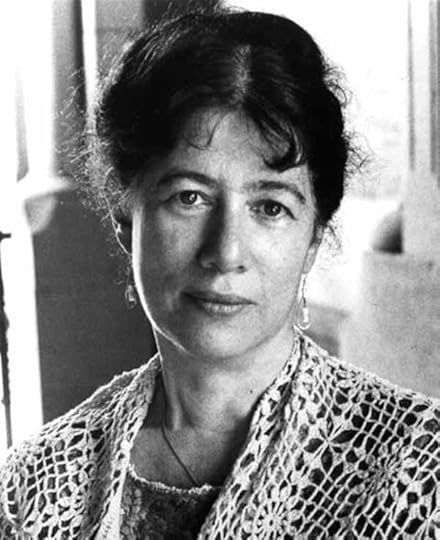
Rosellen Brown (born May 12, 1939) is an American author, and has been an instructor of English and creative writing at several universities, including the School of the Art Institute of Chicago and the University of Houston. She has won several grants and awards for her work. The 1996 film Before and After was adapted from her novel of the same name.

(from Wikipedia)

Ratings & Reviews

What do you think?
Rate this book

Friends & Following

Create a free account to discover what your friends think of this book!

Community Reviews

5 stars
122 (15%)
4 stars
274 (34%)
3 stars
285 (35%)
2 stars
88 (11%)
1 star
28 (3%)
Displaying 1 - 30 of 132 reviews
Profile Image for Chris.
758 reviews15 followers
February 17, 2019
Interesting plot and concept, though not a really new one to us or to many immigrants who came to America with the lure of a better life.

This is a story of a Jewish family who comes across the ocean with some other relatives, neighbors and friends and “settle” on barren farmland in Wisconsin in the 19th century. The thing is, they lived previously in a city environment, have no farming experience or tools, and have come over with very little money to create even the basic of settlements, grow crops or raise animals.

This is a hardship story of struggles, from the beginning to the very end. At first I wasn’t sure how this story would proceed. It had the beginning of many such difficult stories of immigrants coming to America. It did take a personal turn as the story took us from Wisconsin to Chicago and interestingly unfolded from there.

Our main characters are Chaya and Asher. Chaya is the oldest daughter of the family and sees and feels deeply the scourge of coming to America, how hard her family works for hardly any result. She is sent to school and she’s quite smart and quick to pick up - it becomes the light of her life, but just as quickly she’s been exposed to learning, reading; she’s pulled out for her physical need on the farm for it is more crucial and important. She rebels. And when her parents eventually try to marry her off to a boy/man who she is not at all attracted to, she knows if she lets this happen, that will be the end of her and her aspirations; her life. She plans to run away. Asher, her genius little brother, a child prodigy, who she is very close with, surprises her by showing up as she’s making her escape.

Chaya is a smart girl and wants a future better than what she has seen/known and heads out to the big city of Chicago by train. Asher, a very intelligent and precocious child, is stuck by her side. They both look after each other in their own special ways.

I applaud these two for taking a huge chance and once again, trying to make a better life for themselves, but like many immigrants arriving in a new country with next to nothing and no knowledge or people contacts, we wonder about their intent and survival. Through the story, they wonder about that too.

But survive they do, just barely, however, because it’s an extremely harsh life. I won’t reveal more of the story as it’s important to be taken along for the ride through the poverty, the difficult working conditions at that time, the discrimination of ethnicity and status levels.

The story also takes the reader through what I remember as a child, talks of “Maxwell Street” aka “Jew Town.” I’ve never been, but heard my parents and others talk of it as a place where the Jewish immigrants first produced a produce market. It evolved over time to what is now known as our suburban flea markets where bargains, and all kinds, of different wares and food, could be had. It was then, and it still is, Chicago’s most unconventional business and residential district. Greek immigrants had settled in nearby area and their section was called Greek Town. Italian immigrants settled in nearby area and their section was called Little Italy.

It’s a good story of brand new eye opening experiences in a new land/big city, the mentoring by those older or by colleagues, a cameo appearance by Jane Addams from the well known Hull House, a settlement house established for European immigrants. It is now a historical museum.

There’s romance for Chaya but it does not come without some pain and compromise. Asher has become a little too precocious and revengeful for his own good.

There’s a price that we all eventually pay when we compromise or stray away from our original values, intended or not intended. 3.5 stars
Profile Image for Lauren.
1,598 reviews97 followers
January 27, 2019
First of, I do not know why Rosellen Brown is not more well known. To me, she is in line with writers like Margaret Atwood and Toni Morrison - a new novel from her is a major cause of celebration. nothing against Sarabande but this should have come out on a major house imprint and with some publicity muscle behind it. It hurts my heart a little.

That said, this is a beautifully written novel about a Jewish family who immigrate to a farming cooperative in Wisconsin and the son and daughter who break away and move to Chicago in the mid 1890s. It is well researched and emotionally resonant. Jane Addams has a cameo. As with all of her novels, there are some scenes that I will never forget and broke my heart in five different ways.
I know comparisons are odious but I can't help but think of another big Chicago novel that came out this year with the FULL power of a publicity machine behind it. Frankly, this is a better and more well constructed novel and one that should have been up for all the major awards. I have nothing against The Great Believers which was very well intended and thoughtful but frankly, a bit of a miss. But it makes me sad. I'm afraid no one will even know this book is out there.
Long live Rosellen Brown.
Profile Image for Quo.
344 reviews
April 24, 2024
Rosellen Brown's Lake on Fire is a very compelling immigrant story, initially set on a dirt-poor farm in Christa, Wisconsin but primarily in Chicago around the time of the 1893 World Columbian Exposition, not officially considered a World's Fair but equal to one in many respects, meant to stand as a testimony to America's sense of progress & self-confidence.

While the novel is in fact a coming-of-age story as well, it is first & foremost a tale of an immigrant Jewish family from Zhitomir in present-day Ukraine who were in quest of a better life in late 19th century America but who were woefully ill-prepared to deal with life as Wisconsin farmers.


The two main characters are Chaya & her younger brother Asher, who suddenly decide to strike out for Chicago, a city that seems to offer a nebulous future for the pair, both seemingly despondent with their poor, agrarian lifestyle.
She sat on the doorstep imagining a life. Everything disgusted her: she was short with her friends, harsh with the animals & a shrew to her mother. They were waiting for--who? The messiah? There was nothing here that was not chipped or cracked, soiled or deformed. Gouges in the wood, fetid flowers in a jar in green & stinking water.

Cow dung on her soles, yellow-brown in the cracks & maggots in the outhouse. The taste of milk gone slightly rancid, the taint of onion on every dish. She had read--half, at least--of that Moby Dick in a book that her teacher let her keep as she made her way through the forests of new words & elaborate sentences. She understood perfectly why that man called Ismael said that when he found himself following funerals, it was time to go to sea.
The year is 1891 and Chaya & Asher take a train to Chicago & with the intervention of a good Samaritan are taken from Dearborn Station to Maxwell Street, the hardscrabble neighborhood where they are able to merge with other Jewish immigrants seeking to follow their own personal dreams, beginning their urban transformation with a Jewish widow, Mrs. Gottlieb, quite in need of boarders to share her meager flat with.

At this point, Chaya declares that she is "no longer angry & at war with herself but just apprehensive & certain that her real life had just begun." The author implants well-researched details of the time & place that often seem almost Dickensian. Meanwhile, younger brother Asher at age 10 seems a kind of wunderkind, unschooled but fascinated with words, a new language, countless paved streets & storefronts to be navigated, all the while bearing an unbridled curiosity as he roams the city, seemingly assimilating all that he witnesses.

Chaya takes up work rolling tobacco in a cigar factory, often working day & night shifts in almost unspeakable conditions in an attempt to make ends meet. Oddly enough & almost fable-like, Chaya connects a 2nd time with the wealthy, aristocratic young man named Gregory who assisted her on her arrival at the Chicago train station & they gradually begin to bond romantically, distressing younger brother Asher who wishes to remain true to his own roots while increasingly taking up the banner of the working class he seems to feel a kinship with, even sitting in on union meetings. This does seem a bit improbable, given his age.

As an historic footnote, the Haymarket Riot had taken place just a few years earlier in Chicago, while the Pullman strike was but a few years to come and strains of pro-unionism and even anarchism were very much in the air.

While Chaya is toiling with her cigars, Asher haunts bookstores & occasionally steals a book but both principal characters have a accentuated love affair with words.
Asher was made to wander the aisles of bookshops rather than the chaotic Maxwell Street Market but he was closer to the spirit of self-delight & irrepressible self-promotion than to the sturdy entrepreneurs who owned the Maxwell Street pushcarts & oiled their wheels, kept its inventory & worried about their daily take. Asher was not salt of the earth; rather, he was unadulterated spice
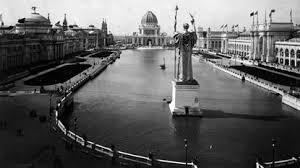
But looming almost as a distinct character, there is the World Columbian Exposition of 1893, an environment the precocious Asher manages to haunt & eventually to be hired as an attraction within, responding to questions of all sorts from fair-goers, this while his sister's relationship with Gregory Stillwell, who is part of the Gilded Class but who identifies with the less fortunate, becomes increasingly more serious.
Gregory is put on notice by his wealthy family but persists, not I felt due to a blind, impetuous love of Chaya but because he has become distanced from his upper-class roots in a manner not dissimilar to what Chaya has experienced with her own family. The question is whether one can experience a true transformation, without losing at least a small fragment of one's old identity in the process?

What makes The Lake on Fire rather a special book, though one with some distinct limitations, is the author's painterly use of words to give the story both meaning as an immigrant tale but also very memorable color. A bit later, she involves the main characters with Jane Addams, of Hull House fame, a philanthropist & seen as the "mother of social work" but also a suffragist who was eventually awarded a Nobel Prize for Peace. There are some inconsistencies within the novel, a few occurrences that stretch the imagination & an ending that I found somewhat unsatisfactory but all in all, I found the novel well worth reading.


When the Chicago Columbian Exposition of 1893 ends, the author suggests that its assembling had been much slower work than its wrecking. "People had uncrated, arranged, positioned the wonders so delicately, behind glass, while others had lugged the machinery, putting shoulders to it, turning it 10 degrees & calling it perfect. Again & again: Calibration, Celebration but now Desolation". However, as Asher surveys the death of so much beauty, of a great & glorious "White City" and seemingly well before its utility had expired, he is crestfallen, much as if a part of his identity is being trashed & eradicated.
The buildings were being abandoned, timbers, dented metal, floorboards & the sludge of white skin that covered it all, huge chunks & clots of it, jagged, useless, to be sent off by train or ship or taken to dumps around the city--goodbye, as if it had never been whole. Or never been. They knew it would come to this when they built it but what kind of special place in hell--for he had read Dante--awaited men who constructed beauty, knowing that they would empty it of purpose a few months later?

The Fair had a heartbeat now extinguished. It had been a hoax, not meant to be taken for real; a bubble, a bauble, to pacify the crowd when everything else was falling down & men were starving, children dying, business collapsing. A jewel in a slag heap & even that snatched back. Pulling apart that beautiful body was the first thing that made Asher cry.
Lake on Fire by Rosellen Brown is this year's chosen book for my village to read & celebrate, with collateral discussions on the history of Maxwell Street, the labor & suffragette movements, the architecture of the World Columbian Exhibition of 1893, music of the period and capped by and an author appearance. Other authors whose books have been featured include Simon Winchester, Ann Pachett, Richard Russo, Jane Smiley, Colum McCann, Elizabeth Strout, Jess Walter & Edwidge Danticat.

*I'd have given The Lake on Fire 3.5 stars if it were possible to do so & in that case, it might be rounded off to 4. **The 1st photo image within my review is of the author, with the 2nd of the 1893 Chicago World's Fair, officially known as the World Columbian Exposition.
Profile Image for Robert Nolin.
Author 1 book28 followers
June 5, 2019
There is so much narrative description and summary of events, so little dialogue, the novel reads more like non-fiction. I've never realized how important dialogue is. Without it, the characters never come to life. Conversations reveal character. The writing style was needlessly complex, and frequently by the time I came to the preposition, I'd forgotten what the subject of the sentence was, and so would have to read the whole thing over. I got to page 87, stopped. Just overwhelmed with details about things I just don't care about, which is saying something, as this is my favorite genre and time period.

Here's one example that stood out. I still have no idea what this sentence means.

Chaya would never know which of Mrs. Gottlieb's gestures of concern won her more reward than the good feeling that must have flooded her with satisfaction.
Profile Image for Sharyn.
3,153 reviews24 followers
February 17, 2025
This book was a book club pick, which we will discuss this week. I had sadly never heard of this author. Written in 2018, with several novels before this, I was quite surprised at the beauty of her writing. I had heard of Jews brought to America and placed on farms with no background in farming. How could anyone think that was going to work? Chaya's family, along with a few other families were settled on a farm in Wisconsin.
Chaya was allowed to go to school for awhile, but when her parents decided it was time for her to marry, she left the farm. Her precocious genius of a brother Asher, followed her to the train station and they set out for Chicago.
The year is 1893 and Chicago is preparing for the World's fair. This of you who have read The Devil in the White city will know the story.
Chaya and Asher arrive completely unprepared, but luckily meet a kind man who takes them to the Jewish section, where they find a place to board.
Chaya gets a job in a cigar factory and Asher, a small 8 year old boy, takes to the streets.
Brown truly brings the city, with its poverty as well as riches to life.
Chaya works hard, but they live in poverty. Her life is hard, but she grimly perseveres. When she meets the kind man again, he begins to court her. His name is Gregory Stillman , he is not Jewish and comes from a very rich family. Chaya resists for some time.
We meet Jane Adams when Gregory takes Chaya to Hull House, and she begins to see Gregory is serious in trying to help poor people.
The book switches between Chaya and and Asher's narration. Through their eyes we see what life was like in Chicago at the time. I enjoyed the book and the writing style very much.
This entire review has been hidden because of spoilers.
Profile Image for Carol Douglas.
Author 12 books97 followers
November 14, 2018
I have followed Rosellen Brown's career for many years. The Lake on Fire is her first book in 18 years, and I was excited to see it appear. Her books are all unique, incisive stories about characters who struggle with serious problems. They are so well-written that they are hard to put down.

In The Lake on Fire, Brown tells about a Jewish family that migrates with its friends and neighbors to the United States in the late nineteenth century to escape from pogroms. A Jewish refugee agency settles them on farmland in Wisconsin. But these immigrants have always lived in a city. They believe that farming is noble, because it was denied them in their home country, but learn how terribly hard it is.

Chaya, the eldest daughter, is bright and longs to learn. Her family sends her to school so she can learn English and translate it for them. After a short time, they decide she has had enough schooling and confine her to the farm.

When Chaya realizes that they are thinking of marrying her to another refugee, she rebels and runs away. Her young brother, Asher, follows her because he can't bear to be away from her.

They wind up in Chicago, where Chaya learns that city living for the poor means exhausting drudgery, no better than the farm. But Asher, a strange genius, is spellbound by the city and by access to books--often, stolen books.

The story is rich and deep. It depicts late nineteenth century Chicago, from the sweatshops to the mansions of the rich. Its main characters, Chaya and Asher, are fully-realized people whom the reader is likely to care about.
268 reviews12 followers
April 8, 2019
I found Ms. Brown's writing rather negative. First, she trashes Wisconsin in the beginning of the book. I imagine Chaya, who didn't want to be there may grouse, but the author had nothing kind to say about the state of Wisconsin. Asher's obsession with books (and authors who always have to write about books in their stories--to please publishers?) was weird. One minute he is reading some of the best known classics, being put on display for his brilliance, and the next minute he can't understand a word used by Chicagoans. I felt the author needed to pick a lane and stay in it.
I found the Pygmalion-like theme with Chaya was a bit annoying too. One minute she is a strong independent girl and then she is taken under the wing of a wealthy man. It didn't work for me. There was a lot of unnecessary words in the writing of this book which made it tedious for me to read.
Profile Image for Jessica DeLucia.
77 reviews2 followers
November 17, 2018
I really want to give this 3.5 stars because it is beautifully written. And hey I love socialism and stories about rich people being terrible and poor people being brave, but I’m sorry it’s boring. Yes i bet Chicago WAS miserable at the turn of the century. The Worlds Fair WAS awesome i read devil in the white city, they covered that. I’m sorry that i thought it was boring. Towards the end i thought something big finally happened and then it was still kind of a letdown. I told my husband the entire plot in five minutes. But beautifully written did I mention? And I have to give it more stars than Crazy Rich Asians.
Profile Image for Litr8r *It isn't hoarding if it's books!*.
67 reviews3 followers
June 19, 2019
Unless you're really into Chicago or labor history, this is one to skip. The book has a good concept, but I felt like I was reaching for a prize on a shelf the whole time. The plot and the characters just never quite arrived. Also, I'm surprised that a writing teacher wouldn't take her own advise to "show," not tell. The writing was often dull; the plot was sometimes contrived, other times dragging.
Profile Image for Amy.
976 reviews6 followers
December 9, 2018
A vivid depiction of Chicago at the time of the Columbian Exposition with insights into labor issues, but a bit heavy going in terms of narrative and lacking in plot.
Profile Image for Lori.
810 reviews15 followers
December 20, 2018
3.5 As other reviewers have mentioned, the writing is a bit dense, making it a rather slow read in many parts. I didn't always buy the "love story," but nonetheless, for the most part I liked this story of a young girl and her brother who leave Wisconsin for Chicago around the time of the World's Fair.
629 reviews5 followers
May 28, 2019
A young Jewish woman and her little brother escape a harsh Wisconsin farm life and head to Chicago just in time for the Columbian Exposition. Amid sweatshops, child labor, grinding poverty, and social inequity, the story takes some surprising turns. If you like historical fiction about women, this is well worth the read.
Profile Image for Phyllis.
611 reviews
January 23, 2019
I liked the story and history, but the writing was sometimes too much.
Profile Image for Tracy.
2,413 reviews39 followers
June 17, 2019
A sobering account of an immigrant family coming to America and trying to make their way, with two young family members moving to Chicago during the time of the Exposition. Interesting look at the Society of the time.
Profile Image for Amy.
64 reviews3 followers
June 3, 2021
Not very often do you get a book with the World's Fair, Jane Addams, and even a mention of Ida B Wells work. It was pretty good.
Profile Image for Susan Messer.
Author 5 books23 followers
January 11, 2019
It's astonishing what Rosellen Brown does to bring the history to life--Chicago in the Maxwell Street and Jane Adams and Columbian Exposition days. And to portray how complicated one's fate can be--pleasure and pain and losses and gains all intricately interwoven.
Profile Image for Nawal Qarooni .
251 reviews9 followers
January 28, 2019
I just finished the beautiful story of Chaya and Asher, which I absolutely loved. I was lost in an old Chicago world for the past few days, torn between love and distaste for Asher, commiserating deeply with Chaya and her predicaments throughout, smitten by Gregory and at the same time, learned a ton about a time period in our city I know relatively little about. It was beautifully written and so much of the description still sits with me, hours after I finished: describing Chaya's mother as constantly in motion (I wonder if that's how my kids see me?); watching as Asher grew into a young man enamored with words - lulled by lethargy, loved that. And was grateful when Chaya was reconnected with her mother. The last letter resonated fully with the Asher you developed and made for an untidy (disconnected though he remained from his found parents!) yet perfect ending.
Profile Image for Lee.
1,267 reviews20 followers
July 28, 2020
A fascinating and well-written historical novel. I was on track to give this five stars but was disappointed in the latter part of the book, which pushed the willing suspension of disbelief (which was already stretched) too far. The depiction of the hardships faced by immigrants and the poor both in rural and urban settings was palpable.
Profile Image for Cheryl.
248 reviews1 follower
June 9, 2019
I really wanted to like this book, but I have so many questions....
Profile Image for Elizabeth.
197 reviews18 followers
February 11, 2020
This book club selection didn't work for me. There was precious little character development, and the writing style (which many have lauded) did not draw me in.
Profile Image for Jill Meyer.
1,188 reviews121 followers
October 21, 2018
Rosellen Brown's new novel, "The Lake on Fire", is an intensely personal story told within the context of a world in turmoil. Set in the 1890's in Chicago, a love affair between the poor Jewish woman Chaya and the wealthy WASP Gregory Stillman, is set during labor unrest and extreme political uncertainty. Brown blends Gregory, Chaya and her young brother, Asher, into the times and comes out on the other side with a tale of both personal determination and societal change.

Chaya and Asher, immigrants with their family from Zhitomer in today's Ukraine, have run away from the wretchedly poor commune on which they had settled in rural Wisconsin. Chaya wanted a better life - and not to be forced into a marriage - and Asher, a strange genius, wanted to know...more about the outside world. Gregory Stillman, meanwhile, was the son of a family that had always been wealthy and accepted in society. Gregory saw the poverty outside his milieu and wanted to do something. He happens to meet Chaya and Asher as they arrive clueless in Chicago and takes them to the Madison street district, where the two are lucky enough to find a place to stay and Chaya gets a job as a cigar roller. (Not all "Havanas" are made in Havana!) Chaya works and Asher - a primitif - becomes a thief and, an entertainer at society parties where he is billed as a "curiosity". He also explores the world around him, which at the time, included the Chicago World's Fair of 1893. (Also called the "Colombian Exhibition". ) The Fair is a wondrous world in itself and Asher meets up with the laborers and showmen who run the Fair. Meanwhile, Chaya and Gregory have met up again and they are courting.

Rosellen Brown has created a world where the reader knows "something" is going to happen, and that "something" is probably bad. But "bad" in what way? And do "bad" things happening to one character necessarily cause "bad" things to another? The only problem I have with Brown's book is that one of the main characters doesn't ring true to me. I can't imagine a Gregory Stillman acting as he does in the book. He's almost too good to be true and that left me a bit off balance.

Brown's book is a superb look at the labor problems of the time and the poverty that came with it. She also writes well about the religious differences inherent in the "Cinderella Bride" marriage and the loss or at least lessening of religious bonds in an immigrant's new society.
Profile Image for Whispering.
254 reviews1 follower
October 6, 2021
I regret reading past page 90 of this book. God

The thing is, the story wasn't bad. In fact, it was interesting. Who doesn't want to read about a girl and her brother running away from their mundane life in the countryside to make something out of themselves in the city? And that city happened to be Chicago. You know, that city that isn't doing so well right now. The point is, I liked the concept and wanted to read about it but the thing that stopped me from really enjoying it was the writing style

God, the writing style. It was so dense and filled with metaphors that didn't need to be included. Every single detail was made note of and it got tiring very quickly. Things that could be explained quickly took a whole paragraph and a half because the author thought that was a good idea. It made it unbearable to read through. You'd read so much and read nothing at the same time.
There were moments where the writing style was easy to read through and actually made the story more interesting but those moments were rare. At some point, I thought to myself, is putting up with this worth waiting for the good parts? No.
Even for classical books, their writing isn't so dense

Now the characters? Idk. They were all right I guess. Chaya and her landlord were trying their best but I didn't read enough to really say much on their character. The one character I found really interesting was Asher. He's a smart and lively person and I would've liked to read more about him. Too bad the writing is bad.

Funny enough I decided to stop reading this on the bus ride home. Decided enough was enough and spontaneously returned this book. Still have no regrets. This book got me into a freaking reading slump. Last time I try pushing myself through a book (this is probably a lie).

Overall, this is a 1.5. I put in 2 stars because 1 star is too harsh and 2 stars look a little better (I'm trying to be generous here)
1,029 reviews2 followers
December 29, 2018
It's been years since I read a Jewish-immigrant-to-the-U.S. story (think: Howard Fast, Belva Plain). The twist for Brown's story is that it's set first in rural Wisconsin, then in Chicago at the 1893 World's Fair. There was some predictability -- wealthy gentile man falls in love with immigrant Chaya and marries her despite his family's disapproval. But the descriptions of Hull-House and Jane Addams were refreshing. (Addams "had the air of an aunt...a perpetual nurturer who made others both subject and object while she, committed to movement, was not a proper noun so much as a verb." And: "This heroic woman did her best...but she lacked the feel of labor in her own hands. She worked hard for the attention of her donors--it was expensive to rescue so many lives...but she had never had to be abject before a [cigar-factory owner]" (where Chaya had worked)...."What Miss Addams did..she did *for* them. One had to be a little beneath her, or a lot. She would never condescend; still, on had to need.")
And Chaya's brother Asher, the prodigy: "he was born teething on syllables."
Profile Image for Beth Chapple.
57 reviews4 followers
May 18, 2019
Absorbing. It's about a historical period and place that interests me: 1890s Chicago. I think it would make a great audiobook, though I read the paperback. Sometimes the overuse of commas and extremely long sentences bothered me. In fact, a particular chapter about Mrs. Gottlieb seems to not have been copyedited at all.
Profile Image for Sandy.
324 reviews
January 1, 2019
This book truly has a lot going on - immigration, family, history, runaways, crime, labor unrest, love and lost. It is beautifully written and at times was compelling but also found times in which I wanted it to move along faster.
2 reviews
May 3, 2019
It's like a beautiful quilt that can't keep you warm in the cold. Beautiful words that tell a nothing story.
17 reviews
June 1, 2021
Decided not to finish. Too tedious. Characters and plot are flat.
Profile Image for Judy.
Author 9 books50 followers
February 9, 2022
During the first 100 pages or so I was completely enthralled with Brown's immense writing talent. So many sentences were pure joy to read. Here is where Chaya, the main protagonist, describes her first look at the farmland in the U.S. after her family arrives from Ukraine in the late 1880s:

"She was bewitched by a beauty she had never seen: the fat spread of rain drops on the doorstep, the sweet smell, better than warming dough, that rose from the damp ground. There was such a promise of peace here, and safety. Empty space without a shadow on it. She had never really seen the horizon before. Perhaps she could be happy here." This level of gorgeous writing abounds.

Unfortunately, the novel becomes a polemic, with characters either on the side of good and virtue or the side of greed and cruelty. Chaya eventually runs away from the farm and its privations to build a life in Chicago, with her beloved scamp of a younger brother, the irrepressible and rules-intolerant Asher, following her. The novel then focuses on the labor abuses inflicted on the powerless immigrant class, who were swelling Chicago's population enormously during the 1890s-early 1900s. Characters like Chaya and her coworkers are all good; the bosses are all bad. Every boss or employer is heartless; there isn't a single reference in the entire book to either a boss who has a heart, or the price paid by industrialists, such as George Pullman, whose excesses in oppressing his workers eventually ruined him. This, too, is part of the story of the Gilded Age but is inconvenient to mention.

Chaya's opportunity to marry into one such wealthy family feels deeply implausible. Her husband considers himself a socialist and genuinely wants to help effect change, which he does by helping to support the early efforts of Jane Addams and Hull House, but the rest of his family appear to be nothing more than cardboard characters--nearly each one a stereotype and nearly each one stony hearted.

Chaya is the most fully developed character, and she agonizes over what it means to grasp the opportunity to live in comfort for the first time in her life, leaving her impoverished friends behind. But Asher is a far less developed and less satisfying character. He lives on the street and becomes a petty thief, in a Robin Hood effort to give to the men he meets who are desperate and claim they are starving. While malnutrition was absolutely widespread, I could find no evidence to support the many references to the poor starving to death in Chicago at this time. This is not meant to minimize--in any way--the horrific circumstances in which so many immigrants found themselves during this time nor the unforgivable treatment of them by a majority of employers.

Asher feels Chaya is a turncoat for marrying into wealth, revealing his immaturity as well as his own heartlessness. He is meant to be lovable but he is too one-dimensional to win our hearts. Knowing Chaya worries about his well-being and whereabouts, he turns against her and disappears. He never has qualms about stealing, or even committing acts of violence. Chaya's difficulty in drawing a line with him also is problematic.

While Chaya and Asher are clearly Jewish, their faith means nothing to them at all; the few references to Jewish religious faith mentioned by other characters are often demeaning.

It is very revealing that in the "About the Author" paragraph Brown doesn't just write that she lives in Chicago, but specifically in "Mr. Obama's neighborhood." I thought this an odd mixture of virtue-signaling plus the information that Brown has also done mighty well writing about poverty--though in a simplistic way.
Profile Image for Margo Littell.
Author 2 books108 followers
February 20, 2019
When Chaya’s family emigrates from Zhitomir to Wisconsin, the new life falls short of its promise. Her parents encourage her to learn English, but refuse to let her continue her studies. Certain that a better fate lies elsewhere, she plans an escape to Chicago--and is surprised when her brilliant youngest brother, Asher, stows away with her. In the city, Chaya finds housing and work, but Asher turns to petty crime, viewing himself as a kind of Robin Hood. As the World’s Fair captures the country’s imagination, both Chaya and Asher are drawn to the burgeoning movement of workers’ rights, discovering that even in their own struggles they are, in many ways, the fortunate ones. But when Chaya marries Gregory, a wealthy man whose brother stands for everything she and Asher despise, the true sacrifices she’s made for her new life become wrenchingly clear.

Rosellen Brown is unsparing in her description of Chaya’s life in Wisconsin, where she, as the only English learner, is the sole connection to a world beyond her family’s remote enclave. In Chicago, too, she serves as a kind of bridge between worlds, a position that strengthens uneasily once she marries Gregory. Chaya is needed everywhere but truly belongs nowhere--except, she believes, with Asher. Brown is adept at showing how differently Chaya and Asher come to see their relationship, with Chaya holding on for dear life even as he becomes the most ungraspable thing of all. The Lake on Fire is a poetic and moving meditation on the choices we make to achieve the lives we imagine.

***Review originally written for the City Book Review. I received a free copy of this book in exchange for an honest review.***
Displaying 1 - 30 of 132 reviews

Can't find what you're looking for?

Get help and learn more about the design.