

What do you think?

Paingod: And Other Delusions
Featuring the Nebula and Hugo Award–winning story “ ‘Repent, Harlequin!’ Said the Ticktockman.”
Robert Heinlein says, “This book is raw corn liquor—you should serve a whiskbroom with each shot so the customer can brush the sawdust off after he gets up from the floor.” Perhaps a mooring cable might also be added as necessary equipment for reading these eight wonderful stories. They not only knock you down . . . they raise you to the stars. Passion is the keynote as you encounter the Harlequin and his nemesis, the dreaded Tictockman, in one of the most reprinted and widely taught stories in the English language; a pyretic who creates fire merely by willing it; the last surgeon in a world of robot physicians; a spaceship filled with hideous mutants rejected by the world that gave them birth. Touching, gentle, and shocking stories from an incomparable master of impossible dreams and troubling truths.
Robert Heinlein says, “This book is raw corn liquor—you should serve a whiskbroom with each shot so the customer can brush the sawdust off after he gets up from the floor.” Perhaps a mooring cable might also be added as necessary equipment for reading these eight wonderful stories. They not only knock you down . . . they raise you to the stars. Passion is the keynote as you encounter the Harlequin and his nemesis, the dreaded Tictockman, in one of the most reprinted and widely taught stories in the English language; a pyretic who creates fire merely by willing it; the last surgeon in a world of robot physicians; a spaceship filled with hideous mutants rejected by the world that gave them birth. Touching, gentle, and shocking stories from an incomparable master of impossible dreams and troubling truths.
190 pages, Kindle Edition
First published December 1, 1965
About the author
Harlan Ellison
1,078 books2,977 followersHarlan Jay Ellison (1934-2018) was a prolific American writer of short stories, novellas, teleplays, essays, and criticism.
His literary and television work has received many awards. He wrote for the original series of both The Outer Limits and Star Trek as well as The Alfred Hitchcock Hour; edited the multiple-award-winning short story anthology series Dangerous Visions; and served as creative consultant/writer to the science fiction TV series The New Twilight Zone and Babylon 5.
Several of his short fiction pieces have been made into movies, such as the classic "The Boy and His Dog".
His literary and television work has received many awards. He wrote for the original series of both The Outer Limits and Star Trek as well as The Alfred Hitchcock Hour; edited the multiple-award-winning short story anthology series Dangerous Visions; and served as creative consultant/writer to the science fiction TV series The New Twilight Zone and Babylon 5.
Several of his short fiction pieces have been made into movies, such as the classic "The Boy and His Dog".
Ratings & Reviews
Friends & Following
Create a free account to discover what your friends think of this book!
Community Reviews
Displaying 1 - 30 of 123 reviews

Read
November 29, 2022Are we really aware of how much pain there is in the world?
There are all kinds of "Pains" and we all have already felt one or several in our lives. If you’ve never felt any pain, you’re either an alien or so cold-hearted that your demise from this world won’t matter at all.
One of the most hurtful pains is that of love. Theodore Sturgeon said: There’s no absence of love in the world, only worthy places to put it.
If we can't find that "place" and find ourselves alone and unloved, well... we all felt that shattering pain already.
Another one is the pain from the thought of dying alone. I know! everyone is "alone" when the moment comes.
The Loneliness One dare not sound—
And would as soon surmise
As in its Grave go plumbing
To ascertain the size—
The Loneliness whose worst alarm
Is lest itself should see—
And perish from before itself
For just a scrutiny—
(Emily Dickinson)
We’ve all at one moment or another felt the fear of that hour awaiting to strike for all of us in a more or less near future. And the thought that we can "go down" without having been beheld as a loved one is more painful than the deed in itself.
I believe that it was what Harlan Ellison tried to tell us with this collection of short stories; Because there’s only one thing that links us as human beings: the universality of our pain and the commonality of our need to go out bravely.
That the most significant aspect in life is to love and be loved and the need of living a worthy life: I’m sure when it comes right down to it, the most ignominious life is better than no life at all, but again and again, I find the answer coming from somewhere too noble to be within myself: “What for?” Staying alive only has merit if one does it with dignity, with purpose, with responsibility to his fellow man. If these are absent, then living is a sluglike thing, more a matter of habit than worth.
As usual with Ellison, you can love or hate him, but you can hardly ignore him. For this review, I opted, like before, for other H.E. books to comment on each story individually.
Paingod
Pain comes to all of us in many packages: physical, emotional, psychosomatic... You name it. What if "Pain" were distributed randomly by a "god" appointed to the position, commanded by an immemorial collective conscience of beings called "Ethos", the self-appointed responsible for the balance between reason and passion in the Universe?
It is the function of that "god" to dispense pain for our own benefit according to the disposition, character or fundamental values peculiar to a specific person and the mesured dollops of melancholy as prescribed by the Ethos... in the immortal words of Mark Twain: If one really believes that there is an all-powerful Deity, and one looks around at the condition of the universe, one is inevitably led to the conclusion that God is an evil crook.
So what would happen if this "god" experienced the same pain he often inflicts on others?
"Repent, Harlequin!" Said the Ticktockman
The mass of men thus serve the State, not primarily as men, but as machines, with their bodies. They are the standing army, jailers, police, etc... they place themselves on a level with wood, earth, and stones; and perhaps wooden men can be made that will also serve the purpose... Others, like most legislators, politicians, lawyers, ministers, and civil servants, serve the state and, as they rarely make moral distinctions, they are likely to serve the Devil, as much as God. Very few, like heroes, patriots, martyrs, reformers in the broadest sense, and Men, also serve the state with their consciences, and therefore necessarily resist it for the most part; and they are commonly treated as enemies.
(Henry David Thoreau, CIVIL DISOBEDIENCE)
Are you a non-conformist? Are you sure? If you are, the "Ticktockman" is waiting for you.
Do you use Time, or do you serve the Time?
Are you certain of your individuality or your pride of being a cog in the "Machine"?
"Repent!" The Ticktockman absorbs all resistance. "To repent" is to lose oneself in the eternal omnipotent ecstasy of Time, which embodies all Past, Present, and Future.
“You are a nonconformist.”
"That used to not be a crime."
"It is now. Live in the world around you.
And so it goes goes goes goes goes tick tock tick tock tick tock...”
And one day we no longer let time serve us, we serve time and we will be slaves of the schedule of the system...
The Crackpots
Madness is the order of the day for this story.
Harlan Ellison, with it, pushes us to ask ourselves:
Am I a proper Kyben mind? A good, logical thinker; the administrative type, you know? Or am I a "Crackpot"? A non-conformist master of the odd and weird?
Eccentricity, madness, lunacy or just idiosyncratic behaviour; some psychologists support that we all, each one of us, in some degree, live, in a moment or another of our lives, all those stages of behavioural patterns outside the accepted norm.
Michel Foucault said: madness is not a natural, unchanging thing, but rather depends on the society in which it exists, where cultural, intellectual and economic structures determine how madness is born and experienced.
Didn't anyone ever ask you, “Are you out of your mind?” And didn't you want to answer: “Certainly!”
H. Ellison tells us that "madness" is in the eye of the beholder. What seems insane or just silly to you may be absolutely logical to someone else. Remember that as you read.
P.S.
This short story demands all the scraps of intelligence we can grasp to understand it, but obviously We wouldn’t expect your simple-celled minds to grasp something like that immediately, after all, we are mad!
Sleeping Dogs
If a male mind is blocked in a manic obsession that tunnels the vision, what is the amount of stupidity it can accumulate?
Military leaders (or any other kind) come in different shapes and sizes. Some are blind to their own flaws. Others are moved by ambition, stupidity, cowardice or sheer evil, and commit barbarous acts.
The patriarchy is a young concept. Human society was mostly matriarchal, woman-centred with goddess-worshipping early forms of religions, from the Paleolithic era (1.5 to 2 million years ago), until sometime around 3000 BCE.
Evidence of matriarchal societies has always existed, although heavily filtered by the narrow minds of Christian missionaries. Before them, Herodotus frightened us with stories of the Amazons as "man-killers" or, later theological depictions of the sinful Eve, passing through the witch hunt and burn epoch, and the myth of inferior female intellectual capacity, radically limited, and in certain societies banned completely, the women's ability to actively contribute to the management of society's affairs, relegating them to a secondary or even irrelevant role except to what concerns reproduction.
Which has been proven to be truly stupid and reductive of the Human Being as a creature possessing a self-conscious intelligence. At the very least, what we are doing is wasting more than 50% of human intellectual capacity and resources, since there are more women than men.
If a man says something in a forest and no woman hears him, is he still wrong? (Sir Ken Robinson)
So, how to read and digest a story that says that sexism is stupid and that a woman can think more rationally and efficiently than a man? Obviously (if you are a man) with a great amount of emotional and intellectual openness and a good dose of painkillers for headaches and antacids for bad digestion. After all, "all men" handle rejection; they just don't handle it well.
Bright Eyes
The Creator's hopeless despair and the futility of creation are the themes of this story.
In a condemned world, the question echoes in silence without obtaining the answer to "Why"?
Putting aside religious considerations and entering the mist of sterile speculation, what would a Creator feel beholding the self-immolation of his creation in an orgy of violence and destruction?
The dead were everywhere, sighing soundlessly with milk-white eyes at a tomorrow that had never come... This was the last of it, the last of the race of men. Dust and dead.
And the last of the demiurges, the abandoned sentinel, falls to his knees, weeping tears of infinite sadness, a lament for an entire past condemned by a lost future. A poignant lament for those who lived and passed, condemning him to live in the dark and melancholy silence of eternity. In the melody, never to be heard again, it was all in vain.
So Bright Eyes - never Man - was the last man on Earth. Guardian of a silent cemetery; tomb without an echo, a monument to foolishness, to the absurdity of nobility.
The Discarded
People? No, Discards...
Bitter betrayal is the core of this story. You can’t trust an Earthman!
People have been worshipping the "Barbie & Ken" myth for too long, now.
In the words of Ellison (in 1959) We have a pathological lemming drive to conceal our age, lift our faces, dress like overblown Shirley Temples, black that grey in the hair, live a Lie. Whatever happened to grow old gracefully, the reverence of maturity, the search for character as differentiated from superficial comeliness? It be a disease, I warn you. It will rot you from the inside, while the outside glows. It will escalate into a culture that can never tolerate The Discarded.
Ringing any bells? Do any TV commercials come to mind? How many of these advertisements to lose weight, eliminate wrinkles, prevent baldness or "stop" ageing can we see on television and billboards around the city in a day?
Horribly deformed mutants exiled from the sight of "normal" human beings... Here Ellison creates a parable around the confrontation between the physical ugliness of the mutant exiled and the much darker inner ugliness of human nature.
Wanted in Surgery
When you become obsolete, you are "shelved".
Not even the best writers are above producing weak stories.
In this, Ellison joins the ranks of the Luddites, attacks technological development and rekindles the flames of the protests against machines and automatisms that started about 200 years ago in England, criticising the fact that improved mechanical performance isn't enough to fill the void created by the lack of emotional involvement of the machines.
This story made me think of an ironic joke I saw on a website: Luddite invents the machine to destroy technology quicker.
I think that somehow Ellison missed the "point" here: Machines are not the problem, as usual, human beings are the problem, with "the progress at any cost" and mostly with the ironic pathetic motto "profit at all costs".
Since machines have evolved to the point where they can now replicate the work of our minds and not just our bodies, no job is safe from machines. According to James Lovelock, whose opinions we can't discard lightly, AIs will be the next evolutionary step and the inheritors and keepers of Human Intelligence.
This vision of the future has been pointing to a "game", in which there can only be one loser: Humankind.
Deeper than the Darkness
Mutantes everywhere... Evil X-Man from the 50s without an agenda or purpose.
“Don’t you even know who your planet’s at war with?”
“I’ve been rural for many years. But aren’t they always at war with someone?”
The ensign looked startled. “Not unless it’s to protect the peace of the galaxies. Earth is a peace-loving…” he cut him off.
“Yes, I know. But how long have you been at war with the Delgarts? I thought they were our allies under some Treaty Pact or other?”
The spaceman’s face contorted in a picture of conditioned hatred. “We’ve been after the bastards since they jumped one of our mining planets outside their cluster.” He twisted his lips in open loathing. “We’ll clean the bastards out soon enough! Teach them to jump the peaceful Earthmen.”
He wished he could shut out the words. He had heard the same story all the way from A Centauri IX and back. Someone had always jumped someone else … someone was always at war with someone else … there were always bastards to be cleaned out … never any peace … never any peace …
This is an anti-war story, but a weak one. I have the feeling that it was written just to "fill a gap" in the collection.
There are all kinds of "Pains" and we all have already felt one or several in our lives. If you’ve never felt any pain, you’re either an alien or so cold-hearted that your demise from this world won’t matter at all.
One of the most hurtful pains is that of love. Theodore Sturgeon said: There’s no absence of love in the world, only worthy places to put it.
If we can't find that "place" and find ourselves alone and unloved, well... we all felt that shattering pain already.
Another one is the pain from the thought of dying alone. I know! everyone is "alone" when the moment comes.
The Loneliness One dare not sound—
And would as soon surmise
As in its Grave go plumbing
To ascertain the size—
The Loneliness whose worst alarm
Is lest itself should see—
And perish from before itself
For just a scrutiny—
(Emily Dickinson)
We’ve all at one moment or another felt the fear of that hour awaiting to strike for all of us in a more or less near future. And the thought that we can "go down" without having been beheld as a loved one is more painful than the deed in itself.
I believe that it was what Harlan Ellison tried to tell us with this collection of short stories; Because there’s only one thing that links us as human beings: the universality of our pain and the commonality of our need to go out bravely.
That the most significant aspect in life is to love and be loved and the need of living a worthy life: I’m sure when it comes right down to it, the most ignominious life is better than no life at all, but again and again, I find the answer coming from somewhere too noble to be within myself: “What for?” Staying alive only has merit if one does it with dignity, with purpose, with responsibility to his fellow man. If these are absent, then living is a sluglike thing, more a matter of habit than worth.
As usual with Ellison, you can love or hate him, but you can hardly ignore him. For this review, I opted, like before, for other H.E. books to comment on each story individually.
Paingod
Pain comes to all of us in many packages: physical, emotional, psychosomatic... You name it. What if "Pain" were distributed randomly by a "god" appointed to the position, commanded by an immemorial collective conscience of beings called "Ethos", the self-appointed responsible for the balance between reason and passion in the Universe?
It is the function of that "god" to dispense pain for our own benefit according to the disposition, character or fundamental values peculiar to a specific person and the mesured dollops of melancholy as prescribed by the Ethos... in the immortal words of Mark Twain: If one really believes that there is an all-powerful Deity, and one looks around at the condition of the universe, one is inevitably led to the conclusion that God is an evil crook.
So what would happen if this "god" experienced the same pain he often inflicts on others?
"Repent, Harlequin!" Said the Ticktockman
The mass of men thus serve the State, not primarily as men, but as machines, with their bodies. They are the standing army, jailers, police, etc... they place themselves on a level with wood, earth, and stones; and perhaps wooden men can be made that will also serve the purpose... Others, like most legislators, politicians, lawyers, ministers, and civil servants, serve the state and, as they rarely make moral distinctions, they are likely to serve the Devil, as much as God. Very few, like heroes, patriots, martyrs, reformers in the broadest sense, and Men, also serve the state with their consciences, and therefore necessarily resist it for the most part; and they are commonly treated as enemies.
(Henry David Thoreau, CIVIL DISOBEDIENCE)
Are you a non-conformist? Are you sure? If you are, the "Ticktockman" is waiting for you.
Do you use Time, or do you serve the Time?
Are you certain of your individuality or your pride of being a cog in the "Machine"?
"Repent!" The Ticktockman absorbs all resistance. "To repent" is to lose oneself in the eternal omnipotent ecstasy of Time, which embodies all Past, Present, and Future.
“You are a nonconformist.”
"That used to not be a crime."
"It is now. Live in the world around you.
And so it goes goes goes goes goes tick tock tick tock tick tock...”
And one day we no longer let time serve us, we serve time and we will be slaves of the schedule of the system...
The Crackpots
Madness is the order of the day for this story.
Harlan Ellison, with it, pushes us to ask ourselves:
Am I a proper Kyben mind? A good, logical thinker; the administrative type, you know? Or am I a "Crackpot"? A non-conformist master of the odd and weird?
Eccentricity, madness, lunacy or just idiosyncratic behaviour; some psychologists support that we all, each one of us, in some degree, live, in a moment or another of our lives, all those stages of behavioural patterns outside the accepted norm.
Michel Foucault said: madness is not a natural, unchanging thing, but rather depends on the society in which it exists, where cultural, intellectual and economic structures determine how madness is born and experienced.
Didn't anyone ever ask you, “Are you out of your mind?” And didn't you want to answer: “Certainly!”
H. Ellison tells us that "madness" is in the eye of the beholder. What seems insane or just silly to you may be absolutely logical to someone else. Remember that as you read.
P.S.
This short story demands all the scraps of intelligence we can grasp to understand it, but obviously We wouldn’t expect your simple-celled minds to grasp something like that immediately, after all, we are mad!
Sleeping Dogs
If a male mind is blocked in a manic obsession that tunnels the vision, what is the amount of stupidity it can accumulate?
Military leaders (or any other kind) come in different shapes and sizes. Some are blind to their own flaws. Others are moved by ambition, stupidity, cowardice or sheer evil, and commit barbarous acts.
The patriarchy is a young concept. Human society was mostly matriarchal, woman-centred with goddess-worshipping early forms of religions, from the Paleolithic era (1.5 to 2 million years ago), until sometime around 3000 BCE.
Evidence of matriarchal societies has always existed, although heavily filtered by the narrow minds of Christian missionaries. Before them, Herodotus frightened us with stories of the Amazons as "man-killers" or, later theological depictions of the sinful Eve, passing through the witch hunt and burn epoch, and the myth of inferior female intellectual capacity, radically limited, and in certain societies banned completely, the women's ability to actively contribute to the management of society's affairs, relegating them to a secondary or even irrelevant role except to what concerns reproduction.
Which has been proven to be truly stupid and reductive of the Human Being as a creature possessing a self-conscious intelligence. At the very least, what we are doing is wasting more than 50% of human intellectual capacity and resources, since there are more women than men.
If a man says something in a forest and no woman hears him, is he still wrong? (Sir Ken Robinson)
So, how to read and digest a story that says that sexism is stupid and that a woman can think more rationally and efficiently than a man? Obviously (if you are a man) with a great amount of emotional and intellectual openness and a good dose of painkillers for headaches and antacids for bad digestion. After all, "all men" handle rejection; they just don't handle it well.
Bright Eyes
The Creator's hopeless despair and the futility of creation are the themes of this story.
In a condemned world, the question echoes in silence without obtaining the answer to "Why"?
Putting aside religious considerations and entering the mist of sterile speculation, what would a Creator feel beholding the self-immolation of his creation in an orgy of violence and destruction?
The dead were everywhere, sighing soundlessly with milk-white eyes at a tomorrow that had never come... This was the last of it, the last of the race of men. Dust and dead.
And the last of the demiurges, the abandoned sentinel, falls to his knees, weeping tears of infinite sadness, a lament for an entire past condemned by a lost future. A poignant lament for those who lived and passed, condemning him to live in the dark and melancholy silence of eternity. In the melody, never to be heard again, it was all in vain.
So Bright Eyes - never Man - was the last man on Earth. Guardian of a silent cemetery; tomb without an echo, a monument to foolishness, to the absurdity of nobility.
The Discarded
People? No, Discards...
Bitter betrayal is the core of this story. You can’t trust an Earthman!
People have been worshipping the "Barbie & Ken" myth for too long, now.
In the words of Ellison (in 1959) We have a pathological lemming drive to conceal our age, lift our faces, dress like overblown Shirley Temples, black that grey in the hair, live a Lie. Whatever happened to grow old gracefully, the reverence of maturity, the search for character as differentiated from superficial comeliness? It be a disease, I warn you. It will rot you from the inside, while the outside glows. It will escalate into a culture that can never tolerate The Discarded.
Ringing any bells? Do any TV commercials come to mind? How many of these advertisements to lose weight, eliminate wrinkles, prevent baldness or "stop" ageing can we see on television and billboards around the city in a day?
Horribly deformed mutants exiled from the sight of "normal" human beings... Here Ellison creates a parable around the confrontation between the physical ugliness of the mutant exiled and the much darker inner ugliness of human nature.
Wanted in Surgery
When you become obsolete, you are "shelved".
Not even the best writers are above producing weak stories.
In this, Ellison joins the ranks of the Luddites, attacks technological development and rekindles the flames of the protests against machines and automatisms that started about 200 years ago in England, criticising the fact that improved mechanical performance isn't enough to fill the void created by the lack of emotional involvement of the machines.
This story made me think of an ironic joke I saw on a website: Luddite invents the machine to destroy technology quicker.
I think that somehow Ellison missed the "point" here: Machines are not the problem, as usual, human beings are the problem, with "the progress at any cost" and mostly with the ironic pathetic motto "profit at all costs".
Since machines have evolved to the point where they can now replicate the work of our minds and not just our bodies, no job is safe from machines. According to James Lovelock, whose opinions we can't discard lightly, AIs will be the next evolutionary step and the inheritors and keepers of Human Intelligence.
This vision of the future has been pointing to a "game", in which there can only be one loser: Humankind.
Deeper than the Darkness
Mutantes everywhere... Evil X-Man from the 50s without an agenda or purpose.
“Don’t you even know who your planet’s at war with?”
“I’ve been rural for many years. But aren’t they always at war with someone?”
The ensign looked startled. “Not unless it’s to protect the peace of the galaxies. Earth is a peace-loving…” he cut him off.
“Yes, I know. But how long have you been at war with the Delgarts? I thought they were our allies under some Treaty Pact or other?”
The spaceman’s face contorted in a picture of conditioned hatred. “We’ve been after the bastards since they jumped one of our mining planets outside their cluster.” He twisted his lips in open loathing. “We’ll clean the bastards out soon enough! Teach them to jump the peaceful Earthmen.”
He wished he could shut out the words. He had heard the same story all the way from A Centauri IX and back. Someone had always jumped someone else … someone was always at war with someone else … there were always bastards to be cleaned out … never any peace … never any peace …
This is an anti-war story, but a weak one. I have the feeling that it was written just to "fill a gap" in the collection.

March 19, 2020
Harlan Ellison (1934-2018) was eccentric, egotistical, outspoken, and perhaps a genius. This is a collection of seven stories, published in 1965, all dark visions..
1. Paingod ****1/2
2."Repent, Harlequin!"said the Ticktockman *****
3.The Crackpots ****
4. Bright Eyes ***
5. The Discarded ****
6. Wanted in Surgery *** 1/2
7. Deeper Than Darkness ****
NOTE: After reading other reviews, I realize I missed an eighth story! "Sleeping Dogs." Will have to find the book and read that one. Sorry to make such a dumb mistake.
Fortunately, there are other reviews on Goodreads...thank goodness for Goodreads!
1. Paingod ****1/2
2."Repent, Harlequin!"said the Ticktockman *****
3.The Crackpots ****
4. Bright Eyes ***
5. The Discarded ****
6. Wanted in Surgery *** 1/2
7. Deeper Than Darkness ****
NOTE: After reading other reviews, I realize I missed an eighth story! "Sleeping Dogs." Will have to find the book and read that one. Sorry to make such a dumb mistake.
Fortunately, there are other reviews on Goodreads...thank goodness for Goodreads!

November 15, 2008
4.5 stars. Very good collection of stories. The title story is excellent but my personal favorites from this collection were (1) The Discarded (worthy of 5 stars), (2) Bright Eyes (also worthy of five stars) and, of course, "Repent Harlequin!" Said the Ticktockman.

February 8, 2026
Boring boring bored i am so bored

February 11, 2013
The Basics
If you know Ellison, then you know he’s almost exclusively a writer of short fiction. This is a collection of just a small fraction of that fiction. A very small fraction, as there are only eight stories to be found here. Yet there is something interesting about this one. There’s a theme: pain.
My Thoughts
I really love Harlan Ellison. And before I nitpick one story in this collection in particular, which will probably happen at the end of this review, can I just say that even his weakest stories are stronger than other people’s best work? He’s that kind of writer. His worst can still be some of the best stuff you’ve ever read, and yet you wind up holding him to such an immense standard that you can’t excuse it either. That’s the power of this guy.
Trying to review a collection of short stories can be difficult. But I’ll start by saying that “‘Repent, Harlequin!’ Said the Ticktockman” can be found in this one. It’s considered one of his most famous works, and if you are interested in Ellison, you can’t pass it up. I was delighted to finally get a chance to read it here after hearing about it for so long. It’s that perfect blend of absurdity and ultimately sadness that makes the theme of pain resonate with even more power. It also goes to show that dystopia, as a genre, has more life in it than most authors can muster.
Another gem I have to mention is “Deeper Than the Darkness”. I feel a bit like a kid obsessed with hyperbole when I think of this one, because I really just want to scream from the mountaintops that it was awesome. It’s about a man who’s a firestarter. Like think Stephen King Firestarter. With a lot of the same struggles for the main character. It just goes to show that there is an innate fear of a simultaneous lack of control while being controlled by others that can be a story-telling goldmine in the right hands.
Here comes the nitpick. “Wanted In Surgery”. Machines have been created to replace doctors. The age-old fear of being obsolete. That’s a very real thing, the idea that you’re replaceable. It becomes even more real as technology advances. But the fears the main character, a surgeon outsourced by a robot, feels come off as pure melodrama. The machines haven’t even committed any crimes, but he finds he instinctively hates them. Ellison tries so hard to impart how soulless and heartless and unfeeling a machine is, that you need a human with a good bedside manner to make a good doctor. But none of it really came across for me.
He wanted the reader to get angry at even something as mundane as cleaning robots and feel a passionate resistance against any technological assistance of any kind, and it just makes me wonder how horrified he must be at where we’ve arrived. Which is valid, but this was the sort of story that wants to grab you and shake you and make you agree. And if you don’t, you’ll find yourself more amused by the protagonist’s hangups than anything.
Final Rating
4/5
If you know Ellison, then you know he’s almost exclusively a writer of short fiction. This is a collection of just a small fraction of that fiction. A very small fraction, as there are only eight stories to be found here. Yet there is something interesting about this one. There’s a theme: pain.
My Thoughts
I really love Harlan Ellison. And before I nitpick one story in this collection in particular, which will probably happen at the end of this review, can I just say that even his weakest stories are stronger than other people’s best work? He’s that kind of writer. His worst can still be some of the best stuff you’ve ever read, and yet you wind up holding him to such an immense standard that you can’t excuse it either. That’s the power of this guy.
Trying to review a collection of short stories can be difficult. But I’ll start by saying that “‘Repent, Harlequin!’ Said the Ticktockman” can be found in this one. It’s considered one of his most famous works, and if you are interested in Ellison, you can’t pass it up. I was delighted to finally get a chance to read it here after hearing about it for so long. It’s that perfect blend of absurdity and ultimately sadness that makes the theme of pain resonate with even more power. It also goes to show that dystopia, as a genre, has more life in it than most authors can muster.
Another gem I have to mention is “Deeper Than the Darkness”. I feel a bit like a kid obsessed with hyperbole when I think of this one, because I really just want to scream from the mountaintops that it was awesome. It’s about a man who’s a firestarter. Like think Stephen King Firestarter. With a lot of the same struggles for the main character. It just goes to show that there is an innate fear of a simultaneous lack of control while being controlled by others that can be a story-telling goldmine in the right hands.
Here comes the nitpick. “Wanted In Surgery”. Machines have been created to replace doctors. The age-old fear of being obsolete. That’s a very real thing, the idea that you’re replaceable. It becomes even more real as technology advances. But the fears the main character, a surgeon outsourced by a robot, feels come off as pure melodrama. The machines haven’t even committed any crimes, but he finds he instinctively hates them. Ellison tries so hard to impart how soulless and heartless and unfeeling a machine is, that you need a human with a good bedside manner to make a good doctor. But none of it really came across for me.
He wanted the reader to get angry at even something as mundane as cleaning robots and feel a passionate resistance against any technological assistance of any kind, and it just makes me wonder how horrified he must be at where we’ve arrived. Which is valid, but this was the sort of story that wants to grab you and shake you and make you agree. And if you don’t, you’ll find yourself more amused by the protagonist’s hangups than anything.
Final Rating
4/5

June 5, 2014
Another good collection from Ellison. This contains a couple of his really good ones, including "Repent Harlequin."

December 9, 2014
Paingod and Other Delusions is a 1965 short story collection by Harlan Ellison. According to the introduction, all the stories selected for inclusion include a variation on the theme of intense pain. This is obvious in some stories, like “Paingod” and “The Discarded”, but it seemed a stretch for some of the others (“Crackpots”, “Repent”). Like most of Ellison’s collections in the 1960’s, this one contains a couple of very good stories but is a mixed bag overall.
My favorite stories were “Deeper Than the Darkness” and “The Discarded”, both of which dealt with classes of people—mutants, telepaths, and pyrotics (firestarters)--treated as outcasts by mainstream society. Ellison would go on, years later, to deal with the same subject in more depth as consultant and writer on one of my favorite science fiction television shows, Babylon 5.
“Paingod” – This is the story of a minor deity whose job is to bring pain to life forms across the universe. It’s a fun concept, but it feels under-developed, and I could see the ending coming. Ellison would go on to write bigger, better stories about gods and god-like beings later in his career.
“Repent, Harlequin, Said the Ticktockman” – Ellison’s most famous work, the one that put him on the map so to speak. It won both a Hugo and a Nebula. It is widely cited as the most often anthologized short story in the English language. It’s never been one of my personal favorites—I find it flamboyant and silly—but it is an important and influential story in the history of science fiction.
“The Crackpots” was the first story in Ellison’s Earth-Kyba war cycle. I disliked it intensely. It features some of the same themes as “Repent”, a societal struggle between beaurecrats/conformists and artists/innovators, but it is too contrived to be taken seriously.
“Sleeping Dogs” is (I think) the final story in the Earth-Kyba cycle, and is only included in editions of this book published after 1975. This is a much better story, with a terrific ending.
“Bright Eyes” – Another character-from-myth story. This one has some brutal apocalyptic imagery, but (much like “Paingod”) feels under-developed and incomplete.
“Wanted in Surgery” – A cautionary tale about man’s growing dependency on technology. Reminded me of Asimov’s Robot novels, only taking the opposite side of the debate. it’s overwritten but interesting nonetheless.
My favorite stories were “Deeper Than the Darkness” and “The Discarded”, both of which dealt with classes of people—mutants, telepaths, and pyrotics (firestarters)--treated as outcasts by mainstream society. Ellison would go on, years later, to deal with the same subject in more depth as consultant and writer on one of my favorite science fiction television shows, Babylon 5.
“Paingod” – This is the story of a minor deity whose job is to bring pain to life forms across the universe. It’s a fun concept, but it feels under-developed, and I could see the ending coming. Ellison would go on to write bigger, better stories about gods and god-like beings later in his career.
“Repent, Harlequin, Said the Ticktockman” – Ellison’s most famous work, the one that put him on the map so to speak. It won both a Hugo and a Nebula. It is widely cited as the most often anthologized short story in the English language. It’s never been one of my personal favorites—I find it flamboyant and silly—but it is an important and influential story in the history of science fiction.
“The Crackpots” was the first story in Ellison’s Earth-Kyba war cycle. I disliked it intensely. It features some of the same themes as “Repent”, a societal struggle between beaurecrats/conformists and artists/innovators, but it is too contrived to be taken seriously.
“Sleeping Dogs” is (I think) the final story in the Earth-Kyba cycle, and is only included in editions of this book published after 1975. This is a much better story, with a terrific ending.
“Bright Eyes” – Another character-from-myth story. This one has some brutal apocalyptic imagery, but (much like “Paingod”) feels under-developed and incomplete.
“Wanted in Surgery” – A cautionary tale about man’s growing dependency on technology. Reminded me of Asimov’s Robot novels, only taking the opposite side of the debate. it’s overwritten but interesting nonetheless.
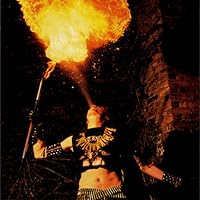
Read
October 23, 2016ARE YOU AWARE OF HOW MUCH PAIN THERE IS IN THE WORLD?
•
•
Some weeks ago I finished reading the 1965 Harlan Ellison paperback anthology 'PAINGOD' and then, the other day whilst waiting in a doctor's office, I finished reading it for a second time with a maniacal grin on my face that likely alarmed those around me...
•
Mr Ellison, in his curmudgeonly wisecracking snarl, exemplifies the strain of sci fi/speculative fiction I love best--short tightly written stories that take a wacky idea like the absurdity of punctuality ('Repent, Harlequin!') or the possibility of a manhating machine ('I Have No Mouth...') and carry the concept to its logical fantastical conclusion. Therein lies the beauty of this genre for me: the freedom to explore human problems and human solutions in bizarre scenarios that, when written by capable hands, feel more real and truthful than the dull grey fog of our reality. In this anthology, the master's fantastical words are deepened by inclusion of short intros to each story that, for me, are worth the price of admission alone. This book covers several decades of his career and as such the story quality is uneven but there are very few anthologies I've read thus far that have compelled to reread them in such short order. Recommended.
•
#harlanellison #paingod #scifi #sciencefiction #speculativefiction #anthology #paperback #halfpricebooks
•
•
Some weeks ago I finished reading the 1965 Harlan Ellison paperback anthology 'PAINGOD' and then, the other day whilst waiting in a doctor's office, I finished reading it for a second time with a maniacal grin on my face that likely alarmed those around me...
•
Mr Ellison, in his curmudgeonly wisecracking snarl, exemplifies the strain of sci fi/speculative fiction I love best--short tightly written stories that take a wacky idea like the absurdity of punctuality ('Repent, Harlequin!') or the possibility of a manhating machine ('I Have No Mouth...') and carry the concept to its logical fantastical conclusion. Therein lies the beauty of this genre for me: the freedom to explore human problems and human solutions in bizarre scenarios that, when written by capable hands, feel more real and truthful than the dull grey fog of our reality. In this anthology, the master's fantastical words are deepened by inclusion of short intros to each story that, for me, are worth the price of admission alone. This book covers several decades of his career and as such the story quality is uneven but there are very few anthologies I've read thus far that have compelled to reread them in such short order. Recommended.
•
#harlanellison #paingod #scifi #sciencefiction #speculativefiction #anthology #paperback #halfpricebooks

July 1, 2020
As the title suggests, these are stories which examine pain. Other themes are man vs. machine, "othering" and the various ways one may feel trapped. The strongest stories are placed earliest in the order of the collection. There are plenty of introductory notes as well as commentary from the author.

November 5, 2020
Paingod (4/5)
“Repent, Harlequin!” Said the TickTockMan (5/5)
The Crackpots (2/5) (Earth/Kyben War)
Sleeping Dogs (4/5) (Earth/Kyben War)
Bright Eyes (3/5)
The Discarded (4/5)
Wanted In Surgery (3/5)
Deeper Than the Darkness (4/5) (Earth/Kyben War)
“Repent, Harlequin!” Said the TickTockMan (5/5)
The Crackpots (2/5) (Earth/Kyben War)
Sleeping Dogs (4/5) (Earth/Kyben War)
Bright Eyes (3/5)
The Discarded (4/5)
Wanted In Surgery (3/5)
Deeper Than the Darkness (4/5) (Earth/Kyben War)

August 30, 2020
Did not finish. Felt he relied too heavily on a mini essays to explain what he meant rather than letting the stories stand on their own. Leaves the reader with the dreaded "so what?" feeling.

August 10, 2023
I think the TikTok man and the discarded were the best stories.
Pretty fun overall!
Pretty fun overall!

May 6, 2008
I watched an excellent documentary on Ellison at a film festival in Toronto a month ago so I was excited to read his stuff as so many people had described it as transcending genre and most literature and having a profound effect on people.
In truth, though, nothing blew me away in this collection. I'd read "Repent, Harlequin, Said the Ticktock Man" in the past but I didn't enjoy it as much this time around despite knowing now that it's one of the most lauded short stories ever.
It was a decent read. The format of this version was really annoying... it was an "e-read" which I don't understand. Maybe it was some effort of publishing on demand in the past. It didn't have the individual story titles in the header, instead every page said "e-reads" which is pointless. I'd have to flip back every time to remember the name of each story I was reading.
Generally, I think I'm enjoying Ellison's introductions more than the books. He's a killer introduction-writer and I've heard there's a book out there compiling them.
In truth, though, nothing blew me away in this collection. I'd read "Repent, Harlequin, Said the Ticktock Man" in the past but I didn't enjoy it as much this time around despite knowing now that it's one of the most lauded short stories ever.
It was a decent read. The format of this version was really annoying... it was an "e-read" which I don't understand. Maybe it was some effort of publishing on demand in the past. It didn't have the individual story titles in the header, instead every page said "e-reads" which is pointless. I'd have to flip back every time to remember the name of each story I was reading.
Generally, I think I'm enjoying Ellison's introductions more than the books. He's a killer introduction-writer and I've heard there's a book out there compiling them.

August 14, 2012
First, understand that I downgraded this book due to the eBook quality--which is poor, at best. There is no reason to charge (or pay) $9.99 for sloppy formatting--there are $.99 eBooks of better publishing quality out there. At least try to make the italicized fonts consistent.
But reading this let me know that I had a bit of distant idolatry of Ellison. I had seen interviews with him and had only read "Repent, Harlequin," which is included here, but this is the first sustained collection of his writing I had sit down to read. There is a Phillip K. Dick essence to him--som wonderful ideas, but poor execution--bland summary, expositionary dialogue, little sense of character--characteristics, but little more. Even the story I thought I loved I found lacking scenery, social character rather than individual. A (probably necessary) deflation of my admiration.
And Harlan's repeated introductions, including the culminating THREE that have evidently collected over the years of this collection, just get skippable.
But reading this let me know that I had a bit of distant idolatry of Ellison. I had seen interviews with him and had only read "Repent, Harlequin," which is included here, but this is the first sustained collection of his writing I had sit down to read. There is a Phillip K. Dick essence to him--som wonderful ideas, but poor execution--bland summary, expositionary dialogue, little sense of character--characteristics, but little more. Even the story I thought I loved I found lacking scenery, social character rather than individual. A (probably necessary) deflation of my admiration.
And Harlan's repeated introductions, including the culminating THREE that have evidently collected over the years of this collection, just get skippable.

February 22, 2025
the way this guy managed to put misogyny in a 11 page story THAT DOESN'T EVEN HAVE FEMALE CHARACTERS 😭😭😭😭😭😭😭 "a brothelful of unregenerate whores" like who gaf! he wouldn't even think of calling the johns and pimps of these women unregenerate... 😒 the thing with harlan ellison is, i like his ideas as concepts but he tends to not rlly do anything with it in the end, this being another one of those. i liked the – spoiler warning – moment when the paingod entity comes to earth and finds this corpse of a miserable guy it used to terrorize with the anguish it sent to earth for ages and then slipping its consciousness into him, reviving him and taking over, described as "If it had been possible to mount an epitaph on bronze for the wet brain, there on the wall of the alley perhaps, the most fitting would have been: HERE LAY PIETER KOSLEK. NOTHING IN HIS LIFE BECAME HIM SO MUCH AS THE LEAVING OF IT." like??? gag icb he is actually peaking in death yk what ur right! anyways, it's too bad harlan ellison usually writes better forewords than stories. 2½/5 maybe

October 24, 2008
I remember furtively reading this paperback in class, the book on my lap, concealed by my desk, then taking it along on a fieldtrip to, of all places, the Field Museum in Chicago, reading it on the bus while the other students sang about "bottles of beer on the wall." Presumably, this was for Introductory Biology during the first year of high school. I was particularly impressed by "Repent Harlequin!" because it was so wierd. The "New Wave" was just striking the banks of my consciousness.

December 29, 2018
Re-reading this after nearly 40 years, I'm struck by how powerful these stories remain. Perhaps they are more potent to me now, with the perspective of my years than when I was a teen, since the psychological and emotional pain expressed in these tales is more akin to older adult matters than youth. Must-read material for any 20th century lit course.

September 8, 2024
Très très bon ça. On a là un recueil de 7 nouvelles de science-fiction assez diverses, mais dans le jus des années 80 (petite fixette sur les robots et l’autoritarisme).
J’avais appréhendé une plume assez complexe : PAS DU TOUT. Le style d’Harlan Ellison est direct, avec son grain de folie qui le rend original («Les Fadas», «Arlequin et l’homme tic-tac»). Mais je l’ai encore plus aimé quand il a usé de cette sf pour nous livrer un discours humaniste (Bradbury ??) («Logos-Vengeur», «Plus impénétrables que les ténèbres»).
Mon récit préféré, «Œil-de-Magie», a été une immense claque. Je ne peux pas en dire plus car il est très court, mais il a résonné en moi comme un texte ne l’avait pas fait depuis longtemps.
Tout n’est pas parfait dans ce recueil mais j’ai découvert un excellent auteur de sf un peu fou, et j’en suis ravi.
J’avais appréhendé une plume assez complexe : PAS DU TOUT. Le style d’Harlan Ellison est direct, avec son grain de folie qui le rend original («Les Fadas», «Arlequin et l’homme tic-tac»). Mais je l’ai encore plus aimé quand il a usé de cette sf pour nous livrer un discours humaniste (Bradbury ??) («Logos-Vengeur», «Plus impénétrables que les ténèbres»).
Mon récit préféré, «Œil-de-Magie», a été une immense claque. Je ne peux pas en dire plus car il est très court, mais il a résonné en moi comme un texte ne l’avait pas fait depuis longtemps.
Tout n’est pas parfait dans ce recueil mais j’ai découvert un excellent auteur de sf un peu fou, et j’en suis ravi.

July 5, 2024
Paingod: “Joy without pain is nothing, so pain is a blessing.” Straightforward, easy listening. ***
“Repent, Harlequin!” said the Ticktockman: Imagine if your life was cut short by your tardiness 🤔 *****
The Crackpots: what if you were actually watching geniuses doing “crazy things”? This was an interesting story! ****
Sleeping Dogs: we should listen to women more often 🫣 ****
Bright Eyes: I liked listening to this story, but I’m not sure I got it 🤔 *
The Discarded: the scariest words in the English language, “I am from the government. I am here to help.” *****
Wanted in Surgery: human involvement is the key too. Humans win against the robots and greed. *****
Deeper than the Darkness: do what is right for your heart and soul. ****
“Repent, Harlequin!” said the Ticktockman: Imagine if your life was cut short by your tardiness 🤔 *****
The Crackpots: what if you were actually watching geniuses doing “crazy things”? This was an interesting story! ****
Sleeping Dogs: we should listen to women more often 🫣 ****
Bright Eyes: I liked listening to this story, but I’m not sure I got it 🤔 *
The Discarded: the scariest words in the English language, “I am from the government. I am here to help.” *****
Wanted in Surgery: human involvement is the key too. Humans win against the robots and greed. *****
Deeper than the Darkness: do what is right for your heart and soul. ****

July 8, 2023
you always have to explain everything

August 14, 2024
Amazing short stories.
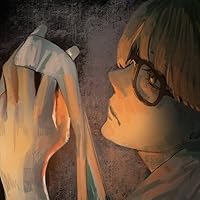
November 18, 2024
This one was even better than I Have No Mouth & I Must Scream and honestly I might as well be a fan of Harlan Ellison now cuz he's yet to miss.
Paingod itself was great tho, I in no way agree with the message it was trying to impart but I do know it’s the kind of short story that will stay with me for a very very long time and yet it honestly wasn't even top 3 best stories here for me. The order goes:
3- “REPENT, HARLEQUIN!” SAID THE TICKTOCKMAN:
This one had both a constant sense of whimsy and palpable underlying bleakness but the unique structure in which it was told is the highlight and will be the main reason it stays with me for a long time.
2- The Crackpots:
“Madness is in the eye of the beholder”
Such ridiculous setting with so many twists, lots of worldbuilding & depth to the characters all in this short story. I doubted this one will be surpassed in this collection but leave it to the creator to prove me wrong. It would've been the best Short Story I've ever read if not for-
1- Wanted In Surgery :
As a medical doctor, this hit me on a personal level. I've seen & read lots of cautionary tales about machines/AIs but never from the medical perspective. The horror specifically how convincing the case were for them had me defeated until the end. Best Short Story ever for me.
The other short stories were still at least good like:
The Discarded which was about pretty privilege and the vain treatment of those deemed undesirable and as such was depressingly infuriating and the fact it's an allegory to our usual reality makes it all the more so. Perfectly succeeded in its message which I'm in agreement with. or
Bright Eyes a story that reminds me of the Enar race from Sun Eater. Making me wonder if they were in any way inspired by it 🤔 but those familiar with Sun Eater and my relationship with it should know this is automatically good off that alone and of course both
Sleeping Dogs and Deeper Than The Darkness (The Crackpots too in some manner):
They both highlight the brutality, ridiculousness, futility and all sort of negativity associated with warfare beyond the obvious lives loss. They've also now familiarised me with the Earth-Kyba war series and so I’ll be searching out any of the short stories from that collection I can get my hands on.
All in all, this collection has made me as fan of this author and I'll endeavour to go through his whole library in the foreseeable future.
Paingod itself was great tho, I in no way agree with the message it was trying to impart but I do know it’s the kind of short story that will stay with me for a very very long time and yet it honestly wasn't even top 3 best stories here for me. The order goes:
3- “REPENT, HARLEQUIN!” SAID THE TICKTOCKMAN:
This one had both a constant sense of whimsy and palpable underlying bleakness but the unique structure in which it was told is the highlight and will be the main reason it stays with me for a long time.
2- The Crackpots:
“Madness is in the eye of the beholder”
Such ridiculous setting with so many twists, lots of worldbuilding & depth to the characters all in this short story. I doubted this one will be surpassed in this collection but leave it to the creator to prove me wrong. It would've been the best Short Story I've ever read if not for-
1- Wanted In Surgery :
As a medical doctor, this hit me on a personal level. I've seen & read lots of cautionary tales about machines/AIs but never from the medical perspective. The horror specifically how convincing the case were for them had me defeated until the end. Best Short Story ever for me.
The other short stories were still at least good like:
The Discarded which was about pretty privilege and the vain treatment of those deemed undesirable and as such was depressingly infuriating and the fact it's an allegory to our usual reality makes it all the more so. Perfectly succeeded in its message which I'm in agreement with. or
Bright Eyes a story that reminds me of the Enar race from Sun Eater. Making me wonder if they were in any way inspired by it 🤔 but those familiar with Sun Eater and my relationship with it should know this is automatically good off that alone and of course both
Sleeping Dogs and Deeper Than The Darkness (The Crackpots too in some manner):
They both highlight the brutality, ridiculousness, futility and all sort of negativity associated with warfare beyond the obvious lives loss. They've also now familiarised me with the Earth-Kyba war series and so I’ll be searching out any of the short stories from that collection I can get my hands on.
All in all, this collection has made me as fan of this author and I'll endeavour to go through his whole library in the foreseeable future.

October 2, 2024
very enjoyable book, i enjoyed reading the dysopian supernatural world, heres some excerpts which stuck out to me:
YOUR BASIC CROWN OF THORNS:
“Everybody needs to belong to somebody. Sometime. For an hour, a day, a year, forever...it’s all the same. And when you’ve paid dues on a bunch of decades without having made the proper linkup, you come to live with a pain that is a dull ache, unlocalized, suffusing every inch of your skin and throbbing like a bruise down on the bone.”
“People sense the pain, and they shy away from it, because they’ve felt it themselves, and they don’t want to get contaminated. ”
PAINGOD:
“For without pain there can be no pleasure. Without sadness there can be no happiness. Without misery, there can be no beauty. And without these, life is endless, hopeless, doomed and damned. ”
“REPENT, HARLEQUIN!” SAID THE TICKTOCKMAN:
“ He had become a personality, something they had filtered out of the system many decades before. But there it was, and there he was, a very definitely imposing personality. In certain circles-middle-class circles-it was thought disgusting. Vulgar ostentation. Anarchistic. Shameful. In others, there was only snickering, those strata where thought is subjugated to form and ritual, niceties, proprieties. But down below, ah, down below, where the people always needed their saints and sinners, their bread and circuses, their heroes and villains, he was considered a Bolivar; a Napoleon; a Robin Hood; a Dick Bong (Ace of Aces) ; a Jesus; a Jomo Kenyatta.”
“You don’t call a man a hated name, not when that man, behind his mask, is capable of revoking the minutes, the hours, the days and nights, the years of your life.”
“How did we get into this position, where a laughing, irresponsible japer of jabberwocky and jive could disrupt our entire economic and cultural life with a hundred and fifty thousand dollars’ worth of jelly beans...”
“And so it goes goes goes goes goes tick tock tick tock tick tock and one day we no longer let time serve us, we serve time and we are slaves of the schedule, worshippers of the sun’s passing, bound into a life predicated on restrictions because the system will not function if we don’t keep the schedule tight.”
“Some snicker and call it an altar. Others frown in disapproval and call it a pedestal, or a Playboy bed. It’s none of those. It’s very functional, and serves an emotional purpose that is none of their business, but lord how quick they are to label it the way they see it, and lay their value-judgment on it, and me.”
THE CRACKPOTS
“ The Superior squirmed visibly. “Well, no, not exactly. What I mean is, they’ve-you might say disappeared.”
Themus’ eyes opened wider in surprise. “Disappeared? That indicates free choice.”
“These were not the achievements of madmen.
But they were mad!
They had to be. All the things which seemed mysterious and superhuman were offset by a million acts of out-and-out insanity. They lived in a world of no standardization, no conformity at all. There was no way to gauge the way these people would act, as you could with the Kyben of the stars. It was-it was-well, insane!”
“The Crackpots were the nonconformists. They were the ones who kept coming up with the new ideas. They were the ones who painted the great works of art. They were the ones who composed the most memorable music. They were the ones who overflowed the lunatic asylums. They thought up the great ideas, true, but they were a thorn in the side of the Stuffs, because they couldn’t be predicted. They kept running off in all directions at once. ”
“ “Fools! We threw you out! We didn’t want you tripping all over our heels, annoying us. We weren’t left behind-you were thrown away!”
Themus’s breath caught in his throat. It was true. He knew it was true. He had no doubts. It was so. In the short space of a few seconds the whole structure of his life had been inverted. He was no longer a member of the elite corps of the elite race of the universe; he was a clod, an unwanted superfluousity, a tin soldier, a carbon copy.”
“ “Certainly we allow you to rule the Galaxy. It keeps you out of trouble, and out of our hair. You rule the Galaxy, but we rule you!”
SLEEPING DOGS:
“ Ferraro despised him. It was the only word that fit. She despised everything about him, but this blind servitude to cause was the most loathsome aspect of his character.
And even that was futile, as Globar and Schall burned. Who would speak the elegy for the thousands, perhaps millions, who now burned among the stones of the twin cities?”
BRIGHT EYES:
“Bright Eyes went to him. “They are the saddest creatures of all. They are alone.” ”
“ And then it was, that Bright Eyes sank to his knees, crying. Tears that had not been seen since before Man had come from caves, tears that Bright Eyes had never known. Infinite sadness. Cried. Cried for the ghosts of the creatures with hair, cried for Men. For Man. Each Man. The Man who had done away with himself so absurdly, so completely. Bright Eyes, on his knees, sorrowing for the ones who had lived here, and were gone, leaving him to the night, and the silence, and eternity. A melody never to be heard again.”
“ So Bright Eyes-never Man-was the last man on Earth. Keeper of a silent graveyard; echoless tomb monument to the foolishness, the absurdity, of nobility.”
“The reasoning of the rationale is a simple one, we worship the Pepsi Generation. We have a pathological lemming drive to conceal our age, lift our faces, dress like overblown Shirley Temples, black that grey in the hair, live a lie. What ever happened to growing old gracefully, the reverence of maturity, the search for character as differentiated from superficial comeliness? It be a disease, I warn you. It will rot you from the inside, while the outside glows. It will escalate into a culture that can never tolerate”
WANTED IN SURGERY:
“ The phymechs below were proceeding with the delicate operation. One of the telescoping, snakelike tentacles of one phymech had a wafer-thin circular saw on it, and as Thomas watched, the saw sliced down, and they could hear the buzz of steel meeting skull.”
“Like scraps from the table...and watch us while we do it! What are we, dogs? To be treated like pets? I tell you fm going crazy, Murray! I go home at night and find myself even cutting my steak as though it were heart tissue. Anything, anything at all, just to remind myself that I was trained for surgery. My God! When I think of all the years, all the sweat, all the gutting and starving, just to come to this! Murray, where’s it going to end?”
DEEPER THAN THE DARKNESS:
“They listened almost reverently, with a desperation born of men who know they are severed from their home worlds, who know they will go out and out and seldom come back. He sang of space, and he sang of land, and he sang of the peace that is left for Man-all men, no matter how many arms they had, or what their skin was colored-when he has expended the last little bit of Eternity to which he is entitled.”
YOUR BASIC CROWN OF THORNS:
“Everybody needs to belong to somebody. Sometime. For an hour, a day, a year, forever...it’s all the same. And when you’ve paid dues on a bunch of decades without having made the proper linkup, you come to live with a pain that is a dull ache, unlocalized, suffusing every inch of your skin and throbbing like a bruise down on the bone.”
“People sense the pain, and they shy away from it, because they’ve felt it themselves, and they don’t want to get contaminated. ”
PAINGOD:
“For without pain there can be no pleasure. Without sadness there can be no happiness. Without misery, there can be no beauty. And without these, life is endless, hopeless, doomed and damned. ”
“REPENT, HARLEQUIN!” SAID THE TICKTOCKMAN:
“ He had become a personality, something they had filtered out of the system many decades before. But there it was, and there he was, a very definitely imposing personality. In certain circles-middle-class circles-it was thought disgusting. Vulgar ostentation. Anarchistic. Shameful. In others, there was only snickering, those strata where thought is subjugated to form and ritual, niceties, proprieties. But down below, ah, down below, where the people always needed their saints and sinners, their bread and circuses, their heroes and villains, he was considered a Bolivar; a Napoleon; a Robin Hood; a Dick Bong (Ace of Aces) ; a Jesus; a Jomo Kenyatta.”
“You don’t call a man a hated name, not when that man, behind his mask, is capable of revoking the minutes, the hours, the days and nights, the years of your life.”
“How did we get into this position, where a laughing, irresponsible japer of jabberwocky and jive could disrupt our entire economic and cultural life with a hundred and fifty thousand dollars’ worth of jelly beans...”
“And so it goes goes goes goes goes tick tock tick tock tick tock and one day we no longer let time serve us, we serve time and we are slaves of the schedule, worshippers of the sun’s passing, bound into a life predicated on restrictions because the system will not function if we don’t keep the schedule tight.”
“Some snicker and call it an altar. Others frown in disapproval and call it a pedestal, or a Playboy bed. It’s none of those. It’s very functional, and serves an emotional purpose that is none of their business, but lord how quick they are to label it the way they see it, and lay their value-judgment on it, and me.”
THE CRACKPOTS
“ The Superior squirmed visibly. “Well, no, not exactly. What I mean is, they’ve-you might say disappeared.”
Themus’ eyes opened wider in surprise. “Disappeared? That indicates free choice.”
“These were not the achievements of madmen.
But they were mad!
They had to be. All the things which seemed mysterious and superhuman were offset by a million acts of out-and-out insanity. They lived in a world of no standardization, no conformity at all. There was no way to gauge the way these people would act, as you could with the Kyben of the stars. It was-it was-well, insane!”
“The Crackpots were the nonconformists. They were the ones who kept coming up with the new ideas. They were the ones who painted the great works of art. They were the ones who composed the most memorable music. They were the ones who overflowed the lunatic asylums. They thought up the great ideas, true, but they were a thorn in the side of the Stuffs, because they couldn’t be predicted. They kept running off in all directions at once. ”
“ “Fools! We threw you out! We didn’t want you tripping all over our heels, annoying us. We weren’t left behind-you were thrown away!”
Themus’s breath caught in his throat. It was true. He knew it was true. He had no doubts. It was so. In the short space of a few seconds the whole structure of his life had been inverted. He was no longer a member of the elite corps of the elite race of the universe; he was a clod, an unwanted superfluousity, a tin soldier, a carbon copy.”
“ “Certainly we allow you to rule the Galaxy. It keeps you out of trouble, and out of our hair. You rule the Galaxy, but we rule you!”
SLEEPING DOGS:
“ Ferraro despised him. It was the only word that fit. She despised everything about him, but this blind servitude to cause was the most loathsome aspect of his character.
And even that was futile, as Globar and Schall burned. Who would speak the elegy for the thousands, perhaps millions, who now burned among the stones of the twin cities?”
BRIGHT EYES:
“Bright Eyes went to him. “They are the saddest creatures of all. They are alone.” ”
“ And then it was, that Bright Eyes sank to his knees, crying. Tears that had not been seen since before Man had come from caves, tears that Bright Eyes had never known. Infinite sadness. Cried. Cried for the ghosts of the creatures with hair, cried for Men. For Man. Each Man. The Man who had done away with himself so absurdly, so completely. Bright Eyes, on his knees, sorrowing for the ones who had lived here, and were gone, leaving him to the night, and the silence, and eternity. A melody never to be heard again.”
“ So Bright Eyes-never Man-was the last man on Earth. Keeper of a silent graveyard; echoless tomb monument to the foolishness, the absurdity, of nobility.”
“The reasoning of the rationale is a simple one, we worship the Pepsi Generation. We have a pathological lemming drive to conceal our age, lift our faces, dress like overblown Shirley Temples, black that grey in the hair, live a lie. What ever happened to growing old gracefully, the reverence of maturity, the search for character as differentiated from superficial comeliness? It be a disease, I warn you. It will rot you from the inside, while the outside glows. It will escalate into a culture that can never tolerate”
WANTED IN SURGERY:
“ The phymechs below were proceeding with the delicate operation. One of the telescoping, snakelike tentacles of one phymech had a wafer-thin circular saw on it, and as Thomas watched, the saw sliced down, and they could hear the buzz of steel meeting skull.”
“Like scraps from the table...and watch us while we do it! What are we, dogs? To be treated like pets? I tell you fm going crazy, Murray! I go home at night and find myself even cutting my steak as though it were heart tissue. Anything, anything at all, just to remind myself that I was trained for surgery. My God! When I think of all the years, all the sweat, all the gutting and starving, just to come to this! Murray, where’s it going to end?”
DEEPER THAN THE DARKNESS:
“They listened almost reverently, with a desperation born of men who know they are severed from their home worlds, who know they will go out and out and seldom come back. He sang of space, and he sang of land, and he sang of the peace that is left for Man-all men, no matter how many arms they had, or what their skin was colored-when he has expended the last little bit of Eternity to which he is entitled.”
This entire review has been hidden because of spoilers.

July 31, 2024
Harlan Ellison, the prolific, mind-altering imaginous who writes not to please an audience of optimist, but to those so grossly attuned with our frightful nature, and the unpredictability of whether good times are before us, or rather, behind us. Ellison's books don't skip through fields of dandelions under pastel skies, singing 'What a Wonderful World' - they explore the depths of despair, examine the underbelly of our own morbid existence, and consider the unfathomable crisis of time always advancing toward an end equally as unfathomable.
Of the short stories in this collection, my favorites were: Paingod, "Repent, Harlequin!" said the Ticktockman, The Crackpots, and The Discarded. All of which were 5/5, excellent prose! Very avant-garde conceptions of god, social division, and a plague that haunts humanity.
Of the short stories in this collection, my favorites were: Paingod, "Repent, Harlequin!" said the Ticktockman, The Crackpots, and The Discarded. All of which were 5/5, excellent prose! Very avant-garde conceptions of god, social division, and a plague that haunts humanity.

December 19, 2024
Ellison acknowledges the overwhelming weight of suffering in the universe and then goes for a cop out on it providing necessary contrast for pleasures.
"ARE YOU AWARE OF HOW MUCH
PAIN THERE IS IN THE WORLD?"
"I was part of the human floodtide they called a “freedom march” that was trying to tell Governor George Wallace that Alabama was not an island... But now it’s ten years later and yesterday a friend of mine’s sixty-five-year-old mother got mugged and robbed in broad daylight by two black girls. It’s ten years later and a girl I once loved very deeply got raped repeatedly, at knife-point, in the back seat of her own car in an empty lot behind a bowling alley in the San Fernando Valley by a black dude who kept at her for seven hours. It’s ten years later and Martin Luther King is dead and Super Fly is alive, and what am I to say to Doris Pitkin Buck, who lost her dear and magical Richard on the streets of Washington, D.C. to a pack of black killers who chose to stomp to death a man in his eighties for however much stash-money he might have been carrying?
...my days of White Liberal Guilt are gone. My days of championing whole classes and sexes and pigmentations of people is gone. The Sixties are gone, and we live in the terrible present, where death and guilt don’t mix. "
"ARE YOU AWARE OF HOW MUCH
PAIN THERE IS IN THE WORLD?"
"I was part of the human floodtide they called a “freedom march” that was trying to tell Governor George Wallace that Alabama was not an island... But now it’s ten years later and yesterday a friend of mine’s sixty-five-year-old mother got mugged and robbed in broad daylight by two black girls. It’s ten years later and a girl I once loved very deeply got raped repeatedly, at knife-point, in the back seat of her own car in an empty lot behind a bowling alley in the San Fernando Valley by a black dude who kept at her for seven hours. It’s ten years later and Martin Luther King is dead and Super Fly is alive, and what am I to say to Doris Pitkin Buck, who lost her dear and magical Richard on the streets of Washington, D.C. to a pack of black killers who chose to stomp to death a man in his eighties for however much stash-money he might have been carrying?
...my days of White Liberal Guilt are gone. My days of championing whole classes and sexes and pigmentations of people is gone. The Sixties are gone, and we live in the terrible present, where death and guilt don’t mix. "

February 23, 2019
Harlan Ellison was a genius writer. Eccentric and egotistical as hell, probably had a napoleonic complex (see the biography documentary on him, “Dreams with Sharp Teeth”) but an absolute genius. I got this book for the multiple award winning short story “Repent, Harlequin! Said the Ticktockman” which was good, but I actually thought there were several better stories in this collection.
As a lover of science fiction I’m finding myself constantly disappointed the majority of the time. It’s so damn hard to find good literature in this genre. This however, is great literature. So satisfying as a reader to be excited by an author and a book each time you reach for it. I absolutely loved his anecdotal musings and introductions between each short story on his thought process at the time. I looked forward to reading those as much as his fiction. Just an absolute joy of a book by a master of his craft.
As a lover of science fiction I’m finding myself constantly disappointed the majority of the time. It’s so damn hard to find good literature in this genre. This however, is great literature. So satisfying as a reader to be excited by an author and a book each time you reach for it. I absolutely loved his anecdotal musings and introductions between each short story on his thought process at the time. I looked forward to reading those as much as his fiction. Just an absolute joy of a book by a master of his craft.
August 15, 2019
I first read this in 1972 and it is definitely science fiction from another era. Written more than 50 years ago, but still seems fresh. Many of the ideas explored are timeless and just as relevant today as they were when Ellison put them to paper. My only complaint is that the stories are relentlessly depressing. Yeah, I know, with a title like Paingod and Other Delusions what should I have expected, right? All that said, I liked it and am looking forward to revisiting the rest of Harlan Ellison's oeuvre.

November 17, 2017
Eight short stories from Ellison. I got this collection because it included “‘Repent, Harlequin!’ Said the Ticktockman.” And it was great. I think Paingod and Deeper Than The Darkness are the other stand-outs for me, but all of the 8 stories here were really wonderful.
Highly recommended to Fantasy/Science Fiction lovers.
Highly recommended to Fantasy/Science Fiction lovers.
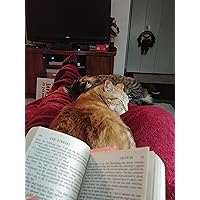
November 7, 2019
A good effort for the most part. Classic dose of Ellison. Some too long, some too short and could probably use some establishing.
I think the best in terms of quality were "Repent Harlequin", "Paingod", "The Discarded", and "Bright Eyes". These others are fine too, I like bits of "Wanted in Surgery" and the rest.
If you like some solid Ellison through good and bad I'd give it a read.
I think the best in terms of quality were "Repent Harlequin", "Paingod", "The Discarded", and "Bright Eyes". These others are fine too, I like bits of "Wanted in Surgery" and the rest.
If you like some solid Ellison through good and bad I'd give it a read.

December 5, 2018
Another fine collection. It's difficult to find a substandard Ellison tale.
Displaying 1 - 30 of 123 reviews