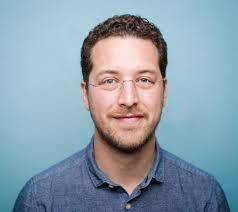
Jack Hartnell is a lecturer in art history at the University of East Anglia, Norwich. He has previously held positions at Columbia University, the Courtauld Institute, the Max Planck Institute in Berlin, and the Victoria & Albert Museum in London.
I found this non-fiction informative and insightful as the Author spends time telling us how body parts were perceived during life, how they were cured and how they were treated after death. If you are interested in the truths and myths surrounding organs in the so-called Dark Ages, this book will deliver. Of some information I was aware, however, most was new to me, and as I read HF set in the period, I am sure I will find many references in the novels I will read. The book provides details referring to many aspects of life and death during that period. It shows the ways scientists and scholars went in the search of truth. And it is written is an approachable way that makes this read available to anyone, not just scholars. My only regret is that I listened to the audiobook and was not always able to refer to the visual presentations depicted.
In the category of book as physical object this would gain 5 stars. Beautifully presented and well illustrated, this is a lovely object. The writing is to a high standard, erudite and mostly interesting. Structured around several themes - all taken from parts of the body like heart, hands and feet, the book then describes medieval attitudes, beliefs and behaviours to these parts of the body - or at least that what it claims to do.
At times it does this well, but too often the author uses the chapter title as an excuse for a rambling exploration of subjects only tenuously connected with the book or chapter title - hence from feet we go to travel and from travel to maps. I'm not sure if this is because there was not much more to say on the subject of feet or it's just poor editing.
It's all intelligent stuff, but nevertheless turns what could have been a really interesting book, into a mildly interesting random collection of information about medieval times. At its best it is very good, but too often it drifts to this randomness. For me this is a shame, as it could have been much better. If you want a book that really is about the body in medieval times then you can do better, on the other hand if you are happy with a well written, slightly unfocused social history in snippets you may enjoy.
4.5 — I gobbled this book up in no time. If you, like me are interested in history in general and the medieval period in particular, you may enjoy this book a lot. The book is organized as a tour of the human body from head to foot by way of describing the lives, beliefs, sciences, art and much more that were prevalent in a vast period of time and which encompassed various civilizations and peoples.
As a way of reconsidering what is still a poorly understood era, I found this approach interesting, especially as the middle ages were imbued with a body politic, in which the ruler of a country, the queen or queen, was literally the "head" of the state.
This period is so often defined by all the horrors the term "Dark Ages" suggests; recurring pandemics of plague, tortured bodies by way of a harsh & brutal punishing processes, overzealous doctors, poor to no sanitation, and so on. The author bases himself on a variety of sources to fill in details about this long period in human history. These constitute more areas of investigation for those who, like me, enjoy doing research for its own rewards.
By all means not a comprehensive work on the period; even a series of encyclopedias couldn’t encompass all aspects of the medieval era, but I found the audiobook informative and fun to listen to. I've got the ebook version to look at still, in which some of the artworks mentioned are shown. I enjoyed this book so much, and it contains so many leads for further reading that I am very tempted to order the hardcover copy as well. The printed version contains more visual resources, since licensing issues limited the availability of reproductions in the electronic version.
One of my standouts of the year, and possibly will merit 5 stars, a rating which I only give sparingly as when I’m likely to want an edition of the book to use as a reference or simply pore over again at leisure. This is a pleasurable use of time well spent.
I do love a niche interest book and this is certainly one of those. A beautifully illustrated book that explores how the people of the medieval world understood the mechanics of their bodies; what they looked like internally, what the function of each organ was, how diseases spread and the cures for various ailment. While it is easy to ridicule the misconceptions and the erroneous beliefs it is worth considering it a considerable achievement that they were correct with as much as they were when you consider that dissection was not an option for a society founded on a religion that saw desecration of bodies as a sin.
It is much the same for how they thought diseases were caught or transmitted. We can laugh at their naivete but that laughing might well stop when we consider that the cause of the last pandemic is still a mystery and theories range from conspiratorial deliberate release of infection to people eating wild animals and that is with all our abilities to map the strains and DNA of it. While some of their ‘cures’ might be completely ineffectual, many would not be harmful and others would probably have had some curative properties in the same way some drugs of today are based on plants. It has been posited that physicians of the future will look back in horror at the treatments we used, not because they are ineffectual but the opposite, because they are so brutal and destructive – think chemotherapy, radiotherapy - perhaps in future the mercury in vaccines injected into children will be viewed with horror. Who can say but it is slightly hubristic to mock the past while considering that we have reached the pinnacle of knowledge and future generations will not be agog at our understanding and treatments.
I started by saying this book was niche – which I stand by. It is not most people who will decide that what they fancied reading was about how people over 600 years ago thought four humours dictated personality and what illnesses you were prone to but this book is very accessible, it is written in a clear and lively way that keeps you interested and doesn’t lose you in extraneous detail. We all have bodies, we all get sick, we all seek cures and so, despite the narrow topic, it is a book that anyone would struggle to find an unworthy read.
тіло – це ніколи не просто тіло; воно завжди оточене якоюсь культурою, забарвлене світоглядом, вхоплене в мережу ідей. джек гартнелл, пишучи про середньовічні тіла, старається вловити це розмаїття тілесного буття у світі: від концепцій про мислення й чуття, пов'язаних із головою, через кров і ксенофобію й до просторових уявлень, залежних від ходіння пішки. і його книжка – з тих майстерних, після яких хочеться копати глибше.
Historian Jack Hartnell had me highly intrigued when I came upon this book. His exploration of the human body and the importance of its various parts during the Middle Ages proves to be educational to the attentive reader. Hartnell illustrates just how different body importance was in medieval times, as opposed to today, while offering detailed explanations of how the body was understood. Full of detail and covering parts from head to toe (literally), Hartnell dazzles in this unique piece of historical fiction. Just what I needed to raise an eyebrow, some of the only hair I have on my 21st century head!
Jack Hartnell pulls no punches when he open this tome, letting the reader know that the book seeks not only to explore the body, but offer a detailed contrast between modern times and the medieval era. He thoroughly goes through each part of the body and shares scientific understandings, artistic renderings, and eve religious importance from the medieval days. One such exploration would be the understanding of hair, thought to be a concentration of bodily fumes pushed out through the pores. Those with little hair would surely be lacking one of these medical humours, which explains why men had a denser concentration of hair and some of the weaknesses baldness might have had for both sexes at the time.
Hartness also offers some great explanations where some modern English idioms came into practice, including being broken hearted or losing one’s head. These provide the reader an “aha” moment and injects context few would likely have known before. The humour that emerges. throughout these analyses lightened the mood during some of the writing that could get quite dense or philosophical. The vignettes used to explain them help bring things full circle and entertain with easily understood explanations.
Balancing medicine, mysticism, artistic rendering, and even politics of the time, the medieval body was so important and taken seriously. Hartnell stresses this throughout the various chapters, each building on those that came before it. I found myself hooked and learning so much, getting lost in the stories as I tried to digest all that I was discovering.
While I have always enjoyed unique, history-based tomes, this one by Jack Hartness took things to a whole new level. The book had moments of dense analysis, light banter, and interesting tidbits that the reader likely had no idea could tie the two eras together. Hartnell provides vivid description of the body while contrasting how modern views differed greatly from the past. Chapters separate the differing parts of the body, yet link them all together, throughout the tome. I took so much away from this book and can only hope that I discover more of Jack Hartnell’s work in the future, as it was quite the experience.
Kudos, Mr. Hartnell, for such an ‘eye opening’ piece that shows you put your ‘heart’ into it.
Solid enough but unexciting. In using the parts of the body as jumping-off points to explore wider Medieval culture, it becomes broad and shallow where a deep and narrow approach would have been more rewarding.
The upside of this broadness is that there are a range of trivia titbits to spark the imagination. Personal favourites are the Cluniac monks' sign language (because of the vow of silence, see), the Welsh religious/erotic poet Gwerful Mechain, and the paper hearts pierced on the Spear of Longinus, produced en masse as tourist merch.
Jack Hartnell clearly has a lot of love for the bizarre and ingenious people of the Middle Ages, and dedicates several pages to dispelling the old blood-mud-and-shit, Game of Thrones-type conception of the period, which is an endeavour I've always got time for.
Hartnell's preference for broad strokes over a more focused narrative frustrates me a little, but I suppose he his following the model of his Medieval predecessors – no bestiary, atlas or medical compendium worth its salt could resist a good tangent either.
(A tangent of my own: the visual character of this book is exceptional, including the cover design and the many, many colour illustrations within. I'm so happy I got this from the library because it feels very expensive.)
A solid head-to-feet [literally] introduction to the medieval concepts of body parts.
The head gets the most attention as the seat of the mind and the senses, which tend to work both ways.
Skin and bodily fluids, blood & urine, get separate chapters, but their common significance as health indicators & possible relics of Christ is clearly laid out.
Bones touch upon the same saintly dimension as well as death.
The overall impression goes a long way to adjusting the popular image of the Middle Ages as unadultered filth and ignorance. Within the limits of anatomical knowledge, where organs had to confirm to the science of Galens animal experiments & without a view on bacteria or the blood circulation, there existed a practical corpus of knowledge. It was only half linked to tertiary education or everyday religion.
I cannot stress enough how lavishly it is illustrated. Not in those plastic photo sections with little bynotes, but integral to the corpus of the text.
This history is structured into chapters relating to different body parts, ie., the head, the heart, the feet, and Hartnell seeks to elucidate his audience on how humanity viewed our corporeal forms biologically, scientifically, and culturally. Hartnell attempts to draw evidence from not only Western sources but from the Middle East and Asia as well, but by the end heavily leans on European accounts to assert his suppositions. There are pockets of interesting asides, but his research is paltry and cherry-picked, and the conclusions that are subsequently drawn are weak and point toward what often felt like the author's own professed uncertainty about the subject. I questioned what I was supposed to have learned at the end of each chapter.
Gražiai parašyta, su daug įdomių istorijų, ir ypač (!!!) iliustracijų - viduramžiškų graviūrų, gobelenų, medicininių užrašų, schemų ir t.t. Ir būtent apie kūno sampratą aiškinant atskirais organais (vienam organui ar kūno daliai - vienas skyrius), o ne apie vaizdavimą ir panašiai, apie ką meno istorikai paprastai kalba (nes negi imsis tyrinėti tą, ką jau kitas, nebe meno istorikas turi tyrinėti. Nustaebino viduramžių medicinos žinios ir praktikos, ir dar daug daug kas nustebino viduramžių naudai. Pagarba autoriui, pirmiausia dėl to, kad jis moka, ko gero, visas senąsias Europos kalbas, dar senąją hebrajų ir arabų, ir dar nežinia ką. Bet svarbiau, kad moka viską, ka paskaito ir išsiaiškina, sudėti į vieną labai įdomų ir jokiais šablonais apie viduramžius neįkrautą dalyką. Tiesa, ir dar labai malonu, kad "politinis kontekstas" beveik visai nepasirodo. T.y. ne karalių ir karvedžių gyvenimas yra laikų matas, o žmonių gyvenimas.
Absolutamente fascinado por la delicadeza, fantasía y punkismo de la escatología medieval. Por un mundo con antípodas, blemios y unicornios que salvaguarden mis sentidos.
I did not enjoy Medieval Bodies, and and put the book down midway through; which is something I rarely ever do. However, in this case, I decided to cut my losses and move on...
Author Jack Hartnell is a lecturer in art history at the University of East Anglia, Norwich. He has previously held positions at Columbia University, the Courtauld Institute, the Max Planck Institute in Berlin, and the Victoria & Albert Museum in London.
Jack Hartnell:
My main grievance with this book was its overall presentation. I found writing to be sadly somewhat typical of much British prose. That is; it was overly dry, long-winded, and esoteric.
What I wanted from the book: An interesting and quirky look into how unwieldy and inaccurate medieval medicine was. There's some rich subject material with that premise, and I thought it would make for an engaging read. The book's title and description seemed to indicate as much.
What I got: dry, long-winded tedium that was recited like a long-form encyclopedia article. The author rattles off names, dates, and places. Over and over, and over and over again. Rinse and repeat. I'm done!
********************
I am admittedly very picky on how engaging, lively, or generally readable my books are, and sadly, this one left quite a lot to be desired in that regard. I would not recommend it. 1 star, and off to the return bin.
I’d just finished a novel set in the 1490s (Samantha Harvey’s The Western Wind) and this was a very suitable follow-on. The novel paints a pretty grim picture of life in an isolated Medieval English village whereas, in his book, Jack Hartnell seeks to dispel some of the myths around the period as being the Dark Ages where humanity made very little progress culturally or scientifically. He uses the human body to structure the book going from head to toe. It’s somewhat artificial and rambles around so much more than body parts, but I didn’t mind that. I found it a lively and entertaining read. Warning: the illustrations are vital so read either a hard copy or an e-book on a device that has a big enough screen to display them.
The grumpus23 (23-word commentary) Interesting but disappointing. Perhaps better as a mini documentary series by body part. How people saw themselves with typical treatments of the time.
Ta książka to było rozczarowanie. Plusem było to, że jest napisana łatwym językiem, a minusem, że okropnie się dłużyła, niektóre zagadnień były tylko lekko poruszone, a mogły być jednymi z ciekawszych tematów w tej książce. A szkoda.
A fascinating book that offers a unique insight into the thoughts and attitudes of people from the Middle Ages regarding the body and medicine. I enjoyed reading this and the author's approach and writing was a pleasant surprise.
This is a book by a British Art Historian about how medieval people thought about their bodies, their health and sickness, their life and death, during the Middle Ages before we learned what we have learned about medicine, illness, and the functioning of the body through the discoveries of modern medical science. Hartnell provides chapters focused on different body parts that we of particular interest to thoughtful medieval: the five senses, along with head, heart, blood, hands, etc. I thought this would be a review of medieval medicine and so tried to steel myself for some gross reading, but that did not happen. Each chapter is a combination of what was known and not known, what mental models were popular for understanding some part of the body, and an indication of how the physical and moral became intermixed then to an extent that would be difficult to expect now - although the more I think of it I could expect some of these habits to persist today.
The book is well illustrated and is a treat for anyone interested in medieval artifacts and illuminated manuscripts. While Hartnell does not emphasize the brutal and gross, it is easy to see why life spans a thousand years ago were much shorter than today and why childbirth was much more an experience to be feared than it is today.
The idea of exploring the great knowledge discrepancies between medieval times and the present (or even 200 years ago and the present) is not a new one. In historical romance and adventure series, a contemporary time traveler would have a strong advantage in going back in time given the lack of knowledge of the locals. After reading Hartnell’s book, one is tempted to question such a dramatic device, since it is hard to imagine how people of long ago would even begin to make use of 20th and 21st century medical and scientific knowledge, given that they were largely illiterate or else dependent on the state of knowledge about the body that Hartnell so effectively chronicles. Maybe I would start thinking of sorcery too in such circumstances.
This is an interesting and accessible book that is very entertaining.
Bałam się trochę tej książki - wydawało mi się, że będzie zbyt naładowana średniowieczem rodem z książek historycznych. Jednak było naprawdę świetnie! Dużo dowiedziałam się ciekawych rzeczy, a przede wszystkim - nastąpiło trochę odczarowanie wieków średnich (nazywanych ciemnymi). Mnóstwo wiedzy, takiej pozytywnej o tej epoce, ciekawostek, fajny podział ja różne części ciała i naprawdę szerokie podjęcie tematu. Cała masa zdjęć, które jeszcze dodatkowo obrazują przedstawioną teorię. Jak dla mnie ta książka jest świetna!
Wasn't what I expected. I enjoy medieval facts and scenes. I found this book had a lot of coloured medieval pictures and diagrams, which were fascinating and given enough space.
I enjoyed the heart and blood section, the bone section was particularly detailed.
I expected more medical facts that socio- economic or religious facts. I was surprised by the translations of sources and untranslated sections. These have a strength of feeling of reaching back in time and hearing individuals..which of course in the dark ages is miriculous.
Medieval Bodies: Life, Death and Art in the Middle Ages by Jack Hartnell was a great follow up after reading Life in a Medieval Castle by Joseph Gies and Frances Gies in July. Medieval Bodies is structured with chapters dedicated to different parts of the body (e.g. head, heart, hands, feet and so on) from the head to foot in order to provide the reader with an overall picture of the body in the middle ages and the approach to medicine at the time. Of course, this includes the four humours (blood, yellow bile, black bile and phlegm), and if a person was unwell, this was attributed to an imbalance of the humours. The appropriate treatment was then prescribed, which might include blood letting, leeches, poultices and more.
"Lauded above sweat or urine or spiritus, blood was the medieval body’s most vital substance." Chapter 7
Occasionally the author drifted off topic and while still maintaining my interest in the content provided, it weakened the overall structure of the book in my opinion.
Jack Hartnell is an Associate Professor of Art History specialising in the art of the Middle Ages and it shows in this book. There was a clear focus on the Art in the Life, Death and Art in the Middle Ages subtitle, and by listening to this on audiobook, I missed out on the illustrations which might have lifted this from a 3 star to a 4 star read. My natural curiosity led me to seek out the artworks mentioned online and my efforts were rewarded.
Medieval Bodies: Life, Death and Art in the Middle Ages by Jack Hartnell is recommended reading in print form for those with an interest in history, art, medicine and the middle ages.
A really nice miscellany with weird and beautiful images and illustrations throughout - The Wheel of Urine is a particularly odd highlight. Risks sometimes being a little shallow given how impressively broad it is, but a concise and well laid out bibliography of accessible works is able to point you in the right direction of further reading for the myriad of issues touched upon. There's no great narrative or structure beyond the subdivision of the book by body part, but to say that this makes the book disjointed or disconnected would be uncharitable. Rather than offer some overarching theory or comprehensive argument for how Medieval people viewed their bodies (arguably an impossible task generally, let alone for a popular history book - I know someone writing an entire thesis just on skin in the classical world), the book revels in the sheer variety and diversity of ways that different people understood and interpreted the human body. In my view, the book being so discursive is a feature not a bug. Given this though, it is a little disappointing when these discursions stray away from the body, and into more generic territory - looking at you, foot chapter.
It's also so refreshing to see a broad work on Medieval life going beyond documenting Western Christendom alone by consistently integrating the stories, histories and experiences of Jewish and Islamic people into the book. A welcome reminder that there's more to the Medieval world than Northern Europe.
Medieval Bodies is a wonderful study of life, death and everything in between during the Middle Ages.
It has been a real pleasure reading this book, it’s too common to come across non-fiction books that are not properly structured or contextualized but that is definitely not the case, Medieval Bodies has excellent historical context and a good structure with a clear development of ideas.
In this book Hatnell paints a very complete picture of the Middle Ages. He analyses a wide and diverse range of interesting subjects (medicine, race and racism, culinary practices, traveling or cartography to name only some) all of them connected through a common thread that gives its name to the book: the human body. Treating each body part as a chapter, the author throws light on how people lived at the time and the extent of the medieval understanding of the inner workings of bodies.
It’s also a beautiful book with very well selected coloured pictures that masterfully illustrate the text and help us immerse even more in this interesting historical era.
Finally, it should be noted the vast research task undertaken by the author that becomes clear just taking a look at the bibliography, also organized according to the multiple topics discussed in the book.
Hartnell approaches the Middle Ages by looking at how people of the time period wrote about and illustrated different parts of the body. There is lots here on medicine of the time - but just as much on religion, as well as legal codes, punishments, fashion, and more.
The book follows the framework of each chapter being about a different part - head, heart, stomach, feet, etc., but even with that organization, it's easy to get confused by just how much time and space he covers here as well as getting well into the weeds on some points.
Fascinating look at the Middle Ages, showing the people then were not quite as alien as often portrayed.
Emylie says: This is a nice overview of living in the Medieval period, and Hartnell adds an interesting flair to discussing it by using the body. From head to toe, readers learn about a variety of subjects, such as what the stomach meant to people, or giving birth. He covers Europe and some of the Middle East, so there is a bit of diversity. However, it really is only a introductory book and not great if you're looking for a more in-depth look at the people involved and their practices/beliefs.
I've read many books about the Medieval period and this is by far my favourite. It brings something new to the table in terms of how the book is thematically presented via body parts. Not only does it contain beautifully high quality images showing art and artifacts from the period but it also contextualises them in engaging prose that humanises the period. It should definitely be read rather than listened to as the many images mean an audiobook by its nature leaves significant parts out.
The book's coverage of the entire period and the spanning of multiple continents means its aims sometimes exceed its grasp. However, I admire that it gives readers a historical context beyond European Christianity and the detailed bibliography means that further research can be easily found. It is also incredibly refreshing to see both Islamic and Jewish medieval experiences represented.
A really thrilling read. I devoured this over a couple of days and I will certainly be reading more by this author.
Były momenty kiedy trochę się nudziłam, ale przez większość czasu byłam zaangażowana, dużo się dowiedziałam, a rozdziały o skórze, dłoniach i genitaliach były mega ciekawe, nawet byłam podekscytowana. Mam trudną relację z non-fiction, ale tę książkę bardzo polecam.