“A remarkable debut. Valencia writes with a sinuous maturity, a boldness of vision far beyond his years. In Lord of California, this beyond-seeing is wild, impressive, at times menacing invention about what a separatist California might look like begins to look downright prescient, and Valencia’s portraitist skill with his characters lifts them off the page, too.”—Ryan McIlvain, author of Elders
Set in a future where the United States has dissolved and California is its own independent republic, Lord of California follows the struggles of the Temple family as they work at running a farm on a nationalized land parcel in the central San Joaquin Valley. When the family patriarch, Elliot, dies, it’s revealed that he had been keeping five separate families, and in the aftermath of their discovery, his widows and children must come together to keep from losing all they have. But their livelihood is threatened when Elliot’s estranged son tries to blackmail them, unleashing a series of violent confrontations between different factions of the family.
A sparse family drama reminiscent of Cormac McCarthy, combined with the intimate first-person narratives of Kazuo Ishiguro, Lord of California is a powerful debut novel.
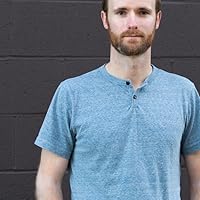
Andrew Valencia was born in Fresno, California, and graduated with a BA in English from Stanford, where he was awarded a Levinthal Tutorial by the Creative Writing Program. He holds an MFA in fiction from the University of South Carolina, and his work has appeared or is forthcoming in Silk Road Review, the Ploughshares blog, Day One, The Southern Pacific Review, The Fat City Review, Crack the Spine, and other publications.
Thank you to Ig Publishing for sending me an ARC of this book! I am happy to be among the first people to read and review it on Goodreads!
Honestly, I was pretty disappointed by this book. It had a lot of potential and I definitely intrigued by the plot and the setting. I very much enjoy dystopian fiction and I was very much looking forward to reading this one. I felt that the dystopian elements didn't play a big enough role in the book, and that really the entire book could have taken place somewhere in rural America as it exists today. This book could easily have been a contemporary fiction book with the same plot: a man has five wives on five parcels of land, and the wives find out about each other only after the man dies. Then it turns out that the man has another son who finds out about the wives and also finds out that all his father's money is in their hands, and so he attempts to get the land and money away from them by means of blackmail. I felt like the book was billed as dystopian fiction more in an effort to make it more marketable than because it was truly an integral part of the plot.
The story is told through three different points of view, in three separate chunks. I really enjoyed the first third of the book, told from the point of view of Ellie, the thirteen-year-old daughter of Elliot Temple, the man with five wives. I felt that her perspective was the most relatable and her voice was the one I was drawn to the most, by far. Ellie's voice made sense with the story she was telling and the first third of the book set up the plot and the backdrop well. After that, the book totally fell apart for me. I absolutely hated the voice of Elliot Jr. and found myself not at all caring about his backstory. It didn't make me feel any sympathy for him, and I personally hate villains who have no sympathetic qualities. I thought the author was trying to make him more sympathetic by sharing some of the background about his relationship with his father (also a complete villain), but I didn't think it worked at all. The last part, told from the perspective of Anthony (another of Elliot Temple's sons), didn't do a lot for me, but I didn't hate it. The actual story definitely got bogged down though and I found myself wishing that the author had gone back to Ellie's voice or perhaps told the entire story from Ellie's point of view.
So to sum up, I had high hopes for this one, but it definitely fell short of my expectations.
Dystopian, yes, and futuristic, but really transcending and messing with these genres as much as participating in them. I know this may rankle some readers, but I'm slightly in awe of how bold and quietly experimental Valencia's handling of his characters is—and it's really about the characters here, first and last. No fealty to genre conventions will knock the author off his task, which is to imagine, in a sustained, deep way, what it feels like to be a man or a woman, or a young woman, or a person of color, in the grip of the petty totalitarianisms that rule over a family or a state. I'm particularly impressed with how Valencia has written "across" in this debut novel—across gender, across race. He's a bold writer with a bold imagination, a gifted sentence maker, a gifted writer of dialogue, and I'll be eager to read anything else he puts out.
It’s brass tacks, not brass taxes. And Lexus isn’t a German car. Did this book self publish? How did an editor not catch such sloppy details. Picked it up bc it had cool potential for an interesting setting but it’s not really dystopian or about this apocalyptic California. It’s a family drama about a bigamist’s messed up kids. I don’t know why I finished except I kept hoping it would redeem itself but it was disappointing.
Up close as I was, I came to notice that the trees on Katie's property were plums instead of nectarines, and it got me thinking about all the ways Daddy had diversified his investments over the years--different crops for different families, different wives for different children. In my solitude I felt the pang of real sadness come over me for the first time since Mama had opened up about his lies. All those months I had held on to the hope that eventually someone, whether Mama or one of the other wives, would explain everything to me in a way that made sense, and then I would finally understand how he could do that to us for so long, and how he could leave us with such a mess on our hands. I'd been waiting for one of them to set me straight, but now I was starting to get it. They could smile and talk over a plate of barbecue, but they were every bit as lost as me.
~~The sun hangs low in the sky over the San Joaquin valley in California, casting a warm glow on the agricultural fields. In Valencia's fictionalized future, the valley remains heavily farmed, with small 20-30 acre parcels leased to families who then grow designated crops such as nectarines, plums, or grapes. They feed the coastal states surrounding San Francisco and Los Angeles, while missing out on most of the "luxuries" found in the cities (like pharmacies and dental care) that promote health and extend life.
Vital statistics: Author's home: Born in Fresno, California, and a graduate of Stanford. Year written: 2018 Length: 261 pages Setting: The United States has disbanded. The novel follows the wives and children of a con artist and all around not nice man, predominantly in the San Joaquin Valley of California. Genre: character driven dystopian novel. Teenagers tell two-thirds of the story, so it is also very much a coming-of-age novel. Read if: You enjoy novels set in a future that hasn't completely fallen apart.
First two sentences: Daddy was a fancy man. He used to come around twice a year to see us kids.
My two cents: As another reviewer noted, the prose was quite good at times. I also absolutely loved the character of Ellie, and the section of the book she narrates is by far the strongest. Unfortunately, punctuation errors, spelling errors, and some glaring discrepancies an editor should have caught--calling a Lexus a German luxury car for instance--kept the book from a higher rank. There was also very little in the way of dystopian setting. In many ways, I felt more like I was reading a historical novel set in the late 1800's or early 1900's when small farming and share-cropping were commonplace. The primary villain does worship feudal lords, though. So maybe, to the author, days of patriarch driven farming *is* dystopian. For me though, the setting was pastoral with a sprinkling of bad characters. It certainly didn't have the tone of a malfunctioning society. Given 3 stars or a rating of "good." Recommended on the strength of the prose, and the character of Ellie if this plot sounds interesting to you.
Other favorite quotes: Sometimes being a sister is as easy as recognizing that someone else has the same pain as you.
~~Because sometimes, when you're learning to stand on your own, you trip and fall instead. That's when you need a little help getting back on your feet.
~~Just be careful. Walls keep out more than just the bad. Day might come when you wish you'd let in more of the good.
~~Instead of drinking this time, I raised my glass and held it off to the side with the ice rattling against the edges. I was already learning that drinking came with a performative aspect that could ease the tension in the room as effectively as the drink itself.
~~"A handful of mother hens can peck a fox into submission. Evolution can't help but give the female of the species the tools she needs to keep her babies safe. Call it instinct, call it irrationality, or whatever, but at the end of the day, those with something to live for tend to outlast those with nothing to lose."
~~I nodded at the careful wisdom of his remark. I wanted to be like that when I grew up, to be so settled and sure of myself that my opinions rang out with the music of perfect infallibility.
Very busy these days, but this book forced from me the time. Perhaps it's the family or faith, the nuanced social commentary or fascinating internal conflictions, the classic feel or modern timeliness. Whatever the lure, writing through three perspectives, it is hard to fathom how Valencia (or any author for that matter) could so concretely ensoul such disparate characters. 'Lord of California' will linger with me for some time.
This book is a mixed bag, and that’s unfortunate, since the good sections are very, very good. All three point-of-view characters are engaging in their own way (even Elliot, who’s a villain), but their sections were so short and the book’s timeline so stunted (it covers less than a year) that it felt like we barely got to know each one before their section ended. I would have gladly read the whole novel from Ellie’s POV, and I don’t know why Valencia felt the need to cut away from her, when Elliot and Anthony were already plenty interesting from the outside. The world he proposes has a lot of potential, but we don’t get to see or understand very much of it.
I think I would have loved this book if it had been 100-200 pages longer and gone through some serious edits, both to restructure and to take out some of the really bad lines (again, when this book is good, it’s really good. But Valencia and/or his characters will sometimes stop dead to lecture the reader about the book’s themes, and it’s agonizing). This version just wasn’t polished enough. At the very least, I’m looking forward to Valencia’s next project.