What do you think?
Rate this book


Hardcover
First published January 1, 2012


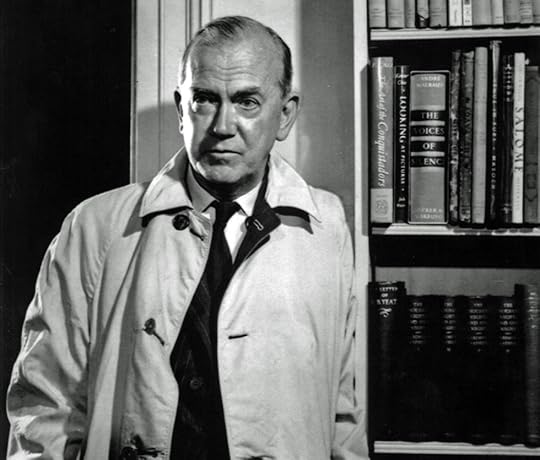
Graham Greene the novelist appeals to some of us--even challenges our sense of who we are--in part because he is so acutely sensitive to all the ways we can fail to understand one another, even those people closest to ourselves; he knew his characters better than anyone in real life. He becomes the caretaker of that part of us that feels we are much larger & harder to contain, a mystery that is fundamental & unanswerable, which gives us a sense of hauntedness. It is the best side of us, our conscience, our sense of sympathy, our feelings for another's pain--that causes the deepest grief. And God, if He even exists, is less a source of solace that a hound of heaven, always on our path.
One Greenian paradox is that in his books, as in many lives, enemies do suddenly become friends & then turn into enemies again. Beyond that, he mocks America's civilization, yet his greatest love was an American, as was his favorite writer; he pricks holes in Catholicism & yet his fallen, errant, sinning Catholic priest becomes a hero because he refuses to flee when his dying mother needs his priestly ministration--I noticed that the only reliable & constant enemy in all of his work was, in fact a version of himself. Greene could write with harrowing compassion for every character except the one who might be taken as Graham Greene.
No one can be defined by the roles he plays onstage. I watched my neighbors n California embark on lifelong excursions into the self, while seeming baffled by the world; I saw my friends in Britain more or less take over the world, but only by never looking too closely within.Pico Iyer's well-crafted narrative conveys how the books we read can stand as a guiding force in our lives, even beyond that of a parent's influence, fostering a kind of tandem kinship with one's own genetic inheritance.
Greene, I felt was always in his books hoping to give us a sense of responsibility--of conscience--in part by bringing himself before an unsparing tribunal. At the heart, he offered me a way of looking at things & the way one looked became a kind of theology, a preparing for a way of acting. It didn't matter if the man within my head--this one at least-- was carefully edited or artfully fashioned; his unearthly, unflinching blind man's eyes gave me an image of attention, and the spirit that lies behind it.