SUSANA (separándose bruscamente del grupo y deteniéndose junto a la escalera). - Entonces yo me detengo aquí y ¿De dónde ha sacado usted que yo soy Susana? JUAN. - Sí, ya sé, ya sé ... SUSANA (volviendo a la rueda). - Ya debía estar aquí. PEDRO (consultando su reloj). - Las cinco. JUAN (mirando su reloj). - Tu reloj adelanta siete minutos. (A SUSANA). - ¡Bonita farsa la tuya! SUSANA (de pie, irónicamente). - Este año no dirán en la estancia que se aburren. La fiesta tiene todas las proporciones de un espectáculo. JULIA. - Es detestable el procedimiento de hacerle sacar a otro las castañas del fuego. SUSANA (con indiferencia). - ¿Te parece? (JULIA no contesta. SUSANA a JUAN.) No te olvides. JUAN. - Noo. (Mutis de SUSANA.) PEDRO. - ¡Qué temperamento! JULIA (sin levantar la cabeza del tejido). -Suerte que mamá no está. No le divierten mucho estas invenciones. PEDRO. - Mamá, como siempre, se reiría al final. JULIA. -¿Y ustedes no piensan cómo puede reaccionar el mantequero cuando se dé cuenta que lo han engañado?
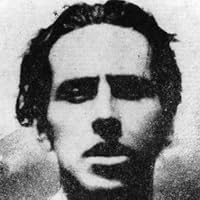
Roberto Arlt was an Argentine writer born Roberto Godofredo Christophersen Arlt in Buenos Aires on April 2, 1900. His parents were both immigrants: his father Karl Arlt was a Prussian from Posen (now Poznan in present-day Poland) and his mother was Ekatherine Iobstraibitzer, a native of Trieste and Italian speaking. German was the language commonly used at their home. His relationship with his father was stressful, as Karl Arlt was a very severe and austere man, by Arlt's own account. The memory of his oppressive father would appear in several of his writings. For example, Remo Erdosain (a character at least partially based on Arlt's own life) often recalls his abusive father and how little if any support he would give him. After being expelled from school at the age of eight, Arlt became an autodidact and worked at all sorts of different odd jobs before landing a job on at a local newspaper: as clerk at a bookstore, apprentice to a tinsmith, painter, mechanic, welder, manager in a brick factory, and dock worker.
His first novel, El juguete rabioso (1926) ("Mad Toy"), was the semi-autobiographical story of Silvio, a dropout who goes through a series of adventures trying to be "somebody." Narrated by Silvio's older self, the novel reflects the energy and chaos of the early 20th century in Buenos Aires. The narrator's literary and sometimes poetic language contrasts sharply with the street-level slang of Mad Toy's many colorful characters.
Arlt's second novel, the popular Los siete locos (The Seven Madmen) was rough, brutal, colloquial and surreal, a complete break from the polite, middle-class literature more typical of Argentine literature (as exemplified, perhaps, by the work of Jorge Luis Borges, however innovative his work was in other respects). Los lanzallamas (The Flame-Throwers) was the sequel, and these two novels together are thought by many to be his greatest work. What followed were a series of short stories and plays in which Arlt pursued his vision of bizarre, half-mad, alienated characters pursuing insane quests in a landscape of urban chaos.
During his lifetime, however, Arlt was best known for his "Aguafuertes" ("Etchings"), the result of his contributions as a columnist - between 1928 and 1942 - to the Buenos Aires daily "El Mundo". Arlt used these columns to comment, in his characteristically forthright and unpretentious style, on the peculiarities, hypocrisies, strangeness and beauty of everyday life in Argentina's capital. These articles included occasional exposés of public institutions, such as the juvenile justice system ("Escuela primaria de delincuencia", 26–29 September 1932) or the Public Health System. Some of the "Aguafuertes" were collected in two volumes under the titles Secretos femeninos. Aguafuertes inéditas and Tratado de delincuencia. Aguafuertes inéditas which were edited by Sergio Olguín and published by Ediciones 12 and Página/12 in 1996.
Between March and May 1930, Arlt wrote a series of "Aguafuertes" as a correspondent to "El Mundo" in Rio de Janeiro. In 1935 he spent nearly a year writing as he traveled throughout Spain and North Africa, on the eve of the Spanish Civil War. At the time of his death, Arlt was hoping to be sent to the United States as a correspondent.
Worn out and exhausted after a lifetime of hardships, he died from a stroke on July 26, 1942. His coffin was lowered from his apartment by an operated crane, an ironic end, considering his bizarre stories.
Arlt has been massively influential on Latin American literature, including the 1960s "Boom" generation of writers such as Gabriel García Márquez. Analogues in English literature are those who avoid literary 'respectability' by writing about the poor, the criminal and the mad: writers like William Burroughs, Iceberg Slim, and Irvine Welsh. Arlt, however, predated all of them. He is widely considered to be one of the founders of the modern Argentine novel; among those contemporary writers who cla
Un disparate de obrita. La recomiendo mucho porque se lee un plis y tiene gracia, tiene un buen final y ofrece un juego de diferentes niveles de realidad que, para lo corta que es la obra, está muy bien conseguido. Con ganas de leer más de Arlt.
No suelo leer obras teatrales, desconozco si es una obra larga o más bien corta en comparación con otras obras. Pero si sé que no esperé nada de lo que pasó. Uno puede creer que cuando algo es corto, el final está dado desde el principio. Me encantó, se lee rápido y el final es la cereza del postre. No puedo pedir mucho más