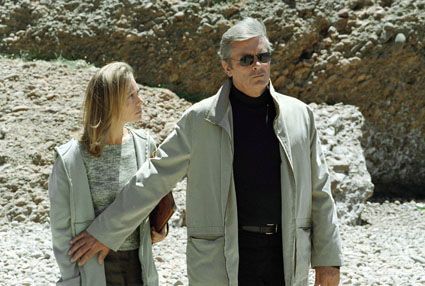
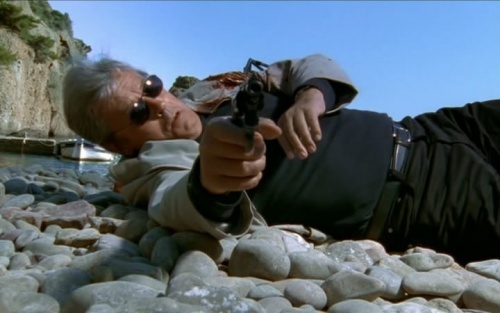
Solea is as Noir as they come, although I make that claim as one who reads only occasionally in the genre. Reportedly, despite pressure from Gallimard, his publisher, Izzo rejected the idea of continuing his Marseilles Trilogy beyond Solea (a Miles Davis tune appreciated by Fabio Montale, the existentially doomed protagonist / anti-hero of the series). In this final novel, Izzo dispenses with side plots to focus on the Mafia(there are, of course,still several relationships with beautiful & intriguing women, past & present, that preoccupy Fabio). This time, Izzo is not so much concerned with the truands who regularly engage in turf wars & s'entretuent (no satisfying English translation for this verb) & produce much collateral damage as he is with the Big Picture(there is, nevertheless, a cold-blooded throat-slitter this time around). At stake is his friend & former lover Babette's investigation into the Mafia's influence over & corruption of the financial and political systems in France, an influence that borders on complete takeover. The evidence that she has compiled is detailed in a series of computer disks that she sends to Fabio for safekeeping--the last of which, the black disk, goes so far as to name names & reveal bank account numbers. Naturally, Fabio and everyone close to him is at risk. It is safe to say that things don't turn out well & that Izzo ends his series in the most definitive manner. There is no possible sequel.
It occurred to me while reading Solea, that in our current global financial meltdown, little to no mention has been made of the role, if any, of organized crime, at least not in reference to the United States. I remember the President's Commission on Organized Crime back in the sixties, but like the War on Poverty, except for our obsession with Mexican drug cartels, we seem to have forgotten about more traditional crime syndicates, those which have integrated their operations with legitimate business (one wonders these days, if such a concept still makes any sense at all). To quote Babette (my translation): "As a consequence of tax evasion, the accumulation in tax havens of enormous capital reserves belonging to the largest corporations is also responsible for the growth of the budget deficits of most countries in the West." Considering the current debt crisis in the European Union & the budget deficit in the U.S., this statement in a piece of 1990s' genre fiction is all the more startling. At the end of the novel, Fabio discloses that he has instructed Cyril, a young hacker, to broadcast the contents of Babette's disks across the Internet. Written in the 1990s, this scenario seems now, post- Wikileaks, quite prescient.
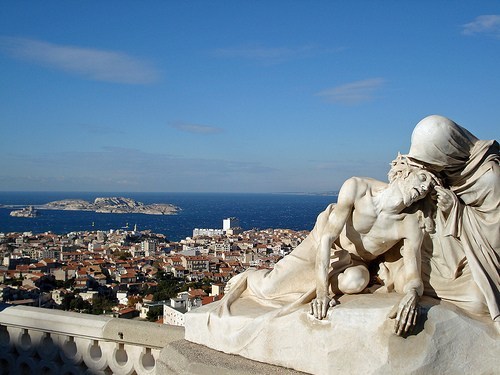
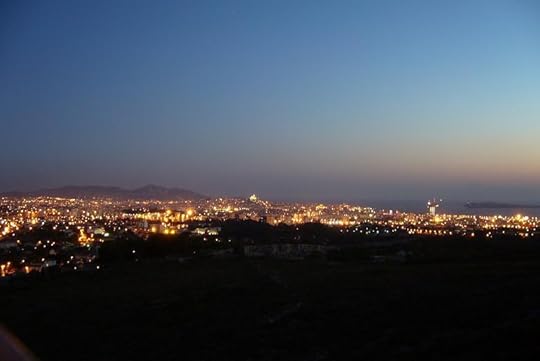
True to genre & true to the character of Fabio Montale, there is excessive consumption of alcohol (one wonders how Fabio manages to function at all!) and cigarettes & much sleep-deprivation. There are fewer compensations and less consolation to be found here than in the previous novels of the trilogy, however. The sea and coast, the cuisine, the incomparable light, music & the city of Marseilles itself, finally, can't tip the scale to the side of Good.