

What do you think?
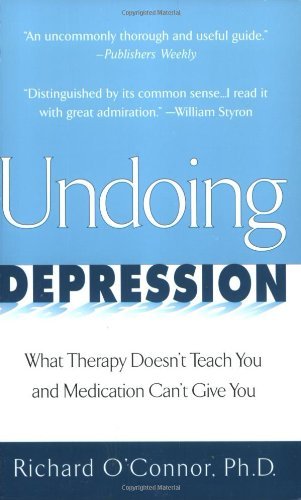
Undoing Depression: What Therapy Doesn't Teach You and Medication Can't Give You
This refreshingly sensible book teaches how to replace depressive patterns of thinking, relating, and behaving with a new and more effective set of skills.
368 pages, Paperback
First published January 1, 1997
About the author
Richard O'Connor
29 books58 followersRichard O'Connor, PhD, is the author of Undoing Depression, Undoing Perpetual Stress, and Happy at Last. For fourteen years he was executive director of the Northwest Center for Family Service and Mental Health, a nonprofit mental health clinic, where he oversaw the work of twenty mental health professionals in treating almost a thousand patients per year. He is a practicing psychotherapist with offices in Connecticut and New York, and lives in Lakeville, Connecticut.
Ratings & Reviews
Friends & Following
Create a free account to discover what your friends think of this book!
Community Reviews
Displaying 1 - 30 of 132 reviews

February 20, 2018
‘In a true dark night of the soul, it’s always 3:00 in the morning.’
Описанието на Франсис Скот Фицджералд може да се нарече поетично и доста лаконично обобщение на депресията. Всеки, който е прекарал поне една безсънна нощ, знае, че когато е три сутринта, ти се струва, че никога няма да се развидели. Самият Фицджералд е бил отявлен алкохолик с депресия, така че кои сме ние да му противоречим?
По нашите географски ширини понятието за „депресия“ е относително слабо познато. Да, думата се използва изключително често с повод и без повод (най-вече без), но зад нея със сигурност не стои клиничното определение на това състояние. На вас кое от посочените по-долу ви прилича на депресия:
а) „Днес шефът ми се развика и се депресирах от отношението му“
б) „Тази седмица не съм излизала никъде и съм депресната“
в) „Като вали ми е едно депресарско“
г) Никое от гореизброените (разбира се)
Депресията не е временно сдухано състояние, което продължава около половин следобед като реакция на това, че в магазина са нямали вашия размер обувки. В България често и доста невежо гледаме на депресията едва ли не като на превземка от страна на човек, който е мекушав, и бързо съвсем здравомислещо и по балкански го съветваме да се стегне. Както правилно отбелязва д-р Ричард О’Конър в книгата си, това е най-безсърдечната препоръка, която можете да дадете на човек в такова състояние. Понякога смятаме депресията и за екзотично животно, което обикновено вирее в западните ширини, най-често в САЩ, и с което се обзавеждат предимно богати и безделни американци, защото и без това си нямат друга работа. Опитваме думата на вкус, когато по новините съобщят за поредния актьор или музикант, който се е самоубил, защото е имал депресия. Обикновено бързаме да ги порицаем от висотата на безукорния си морал и да разправяме как не ни минават тия, дето някакви си капризни знаменитости ни се правят на интересни и търсят внимание и изобщо какво повече искат от този живот? Ние и това нямаме, нали? Нямането нерядко е повод да се изнесе нравоучителна лекция. А представяте ли колко тежко им е било всъщност на тези хора, които всичко си имат, за да се решат именно на тази стъпка?
Като се има предвид колко разпространено заболяване всъщност е депресията, изненадващо е, че хората не са по-добре запознати с него. Как не знаят, че да развиеш депресия не е ничий избор, не повече, отколкото да имаш рак. Тук някой, който вярва как мислите и стресът пряко се проектират върху определени органи и всъщност си избираш да не си стресиран (и съответно да нямаш рак), може да ми възрази, но никого не убеждавам в някаква правота. Вие скоро казвали ли сте на човек с онкологично заболяване „Абе, я се стегни, ще ти мине като на куче“? И аз така си помислих.
Това дали някой ден ще имаме депресивен епизод зависи от генетично предразположение, фамилна история със заболяването, детството, средата ни. Културата ни, натискът да работиш повече и да имаш повече, защото иначе си загубеняк, моделите за подражание, възпитанието. Усещате ли как върху основната част от тези фактори влияние нямаме? Депресията скоро ще стане втората най-разпространена причина за смъртност в световен мащаб след сърдечно-съдовите заболявания. На всеки 30 секунди някъде в света се самоубива човек с депресия. Клеймото върху това състояние и липсата на искрено споделяне и информиране по темата е причина за огромна част от тези безсмислено изгубени животи.
За мен книгата на д-р О’Конър беше изключително полезна в разясняването на причините за развиване на депресивни състояния. Много добре е описано и какви отрицателни „умения“ придобиват такива хора и как чрез тях поддържат депресията си – неволно, разбира се. Ако искате да си обогатите общата култура за нещо наистина важно, силно препоръчвам Undoing Depression. За който се интересува, ето и едно добро визуално представяне на клиничната депресия:
Living With Depression
Описанието на Франсис Скот Фицджералд може да се нарече поетично и доста лаконично обобщение на депресията. Всеки, който е прекарал поне една безсънна нощ, знае, че когато е три сутринта, ти се струва, че никога няма да се развидели. Самият Фицджералд е бил отявлен алкохолик с депресия, така че кои сме ние да му противоречим?
По нашите географски ширини понятието за „депресия“ е относително слабо познато. Да, думата се използва изключително често с повод и без повод (най-вече без), но зад нея със сигурност не стои клиничното определение на това състояние. На вас кое от посочените по-долу ви прилича на депресия:
а) „Днес шефът ми се развика и се депресирах от отношението му“
б) „Тази седмица не съм излизала никъде и съм депресната“
в) „Като вали ми е едно депресарско“
г) Никое от гореизброените (разбира се)
Депресията не е временно сдухано състояние, което продължава около половин следобед като реакция на това, че в магазина са нямали вашия размер обувки. В България често и доста невежо гледаме на депресията едва ли не като на превземка от страна на човек, който е мекушав, и бързо съвсем здравомислещо и по балкански го съветваме да се стегне. Както правилно отбелязва д-р Ричард О’Конър в книгата си, това е най-безсърдечната препоръка, която можете да дадете на човек в такова състояние. Понякога смятаме депресията и за екзотично животно, което обикновено вирее в западните ширини, най-често в САЩ, и с което се обзавеждат предимно богати и безделни американци, защото и без това си нямат друга работа. Опитваме думата на вкус, когато по новините съобщят за поредния актьор или музикант, който се е самоубил, защото е имал депресия. Обикновено бързаме да ги порицаем от висотата на безукорния си морал и да разправяме как не ни минават тия, дето някакви си капризни знаменитости ни се правят на интересни и търсят внимание и изобщо какво повече искат от този живот? Ние и това нямаме, нали? Нямането нерядко е повод да се изнесе нравоучителна лекция. А представяте ли колко тежко им е било всъщност на тези хора, които всичко си имат, за да се решат именно на тази стъпка?
Като се има предвид колко разпространено заболяване всъщност е депресията, изненадващо е, че хората не са по-добре запознати с него. Как не знаят, че да развиеш депресия не е ничий избор, не повече, отколкото да имаш рак. Тук някой, който вярва как мислите и стресът пряко се проектират върху определени органи и всъщност си избираш да не си стресиран (и съответно да нямаш рак), може да ми възрази, но никого не убеждавам в някаква правота. Вие скоро казвали ли сте на човек с онкологично заболяване „Абе, я се стегни, ще ти мине като на куче“? И аз така си помислих.
Това дали някой ден ще имаме депресивен епизод зависи от генетично предразположение, фамилна история със заболяването, детството, средата ни. Културата ни, натискът да работиш повече и да имаш повече, защото иначе си загубеняк, моделите за подражание, възпитанието. Усещате ли как върху основната част от тези фактори влияние нямаме? Депресията скоро ще стане втората най-разпространена причина за смъртност в световен мащаб след сърдечно-съдовите заболявания. На всеки 30 секунди някъде в света се самоубива човек с депресия. Клеймото върху това състояние и липсата на искрено споделяне и информиране по темата е причина за огромна част от тези безсмислено изгубени животи.
За мен книгата на д-р О’Конър беше изключително полезна в разясняването на причините за развиване на депресивни състояния. Много добре е описано и какви отрицателни „умения“ придобиват такива хора и как чрез тях поддържат депресията си – неволно, разбира се. Ако искате да си обогатите общата култура за нещо наистина важно, силно препоръчвам Undoing Depression. За който се интересува, ето и едно добро визуално представяне на клиничната депресия:
Living With Depression

May 28, 2008
If you or anyone you know has ever suffered from depression, I would highly recommend Dr. O'Connor's book. Reading this book I realized that most people - including those with depression themselves - have a fundamental misunderstanding of what it means to be depressed. The first half in particular offers some especially interesting insights into the psyche of the depressed.
"We confuse depression, sadness, and grief. But the opposite of depression is not happiness, but vitality - the ability to experience a full range of emotion, including happiness, excitement, sadness, and grief."
"We confuse depression, sadness, and grief. But the opposite of depression is not happiness, but vitality - the ability to experience a full range of emotion, including happiness, excitement, sadness, and grief."

April 12, 2017
За даними Всесвітньої організації охорони здоров'я, депресія "is leading cause of disability worldwide", збитки від неї оцінюються у один трильйон на рік, більших економічних збитків завдає тільки рак. За різними даними, до 20% населення у будь-який окремо взятий момент мають епізод більш чи менш тяжкої депресії. При цьому (а) більшість із тих, хто на неї страждає, не діагностовані - себто ситуація може погіршуватися; (б) природа фігні до кінця не зрозуміла і єдиного способу лікування, який гарантував би відсутність рецидивів, немає. Очевидно, потрібен якийсь комплексний підхід (за потреби таблетки + зміни способу життя, щоб мінізувати стресори + зміни депресивних моделей мислення).
Попри провокативну назву ("чого вас не навчать психологи і що вам не дадуть таблетки"), ця книжка базується в основному на старій-добрій когнітивно-біхевіоральній терапії: відловити ті моделі мислення, які є симптомом болячки і погіршують ситуацію, знайти спосіб їх знешкодити і виробити безболісніші для себе способи поведінки. Наскільки це можливо без психолога, який тицятиме пальцем у конкретні приклади монологів депресії у твоєму мовленнєвому потоці - я не знаю, але якщо нема доступу до психолога, то, мабуть, і то хліб.
Основна теза така: депресія вчить тебе жити з депресією і робить малопридатним до життя без неї. Людина з депресією виробляє захисні механізми, які роблять життя з депресією стерпним, але підтримують певність, що ні на що краще ти не заслуговуєш. Людей, які говорять "просто візьми себе в руки", треба якось м'яко усувати, тому що депресія - це набір поведінкових моделей, звичок і припущень, які ти вже не можеш відділити від своєї особистості, себто ти не можеш від них просто відмовитися, їх треба чимось треба заміняти. Себто, в цілому, це як алкоголізм: якщо в тебе є історія депресії, то швидше за все, це розвага надовго, яка потребує структурних змін у житті.
Поверховий конспект якихось тез:
Формальний критерій депресії - щонайменше два тижні депресивного стану і втрати інтересу до/задоволення від зазвичай приємних речей + як мінімум чотири симптоми із цього списку: зміни ваги і апетиту в будь-який бік; безсоння чи забагато сну; рівень активності падає; постійна втома; відчуття своєї worthlesness чи вини; нездатність концентруватися чи приймати рішення; думки про смерть чи самогубство.
Якщо у вас є щось із цього набору, то - погана новина - є немала імовірність, що у вас є ще якась частина цього пакету депресивних припущень і поведінкових моделей, які дозволяють з депресією жити, але її укорінюють. Хороша новина: це не ваше глибинне єство, а симптоми, їх можна позбуватися. Депресивні механізми адаптації:
* нездатність відчувати повний спектр емоцій, сіре ніщо із проблесками тривожності. депресія часто є наслідком спроб уникнути неприємних емоцій: ми знаємо, що відбувається, але придушуємо почуття і не маємо відповідної емоційної реакції. заодно придушуємо і всі інші почуння, бо чому, врешті, ні. (Тому я не думаю, що від депресії поможуть селф-хелп книжки: людина з депресією, швидше за все, неадекватно розпізнає свої реакції.)
* соматизація (спроби виразити почуття, які придушуєш чи не вмієш висловити, через фізичну симптоматику: хронічна втома найчастіше). (часто в комплекті: мої страждання дають мені певні привілеї, не вимагайте від мене зайвого).
* низька самооцінка, відчуття безнадії, песимізм, негативні узагальнення (я не можу, в мене ніколи нічого не виходить, я безнадійна)
* екстерналізація або інтерналізація (звинувачування себе, незажно від реальної міри вини - або звинувачення інших, теж незалежно від; приписування іншим своїх негативних емоцій)
* апатія, пасивність (ти - пасивний об'єкт, на який впливають зовнішні сили, а не активний агент у своєму житті)
* втрата відчуття задоволення
* прокрастинація (якщо лишити все на останній момент, то тебе ж не можна звинувачувати в поганому результаті, було б більше часу - зробила б краще)
* схильність працювати, доки не звалишся, нездатність розставити пріоритети чи оцінити свій стан, аби тільки забити мізки чимось іншим
* обсесивно-компульсивна поведінка
* селективна увага (ти помічаєш лише ті факти, які підтверджують цей набір, і відкидаєш ті, які йому суперечать, як випадковість)
* віктимізація - і агресія як наслідок сприйняття світу як ворожого
* хвороблива зосередженість на собі, постійно оцінюєш, як виглядає збоку те, що ти робиш
* деструктивна і самосаботажна поведінка (прокрастинація, неорганізованість, алкоголізм, пасивність, сором'язливісь, невміння стояти на своєму)
* катастрофічне мислення ("на моїй машині здулася шина, всі шини зіпсуються, я не зможу їздити на роботу. Я муситиму кинути роботу. Я ніколи не знайду іншу роботу. Я помру від голоду")
* нарцисична потреба у постійному схваленні ззовні, щоб почуватися живими і компетентними
Що радить автор? Тезово (у книжці детальніше, хоча, думаю, без живого психолога не обійтися):
Відстежувати, що стає причиною емоційних сплесків (люди з депресією придушують свої емоції, доки щось не стане останньою краплею, і в результати спалахи виглядають безпричинними. Так от: причина є, її треба відловлювати.) Goes without saying: фізичні вправи, здорове харчування, регулярний сон, уникати алкоголю, уникати неструктурованого часу, бодай трохи часу щодня присвячувати грі і творчості; обмежити доступ до ЗМІ. Уникати депресивної зацикленості на собі. Приділяти більше уваги маленьким приємностям (перед сном згадувати бодай три маленькі приємності за день, навіть якщо це просто побачена на вулиця красива людина абощо). Визначити свої цілі в житті - і робити щось для їхнього досягнення, щоб культивувати відчуття гордості й суб'єктності; знаходити собі заняття, орієнтовані на ціль, які поглинають всю увагу і дають відчуття контролю і/чи досягнення; це має навчити пишатися своїми досягненнями і сприймати їх саме як досягнення, а не випадковість. Навчитися прямо говорити людям, що ти відчуваєш і хочеш, і не припускати, що знаєш їхні думки (негативні гггг) наперед.
Все звучить упізнавано і здорово, себто якщо ви думаєте, що у вас депресія, то варто бодай переглянути.
Біографічна примітка: минулого року я три місяці лежала пластом, дивилася в стелю і спала по 14 годин на день. Вранці я викладала (на щастя, той курс викладала вдруге, себто в мене вже були всі заготовки - інакше ніякого викладання не було б), а тоді знову дивилася в стелю. Мені не було сумно чи ще щось, мені було ніяк. Тоді мені нарешті діагностували депресію, яка у м'якших формах явно була зі мнов не перший рік (і пояснювала все інше, з чим я потрапляла до психолога і/чи в лікарню до того: social anxiety, panic attacks, you name it). Я спочатку не вірила, як то водиться. N психологів і пачок антидепресантів по тому, я зараз щасливіша і працездатніша, ніж будь-коли на живій пам'яті. Так, я все одно, в цілому, людина з депресивними моделями мислення і поведінки, але це не унеможливлює щасливого життя (я бодай дуже на це сподіваюся і об'єктивні факти поки що це підтверджують), просто на це потрібні зусилля. Конспектувала зокрема як нагадування собі.
Ті 20% навколишніх, які зараз з депресією, зокрема не діагностованою: будь ласка, бережіть себе. It gets better.
Попри провокативну назву ("чого вас не навчать психологи і що вам не дадуть таблетки"), ця книжка базується в основному на старій-добрій когнітивно-біхевіоральній терапії: відловити ті моделі мислення, які є симптомом болячки і погіршують ситуацію, знайти спосіб їх знешкодити і виробити безболісніші для себе способи поведінки. Наскільки це можливо без психолога, який тицятиме пальцем у конкретні приклади монологів депресії у твоєму мовленнєвому потоці - я не знаю, але якщо нема доступу до психолога, то, мабуть, і то хліб.
Основна теза така: депресія вчить тебе жити з депресією і робить малопридатним до життя без неї. Людина з депресією виробляє захисні механізми, які роблять життя з депресією стерпним, але підтримують певність, що ні на що краще ти не заслуговуєш. Людей, які говорять "просто візьми себе в руки", треба якось м'яко усувати, тому що депресія - це набір поведінкових моделей, звичок і припущень, які ти вже не можеш відділити від своєї особистості, себто ти не можеш від них просто відмовитися, їх треба чимось треба заміняти. Себто, в цілому, це як алкоголізм: якщо в тебе є історія депресії, то швидше за все, це розвага надовго, яка потребує структурних змін у житті.
Поверховий конспект якихось тез:
Формальний критерій депресії - щонайменше два тижні депресивного стану і втрати інтересу до/задоволення від зазвичай приємних речей + як мінімум чотири симптоми із цього списку: зміни ваги і апетиту в будь-який бік; безсоння чи забагато сну; рівень активності падає; постійна втома; відчуття своєї worthlesness чи вини; нездатність концентруватися чи приймати рішення; думки про смерть чи самогубство.
Якщо у вас є щось із цього набору, то - погана новина - є немала імовірність, що у вас є ще якась частина цього пакету депресивних припущень і поведінкових моделей, які дозволяють з депресією жити, але її укорінюють. Хороша новина: це не ваше глибинне єство, а симптоми, їх можна позбуватися. Депресивні механізми адаптації:
* нездатність відчувати повний спектр емоцій, сіре ніщо із проблесками тривожності. депресія часто є наслідком спроб уникнути неприємних емоцій: ми знаємо, що відбувається, але придушуємо почуття і не маємо відповідної емоційної реакції. заодно придушуємо і всі інші почуння, бо чому, врешті, ні. (Тому я не думаю, що від депресії поможуть селф-хелп книжки: людина з депресією, швидше за все, неадекватно розпізнає свої реакції.)
* соматизація (спроби виразити почуття, які придушуєш чи не вмієш висловити, через фізичну симптоматику: хронічна втома найчастіше). (часто в комплекті: мої страждання дають мені певні привілеї, не вимагайте від мене зайвого).
* низька самооцінка, відчуття безнадії, песимізм, негативні узагальнення (я не можу, в мене ніколи нічого не виходить, я безнадійна)
* екстерналізація або інтерналізація (звинувачування себе, незажно від реальної міри вини - або звинувачення інших, теж незалежно від; приписування іншим своїх негативних емоцій)
* апатія, пасивність (ти - пасивний об'єкт, на який впливають зовнішні сили, а не активний агент у своєму житті)
* втрата відчуття задоволення
* прокрастинація (якщо лишити все на останній момент, то тебе ж не можна звинувачувати в поганому результаті, було б більше часу - зробила б краще)
* схильність працювати, доки не звалишся, нездатність розставити пріоритети чи оцінити свій стан, аби тільки забити мізки чимось іншим
* обсесивно-компульсивна поведінка
* селективна увага (ти помічаєш лише ті факти, які підтверджують цей набір, і відкидаєш ті, які йому суперечать, як випадковість)
* віктимізація - і агресія як наслідок сприйняття світу як ворожого
* хвороблива зосередженість на собі, постійно оцінюєш, як виглядає збоку те, що ти робиш
* деструктивна і самосаботажна поведінка (прокрастинація, неорганізованість, алкоголізм, пасивність, сором'язливісь, невміння стояти на своєму)
* катастрофічне мислення ("на моїй машині здулася шина, всі шини зіпсуються, я не зможу їздити на роботу. Я муситиму кинути роботу. Я ніколи не знайду іншу роботу. Я помру від голоду")
* нарцисична потреба у постійному схваленні ззовні, щоб почуватися живими і компетентними
Що радить автор? Тезово (у книжці детальніше, хоча, думаю, без живого психолога не обійтися):
Відстежувати, що стає причиною емоційних сплесків (люди з депресією придушують свої емоції, доки щось не стане останньою краплею, і в результати спалахи виглядають безпричинними. Так от: причина є, її треба відловлювати.) Goes without saying: фізичні вправи, здорове харчування, регулярний сон, уникати алкоголю, уникати неструктурованого часу, бодай трохи часу щодня присвячувати грі і творчості; обмежити доступ до ЗМІ. Уникати депресивної зацикленості на собі. Приділяти більше уваги маленьким приємностям (перед сном згадувати бодай три маленькі приємності за день, навіть якщо це просто побачена на вулиця красива людина абощо). Визначити свої цілі в житті - і робити щось для їхнього досягнення, щоб культивувати відчуття гордості й суб'єктності; знаходити собі заняття, орієнтовані на ціль, які поглинають всю увагу і дають відчуття контролю і/чи досягнення; це має навчити пишатися своїми досягненнями і сприймати їх саме як досягнення, а не випадковість. Навчитися прямо говорити людям, що ти відчуваєш і хочеш, і не припускати, що знаєш їхні думки (негативні гггг) наперед.
Все звучить упізнавано і здорово, себто якщо ви думаєте, що у вас депресія, то варто бодай переглянути.
Біографічна примітка: минулого року я три місяці лежала пластом, дивилася в стелю і спала по 14 годин на день. Вранці я викладала (на щастя, той курс викладала вдруге, себто в мене вже були всі заготовки - інакше ніякого викладання не було б), а тоді знову дивилася в стелю. Мені не було сумно чи ще щось, мені було ніяк. Тоді мені нарешті діагностували депресію, яка у м'якших формах явно була зі мнов не перший рік (і пояснювала все інше, з чим я потрапляла до психолога і/чи в лікарню до того: social anxiety, panic attacks, you name it). Я спочатку не вірила, як то водиться. N психологів і пачок антидепресантів по тому, я зараз щасливіша і працездатніша, ніж будь-коли на живій пам'яті. Так, я все одно, в цілому, людина з депресивними моделями мислення і поведінки, але це не унеможливлює щасливого життя (я бодай дуже на це сподіваюся і об'єктивні факти поки що це підтверджують), просто на це потрібні зусилля. Конспектувала зокрема як нагадування собі.
Ті 20% навколишніх, які зараз з депресією, зокрема не діагностованою: будь ласка, бережіть себе. It gets better.
March 11, 2015
This book should be re-titled as "In-depth understanding of Depression/Its causes and effects on a depressive and loved ones"
To be honest, as a depressive, I feel that there weren't much I learned how to "unlearn" depression. I was expecting activities and worksheets. But in fact, this book was very theoretical. The title was rather misleading. Don't get me wrong. This book was good, it's not terrible. It describes depression perfectly and how it affects one person and the loved ones around them. There were also a lot of insights on medication and psychotherapy and how it helps a depressive. It explores many areas on how the depression takes root in a person (genes/media/environment etc.)
However, one thing that annoyed me was that it seems that a person is only depressed due to dysfunctional family background/childhood trauma/bad parenting. It emphasized a lot on sexual abuse/emotional neglect/divorced parents/suicidal parents etc. But a person can have a perfect family, a roof over their head, food to eat, water to drink, ample money AND be depressed. I guess the author did not take this into account. Don't know if he only thinks only people with traumatic experience get depression or he did not touch this point.
All in all, it was a pretty good read. Very informative and insightful. Care-givers of a depressive should definitely read this because it provides in details how one with depression feels and express themselves.
To be honest, as a depressive, I feel that there weren't much I learned how to "unlearn" depression. I was expecting activities and worksheets. But in fact, this book was very theoretical. The title was rather misleading. Don't get me wrong. This book was good, it's not terrible. It describes depression perfectly and how it affects one person and the loved ones around them. There were also a lot of insights on medication and psychotherapy and how it helps a depressive. It explores many areas on how the depression takes root in a person (genes/media/environment etc.)
However, one thing that annoyed me was that it seems that a person is only depressed due to dysfunctional family background/childhood trauma/bad parenting. It emphasized a lot on sexual abuse/emotional neglect/divorced parents/suicidal parents etc. But a person can have a perfect family, a roof over their head, food to eat, water to drink, ample money AND be depressed. I guess the author did not take this into account. Don't know if he only thinks only people with traumatic experience get depression or he did not touch this point.
All in all, it was a pretty good read. Very informative and insightful. Care-givers of a depressive should definitely read this because it provides in details how one with depression feels and express themselves.

May 18, 2013
As others have said, this is probably the best book on depression out there, certainly the best I have read. It's pretty good at explaining what depression is and what causes it. We learn depression, the author writes, because the skills of depression were at one point necessary for our survival. And everything we learn, we can also unlearn. And to explain the unlearning part, the book launches us into things such as mood journals and some basics of cognitive behavioral therapy.
I think he gives the best definition of depression when he says something like, depression isn't sadness or absence of joy, it's absence of vitality and spontaneous feeling. EDIT The actual quote: "... the opposite of depression is not happiness, but vitality - the ability to experience a full range of emotion, including happiness, excitement, sadness, and grief."
But I feel that psychotherapy can do more harm than good when it isn't done right, and that it probably, most often, unfortunately, isn't done right. And that it certainly cannot be done in book form. So, read this book as a pre-emptive strike against depression, or if you want to understand more about it, but don't use it for self-therapy.
For anyone interested in what the author actually has to say (rather than my random thoughts), you can read an excellent Q&A with him here: http://www.nytimes.com/1998/01/11/nyr....
And hey, if you are still reading, then go and read something really real about depression that is also really funny: http://hyperboleandahalf.blogspot.fi/...
I think he gives the best definition of depression when he says something like, depression isn't sadness or absence of joy, it's absence of vitality and spontaneous feeling. EDIT The actual quote: "... the opposite of depression is not happiness, but vitality - the ability to experience a full range of emotion, including happiness, excitement, sadness, and grief."
But I feel that psychotherapy can do more harm than good when it isn't done right, and that it probably, most often, unfortunately, isn't done right. And that it certainly cannot be done in book form. So, read this book as a pre-emptive strike against depression, or if you want to understand more about it, but don't use it for self-therapy.
For anyone interested in what the author actually has to say (rather than my random thoughts), you can read an excellent Q&A with him here: http://www.nytimes.com/1998/01/11/nyr....
And hey, if you are still reading, then go and read something really real about depression that is also really funny: http://hyperboleandahalf.blogspot.fi/...
March 28, 2012
This the first book that I have read on depression. I like the fact that the author has personal experience with depression, understands the paradoxical elements and behavior patterns of those afflicted and "suggests" courses of action to remediate the suffering of those afflicted. As a son of a clinically depressed parent, I am now getting a broader understanding of what my "Triggers" are which affect my marriage. The author's comments on "Big Pharma" struck a nerve as well. The "Fix it fast" mentality with little understanding of other cognitive approaches is nothing short of disturbing. My personal experience with depression treated only by SSRI's fell short which places doubt in the effecacy of the drugs prescribed. I feel that this is a must read for those who have loved ones who suffer from this terrible illness.

February 14, 2018
Нищо ново. Грижете се за себе си, медитирайте, спортувайте. Ето, будистките монаси са щастливи, защото медитират.
Най-важното е обаче изцяло да си промените мисленето. Трябва да сте оптимисти и всичко ще е ок. А депресарите се разболяват повече и живеят по-кратко.
Ужасно полезно, няма що.
Най-важното е обаче изцяло да си промените мисленето. Трябва да сте оптимисти и всичко ще е ок. А депресарите се разболяват повече и живеят по-кратко.
Ужасно полезно, няма що.

February 25, 2016
This. Book. It will be going on my "life-changer" shelf. I actually didn't realize I could call myself a depressive until I read this book. As I started reading the very first chapter, I realized he was describing me with chilling accuracy. How did he know I think this way?
What a relief of a lifetime to have a name to call this "way" I've been my whole life.
What a bigger relief to find that this book is FULL of hope that I can change the patterns that have followed me all my life and practical ways I can grow!
If you've ever dealt with anxiety and depression in any form in your life, I can't recommend this book enough. If a loved one has ever dealt with anxiety and depression, you can count on this book to help you truly understand how you can help.
If I could give this book more than 5 stars I would!
What a relief of a lifetime to have a name to call this "way" I've been my whole life.
What a bigger relief to find that this book is FULL of hope that I can change the patterns that have followed me all my life and practical ways I can grow!
If you've ever dealt with anxiety and depression in any form in your life, I can't recommend this book enough. If a loved one has ever dealt with anxiety and depression, you can count on this book to help you truly understand how you can help.
If I could give this book more than 5 stars I would!

June 2, 2010
Dr. O'Connor has written one of the best books on depression out there. He helps untangle the myriad of therapeutic approaches to treat depression, and attempts to sort out the conflicts held by many concerning medications. I totally buy his philosophy on "Big Pharma", and the undenialble fact that more people are diagnosed with depression in this country than ever in history because of the milieu of drugs available to treat it, and the push of doctors to prescribe it. He seems to vacillate in his opinions on the efficacy of medications but appears to settle on the side of their absolute necessity for some, but overprescribed to many. The title summarizes his thesis well: depression is something we do, and we can undo it. Those who struggle with it learn negative thinking patterns and they must be unlearned through cognitive behavioral therapy. If you or any of your loved ones struggle with depression, grab this book first.

June 27, 2013
The best description of depression I have ever read, and I've read a lot of books on the subject. Its particular insight,mentioned by quite a few other reviewers here, is that clinical depression is more a lack of feeling, rather than feeling "depressed" in the sense that the term is commonly used by people who are not depressed. This mistaken view of depression prevented me from recognising it in myself for nearly twenty years. O'Connor also doesn't gloss over the complexities of the condition, and is clear that there is no unifying theory of depression (yet), but rather uses his clinical (and personal) experience to highlight useful insights that the various theories offer. I would say that the book is excellent in helping a sufferer understand the condition, and is highly recommended for friends and family of a depressed person. It is less of a practical self-help guide.
June 13, 2020
Very helpful book. The author did a great job describing depression. The absence of feeling, self-conflict, and perfectionist guilt all made so much sense. There is a few spots where I skimmed the “psycho-babble”, but as a whole this book is down to earth. I love his perspective that we bear responsibility for improvement. This gives hope and a possible good outcome. The final two chapters of action steps were excellent.

June 6, 2019
I loved this book so much. It took me almost a year to finish, mostly because I read small pieces almost every day, trying to change my thinking and behaviour according to the information I got from this book.
I never felt so understood, honestly. I sometimes cried because I really felt like someone was there with me, understanding what's going on and where I am. I feel so much stronger after this year. I also had therapy at the same time, but very unregularly so the reading helped me a lot through those times when I didn't have any therapist to speak to.
There are so many information and so many great tipps and proposals to what you can do to make things a little bit easier. I felt that the exercises were short and easy and I tried to implement many things into my daily habits.
I don't know how this could help someone who is very far down in his/her depression, but I think the information alone is a great start. You don't have to do every thing at once. It took me a year to read this book and I'm almost sad that I'm done, because it feels like I lost a friend who told me exciting new things every day.
I would absolutely recommend this book to everyone who struggles with depression or just simply feels like he isn't getting the most out of his life.
I never felt so understood, honestly. I sometimes cried because I really felt like someone was there with me, understanding what's going on and where I am. I feel so much stronger after this year. I also had therapy at the same time, but very unregularly so the reading helped me a lot through those times when I didn't have any therapist to speak to.
There are so many information and so many great tipps and proposals to what you can do to make things a little bit easier. I felt that the exercises were short and easy and I tried to implement many things into my daily habits.
I don't know how this could help someone who is very far down in his/her depression, but I think the information alone is a great start. You don't have to do every thing at once. It took me a year to read this book and I'm almost sad that I'm done, because it feels like I lost a friend who told me exciting new things every day.
I would absolutely recommend this book to everyone who struggles with depression or just simply feels like he isn't getting the most out of his life.

February 21, 2015
Книга понравилась. Что такое депрессия — эта серая, липкая дрянь, парализующая разум и волю, мне известно на собственной шкуре. Раз в месяц эта гадость выводит меня из строя на несколько дней и ввергает в состояние бездействия и отсутствия желаний. Я интуитивно нащупал способы справляться с этим состоянием и минимизировать последствия. Книга подтвердила мои догадки, добавив научную базу и практику. Читается непросто, местами приходится продираться через «академизмы», не смотря на адресованность книги широкому кругу читателей.
Ключевые моменты для избавления от депрессии и уменьшения страданий:
— Дневник наблюдения за настроением и мыслями.
— Письменные практики (фрирайтинг).
— Медитация осознанности.
— Физические упражнения.
— Здоровое питание.
— В тяжелых и запущенных случаях медикаментозная помощь специалистов.
Ключевые моменты для избавления от депрессии и уменьшения страданий:
— Дневник наблюдения за настроением и мыслями.
— Письменные практики (фрирайтинг).
— Медитация осознанности.
— Физические упражнения.
— Здоровое питание.
— В тяжелых и запущенных случаях медикаментозная помощь специалистов.

May 20, 2012
A book worth the read, I would highly recommend this book to anyone who's been around the block in the neighborhood of depression. I found myself numerous times throughout the reading, nodding my head in agreement or stopping to truly reflect a point, that I had never pondered. I find myself agreeing a lot with another reviewer (Doug) who chose this to say from the book itself: "We confuse depression, sadness, and grief. But the opposite of depression is not happiness, but vitality - the ability to experience a full range of emotion, including happiness, excitement, sadness, and grief." I have already found myself returning to this book on more than one occasion to re-examine my thoughts on depression.

November 5, 2019
I've read several books about depression over the years, having struggled with it for most of my life. I always feel like the underlying message is, "If you tried harder, used this method, etc., you wouldn't have this problem." There's always an element of blame, however slight, at least in my eyes.
Richard O'Connor is the first book that didn't feel that way to me. There's no blame, lots of support, and real-world ways to help. He writes as if he truly understands, probably because he does, being both a depression suffer and mental health professional. If I were to recommend one book about depression to someone with the illness or who loves someone who has it, it would be this one.
Richard O'Connor is the first book that didn't feel that way to me. There's no blame, lots of support, and real-world ways to help. He writes as if he truly understands, probably because he does, being both a depression suffer and mental health professional. If I were to recommend one book about depression to someone with the illness or who loves someone who has it, it would be this one.

February 13, 2025
Really good book if you’ve ever dealt with depression or know someone close to you who has. A little bit of an older read, but really great information.
“We confuse depression, sadness, and grief. However, the opposite of depression is not happiness, but vitality — the ability to experience a full range of emotions, including happiness, excitement, sadness, and grief. Depression is not an emotion itself. It’s the loss of feelings, a big heavy blanket that insulates you from the world yet hurts at the same time. It’s not sadness or grief. It’s an illness.”
“We confuse depression, sadness, and grief. However, the opposite of depression is not happiness, but vitality — the ability to experience a full range of emotions, including happiness, excitement, sadness, and grief. Depression is not an emotion itself. It’s the loss of feelings, a big heavy blanket that insulates you from the world yet hurts at the same time. It’s not sadness or grief. It’s an illness.”

March 7, 2018
"Though in common speech we often hear people say, “I’m really feeling depressed today,” depression is not an emotion. Sadness, disappointment, and fear are emotions. Depression is an illness."
Огромни благодарности към Наталия Янева , чието чудесно ревю привлече вниманието ми към книгата, както и за съдействието ѝ да я прочета! ; )))
Огромни благодарности към Наталия Янева , чието чудесно ревю привлече вниманието ми към книгата, както и за съдействието ѝ да я прочета! ; )))

March 6, 2020
This is one of those psychology books that leans heavily towards the theoretical side than self-help. O'Connor isn't just a psychologist, but someone who has suffered from depression and brings that personal element into the book. He breaks up the book into three parts: what we know about depression (the experience, the diagnoses, the causes), learning new skills (pertaining to emotions, thoughts, behaviors, socially, medication, psychotherapy, etc.), putting the skills into practice, and a summary of the book. It's a lot of info, so if you're depressed and looking for practical tools, you'll have to do some digging and of course reading something an applying it is easier said than done. If you're a therapist, this book is a helpful overview and I liked the Mindfulness-based CBT focus with some useful exercises to use with clients. That said, although this is the second edition, it reads a bit dated (and reading it was a slog), so be aware of any changes in the DSM or medication. Perhaps it was out of the scope of this book, but O'Connor didn't address the context of depression as much in terms of depression afflicting people of different identities, or how that might play a role in perpetuating their depression. I know he's from an older generation of mental health providers, but I hope he at least acknowledges how depression might play out in minority and marginalized groups. Overall, Undoing Depression is a dense, but informational read on a pervasive mental health issue.

December 8, 2018
A lot of insight into the mind of a depressive especially when written from one who has suffered the debilitating effects of depression. It's really helped me as a sufferer to rethink my strategy of dealing with it and to learn that I can rewire my thought process for the better.
I would highly recommend for anyone who has suffered or recovered or is still suffering. The useful tips and exercises may be of help to lift you out of that negative thought pattern.
I really enjoyed his writing style, mixing real cases with scientific fact. I also appreciate that he didn't discount the fact that GOD/prayer and a Christian experience can also be a major factor in helping one get out of depression.
I would highly recommend for anyone who has suffered or recovered or is still suffering. The useful tips and exercises may be of help to lift you out of that negative thought pattern.
I really enjoyed his writing style, mixing real cases with scientific fact. I also appreciate that he didn't discount the fact that GOD/prayer and a Christian experience can also be a major factor in helping one get out of depression.

August 16, 2010
Amazing! Finally a book about depression by a Dr with depression. This book was like reading the pages of my life. He gets it. The chapters address all areas of depression and help you overcome the habits you have created living with depression. I have re-read this book and re-read this book. It is a self help book for people with depression. Everyone with depressin must read this and all their family members.

August 19, 2010
One of the better books out there on how to deal with depression and how to drag yourself out of the hole. If you think that medication alone will fix you, read this book. If you love or are with someone that is depressed, read this book. I got more tips on how to survive and deal with my illness than just about any other book in the market. Five stars and very deserving of them.
For the complete review, please go here:
http://www.epinions.com/content_79184...
For the complete review, please go here:
http://www.epinions.com/content_79184...

December 24, 2024
4 stars for chapter 19. Recommend to read in diagonal previous chapters unless it resonates - then slow down with a box of tissues. Some good reflexions if seeking a process to reduce modern time stress

January 20, 2025
I had this sitting on my shelf for almost two years, I had gone through The Noonday Demon and this book was even recommended in there. I regret not digging into it earlier. Managing something like major depressive disorder is a challenge at the best of times, and this book had a lot of insight that I could have benefited from.
I had started jotting down lines and sections that I identified with, and soon I had dozens of quotes written down in my document. Sometimes just reading these things and going "hey that's me" can make you feel recognized. It's not some unique experience only you have, there's so many people with the same condition and feelings that there's an entire book about it.
Overall I agree with a lot of what O'Connor recommends. He isn't really condemning any one specific approach, but advocating for a bit of everything. He also doesn't try to make it sound like there's a simple fix, and that overcoming clinical depression is work. It's a job we have to be able to take on, which is a tremendously daunting task for those of us who feel like we are starting the mountain climb from the bottom of a deep pit. This book does it's part by giving us a road map to the summit, and some guidance on how to get there.
I had started jotting down lines and sections that I identified with, and soon I had dozens of quotes written down in my document. Sometimes just reading these things and going "hey that's me" can make you feel recognized. It's not some unique experience only you have, there's so many people with the same condition and feelings that there's an entire book about it.
Overall I agree with a lot of what O'Connor recommends. He isn't really condemning any one specific approach, but advocating for a bit of everything. He also doesn't try to make it sound like there's a simple fix, and that overcoming clinical depression is work. It's a job we have to be able to take on, which is a tremendously daunting task for those of us who feel like we are starting the mountain climb from the bottom of a deep pit. This book does it's part by giving us a road map to the summit, and some guidance on how to get there.

September 23, 2016
This is a fairly interesting approach to getting yourself out of depression using a variety of techniques. If one thing here didn't work you, there's plenty more information to help you find what will. The book is well organized and decently written, if not exactly gripping. I think the author meant to comfort his readers by discussing his own struggles with depression and to some extent, that's a great approach. It takes apart the usual therapist/patient binary, which can be empowering for people intimidated by that power differential. At the same time, there might be a bit of oversharing going on--but that's entirely a personal perception.
I didn't find anything here that you can't find elsewhere, but O'Connor brings together a variety of approaches and techniques into a comprehensive approach, which he presents in clear, accessible language. I suspect his book will prove quite useful for a variety of people who suffer from depression.
One side note: If you happen to be deciding between the print and audio versions of this book, be sure to listen to the sample audio before you buy that format. I am not a fan of authors reading their own works, preferring professional readers/actors, but I understand that cost constraints sometimes make that decision for the author. O'Connor's voice isn't bad and he's a competent reader, but the reading is a bit flat and I found myself bored sometimes, not because of what he was saying, but because of his tone. I got the print copy and found it much easier to assimilate and retain.
I didn't find anything here that you can't find elsewhere, but O'Connor brings together a variety of approaches and techniques into a comprehensive approach, which he presents in clear, accessible language. I suspect his book will prove quite useful for a variety of people who suffer from depression.
One side note: If you happen to be deciding between the print and audio versions of this book, be sure to listen to the sample audio before you buy that format. I am not a fan of authors reading their own works, preferring professional readers/actors, but I understand that cost constraints sometimes make that decision for the author. O'Connor's voice isn't bad and he's a competent reader, but the reading is a bit flat and I found myself bored sometimes, not because of what he was saying, but because of his tone. I got the print copy and found it much easier to assimilate and retain.

April 30, 2019
O'Connor describes depression as a chronic condition, like heart disease, but with a higher prevalence. He estimates one of five people are suffering from depression at any given point. He argues that depressives need to learn new coping skills, new ways to "be," because the tools we currently use tend to reinforce our depression, and then he offers lots of alternatives, including mindfulness, meditation, focusing on little "wins" (I felt good when I filled the bird feeder today and then birds showed up!) and generally making good choices even if they don't seem to align with what we think of as our personalities -- because our personalities are so wound up in our depression and are not serving us well.
Toward the end of the book, he waxes on about all the depressing aspects of modern culture and their effects on our mental state. It gets tedious and, well, depressing. But the book is well worth a read if you suspect you might be or have been depressed (or if you have been diagnosed).
Toward the end of the book, he waxes on about all the depressing aspects of modern culture and their effects on our mental state. It gets tedious and, well, depressing. But the book is well worth a read if you suspect you might be or have been depressed (or if you have been diagnosed).

December 2, 2011
One of the best books I've ever read on the subject. Coming from the unique perspective of a psychologist who has also suffered from depression and been treated himself, he treats the reader with compassion and understanding which I appreciated. The only problem I had with the book is that the subtitle seems inaccurate. To me, the subtitle implies that therapy and medication are perhaps unneeded and that is not at all what the book advocates. He approaches the topic with the understanding that depression is caused by multiple factors and may require multiple angles of treatment. Lots of really good information and suggestions, but without the insinuation that doing all these things will "fix" everything easily. I have a bunch of passages marked that resonated strongly with me. Highly recommend.

February 18, 2014
Amazing, well-written, deep book on depression, written by a doctor who suffered depression himself. He carefully explores depression uncovering a lot of hidden aspects of the psyche of the depressed. The book touches you and changes how you perceive and understand depression. He offers a full recovery program that works on emotions, behavior, thoughts and relationships and offers insights on how to apply new skills in dealing with your depression. In the end he introduces 12 principles for recovering.
I recommend this book for anyone suffering depression or has a loved one who does.
"We confuse depression, sadness, and grief. But the opposite of depression is not happiness, but vitality - the ability to experience a full range of emotion, including happiness, excitement, sadness, and grief"
I recommend this book for anyone suffering depression or has a loved one who does.
"We confuse depression, sadness, and grief. But the opposite of depression is not happiness, but vitality - the ability to experience a full range of emotion, including happiness, excitement, sadness, and grief"
December 4, 2018
I picked up this book after dealing with an extensive bout of depression for over a month. It had lessened a bit, so I felt like I was well enough to try listening to it, and I'm glad I did. While a lot of the advice here isn't entirely unfamiliar, and the section near the end where the author expresses hope that our society will get less oppressive was rather off the mark, it did have excellent information on some relatively new research about drugs for depression, as well as information on ways to change your habits to get out of a depressive state, while acknowledging that drugs can definitely help with that process. It has helped me to start to make better choices and pull myself out of the depression that had been plaguing me.

October 6, 2009
What a refreshing perspective on depression! Written by a professional who also struggles personally with depression, I found his perspective intriguing. He doesn't wholly espouse any current theory of treating depression, but talks about how a combination of elements of each coupled with the decision to live life differently are the key to treating (or undoing) depression. A must-read for those counseling the depressed, those who are depressed, or those who have a friend or family member who's depressed.

February 27, 2012
A great book for those who are depressive and feel like no one can understand them.
As a person who is depressed, I can totally relate to the situations mentioned in the book.
I get to know many things that my shrinks never even bothered to explain to me.
I can personally vouch that the author depicted our thought patterns realistically.
I wish more people; with or without depressive disorder can read this book.
As a person who is depressed, I can totally relate to the situations mentioned in the book.
I get to know many things that my shrinks never even bothered to explain to me.
I can personally vouch that the author depicted our thought patterns realistically.
I wish more people; with or without depressive disorder can read this book.
Displaying 1 - 30 of 132 reviews