

What do you think?
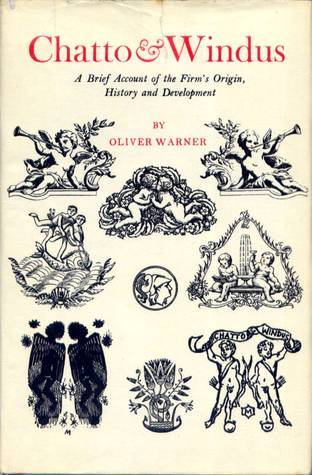
Chatto & Windus: A Brief Account of the Firm's Origin, History and Development
Chatto & Windus celebrated its centenary in 1955 with the publication of 'A Century of Writers, 1855-1955', an anthology of work published under the firm's imprint. Preceding the anthology there was a short history of the firm by Oliver Warner, who, as well as being a distinguished author, was Reader for Chatto & Windus for many years.
For this edition of his history, Mr Warner has enlarged and brought up to date the original material. His story will be of special interest to people professionally concerned with books, because Chatto & Windus has a long history and a remarkable degree of continuity of management.
For this edition of his history, Mr Warner has enlarged and brought up to date the original material. His story will be of special interest to people professionally concerned with books, because Chatto & Windus has a long history and a remarkable degree of continuity of management.
32 pages, Hardcover
First published January 1, 1973
About the author
Oliver Warner
83 books6 followersOliver Martin Wilson Warner was a well-known British naval historian and writer.
Warner was educated at Denstone College and Caius College, Cambridge. In 1926 he succeeded Frank Swinnerton as staff reader at the publishing house of Chatto and Windus. In addition to his work as staff reader he also worked on the company's advertising material. As a young man he made contributions to magazines such as The Spectator and Time and Tide, some of which were later reproduced in his 1947 book Captains and Kings. In 1939 he published an account of his visit to an "unworldly" relative in Canada, entitled Uncle Lawrence. During the Second World War he joined the Admiralty secretariat, initially serving in the Commission and Warrant (C.W.) branch[citation needed] before serving on the war artists advisory committee. He later served as secretary to the naval honours and awards committee.
After the war he became deputy director of publications of the British Council, where he remained until his retirement in 1963. he worked thereafter at Chatto and Windus for another year before concentrating on writing. By the time of his death he had more than twenty books in print. He married twice, first to Dorothea Blanchard who died in 1937, by whom he had one daughter. He was married secondly to Elizabeth Strahan, with whom he had one son and one daughter.
-Wikipedia
Warner was educated at Denstone College and Caius College, Cambridge. In 1926 he succeeded Frank Swinnerton as staff reader at the publishing house of Chatto and Windus. In addition to his work as staff reader he also worked on the company's advertising material. As a young man he made contributions to magazines such as The Spectator and Time and Tide, some of which were later reproduced in his 1947 book Captains and Kings. In 1939 he published an account of his visit to an "unworldly" relative in Canada, entitled Uncle Lawrence. During the Second World War he joined the Admiralty secretariat, initially serving in the Commission and Warrant (C.W.) branch[citation needed] before serving on the war artists advisory committee. He later served as secretary to the naval honours and awards committee.
After the war he became deputy director of publications of the British Council, where he remained until his retirement in 1963. he worked thereafter at Chatto and Windus for another year before concentrating on writing. By the time of his death he had more than twenty books in print. He married twice, first to Dorothea Blanchard who died in 1937, by whom he had one daughter. He was married secondly to Elizabeth Strahan, with whom he had one son and one daughter.
-Wikipedia
Ratings & Reviews
Friends & Following
Create a free account to discover what your friends think of this book!
Community Reviews
Displaying 1 - 2 of 2 reviews

August 5, 2013
Histories of publishing houses generally provide plenty of literary background and this one is no different as Charles Reade, Mark Twain, William Faulkner, A A Milne, Aldous Huxley and many other flit across the pages.
John Camden Hotten began the business, first as a bookseller and then as a bookseller and publisher, in London's Piccadilly in 1855. And by the end of the 1850s he had built up quite a clientele and was instrumental in many American authors, including such as Edgar Allan Poe and Walt Whitman, appearing in print in England.
The publication in 1866 of Algernon Charles Swinburne's 'Poems and Ballads' put the firm in the top rank of publishers and was regarded as the most important single event since the firm's foundation.
When Hotten died, Andrew Chatto brought the business from the widow for £25,000 and he was joined in partnership by W E Windus, who wrote narrative and lyric verses and had had his first book published by Hotten in 1871. Percy Spalding joined the business in 1876 and he put some spark into the firm, helping establish it not merely on a respectable basis but on an assured one.
Chatto's two sons followed him into the firm and when Andrew died in 1911 one of the sons took over. Other luminaries joined the firm and took it to the powerhouse publisher that it became and that this superb history celebrates.
John Camden Hotten began the business, first as a bookseller and then as a bookseller and publisher, in London's Piccadilly in 1855. And by the end of the 1850s he had built up quite a clientele and was instrumental in many American authors, including such as Edgar Allan Poe and Walt Whitman, appearing in print in England.
The publication in 1866 of Algernon Charles Swinburne's 'Poems and Ballads' put the firm in the top rank of publishers and was regarded as the most important single event since the firm's foundation.
When Hotten died, Andrew Chatto brought the business from the widow for £25,000 and he was joined in partnership by W E Windus, who wrote narrative and lyric verses and had had his first book published by Hotten in 1871. Percy Spalding joined the business in 1876 and he put some spark into the firm, helping establish it not merely on a respectable basis but on an assured one.
Chatto's two sons followed him into the firm and when Andrew died in 1911 one of the sons took over. Other luminaries joined the firm and took it to the powerhouse publisher that it became and that this superb history celebrates.
March 6, 2025
[Chatto & Windus] (1973). HB/DJ. 32 Pages. Purchased from Richard Dalby’s Library.
A short history which, for me, was lacking in anecdotes regarding the publisher’s large stable of interesting writers.
Unindexed.
A short history which, for me, was lacking in anecdotes regarding the publisher’s large stable of interesting writers.
Unindexed.
Displaying 1 - 2 of 2 reviews