

What do you think?

X-Men Epic Collection
X-Men Epic Collection, Vol. 3: The Sentinels Live
Professor X is dead! The X-Men have gone their separate ways. Searching to find a way to make its poorest-selling super heroes click, Marvel was trying anything and everything. With the title on the verge of cancellation, Roy Thomas and Neal Adams clicked, and the rest is history. Their epic evolution of the X-Men defines the team to this day. Adams' lavish and dynamic visuals and Thomas' challenging and contemporary stories combined in a book that throbbed with the pulse of the times. Their iconic stories collected here introduce Havok, the vampiric villain Sauron, the Mutates and X-Man-to-be Sunfire! Not to mention the Living Pharaoh, a classic Savage Land team-up with Ka-Zar, as well as the return of Magneto! COLLECTING: VOL. 3: X-MEN (1963) 46-66; MATERIAL FROM KA-ZAR (1970) 2-3, MARVEL TALES (1966) 30
512 pages, Paperback
First published November 13, 2018
About the author
Roy Thomas
4,603 books282 followersRoy Thomas was the FIRST Editor-in-Chief at Marvel--After Stan Lee stepped down from the position. Roy is a longtime comic book writer and editor. Thomas has written comics for Archie, Charlton, DC, Heroic Publishing, Marvel, and Topps over the years. Thomas currently edits the fanzine Alter Ego for Twomorrow's Publishing. He was Editor for Marvel comics from 1972-1974. He wrote for several titles at Marvel, such as Avengers, Thor, Invaders, Fantastic Four, X-Men, and notably Conan the Barbarian. Thomas is also known for his championing of Golden Age comic-book heroes — particularly the 1940s superhero team the Justice Society of America — and for lengthy writing stints on Marvel's X-Men and Avengers, and DC Comics' All-Star Squadron, among other titles.
Also a legendary creator. Creations include Wolverine, Carol Danvers, Ghost Rider, Vision, Iron Fist, Luke Cage, Valkyrie, Morbius, Doc Samson, and Ultron. Roy has also worked for Archie, Charlton, and DC among others over the years.
Also a legendary creator. Creations include Wolverine, Carol Danvers, Ghost Rider, Vision, Iron Fist, Luke Cage, Valkyrie, Morbius, Doc Samson, and Ultron. Roy has also worked for Archie, Charlton, and DC among others over the years.
Ratings & Reviews
Friends & Following
Create a free account to discover what your friends think of this book!
Community Reviews
Displaying 1 - 30 of 33 reviews

June 15, 2020
I read the comic books The X-Men #46-49, and then the renamed adjective-less X-Men #50-66 and Marvel Tales #30 collected in this volume. We get the debuts of sees debuts Havoc, Lorna Dane, Mesmero, Lorelei, Brainchild, Sauron, Larry Trask, Neo-Sentinels, Z'Nox, 'Erik The Red' etc. Also Professor X has died! But this period is about the best drawn and written X-Men to date with Roy Thomas writing and the thrilling run of Neal Adam's art from X-Men #58. Overall 7 out of 12, better rated than Stan Lee's run in opinion!
2014 read
2014 read
January 9, 2020
If Lee and Kirby birthed the X-Men (and if the thought of Iceman slip-sliding out of Stan’s uterus doesn’t give you pause, you’ve got issues, my friend), Roy Thomas and Neal Adams were the cool older kids who lived up the street and taught them how to not be dorks.
Look, I love Stan and Jack, and I can read Stan/Ditko Spidey for days. But, the X-Men, while conceptually delightful, was sputtering when Thomas and Adams took over. It’s not like the Thomas/Adams duo instantly spun the stuff of legends, but they did—wait for it—evolve the X-Men into something other than “beat up the bad guy of the month while cracking wise” by introducing more complex relationships, deeper storylines, and a greater focus on social issues. It’s not the gold standard for X-Men—for my money, that is, and likely always will be, Claremont and Byrne—but it enabled the gold standard to come into being.
So, a tip of the cap to Thomas and Adams for teaching the squeaky clean teens to smoke, question authority, and explode frogs in the mailbox of that guy at the end of the block who always glares at people for walking by his house.
Look, I love Stan and Jack, and I can read Stan/Ditko Spidey for days. But, the X-Men, while conceptually delightful, was sputtering when Thomas and Adams took over. It’s not like the Thomas/Adams duo instantly spun the stuff of legends, but they did—wait for it—evolve the X-Men into something other than “beat up the bad guy of the month while cracking wise” by introducing more complex relationships, deeper storylines, and a greater focus on social issues. It’s not the gold standard for X-Men—for my money, that is, and likely always will be, Claremont and Byrne—but it enabled the gold standard to come into being.
So, a tip of the cap to Thomas and Adams for teaching the squeaky clean teens to smoke, question authority, and explode frogs in the mailbox of that guy at the end of the block who always glares at people for walking by his house.

May 13, 2019
Roy Thomas & Neal Adams grabbed old-school X-Men by the nuts. You can definitely feel the paradigm shift; it was cool to watch the "let's battle Magneto while he yells at incompetent underlings!" style** stretching & metamorphosing to a hipper, hoopy adventure with pertinent, albeit comic-style, messages about forgiveness, grief, & generational misunderstandings -- but still mixed with plain ol' asskicking fun & goofy monsters. (And while Magneto does reappear, thankfully he too is somewhat altered, shifting into the suaver, more slyly malevolent arch-nemesis we know today.)
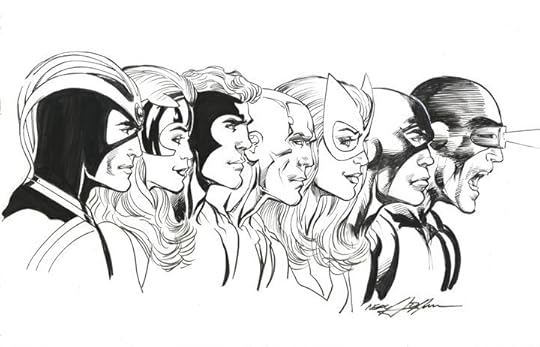
As for Neal Adams' artwork, that speaks for itself. It's definitely of its time, often reminding me of retro Fillmore posters -- but that's a compliment, because I love Fillmore graphics. (Flying Eyeball, anyone?) In our modern world of overdone CGI, his hand-crafted style is fresh & appealing, detailed with Hitchcockian diagonals & a great sense of flow. I can't claim any significant knowledge re: the history of comic book art, but I do know what I like to look at. And IMO, anyone who can draw a half-pteranodon, half-human supervillain -- & then get the reader to take him seriously in a multi-issue story arc -- is blessed with epic talent.
Also: Ka-Zar. He's an ultimate badass. *fangirl scream*
The second half of this collection was great; the first, not so much. But if you can't LOL at those god-awful Computo or Blastaar issues, why are you even reading comic books? :P
**I'm not knocking the Kirby era...but those villain-of-the-month stories are really difficult to keep interesting. They desperately needed a fresh hand at the helm, & Thomas/Adams provided it.
As for Neal Adams' artwork, that speaks for itself. It's definitely of its time, often reminding me of retro Fillmore posters -- but that's a compliment, because I love Fillmore graphics. (Flying Eyeball, anyone?) In our modern world of overdone CGI, his hand-crafted style is fresh & appealing, detailed with Hitchcockian diagonals & a great sense of flow. I can't claim any significant knowledge re: the history of comic book art, but I do know what I like to look at. And IMO, anyone who can draw a half-pteranodon, half-human supervillain -- & then get the reader to take him seriously in a multi-issue story arc -- is blessed with epic talent.
Also: Ka-Zar. He's an ultimate badass. *fangirl scream*
The second half of this collection was great; the first, not so much. But if you can't LOL at those god-awful Computo or Blastaar issues, why are you even reading comic books? :P
**I'm not knocking the Kirby era...but those villain-of-the-month stories are really difficult to keep interesting. They desperately needed a fresh hand at the helm, & Thomas/Adams provided it.

May 31, 2022
The late Neal Adams' style - wild angles and compositions, matched with more detailed, realistic anatomy - defined the Bronze Age, and it's all here right away in the half-dozen X-Men issues he did with inker Tom Palmer. There's more than a little pulp and fantasy art influence in Adams' work, and it's no surprise that his best-remembered work on the X-Men involves were-pterodactyl Sauron and the ragtag collection of mutated barbarians Magneto throws together in the Savage Land. Cometh the decade, cometh the men: the 1970s would be full of pulp- and horror-styled comics and Adams and his many imitators would work on a fair few of them.
Before Adams shows up there's a couple of issues with the previous Hot Artist, Jim Steranko. It's an interesting contrast. Steranko's layouts are extraordinary, his use of shadows and silhouettes radical, and his vision of Mesmero's "City Of Mutants" as startling as anything from his better known work. But his figures are stiffer than Adams' and he's still building on Jack Kirby's Marvel style rather than making the more dramatic break Adams represents. Still, the collection's worth a read purely on the basis of those two artists' contributions.
Received wisdom has it that Adams' tenure as X-Men artist and Roy Thomas' as writer sparked a renaissance that came sadly too late to save a declining comic. It feels half true. If X-Men had been cancelled a few issues before Adams showed up I doubt anyone would have cared much about reviving it, but Roy Thomas' stories are just as random and directionless as Arnold Drake's were immediately before, they just feel like they've got momentum because Adams has grabbed the comic by the scruff of its neck.
Indeed, the first few issues here have the most coherent direction of all - Professor X has been killed off and the team have essentially graduated, so what we're getting is young adult heroes negotiating a late 60s boho lifestyle. Drake's scripting is so flowery it's hard not to think he was taking the piss out of Marvel's house style, but there are interesting ideas here - the kids getting jobs, living lives, hanging out at the Beatnik-A-Go-Go... but those ideas are married to woefully creaky superhero action, and it's impossible not to feel some relief when a threatened meeting with METOXO THE LAVA MAN never materialises. Instead editorial mandate pulls the team back together, Drake seems obviously bored, and the book reaches the nadir of the barely comprehensible Living Pharaoh storyline.
Roy Thomas replaces Drake and initially things improve, especially when Adams arrives: his straining-sinews art is a good fit at first with Thomas' frothing melodrama. But it doesn't take long before I was wishing Roy would just STFU for a bit, as all his characters rant, howl, and beat their sometimes metaphorical chests (except the women, who have a big dose of Mighty Marvel Self-Doubt). He reverses Professor X's death just in time to re-establish the old status quo as the comic gets cancelled. Deservedly, I have to say, despite the artistic fireworks.
And yet it's true to say that when Wein, Claremont, Cockrum et al bring X-Men back it's the Thomas/Adams run that's the obvious template: rolling storylines, anti-mutant prejudice and lorryloads of angst and strife. Claremont is just vastly more imaginative, ambitious and skilful at executing it than Thomas was, and as soon as he gets his own Adams the comic catches fire in a way this run honestly never managed.
Before Adams shows up there's a couple of issues with the previous Hot Artist, Jim Steranko. It's an interesting contrast. Steranko's layouts are extraordinary, his use of shadows and silhouettes radical, and his vision of Mesmero's "City Of Mutants" as startling as anything from his better known work. But his figures are stiffer than Adams' and he's still building on Jack Kirby's Marvel style rather than making the more dramatic break Adams represents. Still, the collection's worth a read purely on the basis of those two artists' contributions.
Received wisdom has it that Adams' tenure as X-Men artist and Roy Thomas' as writer sparked a renaissance that came sadly too late to save a declining comic. It feels half true. If X-Men had been cancelled a few issues before Adams showed up I doubt anyone would have cared much about reviving it, but Roy Thomas' stories are just as random and directionless as Arnold Drake's were immediately before, they just feel like they've got momentum because Adams has grabbed the comic by the scruff of its neck.
Indeed, the first few issues here have the most coherent direction of all - Professor X has been killed off and the team have essentially graduated, so what we're getting is young adult heroes negotiating a late 60s boho lifestyle. Drake's scripting is so flowery it's hard not to think he was taking the piss out of Marvel's house style, but there are interesting ideas here - the kids getting jobs, living lives, hanging out at the Beatnik-A-Go-Go... but those ideas are married to woefully creaky superhero action, and it's impossible not to feel some relief when a threatened meeting with METOXO THE LAVA MAN never materialises. Instead editorial mandate pulls the team back together, Drake seems obviously bored, and the book reaches the nadir of the barely comprehensible Living Pharaoh storyline.
Roy Thomas replaces Drake and initially things improve, especially when Adams arrives: his straining-sinews art is a good fit at first with Thomas' frothing melodrama. But it doesn't take long before I was wishing Roy would just STFU for a bit, as all his characters rant, howl, and beat their sometimes metaphorical chests (except the women, who have a big dose of Mighty Marvel Self-Doubt). He reverses Professor X's death just in time to re-establish the old status quo as the comic gets cancelled. Deservedly, I have to say, despite the artistic fireworks.
And yet it's true to say that when Wein, Claremont, Cockrum et al bring X-Men back it's the Thomas/Adams run that's the obvious template: rolling storylines, anti-mutant prejudice and lorryloads of angst and strife. Claremont is just vastly more imaginative, ambitious and skilful at executing it than Thomas was, and as soon as he gets his own Adams the comic catches fire in a way this run honestly never managed.

August 26, 2026
Well still silly at times and as simple as it gets plot to pass the time, but amazing art, and on the plus side this is where the stories start to get more interesting and more complex.
Great stories in here include the sentinels (of course) and the one with Magneto on Savage Land, an all-time favorite, ending it all with the return of Professor X from the grave.
Don't forget to read X-Men: The Hidden Years after this one, before going onto the next epic volume.
Great stories in here include the sentinels (of course) and the one with Magneto on Savage Land, an all-time favorite, ending it all with the return of Professor X from the grave.
Don't forget to read X-Men: The Hidden Years after this one, before going onto the next epic volume.

August 9, 2019
This collects Uncanny X-Men 46-66, plus three 10 pp. Angel solo stories written by Superman co-creator Jerry Siegel (although he is credited as Jerry Siegal).
I had the Neal Adams issues in a separate collection, but was determined to get them again here, along with two issues drawn by Jim Steranko, and the infamously unpropitious debut of Barry Smith:
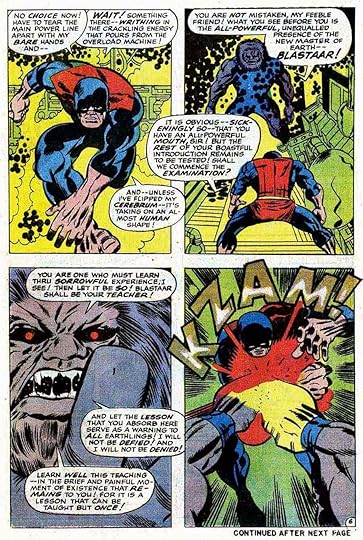
Can I confess to never getting issue 64 (drawn by Don Heck) and issue 66 (drawn by Sal Buscema)?
Reading them again now, I can see the strain on Neal Adams in his later issues. It is really only 56-61 which shine.
I had the Neal Adams issues in a separate collection, but was determined to get them again here, along with two issues drawn by Jim Steranko, and the infamously unpropitious debut of Barry Smith:
Can I confess to never getting issue 64 (drawn by Don Heck) and issue 66 (drawn by Sal Buscema)?
Reading them again now, I can see the strain on Neal Adams in his later issues. It is really only 56-61 which shine.

August 4, 2025
3.5
I love when they call me pussycat🥰
I love when they call me pussycat🥰
May 18, 2022
Things one learns from this volume:
1. Early Barry (Windsor) Smith was too early.
2. Early Neal Adams was right on time.
3. Tom Palmer’s inks make everyone look good.
4. Roy Thomas overwrites everything.
5. Alliteration in action scenes? Not natural, nabobs.
6. Beast’s loquaciousness only over-proves Thomas’ proclivity for preciousness.
7. Arnold Drake was a terrible writer.
8. Do Alex and Scott Summers always have to call each other “brother mine”? Where does that even come from?
9. Professor X never dies for real.
10. Ditto Magneto.
11. Steranko so stiff.
1. Early Barry (Windsor) Smith was too early.
2. Early Neal Adams was right on time.
3. Tom Palmer’s inks make everyone look good.
4. Roy Thomas overwrites everything.
5. Alliteration in action scenes? Not natural, nabobs.
6. Beast’s loquaciousness only over-proves Thomas’ proclivity for preciousness.
7. Arnold Drake was a terrible writer.
8. Do Alex and Scott Summers always have to call each other “brother mine”? Where does that even come from?
9. Professor X never dies for real.
10. Ditto Magneto.
11. Steranko so stiff.
This entire review has been hidden because of spoilers.
August 7, 2022
On the verge of cancellation Roy Thomas and Neal Adams create one of my favorite X-men run. From Neal Adams' realistic art to Roy Thomas' incredolous stories changes the tone of X-men up to this day.
Also included in this collection is Jim Steranko's dynamic art that make this so satisfying.
Also included in this collection is Jim Steranko's dynamic art that make this so satisfying.
August 22, 2024
Reading Neal Adams in context like this really makes me understand why people thought he was the greatest to ever do it. One of the most intense tonal shifts in an art team I've seen
January 6, 2025
Glad to have completed the milestone that is reading all the original 60’s era x-men. I felt of the three volumes released during that time, this was by far the easiest to read and laid the foundations of future titles.

February 19, 2021
Collects X-Men #46-66 (July 1968 - March 1970), some solo Angel stories from Ka-Zar #2-3 (December 1970 - March 1971) and Marvel Tales #30 (April 1971) and some supplemental material.
This is it....the end of the original X-Men run, before it languished in reprints for nearly 5 years. The first half still feels very much in the Silver Age and is marred by some uneven story telling. The primary stories are good, but every issue contained short origin stories tacked on to the end that just don't quite work as well. The latter half gets much, much better. Really feels like it's lifting off into the Bronze Age with some longer form stories and better artwork (especially the covers). Unfortunately, the collection tacks on some random solo Angel stories that don't look as good or work quite as well and were just supplements to other comics round the same time.
When you see just how good the comic was getting towards the end of its initial run, it makes it doubly sad that it was dropped, just as it was getting good. The last half of this collection is every bit as good as the first couple years of Claremont's run and sometimes even better. But, the almighty dollar won and the comic was pretty much shelved (in reprints) for a long time after this.
This is it....the end of the original X-Men run, before it languished in reprints for nearly 5 years. The first half still feels very much in the Silver Age and is marred by some uneven story telling. The primary stories are good, but every issue contained short origin stories tacked on to the end that just don't quite work as well. The latter half gets much, much better. Really feels like it's lifting off into the Bronze Age with some longer form stories and better artwork (especially the covers). Unfortunately, the collection tacks on some random solo Angel stories that don't look as good or work quite as well and were just supplements to other comics round the same time.
When you see just how good the comic was getting towards the end of its initial run, it makes it doubly sad that it was dropped, just as it was getting good. The last half of this collection is every bit as good as the first couple years of Claremont's run and sometimes even better. But, the almighty dollar won and the comic was pretty much shelved (in reprints) for a long time after this.

February 4, 2023
I enjoyed this more and less than I thought I would.
First - it should almost go without saying but any X-Men fan needs to read the Roy Thomas/Neal Adams stories in this collection because they are The Best. When you see Neal's art and then you see the rest of the art in the collection you wonder how they can be part of the same industry. Neal is so far ahead of every other artist at the time. I really love these issues and they should be read by any comic fan. Okay the stories aren't always the best (Roy Thomas is a weak writer) but Neal elevates them.
Which leads me to Sterenko's art. He only did three issues and once again I scratch my head as to why he is considered such a genius. His story plotting is horrid, and aside from his double pages or "title in the landscape" he is not a very competent artist. Sure I loved his run on Nick Fury agent of S.H.I.E.L.D. but you see him already starting to repeat his tricks here to lesser effect because his heart really isn't into super heroes (versus James Bond and Nick Fury type stories). These issues introduce the character of Lorne Dane who has magnetic powers like Magneto so when Magneto lies and says she is his daughter she obeys him and becomes his right hand woman. Which is such a stupid idea. She keeps thinking "I don't want to be evil but since this guy I just met says he is my father - what choice do I have?". Talk about a one dimensional character. As soon as she finds out she isn't his daughter "oh good, I can fight him now". Can you imagine a real person acting like that? "This guy just told me I am his son and he wants me to rob a bank with him - what choice do I have - I share half his genes."
We also have one issue drawn by Barry Smith - later known as the genius Barry Windsor Smith of Conan and Wolverine fame. And most recently Monsters (which everyone but me loved). He would eventually become an amazing artist but in the issue he draws here - you would neve rgusss that. It stinks. Even the X-Men don't look like themselves he draws them so poorly.
I will end with the first stories in the collection, scripted by Arnold Drake and drawn by Werner Roth. While I surprisingly hated Sterenko's issues I really enjoyed Werner's issues (and the many back up stories he wrote of the X-Men's origins). I read many fans dismissing his stories but I really loved how he drew the characters and I felt when he was on the issues the X-Men acted in a way that was more tender and more like family and less like the "losing their cool" gang you see with Roy Thomas and Arnold Drake. Iceman, especially, is unrecognizable in his insane jealously later on.
Overall - a fun collection with more hits than misses. But it reaffirms my belief that Sterenko is/was overrated. and my certainty that Neal Adams was a genius.
First - it should almost go without saying but any X-Men fan needs to read the Roy Thomas/Neal Adams stories in this collection because they are The Best. When you see Neal's art and then you see the rest of the art in the collection you wonder how they can be part of the same industry. Neal is so far ahead of every other artist at the time. I really love these issues and they should be read by any comic fan. Okay the stories aren't always the best (Roy Thomas is a weak writer) but Neal elevates them.
Which leads me to Sterenko's art. He only did three issues and once again I scratch my head as to why he is considered such a genius. His story plotting is horrid, and aside from his double pages or "title in the landscape" he is not a very competent artist. Sure I loved his run on Nick Fury agent of S.H.I.E.L.D. but you see him already starting to repeat his tricks here to lesser effect because his heart really isn't into super heroes (versus James Bond and Nick Fury type stories). These issues introduce the character of Lorne Dane who has magnetic powers like Magneto so when Magneto lies and says she is his daughter she obeys him and becomes his right hand woman. Which is such a stupid idea. She keeps thinking "I don't want to be evil but since this guy I just met says he is my father - what choice do I have?". Talk about a one dimensional character. As soon as she finds out she isn't his daughter "oh good, I can fight him now". Can you imagine a real person acting like that? "This guy just told me I am his son and he wants me to rob a bank with him - what choice do I have - I share half his genes."
We also have one issue drawn by Barry Smith - later known as the genius Barry Windsor Smith of Conan and Wolverine fame. And most recently Monsters (which everyone but me loved). He would eventually become an amazing artist but in the issue he draws here - you would neve rgusss that. It stinks. Even the X-Men don't look like themselves he draws them so poorly.
I will end with the first stories in the collection, scripted by Arnold Drake and drawn by Werner Roth. While I surprisingly hated Sterenko's issues I really enjoyed Werner's issues (and the many back up stories he wrote of the X-Men's origins). I read many fans dismissing his stories but I really loved how he drew the characters and I felt when he was on the issues the X-Men acted in a way that was more tender and more like family and less like the "losing their cool" gang you see with Roy Thomas and Arnold Drake. Iceman, especially, is unrecognizable in his insane jealously later on.
Overall - a fun collection with more hits than misses. But it reaffirms my belief that Sterenko is/was overrated. and my certainty that Neal Adams was a genius.

March 19, 2026
I read the Roy Thomas-Neal Adams issues in the back half of this about 4 yrs back & liked them, but they didn't strike me as strongly then. Now, I'm reading this after reading the 1st 2 X-Men epics, & that 2nd X-Men epic is mostly awful despite some interesting Kirby imitation from Werner Roth.
Here, Arnold Drake does more interesting work in the front half (although not nearly as good as his work on Doom Patrol & Deadman across the st) & Thomas comes back on this book in the back half a much better & restrained writer having shed some of his obsession w/ overwriting & lame villains. However, the real story is the art, which includes 2 issues from Jim Steranko, a fill-in from Barry Windsor-Smith, & 9 from Adams, which lends the book a needed charge. The Windsor-Smith work is not great, but it is a fascinating Kirby imitation, more thorough yet less accomplished than Roth's Kirby imitations. Steranko & Adams are not at their full powers yet either, but they are much more accomplished at this stage than Windsor-Smith is, & Steranko & Adams bring this book a dynamism it lacked even under Kirby (although I have to give Kirby's flair for creating characters on this book more credit than Steranko's or Adams's).
Other reviewers point out that the early Claremont & Cockrum & Claremont & Byrne runs on New X-Men revive the energy & formula of Thomas & Adams X-Men although, as those reviewers say, the 'mont & his collaborators improve the Thomas & Adams original. Still, great fun in mutant comics especially if you suffer through the 2nd X-Men Epic first.
Here, Arnold Drake does more interesting work in the front half (although not nearly as good as his work on Doom Patrol & Deadman across the st) & Thomas comes back on this book in the back half a much better & restrained writer having shed some of his obsession w/ overwriting & lame villains. However, the real story is the art, which includes 2 issues from Jim Steranko, a fill-in from Barry Windsor-Smith, & 9 from Adams, which lends the book a needed charge. The Windsor-Smith work is not great, but it is a fascinating Kirby imitation, more thorough yet less accomplished than Roth's Kirby imitations. Steranko & Adams are not at their full powers yet either, but they are much more accomplished at this stage than Windsor-Smith is, & Steranko & Adams bring this book a dynamism it lacked even under Kirby (although I have to give Kirby's flair for creating characters on this book more credit than Steranko's or Adams's).
Other reviewers point out that the early Claremont & Cockrum & Claremont & Byrne runs on New X-Men revive the energy & formula of Thomas & Adams X-Men although, as those reviewers say, the 'mont & his collaborators improve the Thomas & Adams original. Still, great fun in mutant comics especially if you suffer through the 2nd X-Men Epic first.

January 1, 2026
After 2 very lack-luster epic collections of X-Men this one finally hits. I do like the Arnold Drake stories better than the Roy Thomas ones (who has a tendency to overwrite). The 3 Jim Steranko issues look terrific. Surprisingly, the Barry Windsor-Smith one has awful art. It must have been one of his first comics. But where this book really takes off is when Neal Adams comes in at the end. The artwork is light years ahead of anything else at the time. It's so full of life. Having Tom Palmer ink it certainly doesn't hurt. I wonder if Neal Adams helped with the plotting as well. These issues are so less verbose than the other Roy Thomas penned issues. (BTW, I'm growing to dislike Roy Thomas more and more, the more of his work I go back and reread.) Polaris and Havok come into the book and all of the Living Monolith stuff happens. It all looks so freaking good. I really like the Sauron and Savage Land Mutates stuff as well.
Besides the end of the original X-Men run before it went into reprints is a 3 part Angel story written by Jerry Siegel. (Yeah, the creator of Superman!) Warren's dad is killed by a terribly written villain who is going to take over the world after getting a diamond. (Yeah, it's dumb.)
Besides the end of the original X-Men run before it went into reprints is a 3 part Angel story written by Jerry Siegel. (Yeah, the creator of Superman!) Warren's dad is killed by a terribly written villain who is going to take over the world after getting a diamond. (Yeah, it's dumb.)

March 6, 2024
"YOU!! YOU CAMEL-JOCKEYS DID THIS! IT'S YOUR FAULT HE'S GONE... YOU WHO DROVE HIM OFF!"
- Cyclops, upset at having lost the trail of his brother, and (Mr. Thomas) reminding the reader that the rules were a bit different in 1969.
X-Men Epic volume 2 was a miserable slog, and this was nearly as bad until a new creative team was introduced.
Roy Thomas picks up writing in issue #55. Neal Adams' art goes futuristic in issue #57. If these two hadn't taken over when they did, this title would've been retired, cremated, and had its ashes scattered in the porcelain sea. Instead, it was relegated to a lesser-death in re-runs until Claremont and Cockrum resurrected the team in 1975 (with John Byrne taking over art from '77 to '83) leading to the X-men Renaissance that remains as one of the most popular Marvel titles.
Neal Adams was seriously ahead of his time. He did stuff in the 60's that wasn't mainstream until the 80's. Roy Thomas' stories were fast-paced and engaging. The Thomas-Adams dynamic made some good reading.
Overall, half-slog/half-readable. Two-and-a-half stars.
- Cyclops, upset at having lost the trail of his brother, and (Mr. Thomas) reminding the reader that the rules were a bit different in 1969.
X-Men Epic volume 2 was a miserable slog, and this was nearly as bad until a new creative team was introduced.
Roy Thomas picks up writing in issue #55. Neal Adams' art goes futuristic in issue #57. If these two hadn't taken over when they did, this title would've been retired, cremated, and had its ashes scattered in the porcelain sea. Instead, it was relegated to a lesser-death in re-runs until Claremont and Cockrum resurrected the team in 1975 (with John Byrne taking over art from '77 to '83) leading to the X-men Renaissance that remains as one of the most popular Marvel titles.
Neal Adams was seriously ahead of his time. He did stuff in the 60's that wasn't mainstream until the 80's. Roy Thomas' stories were fast-paced and engaging. The Thomas-Adams dynamic made some good reading.
Overall, half-slog/half-readable. Two-and-a-half stars.

June 12, 2020
More X-Men origins, and Professor X is dead! The stories are getting better at this stage, possibly with the first appearance of Polaris in issue 49, and then we get what is possibly the best run in the series to date, featuring the return of The Sentinels and Magneto, the first trip to the Savage Land, some brand new X-Men joining the team, and a fight with The Hulk! What followed for the next six years was nothing but reprints, but then came Giant Size X-men issue one and the rest is history...

October 4, 2020
A definite improvement on volume two of the epics. Roy Thomas is evidently getting a bit more comfortable adding to the X-Men canon without as many of the damp squibs from the start of his run. Havok, Polaris and Sauron all make a great impact. Professor X's first faked death is quickly resolved before the cancellation of the series. It's a smoother and more memorable ride than the middle section of this run, but I can't wait to reach the start of Claremont's era.

January 19, 2022
I enjoyed the introduction of Havok and Polaris, but overall these were all still pretty weak. I just hate the writing, start to finish. The characters fight and freak out on each other as if they haven't been on a team for years together and need to trust each other with their lives. Bobby's weird ass possessiveness over Lorna was just so off-putting, and Scott suddenly got super sexist regarding Jean. And the plots make no sense either.
September 9, 2023
I gotta be honest this was gold until it wasn't. It is too bad it was canceled. Out of all of the original late 60s X-men this was the best. I thought Stan Lee's writting was painful to read. I found this to be a page turner. I like liked the Sentinels and Sauron. I am a big fan of Days of Futures Past. So I actually found the Sentinel story to be kinda scary to think about considering Cyclops suggests that you couldn't have mutants without humans.
Good sci-fi vibes all around here.
Good sci-fi vibes all around here.
July 26, 2024
This was a huge step up from the book before it, and also the best x men book so far. I really enjoyed the stories with the sentinels and sauron, and for the most part the other stories were enjoyable reads as well. The artwork was a huge improvement all throughout and overall this was a solid read.

September 8, 2026
X-Men 1968-1970. Volume 3.
Even less to like than Volume 2. The villains are still one dimensional and not very creative.
Highlights if you can call them that:
*The sentinels attack
*Cyclops brother makes an appearance… with powers
*X-Men vs the Hulk (the only remotely good thing about this volume
*What happened to Professor X (explaining what happened in volume 2)
Even less to like than Volume 2. The villains are still one dimensional and not very creative.
Highlights if you can call them that:
*The sentinels attack
*Cyclops brother makes an appearance… with powers
*X-Men vs the Hulk (the only remotely good thing about this volume
*What happened to Professor X (explaining what happened in volume 2)
August 20, 2021
It’s almost impossible to describe how much better this book got once Neal Adams showed up. And then it was canceled and turned into a reprints-only title for five years before coming back as maybe the most important title in Marvel’s history. What a weird ride.

October 3, 2023
This was well worth the hype that I’ve heard about Thomas and Adams’ run on X-Men. The art was so dynamic and such a shift from the clunky early 1960’s page layouts and dialogue. It’s honestly a shame this run didn’t last longer.

August 21, 2026
Much better than Lee’s run on the failing title the Neal Adams art redefined the characters as they threw everything at the wall to see what stuck before the first cancellation. Polaris and Havok are introduced in this. 1968-1970. 7/10

April 13, 2019
The stories covered in this volume are pretty inconsistent, but still a fun read.

November 11, 2020
The first third of this is atrocious. Luckily, the rest (with the exception of a trifle spotlighting Angel) is quite solid. Hell, it might be the first time this comic was actually good.

April 10, 2021
Mostly worth it for the Neal Adams run, but that's only a few issues.
Read
June 9, 20210

June 15, 2021
Neal Adams's art is incredible.
Displaying 1 - 30 of 33 reviews