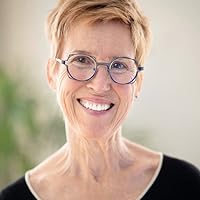
Krambambuli is a memoir of the author's childhood experiences during and subsequent to World War II. She documents three stages of displacement due to war: escaping destruction in Estonia, living as a refugee in Germany and Austria, and beginning a new life as an immigrant first in the United States, and later in Canada. Krambambuli is not meant to be a historical account. Rather, it offers a child's perspective of the situations and people making up her early existence: her handsome and charming father, Isa, who sweeps into her life at intervals but provides no financial support; her disciplinarian mother, Ema, an optimist and extremely competent survivor who uses her creativity to make even a small rudimentary space attractive and homey; the hated Onu Gusti; and the many others who pass through this transitory time dominated by war. The book is a moving account of child's experience in a camp for displaced persons and of growing up as a displaced child and daughter of a single mother in America. Totsu, the child, is terrorized by the war and the disruption and fears losing her mother's love to a male lover and the possibility of being displaced by a half-sibling. She endures multiple new school and language situations and the added angst that being a displaced person can add to the life of a teenager. With such different personalities, she and her mother live their lives in both conflict, and in the knowledge that they are all each other has.
In the spring of this year, I briefly met Syr at a wonderful local bookstore, LaHave River Books. We were gathered at a reading event and she purchased one of my memoirs and I made note to purchase her soon to be released memoir. This fall I was able to follow through on purchasing her book. And so glad that I did! I loved this book! It always held my interest. And even though it deals with unhappy times—her childhood experiences during and after World War II, it was never too dark or depressing for me. I learned about displacement and escaping destruction in Estonia. Life as a refugee in Germany and Austria at that time, and how her mother and she began a new life as an immigrant in the United States. Later Syr and her family would immigrate to Nova Scotia. The title of the book: Krambambuli comes from a seventeenth century German drinking song. I did an internet search and listened to the song. This book shows the resilience of the human spirit. And a great reminder about the difficulties faced by immigrants regarding language and cultural differences. On page 60 she writes… Is the hurt smaller when a person is little? It may be easier to forget when one is six, but the brain stores all experience for future reference. Though Syr and I lived worlds apart as children, I could relate to her in many ways. I also cut images of people from catalogs and magazines, creating paper dolls, I also overheard stories not meant for “little ears”. I came from a houseful of many, lots of kids uprooted, relocated, learning to live in a family that wasn’t theirs. I saw the hardships of others while growing up. I could understood Syr in that way. I did wonder while reading, why she called her father Isa, and her mother Ema, I thought it their first names, but at the end of the book, I learned that they are the Estonian names for father and mother. Maybe I would have liked that at the beginning, not really sure. It was nice learning it though, even if at the end. The saddest part of this book for me is that war still continues and that people still hurt each other in so many ways. Why can’t we all live in peace? Maybe it goes against human nature, I don’t know. Another similarity I share with Syr comes in the form of different viewpoints with our mothers. On page 202 she writes: True to my nature, I didn’t vocalize any of that. What I said was nothing, sitting mutely with my mouth open, letting the import of our polarity sink into my consciousness. I was talking people; she was talking politics. I also liked the part about when as an adult on a trip back to Estonia she learns the perspective of others, that others didn’t see those who escaped the horrible oppression and poverty of communist rule as the lucky ones, instead they felt sorry for those who became refugees, leaving all they had behind, going off into an unknown world. Those left behind feeling that at least they had a home. Syr struggled over the years with feeling that everybody thought her stupid. As a teen she felt awkward and clumsy, ashamed of being so fat and ugly and miserable. Paralyzed by shyness. She often sought solitude. She writes how it was easier to hide in the dark corner and chew her nails than expose yourself to ridicule. But she had a great internal strength. And for those who never saw it, the lines of a song came to mind while reading her book… “If they could see me now… all they could say is wow.” From what I know of Syr, she is an amazing woman, beautiful not only on the outside, but where it really counts—within. She’s earned herself an MA in English and an MS in Education. On page 147 she says I didn’t know how to be like them, my feet solidly stuck to the ground, dumb as a stone. I believe most of us some point in our life can relate to those kinds of feelings, of being the outsider. Reading this book allows the reader to stand in someone else’s shoes. See the world from their vantage point. To hopefully be more accepting of the struggles others face. I thank you Syr for the telling of her story. And I’m so happy that little girl grew up to become such an amazing woman.
This is the book I chose for the 52bookclub reading challenge and fit it under the prompt "a 5-star read." I also used this book for the Indigo reading challenge under the prompt "A non-fiction book by a Canadian author." I don't want to say too much to give the story away, and perhaps fail to do it justice. This is a memoir that is so very interesting, educational, personal. The author (with whom I am privileged to be acquainted) was born in Estonia, her life being deeply affected by WWII. She, with her mother, became displaced persons who lived in three different countries while trying to find a safe place to make their home. As immigrants they found passage to the US on a ship they hoped would not be bombed along the way. The story is told through the memories of the author's childhood when she was a little girl full of fears and feelings of inadequacy and loneliness. (Her father was more absent than present in her life.) She tells about her life later in North America and her difficult relationship with her mother during her life in the US and after she immigrated to Canada. It made me wonder and marvel at the lovely woman that little girl became, overcoming so much. She has authored several books and is an encouragement to other writers.
Beautifully written. It brought to light many realities of the DP experience that I'd previously only considered in a superficial way, including the many stages of displacement involved. Syr's perspective of how she handled the whole thing versus how her mother managed was particularly interesting, and I thought she did a good job of being objective, given the partisan nature of a mother-daughter relationship. I would have liked to better understand some leaps she made as an early teen and moving into adulthood and marriage. Apart from that I found it to be an engrossing read with some real jewels of language use, which is always a special pleasure.