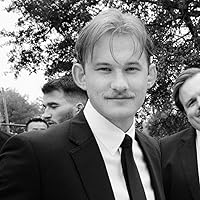
At 14, David Bennett came out to his parents. At 19, he encountered Jesus Christ. At that moment, his life changed forever.
As a young gay man, David Bennett saw Christianity as an enemy to freedom for LGBTQI people, and his early experiences with prejudice and homophobia led him to become a gay activist. But when Jesus came into his life in a highly unexpected way, he was led down a path he never would have predicted or imagined.
In A War of Loves, David recounts his dramatic story, from his early years exploring new age religions and French existentialism to his university experiences as an activist. Following supernatural encounters with God, he embarked on a journey not only of seeking to reconcile his faith and sexuality but also of discovering the higher call of Jesus Christ.
A War of Loves investigates what the Bible teaches about sexuality and demonstrates the profligate, unqualified grace of God for all people. David describes the joy and intimacy he found in following Jesus Christ and how love has taken on a radically new and far richer meaning for him.
Librarian Note: There is more than one author by this name in the Goodreads database.
David comes from Sydney, Australia where he studied journalism and then international relations. He moved to Oxford to pursue his studies in theology and train as an apologist from a skeptical, atheist background as an anti-Christian gay activist. David now holds undergraduate and postgraduate degrees in theology from Oxford, a master’s degree in theology from the University of St Andrews, Scotland, and is now completing his doctorate (DPhil) in theology at Oxford. He specialises in the relationship between queer theory, asceticism and contemporary Anglican theology, especially ethics, and the role of desire in knowing God. He’s in the process of discerning a call to ordination.
David is an author, passionate communicator and budding scholar who speaks and writes on a wide range of topics including theology, desire, beauty, ethics, and sexuality. He is frequently asked to appear and speak internationally in a variety of settings including churches, academic conferences, national radio and TV including VICE Australia, and on BBC platforms such as the BBC One Documentary, Young, Gay, Christian. As a celibate Christian, he is seeking to be a fresh voice on the topics of love, desire, and sexuality in order to show how people can live and flourish through Christ’s teaching. David has recently published his first book, A War of Loves: The Unexpected Story of a Gay Activist Discovering Jesus (Zondervan, 2018). It describes his own story from atheistic gay activism to becoming a follower of Jesus, in which he advocates for a positive moral vision of biblical sexuality and discipleship. His other interests include French, Latin, church history and patristics, writing, travel, cooking, reading books, and living in Christian community.
Twenty-nine year old David Bennett, an Australian living in the UK, has just released his first book, “A War of Loves” (Zondervan, 2018). Bennett self-identifies as a gay celibate Christian.
Bennett states, “Identifying with others in the LGBTQI world can open up doors to engage people who need to hear about Christ.” (p. 215) So, in some conservative environments, for Bennett to own his identity as gay, is a bold move.
Bennett wrote the book “to share how God's love has impacted my life. Rather than attempt to answer every question about homosexuality, I hope to provide in this book’s page a clear picture of how I was reconciled to God. The gay and Christian communities are often seen as polar opposites: one a progressive, inclusive community, the other a community of oppressive, archaic laws. Having stood on both sides, I know the reality is far more complex.” (p. 17)
Commendably, Bennett adds, “I remember those who have deeply struggled or even committed suicide because they felt unable to reconcile their faith and sexuality. I stand too with my same-sex attracted or gay Christian brothers and sisters who are living faithfully before Christ.” (p. 19) Sadly, many in the Christian community refuse to see the link between theology and destructionion the LGBTQ community, nor will they attest to the presence of committed LGBTQ Christians who are living faithfully before God.
In the first eight chapters, Bennett tells his coming out story at age 14, and conversion to Christianity story at 19. Though the subtitle of the book is: “The Unexpected Story of a Gay Activist Discovering Jesus,” I am not quite sure how much history a person can accrue as a “gay activist” and one who “was heavily involved in the gay rights movement” (p. 214) in one or two short years. Many reviews accentuate the “gay activist to celibate Christian” angle. We Christians love those bad to good stories, even when a bit of exaggeration is imbued.
Understandably, when Bennett becomes a Christian, he begins to look at what the Bible says about homsexuality. He concludes: “Scripture is clear that homosexual acts are sinful. (p. 210) He addresses his theological beliefs in an appendix at the books’ end, asking “So what did I discover the Bible really says about homosexuality?” (p. 239) Referring to Romans 1, Bennett calls it “Paul's famous text on homosexuality.” (p. 225)
I need to step back here a bit to lay some historical groundwork about when and how the word “homosexual” got into the Bible for the first time, and eventually, in Romans 1.
Christian theology about sexuality in general, and with respect to gay people in particular is quite a new concept. Christians had widely avoided discussing sexuality at all until the 1970s. And there was certainly no theology about homosexuality coming from the conservative church during that time.
Further, did you realize the first usage of the word “homosexual” in the Bible was in the Revised Standard Version in 1946 where it appeared in 1 Cor. 6: 9-10? Before the RSV was published, throughout history that Corinthians text had been interpreted and understood as a situation in which a socially more powerful and/or older man imposed exploitative, abusive penetrative sex on a boy, or on a subservient person.
During the RSV translation process of Corinthians in the 1930s and early 1940s, the team decided to join two Greek words—malakoi and arsenokoitai—into one word “homosexual” for ease in understanding. The team had been tasked to update the language of the popular King James, the ASV, and the ESV to more modern English. For the most part, until then, the two Greek words had been a variation on “effeminate” (one who takes the sexual penetrated role of a woman) and “sodomite” (one who penetrates another person, typically with excessive lust and with no intent to procreate). Even in the 1930s, the word “homosexual” carried a different meaning and implication than it does today. Then, homosexuality was wrongly considered a mental illness; not a moral issue, but a pathological one.
It’s even more obvious that the word homosexual as we understand it today (one who is emotionally, romantically, and sexually attracted to the same sex) is a poor conjoining and translation of two words that throughout history had referred to exploitative sex.
The placement of the word “homosexual” in Corinthians went relatively unnoticed for the next 30 years. Historical denominational journals, pastoral counseling magazines, and Christian books reflect this. There was simply no discussion taking places that connected morality and sin to homosexuality using 1 Corinthians. (This is all part of the historical work I am now doing.)
Then in the 1971 The Living Bible paraphrase, the words “homosexual/homosexuality” were introduced in six more places in the Bible for the first time (Leviticus twice, Deuteronomy, 1 Kings, Romans (inferred) and 1 Timothy). Surprising, isn’t it? Still, there was no theology created around homosexuality. The Christian church was not in the fix-the-gays business. The translation notes on this Bible indicate the translations, just as had happened in the RSV, were cultural decisions, not theological ones.
So, this “famous” passage that Paul wrote on homosexuality, has only been famously about homosexuality since 1971.
Back to Bennett’s theology. “For non-Jews, such as those addressed by Paul, it (same-sex relationships) was an obvious issue since every possible kind of sexual expression was well-known in cities like Corinth and Rome, (there is a popular belief just now that the ancients didn't know about lifelong same-sex relationships, but this is easily refuted by the evidence both literary and archaeological.)” (p. 243) “While there is a general understanding of homosexual acts in the broader Greco-Roman literature of the time as predominantly virile or explicated expressions of power over another, many counterexamples of loving gay romances and gay love poetry that would echo and resemble a gay marriage also existed, including the Greek traditions of writing on homoerotic love.” (p. 244) No, no, no!
Every example of same-sex sex in ancient cultures and literature had at its center a profound age and/or power differential. Paul was NOT referring to LGBTQ relationships as we know them today. The history of the understanding of the progression of human sexuality when it comes to heterosexuality and homosexuality is a fascinating one, and the story of it only began at the end of the 19th century. What Paul witnessed and wrote about was a combination of abusive, excessive and lustful sex where one male penetrated another male who took the submissive sexual role of a female, or the feminine position.
Why are some people homosexual and others heterosexual? Even medical and psychological experts don’t know why yet, but they do agree that human sexuality exists naturally along a spectrum from heterosexuality to homosexuality. Bennett however goes to the Bible for the explanation, “Same-sex desire, like other desires that find root in The Fall, is part of the reality of the broken creation. Same-sex practice was understood by Paul implicitly as a normal part of fallen humanity. (p. 243) And, “Same-sex erotic desires are part of our fallen humanity. They are similar to broken heterosexual desires in that there and can never be righteously expressed in the covenant of marriage.” (p. 250) “We have all been impacted by the Fall.” (p. 212)
The Fall and Genesis are frequently cited by conservatives as substantiation to maintain strict gender binaries in marriage. These same binaries are often used to stigmatized transgender people. Why are there LGBTQ people?—“because of fallen humanity, and The Fall.”
I object to this non-scientific assumption. First, there is no list of “things” that are a result of The Fall. What we cannot explain with the Bible is “because of The Fall.” I don’t use Genesis or the Bible as a science book, or as a template dictating a limited heteronormative binary of human sexuality, and still, I am a Christian, one who refuses to abuse Scripture and use unsubstantiated interpretations created by others to marginalize groups of people that are not like me.
To be a faithful Jesus-following Christian, it seems, we are forced to choose between two alternatives -- either choose faith and literal reading of the Bible in intellectual exile, or be intellectually curious and honest and abandon your faith. I choose the middle ground. Incorporating Scripture and science does not diminish my respect for and submission to God’s authority. I can both value the creation story as a different style and intention in writing than say, the New Testament letters and gospels.
I remain safe from a threatened slippery slope toward unbelief in Jesus while using my intellect alongside the Genesis 1 texts to establish a more realistic yet still God-honoring view of human sexuality that also is reflective of what I witness in the lives of LGBTQ people before me and cognizant of the history of the progression of understanding human sexuality.
After his conversion experience at age 19, Bennett wondered if, as a gay man, same-sex marriage might be available to him in the future and asks, “ Could I live out my Christianity as a partner in a gay, sexually active marriage, or was that in conflict with my newfound faith?” (p. 87) Because I know hundreds of married same-sex Christian couples, I actually screamed out “Yes!” as I was reading the book. But, this is not what the author concludes for himself.
At one point, Bennett discusses the idea that the church has made “marriage a romantic idolatry.” (p. 133) I am seeing this line of thinking pop up more frequently lately in the gay celibate/same-sex attracted celibate niche. By yanking the desire for marriage down just a smidge, the distance between the loneliness of being single and marriage decreases. It is just a pattern I am noticing.
Let’s let the LGBTQ Christian community think marriage is not all that wonderful so they won’t miss it so much. And then, let’s tell them this time of celibacy is their shining moment to use all that spare time to serve God and His people. Do you really imagine this is a Balm of Gilead to lonely, must-be-single-and-celibate LGBTQ Christians each day, night, holiday? Cheer up, “Compared with eternity, homosexuality is a momentary desire. It will soon pass away with God's new creation in Jesus Christ this goes with all other broken desires.” (p. 229) Yay!
Bennett shares his views on celibacy: “Celibacy is neither an easy gift nor repressive burden. It is an opportunity, not that different from marriage, to trust in God's capacity to provide for our needs for intimacy, forsaking all others.” (p. 166)
What might an LGBTQ same-sex married couple do if they become Christians and then find themselves living contrary to what many conservative Christians, including Bennett apparently, think God would have them do? Bennett writes, “For those in gay relationships or marriages who bravely repent of sexual sin, the solution is anything but simple. It takes time, and many answers are going to be messy. Gay couples often have children and become a family unit. What is their call? Easy answers break down very quickly without the Spirit's leading and discernment.” (p. 181) Several years ago, John Piper wrote an article responding the this situation. He wrote that the couple needed to walk slowly through a divorce and create a child sharing arrangement. That Bennett would even dip a tiny toe in those waters is horrifying.
Can you be gay and Christian? Yes, says Bennett. But the line he has drawn for himself and suggests for others is that one cannot be in a romantic/sexual relationship, and certainly not a same-sex marriage. These decisions took him time to resolve: “It took me three years before I was willing to submit to God's clear teaching in Scripture.” (p. 200) “By definition, this new identity cannot live the old way. We must repent and put away the old identity. In a gay person's case, the old identity is defined by same-sex desire. While celibacy and identifying as gay are in the some sense compatible, staying in a sexually active relationship cannot be compatible with fully embracing a Christian identity. God's Word reveals that we are called to die to our sinful nature and to pursue holiness, by the power of the spirit. (p. 181) Then adding a commonly overused used trope, “The opposite homosexuality is not heterosexuality. It is holiness.” (p. 213) I have often wondered what the opposite of heterosexuality is.
Obviously, there are other Christian perspectives which support same-sex marriage. Much has been written about the sacredness and Christian possibility for blessing and conducting same-sex marriages. I've written an extensive chapter in my own book. I would also challenge those who do not endorse Christian same-sex marriage to perhaps go to my blog (which I cannot link here) and read a series I wrote linked under “MARRIAGE.” I offer thoughtful and scriptural reasoning supporting same-sex marriage. Churches that do not allow same-sex marriages are missing out on what many of us know to be true. The witness, gifts, and richness that LGBTQ couples and their families bring to community and churches is apparent. You may well be missing out!
Another common recurring theme in gay celibate/same-sex attracted celibate Christian books is a suggestion of how the church is to “comfort” those on whom we/our interpretation of the Bible imposes mandatory celibacy and singleness. Bennett, in keeping with his peers, touches on it as well. Christian families should include the single/celibate people of the church within their own families in order to create a family for them. Bennett suggests the church return to the model depicted in the Book of Acts. (p. 231) “It means we Christians must open up our private lives and welcome others into a kind of spiritual families and intimate communities we see demonstrated in the Book of Acts in the early church.’ (p. 232) This is a quite altruistic view, and where is the biblical model for couples taking in the church celibate? My goodness, many of us struggle to love the stranger and the immigrant well, and that directive is in the Bible.
A few more things about the book that irritated me while reading. Dozens of times, Bennett writes an exact recounting of conversations with God, or the Holy Spirit. It comes off as somewhat manufactured.
Along the same lines, narcissism bugs me. Bennett’s mention of “Oxford” forty-four times in the book was excessive. But again, it does fill our need for the Cinderella stories we so crave—smart gay activist becomes Christian. It is a bit overdone.
I struggled between giving Bennett two or three stars. Compared to many books in this genre, Bennett is far more gracious and inclusive of LGBTQ Christians, than say, Christopher Yuan. I do however give great consideration in reviews as to how this book might be used against people. I wonder, would I want a young LGBTQ Christian who is struggling to figure out where they fit into the intersection of faith with sexual orientation and gender identity to read this book? No, I would not.
I do not think Bennett has done the harder work around the context and history of the same-sex verses in the Bible, even though he did go to Oxford. Unfortunately, I think he’s taken the easy route, which for me as a researcher, I find disappointing that a scholar would not do the work required. It has become very apparent to me, that when people dig in and do the hard work, they typically come out affirming.
Bennett recently mentioned that his book “can’t be weaponised for harm.” (Twitter, 11/22/18) Everyone gets to tell their personal stories and testimonies. However, when flawed theology is used as a “clear” foundation for one’s insights and given advice, the book will not be beneficial to the person that once again I am considering— that young LGBTQ Christian who is struggling to figure out where they fit into the intersection of faith with sexual orientation and gender identity.
Conservative leaders, parents of LGBTQ children, well-meaning friends WILL all “lovingly” hand this book to that same young LGBTQ Christian who is struggling to figure out where they fit into the intersection of faith with sexual orientation and gender identity. Bennett with his life of celibacy will be strongly suggested as the role model. And into a prison that young LGBTQ person will walk.
This book is not just a story. Christopher Yuan’s “Out of a Far Country” and Rosaria Butterfield’s “Secret Thoughts of an Unlikely Convert” are “just” their stories of conversation to Christianity and their “leaving homosexuality” narratives. Have those books been weaponized? Oh my goodness, yes, they have.
If Bennett is really serious about not wanting his book to have damaging effects, he needs to be intensely cautious over the next few years. He will be placed on stages and made to be the poster boy the church so desperately needs to continue its control over LGBTQ Christians. People will get hurt, discouraged, and yes, may even leave the faith because they cannot and do not believe in this version of restrictive, inaccurate theology any longer.
While I was reading this book, I kept thinking of my friend Liam Webb who lives in Newtown, near Sydney, Australia, where David lived at one time. I’ve walked those Newtown streets with Liam and sat over yummy meals having deeply spiritual conversations. Liam too came from a family with no religious base. But then, God got a hold of him. Liam leads Bible studies, is involved in worship and drama at his church, and knows the intricacies and context of the verses that have been used to enslave LGBTQ Christians. He is also about Bennett’s age, and he is single and celibate. But, he is waiting for the right partner and husband that God will bring him in time.
Liam is the person I would love to put up on stages in front of churches. I trust him. He knows the Bible very well. He is a lovely man. His messages and advice will not harm that young LGBTQ Christian who is struggling to figure out where they fit into the intersection of faith with sexual orientation and gender identity. He would love that person I care so deeply about to the Kingdom, and to freedom.
I wish two and a half stars were an optional rating; I would give it. Read this book if you want to hear Bennett’s story. But don’t read it for reliable theology or life-giving advice. Start with Justin Lee’s book “Torn” instead.
David Bennett's powerful memoir is one of the most gripping and convicting books I've read this year. As a single Christian woman in Christian communities that seem to value romance and marriage over holiness and union with God, so much of David's encouragement and wisdom spoke deeply to my heart. His story so clearly opened a window to help me empathize with my LGBTQI brothers and sisters. His writing style is so honest and humble—this book feels like a long, deep coffee conversation with a friend. I am so thankful for this book that has been so truthfully and lovingly written and sincerely pray David's story is a resource for those seeking to welcome the LGBTQI community into their churches, but more ardently for those who have felt rejected and hurt by the church to find resonance and truth in the arms of God. Im deeply grateful this book exists and will be returning to it often as I process and reflect.
This is a book everyone should read: the Christian who has no clue about gay people and how to treat them, the out and proud gay person, the gay people in the closet, and those like me: we who struggle with this issue, know it is wrong to give into our attractions and desires, and are striving to serve God despite it.
It is a book that if you go into it with the wrong mindset, you will be distracted by what you don't agree with, and will miss out. I didn't agree 100% with David, but that is OK.
I ran across the author a few months back, and followed him on Twitter and Facebook, as I am interested in anyone who has same-sex attractions/is gay and serving God. I thought his book sounded worth reading, and I was fortunate to be able to review it.
My review could be summed up in a few words: David's story is amazing. They of course want more than a few words, so I will go on.
A lot of gay/SSA people have church backgrounds, and may be a little antagonistic towards God and Christians. David was an atheist and despised Christians. He took delight in fighting them (not physically), and had absolutely no interest in the church or God. Who would imagine a young man like him would be converted in a pub.
His story doesn't read like many others I have read. It took him a few years to completely walk away from dating other guys, and surrendering his sexuality and desire for a boyfriend completely to God. I found his story very inspiring and encouraging, and also convicting. The point he came to in his surrender is one I honestly don't think I have ever come to, along with many other Christians.
Bennett makes an interesting case for Christians with SSA to use the gay Christian label. I am not sure I agree, but he did stretch my thinking and caused me to look at some things like that in a different view.
The book ends with an appendix of how he researched the verses on what the Bible says about homosexuality, and how he eventually came to believe that the Bible does not condone any kind of sexual relationship between people of the same sex.
David Bennett's story is very inspiring and miraculous.... that God could save a young gay activist who didn't believe in God, and despised Christians and the church. It should give us hope that God can reach anyone.
If there was such a thing as required reading for Christians, this book belongs on that list. I wish every Christian would read this book. There are a lot of books out there like it, but David does an amazing job of portraying what it is like to have these attractions and desires, and what it costs and what it takes to forsake them to follow Jesus.
I was given a copy of this book in exchange for my honest review.
The author makes you think. Obviously many will read this because of the shocking and fascinating story. However, what Bennett successfully does is move beyond the narrative to deep and thoughtful analysis of cultural, religious, ethical, and philosophical issues surrounding the interaction between traditional (orthodox) Christianity and the experiences of LGBTQI persons.
I admit that some parts made me cry, some made me cringe, and most made me think.
This book was profound on so many levels. I found his articulation if the Christian life to be compelling. His section on the importance of friendship was compelling. His description of Christ led transformation vs sin management is something that will stick with me. His love for and connection with Christ, convicted and inspired me. And his story as a gay Christian was honest and compelling. He did not dismiss many of the issues raised by secular society the way many traditional people often do. He was intellectually honest and sensitive to the human experience. 5/5
A beautiful and captivating story about Jesus' pursuit of a gay man. David offers a compelling vision for how celibate gay Christians can flourish and for what they bring to the church. I'm so grateful for his willingness to share his story!
A War of Loves is a beautifully written, heartfelt memoir offering hope to all of those seeking to reconcile their faith and sexuality today. Bennett shares his story and reflects on it in light of the Bible throughout the book. I truly appreciate his thoughts from all angles of the subject. Because we have a loved one that is gay and against Christianity because of it, my husband and I want to love him as Jesus would. I think reading this book has helped me to gain better perspective and to be able to offer more compassion. I see Bennett's heart toward serving Christ and sharing in such a way that the church and the gay community can both converse and reflect in a better way. Honestly, before the gay member of our family told us, we didn't know anything except what we heard on the sidelines of the discussion. After reading, Bennett's book, I feel like I can better support our loved one. I also better know how to pray for him as a result of this book. I appreciate that Bennett told readers some of the things that were offensive that I had no idea were offensive, like certain words or phrases. I also like that he shared what his parents and relatives thought and their experiences. I guess, if I could wish for a little more, I wish that he would have shared more about how his relationship with his parents and family later in the book.
I am so thankful I read A War of Loves. I would encourage every Christian to read it. I think it would help further better discussion in churches. I am not a theologian, but I found the theology shared in this book easy to understand even though Bennett is a well-educated scholar who could probably talk above many of us, but he doesn't. Any phrases that I was unfamiliar with regarding the gay community, Bennett shared in the glossary in the back. There are also two helpful appendixes in the back of the book: one entitled, "What I learned the Scriptures Really Say about Homosexuality" and the other, "Desiring and Imaging God: The Challenges."
In A War of Loves, I especially liked that Bennett shared how as Christians we could be more compassionate to those we don't understand. He also talks about how church people sometimes treat singles and how there is often on emphasis on romance and finding a partner for heterosexual couples within the church. I would agree. I don't know what it is like to be gay, but I do know what it feels like to not fit in due to differences that you can't help. I found myself getting emotional at times reading this book as I could see life and the church through his eyes. Bennett has shared his heart and put a lot of thought in this book. I encourage you to thoughtfully and prayerfully read it and reflect as well.
I received a copy of this book from the publisher. I was not required to write a positive review.
This is probably the best book I have read on the issue of homosexuality and the church. The book is engaging, written in biographical form. We see Bennett's struggles, his conversion, and the evolution of his thought on what the Bible actually teaches. He gives a strong and thought-provoking argument for identifying as a "celibate gay Christian." His counsel on reaching out to the LGBTQI community is profound. I highly recommend this book.
Super provocative and a true example of the Holy Spirit changing someone’s mind and heart desires to be more like Christs. Also a convicting call to the modern church to stop worshipping marriage and see a celibate/single lifestyle as one worthy of honor and of unique ability to glorify our God.
I wanted to read this book because I was (and still am) insanely ignorant of the struggle of homosexuality and how we as a church deal with it. I wanted to be able to see people better and have a better outlook on what the Bible says on it. But this book is so much more than that.
This book weaves together how homosexuality and Christianity fit into place with each other- both in obeying Gods word through love and obedience for what it says- and I think it conveys it so well. It convicted me of believing that as a Christian you gotta have everything right at the beginning and be theologically set on the commands of God instead of just loving him and having that obedience follow, not out of obligation to laws, but a desire for Jesus and who He is. Yes it is important but why am I judging people for living wrong when I am only saved through Christ as they are.
In David’s life he was both living in his sin of homosexuality and following Jesus because he didn’t know what to believe and the Holy Spirit was still on his life. That tripped me up because I have a wrong view of performance and the spirit of God. It shifted my view from living in the spirit by works (makes no sense right?) and living in the spirit for a love and a life for Jesus.
I would recommend this book to anyone. It challenges the church in a new way of loving people while not accepting their sin but allowing the Lord to work in their hearts. This book can also be applied to all aspects of the faith not just homosexuality. It’s a war for our worship. And it’s either going to be for the heart of Jesus or literally anything else.
It leaves you asking the question: What are the idols of my heart? Definitely read this.
A War of Loves is one of the three best books I’ve ever read. It is a careful blend of gripping narrative & stunning theological insight. David Bennett articulates his story in a way that kept me guessing & made me eager to keep reading. I would recommend this book to almost anyone.
Here are two of my favorite quotes from the book:
Love, I have come to learn, is not God. Flip that. God is love. The God revealed in Jesus Christ is the definition of love. This difference changes everything. We are caught up in arms greater than our own, feeling the possibility of being accepted not by our mirror but by our maker. Page 162
In the end, there will be no "right side" of this issue to be on. There will be only one side, the kingdom of Jesus Christ, and the incredibly rich and diverse people who fill it. It will be free from arguing, division, and the idolatry of self, and filled with resurrected people whose very natures are like Christ's. I long for that day, pray for that day. I'm working for that day. But I wonder, can I start living it right now? Do I really have to wait? Page 184
Honestly, one star might be a little harsh, but it’s how I feel. If this book makes Christians any more loving towards the LGBTQIA+ community, then awesome. But as someone who has had the opposite journey of the author, I am afraid that this book will be used to justify continued persecution of LGBTQIA+ people. Not to mention that I fundamentally disagree with most of his arguments. You cannot force a Christian belief onto those who are not Christian.
wow, so interessant! Und er haut echt uns als Gesellschaft/Christen auf die Finger, weil wir Ehe/Sexualität zu einem Gott machen. Das Buch hat’s in sich
As someone who experiences same-sex attraction this book has been both transformative and encouraging. Celibacy is not a curse, but a call to worship. And not worshiping the gods of the culture around us, but to worship Jesus. David tells his story in a gripping way while also taking the time to explain how he has come to his conclusions.
I listened to it on Hoopla with headphones, and I kept verbally declaring, "Praise the Lord!" This is a much needed book for this generation, and it leads me to deeper awe of God's grace!
A radically honest testimony of conviction, surrender, and compassion. Really grateful for his narrative that bridges the gap between several polarized sides of a raging debate. A worthy read for all of us, regardless of our stance on sexual ethics, because of his approach to weigh and consider the humanity and cause of those we oppose.
A few standout quotes:
“What truly matters… is not our view as the church or as a society. What matters is what Jesus Christ is saying to us.”
“Sadly, people from all of these sides most of the time do very little together. While we have important differences, we choose to fight each other instead of humbly hearing one another…Instead, we have created our own churches and denominations, rejecting each other in our own lives and on social medias. However, the biblical model when there is controversy or even disobedience to the gospel is to meet together, humbly removing the bitterness towards others and our idols, and loving our enemies. In doing so, we are able to come to one mind, reaching a clear resolution by submitting to the authority of God’s Word by the Holy Spirit.”
“What matters is God’s perspective, not our projection of what we want God to be like and to accept. This discussion of sexual ethics is one for inside the church, and I do not wish to extend it into the state or political arena. The church is called to live differently than the world. Its primary authority on all matters of faith practice and discipleship is Jesus Christ and the scriptures that testify of Him. Love and the purpose of our desires are defined by God, and no longer by us.”
I've read Wesley Hill's "Washed and Waiting," I've read "Single, Gay, Christian" by Greg Coles, and even "God and the Gay Christian" (an alternate, differing view than my own, but valuable nonetheless) by Matthew Vines, and these works have been tremendously encouraging and insightful in the topic of homosexuality and how it relates to Christianity and the Gospel. This book, however, has touched me so tremendously and communicated the love of Jesus and the Gospel and it's place in the lives of the LGBT community better than any other I've read, including those mentioned above.
The writing style was so personal and real that I had a real sense of not only David as a person, but every character (real person) he brought to life in his story. The people that came in and out of his life - his family, his friends, his lovers, his fellow students - spring to life and communicate his painfully and beautifully real story that I related to so deeply and so personally. I loved how the thesis and point of the book was not just a straight-forward, dry theological argument, but that it was framed in an intimate and raw, real story.
His arguments hold firm to Scripture, and they are presented in a loving, open, and real way that is rare to find in such written works. I would recommend this book highly to just about anyone - to the gay or lesbian Christian who is "Side A, B, X, or Y," to the family and friends of such Christians to better understand the lives, struggles, and hope of their loves ones, to the non-Christian who could not possibly see Christianity reconciled with homosexuality, and to the Christians who could say the same. A tremendous read that I finished in less than 24 hours. It was that captivating.
I've now read David Bennett's book three times. And it's still just as good as when I first read it. This book is one of the most beautiful written testimonies of the effectual calling of a gay activist who hated God. In the end, though, he gives his life completely over to Christ. Praise God.
Nabeel Qureshi (Seeking Allah, Finding Jesus) encouraged David to write his story down so that he could "bless more people through a book than [he ever could] through speaking." That godly encouragement led to this beautiful work of God's redeeming grace. Praise God.
David's book was first recommended to me in 2023 by a friend, Clay, after he had finished reading it. He described it as a "little weird, but really cool." (I think—that was a long time ago.) That summer, I decided to give it a go, and I couldn't help but smile at how cool God is. Paul is right when he says that God's power is displayed in our weakness. I see it through the impact of David's work. I see it through the impact of David's life. And I see it in my own life. Praise God.
"And such were some of you. But you were washed, you were sanctified, you were justified in the name of the Lord Jesus Christ and by the Spirit of our God" (1 Cor 6:11). Praise God.
This book is incredibly heavy handed; literally could not recommend this book to anyone looking for a reasonable treatment of homosexuality in the context of the Christian faith.
There’s a valid way to make an argument for celibacy in the church, but this was not it. The author’s argument shifts at multiple points throughout the book to suit whatever anecdote he’s sharing at the time and is more a treatment of how the church should deal with anger and promiscuity than it is a treatment of the LGBT issues it advertised as the focus.
I honestly only gave one star because of the appendices.
An inspiring and interesting autobiography of one man's struggle with sexuality, activism, and devout faith. But the book is an insufficient summary of how homosexuality and the church are to be reconciled. He too easily resolves that his own calling to celibacy and experiences with God extrapolate to every gay Christian.
Read for the story faith and personal calling. Incomplete treatment of the theological and political issues at play. We are not all called to celibacy. The good news has to be good for everyone, including same-sex families.
TLDR This is a personal testimony book and not an argument book. It is worth reading David's autobiography for his journey, expression of faith, and the love of Jesus that he professes. His experiences are... rare, even amongst Pentecostals.
I do affirm same-sex marriage and disagree with his theological framework [note wording]. On the other hand, I also think David's stance is an acceptable path forward for the "traditionalist" church: that of valuing LGBT labels, rejecting ex-gay/conversion-therapy practices, and rethinking their idolatory of sex and marriage. That latter: it's screwing everyone over far more than many might realise.
It's worth reading, since I find it illuminating. As N.T. Wright opens: "This is a brave and wise book." I concur.
= = = = = Longer version containing spoilers To review a personal testimony, I thought it better to provide a commentary and personal reflections. A tiny bit about me first though, for context: Like David, I started faith in a Pentecostal denomination. Like David, I spent a number of years perusing after... experiences. Unlike David, I moved from side-B to side-A at the end of this perusal. So, let's begin.
Part 1. The Search As a professional scientist, it's funny to read people investigating science as a 14-year old. Too young to know that Freud is thoroughly discredited in serious psychology, and survives chiefly because people prefer to think with their genitals. Not enough practice in persistence, thinking through all of the consequences. Etc. Heck, I was a six-day creationist at this age. We grow up. Incidentally, most of us in our generation grew up with expectation of dating the opposite sex. I'm thankful that I didn't care much for expectations.
The observation that David grew up with an personality of fire-and-brimstones actually explains a lot about where he is now, and his church/theology of choice. His multiple contacts with the Catholic and Orthodox ocean-like faiths absolutely didn't phase him: it's practically incompatible with what David was like as a young person. Whereas, the Pentecostal branches tend to be made of fire and ice. Perfect fit for an LGBT activist, if they didn't kill each other on first sight.
As for the conversation with the tarot-card reader and prophecies about his coming-to-Christ, David's experience is not unique. Similar accounts are scattered throughout the millions of testimonies within the Body of Christ - but so rare that you tend not to hear about them unless you're within the local social circles. If I remember correctly, my first pastor once went to one such woman, who told him very strongly not to come back once he became a Christian. Just saying.
By the way, assuming that David was referring to the ACT Civil Partnerships Amendment Act 2009... I may have finally figured out who it was that plastered all over our Evangelical Union posters with ones on Marriage Equality. No harm done, really. Meanwhile, I was working within talking to people about how the churches have failed to value singles alongside people in romantic relationships.
Part 2. The Encounter It strikes me that David's mother and aunt, and several other women in his life, have been worthy followers of Jesus. It takes a long time to shed one's baggage, as most people know, and they have been alongside much of the way. Basically picking up the slack when most of the church just didn't know what to do with us LGBT people.
As we move through David's testimony of how God shaped his early faith, I think it's worth providing a different experience at this point. David converted in a Road to Damascus moment, and through his continuing relationship with God slowly learned to shed one piece of his old self at a time. Hatred. Bitterness. Eventually, his obsession on romance. I converted on a whim, almost died [insert divine intervention here] then sacrificed every desire, and received some of them back one slow piece at a time, now sanctified. The contrast is... interesting.
I have noticed over the years that both side-A and side-B communities tell of such rare circumstances. If I put on my agnostic-we're-living-in-a-simulation hat, I'd definite suggest that some agent or agents are f*cking around with us. There are other hats I can put on, but that is its own whole story.
Part 3. Wrestling with God: Sense and Sexuality I would agree that Don Carson is one of the pivoting points in David's life. David's naturally academic mind would draw him deeper and deeper into theology, and most importantly, hermeneutics. This happens, despite him resonating with Kirkegaard that "Christian scholarship is the church's prodigious invention to defend itself against the Bible, to ensure that we can continue to be good Christians without the Bible coming too close." My theological education used the layers in Judaism: the Torah and the Misnah and their interpretations for an analogous lesson (via Messianic Jewish brethren).
One of the most important messages to take home in this part is David's namesake forefather's words: "I will not offer a sacrifice to the LORD ... an offering that costs me nothing." (2Sam 24:24) This should be a general maxim in terms for both born-again Christians as well as other streams of faith. Giving up your TV/mobile phone/etc. for Lent was a joke made every year in my travels amongst denominations that pay more attention to the calendar. I suggest that people should try something more costly than that. Seriously, I think you won't be disappointed.
Part 4. The New Identity One of my background worries is that David leans too much on theology to guide his faith. Maybe it's taken to try to balance out that he's seen and heard some serious stuff. Maybe because he loves Oxford and all of its grand history. I make these observations, partially because (1) I myself took three years post-revivescere trying to prove that my first church's theology was correct, and (2) I do love the giants upon whose shoulders we stand. No one can just run off and think that they can do nothing wrong because they've been anointed, and David knows this. You really want to be sure you know what you're doing, since it's been hammered into us that to those whom more is given, more is required.
My reaction is that there must be some balance between the two, plus an acceptance of their limitations. Knowledge and signs are both means to an end, as Paul writes: "For Jews demand miraculous signs and Greeks ask for wisdom, 23 but we preach about a crucified Christ, a stumbling block to Jews and foolishness to Gentiles. 24 But to those who are called, both Jews and Greeks, Christ is the power of God and the wisdom of God." (NET, 1Cor:22-24)
P.S. I like the NET translation.
There are some statements in this section that David makes, which I would modify were this my story. I'll list two for the purposes of brevity. One, progressive Christians have not adopted the views of Western culture more than the conservatives have. They prioritise different ideals, drawn from the culture that we all live in. Two, I would happily accept the somewhat derogatory term "revisionist", since I would instead contend that all churches across the ages are actually revisionists. My current position is that human society seems to be only as conservative as their living memories extend. For instance, before our time colonial Christianity borrowed from the Israelites entering their promised land to understand their experiences, as much as the colonised Christianity borrowed from Christ the Redeemer and Liberator for theirs. To wit, Dr. Meredith Lake's book on the complex relationship between Australia and the Bible is worth reading.
A dose of history beyond the Church Fathers and continental Europe goes a long way. Incidentally, I think it's a great loss that the history and beliefs of the churches planted in Asia and Africa by the other apostles have been largely lost to us.
Part 5. Reflections on Homosexuality and Christian Faithfulness
For what it's worth, I think the call to celibacy and the reinvention of church community should be seriously considered by everyone. When David describes the community in Acts as the ideal, the activist in him starts to shine again. If I were to sit him with the single men's groups at half the modern churches, I bet everyone will quickly agree on some particular shortfalls. Having said that, I think this situation is slowly shifting in Christendom (though as always, about twenty years behind the secular world). I have seen myself that many young people in the pews are paying attention. As for our long-awaited embrace of the transgender and non-binary community, David's current stance probably makes it impossible to commit to moving beyond the male and female. Oh well, I don't fault people for being consistent.
If there's something nit-picky yet constructive to do here, I would simply do the following: "It should come as a great relief that we no longer have to be our own gods or be slaves to our own identities, including homosexuality. Compared with eternity, homosexuality is a momentary desire." This small act will instantly turn David into one of the current front-line thinkers in Queer Christianity, moving him beyond the LGBTIQ+ labels. Think about it for a moment. According to the Christian worldview, this entire earth is passing away, both the good and the bad within it. So the presence of prefixes depends on how you understand Paul's "there is neither Jew nor Greek, there is neither slave nor free, there is neither male nor female-for all of you are one in Christ Jesus." (NET, Gal3:28)
His usage of Abraham and Lot goes a bit awry, in my opinion. Yes, Lot did choose to move to Sodom and this is allegorically a bad decision. However, he did remain faithful as much as he could in such a situation. Is he actually responsible for his wife's crystallization and his daughter's incest? Ezekiel 18 says no. Did he put his family at risk? Yes. It's complicated. In any case... to put thing more constructively, I would advise that if you want to compare yourself to Abraham, pay attention to how Abraham begs God not to judge the city. My instinct says that David would obey likewise, although I've been converted to be naturally charitable.
Appendixes This isn't really the place to actually talk about detailed theological differences, but I do find many resonances with Appendix 2.
= = = = = Afterword One of the messages that I'd like to pass along to the "traditional" church is that we, the affirming church, are still receiving the broken and torn lambs whom have been mangled by wolves in sheep's clothing. This is a part of why so many in the affirming camp are so reticent of any compromise. Many of us were them, and still bear those scars. Scars that may forever prevent David's vision of the love of Jesus from manifesting outside of a genuine revival.
This eleventh hour rescue will continue even if all conversion therapies are closed down, because there will still be many people who would not ever read David's book (or Wesley's, etc.), but would yet twist their existence into weapons against their own flock. Such maligned servants are beyond our reach, but they are likely not yet beyond yours. Save our brothers and sisters. Our love for them would be moot if they don't even survive long enough to hear the message that they are worthy. Worthy indeed.
I actually had trouble sleeping the night I read the first half of this book. And I continued to have many concerns the next day as I finished it. Though it has some major strengths, it's fundamental weaknesses make it a questionable resource for Christian leaders with a conservative or traditional understanding of sex and marriage.
First, it’s strengths.
Most importantly, it is a powerful and compelling story of the transforming grace of Jesus Christ that often comes about in surprising and unexpected ways. It’s similar in that respect to Rosaria Butterfield’s experience (recounted in her book The Secret Thoughts of an Unlikely Convert) though hers was largely rational in nature where Bennett’s, at least initially, was mainly emotional and charismatic. How amazing that God meets us where we are and in the way that will speak to us!
I also like that he dis-conflates (if that is a word) same-sex feelings and desires from behavior and identity. Our current culture collapses them all together – this is what you feel so this is who you are and this is what you must do to flourish. I’m glad Bennett makes the distinction strongly and repeatedly.
I think his focus on sexual ethics as an issue of discipleship and sanctification rather than justification is spot on. My own sexual sanctification was similar to his in many respects. My total commitment to personal heterosexual purity came many years after I had accepted Jesus as Savior, and my rejection of a pro-gay worldview happened several more years after that. But since I don’t put a lot of trust in the authority of personal experience, my agreement with him here is based in Scripture – 1 Thessalonians 4:3-5 to be exact. I’m frankly surprised Bennett didn’t specifically mention that passage:
"It is God’s will that you should be sanctified: that you should avoid sexual immorality; that each of you should learn to control your own body in a way that is holy and honorable, not in passionate lust like the pagans, who do not know God."
And I love his bold challenge to the Church to repent of its mistreatment of LGBTQI identified people – even if it was unintentional or perceived rather than actual.
Now the troubling parts.
I believe that his message about identity, particularly sexual identity, is mixed, confusing and culturally compromised. In many passages he almost reverts back to that collapsing of feeling and identity (though not behavior) that he had worked so hard elsewhere to separate. Because he retains some same-sex desire he still self-identifies as gay, at least to some degree.
He recognizes that the idolization of the nuclear family was culturally driven – and powerfully chastises Christians for buying into that, but he fails to do the same for the concepts of sexual orientation and gender identity. They are nothing more than cultural constructs, with no real universal meaning and basically contrary to a Scriptural understanding of human nature.
I understand his rationale for using those categories because they are familiar to people, especially the mission group he hopes to reach – folk who identify as LGBTQI. But I agree with retired United Methodist Bishop Timothy Whitaker, who wrote in an online essay (available on the Florida Annual Conference website):
"The main reason I prefer to refer to someone as a person who experiences same-sex attraction rather than as a 'homosexual' or 'gay' or 'lesbian' is because this way of speaking is more fitting for the church, which views all people as persons created in the image of God. That is, the church views our identity in terms of our relationship to God, not in terms of our sexual identity. Once the church succumbs to the idea that our basic identity is sexual rather than theological in nature, then the church has already lost its way in the discussion."
The men and women I know who have experienced the greatest change – who have lived out their heterosexual potential (a counseling term) to the greatest degree – haven’t only renounced immoral sexual behavior; they have rejected the false sexual identity that is rooted in fallen, sinful human nature. That Bennett wants or needs to hang on to that is very sad and troubling to me. And ultimately dangerous to the Church and the precious souls he hopes to reach.
Finally, I was actually angry about Bennett’s depiction of “Side X” people and organizations. Although he apparently never experienced so-called “ex-gay” ministries or counseling himself, that doesn’t stop him from sharing his second-hand opinions about Exodus International, “reparative therapy,” and, by implication, the many godly men and women who still offer hope and healing to people with unwanted same-sex attraction.
In fact, some of his assertions come close to bearing false witness. Exodus member ministries, for example, did NOT generally engage in reparative therapy, which is a distinctive theoretical (and often secular) counseling method. They used Bible study, small group discussion and healing prayer, the very same methods that transformed Bennett’s life.
The ONLY thing Alan Manning Chambers did was close down the national Exodus office in Orlando. A majority of the local and regional ministries (where the real work of transformation took place, thank God) continued either as independent ministries or connected to several successor organizations – The Restored Hope Network and Hope for Wholeness. Neither claims that sexual sanctification means “no longer hav(ing) same sex attraction.” (Bennett p. 200.) That might have been the case when Exodus was a new ministry taking “baby steps” 30+ years ago; but it is not true today. Bennet is either misinformed or deliberately misleading.
(How do I know this? The ministry I served - Transforming Congregations in The United Methodist Church - was an Exodus member ministry for over a decade and I was on staff under Chambers’ leadership for a brief time in 2009-2010. I also served for 4 years on the Board of Directors of the Restored Hope Network.)
Bottom line? Is same-sex attraction an intrinsic “good” – something God “allowed” (Bennett’s term) as an essential part of a man or woman’s being? Or is it a sinful inclination to be resisted and, hopefully, overcome during the course of redemption and sanctification? There is a huge difference and Bennett, in my opinion, has not been as clear as he could be about that choice and its potential outcomes.
I think this would be a good resource to get a local church thinking about ministry to, with and for same-sex attracted men and women. But it’s shortcomings would have to be addressed and it would need to be balanced by teaching and testimony from those who have experienced profound change.
Read this for a course. I’m feeling conflicted about it.
On the one hand, I cried several times. As someone who has been single 99.9% of their life, this was a beautiful reminder of how that doesn’t deprive me of a full life - especially in our culture of riding off into the sunset happy endings. David’s story and the love God showed for him was so visceral I was incredibly moved.
On the other hand, I can’t help but just feel the way this *could* be used to do damage. His journey to celibacy is inspired and genuine. But I also love that he said it should never be forced on anyone. I worry people will miss that. I have no doubt of his sincerity and deeply inspirational relationship with God.
Ultimately, what maybe has me emerging on the side of this book is the flip side: the good that could come from this in the Church working to repair the immense damage done to queer communities. It breaks my heart and I don’t think anyone who chooses not to be celibate should ever be banned from the Church or condemned. That is the opposite of Jesus’ invitation. David would agree.
It’s an unconventional book, framed in a grating way by its over the top title unfortunately, that traces many emotional fault lines but did inspire something in me. My hope and prayer is it unites all of us in Christ and reminds people how important they are - that they don’t need a partner to fill a hole in their heart. God knows I have trouble believing it often.
Such an honest and nuanced approach to queerness and Christianity. It's perfectly intellectually rigorous but still vibrant and colorful through David's stories. Will revisit.
This book is a memoir of an atheistic gay activist who hated the Bible, Christians, and the church. It is the story of his transformation into a "celibate gay Christian" (his terminology).
I love reading stories like this because I want to be reminded afresh of the unbelievers perspective as they encounter Christians and participate in church gatherings. It's helpful to hear what they find attractive and what they struggle with as they have new first-time experiences.
His story is messy as three years into his Christian faith he is still dating a man and anticipating gay marriage. He becomes more orthodox as time goes on, but the lack of discipleship and the particular churches he was a part of stunted his spiritual growth. Having said that, it is a good reminder that sanctification is not an overnight process and sometimes we can have blind spots and idols we cling onto for longer than others.
While I greatly enjoyed his testimony and welcome him as an orthodox believer, the book has quite a few problems. He receives unsound advice that is never corrected. For example, a close lady at his church said "our church can't change our position on marriage, but if you disagree and continue in your same-sex relationship, you're both still welcome here [at church]." That is advice contrary to 1 Cor 5:9-13 which commands we purge those in unrepentant sexual immorality from our midst. Other times he gives bad advice himself ("don't use the old testament to judge people"). The biggest downside to this book comes from his charismatic theology where he constantly recounts what God says back to him. It is not once or twice, but throughout the entire book. God sounds an awful lot like his own voice, rather than the voice of Scripture. For example, as a brand new Christian he asks God why Romans 1 is so confusing (prohibition on same-sex relationships), and God responded "don't worry about that, trust me, it's a secret to be revealed on the last day". That sounds more like his own voice than God's.
I still think the book is well worth the read for the discerning Christian. It brought me into the "gay Christian" world to understand their terminology and distinctive beliefs. For example, if you don't understand the difference between Side A, Side B, Side X, and Side Y Christians you'll learn what they mean. If you notice I put "gay Christian" in quotes because it's terminology he uses as a Side B Christian. While I recognize that as an orthodox perspective, I reject that and believe Side X and Y is more faithful. I also got to understand more about the push for "spiritual friendship" and it's associated beliefs. They believe the nuclear family is a major idol in our culture and the highest human love of all is friendship, not sex. Their hope is that the church will be more inclusive to celibate Christians by de-emphasizing marriage and emphasizing friendship (to make them more balanced). For the record, I don't fully agree with these thoughts, but it was very helpful to understand where they are coming from and how they defend it.
Finally, one thing that I marveled at in this story was God working through imperfect advice and imperfect gospel presentations. Sometimes I get caught up in trying to make a compelling argument that I forget that the Spirit can use anything. He loves sincere hearts more than a perfect presentation with every I dotted and T crossed. This was a personal challenge and reminder I needed.
Enjoyable read, but due to many issues, I would only recommend it to a discerning Christian. 3.5 stars.
These celibate gay Christians whose stories I am hearing and reading lately are so precious, so brave, and so needed. I keep feeling like I am finally hearing the gospel for the first time. So much of modern Christianity is EXTRA. It has been hard to sift through what from my childhood is real/true and what is superfluous. These stories of self-sacrifice, of truly putting God first are like a light in the darkness. And they are shining light on more ways the Church has failed to truly be the Church. We need these voices of truth and correction. We need these examples of real Christianity to counter the consumer Christianity we’re swimming in. May God uphold and sustain these men and women as they face persecution and rejection from almost every angle.
(I don’t recommend the audio of this book, unfortunately. It is read by the author, but he takes breaths at the wrong time all throughout the book which makes it hard to follow the train of thought.)
Great personal story demonstrating the process of sanctification. God doesn't change us and our views all at once. While initially rejecting that he had to give up a gay life style after his conversion to Christ, David eventually recognizes the orthodox view of sexuality presented in Scripture and responds with another Biblical option: celibacy. Paul's advocacy for singleness and celibacy in the New Testament is not often promoted in American Christian culture, and while I don't hope that life for anyone not called to and equipped for it, I'm grateful for his experience and testimony. What he writes is convicting and helped me look critically at my own proclivities to idolize love, marriage, and family.
It's hard to argue with someone's personal story. At the same time, David also includes objective theology in addition to his personal, emotional testimony. Highly recommend for friends - believers or not - who have a hard time with the Bible's doctrine of marriage and sexuality.
David Bennett’s moving new book will be so helpful to many. In it he not only shares his experience of his encounter with Christ but also reveals his own journey in terms of what this now meant for his sexuality and identity. If you’re gay / same sex attracted then this book will resonate with many of the questions you will have as you consider the claims of the Christian faith. If you’re not – then it will help you better understand those questions and struggles and learn how you might speak the truth in love. An excellent contribution to the discussion on this topic and one that is very readable – I couldn’t put it down.
This is, first and foremost, a powerful (and beautifully-written) memoir. Don't come here for a book on deep exegesis of biblical texts, or a survey of different theological perspectives on human sexuality (those exist in spades elsewhere). Rather, pick this up for a remarkably powerful, brutally honest, story of a young man's process of coming to grips with his own sexuality and faith. I love his honesty and humility, and found myself both intellectually convicted and emotionally moved.