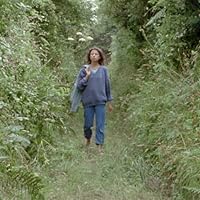
Willie Ryan returns to his home town in ‘the great central plain of Ireland’, having escaped from the insane asylum where he was committed, and unvisited, by his devout Catholic family for twenty-five years. The given pretext for his commitment was an attack on his sister-in-law, Mary Ryan, wife of his brother Michael. The true reason: an affair with a hedonistic young man who introduced him to art, literature and music. In this exposee; of the ‘petty bourgeois snobbishness, hypocrisies and pretensions of the ‘little grocer’s republic’ of 1950s Ireland, nothing evil happens as long as it is not seen. Through Willie’s piercing vision, we see the truth of his brother Michael’s grief and remorse, his nephew Chris’s fear of freedom, and the perceptiveness of asylum nurse Halloran. As Willie prepares for death, he agrees to a private family mass, setting the stage for a confrontation with father Mannix, one of those complicit in putting him away.
Warning! This is not a review, this is a dumpster fire of my thoughts that I need to get out of my system after finishing this book.
I had my own expectations for this book and was ever so slightly let down by the way this is written. I think subconsciously I kind of thought of it as a lesser known and less influential 'Brideshead Revisited' (aka my all time favourite book) but that was my own fault.
I think the story-telling was weak at some points and, oh my, does Broderick love to describe every time someone crosses their hands, puts on a glove, takes a sip of tea, etc. That was a bit annoying in some chapters. I also wished for characters to be explored in more depth, especially Willie and Michael.
However, the story itself was great. It's like it transcended its time. The humility and acceptance of Halloran, the way Broderick just points out the bigotry of a small town and religion!! And I truly loved the confrontation between Willie and Father Mannix, the last 50 pages was such a treat, really rewarding. Loved the humour and the cheekiness of Willie as well as his ability to read everyone else and their intentions. I would have loved if Broderick expanded on his character even more.
I craved for a bit more drama, a bit more intensity but perhaps this is just my need for everything to be as dramatic as possible. I suppose the subject of homosexuality in a Catholic country in itself is intense and dramatic, so maybe I'm just blabbering now.
All the time while I was reading it, I was thinking of how great it would be if some massively talented film producer hired some massively talented screenwriter to write a screenplay based on this book. I think if it landed in the right hands, it could be expanded and explored in way where it would turn in to a beautiful drama film. It did feel very cinematic.
Great depiction of Ireland in the 1960s, I can see why David Norris called it brave. One of the few books to highlight how we Irish incarcerated inconveniences. Reading it, we see how nasty families were to those who didn't fit the mould. Wonderful imagery, but the novel was let down by its characterisation. Willie and Fr Mannix were probably the only defined people, with the women being particularly poorly defined.
Close to a 4 star from me, I did enjoy it. I was just expecting a bit more of a twist or payoff from a certain section that never came.
Had never read any of his work before, but gave it a go after seeing an exhibition to mark his centenary in the local library. Also a pick from a local book club.
This entire review has been hidden because of spoilers.
"Greetings exchanged in the narrow streets seemed to linger in the damp air like falling leaves."
Sometimes a piece of writing catches my eye or ear; this caught both. This book is a bitter sweet tale of an Irish family at a time when things were both simpler and more complicated than they are now. Worth a read.