Jump to ratings and reviews
Rate this book

La restauración de la cultura cristiana

Rate this book
Una de las novelas más leídas de nuestra literatura reciente,El despertar de la señorita Prim, debe mucho a este libro. ¿Qué misterio conecta la obra de un profesor de la universidad de Kansas, empeñado en restaurar la cultura cristiana, con una señorita contemporánea en busca de sentido?
Quizá la perspectiva de Senior tiene tanto de universal, o sea de católica, que su influencia es capaz de extenderse mucho más allá de lógicas espaciales o temporales, redescubriendo con asombrosa sencillez verdades permanentes de nuestra civilización.
“Debemos poner nuestro mayor esfuerzo en restaurar la lectura en la casa y, sobre todo, la lectura en voz alta: junto al fuego del hogar en invierno, y en el porche, en las noches de verano. Denles a sus hijos una catequesis fuerte, sermones serios, buenos ejemplos y ejercicio físico. Gobiérnenlos con firmeza, pero no los enfermen: déjenles leer los buenos libros “peligrosos”, y déjenles practicar deportes “peligrosos”, como el rugby o el montañismo. La condición humana supone que alguno se quiebre una pierna y peque, pero en una familia católica bien equilibrada las caídas serán pocas y los cuerpos y las almas se recuperarán.
Quizás alguien que esté leyendo estas páginas en este momento se levantará y destrozará el televisor. Ese acto, que no modificará el curso de la historia, cambiará radicalmente su vida y, sobre todo, la de sus hijos.”
John Senior

224 pages, Kindle Edition

First published October 31, 1983

55 people are currently reading
892 people want to read

About the author

John Senior

38 books44 followers
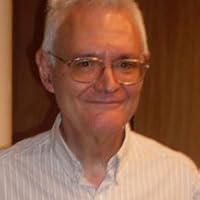
Dr. John Senior was a retired Professor of Classics and a well-known Catholic thinker.

Dr. Senior taught English, Comparative Literature, and Classics for decades at Bard and Hofstra Colleges, Cornell, and the Universities of Wyoming and Kansas.
With two other professors, Dr. Dennis Quinn and Dr. Frank Nelick, he chaired the Integrated Humanities Program at the University of Kansas.

Dr. Senior was a longtime member of the Immaculata Chapel at St. Mary’s College in Kansas.

Ratings & Reviews

What do you think?
Rate this book

Friends & Following

Create a free account to discover what your friends think of this book!

Community Reviews

5 stars
184 (57%)
4 stars
86 (26%)
3 stars
34 (10%)
2 stars
15 (4%)
1 star
1 (<1%)
Displaying 1 - 30 of 44 reviews
Profile Image for Manuel Alfonseca.
Author 80 books214 followers
April 23, 2019
ENGLISH: I think this book makes a good diagnosis of the problems of our current culture, which is no longer Christian and therefore goes directly to the abyss, but I am not so sure about the proposed treatment: mainly classical education, a return to the way of living in the nineteenth century, and a revival of the rule devised by St. Benedict of Nursia in the layman normal life.

In summary, what is said here is more or less what St. Augustine said in his "City of God": We are living in two interlocked cities, the city of God and the city of the World, but the second can be inimical to the first, in which case a Christian should use it if possible, and isolate from it otherwise. Christopher Dawson wrote an article about this, and I think Senior's book would fit in this vision. But I don't agree with some of his fobias, as the TV or musical reproduction equipment, which he considers intrinsically evil, or the Second Vatican Council, whose consequences he does not like.

What Senior likes is the way of life at the end of the nineteenth century, and he would like us to go back to the style of life of that time, specially to small-scale farming. But the world is now inhabited by five times more people, and modern technical agriculture is a must to feed so many people. Senior says nothing about how the world population could be reduced back to those levels. Is he advocating for a nuclear war, which would probably bring that result? Obviously not, but he doesn't even address the problem. He says he would like to backtrack in Technology, he is even adverse to mechanical typewriters, but obviously (as every technological retrograde) he would exempt a few advances, such as vaccines, antibiotics, and other medical improvements.

ESPAÑOL: Creo que este libro hace un buen diagnóstico de los problemas de nuestra cultura actual, que ya no es cristiana y por lo tanto se dirige directamente al abismo, pero no estoy tan seguro acerca del tratamiento que propone: educación clásica, vuelta al modo de vida del siglo XIX, y la recuperación de la Regla ideada por san Benito de Nursia en la vida corriente de los laicos.

En resumen, lo que aquí se propone es más o menos lo mismo que dijo San Agustín en su "Ciudad de Dios": Vivimos en dos ciudades entrelazadas, la ciudad de Dios y la ciudad del mundo, pero la segunda puede ser contraria a la primera, en cuyo caso un cristiano debería usarla si es posible, y aislarse de ella en caso contrario. Christopher Dawson escribió un artículo sobre esto, y creo que el libro de Senior encajaría en esta visión. Pero no estoy de acuerdo con algunas de sus fobias, como la televisión o los equipos de reproducción musical, que considera intrínsecamente malos, o el Concilio Vaticano II, cuyas consecuencias no le gustan.

Lo que le gusta a Senior es el modo de vida de finales del siglo XIX, y le gustaría volver al estilo de vida de esa época, especialmente a la agricultura en pequeña escala. Pero el mundo está ahora habitado por cinco veces más personas, y la agricultura tecnológica moderna es necesaria para poder alimentar a tanta gente. Senior no dice nada sobre cómo la población mundial podría volver a reducirse a esos niveles. ¿Aboga quizá por una guerra nuclear, que probablemente tendría ese efecto? Obviamente no, pero ni siquiera aborda el problema. Él dice que le gustaría echar marcha atrás en la tecnología, incluso se opone a la máquina de escribir mecánica, pero es obvio que, como todo retrógrado tecnológico, se quedaría con algunos avances, como las vacunas, los antibióticos y otras mejoras médicas.
Profile Image for Michael Helvey.
12 reviews1 follower
July 5, 2015
John Senior is far more than a stodgy old cultural critic, stamping his petty foot against "modern barbarism" in all its forms. In the first chapter, he promises his book will be a positive, for as T. S. Eliot said, "It is far easier to tear down than to build up."

He argues against modern media--but not because it is "distracting." He objects to it because it is "unreal." After 30 years of teaching the Great Books at liberal arts colleges, Senior has seen the dearth, not simply of reading of ability but of a dearth of experience. Modern people simply do not experience reality. For, as Senior put it in a particularly memorable phrase, "The thrashing tail of a whale splashed across nineteen inches of one's living room while you sip a Coca-cola is not reality."

The answer to this cultural malaise, he argues, is the spirit of monasticism. This is a tack rarely taken by any writer on education. He describes the silence (both physical and spiritual) of prayer, not as a "taking away," not as a dearth of sound, but as a positive attainment, an actual reaching up to a higher reality. Only in a real, liturgical, and simple Christianity, the Christianity of St. Benedict, can we actually attain to the experience necessary for a true education.

One of the best and most thought-provoking books on education I have read.
Profile Image for Fer de Uña.
73 reviews23 followers
June 29, 2018
Realmente no sé cómo hacer esta reseña, porque este libro merece tanto la pena de principio a fin que quedarse con alguna parte concreta sería cercenarlo injustamente. En este libro, el profesor Senior llama a los cristianos en Occidente a recuperar la iniciativa cultural, no metiéndose en batallas inútiles, sino comenzando por ellos mismos y por sus familias: el momento histórico de nuestra civilización implica que debemos realizar un esfuerzo consciente y constante por recuperar y por vivir en una cultura cristiana, transmitiéndola en nuestras familias. Para ello, Senior hace varias observaciones, algunas de ellas muy sencillas, pero terriblemente urgentes y necesarias, en el ámbito de la transmisión de la fe, la vida familiar, la educación, la cultura, el deporte, la economía...

Una advertencia: leer este libro cambia la vida. Es momento de sumarse a ese ejército que Senior menciona en el último capítulo, ese ejército que ahora, en este momento histórico preciso, debe librar la batalla final entre el Señor y el reino de Satanás, que como avisó Sor Lucía, será acerca del matrimonio y la familia.

Profile Image for Ryan.
141 reviews2 followers
March 26, 2014
Still relevant 30 years after its publication, and even more so in our day and age than perhaps Senior would have guessed: the emphasis on a true union between catholic cult and culture; the integration of our work, our prayer, and our love for neighbor rather than the endless multiplication of useless, parasitic occupations; the necessity of encountering the real being which "God made" in the form of trees, meadows, woods, flowers, bugs, and a thousand thousand other wonders, and of the insufficiency of a computer screen or zoo to supply such an encounter; these and a dozen other topics are addressed with oscillating gravity and levity from the beloved professor, whose students described his lectures as no less than symphonic in their sweep and beauty. Senior's book is, in all likelihood, my favorite of all time -- it always calls me back to the conviction that what we need is not a quicker exchange of information or a greater source of bodily pleasure, but more silence, more listening to the enduring truths, more of what has always made us human -- working, praying, singing with joy "in the light of things." In other words, the Benedictine life. A wonderful work, especially if paired with Dr. James S. Taylor's "Poetic Education."
11 reviews
July 6, 2025
People who don't like this book are too subject to their passions to understand it. My reading of this book is that Senior doesn't think much of our modern culture is redeemable. It is so unreal, so artificial, it cannot be saved, and does not provide the experience required to understand the "Great Books", and even more so, the saving truth. The restoration of Christian culture begins with the restoration of monasticism and the people's imitation of the monks insofar as they are able, and the throwing away of unreformable modern technology (e.g., smash the TV).
Profile Image for Becca Maginn.
44 reviews4 followers
January 14, 2021
A manual to bring meaning and sanctity to the mundane tasks of life. Though harsh in his assertions, Senior speaks boldly against a culture we allow ourselves to be engulfed in out of our own cowardice tendencies. Rather than using the culture to justify our inadequacies, let us answer the call of our Lord, and forge the narrow path.
Profile Image for Joseph.
121 reviews24 followers
January 22, 2019
The late Dr John Senior was a professor of literature at Hofstra, Cornell, Bard, and the Universities of Kansas and Wyoming. I picked up this volume, which is actually his second on the topic, the first being titled The Death of Christian Culture, because as a seminarian in a country where church attendance is somewhere between crumby and abysmal in most places I try to look at the problems from different view points, sociological, cultural, religious, etc. Dr Senior's expressed views end up being an interesting combination of educated but amateur theology, English teacher despairing at how much dumber his students are getting (no joke), and the call of a father to a renewal of family life which is even more pressing today than when he wrote this in 1983.

This book is presented as a series of essays (a term Dr Senior actually rips apart in his discussion of education, he would probably prefer "articles" or "reflections") on a variety of cultural topics. And some of what he comes up with is guaranteed to start a facebook fight. For example, his explanation of the title of the book, shared with the first essay.

What is Christian Culture? It is essentially the Mass. That is not my or anyone's opinion or theory or wish but the central fact of two thousand years of history. Christendom, what secularists call Western Civilization, is the Mass and the paraphernalia which protect and facilitate it. All architecture, art, political and social forms, economics, the way people live and feel and think, music, literature- all these things when they are right, are ways of fostering and protecting the Holy Sacrifice of the Mass.


This is not the first time that I have seen this particular phrasing. In the late 1960s, when the new form of the Mass was about to be promulgated by the Holy See, a group of British intellectuals wrote a petition to Pope Bl. Paul VI asking that the use of the Mass of Pope St Pius V be allowed to continue in England, Scotland, and Wales. That document used this exact same language, arguing that what we commonly call Western Civilization exists for the Mass. Agatha Christie, who was not a Catholic herself, was among the signatories and the story goes that Pope Paul VI was a fan and upon seeing her signature, granted permission for the continued use of the old form of the Mass. Because of this story, that permission is called The Agatha Christie Indult.

Fun anecdote aside, the point that Dr Senior is trying to make is that a societies religious belief and practice shapes it. The core of Dr Senior's extended argument is that it is modern social changes within the family which explain both religious and wider social break down. His very practical first step suggestion is to "smash the TV."

While I am not strictly in the smash the TV camp, I certainly can and do fall into the trap of watching too much of it. Dr Senior’s aim is to encourage actual time spent with other human beings instead of burning the day watching actors on a small screen. At one point he also advocates, instead of watching Sunday football (Dr Senior was born in Britain so I’m not sure if he means football or soccer but either works), get your friends together and play a game. Mixed in with this is his strong view that our culture doesn’t read enough, a condition which has only gotten worse in the last 35 years. In his own words

We must put our greatest effort into restoring reading in the home, first and foremost reading aloud around the fireplace of a winter’s evening or on the porch of a summer’s afternoon; and for the older children and adults, silent reading, each by himself as they all sit together in the living room, reading, not the hundred great books which are for analytic study and mostly for experts, but reading what I shall call the thousand good books, not everyman’s but everychild’s library, the ordinary stories and poems we all should know from Mother Goose to Willie Shakespeare, as she affectionately calls her best friend, the thousand good books for children the the nursery to the youth at college, which we read and reread all the rest of our lives.
On Goodreads, I expect little argument on the “less TV, more books” point. But Dr Senior presents this with a very particular aim in mind, and that is that people need to be better readers to be better learners in order to, in the end, be better people. In his chapter about education he notes “that even the Great Books movement, so good in many ways, is based upon a false rhetorical assumption: students simply don’t have the prerequisites such an education supposes.” This is what I was referring to when Dr Senior laments the declining abilities of his students. He says later in the paragraph “In my own direct experience teaching literature at universities, I have found a large plurality of students who find, say, Treasure Island what they call ‘hard reading,; which means too difficult to enjoy with anything approaching their delight in Star Wars or electronic games.”

The core point to which these earlier comments lead is actually made in the previous chapter where Dr Senior says “The student must not only receive the knowledge, counsel of the teacher, he must fulfill them, which means that he must understand, not just parrot or comply; and by learning become assimilated to the spiritual, intellectual and moral model of the teacher.”

I realize that this review has included a lot of quotes pointing out the problems that Dr Senior saw with our society, but the point that the book gets across quite well, and what I think makes it worth reading, is that a lot of our problems come from our having forgotten how to be human. Quite simply put, the reason that Dr Senior advocates anything that leads to more social interaction and time spent out in the country is so that we can better understand each other and reconnect to the spirituality which we lose when we coop ourselves up in front of the TV. Dr Senior was certain that if only we stop drowning out reality with artificiality, we will be able to reinvigorate our cultural institutions and return to the center that has been lost over the course of the 20th century.
411 reviews11 followers
August 3, 2018
No tengo nivel para leer este libro.

Me ha quedado grande.

Pero las partes más fáciles las he disfrutado.
Profile Image for Granger Stimpson.
13 reviews1 follower
May 2, 2025
This book will be one I return to. I’m challenged by its poetic and powerful assessment of the problems of this age. It’s only become more prophetic since its publication. Would recommend.
1 review
April 28, 2018
Mucho más de lo que esperaba.

Senior trata los asuntos verdaderamente importantes con una conexión lógica que no se encuentra en cualquier libro. Artes liberales, arquitectura, trabajo, liturgia, todo debe tener un solo fin. La lectura de este libro sólo es para aquellos que están buscando una verdadera explicación a la situación actual y que tengan la humildad suficiente para conocer cuál es la solución.
Profile Image for Fr. Peter Mottola.
143 reviews98 followers
October 6, 2016
Does exactly what is says on the tin: A fantastic and practical outline of the restoration of Christian culture, with an emphasis on the supreme importance of the family and community.
22 reviews1 follower
December 23, 2022
The occasional good idea was buried in vitriol and other things out of left field. The idea of making an intentional culture in the home for the good of spouses and any children is a worthy pursuit. Ranting about eating french fried potatoes from the "hamburger King" with your fingers isn't helpful to that (or any) end.
More assertions thrown against the wall than any points proven or arguments made. If this is the "positive" one, I don't think I'll be paying The Death of Christian Culture any mind.

Giving it two stars because of the few interesting points that can be wrestled from some chapters, but overall, not a terribly helpful book. For example: Giving children real experiences and "the good books" before they can understand the Great Books - we must live in the real world and develop a sense realism and awe and wonder.
Profile Image for Joan23GU.
5 reviews
April 4, 2025
Senior is incredibly well-read: in less than two-hundred pages he quotes Homer, St Thomas, Eliot and Niels Bohr, to name just a few. He must have been a great teacher, also. In this regard, however, I am afraid his two books are unable to recreate an educative work that was probably built upon his character, and that of his colleagues. He may be repetitive, hyperbolic at times, but, at the end, I think he is right. What he suggests, however, appears to be practically impossible. Is it though?
Profile Image for Ann Warren.
697 reviews
April 7, 2019
Convicting, and at the same time both depressing and uplifting. An interesting look at our culture, where it has strayed from its Christian roots, what we can do to reclaim an authentic Christian lifestyle, and the impact of the education system. There is extensive quoting, in Latin, which I had to constantly translate via Google, which I guess was the author’s point...
113 reviews
October 16, 2021
As I read this book I had to keep highlighting parts that really struck a chord with me. At times I highlighted comments on page after page. Initially I felt depressed to see how far down the rabbit hole our society has fallen. But when I finished I was ecstatic because the author’s solution was so simple. Stay close to Mary, the Mother of God and she will hand you off to her Son, Jesus.
Profile Image for Thadeus.
199 reviews52 followers
February 26, 2018
This book is a passionate call to those who feel as though we have lost Christian culture. The book is wide ranging, but at the same time focused on all of the things that make a human culture human. With a focus on education that stems from the essential root of wonder, the book details the many ways in which government education and in many cases parochial education as well, has strayed from the pursuit of truth in an integrated fashion, towards a mechanized view of education and the loss of connection to nature and to God.

If you a Christian or a parent or both, you will find in this book a passionate call to better, or perhaps begin, a culture in your own family that is rightly founded in prayer and work, wonder and nature.

Highly recommended!
Profile Image for Steve.
1,451 reviews103 followers
July 27, 2010
Dissapointing. This was recommended but I am unsure why. It's a Roman Catholic rant against modern culture and a plea to return to the Faith (RC!)and to family, a more contemplative life, and the arts as traditionally understood and practiced.
If you want a rant, there are better rants.
211 reviews10 followers
December 30, 2018
A powerful, classic book, beautifully written, on how to reclaim the Church's spiritual and cultural heritage, which has been neglected and abandoned in our time.

But most of all, Senior tells how to live as Christians -- for one's own home and family to pray; engage with people, not electronics; read; worship; and live deliberately counter-cultural lives.

There have been other books making these points, but most (if not all) were written after Senior's books, and none come close to Senior's eloquence, wisdom, and erudition. John Senior was an English professor, and he writes like a poetic prophet. It's dense, in the sense that there is a lot to unpack and think about. Senior seems to effortlessly quote Shakespeare and other writers, often in their original languages. His writing shows how the riches of Christian culture should be treasured and enrich our lives.

The teaching of John Senior at the University of Kansas inspired his students to changed lives. Many became Catholic (which led Kansas to shut down Senior's program). Our family visits an abbey in Oklahoma started by monks who are former Senior students. It is a holy, peaceful place. After attending morning prayer there for the first time, my husband commented that there was an utter lack of frivolity.

The word "frivolity" (or frivolous) seems me to to define our current culture: little is believed to have objective or ultimate value, so little is taken seriously. We need help to set aside frivolity to pursue what is good, beautiful, and true -- what is really valuable. C.S. Lewis said that "joy is the serious business of heaven," and Senior leads one to that joy.

Senior's two seminal books (this and The Death of Christian Culture) have inspired many to change lives. This book has changed my family's lives. But it's largely unknown. My hope and prayer is that it, like the mustard seed, is taking root unnoticed now, and one day its growth will be widespread and luxuriant.
Profile Image for sch.
1,277 reviews23 followers
September 28, 2021
Sep 2021. A treatise on education in a broad sense, written by a man learned in literature and philosophy, with several memorable passages, and (to me a disquieting) veneration for the mother of the Lord.
* He urges--in 1983!--parents to smash their television sets and sing songs as a family each night. Or to tell stories or read aloud a good book. That sounds right, in spirit if not in letter.
* He judges the twentieth century to be the worst in human history, in terms of both ignobility and murder--meaning the millions of American children aborted each year, not the World Wars.
* He thinks a vigorous movement of contemplatives and monastics is essential for cultural renewal, as in the sixth century.
* Anticipating an argument I first heard from Patrick Deneen, he denies the value of "Great Books" curricula, at least when presented to naive undergraduates, and apart from a firm, robust authoritative understanding of Christian revelation (in his terms, the Roman magisterium). He says much the same of Socratic seminars. These criticisms sound right, too. Perhaps the best part of the book, although the first chapter is stellar (and practical) too.
* Although I understood and enjoyed the chapter on the Benedictines, it felt out of place in the book, as if composed for another occasion, then reused/adapted. At the very least it belongs to a different genre: more memoir than criticism.
* The final chapter satisfactorily explains his theological position on Mary pretty well, at least as a matter of speculation. The difference between his beliefs and the celebration of the Virgin in the final cantos of PARADISO is a matter of degree, not kind. But it still makes me squirm a bit. Maybe I'm more Protestant than I consciously realize.
76 reviews
June 14, 2025
I read this for a men's religious book club and was excited to read this book as many people had spoken highly of this book and of the author but I was deeply disappointed in this book. The book reads like a rambling tenured professor who is deeply angry and lashing out at everything and anything with very little to show other than how many books he has read. His arguments are more rooted in anger and sophistry, using Latin, philosophical hot phrases, and lots of references to cloak his shallow arguments in a veneer of seriousness. At the root of this book is a theological treaties that is rooted not in the Tradition (and tradition) of the Catholic church but in his own grievance fueled understandings and misunderstandings of the faith and the world.

The book has some good conclusions (if you ignore the principles, the arguments, and the full force of this conclusions) that in summary say that people should eschew technology for reading and playing music, building strong community and friendship (to the point of trying to move near your friends), and support religious orders and try and live in a way that St. Benedict would be proud.

In the end, this book is a rambling tirade against the modern Catholic Church rooted in grievance against Vatican II. I think that if I gave this book to a random person in my parish to read and told them that this way my favorite, I would not be surprised if that person avoided me at coffee and donuts due to them thinking I had gone crazy. The best way to approach this book, as the individual who "loved" this book at my book club said, "I love this book! I just ignored all the parts I didn't like or agreed with."
Profile Image for Adam.
75 reviews
December 8, 2025
I can’t tell if this is valid advice or a venting of Post-Vatican II emotion. The first and last two chapters contained what I felt to be the most relevant portions; I struggle a bit when laymen give “If I were the Pope” statements about the Latin mass (this is not an issue with Senior, but with modern cultural developments - still, I didn’t have much patience for it). While I’m inclined to agree with arguments for live music and no television, I wish Senior went into more nuances of his positions. The work feels disconnected for this reason; Senior traipses through his thoughts without a coherent thesis or defense apart from “new technology doesn’t help us, so we should get rid of it all.” His idea of a devotion to Mary is very appealing, but he again fails to reinforce it throughout the work, choosing instead to give us samplings in the first and last chapter. This lack of undergirding holds the work back in my opinion.

Overall, I picked up this book based on the first chapter, and I would say that’s where the main gems are. Sing with your family, read good books aloud, deemphasize the television (which I interpret - although I wish Senior had clarified if this is what he meant or not - not as an attack of the medium of film, but on mass consumption of media as a whole - endlessly supplied shows, scrolls, and music). Things ought to matter.
136 reviews1 follower
January 27, 2022
The crux of the book seems to be underline the importance of reestablishing the contemplative life over the active life, the spiritual above the physical. This is most clearly seen in contemplative religious orders but can and should exist in all of us and from which renewal and restoration will come. Besides this principal idea, there is cultural criticism which is mostly insightful and always interesting albeit with seemingly constant tangents. At times, he comes across as an old fogey criticizing everything in the modern world and fighting unnecessary fights (e.g. criticizing running as exhibitionism), though even if not everything he says is completely accurate his perspective is always interesting. For anyone seeking to build a Christian culture in their own corner of the world, it is an important book to be aware of and informed by to work toward that goal more effectively.
Profile Image for Piedad Restrepo V..
6 reviews
July 22, 2018
Ejemplar Testimonio Sobre: Creer, Decir y Hacer

He considerado la máxima valoración para este libro por el testimonio que representa el ejercicio profesional comprometido con la Fe, que permite a docentes universitarios que laboran en ambientes secularizados, totalmente agnósticos y materialistas, motivar los jóvenes a la búsqueda de su re-encuentro con la razón de la existencia humana y la meta de vida plena. Lamento no haberlo leído mientras fui docente activa. Lo recomiendo a tantos profesores que declaran ser católicos puesto que hoy se tiene urgencia de su ejemplo evangelizador, mostrando coherencia entre lo que creen, dicen y hacen.
Profile Image for Javier Muñoz.
191 reviews16 followers
July 11, 2018
Libro muy sugerente, cuyo autor, John Senior, defiende una vuelta a los valores tradicionales, la recuperación de los clásicos como escuela pedagógica privilegiada, la importancia de la familia, la buena educación, el papel importantísimo de la vida monacal como aglutinante de las pequeñas comunidades y como maestros de oración...
En definitiva, mediante todas estas notas, y más, su planteamiento es el de una vuelta a Dios, poniéndole en el centro de nuestra existencia, a pesar de la vida moderna y de las comodidades que llevamos, y que nos ha hecho olvidarnos de lo trascendente.
La agenda católica que señala, es atemporal: oración, trabajo y sacrificio.
Me ha recordado, con sus diferencias, al libro escrito hace décadas por Richard Weaver "Las ideas tienen consecuencias"; desde enfoques muy diferentes, ambos plantean lo mismo: Occidente está en crisis.
Lectura muy recomendable.
Profile Image for Mags.
13 reviews
April 27, 2020
I would imagine that the audience to which this book appeals will have already heard much of what Senior writes. However, I did think it was a refreshing take on a lot of topics serious Christians are used to hearing about (abortion, the culture of death, philosophy of work, education, technology, etc.) I was under the impression that the book would be more home and family-focused than it actually was. Also, I have to acknowledge that I skipped reading “The Death of Christian Culture”, so that may totally discredit my opinion.
71 reviews
April 27, 2021
John Senior is a radical by modern standards, and believes being radical is the only thing that makes sense for a Christian in today’s world. Filled with practical advise like it’s invitation to ‘put an ax through the television’ to its suggestion to take up gardening so ‘food can taste like vegetables again, and we can finally give up all that stupid jogging’, Senior wants to put us back in touch with the world God made for us, rather than the artificial world in which modern man ‘lives and moves and has his being’.
6 reviews4 followers
March 8, 2021
I wanted to give this book 3 stars, but ultimately I agree with the overall aim of his project too much to do so. If you’re already a trad or are at least sympathetic to more traddy strains of Catholicism, you’ll enjoy it as much as or more than I did. If you aren’t Catholic, don’t start here. If you’re easily irritated by trad Catholics, don’t start here.
57 reviews1 follower
November 26, 2021
Phenomenal, edifying and inspiring. Perhaps the most dense, meaningful writing that I have encountered from the last century.
Part of me wishes that this book was a more accessible to non-Christians, but that would be asking Senior to be less than what he is.
Believer or not, everyone must read this book.
Profile Image for Randall Sterk.
13 reviews
August 19, 2021
Good and correct critique of modernity that goes into an apologetic for Marian devotion.
Not sure that is what is going to save Western Civilization and Christendom tho.
Profile Image for Fr. Matt Davied.
24 reviews3 followers
May 4, 2022
Counter cultural. Helps you see outside the box for living your best life. I found it to be really enlightening especially in regards to prayer and maintaining a state of awareness of reality.
Displaying 1 - 30 of 44 reviews

Can't find what you're looking for?

Get help and learn more about the design.