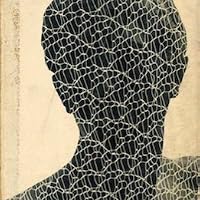
Here is the slim, stunning debut novel from the acclaimed author of Geek Love. Attic follows a young woman named Kay who has joined a cult-like organization that sells magazine subscriptions in small towns. When Kay tries to cash a customer’s bad check, she lands in jail, and Dunn’s visceral prose gives us a vivid, stream-of-consciousness depiction of the space in which she’s held. As Kay comes to know the other inmates, alliances and rivalries are formed, memories are recounted, and lives are changed. Based on Katherine Dunn’s own formative coming-of-age experiences, Attic was critically lauded when it was first published in 1970. Now, it stands as an extraordinary, indelible work from one of our most celebrated writers.
Katherine Dunn was a novelist and boxing journalist who lived and worked in Oregon. She is the author of the three novels: Attic; Truck; and Geek Love. This, her most well-known work, was a finalist for both the National Book Award and the Bram Stoker Prize for horror fiction. She also authored the essay collection One Ring Circus. She died in 2016.
Definitely not an easy book to read. The language was difficult, stream of consciousness, and did admittedly often lose me or leave me behind. But that didn't mean it wasn't still beautiful. Like an abstract work of art, you still knew what was being said to you, even if the language confused you. You still felt the same emotional response even if you weren't exactly sure why. I don't know how a story about a dragon who could shit chocolate cake could be sad and beautiful, but she was able to make it so. The book is called "Attic" not "Prison" and it's not about being in prison. It's about the character K, about her emotional and mental problems and her responses to the world. Like many Poe narrators we cannot tell when she is telling the truth and when she is lying, but even in her lies we see into her subconscious. It was difficult and beautiful and well worth it.
This might as well have been written in a different language for all I understood it. Complete stream of consciousness for the entire duration. It was brilliant. It was grotesque. It was confusing as hell. I don’t know a single person that I could confidently say would enjoy this. I don’t even know if I did. Glad I read it.
This was the most atrocious book I have ever read. It really didn't even deserve an entire star and barely half of one. I am one of those people who needs a plot, a coherent plot. I'm not even sure if this was written in an abstract manner. The synopsis explains this is an autobiographical account of Dunn when she was arrested for writing bad checks and her personal experiences that followed, but the theme of the story kept going back to sex, with who or what was questionable. The thoughts were fragmented in sentences that were fragmented and Dunn added to the confusion by not even using correct grammar or punctuation.
This is the second book of Dunn's that I have despised. I'm done.
I LOVED Geek Love and was excited to read this but couldn't even get through it. And it is a short book. It was poorly written and impossible to follow. Although I will say the scene with the marry-go-round of horses with penises that fuck the children, well, that stuck with me.
Have you ever had the radio or TV on in the background and it's some sort of talk program and you realize people are speaking, but it's like the noise is just going straight through you with almost no comprehension of what's being said? Well, that's close to what reading this was like. There were whole swaths where my eyes traveled over the letters and my brain whispered the words in my head and there was no connection whatsoever. I had to look up online what this book was about--some of it I actually did have right in my head, some of it I missed (or misread) entirely. It's a very stream-of-consciousness book about a young woman who gets arrested for check fraud and prostitution. Then the rest of the novel is about her life in prison with flashbacks to earlier times (I think that's what they were). She has an aversion to using the toilet in front of other inmates, has some interesting sexual impulses, and does indeed describe two fabulously imaginative scenes (one is a kind of perverse merry-go-round and the other is a dragon whose every secretion appears to be a candy or sweet of some ilk). Still, highly, highly, highly (and that's advancing the third "highly" from next month's stock) recommend Geek Love, but you can probably skip this one. ----------------------------------------------- Words I Learned While Reading This Book: stroboscopic | transom | anopheles
For completists only, if you've read 'Geek Love' by her and realized she has three other books. This one very much feels like a late 1960s story, and—as I understand it—based on her own experiences of being arrested in her youth. (Spoiler alert. Kidding, that happens on the second page.) There's a lot of meandering, dreamlike story going on here, that feels spontaneous and unrelated, but ultimately gives you a gnarly little chunk to chew on. On that note, thankfully it's a short novel, because it might really test the patience of readers who prefer more realistic or conventional storytelling. Good thing Dunn was incapable of writing a bad sentence.
All the steel is painted at the advice of some penologist with a psychology degree. A cool pink. A deceptive pink, to make us think we are remembering the hot pinks and livid reds of the outside while chilling even those memories, embalming theming's body in the deactivated fluids of the past.
This book is not like anything I've ever read before. If a defined plot is a must for you, you will hate this book. If riding along on a stream of consciousness is just good enough, then there is a lot to love. From a writing standpoint, it's incredible that Dunn was able to set the conventions of writing/structure aside to write this book.
There were chunks in this novel that totally lost me--this narrator is far from reliable and she weaves in and out of her time in prison to her childhood to her 'job' selling magazine subscriptions with no warning or set up. It was also often hard to place who the character was with who was real in the prison and who was in her mind.
The moments of lucidity drew me back in. Once you pick up the pace of Kay's consciousness, it becomes easier to follow, and there were so many quotes and lines worth underlining. Dunn plays around a lot with perspective and perception, and the hot shame that can stem just from being woman.
After reading and being a big fan of Geek Love, this novel doesn't feel as polished or put together, but I 110% do not regret reading it.
a kind of Acker / Lunch /Piercy's 'woman on the edge of time' mash up of holy hell. Abstract text that brushes up against realism in the hardest of ways, I really enjoyed this book and would definitely recommend it to anyone who enjoyed 'Geek Love'
In a mind in a prison, in an attic in an attic; the author's mind's-eye-autobiographical experiences from her stay on the thirteenth floor of the Jackson County Jail.
When meta-reviewing the thoughts of other critics on Attic, it becomes apparent that what most readers found noteworthy was its style more than its story, and this is also what seems to be the greatest obstacle of the book. This relates to the fact that this story is autobiographical: Dunn is herself the protagonist and it is through her mind's eye that we get to experience a reproduction of what she experienced. Note that word 'reproduction,' because it wasn't until after she had been released from the jail that she wrote down what had happened and the story bears the mark of being memories as opposed to being current observations. In other words, the limitations found in the text is not just due to the viewpoint being at her mind's eye (by which I mean the stream of mental information which passes through the consciousness, the point where inner thought and outer sensations meet and are made known to its observer), but that what is viewed has been subjected to her memory, meaning that lack and error of retention has turned it into something much more frail and easily fragmentable than the actual experience. (It should be noted that I do not believe this was the author's intent, but rather that it was an involuntary effect of when in the autobiographer's life the book was written.) The resulting thoughts are incomplete and often scattered, often losing much of the context of whatever is happening. It is characterised by describing people and places in a reduced/generalized manner. It is very sparse when it comes to drawing conclusions on cause and effect, focusing instead on her emotional connection with what passed. It is, in short, a story broken, and knowing how it broke does make quite a difference when trying to navigate the text.
It is also worth taking into consideration that while it is tempting to make thoughts on any would-be diagnoses of the protagonist/author based on the story – perhaps presenting symptoms of a psychotic state, disorganised thought, trauma or perhaps even PTSD, some kind of autism, some personality disorder, dissociative disorder, etc; all of which one could find some kind of corroborating evidence for in the text – but this would be a blunder on the readers part. First and foremost because this is a biography, the protagonists existence is a fact and her mental health is also very much a factual issue, and a personal one; here error is dangerous in all the ways which misrepresentation could bear upon an actual person. Secondly, it is an obvious enough inference that if it is possible to make a case for any and all diagnoses then it is best to assume that neither are true. Thirdly, the author herself has denounced this book as a work of shoddy writing, often done in hasty five-minute bouts injected into a hectic day-to-day life, and it is difficult if not impossible to figure out how any given part of the book would have looked if she had altered to her ultimate satisfaction. Finally, it is as difficult to say what if any freedoms the author has taken with the text, making it impossible to tell what is in accordance with what actually happened and what is added post hoc.
But refraining from diagnosis, or at least from analysing the author's mindset at the time, presents its own difficulties. Many of her metaphysical constructs make no sense beyond her own mental world and in most cases they are never explained, instead they intermingle with much of the narrative in meaningful ways which we readers can't make out the meaning of because we are never properly introduced to them. Take for example the very first sentence of the book: ”Sister Blendina was playing solitaire.” (p. 1) She is a figment of the protagonist's mind and she never does anything but play patience, and that is as much as we get to know about her even if she is regularly involved in the narrative. (There is a mention of her being on a television show which one might consider to be a partial explanation of her function, but it is vague enough that it is far from certain that it was intended to explain anything at all.) On the same page we are also introduced to the author's second skin, but it is perhaps given a better (but equally confusing) depiction two pages later: ”The uniform gives me a shove toward the door and I just have time to pooch out tits where they would be if Dogsbody were on the job before we're moving.” (p. 3) Being able to crawl into Dogsbody is of obvious importance to the protagonist, to the point where she attempts some kind of ritual to force this skin to cover her when it refuses to do so, but beyond this we are left guessing and knowing that any guess might be both wrong and unfair. To the reader this means that a certain amount of acceptance, i.e. an understanding that some parts of her mind is forbidden to us, is necessary in order to get through Attic without unnecessary frustrations.
Once the readers are aware of these constraints of the text and the compromises it demands, then they are properly prepared to take on the novel (or so this reviewer would claim anyway), holding the expectations that allows them to appreciate it for the unique novel it is. Dunn spent twenty-one days in the Jackson County Jail and it is these days which found their way into the novel. At the time she was one of the peddlers of a crew of magazine scalpers, the kind which would buy magazine subscriptions for one price and then sell them on for another vastly exaggerated price, enlisting (or even forcing) these young people to go door to door with phony stories, attempting to con people's feelings in their favour, and plying any other trick which could get them a sale. A quota was set and those who did not meet it would be sorry for it. Finally she was arrested for attempting to cash in a fraudulent check some punk had made out to her, and it is at the very moment that she is exposed that the novel begins, at this major turning point in her life. In the jail she is introduced to a wide range of personalities, some more pleasant than others, most at least a bit degenerated by their time behind bars and their time before, and all are as colourful as Dunn's memory allows them to be; her take on the conditions of the jail is presented in a likewise manner. Since the descriptions are as seen from her mind's eye they come across as unfiltered in the way our thoughts are before we sensor them. If a thought concerns itself with genitalia, and such thoughts are not infrequent though rarely voiced, then that thought would have found its way to the page without mitigation. The same goes for thoughts of excrements, violence, child molestation, dragons that poops peanut clusters, and all the opinions she forms of others; they are in a word unfiltered and as such makes no effort to be pleasant to the reader.
The allure of Attic is perhaps best described as a piece of 60's counterculture. One article seems to have hit the nail perfectly; it quotes Pomerantz' (Dunn's husband) encouragement to see the novel in the context of its time, and it is as a continuation of this the article makes the following comment:
Pomerantz is right: "Attic" and "Truck" hit bookstore shelves at the height of the counterculture, when a whole generation seemed to be lost, the social contract irretrievably broken. Publishers were desperate to find writers who could explain what was really going on with the thousands of young Americans who were turning on, tuning in and dropping out. Harper & Row thought Dunn's fiction, with its swirling, violent, stream-of-consciousness narratives, did just that. (Perry, D., 'The rise of Katherine Dunn: How the late Portland author survived hard times and became a literary legend' in The Oregonian/OregonLive, December 3rd 2017)
It was honesty and information which was sought and which was delivered by this novel, and the one that followed for that matter. Many compare these two novels, and they are indeed similar in many ways, both honestly and unfiltered chronicling the adventures of young people in a world which is antagonistic to who they are. Yet Truck is a far more coherent book where it is usually possible to discern thought from reality, making it more in tune with how our mind's eye actually works (if it functioned like in Attic then we would be unable to distinguish the outer world from our own imagination). This criticism aside, Attic does give a very valuable insight into the minds and lives of those often thought of as mere delinquents, an insight not in the form of knowledge (the narration is too unreliable with regard to reality for there to be any gain in actual knowledge), but in the form of a feeling that one understands what it must be like to be in their shoes. In that regard the book was a success.
This book left me feeling disturbed, concerned, and disgusted. I don’t remember why I put this on my TBR… It was so gross and scary. Graphic descriptions of cp, sa, bestiality, and sex and violence. Also racial slurs and discrimination multiple times!
It was written in stream of consciousness that was confusing and hard to understand at many points. But the plot was interesting at times and the characters were striking. I’ll definitely think about this for a long time. I think the ideas were cool maybe? But it’s hard to get over the subject matter!
(Trigger warnings for graphic sex and violence, often in tandem.)
The first novel by the author of Geek Love, Attic is similarly disturbing. It doesn't have the tight structure or dark humour of Geek Love but shares its fixation on the grotesque.
A young woman is arrested for passing a bad cheque and spends months in jail awaiting trial. Her nightmares and hallucinations flash back to a lifetime of sexual abuse, often related as fairy-tale, science fiction, or anything to make the pain less real. Near the end of the story we learn that the young woman's name is Katherine Dunn.
Attic is gorgeously written. The character's breaks with reality are rendered in the stream-of consciousness of a hugely talented young writer who discovered Joyce and Woolf and realized that she had found a vehicle for telling her story. The influences take over her voice in places; a repeated "yes" that sounds awful lot like Molly Bloom punctuates some sex scenes.
Day to day life in the cell block is portrayed more conventionally but just as horrifically. Damaged women try to help or hurt each other and no one gets better.
I'm a style junkie and and enjoy a book that makes me work (and squirm) a bit. I liked this one a lot.
Was this written for the sake of being vulgar? There’s something entertaining in Dunn’s writing that keeps me invested in the story, even when there isn’t much of one. It’s “stream of conscience writing,” sure-sure, though I keep getting lost. I was sold on the premise that she was escaping from a cult, but there isn’t much mention of that. We do get a lot of bodily fluid imagery… and some bestiality.
There are moments of brilliance within this chaotic mess. It was very hard to follow the story throughout the stream of consciousness ramblings. This would take multiple listenings to even begin to understand. I am not willing to go through this again. Geek Love was such a masterpiece, This felt like it was written by someone under the influence so much that they believed they were making sense.
My brain is all jumbled and my connection to the real world is frayed and I’m left positively exhausted and I’m going to need time to recover. Damn this feels invigorating!
When I read this book for the first time, it was before my adolescence. I got it from the public library, I have no idea how. I don't think anyone actually cared what books I was reading as long as I was reading. I had no idea what I was in for. This book fucked me up. I hurried through it initially, because I was appalled and enthralled at the same time. I didn't want to get caught with this book so I finished reading it as fast as I could, but I internalized some very disturbing things. I would spend the next 30 something years wondering what the hell thigh-links were, what the hell was that dragon all about, and why did I see Puff the Magic Dragon as the dragon the author portrayed in this story. I forgot all about the name of the book, the author, and all that remained in my damaged memory were fragments of disturbing pieces. I would spend decades looking for this book once again thinking I made it up and that there was no such book. Thanks to some sleuthing and googling bits and pieces of my memory, I finally found it! This book is still very hard to make sense out of. Thanks to the other reviews I've read, I understand now this is a stream of consciousness story of an emotionally and sexually damaged person. I can put to rest the agonies of trying to figure out if I actually did read a book so disturbing or was it just something fucked up that I made up on my own.
Kinda hard to talk about this book without wanting to break into stream of consciousness, because having just finished it, I’m still in that mode. But I’m nowhere near the writer that Katherine Dunn was.
I found the book torturous to read. But effective. As a debut (autobiographical) novel, it’s a stunning achievement. Dunn shows us her experiences at the hands of an abusive mother, various abusive men, and at a job selling magazines that sounds a lot like white slavery. Compared to the outside world, a stint in jail feels to our narrator like safety: there are three squares, a warm bed, and a pecking order among her peers that provides structure and predictability. When she takes us into her occasional dissociatIve episodes it’s disorienting and upsetting to see how far her brain has to take her in order to escape from her traumatic memories. Effective.
Dunn’s depictions of life in the county jail reminded me of Orange is the New Black, but with less drama. It made me wonder whether Piper Kerman read Attic, or women’s jails are just like that.
Not for everyone. Recommended for readers who enjoy being challenged.
I hated this but felt compelled to keep reading. Though this 1970 novel was relentlessly grotesque and usually incomprehensible, I was impressed by how modern it read, and how something so well-written could completely alienate me. However, there never was any explanation for wtf her "dogsbody" was, nor do I really want to know what it was. Probably the imaginary carcass of the puppy she killed or the dog she left chained up to die. What an awful woman. Thanks a lot, Powell's Bookstore.
Violent, disturbing, disgusting, abnormal, eloquent, beautiful, conscious, and bold. Attic's stream-of-consciousness jail narrative has an intentionally evasive thesis but still seems to comment on so many aspects of contemporary society: from sexuality to incarceration to cult scams an onward.
Katherine Dunn's "Attic" is a haunting and powerful exploration of the human psyche, offering readers a raw and unflinching look at the complexities of emotional trauma and the search for belonging. This masterfully crafted novel, first published in 1970, has stood the test of time and continues to resonate with readers today.
At the heart of the story is Kay, a young woman whose journey into a cult-like organization serves as a lens through which Dunn examines the depths of human vulnerability and resilience. The author's prose is both lyrical and visceral, creating a vivid and immersive reading experience that pulls you into Kay's world from the very first page.
One of the novel's greatest strengths lies in Dunn's ability to navigate difficult themes with sensitivity and insight. The exploration of abusive relationships and emotional damage is handled with a deft touch, never veering into sensationalism but instead offering a nuanced and compassionate portrayal of the human condition.
Dunn's writing style is nothing short of exceptional. Her command of language is evident in every sentence, with vivid descriptions and poetic turns of phrase that elevate the narrative beyond mere storytelling. As the Chicago Sun Times aptly noted, Dunn is "a practitioner of the highest form of writing there is: literature of the imagination".
The novel's structure, which alternates between Kay's present experiences and her troubled past, adds layers of depth to the narrative. This non-linear approach keeps readers engaged and allows for a gradual unfolding of Kay's character, making her journey all the more impactful.
"Attic" is not just a story; it's an experience. Dunn's ability to create a palpable sense of atmosphere is remarkable. This immersive quality makes the novel a truly unforgettable read.
What sets "Attic" apart is its unflinching honesty. Based on Dunn's own formative experiences, the novel carries an authenticity that resonates deeply with readers. It's this raw truthfulness that has allowed the book to maintain its relevance and power over the decades since its initial publication.
In conclusion, "Attic" is a testament to Katherine Dunn's extraordinary talent as a writer. It's a novel that challenges, moves, and ultimately enriches its readers, offering a profound exploration of the human spirit in all its complexity. For those seeking a literary experience that is both intellectually stimulating and emotionally resonant, "Attic" is an absolute must-read.
I was at a loss of how many stars to give this book. I didn’t know if this book was brilliant or horrible. It is one of the strangest books I had ever read (haven’t read Geek Love In years) as well as most difficult books because of all the run on sentences. Dunn does not use a lot of periods in this book. Essentially this book is similar to prison TV shows that are now made; but what makes it brilliant is that it’s published in 1970 and reads like new. It also has very gross and buzzard elements in it and shows the length of a woman’s imagination when put in a cell after experiencing lots of trauma as a child (but not identifying that as trauma). At some points I didn’t know if the protagonist was mentally challenged because the logic and sequence of her thought appeared backwards, but then there are other times when her dreams/thoughts were well written. I would not recommend this book to children or teenagers or even some adults. It is a hard book to process and take in, but it definitely shows Dunn’s ability to write in different styles. If you chose to read this book don’t give up on it after the first few pages, it gets easier to understand as you go along, but it left me feeling strange, kind of like “I-should-have-learned-something-or-maybe-I-should-feel-bad-for-her-or-what-the-heck-did-I-just-read.” I’m just gonna give it 4 starts because only rarely have I come across a book this strange.
What a bizarre little book, definitely not gonna be for everyone. I think I admire it more than I like it, this stream of consciousness mediation on mental illness is fascinating, but it is admittedly a little hard to read and very intimidating at first. I think after the opening which was very disturbing and compelling it does dip for a while and seems to meander, but she really hits her stride after a while and it becomes fascinating. I love Geek Love I think it’s one of the best cult novels, and while Attic is certainly not that it’s a pretty interesting read. Like Girl Interrupted or a manuscript you’d find in an abandoned mental institution. Honestly the first few pages reminded me of that CD Rom game Bad Day at the Midway but somehow even more messed up if you can believe it. Cautious recommend.
At first I picked up this book and was worried I wouldn't understand a thing that was happening the whole time and though it was my own fault for being too dumb to process it or that I just didn't understand it because I had never been in a cult or sold magazines or been to jail but when this book wants you to really understand something there is an immediate shift in narrative style that describes certain scenes clear and vivid in a way that makes you feel like someone whose life has been a nightmarish blur of abuse and traumatic experiences and nothing really adds up except for the certain moments that account for the disconnect between the present and their current state of mind. Satisfies a "morbid curiosity," if you have one you should read this. Also I appreciate the butch lesbians and trans themes.
Picked this up because I LOVED another one of Dunn's novels, Geek Love. Attic is uh... QUITE different.
The language, syntax, and fragmented storytelling style in Attic made for a challenging read--but not in a bad way at all. The challenge of interpreting Dunn's words was a refreshing reminder of the satisfaction that comes from engaging with writing that does not allow itself to simply be rapidly consumed and then easily forgotten.
I have not finished Attic (I forgot to renew from the library whoops), but I'm hoping I find time to restart and ultimately finish Attic this year.
My thoughts so far -- this book is CRAZY! and WEIRD! Dunn plays with grotesque and abject imagery in a way that feels excessive at times, but until I revisit the book, I'll hold judgement on whether I find the extreme shock-value as meaningful, or just shocking for the sake of being shocking.
This is one of the most bizarre books I have read - maybe ever. My all time favorite book is Katherine Dunn's Geek Love, so I was very excited to read this early work. It is stream of consciousness - to the extreme. It seems to be happening in head of a young lady who has been arrested - but whether that is the reality or not is kind of a mystery. Usually, I would totally hate a book like this, but the imagery is so strong and moving and disturbing, and the use of language so amazing that I still have to give it 3 stars - and frankly, I would probably give it more stars if I was smart enough to understand this book. Just wow.