(Following my reviews of Kenneth Clarke’s Civilisation and Jacob Bronowski’s Ascent of Man, this review will concentrate on the documentary and not the book.)
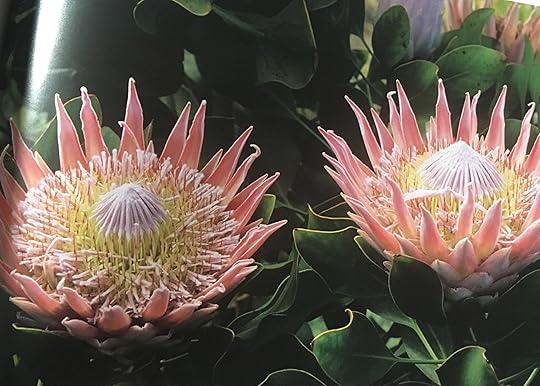
Like so many people, I have been captivated by nature from a very young age. Trees in particular strike me as the paragons of beauty. What painting can compare with the visual beauty of a tree? The yellow flowers of spring, the bright green of summer, the fiery reds and oranges of fall, and the skeletal limbs of winter, twisting themselves into unbelievably intricate shapes. Yet you can’t really compare the beauty of art with the beauty of nature. Art is made intentionally, in order to convey somebody’s unique vision. Art is communication. But a tree’s beauty does not communicate anything. It doesn’t exist for humans or by humans. It just is.
This quality of natural beauty is why I find it so rewarding. The pleasure is almost spiritual. You can experience beauty without thinking about your ego or anybody else’s. There is no moral to be learned, no theme to unravel, no joke to get, no political message. But the downside is that I don’t know how to react, how to express my appreciation. I can, for example, write a review of a book or a documentary. But this would be absurd to do with a tree or an animal. The best most of us can do is to mutter "How lovely!" under our breaths and then lapse into a respectful silence.
David Attenborough seems to have come up against a similar problem, and has solved it by creating his nature documentaries. Don’t try to explain or to analyze natural beauty; just film and enjoy. His voiceovers are typically not analytical, but explanatory; they help you understand what you’re looking at. Attenborough mainly does this through narration. He turns a natural scene into a story, with its own tragedies, comedies, and romances.
Life on Earth was his first program. Nowadays, David Attenborough is such a household name, and his influence on nature documentaries is so widespread, that it made the experience of seeing the young Attenborough a bit jarring. He looks spry, even sprightly. He snorkels, scuba dives, crawls through a cave, holds animals in his own hands, and tries to cut an antelope carcass with a stone tool. He’s slowed down a lot since then. But in all other respects he was and remains the same.
This program is a short history of life on earth. Attenborough takes us from bacteria, to invertebrates, to plants, insects, fish, amphibians, reptiles, mammals, and finally to us. The advantage of this sequence is that is allows Attenborough to show each progression as a response to a major challenge in the environment. Reptiles developed impermeable skin to free themselves from dependence on bodies of water. Mammals developed warm blood to be active at night. The major disadvantage of this arrangement is that it gives the impression that evolution had some sort of goal in mind, or that mammals are somehow “more evolved” than reptiles. It also neglects to emphasize the fact that, during all this time, bacteria remained by far the most widespread life form. As Stephen Jay Gould said, every age of life on earth has been the Age of Bacteria.
But Attenborough needed some way to organize the material, and this one did just fine. In any case, science isn't the focus of these programs. Attenborough does not, for example, give us a good explanation of the mechanism of evolution. He gives us the Attenborough trademark: beautiful images of animals and plants, along with thoughtful narration in his sonorous voice.
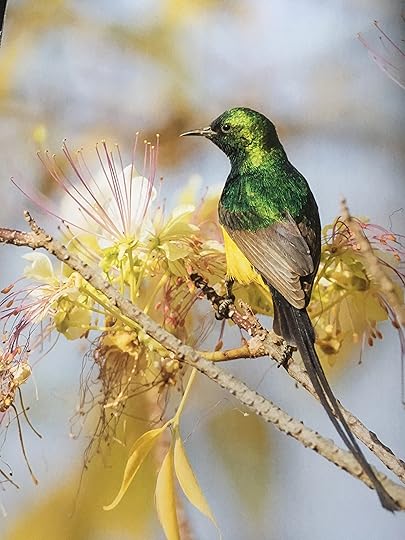
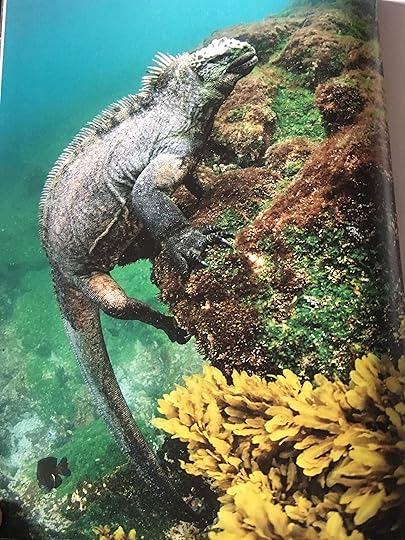
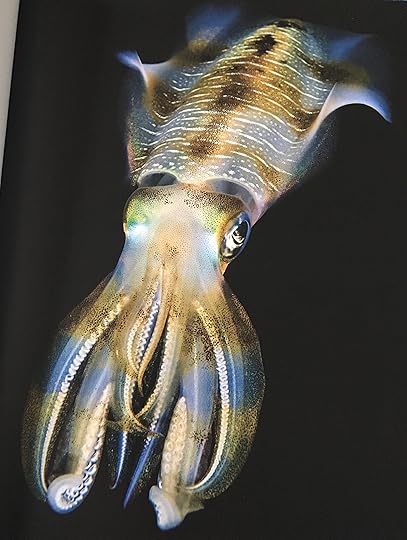
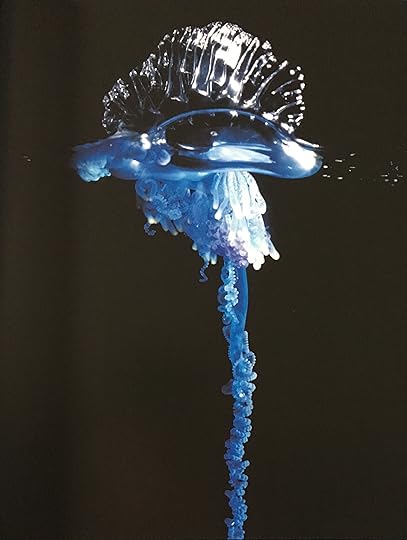
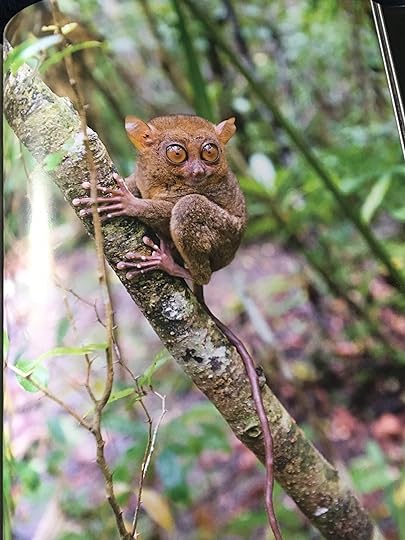
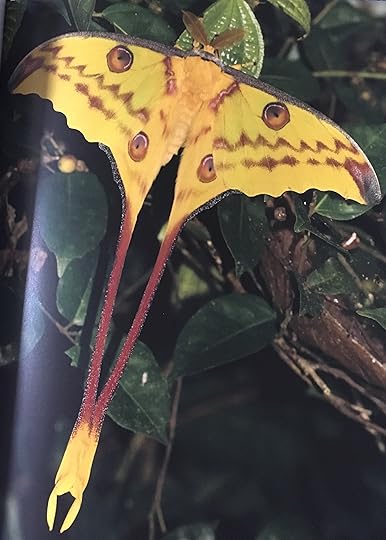
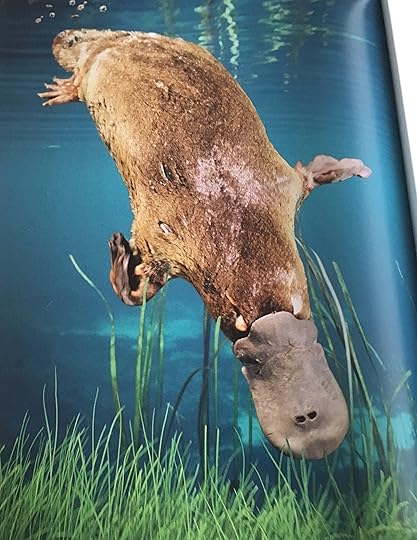
And how fantastic are these images! We see slow-motion shots of bees flapping their wings; we see colorful bacteria floating around in fluid. We see birds of paradise doing their mating dance, and brightly-colored fish darting through the great barrier reef. We swim with dolphins and fly with bats, we spy on moles crawling through tunnels and watch tadpoles developing into frogs. The sounds are no less impressive than the sights. In addition to the calls of birds, the croaks of frogs, the songs of whales, and the howls of monkeys, is the orchestral accompaniment. I don’t know how they make music for these things, but the music in this documentary was always excellent. It matches the mood of the footage and is timed to dance along with the images.
Even though the documentary is not heavy on science, I did learn a few things. It seems no matter how many of these documentaries I see, I always learn about a new species. Did you know that lungfish live in ponds in Africa and dig down into the mud to stay there during the whole dry season? And did you know about Caecilians? They are a group of amphibians, related to salamanders, who have lost their legs and which now look like giant earth worms. Life is many things, but it is certainly never dull.
But the documentary does have its weaknesses. Besides its lack of depth and its potentially misleading organization, I thought the documentary lost its momentum as it progressed. Attenborough seems to stretch his material as he approaches the final episode. The fifth episode, for example, takes us through all the sharks, rays, and boney fish, from their evolutionary beginnings to the present day. We get to see hammerheads, electric eels, flying fish, filter feeding sharks, and phosphorescent fish living in the deep sea. The eleventh episode, by contrast, mainly focuses on the relationship between African predators and their prey, cheetahs, lions, and hyenas.
Another problem was the one I outlined in my opening paragraphs. In Kenneth Clarke’s Civilisation and in Jacob Bronowski’s Ascent of Man, the two presenters offer their own personal view of their subject. The documentaries are therefore not only educational, but are genuine works of art. This program, by contrast, offers no such personal view. Attenborough is a presenter, but he is not laying forth his own unique vision of life on earth. And indeed, how could he? The beauty of nature is not something to be interpreted, but appreciated. At this task, Attenborough is superb.