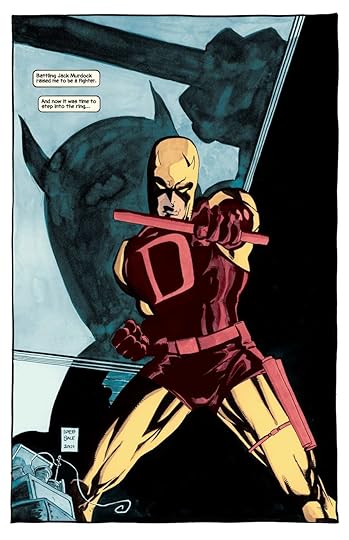
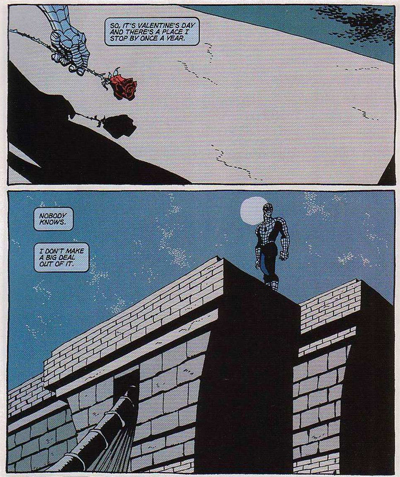
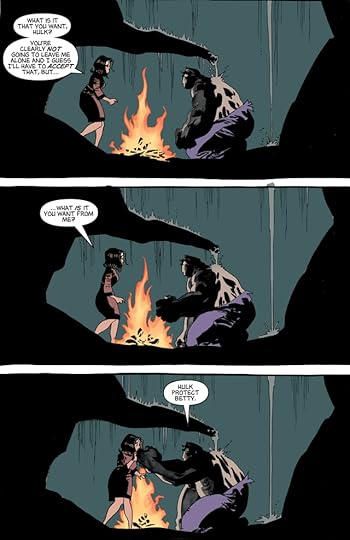
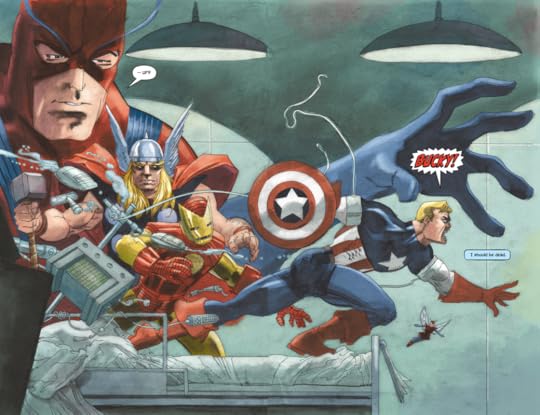
All four of Jeph Loeb and Tim Sale's classic "color" masterpieces in one atmospheric hardcover! Blind acrobat Daredevil was inspired to heroism by the example of his prizefighter father - but Matt Murdock is a young man in love with Karen Page. Relive Daredevil's heartwarming, heartbreaking debut! Then, Peter Parker and Gwen Stacy want to spend the rest of their lives together - but first, Spider-Man must run a gauntlet of his greatest foes. No matter how powerful the Incredible Hulk becomes, his heart can still be shattered by Betty Ross - the daughter of his greatest enemy! And Captain America battles beside his best friend Bucky behind enemy lines in World War II! Touching and insightful tales of super heroism from an Eisner Award-winning team!
COLLECTING: DAREDEVIL: YELLOW 1-6, SPIDER-MAN: BLUE 1-6, HULK: GRAY 1-6, CAPTAIN AMERICA: WHITE 0-5
Joseph "Jeph" Loeb III is an Emmy and WGA nominated American film and television writer, producer and award-winning comic book writer. Loeb was a Co-Executive Producer on the NBC hit show Heroes, and formerly a producer/writer on the TV series Smallville and Lost.
A four-time Eisner Award winner and five-time Wizard Fan Awards winner (see below), Loeb's comic book career includes work on many major characters, including Spider-Man, Batman, Superman, Hulk, Captain America, Cable, Iron Man, Daredevil, Supergirl, the Avengers, and Buffy the Vampire Slayer, much of which he has produced in collaboration with artist Tim Sale, who provides the comic art seen on Heroes.
I got this book mainly because I absolutley adored Jeph's The long halloween and I wanted to see how he does at Marvel. Paired up again with Tim Sale's art was also another reason why this book, so this was literally a no-brainer to get. Without getting into spoilers these stories are revolving around the love interest's of these four heroes, which in concept was a great idea.
But the biggest problem I had with this omnibus is Jeph Loeb's way of writing female characters, and considering how this focused on the romantic aspect of their lifes, we were off to a bad start. Karen Page was just a Damsel in Distress, but other writers brought much more to her than just that, yes I could live with that but that was only the start. (On a side note my girlfriend was not okay with it.)
In Spiderman Blue - Gwen Stacy / Mary Jane Watson are running around as if they are attention seeking narcissists, with terribly cheesy onliners like "Face it tiger, you just hit the Jackpot!" (first thing she says to Peter at their first meeting). The only way I can justify reading that (still doesn't mean that I like it) is the time its set in, back then some women liked it being cat called, and even then I can't see these 2 behaving like this. Its incredibly prepubescently written and definitely not what I've expected. The only thing that holds me back giving this 2 stars is the interesting plot, the interesting use of the villains and Sale's art, here I see again why I like Loebs writing so much.
In the third story - Hulk Gray our female side character Betty isn't written nearly as badly and also sticks closest to her origins, which makes it the best story by far in my opinion. Better late than never.
So if you're expecting complex written and dignified female characters, then this is the wrong book. Yes its sad considering how much I love Loebs other works, but I've got to be honest about this so I give it a 3,5* out of 5 for the omnibus.
You can find my review on my blog by clicking here.
Where love can thaw through the coldest of hearts, it can also break the toughest of them all into the tiniest of pieces. For some beloved heroes, it is through love that they discover their darkest regrets and their greatest callings. Despite the incredible emotional toll that they must carry, it is these very life-defining stories that bring them to make the toughest decisions in their lives. And sometimes, all they can do is remember these stories to their graves, or share them with those who are willing to listen. Collecting all four colour stories by the Eisner award-winning duo of writer Jeph Loeb and artist Tim Sale, this omnibus presents fans with a stunning and complete look at four of Marvel’s greatest heroes recounting a significant loss early in their days of vigilantism. This omnibus collects Daredevil: Yellow #1-6, Spider-Man: Blue #1-6, Hulk: Gray #1-6, and Captain America: White #1-6.
What is Marvel Knights: Jeph Loeb & Tim Sale: Yellow, Blue, Gray & White Omnibus about? In Daredevil: Yellow, Matthew Murdock recounts the tragic events that culminate in the astonishing arrival of Hell’s Kitchen’s paramount hero as he falls in love with the mesmerizing Karen Page. In Spider-Man: Blue, Peter Parker reminisces the early days when he fell in love with Gwen Stacy only to realize what he would later never get to have with her. In Hulk: Gray, Bruce Banner explains the tragedy that wasn’t just his transformation but his realization that Betty Ross, daughter of his greatest rival, would be the only person to break the Incredible Hulk. In Captain America: White, Steve Rogers goes down memory lane to share his early adventures with his partner in crime Bucky Barnes.
Brilliantly revisiting the early days of superheroism of these iconic characters, writer Jeph Loeb and artist Tim Sale excel in delivering a cohesive selection of tragic chapters in the lives of four heroes that connect together through their exploration of love and loss. With symbolic use of specific colours that depict emotional trauma and moral ambiguity, the story brilliantly puts forth the sheer swagger of these heroes, whether it is through their illustrious dialogue or their impressive charm. While romance and tragedy are key ingredients to these stories, notably bringing out the most vulnerable moments in their life, they also include a fair proportion of action and adventure that depict these characters’ unique skillset, whether it may be their acrobatic skills or their brute strength. While some stories convey their emotional punch with much more efficiency, others do struggle to find their footing, but all succeed in telling a story that highlights the power of love and the burden of loss.
Those familiar with artist Tim Sale’s work will not be surprised by his one-of-a-kind style in these stories and will be impressed by the tone and emotion he is able to convey throughout each of them. While most of his design works wonderfully with writer Jeph Loeb’s story and ideas, there are instances where the story seems to simply fit perfectly with his artistic vision, allowing panels to convey far more than it could’ve without the words to embellish the moment with poetry and power. The occasional splash pages, especially to emphasize certain love interests or costumed vigilantism, make for spectacular moments as well. The colouring also gives the story an additional layer of complexity in terms of narrative depth, as previously mentioned in terms of symbolism, but also allows for excellent atmospheric tone and mood.
Marvel Knights: Jeph Loeb & Tim Sale: Yellow, Blue, Gray & White Omnibus is a wonderful collection of emotional stories centered around loss and love and told by Daredevil, Spider-Man, Hulk, and Captain America.
Jeph Loeb and Tim Sale are a comic book duo that have made some fantastic comics like “Batman The Long Halloween” (my favorite Batman comic) and “Daredevil: Yellow”. The latter was part of the “Colors” series that examines 4 Marvel superheroes (Spider-Man, Daredevil, The Hulk, and Captain America) in Loeb’s and Sale’s unique style. As I enjoyed Yellow already, I was eager to check out the whole collection. By and large, Loeb and Sale deliver with each of these stories.
“Daredevil: Yellow” -
My thoughts haven’t changed too much about Daredevil: Yellow following the reread. Back then, I liked Sale’s art and I thought it was a good story even if I didn’t know too much about Daredevil lore at that point. Now that I have, I did get more of an appreciation for Matt’s relationship for not only Karen but for Foggy as well during this reread. This made the framing device of Matt writing to a deceased Karen all the more poignant. Beyond that I appreciated getting a non-Frank Miller expansion/reimagining of Daredevil’s early days. In terms of individual moments, I loved the scene of Matt standing on top of the Empire State Building listening to the city before jumping into action to save Karen. In general this set the bar for the rest of the collection
“Spider-Man: Blue” -
While I hadn’t read this one like Daredevil’s, I had familiarity with it mostly because it's a bit like Loeb & Sale’s reimagining of key moments in early Spider-Man history (i.e., the iconic first meeting with MJ). Truthfully most of the story I felt like was “just okay”, just a way to show these moments/characters in Sale’s art style. But then Loeb brought it (the story in the past and the framing device of Peter looking back on his time with Gwen Stacy) together absolutely beautifully. It really underscored the thematic intention of the overarching theme of the series (at least for Matt and Peter) and did a better job than “Yellow” IMO.
“Hulk: Gray” -
Of the four heroes Loeb and Sale tackle in this series, Hulk’s the only one I’m not overly familiar with beyond the basics of his character/origin story. So I did think I wasn’t getting too much out of some of the characters I was unfamiliar with like the Rosses and Rick Jones like I had with the other miniseries in this collection. That said, I still got quite a bit out of the story, more so than I thought I would have. The bits about Bruce discussing the Hulk were heartbreaking, particularly with the conclusions he draws between Betty’s love for him (and even The Hulk) and her father who is abusive to Betty in his own way, making Bruce wonder if her love for him/The Hulk is similar to her relation with Thunderbolt. Beyond the themes, as before there’s some stunning Sale art here, maybe more so because he plays around with The Hulk’s size and perspective. It was also wild seeing OG golden Iron Man in this style too. Hulk: Gray is imperfect but as my first real look at The Hulk’s classic origin story I did enjoy it for what it was.
“Captain America: White” -
This is the only real misfire of Loeb and Sale’s collection. There’s nothing absolutely horrible about it and I did think the change to looking at platonic love that Cap and Bucky share (although I’m sure plenty of shippers will say its another type of love). But this honestly felt the most inconsequential of the four stories even if it did try to emphasize the connection between the two. But it otherwise felt like just another story from the Golden-Silver Age of Marvel even if it tried to make this Cap’s first meeting with Nick Fury. Otherwise it was inconsequential with Sale’s contribution carrying the load (I particularly liked his design for The Red Skull).
Minus a disappointing turn with Captain America, this collection is otherwise a pretty great look/reimagining at Marvel heroes and an evaluation of their relationships with some of their most important loves and the myriad of ways that reflects back on them. Loeb’s stories range from fine to good but its really Tim Sale that makes this collection worth check Through “The Long Halloween” I got to see Sale’s take on classic Batman characters and loved that and I loved seeing his take on Silver Age Marvel characters in this collection. In general if you’re a fan of Loeb and Sale’s previous work do yourself a favor and check this out, the strengths far outnumber the weaknesses.
All these books together add up to like a 3.5(maybe a little lower?) but I'm going to talk about each individually because they aren't connected aside from the obvious themes of love and loss and stuff and the color representations for each book.
Daredevil Yellow: this felt like a very small book, which isn't necessarily bad but when it came down to it I didn't have much to think about it. Each issue didn't feel super connected and they spent a lot less time on Karen Page as a character than I would've expected. Matt Hollingsworth's digital water colors were really nice and made this artwork feel moody in a great way. Yellow for me represented bravery or more the discovery and triumph of achieving bravery. This being for "the man without fear" for well but I didn't like the dialogue about his yellow suit at the end.
Spider-Man Blue: this is easily my favorite of the four and its also the only one I've previously read but it's such an achievement in my opinion. It captures the feel of that late 60s/70s Stan Lee writing as well as the John Ramita Sr. artwork and it's so cool. (I have a lot of nostalgia to the Lee era Spider-Man so I might be a bit biased lol.) The dialogue can feel clunky or on the nose but also that's kinda how comics were written back then so I'm honestly fine with it. It captured the way death changes you and your emotions so well. MJ being there at the very end is so beautiful and I love how they captured Peter's love for her and Gwen. This volume has the most emotion to it and the ending almost brings me to tears every time. The metaphorical meaning of blue was made really obvious at the end but it still felt like the culmination of the book and I liked it.
Hulk Gray: I liked this one quite a bit too. Hollingsworth comes back to do the colors but it's still so distinct and visually really fitting for the Hulk. This volume had the most continuation from issue to issue which was enjoyable but what it built up to wasn't that satisfying and we didn't really get enough attention on Betty interacting with Bruce. The covers were another huge highlight for this, they're all so disjointed, out of focus, and have so much raw anger and emotion (just like the Hulk) it's incredible. Gray representing that there is an in between of good and evil in this world worked well for a Hulk book and again the emotional impact of such was really great.
Captain America White: this was definitely my least favorite. The art was weak which is disappointing because Dave Stewart is such a top dog colorist. Instead of capturing the feel of that era's comics like Spider-Man Blue they go more for capturing that mood of war in the 40s but it just didn't work for me. I liked that the focus was on a the loss of a best friend as opposed to love interest lile the previous volumes. This gave attention on how many forms of love their are and loving someone isn't inherently romantic. When I think of why this color was White I think of like rebirth/becoming anew, but it isn't really represented well here. Like both Cap and Bucky had to be reborn into their superhero identities but that wasn't a huge focus so I don't really know why it's White.
One of the very best hardcovers that Marvel has out there.
The so called "color" series from Jeph Loeb and Tim Sale is a fantastic one. These guys did some of the very Best Batman stories and my all time favorite, Batman The Long Halloween. This hardcover collects four mini series all based on a color, Daredevil Yellow focuses on some of the earlier DD stories hence the yellow from Matts suit. Spider-Man Blue is a love story and a fantastic one at that. Hulk Grey and Captain America White are also early stories that suit Tim Sale's artwork really well. The visuals are something else and really among the very best Sale has done. And the scripts from Loeb are great aswell, this is a great hardcover for seasoned fans and newbies alike. All stories have some extra's sketches and stories about how this came to be. Cant recommend this one enough.
A great collection of stories of Daredevil, Spiderman, Hulk, and Captain America. It has the heroes revisiting some of their early adventures in a wistful way. The artwork is amazing and the stories are solid. A must read.
Jeph Loeb & Tim Sale: The Colour Collection — A Complete Series Review ⭐⭐⭐⭐⭐ There is a version of superhero comics that exists purely for spectacle — punches thrown, worlds saved, costumes iconic. And then there is what Jeph Loeb and Tim Sale do together, which is something quietly, stubbornly different. This colour collection — Daredevil: Yellow, Spider-Man: Blue, Hulk: Gray, and Captain America: White — represents the complete body of their collaborative colour series, and finishing it feels less like closing a comic book omnibus and more like finishing a suite of novellas written by authors who genuinely believe superheroes deserve the same interior richness as the finest literary fiction. My introduction to this duo came nearly ten years ago with The Long Halloween — widely regarded as one of the greatest Batman stories ever told. That book taught me that comics could be noir, could be patient, could trust a reader to sit with atmosphere and moral ambiguity rather than demanding constant forward momentum. But the colour series revealed something even more personal about what Loeb and Sale are capable of. Where The Long Halloween is cinematic and expansive, these four books are intimate. Chamber pieces. Each one a man alone with his memories, writing or speaking to someone he has loved and lost, trying to make sense of a past he cannot change. What makes this formula remarkable — and it is a formula, one Loeb commits to across all four entries — is how the retrospective framing transforms superhero action into something closer to elegy. The villains still show up. The costumes are still iconic. But they become almost incidental, props in a story whose real subject is grief, and love, and the weight of what we carry forward. These are not books about saving the world. They are books about learning to live with having lost something irreplaceable. Crucially, each colour is not decorative. Loeb uses it as a thematic lens. Gray for the Hulk — not just the colour Bruce Banner’s alter ego famously began as, but the moral and emotional grey area that defines every relationship in that story, most pointedly General Ross, a man who cannot be reduced to villain or father without losing something true about him. Yellow for Daredevil — the colour of his original costume, yes, but also of caution, of a light that guides rather than blinds, tender and warm rather than righteous. Blue for Spider-Man — melancholy rendered as colour, Valentine’s Day draped in the specific sadness of a love that still aches long after it is gone. White for Captain America — not innocence exactly, but something close to it, the blank space of potential and hope that Bucky represented for Steve before the world took him away. In that sense, this collection rewards reading as a unified work rather than four separate books. The architecture is the same — the framing device, the retrospective grief, the sense of a man reckoning with the defining emotional chapter of his life — but each entry finds something genuinely distinct within that structure. That Loeb never lets the formula feel mechanical is a testament to how seriously he takes each character’s specific emotional truth. And Sale. There is no version of this review that adequately honours what Tim Sale brings to these pages. His art does not illustrate Loeb’s scripts so much as it breathes alongside them. His figures are expressive in a way that feels almost classical, more indebted to illustration and fine art than to traditional comic book draftsmanship. His colour work — done in collaboration with Dave Stewart throughout — understands that a page can carry emotional information that words cannot. The dreamlike softness of Blue, the warm amber tones of Yellow, the cold stark contrasts of White — these are not artistic decisions made in isolation. They are storytelling. This is a collection that belongs in conversations not just about the best superhero comics ever made, but about the best sequential art as a medium, full stop. Daredevil: Yellow ⭐⭐⭐⭐ Yellow is perhaps the most delicate entry in the collection — and the one most dependent on what you bring to it. Matt Murdock narrates his earliest memories of Karen Page, the woman who would become the great love of his life, writing to her in retrospect from a place of quiet devastation. The framing is identical to Spider-Man: Blue, the creative team identical, and yet Yellow achieves something tonally distinct: where Blue feels like a wound that never quite healed, Yellow feels like a candle held against the dark. The choice of yellow as the thematic colour is quietly brilliant. It was the colour of Daredevil’s original costume — a choice Matt’s father made before the iconic red — and Loeb uses it to evoke something gentle rather than garish. There is warmth here, even in the grief. Karen Page is rendered with real humanity, her presence in the law office of Nelson and Murdock feeling lived-in and specific. She is not a plot device. She is a woman Matt fell in love with across ordinary moments, and Loeb understands that is exactly how real love works. The significance of the yellow cloak — the one Matt’s father wore — running through the narrative gives the book a generational weight that the other colour entries don’t quite match. The sins and sacrifices of the father, the identity the son inherits, the question of what we owe the people who shaped us — Yellow folds these questions into what is ostensibly a superhero romance and earns both. For readers coming to Daredevil cold, as I did with this entry, some of the contextual resonance is inevitably muted. Karen’s story in the broader Marvel canon — her eventual descent, her betrayal, her death — would have made this book hit considerably harder with that foreknowledge. But even without it, Yellow is tender and carefully made. It is a book that will likely read differently — and harder — on a return visit once you know where her story ends. Spider-Man: Blue ⭐⭐⭐⭐⭐ Spider-Man: Blue isn’t really about superheroes — it’s about memory, grief, and the way first love never fully leaves you. The framing device of Peter recording tapes on Valentine’s Day is simple but devastatingly effective. You’re not watching Spider-Man swing through the city; you’re sitting with a man revisiting a chapter of his life that still aches years later. What makes this story special is how quiet it is. The villains, costumes, and action are present, but they feel secondary to Peter’s emotional interior. The comic reads less like a traditional superhero book and more like a reflective novel about youth, loss, and the impossibility of going back. Gwen isn’t just a plot point — she feels like a real person, and Peter’s longing feels painfully human. The Gwen Stacy and Mary Jane dynamic is handled with particular intelligence. Rather than flattening either woman into a simple role, Loeb understands the specific tension of that triangle — that Mary Jane knew, that she watched, that she loved someone who was still partly somewhere else. In some ways, Blue provides the emotional closure that larger Spider-Man adaptations have reached for without quite grasping. It understands the Gwen chapter of Peter’s life not as tragedy to be overcome but as something that becomes part of who he is — carried forward, not left behind. Tim Sale’s art amplifies that melancholy with soft, dreamlike visuals that feel like memories fading at the edges. The whole book carries a gentle sadness without becoming cynical. It understands that grief and love can coexist — that remembering hurts, but it’s also beautiful. This is one of the rare superhero stories that grows with you. It’s not about saving the world; it’s about learning how to live with the past. And that’s why it lingers long after the final page. The standout entry of the collection by a meaningful distance, and one of the finest graphic novels I have ever read. Captain America: White ⭐⭐⭐⭐ ⭐️ If Blue is about grief rendered in melancholy and Yellow in warmth, White is grief rendered as absence. Steve Rogers narrating his wartime memories of Bucky Barnes is a story told in negative space — the white of the title is what remains after the colour has been drained out, and Loeb understands that loss on a fundamental level. What struck me reading White is how much of the Captain America mythology as we understand it — particularly through the lens of the MCU trilogy — finds its emotional foundation here. The relationship between Steve and Bucky is the beating heart of some of the finest superhero cinema ever made, and seeing that dynamic rendered in its original wartime context makes clear how rich the source material always was. The guilt Steve carries, the responsibility he feels for placing Bucky in danger, the sense that his own survival is in some way a failure — all of it is present in White, and all of it informed what came after in ways that feel genuinely significant. Sale’s art in this entry is perhaps his most compositionally ambitious. The wartime sequences have a scale and kineticism that the more intimate colour entries don’t require, and he meets that demand without sacrificing the emotional granularity that makes this series work. The white palette is used with real restraint — cold, clean, suggesting both the purity of the wartime ideal and the blankness of what Steve will wake up to alone. White is a book that benefits enormously from existing within a larger mythology. Readers who come to it through the films will find it resonates deeply. It is not the collection’s most emotionally overwhelming entry, but it may be its most quietly dignified. Hulk: Gray ⭐⭐⭐⭐ Hulk: Gray is the collection’s most philosophically ambitious entry — and arguably its most sophisticated in terms of how it uses its central colour metaphor. The gray of the title refers simultaneously to the Hulk’s original colouration, the moral ambiguity that defines every significant relationship in the story, and something deeper about the nature of identity itself. Bruce Banner is gray — neither the brilliant scientist nor the rampaging monster, but something caught perpetually between, never fully either. Loeb uses this ambiguity to complicate every character who surrounds Bruce, most pointedly General Thaddeus Ross. Ross is positioned throughout superhero mythology as antagonist, as obstacle, as the embodiment of institutional hostility toward the misunderstood. Gray insists on something more nuanced — that Ross is a father, a soldier, a man operating by a moral code that is neither simply right nor simply wrong. He is, like the colour that gives this book its name, somewhere in the middle. That refusal to flatten him is the book’s greatest achievement. The relationship between Bruce and Betty Ross carries the same retrospective weight that defines the broader collection — Bruce narrating early love knowing what it will eventually cost both of them — and Sale renders Betty with a warmth and specificity that makes her feel fully realised rather than merely present. The tragedy of the Hulk, as this book frames it, is not that Bruce cannot control his power. It is that he cannot be close to anyone without the power eventually reaching them. Love becomes collateral damage. That is a genuinely devastating idea, and Gray commits to it. As the final entry I read in the complete colour series, Gray landed with the cumulative weight of everything that preceded it. After four books of men narrating their greatest losses, the Hulk’s particular loneliness — too monstrous for the world, too human to stop caring — felt like the most complete expression of what Loeb has been exploring all along. Ten years ago, The Long Halloween showed me that superhero comics could be great literature. This colour collection — read in full, completed at last — shows me they can also be deeply, quietly human. Jeph Loeb and Tim Sale are one of the great creative partnerships the medium has produced, and this series stands as their most personal and emotionally honest work together. Strongly recommended for any reader, not just comics fans. These books ask real questions and sit with real grief, and that is rarer than it should be in any genre.
All four stories are from early in each heroes' respective career and revolve around them having lost their greatest love: - For Daredevil it's Karen Page - For Spider-man it's Gwen Stacy - For Hulk it's Betty Ross - For Captain America it's ... Bucky
The Hulk story was surprisingly my favorite one and I really enjoyed the bittersweet Spider-man story. But the quality of the entire collection is brought down by the other two, with the Daredevil one being "just ok" and the Captain America one being the weakest of the four.
If Hulk and Cap bring the average down, Daredevil and Spider-Man alone bring it right back up. I should give this 4 stars but I’m a sucker for Sale’s art. Loeb’s voice over dialogue can sometimes wear thin on me, in Hulk Yellow it does. And while Cap White is light, it’s also very chewable. Daredevil Yellow is beautiful and Spider-Man Blue really did make me cry. It’s amazing how much influence this series had as a sort of modern retelling or classic character moments. A fantastic wholesome series.
3.5 Started raining hard after finishing blue, I like them all. I would do spider-man & hulk tie for best, cap next, and daredevil last. Daredevil best after finishing Kevin smith daredevil. Hulk after peter david run, rip. Spider after Gwen death, and cap general story. 4 different stories in one omnibus which is about each character dealing with a death in their lives. Read whichever character you like, don’t need any reading beforehand. They’re all 6 issues long, the art is lovely as always
Amazing figure and perspective work with the art, but despite the more mature subject matter, could have still used a better writer to really bring out what Tim Sale is capable of.