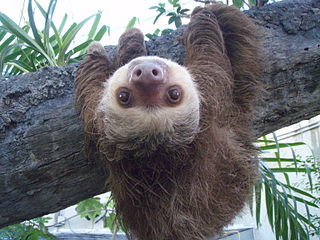
With The Truth About Animals: Stoned Sloths, Lovelorn Hippos, and Other Tales from the Wild Side of Wildlife trained zoologist, award-winning documentary film producer and now author Lucy Cooke introduces and showcases thirteen diverse animal species (from freshwater eels to chimpanzees) to not only give readers detailed and informative (engagingly recounted) portraits of the latter, but to also and equally demonstrate how our own actions and behaviours, how mankind's approaches to wildlife (and how human superstition and our tendencies to anthropomorphise and impose our often restrictive moral and ethical codes on other animal species) have often lead to major misunderstandings regarding the lives, the purposes and the general roles in a given ecosystem for animal species such as sloths, bats, hyenas, vultures etc. (that we are very quick to both condemn and even sometimes strive to actively annihilate animal species that we consider to be imbued with such negative human personality traits as cruelty, laziness, even the potential for evil, although in the majority of cases, these animal groups are both perfectly suited and adapted to and for their habitats and yes, like for example with bats, hyenas and vultures actually do play important general roles keeping vermin in check by devouring billions of insects or preventing the spread of disease by scavenging, by consuming mostly or primarily flesh from the deceased, from animal and yes, if unburied, even human corpses).
Now while I was reading The Truth About Animals: Stoned Sloths, Lovelorn Hippos, and Other Tales from the Wild Side of Wildlife, it also became rather painfully obvious that in particular natural philosophers and scientists have sadly and frustratingly over the millennia, over the centuries been some of the absolutely worst offenders and villains with regard to imposing human characteristics, human superstitions, fears and animosities on animal species other than ourselves (claiming, for example, that beavers were socially organised construction companies and that bats supposedly were sexually deviant, even though their sexual practices are actually very much like our own, for bats as a species are in fact more closely related to primates and thus also to us, to humans, than to ANY other mammal species), not to mention the already alluded to above vehement and silly opposition to and often active hatred of scavengers (even though they provide such an important and essential general global service).
But even more problematic is the sad and true fact that for "science" for "discovery" both amateurs and professionals have repeatedly both then and also still sometimes even now often viciously and cruelly tortured the very same animals they have been studying. And yes, I was rather unpleasantly surprised and disgusted at and by this (although in retrospect, I probably should not have been) when I read about the multiple instances of "scientists" actively and very much deliberately maiming, blinding, deafening bats in order to study how they hear and how they fly at night, or that before we figured out that many birds migrate in the fall to warmer climates, there was for example the idea floated around that swallows submerged themselves in water to wait out the winter, and of course this was then tested by deliberately drowning the poor birds and then trying to (and of course unsuccessfully) revive them (and while I have indeed found all of this presented factual information most interesting and enlightening, it has also proved infuriating, and even though I do very highly recommend The Truth About Animals: Stoned Sloths, Lovelorn Hippos, and Other Tales from the Wild Side of Wildlife I do leave a caveat that many of the human "mistakes" and misunderstandings regarding animals will make those of you who love animals and want to protect and help animals at best a trifle upset, although I still do absolutely and highly commend Lucy Cooke for both detailing these experiments of what I can only call terrorism towards animals and that she is also always both ready and willing to vociferously condemn and disparage even those scientists and natural philosophers whom many of us seem to somehow consider heroic and proverbial sacred cows and thus above and beyond criticism, such as Carl Linnaeus, Charles Darwin, Georges Cuvier, Aristotle just to name a few).
Highly recommended, and yes, a fun, engaging, informative (and also never tedious, never dragging or monotonous reading experience) The Truth About Animals: Stoned Sloths, Lovelorn Hippos, and Other Tales from the Wild Side of Wildlife has been (with the detailed footnotes/endnotes and bibliography at the back and that the latter is in fact divided into specific sections corresponding to Lucy Cooke's presented chapters being both appreciated and very much an added bonus). But truth be told, I did kind of already expect there to be an included bibliography in The Truth About Animals: Stoned Sloths, Lovelorn Hippos, and Other Tales from the Wild Side of Wildlife (just because of the subject matter at hand and that Lucy Cooke is obviously not just presenting her personal observations but also her own secondary research), but from my own academic point of departure, especially this here particular bibliography really does totally shine, and mostly because of the way it is organised, as I have always found that bibliographies based on a book's chapters or sections considerably easier and much more user-friendly to consult for especially supplemental research purposes than those bibliographies that just appear as one large and all encompassing list.