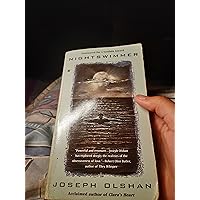
In this brilliant literary mosaic centered around a love affair, acclaimed novelist Joseph Olshan explores the intense pressures and passions of gay life in New York City during the AIDS epidemic
Ten years ago, Will Kaplan and his lover went for a night swim in the Pacific Ocean—but only Will emerged. In the decade that followed, Will relocated to the other end of the continent, filling his days with shallow and pointless affairs, unable to come to terms with the bizarre disappearance that could have been a tragic drowning, a well-planned abandonment, or both.
While immersing himself in New York’s gay bar and disco scene, and a hedonistic Fire Island culture darkened by the grim specter of AIDS, Will meets Sean Paris, a young man as tortured and damaged by the past as Will himself. Drawn together by mutual doubts, needs, secrets, and obsessions, the intense relationship that they form will make waves in their circles of friends and ex-lovers, transforming Will’s life forever.
Joseph Olshan is an award-winning American novelist. His first novel, Clara's Heart, won the Times/Jonathan Cape Young Writers' Competition and went on to be made into a feature film starring Whoopi Goldberg. He is the author of eleven novels, the most recent of which, Milo's Reckoning, was published in 2025.
In addition to his novels, he has written extensively for newspapers and magazines, including the New York Times, the New York Times Magazine, The Times (London), The Guardian (London),The Independent (London), The Washington Post, The Chicago Tribune, the New York Observer, Harpers Bazaar, People magazine and Entertainment Weekly. During the 1990's he was a regular contributor of book reviews to the Wall Street Journal. For six years was a professor of Creative Writing at New York University where he taught both graduate and undergraduate courses.
Joseph Olshan's other novels include Nightswimmer and Vanitas, as well as The Waterline, A Warmer Season, The Sound of Heaven and In Clara's Hands, a sequel to his acclaimed first novel, Clara's Heart.
Joseph Olshan is published in the U.S. by Saint Martin's Press and Berkley Books; and in the United Kingdom by Bloomsbury publishing and Arcadia Books. His work has been translated into sixteen languages.
Since 2010, he has been the editorial director of Delphinium Books (distributed by Publishers Group West
This is one of my favorite books. Of all time. Seriously. I've read it about 10 times.
Why would I spend that much time reading and re-reading a book? Because it speaks so loudly about love and loss in such a way as I can't describe. I always end up reading it in one sitting because I just get pulled into it headlong and can't let it go. The dialogue still holds up, as do the characters and the general theme of love and loss are always present in all of our lives.
Beautiful and poignant writing telling a beautiful and poignant story about relationships:
How they shape and un-shape us, how love can be difficult yet desired so desparately, the desire for intimacy And the fear and barriers that prevent the true intimacy that so many of us desire.
This is a LAMDA award winner and I am not surprised because the writing is excellent and the story is deeply emotional.
Ten years ago Will lost his lover Chad, in a swimming accident. He has had other relationships since then and has tried to move on with his life but the loss has cast a shadow over his life. It is ever present, a shadow that he lives with and which is always there. He meets Sean quite by accident through a mutual friend. Sean has a shadow of his own and immediately recognises that Will is a fellow shadow dweller and so begins a relationship in which the two men try to move towards light and hope, but some how fail to entirely escape the shadows of the past.
But this summary does not do this story justice because the emotions of these two men come to life across the pages. Both men have losses and past lives that they need to come to terms with and both of them struggle to do so. Both men try their best to live and love in a new era of increased communication, more openness and freedom and the spectre of AIDS. They embrace the freedom of the clubs, the parties and but recognise the restrictions of love in the time of AIDS. They also begin to heal somewhat and find peace with their pasts as they seek a present and a possible future together but the future kind of eludes them and the story tells of their struggles, desires, dreams and unfulfillment.
The story is told from Will's perspective and he tells how he encounters Sean, is immediately attracted to him but also remembers Chad. Along with this are other friends and loves that have ended. Will explores these relationships along with the everyday business of life and being a writer and slowly he finds a kind of peace from the past and perhaps hope for the future even with the shadows.
This is a story about life and love and it is real. It is a love story but one that focuses on loves within a young life and how early loves and friendships can shape our future but how present love can help us reshape and understand the past.
It isn't a traditional romance with an HEA. In fact there isn't a nice tidy ending just a sense of openness but also a sense of having hope for Will's future.
It is a beautiful story, very emotive as we explore the different characters and their lives and loves.
Nightswimmer is a very good book - it is a story about love, caring, vulnerability, fear, trust, betrayal and other emotions. I was very powerfully affected by this novel when I first read it (sometime in the very early 2000's) and it held up very well when I reread some of it recently. There are plenty of long reviews and discussions of the books characters and themes - both for and against - I am sure anyone who enjoys good storytelling and fine writing will not be disappointed in this novel.
Frank, touching, and effortlessly itself. Authentically human affairs interlaced with quiet, evocatively atmospheric scenery and poignant inner turbulence.
Feeling somewhat ambivalent about this novel ... it’s at times beautifully written, especially the evocation of place and mood, and it begins with a clever premise/metaphor about disappearing love. But the metaphor becomes a tad repetitive and I became so irritated with the narrator’s one-dimensional obsession with romance that I wanted to slap him upside the head. But as a portrait of a group of solipsistic, young-ish New York gay men in the 1990s, it’s probably highly accurate. Just that, like them, the book becomes more tedious the longer one spends in its company.
This entire review has been hidden because of spoilers.
This is the first novel by Joseph Olshan that I have read. I found this novel to be just okay. Mr. Olshan does a good job in telling the story of the gay lifestyle, I did feel a bit of a connection to the characters, and found the story to be interesting overall. This is not an earth shattering novel by any means, but it does make you think about the AIDS/ HIV epidemic that we still face today in 2016. I could feel the angst and sadness in the characters souls. One thing that I wish that the author would have done is gone a little deeper into the characters lives, at times I did feel like this was a story that was rushed, with a story this serious, time and care of the subject matter needed to heeded here. Give this novel a shot, you may like it...but I don't think you are going to love it!
Many books are written by talented and capable people who have not personally had the experiences about which they write. War stories, for example, are often written by historians, writers of historical fiction and others whose research and imagination combine to create plausible and interesting stories. John Steinbeck had not been a refugee from the Dust Bowl when he wrote The Grapes of Wrath nor had Margaret Mitchell even been a slave holder or participant in the Civil War, yet each wrote powerful novels, conveying wonderful truths and ideas. In Nightswimmer, I felt a level of authenticity that was subtle but undeniable. Olshan knew what it was like to face the AIDS epidemic, to experience love and yet be betrayed, to feel hurt so deeply that it became difficult to smile, to recover and to be vulnerable to another. Good writers portray these feelings and portray them well, but writers who are writing from their souls, from their deepest pains or most ecstatic joys are able to tell a story in a way that leaves readers with absolute knowledge that the author bared his soul, shared his pain and created his art not from conjecture but from experience. Often the reader shares nothing in common with the writer nor even his characters and storyline and yet still experiences something mystical and ethereal that reveals the truth within the fiction. And this is exactly why books need to be written and readers need to read widely, because only from seeing into the journeys of others can we develop the empathy that makes us better human beings. Nightswimmer is a good book for anyone to read, straight or gay. It’s story is about love, caring, vulnerability, fear, trust, betrayal and other emotions. Are these confined only to those of one orientation or the other? Good books portray universal themes and when those themes are set in non-traditional situations, they help readers gain insights into those themes they would not get otherwise. The gay readers of this book will identify with its theme, perhaps thinking more deeply about their own vulnerabilities or frustrations with those of others. Straight readers with deepen insight, perhaps examining their own vulnerability after a tragic experience. It is a worthwhile read.
Two stars means "it was ok". So I'm giving Night Swimmer two stars, because it IS ok. The writing was ok, the characters were ok, the plot, such as it is, is ok.
I can't really think of anything to say *against* the book. In fact I don't feel I have much to say about it either way. It simply leaves me cold. I couldn't really relate to the characters and their experience and since it is very much character-driven, it has largely passed me by.
"Sean. It's human to give up the spirit of one love only when we commit to another." "No, I don't agree. We have to give up the ghost first. Be free. Only then be with somebody new. Otherwise one ghost-love gets replaced with another ghost-love. There's no real content. Just another form, another outline that we fill in with the exact same longing we had before."
For gay men who lived during the AIDS epidemic, intimacy was equated to death. Even beyond that, both Will and Sean have serious baggage from their past ghost-loves, some losses more recent than others. The idea of falling in love, considering the circumstances and their pasts, is both unthinkable and entirely necessary.
The world in the novel is so vivid. I absorbed so much about each character just by the way their apartments were described. A lot of the characterization is imparted through setting and dialogue, which I find really impressive, considering how much is left unsaid. Will's hyper-analytic and somewhat obsessive nature is easy to overlook since narrators are typically keen observers for the sake of the reader, but we get reminders when other characters begin to call him out for it. I remember laughing at his impressive mixup between 'black' and 'back', when worried about the man Will had danced with at the Morning Party.
Some of the little plot threads fall flat for me (the shredded novel), but when things work, they REALLY WORK. Will's relationship with swimming and water was some of the most enjoyable writing of the book for me, especially his last nightswim.
Speaking on characters again, I had trouble connecting with them, sometimes, since they were always keeping each other at arm's length. Even though Will is the narrator character and protagonist, I felt at times that he keeps the reader at a certain distance, too. I understood why, obviously; for these men, vulnerability is dangerous, getting attached even more so. However, it kept me from really rooting for their relationship in the way I feel like the book wanted me to (mostly, I was rooting for them to go to therapy).
“And so, no matter where I am, I remain exactly where I lost him.” — Joseph Olshan, Nightswimmer
I have author Michael Scott Garvin and the prologue of A Faithful Son to credit for pointing me to this novel. First published in 1994, Olshan’s Nightswimmer reflects its era in the evolving social and sexual mores under the specter of AIDS. Will Kaplan narrates the story, which follows the progression and regression of his relationships—from his college days when he met and fell in love with a fellow student we know only as him for the better part of the story, to his current ex-lovers and friends, and then, to one man in particular, Sean Paris.
What sets this novel apart from anything I’ve ever read before is Olshan’s narrative and stylistic choice. The story reads like a memory, an epistle and a dramatic monologue, and then, it also has a sort of stream of consciousness feel to it, where Will is telling his story to both the reader and to Sean himself, and time jumps from present to past to present. There are points when the timeline and telling are disjointed—whether that was by design or not, I don’t know, but it fit the delivery of events as Will chose to reveal them. Olshan’s storytelling method is decidedly unusual, and reading a novel in which the protagonist is narrating events and conversations to a character who’s already directly involved in them on a personal level, lends itself to the idea that the events are more reminiscence than real-time occurrences. It takes some getting used to, some readers may never warm up to it, yet it also complements the overall tone and mood of the novel, which is poignant and heavy with dramatic events of the heart.
Nightswimmer is a character driven novel, which means it’s not action packed or flashy. It’s rather subdued, in fact, because of its themes of loss—the giving away of oneself and the loss of first love and the him-shaped hole left where that person once existed but is no longer. Grief plays a major part in this novel and adds to its pathos, with regret playing alongside loss and past mistakes that can’t be undone.
Will and Sean have each lost what they would define as their one great love, and those losses have each left their own scars that act as emotional barricades to their ability to make a deeper connection with each other. They are each stagnating under the weight of never having found real closure, and it affects their interactions with each other from the start. While, for obvious reasons, I can’t speak on a personal level to Will’s or Sean’s experiences, I can say that the universal themes and the events of our shared human condition are expressed in a touching and coalescent way. Unrequited love, emotional manipulation, learning to trust—and sometimes neither winning nor earning that trust—each play their part in Nightswimmer. These are all factors that made the story not only an interesting character study, as well as an engrossing examination of relationships and their lasting impact, but spans the divide between personal understanding and the ability to empathize outside of one’s own life experiences.
Joseph Olshan’s writing is captivating and atmospheric, the story he tells at once evocative as well as provocative. Nightswimmer is a novel upon whose pages a chance meeting brings two men together and then portrays their snarled entanglements of past and present, and the complexity of commitment and emotions. Whether you like Will or not will likely affect your reading experience–I can’t say I always did–but he’s flawed, as is Sean, and those imperfections make them human, adding another healthy dose of realism to the story. There is no tidy ending for the sake of romantic tropes, nor are the issues that still plague Will and Sean glossed over or magically swept away for the sake of a happily-ever-after. Their story is interesting and complex, and is as relevant today as it was in the decade in which the book was originally published.
A few pages into this novel it occurred to me I must have read it before, and indeed I had, but I decided it was good enough to merit a second reading, and so I read on.
A novel from the high years of the AIDS epidemic, although this is hardly a novel about people with AIDS. It's in essence a novel about two people still coming to terms with the emotional damage wrought by their first loves from late adolescence (early 20s counts, doesn't it?). The characters are drawn with admirable complexity, even if I'm not totally convinced by them. The more convincing of the two, the narrator (Will), is still dealing with the question: Did his lover drown or otherwise die during a dangerous overnight swim (the body was never recovered), or did he escape to a new life? (Here the German verb "untertauchen," which implies diving but means "to disappear incommunicado," would serve admirably. The reader has to suspect the former: after all, how does one emerge into a new life without means of any kind, not even a stitch of clothing? -- but this seems possible to our Will largely because he wishes it were so.
There are a few false notes in the book: the back/black conversational misunderstanding is a groaner (at least it isn't the old "Once you go black, you'll never go back" business), but the writing is pretty consistently impressive.
It is rare I don't finish a book but I stopped this one half way through. The writing was eloquent but there was no real substance. By half way nothing had really happened but much wistful reflection. The only mildly interesting thing about the lead is that he used to night swim and a lover disappeared. otherwise he leads an inane self indulgent lifestyle complete with dog custody arrangement that is of zero interest to me. Very middle class white guy problems. I am perfectly capable of understanding subtlety and subtext I just didn't feel there was enough driving this book.
Well written, poetic, unashamed of its sexuality and pays off at the end- but all through this book I had the feeling that I used to get at big gay dance parties when a muscle Mary would walk through me like I didn't even exist. The characters in this book would never even deign to SEE me. I would never even register as furniture. Kind of made it hard for me to care about their relationship and abandonment issues.
I do wish modern 'novelists' wouldn't so self-indulgently dress up rather dull biography as 'art'. One more for the rubbish bin while I'm clearing out.
I don't think I liked it as much as all these other 5-star-reviewers did, but there is nothing wrong with it. It was good. Just didn't really resonate with me, somehow. It'd make a good movie...
I feel the need to swear, but I'll abbreviate it because I don't know the Goodreads policy on swearing: JFC!!!
I felt like the main character (Will) was way more driven by loneliness than obsession. He has this deep want to be loved; to be the centre of someone's universe. It also comes across as though he's lonely around the people who love him, as though they don't know him—he's more in tune with them, than they are with him. Of course with this mix of first- and second-person narration (which I loved!!!), it took me a while to realize his perception of that wasn't always fact.
It comes across as if some of the blurbs on the back of this book (at least on my copy, which I found at a secondhand bookstore) completely missed so much of the plot. There are universal truths, but the alienation, and the way Will and the men around him perceive the world, aren't metaphorically linked to straight people too. It's specifically because they are gay, loving other men in the 90s, and while—as written in the book too—the prospect of men holding hands was becoming more commonplace, it didn't change the fear Will experienced (however briefly mentioned). It didn't change the way people perceived him and the ones he loved.
Will's inner struggles with himself, his fear of abandonement, etc. were all portrayed so well too. Like I said before, at the core, all Will wanted was love, and at every corner all he was confronted with was unrequited love. Whether it be from him, or directed at him.
The emotion, to me, most prevalent in this book is obviously loneliness. Death, grief, love—they all seem to have profound loneliness in common in Nightswimmer.
I will also say I don't think I've ever truly felt like a book had a perfect ending, until I got to the last page of this one. Not to mention, it's so beautifully written!
Anyway, to whom it may concern: if this book took place today, Will would have had a love-hate relationship with Instagram and the term "situationship", and he'd have been obsessed with these songs: "illicit affairs" by Taylor Swift, "Like I Can" by Sam Smith, and "Lookalike" by Conan Gray.
Published 25 years ago, according to Goodreads this book still attracts a steady stream of readers and has achieved an impressively high average GR score, so it might be just me and not the book with the major issues.
I really didn’t like this. I suggested it for my book group based on its interesting premise, but reading it was a slog. I missioned my way through, and it left me cold.
On the plus side: 1. Beautiful poetic prose; well structured; interesting premise.
Ambiguous: 2. Reading it, I thought this a unique response to the AIDS crisis of the early-to-mid 90’s - it’s wildly different to other AIDS-inspired novels and memoirs, either then or now. However, subsequent to finishing the book, I’m wondering: how much of this approach is actually due to AIDS denial? Either the narrator’s or the book’s? The answer is unclear.
Negative: 3. 2nd-person POV a disaster. Adds nothing and actually just confuses the reading experience. 4. Jane Austen had a famously narrow frame of reference, but her demographic is considerably wider than this book’s. If you are not a physically beautiful, youngish, muscled, middle-class gay man you just don’t exist here. 5. The book is tediously obsessed with beautiful shiny surfaces. Characterisation is tissue-thin. I totally failed to keep track of all the identikit characters - and the staggered chronology and narrative POV exacerbate this issue. 6. Related to the above, many plot points demand high tolerance for first world problems: custody of a dog; hassling over a bequest. 7. I’ve seen a review commending the book for its unapologetic approach to sexuality. This is true based on copious references to ‘making love’ or sex throughout - virtually on almost every page - but to me it was all dully clinical rather than packing any erotic punch á la Edmund White or Christopher Bram, to name but two gay literary authors who examine gay male sensuality.
This entire review has been hidden because of spoilers.
Okay, from the beginning. Nighswimmer tells the story of a young man called Will, who falls passionately with another man named Sean. Both Will and Sean are haunted by past demons and failed relationships with other which burned into them. The novel follows their love story, struggling with the past, trying moving on, although it is not easy, having difficulties and age issues. It was a big-time surprise. It was so good, although it was nothing more than slice-of-life piece of fiction. Just the friendship and jealousy between men who know each other long, surrounding Will. No girls and it was stunning, I absolutely loved every single one of them. I loved the humor, the dialogues, the happenings. I also loved the romance and the philosophical part behind it. It was absolutely beautiful. It also had a happy ending! I only think they should not mention on GOODREADS the whole AIDS issues. After all, It had nothing to do with the plot. I also doubt the fact they all attracted to one another, but then again, they probably hung up in a society. I recommend it to anyone who read HISTORY IS ALL YOU LEFT ME, because it was pretty similar, although it focused on a bunch of kids, and on Nightswimmer, they are nearly 30-40. I actually recommend it to anyone. It was refreshing, sweet and kind. It was romantic and clever. It was lovely and I wish for more Will-sexual-adventures, although I usually not feel any related to a 35 year old man. It was so beautiful I could cry with Will and hug him.
Qué manera más bonita de escribir sobre la ruptura y el amor. Hombres marcados por otros hombres que dejaron a su paso un vacío imposible de llenar. El deseo de intimar con otros cuerpos que sean refugio, otras caras que amar, otros ojos que te hagan olvidar el dolor de la pérdida del gran amor. No deja de ser un testamento sobre lo mucho que necesitamos ser amados incluso cuando se nos hace imposible volver a amar como antes, volver a sentir lo que se siente cuando el miedo no te nubla la razón.
Wow! I lived through this period, and the author captures it perfectly. The life of a gay man in the 80's and 90's; insecure, loneliness, and trying to erase these through a connection with another person who suffers from the same. The book is well-writtend and captures the essence of a triangle life. I'm glad I made it out alive and wouldn't go back for the world. The story gave me nightmares!!
A beautiful heartbreaking work about love, loss, AIDS, obsession, lies, trust with a side of fries and peppercorn sauce with spiced wallaby pudding to follow. The prose style is almost epistolary in nature as Will's recollections of Sean and Chad are nearly letters but not quite, but you still get that sense of intrusion into the deeply personal. Frankly this book should be far better known.
It was beautifully written. I love how the author masterfully portrayed a human emotion into words. I read this book 3 yrs ago at my school's small Library (It was a treasure hidden like a needle on a hay stack). Until now I still think about the characters as I am so attached to them but regretfully I can't re-read it.
This book was very up and down for me. Beautifully written, some sections I took a second to really let it sink in a way books rarely do. But ultimately I don’t think there was enough intensity in places where it would’ve really benefited. Maybe it’s just because I didn’t like Sean so I spent the whole time thinking “why is everyone so arsed about Sean Paris?”
Memorable quotes: “I´m obsessed with the telephone.” s.36 “Oh Jesus, so now I am just a good friend to you. That´s not what you were saying last week when I had your dick in my mouth.” (Peter Rocca to Will Kaplan) s. 54 “He got bent out of shape.” s. 56
I love books with deep intersections in my own life, or books which contain those things that have fascinated me for so long. There’s just enough of 90s New York in here to keep me hooked, wistful of a time I just missed, and loves I wonder if I had but don’t realize. A beautiful novel all around.