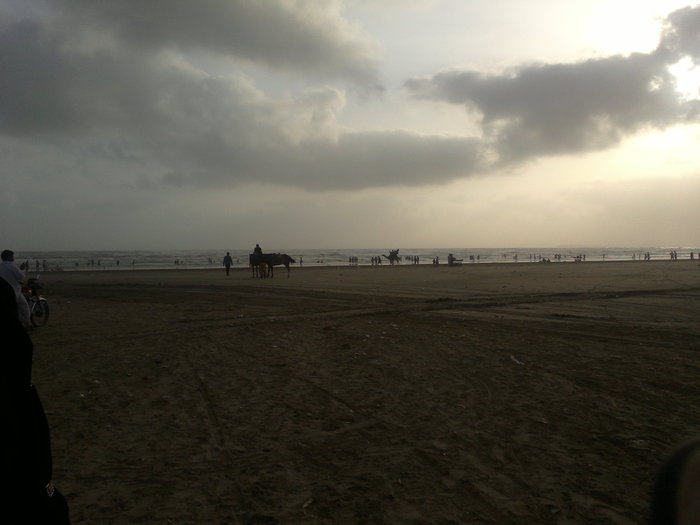
Raheen and her best friend, Karim, share an idyllic childhood in upper-class Karachi. Their parents were even once engaged to one another’s partners, until they rematched in what they call “the fiancée swap.” But as adolescence distances the friends, Karim takes refuge in maps while Raheen searches for the secret behind her parents’ exchange. What she uncovers reveals not just a family’s turbulent history, but also a country’s—and now a grown-up Raheen and Karim are caught between strained friendship and fated love.
Kamila Shamsie was born in 1973 in Karachi, where she grew up. She has a BA in Creative Writing from Hamilton College in Clinton, NY and an MFA from the University of Massachusetts, Amherst. While at the University of Massachusetts she wrote In The City By The Sea, published by Granta Books UK in 1998. This first novel was shortlisted for the John Llewelyn Rhys Award in the UK, and Shamsie received the Prime Minister’s Award for Literature in Pakistan in 1999. Her 2000 novel Salt and Saffron led to Shamsie’s selection as one of Orange’s “21 Writers of the 21st Century.” With her third novel, Kartography, Shamsie was again shortlisted for the John Llewelyn Rhys award in the UK. Both Kartography and her next novel, Broken Verses, won the Patras Bokhari Award from the Academy of Letters in Pakistan. Burnt Shadows, Shamsie’s fifth novel, has been longlisted for the Orange Prize for Fiction. Her books have been translated into a number of languages.
Shamsie is the daughter of literary critic and writer Muneeza Shamsie, the niece of celebrated Indian novelist Attia Hosain, and the granddaughter of the memoirist Begum Jahanara Habibullah. A reviewer and columnist, primarily for the Guardian, Shamsie has been a judge for several literary awards including The Orange Award for New Writing and The Guardian First Book Award. She also sits on the advisory board of the Index on Censorship.
For years Shamsie spent equal amounts of time in London and Karachi, while also occasionally teaching creative writing at Hamilton College in New York State. She now lives primarily in London.
The trouble with books that end poorly is that no matter how much you enjoyed the beginning, it's always those last few pages, that collapsed narrative, those damning passages that linger in your memory. You forget, several years later, how much you relished the first 200 pages, how tightly the prose gripped you, how quickly you devoured it. And so when I slammed Kartography shut, exhausted by the redundance of its last 50-70 pages, I tried to separate the beginning - that I did race through - from the sorely disappointing end. Sadly I realised that despite it being fast-paced, parts of Kartography grated on me from the very beginning.
Kartography is the story of Karim and Raheen, two best friends growing up in an increasingly violent Karachi. Intriguingly and somewhat salaciously, Karim's father used to be engaged to Raheen's father and vice versa. Despite this mysterious partner swap, the families remain admirably close. The only explanation from Raheen's father for this swap is that "the music changed." Karim's mother, Maheen is a Bengali living in West Pakistan at the time of the brutal civil war that created Bangladesh: Shamsie hints that her ethnicity somehow plays a role in the partner exchange, but the reader is denied the details.
Against this suspenseful backdrop, Kartography is ostensibly a tale of children growing up in 1980s Karachi, a period when the city was once again beset by ethnic strife. Frightened and frustrated by the violence, Karim's father decides to move the family to England, a decision that both separates the best friends and destroys Karim's parents' marriage. For reasons that Raheen - and the reader - never fully understand, Karim is never the same again. Though they keep in touch, Karim is conflicted between his undeniable love for Raheen and a dark truth that gnaws at this helpeless love. He develops an obsession with maps, as if by lending structure to Karachi's streets, he could make sense of his beloved, imploding home.
Shamsie does a decent job in driving home the irrational and fatal grasp of ethnic struggles, stressing that no one - no matter how upright - is immune from the madness of war. While making this point, she often overexplains to the point of being didactic, but it's an important message, one relevant to all wars, not just the largely forgotten Pakistani civil war. Shamsie also evokes the constant struggle of expats between the staid comforts of the West and the love, loyalty and guilt that draws them back to their troubled homelands.
That said, one of my biggest gripes with the book from the very beginning was Shamsie's dialogue: It is unattractively witty. Every character speaks with arch self-consciousness, meaning Shamsie clearly could not separate her own voice from that of her characters. The most glaring offender is the banter between the four teenagers. The dialogue between the kids - especially between Karim and Raheen, but Zia and Sonia were guilty too - was unrealistic and annoyingly precious. Maybe one precocious 13 year old could make jokes about kinky communist parties, but 4 precocious 13 year olds infusing their comments with casual socio-political references and scathing wit was a bit excessive. The end result is that most of Shamsie's conversations are structurally really contrived, even if they are substantively interesting.
Despite these irritations, I finished the book in one sitting, urgently wanting to solve the mystery behind the spouse swap. Shamsie builds up a crescendo that is enticing, making the reader desperate to know why Karim's mother and Raheen's father broke up, why they remained close friends and why this knowledge ultimately repels Karim away from Raheen. Unfortunately, the denouement of this narrative is seriously underwhelming.
Shamsie never adequately explains any of the characters' motivations or reactions. Raheen harps on about being ashamed of the last letter she wrote to Karim, but I re-read it several times trying to figure out what was so offensive. Yasmin's forgiving nonchalance is lazily written. Ali's immunity from ethnic issues is never addressed. Zafar's hysteria is flat. Karim's hatred is warranted, but strangely uncompelling. I kept waiting for more sinister revelations to come tumbling out, but they never did. Worst of all, the book continues for 70-odd pages after this big climax. Here Shamsie's writing is clumsy and rudderless, never quite knowing how to make its way home, hysterically connecting every sub-plot and character to each other for no real reason.
Still, Kartography isn't as bad as I am making it out to be. Shamsie clearly has a lot of talent. Her prose is lush with symbolism and shamelessly lovely in certain parts. Never is her writing more incandescent than when she is describing Karachi. She writes, "It hits you in unexpected moments, this city's romance ; everywhere, air pockets of loveliness just when your lungs can't take anymore congestion or pollution or stifling newspaper headlines. (...) I knew that there were so many reasons to fail to love it, to cease to love it, to be unable to love it, that it made love a fierce and unfathomable thing."
It might be cliched to invoke the city-as-character trope but in Kartography, Karachi really is the main character, one I empathized with most and understood best. Perhaps this is because I am from a city but 2 hours away by air, a bitterly estranged sibling, but one that shares Karachi's turbulent history, frustrating filth, maddening chaos but most of all its inexplicable, heart-wrenching magnetism.
Kartography is not a perfect novel, but it is a quick read that is interesting in bits, frustrating in others; sometimes beautiful, other times blundering. I wouldn't write Shamsie off completely, though. If nothing else, her pained but beautiful description of Karachi compels me to search out more of her work.
Kamila Shamsie is one of the best novelists I've ever read. Period. Her grasp of craft is impressive, especially since she's now only published four novels, this one being her second. Her characters are always multidimensional, and she's not afraid to make her narrator a bit unsympathetic at times (or just good at making mistakes that make you frustrated, even while you keep reading because you want to find out that she fixes them eventually). Her evocation of Pakistan both in 1971 during the attack on what became Bangladesh and twenty-five years later, when Karachi was full of violence and chaos is detail-rich. She doesn't explain everything for readers unfamiliar with Pakistan's history, language, and culture, trusting that they're intelligent enough to figure things out from context (or look up what they don't know!). The few Urdu words sprinkled throughout the text give readers a taste of Pakistani culture, which is clearly multilayered, class-conscious, and deeply influenced by its colonial past. An enthralling novel, a history lesson, a meditation on how the past never goes away.
"There's a ghost of a dreams that you don't even try to shake free because you're too in love...with utter irreversible loneliness"- Kamila Shamsie
One of the most romantic novels I've read about unrequited love between seemingly star-crossed lovers Raheen and Karim, it is also a story of family secrets, the horridness of the caste system set among the backdrop of the partitioning the India: of Pakistan in 1947, and Bangladesh in 1971.
In the middle of the historical conflict and violence is the friendship of Raheen, Kamir, Sonia and Zia whose closeness mirrors the couples that eventually became Karim and Raheen's parents.
As family secrets unfold, especially how the nasty caste system is supposed to create discord amongst those who are in love, Shamsie has created a world of violence, and a love that lives on with such purity and obsessiveness that it will linger in your mind once you get to the final page.
Raheen and Karim are childhood friends living in Karachi,Pakistan.Each one's father used to be engaged to the other's mother,until the events of 1971 (the creation of Bangladesh) forced them to swap partners.
As in several of Shamsie's books,the setting is Karachi,that sprawling and dangerous mega city,where violence is and has been a way of life.Karim is interested in maps and Karachi's "Kartography."
There is another familiar theme,partition of the subcontinent in 1947.It is not something Shamsie is too happy about and the subject has appeared in some of her other books too.Shamsie's own family had to move from India to Pakistan.
Here,in addition to 1947,there is 1971 as well which led to further trouble for many families.Here too,Shamsie's sympathies are more with Bengalis than Pakistanis.
I found the book very slow moving.In fact,the lack of pace is something which is pretty much a constant in Shamsie's work.And all that dialogue between Karim,Rahern and their friends bored me.
It is a fairly lengthy book,but there isn't much of a story and what there is,could have been told in far fewer words.But then,a certain number of pages had to be filled.
A disappointing effort,dull and slow, which got a surprisingly warm reception as most of her books somehow do.
Set in Karachi, Pakistan, Raheen and Karim have known each other from infancy. Their parents are best friends. The narrative follows their evolving relationship in the 1980s and 1990s, mixed with flashbacks to their parents’ lives before and immediately after marrying in 1971, the year East Pakistan parted from West Pakistan and became Bangladesh. As they get older, Karim becomes interested in understanding the ethnic conflicts, violence, and corruption in Karachi, while Raheen retreats from it. These two have been largely shielded from the adverse impacts by their parents’ affluent status. It is a story of love, betrayal, and forgiveness.
Shamsie’s writing is elegant. Karachi is integral to the narrative, becoming a character in itself. A family secret propels the narrative – each main character’s mother was previously engaged to the other’s father. It is what I will call a “literary mystery,” but is character driven. The primary themes relate to conflicting emotions about home and how lives are changed by historic events. It is a good example of how fiction can inform what a historical period was like in the lives of people who lived through it, bringing it to a personal level that is easy to relate to, no matter where we live.
i very much enjoyed this novel, in all its rich complexity. in telling a story that centres around the relationship between two main characters, Raheen and Karim, Kamila Shamsie also tells a kinda love story about (and to) the city of Karachi, and also writes a political-(is-personal) novel about the conflicts and partitions of India (especially the India-Pakistan war of 1971 and formation of Bangladesh)(the story approximately spans and/or references the period from 1947-1995 iirc). i don't really feel like i can articulate all the layers, and in all the ways, the novel worked. including that life is not neat, and lives and relationships are messy, and never happen in isolation/devoid of context.
♥💔❤
the story centres two intertwined lives and families, that are also frequently pulled apart by circumstances and politics. idealogically at times, politically at others, and ethnically at other times too. the pain of partition, and of ethnic and racialised violence is very well woven into everyday lives and neighbourhoods, as are its repercussions for years to come.
told as a slow story, spanning years, charting the entwined and touching, and diverging, lives of *all* of our characters. leaving and coming back to Karachi. actions, inactions, mistakes. devastating truths that gradually come to light, especially in the second half of the book. what happened over all those years, and especially in 1971.
"what does 1971 have to do with now?"
♥💔❤
a key theme of Karim wanting to be a cartographer (and Raheen's at times apparent lack of understanding, disinterest in and resistance to this) brings in regular discussions of maps, borders, boundaries, nations, divisions, partitions... in all their forms.
and in these - often theoretical, sometimes official - maps, and discussions, there's also the human story of finding the way thru history, family, politics, conflict, relationships, and the streets of Karachi...
despite what's perhaps seen as Raheen's resistance to Karim's ideas about the importance of maps, including in creating localised maps of meaning to people, Raheen is also positioned, and/or just seen, as having a much more immediate and intimate relationship with the city of Karachi, that Karim has perhaps lost, thru time away, othering politics, and his overview and intellectual charting, and that he's trying to find his way back to...
"follow me, i say, i know the way"
(Raheen)
🌟 🌟 🌟 🌟 🌟 all the stars 🙂 ♥
accessed as an audiobook, donated to the RNIB library, read by Tania Rodrigues.
This entire review has been hidden because of spoilers.
I was all ready to give this book 4 stars until the final 2 pages. I'm curious to know what others thought of the ending, but (without writing a spoiler review) I don't understand it AT ALL. It's in a completely different writing style than the rest of the book (i.e. almost a confusing poem style, not a book/story style). I was left not understanding at all what happened to the main characters in the book. I loved the story, even better loved all the book characters: Raheen, Karim, Sonia and Zia, and then their parents. I liked their strengths and their flaws. I liked how the book went back and forth in time and how the "sins" of the parents continued to affect their lives of their children. I felt REALLY fortunate that I had just finished before this book "A Golden Age" about the war for independence in Bangladesh, so I knew about all of the human right abuses in that country perpetrated by the Pakistani military. Kartography constantly references "1971" and alludes to a lot of these abuses, so it was great to have some idea of what had happened in that war....
In any case, I really liked the book, hated the ending. I'm now going to be left searching the Internet endlessly trying to guess what actually happened at the end of the book. Who wants to do that after reading a book? All you want is to know what happens to a book's main characters. Why would an author do this, completely change her writing style for the last 2 pages? So odd, and SO frustrating.
I loved this book. On the one hand, it's a story about love and friendships and growing up. On the other, it takes on much bigger themes - betrayal, forgiveness, morals. I don't know why I have never read Kamila Shamsie before, but I definitely want to read more of her work after reading this.
Kartography is a book set in my dear hometown, Karachi. I guess that is reason enough to love it; but that is not the only reason. At it's heart, Kartography is a beautiful love story between two childhood best friends who are a made-for-each-other couple...it just takes them some time to reconcile to that fact.
I loved the description of Karachi and I also hated it at the same time because it was so very true. The road near 2 talwar, I guess it's always supposed to remain nameless. The description about the high society; I don't really know if that is accurate. But what I do know that the attitude is very accurate. Karachiites are a bunch of very resilient people. Tragedy strikes, we cry, we scream, we mourn, and then we just get on with our lives. There is so much tragedy all around that people from all classes and ranks of life have their own sanctuaries to seek refuge from all this madness. Each and every one of us have a coping mechanism to push our problems to the back of our minds; and steal some moments each day to laugh with our loved ones & friends.
I read about the unstable law and order conditions of the city and that still rings true even today. People are targeted on the basis of their ethnicity, race, color and religion. The biggest surprise is that each and everyone of us has as diverse a group of friends as shown in the book; a mix of Punjabi, Sindhi, Muhajir, Bengali etc. And yet, ironically, even these so called intellectual minds born in this metropolitan city and sometimes educated in foreign universities fail to stand up for each other. For a moment I thought living in Karachi is like living in the dystopian world of Suzanne Collins' The Hunger Games. I wonder if are we ever going to learn from 1971? Or are we waiting for another event like that. I think it's time to put our egos aside if we actually care for Pakistan.
I have always believed that Karachi is my home. I believe the city is in my blood. I want to travel the world, but at the end of the day I want to come home to Karachi. But sometimes I wonder if I had a chance at a better life someplace else like Karim did; would I be courageous enough to return? Or would I cowardly abandon the city that has taught me to fly? Especially since I might not even have a reason to return like Karim did...his soul-mate, Raheen.
I remembered loving the book when I read it a few years ago. Yesterday as I finished the book in one sitting, I remembered why I'd loved it as much as I did.
The premise is touted as a love story between "soul-mates" Raheen and Karim, set amidst ethnic and political factions in Karachi. This in itself covers a lot of issues such as ethnic, religious and socio-economic prejudices, changing history, redemption, forgiveness, whether one big consequential action defines a person, as well as the concept of love - fate, as a verb, dynamic and everlasting.
The strength of the novel lies in its characters. They are treated with compassion, without excusing their 'mis'actions. The maps are analogous to the complexity of characters. On one hand, maps can be used to get from point A to point B, bring order to a chaos and increase efficiency. On the other hand, maps are the illustrators of stories, which describe the heartbeat of a city, its people and its history. Likewise, the characters in this story are good and bad, flawed and admirable, irritating and generous, wise and silly, and ultimately perfect because they made you stop for a minute and think about who you are. And that is why the book is so brilliant: it makes you realize, perhaps even understand and accept, how truth changes with time. As do people.
If this book's intention was to make me feel more amicable towards Clifton and Defense rich kids, it did not succeed. As a story, though, I had a great time.
Can angels lie spine to spine? If not, how they must envy us humans
GOD!!! The Ending…!!! O-O I read and re-read it for many times. It was kind of out of nowhere… Kamila did a great job. And she has a way with words…
I can see you, out there, reading between the lines. Come home, stranger. Come home, untangler of my thoughts. Come home and tell me, what do I do with this breaking heart of mine?
And thank god, I didn’t miss the following paragraph!!!
In Karachi’s streets even the mourners turn their faces skywards to the rain and falling leaves. Between sheets of water, indistinct figures dance together. I take Karim’s hand and pull him into the music. ‘Follow me,’ I say. ‘I know the way.’
A very quick read. Not very special. Probably good if you want something easy for your next long flight.
Though Shamsie depicts some pecularities of Pakistani society very accurately her main theme is not capturing. She believes too much in the perfect match and destiny. Her message is well intended but her insight to the differences in society (rich and poor, generational conflicts, historical implications and the East-West culture) remain superficial. I didn't learn anything new from her.
I Love this book with all its faults. I accept this book with all its good and the bad things. Just like I accept my Family with all its faults. While reminiscing my childhood days spent with my cousins at my grandparents home, it dawns upon me that how innocent we were to never understand the family politics, and how our minds were too preoccupied with broken knees and teasing each other that we never thought that we all will one day drift apart. How we didn't know about the family secrets, the secrets that were too big that they could alter the course of rest of our lives. Well, not to the extent to what the main characters in this novel went through but closer to that. That is why this book touched those chords of my heart which I think no book ever will. It felt too real and close that it made me to evaluate about where our life went wrong and why the people who were so close to us at one point in our life turned their backs towards us.
Mixed but mostly positive feelings about this one. The drama of two (and more) several entangled families unwinds slowly, with a masterful build-up and a perfect stirring of curiosity. The story manages to be a very good page-turner, on that account.
Things I liked not so much: the way some of the characters seem to make an unrealistically big deal out of things or to end things (at least temporarily) with big dramatic gestures and lines. Another thing I am uneasy over is the way the main female character (and POV voice) keeps struggling to understand the boy/man she is in love with and to find ways to placate him. Lots of effort and lots of stress just to figure out what he wants and in what way she is failing him now. Lots of self-deprecation too.
I know that in the story there's a huge backdrop reason for that (let's call it an inherited disappointment that needs to be overcome), but I can't help seeing it through the gender lens as well, especially considering how common this unbalanced state of things tends to be.
Things I loved: the interactive map idea at the end (and the book-long preoccupation with maps), especially because I also worked on a narrative mental map method while I was still active in anthropology, so this really touched a sensitive spot. I also liked the way the social issues were addressed, and the complicated paths of friendship and family attachments, revealed in almost the same complex glory they attain in real life.
‘Just mindless violence,’ he said, snapping the blade closed. ‘Doesn’t it bother you that we’re here because our parents don’t feel we’re safe at home?’ I shrugged. Our first time away from our parents, and he had to go and do the whole concerned-citizen-of-a-city-in-turmoil bit on me. Imagine if in The Lion, the Witch and the Wardrobe the four children sat around saying, ‘We’re here because there are air-raids in London. How terrible!’ They’d never even make it up the stairs, let alone into the wardrobe, with that kind of attitude.’
“What an odd and misleading thing familiarity is; so ready to disguise itself as intimacy.”
I backed away. ‘God, you’d make a good tyrant.’ ‘I’m a mother. The boundary between the two is sometimes very blurry.’
I was going to give this a 4, but then had to settle for a 3.5 (3 on Goodreads) due to the very fact that the author, in the name of whatever-you-call-it, introduces something at the very end of the book.
I was drawn to this book by its title (which finds an explanation in the book in a nice way) and the Goodreads' blurb. Fiction set in Pakistan is always something that I look forward to reading (particularly after Moth Smoke) and it helps that the author is a native of Pakistan and knows the geography well.
Set in a timeline which makes 1971 the center of the premise figuratively and chronologically, Kartography is a tale of people affected by the partition of East and West Pakistan. The characters central to the book, Karim and Raheen, are easily the most lovable characters that I have come across in the recent part. With their own sense of incompleteness and indecisiveness, the characters find a great place in this story which traverses along geography and timelines while continuing to get back to the happenings of 1971.
The keyword that I'd like to associate with this book is the consistency. The story could have been a short story of less than 50 pages in length. However, Kamila decides to weave in a lot more detail and does not expose the 'Why?' of a major happening in the book until the last few chapters. While this book easily runs the risk of being dismissed as a slow book, it is the element of 'suspense' that drives you to move forward in this book.
This was my first Kamila Shamsie book and I am glad I picked it up after having it in my TBR for over 6 months. Looking forward to reading more of her books soon.
The story revolves around Raheen and Karim, two best friends who were born in love with each other and who finish sentences for each other , their other two friends Zia and Sonia, their parents (who also happen to be best friends) and their other friends all of whom belong to the elite class of a battle-scarred Karachi.
As the story proceeds, we learn that Karim's mother (who's of Bengali descent) and Raheen's Father were once very much in love and engaged and Karim's father was engaged to Raheen's mother but then the War of 1971 happened (and East Pakistan became Bangladesh) and the music changed and the “fiancée swap” happened.
When Raheen and Karim are 13, they're sent to a farm in Rahim Yar Khan to live with Laila and Asif, the friends of their parents because “Karachi kay Halat Kharaab hain” where Karim decides to become a cartographer and Raheen sees an old photograph of her parents and Karim's parents and realizes that there's a lot she doesn't know about the mysterious partner swap.
The main subject of the story is how events that took place before they (Raheen and Karim) were born and decisions and choices made by their parents affected their lives and their relationship even though were unaware of what exactly happened for a long time.
I have mixed feelings about this book. Its the kind of book that hooks you immediately and makes it hard for you to stop reading until you've reached the last page but at the same time leaves you wondering whether you loved it or you hated it
The narrator was annoying. 13yo Raheen was far better and reasonable than the grown-up Raheen. Same goes for Karim, who won't talk to his best friend because he *assumed* she knew everything that had happened years ago and still didn't hate her father.
The only thing I loved reading was the description of Karachi. It was strong and impressive. How the evolution of city was described. How the roads and places never stopped being a part of every page.
Kartography is my book from Pakistan for the Read The World challenge. It’s a novel set in Karachi in the 90s with flashbacks to the 70s and particularly the 1971 civil war when East Pakistan became Bangladesh. Raheen and Karim have a tangled relationship which parallels, and is haunted by, the tangled relationships of their parents twenty years earlier. It’s a love story, a family saga, a book about ethnic and class tensions in Pakistan.
Given that the Read The World challenge has lead me to some pretty obscure and unusual books, it was a nice change of speed to be reading some mainstream literary fiction that was actually written in English. But I wasn’t blown away by this one. I was quite pleased with it when I first picked it up: Shamsie can certainly write, and it’s well observed and lively… but after a while it started to annoy me slightly. The dramatic contrivances are just a bit too contrived and a bit too relentless: every page has to ratchet up the emotional tension, so there’s a constant stream of twists and misunderstanding and surprises. There’s never a lull or a pause; it’s a bit soap-operaish in its piling up of plot devices.
So I didn’t hate it, but I probably could have found a better book for a country like Pakistan. Quite possibly I would have enjoyed one of Shamsie’s other books more, for that matter. But there you go; win some lose some.
I am done, done and done with this novel and can't just stop being thankful to the friend who suggested it to me. I am so in love with this tale of human errors, decisions and forgiveness and above all my fav fav topic :friendships and bonds. Reading this book for much like diving headlong into this new world with 3D glasses whereby everything is different and new and so much more alive than you can ever have thoughts. The strong bond of friendship between these two groups of friends and a huge transformation due to changing circumstances, both in the past and present, the nature and intensity of their love, their changing nature and personalities, all with such precision just melts into a complete beauty. You can almost laugh at this humor of the elites, their typically unaffected life, and these games of making it to the lists of parties and knowing who is who and what is what. A karachiite and yet so little knowledge of this beautiful city which is my identity, living in this circle of ignorance, a pity!! You would think it was not possible to feel a huge crush and a strong urge to beat to pulp a guy from a fictional world, feeling extra protective of raheen.
This book is too real. There are too many feelings here. I'm sure somebody who isn't a Karachiite wouldn't feel the same way I did when I read this, but to me, it was just a reminder of the insane love I hold for Karachi even when I hate it in my most superficial moments.
Kartography is an easy novel to fall in love with, perhaps a tad bit difficult to stay in love. Shamsie translates the turmoils of a Nation torn by Civil War into intricately explored personal stories of falling in love and falling out of love. Karachi, alive and breathing, is perhaps the most vivid character in the novel; and the smells and sounds of Karachi stay with you long after you finish the story.
God. Where do I start with this book. This review is going to be essay-length because there is no other way for me to fully explain my feelings about it. It is currently 5:32 AM on Tuesday, July 30th. I am supposed to be going to the gym right now, but this book has me glued to goodreads because if I don’t write my thoughts down right now, I’m scared they’ll leave my brain. And I need to memorialize the thoughts and feelings I have for this book because there is simply no other way to move on with my life after having read it.
This book holds a special place in my heart because of what I was able to learn about my own roots because of it. My dad was born in 1974, and grew up in the middle of all the chaos that happened in Karachi. I knew a little about it growing up, he’d joke about getting beat up by soldiers for staying out past curfew playing cricket, but that was the most I knew. I heard whispers that some of the people affiliated with the violent political parties immigrated to Canada, and we went to masjids with literal murderers but I was too young to understand. When I was 20% into this book, Kamila Shamsie hadn’t gotten to the worst parts of the civil war in Karachi, so I asked my dad about his experience now that I’m old enough to really grasp what happened. For the sake of my possible review-readers I won’t go into all the details, but it was a lot. Obviously the author wasn’t going to jam pack the nations’ traumas into a book that was about much more than just war and struggle. But I am so grateful that I was able to learn from someone’s personal experience what it was actually like during this time. It also really set the scene for me knowing what actually happened in the book was 20x worse in real life. Okkk now let’s get one with the review !!!
Raheen & Karim are two kids growing up in Karachi in the mid-seventies post-partition. They are the children of upper-class socialites who worry for their safety amidst the riots and ethnic violence erupting in Karachi. The two are sent away to a farm for a few weeks until things settle down a bit more. While both were aware that their parents went through a fiancé swap, their curiosity was truly ignited during their time at the farm. Upon returning to Karachi, Karim shortly moves away with his family to London to escape the mess that is slowly unfolding in Karachi. The story follows Raheen throughout high school and university, as the truth forces its way to her piece by piece.
Shamsie’s characters are so multidimensional. There isn’t a single character I hate in this book, including Zia’s father. Her writing encourages readers to remember how the past haunts people, and nobody walks away untouched from the traumas of war. Every character is morally grey, but all redeem themselves in their own ways. She manages to switch from a light hearted childhood setting, to heartbreak, betrayal, war, reconciliation in a matter of chapters. And she does it so well to not overwhelm the readers.
The prose itself is also very captivating. From witty dialogues, to life changing lessons, I was glued to this book from start to finish and fell in love with the individual characters’ stories.
She somehow made the city of Karachi the main character, which was both beautiful and terrifying. You cannot walk away from this book without appreciating the resilience of those who survived and continue to live there. It is so easy to read about the long lasting effects of colonialism from a historical point of view, but to see the personal impacts of it on friendships, relationships, class; this book really makes me think of how all beautiful cities have a blood drenched past that got them to where they are.
As someone who is from Karachi and who loves living in Karachi - my relationship with my home is quite a complicated thing to explain. Karachi never gets any good press, its dirty, unattractive, chaotic - at the same time to me its - charming, energetic, vibrant, challenging, comfortable and thick-skinned. Also, I read a lot of foreign literature - particularly from the West because I often do not connect to local literature (for whatever odd reason - ive read a lot of books about spices (cliche)- frankly that is definitely not who I am).
Kartography is the first book ive ever read that encapsulates so very perfectly my life and relationship with my city and the people around me. It has this uncanny ability to capture the little details - like the ability to be able to find beauty in unexpected places, how everyone comes together and "contacts" are called in times of need, how a car thief can actually help you fix your car, the nicknames for "gossipy society women", the parties, the late night drives, tea, the melodramatic lifelong relationships with our friends. It was spellbinding to read something that so beautifully captures my experiences.
I think what most people find annoying about this book - which on afterthought - I didnt find annoying- is the relationship between Raheen and Karim. They are flawed characters that make some rather immature choices. But I particularly enjoyed how Karim questions and pesters Raheen about her relationship with Karachi and often calls her out to be complacent and blind. I can relate to that so much. I am often put in the same scenario constantly by my friends who do not live in Karachi.
The writing style is gorgeous. Kamila Shamsie has the most beautiful way with words. Her writing is lyrical and smooth and rich with character without being overly flowerly and unbearable. Her metaphors where thoughtful. I quite enjoyed that.
The ending of the book is also a point of discussion for most people. While it does come out of nowhere and doesnt bother me. I just didnt see why it was necessary. The book has already addressed the unpredictability of Karachi throughout the novel - the ending doesnt seem like a value addition.
Now - would someone who is not from Karachi or Pakistan for that matter be able to understand and connect with the story as well as I do. I think the answer is yes and no. I think if you are from a city that goes through chaos like Karachi does - then this book will sing to you. Otherwise it may be difficult to connect to.
All in all - this is a gorgeous novel. I cant believe ive taken so long to read it. Im so glad I did. Please go out and fall in love with Kartography
I love that this book demands that the reader have a complex understanding of human emotions and sentiments and how what others say and do can really transform and mould your feelings and thoughts. Scratch demands; this book NEEDS us to understand human emotions in all its glory and all its failings because that’s what makes you admire this book in its entirety.
I also love a strongly quotable book. So many phenomenal sentences and paragraphs in this book. Raheen hanging her emotions out bare to dry made her the best narrator. She was so unabashedly honest, something she does keep mentioning throughout and even reflects upon, which made her narrating very refreshing.
This book kept me thinking when I’ll read something like this again throughout and that to me is the hallmark of a great book.
Pakistan in #cartidecititlumea 30/2024 și 3 stele plus E un plus acolo pentru triunghiurile amoroase, dar și triunghiurile sociale și pentru proza care i-a adus scriitoarei atâtea premii. M-a prins. M-a prins bine în viața acestui oraș care seamănă, dincolo de zbucium, cu orice oraș unde ai crescut și pe care îl vezi prin filtre de nostalgie. E un roman care vorbește despre dragoste și politică. Și cum se îmbină, dezbină și aruncă de colo-colo aceste concepte, cum pe unii îi determină să spună Nu acolo unde ar trebui să spună doar Da, dar inima și mintea nu se pot alinia. O să-mi aduc aminte din cartea asta de strada Lunii, o stradă care nu există pe nicio hartă și se deschide de la casă la casă doar în nopțile cu lună plină. O să-mi amintesc de cât de viu și bogat poate fi un oraș când tu îl crezi măcinat de lupte. E o carte ce se poate citi alături de alte cărți care combină viața cu revoluțiile țărilor (A Passage North - Sri Lanka). Povestea de dragoste e tare tandră și sunt momente încărcate de dorință, și la fel se simt și unele descrieri legate de orașul Karachi. Îl poți mirosi, îl poți urmări pe hartă, poți vedea marea și poți simți că ceva e în neregulă când autoarea spune că mașina lor nu a venit, că o cursă cu mașina prin oraș se termina cu gloanțe în portieră, dar la fel de bine când un hot de mașini îi sfătuiește pe niște tineri să închidă sistemul antifurt la mașină, că de aia nu pornește, sau alți oameni care oferă brățări de flori fără să ceară bani, pentru că au surori sau străini care vin să schimbe o roată unei fete doar ca ea să nu iasă din mașină. Contradicțiile astea ale țării și ale orașului se resimt și în Povestea de dragoste și în ceea ce personajul feminin alege să facă în final. Și aici e problema, finalul. Care duce cartea de la 4 la 3, pentru că e grăbit cumva sau rupt și sacadat, când cartea a curs ca un muson. Dar tot v-o recomand, așa cum recomand orice carte ce face 2 lucruri: Spune o poveste și descrie o țară sau un oraș.
Asta a fost călătoria mea în Pakistan, unde din 72 in 92 Bengali sunt inca discriminati și are loc un razboi etnic intre populatiile Muhajir, si Pathan. Muhajirs are a diverse group of Muslim immigrants and their descendants, while Pathans specifically refer to the Pashtun ethnic group. "yes, the city said, I am a breeding ground for monsters, but don’t think that is the full measure of what I am."
"Life compressed into houses and cars and private clubs and school and gardens too small to properly hide in."
This was a fairly effortless and enjoyable read. The novel traces the lives of young people who live in Karachi, Pakistan. All of them from rich backgrounds, which already limits the scope of described environment by a whole lot. The main character, Raheen, is a spoiled and somewhat annoying girl, who has a special connection with her all-life friend Karim. When they get older they inevitably harbor feelings for each other but there is something in their parents' past that poses a hefty obstacle to their happy ever after.
"Kartography" is entangled, though rather slightly, in the events of Bangladesh Liberation War in 1971. I am grateful for that bit of history because I didn't know anything about it before. However, if you are worried that your lack of knowledge of South Asian history would be affecting this novel, you shouldn't be. Shamsie skilfully serves the historical facts, which are mostly the background shadows for the story of our bubble-contained kiddos. What else could I say? Semi-interesting characters, the obstacles-kind-of-love-story, a very strong (and admirable) sense of place. Pretty good writing, it just doesn't necessarily go as deep into certain topics as it could... This is my first novel by Kamila Shamsie and eventually I would like to read something else by her.
This is the second book I have read of hers, the first being Broken Verses, and she just keeps getting better with everything I read of hers. I am beginning to think she understands my soul. Her tactful and fair handling of the sentiments many people in West Pakistan had towards Bengalis in '71, her mastery in dealing with emotions and building those emotions, and her brilliance with words is just mesmerizing. I don't know what it is but I can't seem to be getting enough of her work. Read it.
Summer Bingo-One word title This is a beautifully told story about love, relationships, and coming of age in war torn Pakistan...and, I couldn't imagine a more perfect ending.