

What do you think?

A Honeymoon in Space
One of the first novels about interplanetary travel, A Honeymoon in Space takes readers on a journey across the solar system Lenox, the Earl of Redgrave, has made the greatest scientific discovery in the history of the a flying ship with the power to break free of Earth’s gravity and take to the stars. But before he uses it to expand humanity’s understanding of the universe, he has some personal business to attend to—namely, wooing an old flame. The lady in question is Zaidie, the daughter of Lenox’s colleague Professor Rennick. With Zaidie about to be forced into a loveless marriage, Lenox knows he must do something drastic. He steals her away and takes her out of this world—literally. Griffith’s accounts of other planets are spectacularly engaging—from subterranean civilizations on the moon to the warlike Martians to the musical inhabitants of Venus. This remarkable adventure makes for a memorable honeymoon indeed. This ebook has been professionally proofread to ensure accuracy and readability on all devices.
79 pages, Kindle Edition
First published January 1, 1901
About the author
George Chetwynd Griffith
214 books12 followersGeorge Griffith (1857 – 1906), full name George Chetwynd Griffith-Jones, was a prolific British science fiction writer and noted explorer who wrote during the late Victorian and Edwardian age. Many of his visionary tales appeared in magazines such as Pearson's Magazine and Pearson's Weekly before being published as novels. Griffith was extremely popular in the United Kingdom, though he failed to find similar acclaim in the United States, in part due to his revolutionary and socialist views. A journalist, rather than scientist, by background, what his stories lack in scientific rigour and literary grace they make up for in sheer exuberance of execution.
Ratings & Reviews
Friends & Following
Create a free account to discover what your friends think of this book!
Community Reviews
Displaying 1 - 29 of 29 reviews

March 14, 2015
There's a reason this turn-of-the-century "classic" science fiction novel is so unknown among readers a hundred years later. It stinks. The plot--an abduction to space turned forced wedding--will hardly appeal to modern readers. The science was adequate for SF novels of that day, but the story telling is mediocre.
Misogynistic and boring.
Misogynistic and boring.

September 5, 2017
Alright so this was the book I chose for the "between 1900 and 1950" task of the Read Harder challenge. It's an early work of science fiction and it does some interesting things, but I really can't give it more than two stars.
It was interesting to see what people imagined the surfaces of these planets would be like before telescopes could give us accurate information. So, for example, he describes Venus as having really really clean and fresh air. This also was published before Einstein's theory of relativity, so their travel just all takes place in real time with no relativistic effects. This is totally excusable because of the time that it was published.
What the time period does not excuse is how racist/xenophobic and sexist the author is. The entire plot revolves around him kidnapping a woman who pretty much immediately decides that yes, she does want to marry him. The narrative is peppered with offhand comments about the superiority of Anglo-Saxons. I can't write this off as a product of its time because not everyone at that time felt that way. Yes, it may have been a more common or acceptable viewpoint but that doesn't make it ok or enjoyable to read.
It's not a long book and, as I said, the author's vision of what the planets would be like is certainly interesting. If you are going for absolute completeness in reading every work of historical science fiction then this is a part of that journey, but if all you want is a space adventure narrative, there are much better and more modern books that will fulfill that need.
It was interesting to see what people imagined the surfaces of these planets would be like before telescopes could give us accurate information. So, for example, he describes Venus as having really really clean and fresh air. This also was published before Einstein's theory of relativity, so their travel just all takes place in real time with no relativistic effects. This is totally excusable because of the time that it was published.
What the time period does not excuse is how racist/xenophobic and sexist the author is. The entire plot revolves around him kidnapping a woman who pretty much immediately decides that yes, she does want to marry him. The narrative is peppered with offhand comments about the superiority of Anglo-Saxons. I can't write this off as a product of its time because not everyone at that time felt that way. Yes, it may have been a more common or acceptable viewpoint but that doesn't make it ok or enjoyable to read.
It's not a long book and, as I said, the author's vision of what the planets would be like is certainly interesting. If you are going for absolute completeness in reading every work of historical science fiction then this is a part of that journey, but if all you want is a space adventure narrative, there are much better and more modern books that will fulfill that need.

May 20, 2010
This was great fun!
If you can imagine a sci-fi of the standard of 'Journey to the Centre of the Earth' crossed with one of those oh-so dated guides for housewives you kind of have the picture.
This was written in 1902, before things like cars, aeroplanes, telephones, radio etc were commonplace, but you can really feel that the author knows these are so close he can almost taste them - however, all his guesses to exactly what was around the corner are wonderfully wrong!
Of course all the planets in the solar system are inhabited, some nice and some nasty, but all dealt with with typical british composure and a nice cup of tea (prepared by wifey while the men are being men)
Dreadful - but I loved it!
I read this on my e-reader as one of many out-of-copyright books that are now avaiable for free - it was very pleasing to me that something from such a different age, speculating about the future is now being re-read due to new technology.
If you can imagine a sci-fi of the standard of 'Journey to the Centre of the Earth' crossed with one of those oh-so dated guides for housewives you kind of have the picture.
This was written in 1902, before things like cars, aeroplanes, telephones, radio etc were commonplace, but you can really feel that the author knows these are so close he can almost taste them - however, all his guesses to exactly what was around the corner are wonderfully wrong!
Of course all the planets in the solar system are inhabited, some nice and some nasty, but all dealt with with typical british composure and a nice cup of tea (prepared by wifey while the men are being men)
Dreadful - but I loved it!
I read this on my e-reader as one of many out-of-copyright books that are now avaiable for free - it was very pleasing to me that something from such a different age, speculating about the future is now being re-read due to new technology.

June 23, 2014
A rich british man and spunky american woman fly around the solar system.
Each planet or moon they visit represents a potential view of the past or future of the human race. Its really quite good pulpy sci-fi and the female character is fairly strong for the time.
Each planet or moon they visit represents a potential view of the past or future of the human race. Its really quite good pulpy sci-fi and the female character is fairly strong for the time.

September 23, 2013
Boy meets girl.
Boy kidnaps girl.
Boy marries girl and takes her for a spin around the Solar System.
Oh, sure. The plot is rudimentary.
However, A Honeymoon is Space is noticeably easier to read than either The Angel of the Revolution or The Outlaws of the Air which are two other George Griffith novels that I've recently read. The prose, at least, is somewhat better insofar as it doesn't drone on forever.
Like the author's other work that I've sampled, "Honeymoon" is ultimately worth reading only for a taste of what people were entertained by in popular fiction a century ago (and Griffith was popular). In this case, said taste mainly consists of quaint ideas about the sun's planets with a smattering of English-American superiority and male chauvinism.
Boy kidnaps girl.
Boy marries girl and takes her for a spin around the Solar System.
Oh, sure. The plot is rudimentary.
However, A Honeymoon is Space is noticeably easier to read than either The Angel of the Revolution or The Outlaws of the Air which are two other George Griffith novels that I've recently read. The prose, at least, is somewhat better insofar as it doesn't drone on forever.
Like the author's other work that I've sampled, "Honeymoon" is ultimately worth reading only for a taste of what people were entertained by in popular fiction a century ago (and Griffith was popular). In this case, said taste mainly consists of quaint ideas about the sun's planets with a smattering of English-American superiority and male chauvinism.

May 11, 2020
Weird thing. I didn't like it for another reason, but maybe you'll find this title helpful.
I'll drop this.
I got floored during a romantic moment so I'm going to drop this.
(Description of white lady)
"Youngest daughter of the branch of the Race that Rules."
I'll drop this.
I got floored during a romantic moment so I'm going to drop this.
(Description of white lady)
"Youngest daughter of the branch of the Race that Rules."
This entire review has been hidden because of spoilers.

October 7, 2025
A turn-of-last-century piece of early speculative fiction, offering a tour of the solar system as it was then conceived (more or less; the author's grasp on science, even the science of the day, was not always firm). This makes it a "planetary romance," like Barsoom, C.L. Moore's tales of Mars and Venus, or Lewis's Space Trilogy (the latter a very late example of the form). It wouldn't at all surprise me to learn that Lewis had read it, though his Martians are completely unlike Griffith's, and his Venus, while also an unspoiled Eden, is also significantly different.
The hero is an engineer who has built an interplanetary ship powered by basically Cavorite (though I don't think he was copying Wells, whose The First Men in the Moon came out the same year), and uses it to take his newlywed wife on a tour of the Solar System. In line with the author's first book, The Angel of the Revolution: A Tale of the Coming Terror , as the only possessor of the technology of flight, he's in a position to dominate the earth and make everyone behave themselves, and uses this to stop World War I from breaking out early (with different alliances) before departing for his honeymoon. (Some of my fellow reviewers characterize what happens with his wife as an abduction, but it really isn't. They had a history from several years before, and she wanted to marry him, but he wouldn't say anything until he'd built the spaceship for... some reason. He doesn't just grab some random woman he meets for the first time and make her marry him; he finds her on a transatlantic liner going to marry someone else, who she doesn't love, out of pique, and convinces her quite easily that she'd rather marry him instead.)
It's shot through with all the prejudices of its time and its author. The engineer-hero patronises his new wife (daughter of the scientist whose designs he has realized, a couple of years after the professor's death) abominably. He repeatedly calls her "little woman," even though it's established in one scene that she's almost as tall as he is, and he's a tall man. She's one of Griffith's educated women, who's both celebrated for her intelligence and put in her place, similarly to his The Mummy and Miss Nitocris: A Phantasy of the Fourth Dimension , which I read recently.
The British Empire is a jolly good thing, hurrah, and Englishmen are the best, with Americans only a little bit inferior (the wife is American). When they reach Mars, there's a lot of dialog about how the Martians, under the pressure of their dying world, have become super-rational and no doubt reduced their "lesser races" to servitude or else eliminated them, as will happen on Earth some day; both of the travellers are highly indignant that the first response of the Martians is to shoot at them, which of course English or American people would never do with strange visitors. The most ludicrous moment of the whole book is when they can understand the Martian leader because, since English is the best language, the Martians have naturally come to speak something almost exactly like it as part of their evolution towards rationality and optimisation.
They consider themselves fully justified in mowing down a bunch of the nasty Martians with Maxim machine guns, and depart for Venus.
The Venusians are unfallen angels of sorts, and although they'd love to stay there, even these two egotists recognize that they'd only spoil the place. One of Jupiter's moons has an advanced and friendly civilization - the humanoid form is, of course, what everything evolves into if it's going to be intelligent - and Saturn is full of monsters.
Finally, they barely make it home, through one of several coincidences that save their bacon by celestial bodies being in the right place at the right time to assist their antigravity drive.
Apart from his various storytelling weaknesses, the author makes two big scientific blunders. First, he assumes that because a (very slow-moving) balloon doesn't throw you around when you fly in it, nor will an extremely fast-moving spaceship. Before Einstein (or maybe before actual aeroplanes), people don't seem to have had much of a grasp of acceleration and how it worked. The other blunder is that as they approach one of the gas giants - I forget whether it's Jupiter or Saturn, I think Saturn - he gets phases completely wrong. As he presents it, the planet goes through its phases rapidly because of the rotation of the planet, whereas in fact it's the angle between the observer, the sun, and the celestial body that produces phases, as he ought to have known if he thought about the moon for even a minute.
In summary, it's not good, though interesting as a sample of how people thought about the Solar System (and humanity) a hundred and twenty-five years or so ago.
The hero is an engineer who has built an interplanetary ship powered by basically Cavorite (though I don't think he was copying Wells, whose The First Men in the Moon came out the same year), and uses it to take his newlywed wife on a tour of the Solar System. In line with the author's first book, The Angel of the Revolution: A Tale of the Coming Terror , as the only possessor of the technology of flight, he's in a position to dominate the earth and make everyone behave themselves, and uses this to stop World War I from breaking out early (with different alliances) before departing for his honeymoon. (Some of my fellow reviewers characterize what happens with his wife as an abduction, but it really isn't. They had a history from several years before, and she wanted to marry him, but he wouldn't say anything until he'd built the spaceship for... some reason. He doesn't just grab some random woman he meets for the first time and make her marry him; he finds her on a transatlantic liner going to marry someone else, who she doesn't love, out of pique, and convinces her quite easily that she'd rather marry him instead.)
It's shot through with all the prejudices of its time and its author. The engineer-hero patronises his new wife (daughter of the scientist whose designs he has realized, a couple of years after the professor's death) abominably. He repeatedly calls her "little woman," even though it's established in one scene that she's almost as tall as he is, and he's a tall man. She's one of Griffith's educated women, who's both celebrated for her intelligence and put in her place, similarly to his The Mummy and Miss Nitocris: A Phantasy of the Fourth Dimension , which I read recently.
The British Empire is a jolly good thing, hurrah, and Englishmen are the best, with Americans only a little bit inferior (the wife is American). When they reach Mars, there's a lot of dialog about how the Martians, under the pressure of their dying world, have become super-rational and no doubt reduced their "lesser races" to servitude or else eliminated them, as will happen on Earth some day; both of the travellers are highly indignant that the first response of the Martians is to shoot at them, which of course English or American people would never do with strange visitors. The most ludicrous moment of the whole book is when they can understand the Martian leader because, since English is the best language, the Martians have naturally come to speak something almost exactly like it as part of their evolution towards rationality and optimisation.
They consider themselves fully justified in mowing down a bunch of the nasty Martians with Maxim machine guns, and depart for Venus.
The Venusians are unfallen angels of sorts, and although they'd love to stay there, even these two egotists recognize that they'd only spoil the place. One of Jupiter's moons has an advanced and friendly civilization - the humanoid form is, of course, what everything evolves into if it's going to be intelligent - and Saturn is full of monsters.
Finally, they barely make it home, through one of several coincidences that save their bacon by celestial bodies being in the right place at the right time to assist their antigravity drive.
Apart from his various storytelling weaknesses, the author makes two big scientific blunders. First, he assumes that because a (very slow-moving) balloon doesn't throw you around when you fly in it, nor will an extremely fast-moving spaceship. Before Einstein (or maybe before actual aeroplanes), people don't seem to have had much of a grasp of acceleration and how it worked. The other blunder is that as they approach one of the gas giants - I forget whether it's Jupiter or Saturn, I think Saturn - he gets phases completely wrong. As he presents it, the planet goes through its phases rapidly because of the rotation of the planet, whereas in fact it's the angle between the observer, the sun, and the celestial body that produces phases, as he ought to have known if he thought about the moon for even a minute.
In summary, it's not good, though interesting as a sample of how people thought about the Solar System (and humanity) a hundred and twenty-five years or so ago.

August 14, 2017
An Old-Fashioned Hoot
This book is charming with it's naive tale of space-faring adventure. Though the science is not exactly cutting edge, it is quite inciteful for the time it was written.
This book is charming with it's naive tale of space-faring adventure. Though the science is not exactly cutting edge, it is quite inciteful for the time it was written.

October 14, 2025
George Griffith was once as popular and famous as H G Wells, but he has since faded into near-oblivion. I have previously reviewed his two novels of aerial warfare - "The Angel Of The Revolution" and "Olga Romanoff", both of which pre-dated Wells' "War In The Air". In 1901, Griffith turned to more peaceful matters with "A Honeymoon In Space." In this an English Lord and an American heiress elope in a device known as the "Aeronef". This is powered by R-rays, a form of antigravity; a concept developed by the heiress' father, but brought into existence by the hero, who alone had the money to manufacture it. The machine is maintained by a loyal Yorkshire mechanic, who ancestors had served the aristocracy for centuries. Having eloped, the loved-up pair set off to explore the Solar system, as one does. They find life everywhere, as was expected to be the case in the early Twentieth century. On the Moon, they find that life is almost extinct, as that globe had steadily cooled, but find a few horrid lifeforms hanging on at the bottom of Newton crater. The Martians are, predictably, hostile but the English aristocrat gives them a bloody nose. Unlike Wells, Griffith supposed that intelligent life would always be humanoid. Venus is inhabited by peaceful cherub-like beings who communicate through music. Only Ganymede in the Jovian system is inhabited, but there the tall humanoids calmly await their doom - as their world cools. Saturn does not appear to have intelligent life, but obviously they see only a small part. The novel is obviously a period piece, riddled with class distinctions, but Griffith, probably by accident, does hit the mark occasionally. His book is one of the first to employ antigravity as a means of propulsion, the dense Saturnian atmosphere is populated by aerial life, predating Arthur C Clarke, and the aerojet uses the slingshot effect to return to Earth when all seems lost. Although obviously totally out of date, "A Honeymoon In Space" has an honourable place in the history of SF.

August 21, 2021
So very dated,. Reads like a story from 1910 and a very classic style of planetary Romance and unlikely to be of much interest to anyone who doesn't like old science fiction or planetaryit is painfully dated the wife that comes from the honeymoon is frequently called something like little womanthe ending is a random miracle that I can't understandI have to wonder if it was a precursor to CS Lewis's parentaland it's sort of an interesting little historical artifact and I could really only recommend it to somebody who's trying to understand the early history of Science Fiction or I suppose early history of racism so that's a pretty limited audience I hope
the writing itself is adequate but no better the author is very enthusiastic with his use of adjectives and and SuperLotto especially everything is the most intense or spectacular thing in the solar system which is kind of amusing after a while the giant fish that swim in the atmosphere or oceans of Jupiter for example are far larger than any Earthly whale and he does display a certain amount of imagination for example the those aforementioned giant fish Things Are two-headed beaked creatures that rip each other to shreds to the slightest provocation but compared to later science fiction the or even compared to contemporary science fiction the intensity of imagination is is low at best for example I can't recommend George Griffin Griffiths books over books written at a comparable Time by HG Wells or Jules Verne for example and other authors like like Andre Norton definitely Superior in imagination and and
the writing itself is adequate but no better the author is very enthusiastic with his use of adjectives and and SuperLotto especially everything is the most intense or spectacular thing in the solar system which is kind of amusing after a while the giant fish that swim in the atmosphere or oceans of Jupiter for example are far larger than any Earthly whale and he does display a certain amount of imagination for example the those aforementioned giant fish Things Are two-headed beaked creatures that rip each other to shreds to the slightest provocation but compared to later science fiction the or even compared to contemporary science fiction the intensity of imagination is is low at best for example I can't recommend George Griffin Griffiths books over books written at a comparable Time by HG Wells or Jules Verne for example and other authors like like Andre Norton definitely Superior in imagination and and
April 2, 2026
Fascinating sci-fi book from the turn of the century. I had no idea that author was super popular back then. Never heard of him before I have read his Angel of the Revolution.
The book has really weird racism in it, like referring to Anglo-Saxon "race" as "the race of rulers". The interesting thing is that it has no racial resentment that typified H.P Lovecraft. In general it seems that stuff like this had huge influence on H.P. Lovecraft, some sort of ideal he tried to live up to but he couldn't because of his crippling neuroticism.
There is some interesting stuff like finding anti-gravity more probable than engines capable of powering heavy helicopters. Also, the pneumatic guns from Angel of the Revolution appear again and they use some special explosive that is 20x more powerful than dynamite, which explains why they had such devastating effects in that novel.
It was really interesting to see how people, especially scientists back then imagined planets. There was some interesting stuff like space suits and airlock. On the other hand, the writer haven't predicted zero gravity even relatively close to Earth. There were moments of weaker gravity and a few special extremely low gravity moments on ship, but not related to leaving planet's gravity.
Also, there were no effects of acceleration and deceleration. Very weird.
The book has really weird racism in it, like referring to Anglo-Saxon "race" as "the race of rulers". The interesting thing is that it has no racial resentment that typified H.P Lovecraft. In general it seems that stuff like this had huge influence on H.P. Lovecraft, some sort of ideal he tried to live up to but he couldn't because of his crippling neuroticism.
There is some interesting stuff like finding anti-gravity more probable than engines capable of powering heavy helicopters. Also, the pneumatic guns from Angel of the Revolution appear again and they use some special explosive that is 20x more powerful than dynamite, which explains why they had such devastating effects in that novel.
It was really interesting to see how people, especially scientists back then imagined planets. There was some interesting stuff like space suits and airlock. On the other hand, the writer haven't predicted zero gravity even relatively close to Earth. There were moments of weaker gravity and a few special extremely low gravity moments on ship, but not related to leaving planet's gravity.
Also, there were no effects of acceleration and deceleration. Very weird.

January 5, 2025
This was oddly interesting. The moon was essentially colorless. (Recently, color photographs have been posted to the internet. It's not clear to me if this is from atmospheric issues alone or something else.) The honeymooners landed on most planets and were able to breathe on a few. Pluto was not mentioned in the book, as it was not yet discovered at the time of writing. Science fiction isn't my cup of tea, but it was interesting enough for me to finish, but not a compelling read. There were other creatures encountered, mean, sweet, and two headed. There were only three people on the ship, the Lord, the bride, and the butler. They had space suits the used most of the time they were off of the ship, but on the ship, they smoked cigars and cigarettes. I can't say it enough, it was interestingly odd!

September 19, 2013
I read this with an open mind because I had heard a number less than good reviews about this book, but I am a BIG fan of classic (and pre-classic) SF. I can't even give this a three because it has NO plot, none at all. It just meanders around the solar system (literally). I can forgive the naive science but the lack of a plot - no. Just make the story about something. Could have been an adventure or romance - anything. Instead it reads nearly like pro-British (and American) propaganda. Kind of a nationalistic Mary Sue. Anyway, its hard to keep going with the husband/wife banter. Maybe the best thing that could have happened would have been if it had crashed into Mars because at that point the honeymoon was over for me.
March 2, 2014
Product Description
About eight o'clock on the morning of the 5th of November, 1900, those of the passengers and crew of the American liner St. Louis who happened, whether from causes of duty or of their own pleasure, to be on deck, had a very strange-in fact a quite unprece
About the AuthorPseudonym of English author, adventurer and traveller George Chetwynd Griffith-Jones. He earned great fame as a science fiction writer in the last decade of the 19th century. In his writings the influence of Darwinian Theory of Evolution is quite apparent.

February 19, 2014
This fanciful tour of the solar system is certainly quaint by today's standards. The newlywed couple (and their somewhat surly servant/engineer) find warriors on Mars, angels on Venus, and other assorted aliens on Ganymede, Jupiter, and Saturn--all in the space of four months--in their spaceborne dirigible. I suspect the book was written partly as a social commentary, but that aspect is mostly lost on a modern reader.

November 1, 2016
Reviewing this book, thinking back to the old B movie classic's and you wont go far wrong with this read. Had a smile reading this and reminiscing about how technology has changed and some books/films have been left behind, this being one.
If you can switch off your logic and just enjoy the story, then do that with this book, its a quaint read where life exists on the other planets of the solar system, with some good & bad inhabitants on them and we follow the story of the interactions.
If you can switch off your logic and just enjoy the story, then do that with this book, its a quaint read where life exists on the other planets of the solar system, with some good & bad inhabitants on them and we follow the story of the interactions.

November 4, 2013
It was an enjoyable read as a sample of Victorian Science Romance. The exploration framework was entertaining but the science was a wonder to behold in it's naiveté; even factoring in the newness of the ideas for Victorian and Edwardian times it comes off as very simplistic and comic.

April 19, 2015
So so many unrelated tangents. You see this kind of writing when the author is attempting to world-build. I usually like it, but if brevity is the soul of wit, here lies the deceased body of a good story concept.
October 8, 2016
I give a lot of allowances for scientific misconceptions in early science fiction novels, but in this one, the author is not only uninformed, but strangely inconsistent. This is also one of the most boring reads I've had in a long time.

July 7, 2019
It is important to keep in mind that this book was first copyrighted in 1901. Suspend all 20th century knowledge of space travel and enjoy it as a fun story. This book might be especially enjoyable for fans of Jules Verne.
June 21, 2020
A brief travelogue of the solar system.
Freebie. Reminds me of a jules Verne novel. Could possibly be considered steampunk. The old fashioned morality is quite amusing. A space ship that flies at 150 mph? Alien cars that move at 35mph? Funny what seems fast.
Freebie. Reminds me of a jules Verne novel. Could possibly be considered steampunk. The old fashioned morality is quite amusing. A space ship that flies at 150 mph? Alien cars that move at 35mph? Funny what seems fast.

March 18, 2023
While I understand it was written quite awhile ago, and I'm glad it's getting a new light shed on it, this story is extremely hard to follow.

January 10, 2023
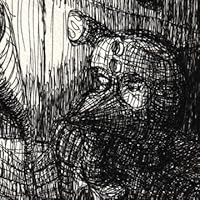
An imaginative, fast-paced and exciting story of Lord Redgrave, the inventor of a space ship, and his beloved Zadie, on a tour around the solar system. The title refers to the fact that on Earth, Zadie is set to marry a man she does not love, and Lord Redgrave realises that the only way he can convince her to postpone this catasteophe is to take her off the Earth completely. Together the two love-birds explore planets and moons in different evolutionary stages, find an underground civilisation on the moon and battle it out with warlike Martians. Along the way, Zadie turns out to be a very Non-Victorian kickass lady, donning portable cannons and mopping the floors with Martians (my 1901 Swedish copy includes Stanley L. Wood's wonderful original drawings).
George Griffith is a somewhat neclected SF pioneer, mainly because his Socialist views hindered his success in the US. However, in Britain and parts of Europe, his novels were just as popular as H.G. Wells' at the turn of the century, and both his writing and the imaginative drawings by Wood were hugely influential on European SF. He is perhaps best known for his Socialist future war epics "Angel of the Revolution" and "Olga Romanoff".
George Griffith is a somewhat neclected SF pioneer, mainly because his Socialist views hindered his success in the US. However, in Britain and parts of Europe, his novels were just as popular as H.G. Wells' at the turn of the century, and both his writing and the imaginative drawings by Wood were hugely influential on European SF. He is perhaps best known for his Socialist future war epics "Angel of the Revolution" and "Olga Romanoff".

February 17, 2024
I have to admit I only read this book because the title reminded me of the title of George McFly's novel "A Match Made in Space" at the end of Back to the Future. And they're both by a "George"...were the movie writers inspired by this book for McFly's book? As it turns out, probably not. This 1901 book is of the scientific romance style of the time, and also of the "grand tour" variety of novels that were popular in the Victorian Age. In this case, the couple's honeymoon takes place while they tour our solar system in their first-of-its-kind R-force (gravity repulsion force) vessel. They behave in typical Victorian, privileged, imperialist manner while encountering alien civilizations and more primitive creatures on the Moon, Mars, Venus, Ganymede, Saturn, and Jupiter. The couple is not particularly likeable from a modern standpoint, and the "science" here is pulp nonsense, of course. It could have been a fun pulp novel if not for the white privileged, conservative proselytizing produced by Griffith here.

August 17, 2024
This is very much of its time. Lenox kidnaps his bride at the start of the book but that's okay because they really love each other. They travel through the solar system with the faithful servant who comes from a line that has been serving Lenox's family for centuries. Got to love the old British attitude that servants find no greater happiness than in serving their social betters. The worlds they visit are all one dimensional: either all good or all bad. My biggest question of the book is how was Lenox smart enough to build this spaceship but too dumb to bring along anything to test the atmosphere of other planets. Opening your helmet and taking a good sniff is a good way to end up dead.

October 9, 2023
The story was ingenious and ahead of its time and the concept was very interesting and the all in all quite entertaining.

November 13, 2014
Lenox Redgrave, a charming young English Lord, is making jaws drop with his new ride: a shiny, one-of-a-kind flying ship that can travel even outside of the earth's atmosphere. More than that, he is determined to sweep up the girl of his dreams and take her on a honeymoon that is out of this world.
I really loved the start of this book. A gorgeously handsome Earl comes to kidnap a beautiful young woman in order to save her from her fate of an arranged marriage and perpetual boredom. Together, they elope on an adventure which is not for the faint of heart. One finds all the ingredients needed to kick off a great adventure novel - romance, drama, danger and suspense. The pace is perhaps a bit too rapid during the first four or five chapters, but other than a few instances of momentary confusion this does not impair the tale.
After the first few chapters seemed to set the stage for a great adventure, the story sadly falls into a tedious telling of Lord Redgrave's scrutiny of life forms in our solar system. The kind Prince Charming turns out to be an arrogant know-it-all who can explain the social derivations and implications of alien life by mere observation and little respect. His overconfidence gets them into trouble a few times, for example when he decides to see what will happen when he "dazzles" the primitive aquatic life forms of Neptune with their bright search lights. His new wife of course never ceases to admire and trust his endless wisdom and judgment.
The scientific explanations in this story are not always too sound, but keeping in mind that this book was written long before the first moon landing even took place makes it understandable. There are a few other absurdities however. The popular Lord and Lady Redgrave single-handedly stops the war by having dinner with the president and flashing messages in morse code with their air ship. When they arrive on Venus (which has mountains far higher than the Himalayas) they test the air for breathability on a mountaintop just above the cloud level and find it to be "glorious."
Although this was not a lengthy novel, it was a long and dreary read. I was hoping for them to die a well-deserved death at some point, but alas, they made it home safely and probably lived happily ever after.
I really loved the start of this book. A gorgeously handsome Earl comes to kidnap a beautiful young woman in order to save her from her fate of an arranged marriage and perpetual boredom. Together, they elope on an adventure which is not for the faint of heart. One finds all the ingredients needed to kick off a great adventure novel - romance, drama, danger and suspense. The pace is perhaps a bit too rapid during the first four or five chapters, but other than a few instances of momentary confusion this does not impair the tale.
After the first few chapters seemed to set the stage for a great adventure, the story sadly falls into a tedious telling of Lord Redgrave's scrutiny of life forms in our solar system. The kind Prince Charming turns out to be an arrogant know-it-all who can explain the social derivations and implications of alien life by mere observation and little respect. His overconfidence gets them into trouble a few times, for example when he decides to see what will happen when he "dazzles" the primitive aquatic life forms of Neptune with their bright search lights. His new wife of course never ceases to admire and trust his endless wisdom and judgment.
The scientific explanations in this story are not always too sound, but keeping in mind that this book was written long before the first moon landing even took place makes it understandable. There are a few other absurdities however. The popular Lord and Lady Redgrave single-handedly stops the war by having dinner with the president and flashing messages in morse code with their air ship. When they arrive on Venus (which has mountains far higher than the Himalayas) they test the air for breathability on a mountaintop just above the cloud level and find it to be "glorious."
Although this was not a lengthy novel, it was a long and dreary read. I was hoping for them to die a well-deserved death at some point, but alas, they made it home safely and probably lived happily ever after.

Read
April 29, 2014Written in 1900, this is one of the first novels about travel to other planets. It has a mix of relatively modern scientific ideas and some laughably mistaken views of the planets and planetary science. There are a number of instances where an aristocratic attitude comes through. On Ganymede, they find everyone looks great, and conclude the better races have ascended and the inferior races have disappeared or become slaves. There's some poor forecasting of geopolitics (anticipating the next international war would have England and Germany on the same side).
There seems to be views in the book that the planets and moons of the solar system are in decline. Our Moon is portrayed as having had an atmosphere and life, but over the course of "thousands" of years, most of the air has gone, leaving only devolved life in areas below the surface. To a lesser degree, such declines are imagined elsewhere.
While the book has bits about how the honeymooning couple came to be married and some of their conversation on the spaceship, this essentially is a "guided tour" book rather than a character- or plot-oriented novel.
There seems to be views in the book that the planets and moons of the solar system are in decline. Our Moon is portrayed as having had an atmosphere and life, but over the course of "thousands" of years, most of the air has gone, leaving only devolved life in areas below the surface. To a lesser degree, such declines are imagined elsewhere.
While the book has bits about how the honeymooning couple came to be married and some of their conversation on the spaceship, this essentially is a "guided tour" book rather than a character- or plot-oriented novel.

November 11, 2015
This is an audio book from LibriVox.
https://librivox.org/a-honeymoon-in-s...
https://librivox.org/a-honeymoon-in-s...
Displaying 1 - 29 of 29 reviews