

What do you think?

First Love and Other Sorrows: Stories
These short stories filled with "narrative grace and rare craftsmanship" chronicle the loss of innocence and the anguish of young love (
San Francisco Chronicle
).
First Love and Other Sorrows is the hauntingly beautiful debut collection of short stories from American master Harold Brodkey. Written when the author was in his twenties, these strong, affecting tales recall the intoxicating joy of young, springtime love, while lamenting the betrayal of dreams and false ideals in the glaring light of reality.
Set in the Midwest during the 1950s, First Love and Other Sorrows centers around a Jewish family that has recently lost its patriarch—and with him the world of privilege. Through the eyes of a son, a sister, and a mother—each one struggling to find a foothold in both family and society—these stories explore class prejudice, obsessive love, and the tragic foibles and emotional truths of being human. First Love and Other Sorrows is masterful fiction from an extraordinary literary artist.
First Love and Other Sorrows is the hauntingly beautiful debut collection of short stories from American master Harold Brodkey. Written when the author was in his twenties, these strong, affecting tales recall the intoxicating joy of young, springtime love, while lamenting the betrayal of dreams and false ideals in the glaring light of reality.
Set in the Midwest during the 1950s, First Love and Other Sorrows centers around a Jewish family that has recently lost its patriarch—and with him the world of privilege. Through the eyes of a son, a sister, and a mother—each one struggling to find a foothold in both family and society—these stories explore class prejudice, obsessive love, and the tragic foibles and emotional truths of being human. First Love and Other Sorrows is masterful fiction from an extraordinary literary artist.
150 pages, Kindle Edition
First published January 1, 1954
About the author
Harold Brodkey
82 books92 followersHarold Brodkey, born Aaron Roy Weintraub, was an American short-story writer and novelist.
Ratings & Reviews
Friends & Following
Create a free account to discover what your friends think of this book!
Community Reviews
Displaying 1 - 30 of 110 reviews

November 18, 2012
LO STATO DI GRAZIA

Saint Louis, Missouri, è la città più grande accanto alla quale scorre la celebre route 66 (“Highway 66 Revisited”, Bob Dylan, 1965).
[Letto in prestito bibliotecario, piaciuto così tanto e annotato così tanto che ho avuto voglia di possedere la mia copia - l'ho comprata ed è ovviamente la nuova edizione di Fandango. Qui sotto il mio pensiero dopo la lettura della prima edizione].

“Stato di grazia” è il titolo del primo racconto, ed è anche come doveva sentirsi Harold Brodkey quando lo scrisse.
Effettivamente, era in uno stato di grazia, perché dopo un incipit come questo:
Esiste una particolare gradazione di mattoni rossi – un rosso cupo, quasi melodioso, profondo e venato di blu – che è la mia infanzia a St Louis ,
si capisce subito d’essere stati proiettati nella grande letteratura, nella immensa arte del racconto, quella che con poche frasi ti proietta dentro tranche de vie che illuminano esistenze intere, che ti lancia per i corridoi del tempo, che in poche pagine allarga il tuo orizzonte di conoscenza e consapevolezza.
E di dolore.
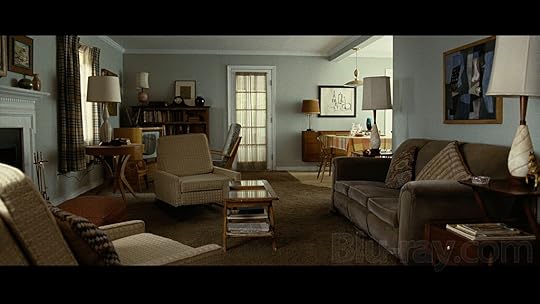
Interno americano.
Non posso non citare il finale dello stesso racconto, la storia di un tredicenne che soffriva della malattia di non essere amato, perché è un racconto che probabilmente mi spingerà a comprare questo libro pur avendolo già letto in prestito bibliotecario, per poterlo riaprire, tornarci dentro e sopra, per potermici specchiare ancora:
Ecco, la storia è tutta qui. Il ragazzo che ero, il bambino che era Edward. Questo, e il terribile desiderio di volgermi di colpo e di correre indietro, urlando al ragazzo che ero, cercandolo fino a scovarlo, e picchiandogli forte sul petto: "Amalo, maledetto idiota, amalo".

Il giovane protagonista conosce già l’odio e il disprezzo per i propri genitori, che, a 13 anni, fortifica e giustifica – poi, a 40, quasi sicuramente, saprà che, sia quello per i propri genitori ormai anziani, sia l’odio che i propri figli hanno verso di noi (il loro turno di fortificarsi e giustificarsi), per noi si è invece trasformato in indebolimento che piega la schiena.
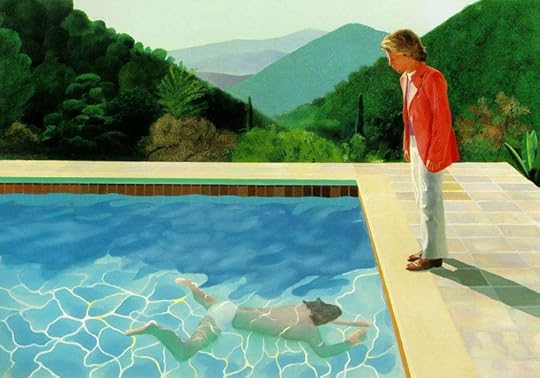
David Hockney: Portrait of an Artist (pool with two figures).
Si prosegue con altro splendore, un racconto dal titolo meraviglioso, quello adottato dall’intera raccolta, che ci trascina attraverso l’incanto dell’infelicità a quello del primo incontro con l’amore.
Siamo dalle parti di “Revolutionary Road”, il dopo guerra americano, la provincia, le villette coi giardini, i campus universitari - ci sono bambini, adolescenti, studenti, giovani mogli e giovani mariti, famiglie in erba - molta educazione sentimentale, molti momenti di passaggio da una fase della vita all'altra, e di scoperta delle segrete sorgenti della tristezza che inondano il mondo intero, tanta impossibilità di comunicare, ma anche attimi di felicità che si vorrebbe lasciassero le cose ferme e immutabili e non finissero mai, che si ripetessero senza fine, perché, come potevi sapere se la felicità sarebbe tornata? E se fosse tornata, sarebbe stata bella come questa? Il guaio della felicità è che ti fa paura.
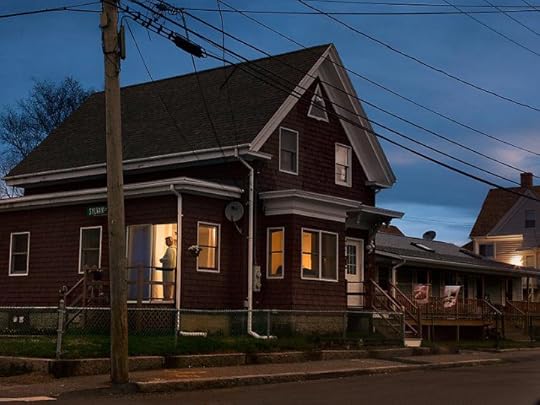
Foto di Gail Albert Halaban dalla serie “Hopper Redux”.
Dopo questo esordio pubblicato nel 1958 Harold Broodkey esplose nel firmamento letterario americano e diventò The Next Big Thing.
Ma passarono oltre trent’anni prima che uscisse la seconda opera, l'unico romanzo, atteso e conteso.
Non abbandonò mai i racconti, continuò a pubblicarne mediamente uno ogni due anni!
Harold, è un pezzo che non ci sei più: tuttavia, come direbbe Sam, penso che questo sia l'inizio di una bella amicizia. Sono sicuro che godrò ancora della tua compagnia.

Foto di Stephen Shore.
Saint Louis, Missouri, è la città più grande accanto alla quale scorre la celebre route 66 (“Highway 66 Revisited”, Bob Dylan, 1965).
[Letto in prestito bibliotecario, piaciuto così tanto e annotato così tanto che ho avuto voglia di possedere la mia copia - l'ho comprata ed è ovviamente la nuova edizione di Fandango. Qui sotto il mio pensiero dopo la lettura della prima edizione].
“Stato di grazia” è il titolo del primo racconto, ed è anche come doveva sentirsi Harold Brodkey quando lo scrisse.
Effettivamente, era in uno stato di grazia, perché dopo un incipit come questo:
Esiste una particolare gradazione di mattoni rossi – un rosso cupo, quasi melodioso, profondo e venato di blu – che è la mia infanzia a St Louis ,
si capisce subito d’essere stati proiettati nella grande letteratura, nella immensa arte del racconto, quella che con poche frasi ti proietta dentro tranche de vie che illuminano esistenze intere, che ti lancia per i corridoi del tempo, che in poche pagine allarga il tuo orizzonte di conoscenza e consapevolezza.
E di dolore.
Interno americano.
Non posso non citare il finale dello stesso racconto, la storia di un tredicenne che soffriva della malattia di non essere amato, perché è un racconto che probabilmente mi spingerà a comprare questo libro pur avendolo già letto in prestito bibliotecario, per poterlo riaprire, tornarci dentro e sopra, per potermici specchiare ancora:
Ecco, la storia è tutta qui. Il ragazzo che ero, il bambino che era Edward. Questo, e il terribile desiderio di volgermi di colpo e di correre indietro, urlando al ragazzo che ero, cercandolo fino a scovarlo, e picchiandogli forte sul petto: "Amalo, maledetto idiota, amalo".
Il giovane protagonista conosce già l’odio e il disprezzo per i propri genitori, che, a 13 anni, fortifica e giustifica – poi, a 40, quasi sicuramente, saprà che, sia quello per i propri genitori ormai anziani, sia l’odio che i propri figli hanno verso di noi (il loro turno di fortificarsi e giustificarsi), per noi si è invece trasformato in indebolimento che piega la schiena.
David Hockney: Portrait of an Artist (pool with two figures).
Si prosegue con altro splendore, un racconto dal titolo meraviglioso, quello adottato dall’intera raccolta, che ci trascina attraverso l’incanto dell’infelicità a quello del primo incontro con l’amore.
Siamo dalle parti di “Revolutionary Road”, il dopo guerra americano, la provincia, le villette coi giardini, i campus universitari - ci sono bambini, adolescenti, studenti, giovani mogli e giovani mariti, famiglie in erba - molta educazione sentimentale, molti momenti di passaggio da una fase della vita all'altra, e di scoperta delle segrete sorgenti della tristezza che inondano il mondo intero, tanta impossibilità di comunicare, ma anche attimi di felicità che si vorrebbe lasciassero le cose ferme e immutabili e non finissero mai, che si ripetessero senza fine, perché, come potevi sapere se la felicità sarebbe tornata? E se fosse tornata, sarebbe stata bella come questa? Il guaio della felicità è che ti fa paura.
Foto di Gail Albert Halaban dalla serie “Hopper Redux”.
Dopo questo esordio pubblicato nel 1958 Harold Broodkey esplose nel firmamento letterario americano e diventò The Next Big Thing.
Ma passarono oltre trent’anni prima che uscisse la seconda opera, l'unico romanzo, atteso e conteso.
Non abbandonò mai i racconti, continuò a pubblicarne mediamente uno ogni due anni!
Harold, è un pezzo che non ci sei più: tuttavia, come direbbe Sam, penso che questo sia l'inizio di una bella amicizia. Sono sicuro che godrò ancora della tua compagnia.
Foto di Stephen Shore.

January 11, 2016
It is said that string quartet music is the highest form of art and the lowest form of entertainment. I’m reminded of this pithy observation when reading Harold Brodkey’s highly polished, finely drawn short stories. Not the bite of fantasy or sci-fi but the world of the everyday rendered clearly and with the lyricism of a classical poet, as when the teenage narrator of First Love and Other Sorrows says of his mother: “She did not want to see life in a grain of sand; she wanted to see it from the shores of the Riviera, wearing a white sharkskin dress.” And here is one of my favorite Harold Brodkey quotes: “Reading is an intimate act, perhaps more intimate than any other human act. I say that because of the prolonged (or intense) exposure of one mind to another.”
As a way of writing my review, I initially considered synopsizing several of these Brodkey pieces or commenting on specific scenes. However, after further reflection, both of these approaches strike me as less than adequate, almost as if I were to synopsize or provide a running commentary on a collection of classical poetry. Therefore, as a way of giving a reader unfamiliar with Harold Brodkey a sampling of what is to be found in this book, here are a few direct quotes.
From The State of Grace, when the narrator is a 13-year old boy: “There is a certain shade of red brick – a dark, almost melodious red, somber and riddled with blue – that is my childhood in St. Louis. Not the real childhood, but the false one that extends from the dawning of consciousness until the day that one leaves home for college. That one shade of red brick and green foliage in St. Louis in the summer (the winter is just a gray sky and a crowded school bus and the wet footprints on the brown linoleum floor at school), and that brick and a pale sky is spring. It’s also loneliness and the queer, self-pitying wonder that children whose families are having catastrophes feel.”
From First Love and Other Tales, when the narrator is a high school student: “That spring when I was sixteen, more than anything else in the world I wanted to be a success when I grew up. I did not know there was any other way of being lovable. My best friend was a boy named Preston, who already had a heavy beard. He was sky, and unfortunate in his dealings with other people, and he wanted to be a physicist. He had very little imagination, and he pitied anyone who did have it. “You and the word ‘beautiful’!” he would say disdainfully, holding his nose and imitating my voice. “Tell me – what does ‘beautiful’ mean?”
“It’s something you want,” I would say.
“You’re an aesthete,” Preston would say. “I’m a scientist. That’s the difference.”
From The Quarrel, when the narrator is a freshman at college: “I came to Harvard from St. Louis in the fall of 1948. I had a scholarship and a widowed mother and a reputation for being a good, hardworking boy. What my scholarship didn’t cover, I earned working Wednesday nights and Saturdays, and I strenuously avoided using any of my mother’s small but adequate income. During the summer between my freshman and sophomore years, my grandmother died and willed me five thousand dollars. I quit my part-time job and bought a gray flannel suit and a pair of white buck shoes, and I got on the editorial board of the college literary magazine. I met Duncan Leggert at the first editorial meeting I attended. He had been an editor for a full year, and this particular night he was infuriated by a story, which everyone wanted to print, about an unhappy, sensitive child. “Why shouldn’t that child be unhappy?” Duncan shouted. “He’s a bore.” The story was accepted, and Duncan stalked out of the meeting.”
Such subtlety and attention to the nuances of language in creating character, setting, atmosphere and tension. If you enjoy poetry as well as prose, Harold Brodkey may become one of your very favorite short story writers.

Harold Brodkey, age 28, in 1958, the year “First Love and Other Sorrows” was first published.

July 17, 2026
Estos nueve cuentos se dividen en dos partes claramente diferenciadas, ambas igual de extraordinarias, que funcionan como dos novelas cortas en las que los capítulos van reflejando distintos momentos dispersos de sus dos protagonistas: un adolescente antes y después de su ingreso en la universidad y una joven (¿la hermana del universitario?) en los momentos previos y posteriores a su boda y al nacimiento de su hija.
Si bien el contexto -la clase media de los EE.UU en los años 50- es en ocasiones muy localista, las tribulaciones de estos adolescentes son universales.
“Lo que me asustaba era la fiereza con la que todos me empujaban a ser rico y famoso y suponer de este modo una compensación para las tribulaciones sufridas por todos ellos”
El enorme peso de las esperanzas familiares en ellos depositadas entrelazado con la necesidad del adolescente de marcar su propio camino y que se complica con el distanciamiento sentimental y cultural que se empieza a sentir con la familia, las presiones sociales, la necesidad de querer y ser querido, de una amistad con la que no sea necesario fingir ni esforzarse por ser comprendido…
“Creíamos que viajando lo bastante lejos y durante el tiempo suficiente, se terminaba llegando a un lugar en donde todo el mundo le gustarían las mismas cosas que a ti y hablaría igual que tú, un lugar en donde todo el mundo sabría lo que uno vale sin necesidad de caer en la deshonra de tener que demostrarlo... no haría ninguna falta mostrarse jactancioso, ni hablar con una chica fea por pura compasión, ni compadecerse de los propios padres”
… los grandes descubrimientos, el amor, paraíso e infierno, los ineludibles compromisos, desilusiones y claudicaciones de los adultos, su decepcionante y despreciable mundo, el yo que no está a la altura de los propios deseos.
“Se despreciaba a sí mismo por creer, precisamente, que era incapaz de sentir pasiones, y pensaba que solo las personas apasionadas valían la pena”
Con los cuentos dedicados a Laura se añade la visión de una joven de la época presionada por su familia para casarse “bien”,…
“Lo malo es, pensaba Laurie, que casarse con un pobre no es más que lascivia. Mientras que si te casas con un rico todo el mundo acude a felicitarte como si hubieses realizado una extraordinaria demostración de ejemplaridad”
… sus dudas sobre su forma de comportarse y sentir, ligeramente desviada de lo convencional para una persona de su estatus y de su género, la inexplicable sensación de que hay algo horrible en su vida, la depresión postparto y el sentimiento de ser mala madre y, por extensión, mala persona…
“Ah, qué triste es el mundo. Ah, qué separadas están las personas. Ah, la torpeza de ser mujer”
Maravillosa colección de relatos que encumbró a su autor como la joven promesa de la literatura norteamericana, siendo elogiado por Harold Bloom, Cynthia Ozick, Gordon Lish o John Cheever, casi na…

August 3, 2017
First Love & Others Sorrows (e un grammofono che suonava La vie en rose...)
Questa raccolta è palpitante , nel senso che ti fa (ri)sentire forti e chiari
i palpiti , la vulnerabilità , lo stupore e le trepidazioni dell'adolescenza
i sentimenti assoluti ,le delicatezze
i primi affanni dell'amore
e l'amore mozzafiato...
Lo stile è morbido e avvolgente, luminoso e insieme malinconico , si avvertono già dall'incipit (bellissimo)i tocchi da maestro di Brodkey
5 stelle a "La lite" (il migliore dei racconti, secondo me , insieme a "Lo stato di grazia" e "Primo amore ed altri affanni")
Mi appoggiai sul gomito e lo guardai. Sorridevo,un po' incerto , è vero; come si sorride ad un fratello maggiore o a qualcuno di indicibilmente caro, di cui si desidera ardentemente l'approvazione. Duncan mi guardò di sbieco.
Poi ,qualche secondo dopo,scoppiammo a ridere,come se fossi stato molto spiritoso.
Le ombre ,azzurre, liquide,si andavano addensando sulla spiaggia.
E noi eravamo lì, noi due ,con tutte le nostre paure e i nostri difetti,con tutte le speranze alle quali non credevamo realmente,e i nostri insuccessi; eccoci lì, diciannove e venti anni .
Da una delle case lungo la spiaggia arrivò la voce di un grammofono che suonava "La Vie en Rose".*
Duncan cominciò a canticchiare la canzone. La gentilezza della Francia si diffondeva intorno a noi come la notte che stava scendendo. Ascoltavo Duncan e il lontano grammofono e come in sogno lo scrosciare delle onde e sapevo che avrei superato la prova della mia giovinezza e sarei stato perdonato.
Se H.Brodkey è stato definito il Proust americano , ci sarà pure una qualche ragione ,no?
* Quand il me prends dans ses bras
il me parle tout bas
je vois la vie en rose
Il me dit des mots d'amour
des mots de tous les jours,
et ça me fait quelque chose 🎶
Questa raccolta è palpitante , nel senso che ti fa (ri)sentire forti e chiari
i palpiti , la vulnerabilità , lo stupore e le trepidazioni dell'adolescenza
i sentimenti assoluti ,le delicatezze
i primi affanni dell'amore
e l'amore mozzafiato...
Lo stile è morbido e avvolgente, luminoso e insieme malinconico , si avvertono già dall'incipit (bellissimo)i tocchi da maestro di Brodkey
Esiste una particolare gradazione di mattoni rossi - un rosso cupo, quasi melodioso, profondo e venato di blu - che è la mia infanzia a St. Louis. Non l'infanzia vera: ma quella finta, che si estende dal primo albeggiare della consapevolezza fino al giorno in cui si lascia la casa per entrare all'università.
5 stelle a "La lite" (il migliore dei racconti, secondo me , insieme a "Lo stato di grazia" e "Primo amore ed altri affanni")
Mi appoggiai sul gomito e lo guardai. Sorridevo,un po' incerto , è vero; come si sorride ad un fratello maggiore o a qualcuno di indicibilmente caro, di cui si desidera ardentemente l'approvazione. Duncan mi guardò di sbieco.
Poi ,qualche secondo dopo,scoppiammo a ridere,come se fossi stato molto spiritoso.
Le ombre ,azzurre, liquide,si andavano addensando sulla spiaggia.
E noi eravamo lì, noi due ,con tutte le nostre paure e i nostri difetti,con tutte le speranze alle quali non credevamo realmente,e i nostri insuccessi; eccoci lì, diciannove e venti anni .
Da una delle case lungo la spiaggia arrivò la voce di un grammofono che suonava "La Vie en Rose".*
Duncan cominciò a canticchiare la canzone. La gentilezza della Francia si diffondeva intorno a noi come la notte che stava scendendo. Ascoltavo Duncan e il lontano grammofono e come in sogno lo scrosciare delle onde e sapevo che avrei superato la prova della mia giovinezza e sarei stato perdonato.
Se H.Brodkey è stato definito il Proust americano , ci sarà pure una qualche ragione ,no?
* Quand il me prends dans ses bras
il me parle tout bas
je vois la vie en rose
Il me dit des mots d'amour
des mots de tous les jours,
et ça me fait quelque chose 🎶

August 3, 2014
Il primo racconto è stupendo. Gli altri malinconici, leggermente cattivi, ma non all'altezza dell'irresistibile amara tenerezza del primo.

August 18, 2022
Iniziamo con lo spartirci le colpe: non mi ero documentato, credevo si trattasse di un romanzo e come tale ho iniziato a leggerlo. I primi due racconti li ho scambiati per due capitoli, parlavano di un adolescente credevo che lo facessero da angolazioni diverse per vezzo; nel secondo era spuntata una sorella più grande che si era presa buona parte della scena... al terzo capitolo/racconto le mie colpe sono finite, Il protagonista era cresciuto si era trasferito ad Harward (ho letto in rete che il solco autobiografico è profondo nella produzione di questo autore) più avanti si disprezzava perché temeva di essere incapace di una vera passione e perché credeva che soltanto le persone passionali valessero qualcosa e tutte le altre fossero superficiali.
Ora si chiamava Elgin Smith e non scriveva più in prima persona ma in terza. Lo avrei preferito alla spagnola, “El-Gin", con il trattino in mezzo, avrei preferito leggere le sensazioni di un bicchiere di Gin Tonic che raccontasse delle labbra avide che si accostano al vetro e vengono anestetizzate dal ghiaccio al primo frenetico sorso. Un bacio freddo che scalda l’anima non appena le labbra si separano dal bicchiere.
Lo avrei preferito ma invece il tenore della prosa era questo
Qualche volta, quando erano seduti in riva al fiume, giocavano, Elgin tirava i capelli a Caroline e lei lo prendeva a pugni. Erano casti. Ogni tanto, accennavano al tempo in cui avevano ascoltato l’usignolo, e mentre la castità non riusciva loro facile, l’atto del sacrificio lo era.
… Amavano la tristezza e la dolcezza della loro situazione e si impegnarono con ogni energia nella parte di amanti disciplinati.
Saranno pure amanti disciplinati, ma come personaggi sono veramente noiosi. È stata una pena portare a termine i racconti, in quelli successivi ci sono una Laurie e una Laura, sono la stessa persona? Sarà Laura Andrew che ci condurrà all’agognato epilogo.
Una pesantezza ingiustificabile considerando la forma breve e l’esiguità delle pagine totali. Harold Brodkey non usa nessuna tecnica particolare, è completamente privo d’ironia, quel che ha in dispensa lo mette in tavola ma è ormai stantio, manca di fragranza e non solo a causa dell’ambientazione (USA anni ’40 del secolo scorso).
Viste le rispettive colpe, dividiamoci le stelle: una a testa
COLONNA SONORA:
Le ombre, azzurre, liquide, si andavano addensando sulla spiaggia. E noi eravamo lì, noi due, con tutte le nostre paure e i nostri difetti, con tutte le speranze alle quali non credevamo realmente, e i nostri insuccessi; eccoci lì, diciannove e venti anni. Da una delle case lungo la spiaggia arrivò la voce di un grammofono che suonava La Vie en Rose.
(Mi si perdoni la versione aggiornata)
https://www.youtube.com/watch?v=YEM8T...
Ora si chiamava Elgin Smith e non scriveva più in prima persona ma in terza. Lo avrei preferito alla spagnola, “El-Gin", con il trattino in mezzo, avrei preferito leggere le sensazioni di un bicchiere di Gin Tonic che raccontasse delle labbra avide che si accostano al vetro e vengono anestetizzate dal ghiaccio al primo frenetico sorso. Un bacio freddo che scalda l’anima non appena le labbra si separano dal bicchiere.
Lo avrei preferito ma invece il tenore della prosa era questo
Qualche volta, quando erano seduti in riva al fiume, giocavano, Elgin tirava i capelli a Caroline e lei lo prendeva a pugni. Erano casti. Ogni tanto, accennavano al tempo in cui avevano ascoltato l’usignolo, e mentre la castità non riusciva loro facile, l’atto del sacrificio lo era.
… Amavano la tristezza e la dolcezza della loro situazione e si impegnarono con ogni energia nella parte di amanti disciplinati.
Saranno pure amanti disciplinati, ma come personaggi sono veramente noiosi. È stata una pena portare a termine i racconti, in quelli successivi ci sono una Laurie e una Laura, sono la stessa persona? Sarà Laura Andrew che ci condurrà all’agognato epilogo.
Una pesantezza ingiustificabile considerando la forma breve e l’esiguità delle pagine totali. Harold Brodkey non usa nessuna tecnica particolare, è completamente privo d’ironia, quel che ha in dispensa lo mette in tavola ma è ormai stantio, manca di fragranza e non solo a causa dell’ambientazione (USA anni ’40 del secolo scorso).
Viste le rispettive colpe, dividiamoci le stelle: una a testa
COLONNA SONORA:
Le ombre, azzurre, liquide, si andavano addensando sulla spiaggia. E noi eravamo lì, noi due, con tutte le nostre paure e i nostri difetti, con tutte le speranze alle quali non credevamo realmente, e i nostri insuccessi; eccoci lì, diciannove e venti anni. Da una delle case lungo la spiaggia arrivò la voce di un grammofono che suonava La Vie en Rose.
(Mi si perdoni la versione aggiornata)
https://www.youtube.com/watch?v=YEM8T...

September 14, 2012
Questi tre brevi racconti di Brodkey mi sono piaciuti molto, prima di tutto perché hanno una continuità, un legame tra loro come se non fossero tre storie separate, ma una stessa storia, quella di un ragazzino di tredici anni che si vergogna di essere ebreo, che a scuola viene preso in giro perché è un secchione, che non ha amici perché prima di voler bene a qualcuno cerca chi voglia bene a lui per primo. Cresciuto di qualche anno, all’università conosce un coetaneo, Duncan, con il quale nasce un’amicizia forte e assoluta come sono le amicizie adolescenziali, fatta di ammirazione, di emulazione e anche di condivisione, fragile però come lo sono tutte le amicizie sorte come piante senza radici, che nel corso di un viaggio estivo in Europa si rafforza, va in crisi e poi delicatamente si riprende, come succede a quell’età. Ed infine quello stesso giovane – o un altro, non importa- al college conosce l’amore, il primo amore, che ho trepidamente vissuto con lui nelle sofferenze e nelle gioie, nella scoperta del sesso e della paura di essere adulti. E così si svolge una storia che potrebbe essere anche definita come un racconto lungo, il racconto di una infanzia e di una giovinezza che avrebbero potuto essere quelle di qualsiasi adolescente americano degli anni cinquanta e sessanta, tanto simile a quelli che riempivano i miei pomeriggi infantili nei telefilm “Happy days”.
Questi sono gli argomenti dei tre racconti, ma è del tutto riduttivo parlarne in poche parole, senza assaporare la scrittura limpida di Brodkey, venata di bellissime metafore e di immagini poetiche che mi hanno conquistato. Il mio preferito è stato il terzo racconto, Educazione sentimentale, bellissimo secondo me, in cui ogni attimo fuggente della prima emozione amorosa viene vissuto con l’ansia, la trepidazione, le paure che tutti noi abbiamo passato, descritto con leggerezza, e grazia soffuse di una dolce malinconia.
Questi sono gli argomenti dei tre racconti, ma è del tutto riduttivo parlarne in poche parole, senza assaporare la scrittura limpida di Brodkey, venata di bellissime metafore e di immagini poetiche che mi hanno conquistato. Il mio preferito è stato il terzo racconto, Educazione sentimentale, bellissimo secondo me, in cui ogni attimo fuggente della prima emozione amorosa viene vissuto con l’ansia, la trepidazione, le paure che tutti noi abbiamo passato, descritto con leggerezza, e grazia soffuse di una dolce malinconia.

June 8, 2014
I had never heard of Brodkey until I caught Richard Ford (an author I'm a huge fan of) reading one of his stories ("The State of Grace") for the New Yorker podcast. Ford had great things to say about Brodkey and when I came across an old Vintage Contemporary paperback copy I snatched it up—and I'm glad I did.
This book started out wonderfully, and Brodkey's seemingly autobiographical stories were brilliant in their honesty and sincerity, especially "The State of Grace", "First Love and Other Sorrows", and "Sentimental Education". In these, Brodkey draws on a few recurring themes throughout: financial status and happiness; intellect and isolation; vanity; self-pity; rebellion against what others feel one "ought" to do; etc. All this creates very compelling main characters that I cant help but feel are all (intentionally) poorly disguised versions of Brodkey, himself—not that that's a bad thing here. If the book ended after the first four stories, it would be 5 stars in my opinion, easily.
The last 70 pages or so depict, in a series of vignettes, a character named Laura and her family. For me, this structure didn't work too well. Another reviewer somewhere made a similar remark, which may have influenced my opinion, but I find myself in agreement. They just didn't captivate me the way the earlier stories in this collection did—they seemed unpolished, hasty, and merely tacked on to flesh out the length of this collection (which wouldn't be a big deal if the first four stories didn't share such a common thread). In the end, I just didn't really care. Maybe these scenes represent an aspect of Brodkey's life that I'm unfamiliar with and therefore may have missed something that would've made me appreciate them more.
Final word: highly recommend the first 160 pages, the last 4 pieces are nonessential...
This book started out wonderfully, and Brodkey's seemingly autobiographical stories were brilliant in their honesty and sincerity, especially "The State of Grace", "First Love and Other Sorrows", and "Sentimental Education". In these, Brodkey draws on a few recurring themes throughout: financial status and happiness; intellect and isolation; vanity; self-pity; rebellion against what others feel one "ought" to do; etc. All this creates very compelling main characters that I cant help but feel are all (intentionally) poorly disguised versions of Brodkey, himself—not that that's a bad thing here. If the book ended after the first four stories, it would be 5 stars in my opinion, easily.
The last 70 pages or so depict, in a series of vignettes, a character named Laura and her family. For me, this structure didn't work too well. Another reviewer somewhere made a similar remark, which may have influenced my opinion, but I find myself in agreement. They just didn't captivate me the way the earlier stories in this collection did—they seemed unpolished, hasty, and merely tacked on to flesh out the length of this collection (which wouldn't be a big deal if the first four stories didn't share such a common thread). In the end, I just didn't really care. Maybe these scenes represent an aspect of Brodkey's life that I'm unfamiliar with and therefore may have missed something that would've made me appreciate them more.
Final word: highly recommend the first 160 pages, the last 4 pieces are nonessential...

September 14, 2023
He firmly believed, he said, that most unhappiness was a pose. “It’s a way of getting out of being interesting.”
This is a quote from one of the lead characters in a story included in this collection.
Since Brodkey is an author that mines heavily from autobiographical elements in his fiction, this quote is also useful to express my arrested enthusiasm for his prose: it’s not all that interesting.
I liked the stories well enough when I read them, but the long summer travels through Europe kept me away from my computer for a couple of months, and I find out now that I cannot really tell you what these stories are all about? I have simply forgotten them, they became irrelevant compared to other books I read at the same time that were instant charmers [A.S. Byatt, Rose Macaulay], books that I am sure I will remember years from now.
The slow burner that is Brodkey I am afraid is destined to be abandoned in the future. Even three stars seem generous, considering I had to spend about half an hour re-reading through the book to refresh my memory.
Unhappiness was real. It was even likely ...
This unhappiness is the ingredient that glues the collection together.
It is, as I already mentioned, heavily autobiographical, and rather gloomy: not from outside elements but from an inner disposition that seems to be expecting the worst from the world, and from the people surrounding the narrator.
When most of these stories finish on a positive, hopeful for the future note, I am starting to wonder what was the point of the exercise exactly?
>>><<<>>><<<
The State of Grace
A thirteen years old boy who feels a stranger in his own family gets attached to the seven years old boy he babysits for. Together they create a fragile, intimate, imaginary world for themselves through stories and games.
First Love and Other Sorrows
The boy is now sixteen years old, living with his mother and with his older sister in St Louis, going for the track team at his school, where he befriends another boy. A lot of attention is given to the dynamic between mother and sister in the context of dating and of ‘catching’ an eligible [read rich] man for a husband.
I thought the story was heading towards a romance between the two boys, but there appears a ‘girl next door’ who becomes the love interest for the protagonist.
I think this is one of the better novellas included here, and the budding love was treated tenderly and realistically.
The Quarrel
The gay vibes are even stronger in this story, but the author continues to steer clear of declaring his position. Before college, the narrator inherits some money and takes a sabbatical, working as a newspaper editor, setting the world to rights with one of his colleagues in lengthy bar discussions.
The two young men decide to take a trip to Europe together, first visiting museums in London then crossing the sea to France, which they traverse on bicycle.
Their unresolved sexual tensions explode in the quarrel from the title, one that is resolved somehow without a true resolution in the sands of Arcachon [a location I truly loved and that I hope to come back to one day]
Sentimental Education
This is probably my favorite story included here. It takes place in college, where two inexperienced young people discover physical love together. They are both exhilarated and scared of what is happening to them, and I think Brodkey is at his best in his restrained, subdued prose here.
When you consider the combustibility of the emotions of these two young people, it is hardly surprising that within two weeks of their first long conversation together they were trembling when they talked, and found themselves oppressed whenever silences fell.
In the first pages of the story, the young man that is probably modelled on the author is described as ... so cracked by longing that it seemed only gravity held him together. , a phrase that does evoke memories of that awkward age in myself, and one that I am glad I’ve bookmarked, because it sort of justifies the extra star I gave to this otherwise forgettable collection.
>>><<<>>><<<
The last set of five shorter stories are related and linked by the main character, Laura or Laurie, a young woman that we also follow chronologically through her twenties, from dressing up for a date, to the struggles of early motherhood and later through sketches of her married life.
I suppose the autobiographical element must refer here to the author’s wife, because all the preceding stories had a male protagonist.
I don’t have much to comment on these, they are rather common and uneventful. Well written, but nothing really special for me. So I will just put the titles down:
Laurie Dressing
Laura
Trio for Three Gentle Voices
Piping Down the Valleys Wild
The Dark Woman of the Sonnets
Harold Brodkey is a talented writer, with a beautiful turn of phrase, but if I want Jewish anxiety and autobiographical elements I believe I will prefer to stick to Phillip Roth.
This is a quote from one of the lead characters in a story included in this collection.
Since Brodkey is an author that mines heavily from autobiographical elements in his fiction, this quote is also useful to express my arrested enthusiasm for his prose: it’s not all that interesting.
I liked the stories well enough when I read them, but the long summer travels through Europe kept me away from my computer for a couple of months, and I find out now that I cannot really tell you what these stories are all about? I have simply forgotten them, they became irrelevant compared to other books I read at the same time that were instant charmers [A.S. Byatt, Rose Macaulay], books that I am sure I will remember years from now.
The slow burner that is Brodkey I am afraid is destined to be abandoned in the future. Even three stars seem generous, considering I had to spend about half an hour re-reading through the book to refresh my memory.
Unhappiness was real. It was even likely ...
This unhappiness is the ingredient that glues the collection together.
It is, as I already mentioned, heavily autobiographical, and rather gloomy: not from outside elements but from an inner disposition that seems to be expecting the worst from the world, and from the people surrounding the narrator.
When most of these stories finish on a positive, hopeful for the future note, I am starting to wonder what was the point of the exercise exactly?
>>><<<>>><<<
The State of Grace
A thirteen years old boy who feels a stranger in his own family gets attached to the seven years old boy he babysits for. Together they create a fragile, intimate, imaginary world for themselves through stories and games.
First Love and Other Sorrows
The boy is now sixteen years old, living with his mother and with his older sister in St Louis, going for the track team at his school, where he befriends another boy. A lot of attention is given to the dynamic between mother and sister in the context of dating and of ‘catching’ an eligible [read rich] man for a husband.
I thought the story was heading towards a romance between the two boys, but there appears a ‘girl next door’ who becomes the love interest for the protagonist.
I think this is one of the better novellas included here, and the budding love was treated tenderly and realistically.
The Quarrel
The gay vibes are even stronger in this story, but the author continues to steer clear of declaring his position. Before college, the narrator inherits some money and takes a sabbatical, working as a newspaper editor, setting the world to rights with one of his colleagues in lengthy bar discussions.
The two young men decide to take a trip to Europe together, first visiting museums in London then crossing the sea to France, which they traverse on bicycle.
Their unresolved sexual tensions explode in the quarrel from the title, one that is resolved somehow without a true resolution in the sands of Arcachon [a location I truly loved and that I hope to come back to one day]
Sentimental Education
This is probably my favorite story included here. It takes place in college, where two inexperienced young people discover physical love together. They are both exhilarated and scared of what is happening to them, and I think Brodkey is at his best in his restrained, subdued prose here.
When you consider the combustibility of the emotions of these two young people, it is hardly surprising that within two weeks of their first long conversation together they were trembling when they talked, and found themselves oppressed whenever silences fell.
In the first pages of the story, the young man that is probably modelled on the author is described as ... so cracked by longing that it seemed only gravity held him together. , a phrase that does evoke memories of that awkward age in myself, and one that I am glad I’ve bookmarked, because it sort of justifies the extra star I gave to this otherwise forgettable collection.
>>><<<>>><<<
The last set of five shorter stories are related and linked by the main character, Laura or Laurie, a young woman that we also follow chronologically through her twenties, from dressing up for a date, to the struggles of early motherhood and later through sketches of her married life.
I suppose the autobiographical element must refer here to the author’s wife, because all the preceding stories had a male protagonist.
I don’t have much to comment on these, they are rather common and uneventful. Well written, but nothing really special for me. So I will just put the titles down:
Laurie Dressing
Laura
Trio for Three Gentle Voices
Piping Down the Valleys Wild
The Dark Woman of the Sonnets
Harold Brodkey is a talented writer, with a beautiful turn of phrase, but if I want Jewish anxiety and autobiographical elements I believe I will prefer to stick to Phillip Roth.

February 8, 2018
“Esiste una particolare gradazione di mattoni rossi - un rosso cupo, quasi melodioso, profondo e venato di blu - che è la mia infanzia a St. Louis. Non l'infanzia vera: ma quella finta, che si estende dal primo albeggiare della consapevolezza, fino al giorno in cui si lascia la casa per entrare all'Università.”
Inizia così questa raccolta di racconti di un autore che, fino a qualche settimana fa, mi era completamente sconosciuto. Leggendo queste poche righe, non ho potuto fare altro che sentire il cuore allargarsi un po': forse “Primo amore e altri affanni” non è la raccolta di racconti perfetti, forse Harold Brodkey non è l'autore migliore che io abbia mai letto, ma indubbiamente c'è qualcosa, nella sua prosa così ricca, avvolgente ed estremamente visiva, che fa risuonare le corde più istintive del mio piacere per la lettura.
Purtroppo ho letto questi racconti in un periodo abbastanza complicato, quando avevo tante cose per la testa e tanti cambiamenti da affrontare, dunque mi rendo conto che la mia soglia dell'attenzione non è stata elevata quanto questo libro meriterebbe. Ed anche ora, a distanza di qualche settimana dal momento in cui ho terminato la lettura, sto cercando di mettere insieme una recensione decente, perché Harold Brodkey merita parole ben ponderate, ma temo che dovrò limitarmi a qualche impressione sparsa.
E' chiaro che la penna di questo autore sia uno strumento estremamente raffinato, lo si avverte ad ogni fraseggio, ad ogni costruzione perfettamente equilibrata di suono, senso e sensibilità estetica. Eppure, non si avverte mai l'artificiosità della lima dell'autore, ma tutto sembra fluire in un unico, grande sospiro, come se le parole fossero semplicemente sgorgate in maniera spontanea sul foglio.
A volte mi chiedo se, alla fin fine, nei libri io non faccia altro che leggere ciò che riesce a parlarmi, perché questo è un periodo in cui sono affamata di gentilezza, ed è già la seconda volta in poco tempo che mi ritrovo a scrivere una recensione parlando proprio di gentilezza. Eppure, non farlo mi parrebbe una forzatura: Harold Brodkey dipinge delle solitudini inquiete, e lo fa con una gentilezza commovente. Non fa sconti ai suoi personaggi, dispensa difetti ed errori con molta sincerità, ma non lo fa mai con il rimprovero in punta di penna. Le sue sono solitudini molto lucide, ma i contorni affilati di questi affanni e queste sofferenze sono smussati da una compassione genuina, autentica e per niente stucchevole. Ci si riconosce in queste figure imperfette che si affacciano nel mondo dei sentimenti con gambe tremanti e movenze goffe, ma lo si fa con il sorriso benevolo di chi ha imparato a perdonarsi.
Ecco, questa gentilezza, questo sorriso un po' amaro e un po' pieno di speranza al tempo stesso mi hanno scaldato un po' il cuore.
Il racconto che ho sicuramente apprezzato di più è stato “Educazione sentimentale”, con quella tensione che si accumula verso un finale che forse si poteva intuire già dalla prima riga, ma che, forse proprio per questo, ha reso la lettura un'esperienza ancora più intimistica, più vissuta.
Mi hanno convinto meno invece i racconti su Laura e sulla sua famiglia, ma ammetto che potrebbe essere solo una questione di tempistiche sfortunate, dal momento che li ho letti nel momento in cui potevo dedicare loro meno energie intellettuali.
L'unica cosa che mi ha fatto accapponare la pelle (e qui il povero Harold non ha la minima responsabilità) è una particolare scelta di traduzione dell'edizione Serra e Riva: la figlia di Laura si chiama Fede, e fin qui tutto tranquillo (anche se, d'accordo, non credo che Federica sia esattamente il nome più diffuso in America). Peccato che, leggendo alcune recensioni inglesi, abbia capito che in realtà questa povera marmocchia si chiama Faith. Non pensavo che nel 1988 i nomi propri venissero ancora tradotti.
Sottigliezze a parte, ho apprezzato veramente molto questa raccolta di racconti, e cercherò al più presto di recuperare tutto quello su cui riuscirò a mettere le mani di Brodkey. E' sorprendente che un autore tanto bravo goda di così poca attenzione, spero che la nuova edizione Fandango contribuisca a portarlo sotto gli occhi di più lettori.
Inizia così questa raccolta di racconti di un autore che, fino a qualche settimana fa, mi era completamente sconosciuto. Leggendo queste poche righe, non ho potuto fare altro che sentire il cuore allargarsi un po': forse “Primo amore e altri affanni” non è la raccolta di racconti perfetti, forse Harold Brodkey non è l'autore migliore che io abbia mai letto, ma indubbiamente c'è qualcosa, nella sua prosa così ricca, avvolgente ed estremamente visiva, che fa risuonare le corde più istintive del mio piacere per la lettura.
Purtroppo ho letto questi racconti in un periodo abbastanza complicato, quando avevo tante cose per la testa e tanti cambiamenti da affrontare, dunque mi rendo conto che la mia soglia dell'attenzione non è stata elevata quanto questo libro meriterebbe. Ed anche ora, a distanza di qualche settimana dal momento in cui ho terminato la lettura, sto cercando di mettere insieme una recensione decente, perché Harold Brodkey merita parole ben ponderate, ma temo che dovrò limitarmi a qualche impressione sparsa.
E' chiaro che la penna di questo autore sia uno strumento estremamente raffinato, lo si avverte ad ogni fraseggio, ad ogni costruzione perfettamente equilibrata di suono, senso e sensibilità estetica. Eppure, non si avverte mai l'artificiosità della lima dell'autore, ma tutto sembra fluire in un unico, grande sospiro, come se le parole fossero semplicemente sgorgate in maniera spontanea sul foglio.
A volte mi chiedo se, alla fin fine, nei libri io non faccia altro che leggere ciò che riesce a parlarmi, perché questo è un periodo in cui sono affamata di gentilezza, ed è già la seconda volta in poco tempo che mi ritrovo a scrivere una recensione parlando proprio di gentilezza. Eppure, non farlo mi parrebbe una forzatura: Harold Brodkey dipinge delle solitudini inquiete, e lo fa con una gentilezza commovente. Non fa sconti ai suoi personaggi, dispensa difetti ed errori con molta sincerità, ma non lo fa mai con il rimprovero in punta di penna. Le sue sono solitudini molto lucide, ma i contorni affilati di questi affanni e queste sofferenze sono smussati da una compassione genuina, autentica e per niente stucchevole. Ci si riconosce in queste figure imperfette che si affacciano nel mondo dei sentimenti con gambe tremanti e movenze goffe, ma lo si fa con il sorriso benevolo di chi ha imparato a perdonarsi.
Ecco, questa gentilezza, questo sorriso un po' amaro e un po' pieno di speranza al tempo stesso mi hanno scaldato un po' il cuore.
Il racconto che ho sicuramente apprezzato di più è stato “Educazione sentimentale”, con quella tensione che si accumula verso un finale che forse si poteva intuire già dalla prima riga, ma che, forse proprio per questo, ha reso la lettura un'esperienza ancora più intimistica, più vissuta.
Mi hanno convinto meno invece i racconti su Laura e sulla sua famiglia, ma ammetto che potrebbe essere solo una questione di tempistiche sfortunate, dal momento che li ho letti nel momento in cui potevo dedicare loro meno energie intellettuali.
L'unica cosa che mi ha fatto accapponare la pelle (e qui il povero Harold non ha la minima responsabilità) è una particolare scelta di traduzione dell'edizione Serra e Riva: la figlia di Laura si chiama Fede, e fin qui tutto tranquillo (anche se, d'accordo, non credo che Federica sia esattamente il nome più diffuso in America). Peccato che, leggendo alcune recensioni inglesi, abbia capito che in realtà questa povera marmocchia si chiama Faith. Non pensavo che nel 1988 i nomi propri venissero ancora tradotti.
Sottigliezze a parte, ho apprezzato veramente molto questa raccolta di racconti, e cercherò al più presto di recuperare tutto quello su cui riuscirò a mettere le mani di Brodkey. E' sorprendente che un autore tanto bravo goda di così poca attenzione, spero che la nuova edizione Fandango contribuisca a portarlo sotto gli occhi di più lettori.

August 4, 2009
"There is a certain shade of red brick - a dark, almost melodious red, sombre and riddled with blue - that is my childhood in St. Louis."
I read that first sentence only and decided to buy this book for four dollars at the bookshop in Ozona, Texas. I was curious about those bricks and that St. Louis.
The stories here are heavy, gentle memories of a life with sisters, mothers, college sweethearts and friends.
One star is lost due to the last four stories. Four attempts at the same story with characters of the same name. Suburban Martin and Laura and their daughter Faith. Each one begins with a description of Laura's beauty - so by the fourth story you are reading it like a parody of the others. And although it ends the book on a dull, flat note - it is incredibly interesting to get a look at a very talented writer trying four times on one little story.
I read that first sentence only and decided to buy this book for four dollars at the bookshop in Ozona, Texas. I was curious about those bricks and that St. Louis.
The stories here are heavy, gentle memories of a life with sisters, mothers, college sweethearts and friends.
One star is lost due to the last four stories. Four attempts at the same story with characters of the same name. Suburban Martin and Laura and their daughter Faith. Each one begins with a description of Laura's beauty - so by the fourth story you are reading it like a parody of the others. And although it ends the book on a dull, flat note - it is incredibly interesting to get a look at a very talented writer trying four times on one little story.

July 26, 2014
Leggendo questi dieci racconti (cinque dei quali sono tra loro collegati, come a far parte di un romanzo mai scritto) si ha l'impressione di avere a che fare con uno dei grandi della letteratura americana, anche se non si è mai sentito parlare di lui, prima di avere tra le mani un suo libro. Che maestria nel raccontare e alla fine di ogni racconto il rammarico che non sia parte di un romanzo.
Un'abilità nel descrivere e raccontare la complessità dell'affacciarsi all'amore lascia senza parole e in alcuni punti diventa lirica, come può esserlo una poesia.
Credo che meriti di essere letto in lingua originale, perché, dalle note del traduttore sull'ultimo racconto, sono evidenti i giochi di parole usati dall'autore che si smorzano una volta tradotti.
Un'abilità nel descrivere e raccontare la complessità dell'affacciarsi all'amore lascia senza parole e in alcuni punti diventa lirica, come può esserlo una poesia.
Credo che meriti di essere letto in lingua originale, perché, dalle note del traduttore sull'ultimo racconto, sono evidenti i giochi di parole usati dall'autore che si smorzano una volta tradotti.

October 13, 2021
I read one of Brodkey’s short stories in the collection My Mistress's Sparrow is Dead: Great Love Stories, from Chekhov to Munro. It was his notorious one which charts the first orgasm of a young woman in what seems to be real time. It’s witty, sexy, heart-warming and a truthful representation of what a relationship is like in all its sublime ridiculousness. It was with this in mind that I looked forward to reading this collection.
Loath as I am to admit it I found them disappointing. There were one or two stand outs but most I struggle to recall and the final three I bordered on actively disliking.
The stand out stories were:
State of Grace where a young woman’s beauty is for a brief period a key to a life of admirers and flirtatious fun but is soon turned into a shackle as her mother pressurises her to marry the local rich boy who has fallen for her. The mother’s desperate need to regain her affluent lifestyle after the death of her husband has left her in reduced circumstances is paramount and the daughter’s happiness a secondary consideration. As miserable as the situation is, there is an added poignancy in the tale being related by the 16 year old brother. He doesn’t get on with nor overly like his sister and at the end he comes to realise the sacrifice she makes for him and the self-pity he feels will be assuaged by her now being able to fund his college fees and offer him freedom of a sort she will never know.
Love and Other Sorrows which charts the experience of first love, the discovery of sex and the initial madness of it all where nothing matters beyond seeing the object of one’s affection. It’s quite beautiful in its understatement, take the simple but evocative line after the couple kiss for the first time after weeks of charged friendship,
“After that they took to kissing each other a good deal”.
And of course it must chart the slow waning of the madness, the small irritations with the beloved that creeps in, the feeling that one is missing out on other equally fun aspects of life and Brodkey does this wonderfully. The non-dramatic cooling, the maturity that grows and recognises that love settles into something less heady but more fulfilling as it allows for the couple to be individuals as well as a pair. Anyone who has ever been in love will recognise themselves in this tale.
The Quarrel: A tale about adolescent friendship which any teenager will tell you is as heady and involved and as passionate as any love affair. There is (like romantic pairings) often one partner who is slightly idealised by the other and so it is in this case. Like many friendships this hero-worship comes to an end when the idol is witnessed in all their raw self and as is frequently the case this unmasking happens on a holiday the pair take. I found it quite sad, the spell of friendship being broken when one sees the actuality of the wizard behind the curtain and vowed never to holiday with anyone who’s friendship I value.
Loath as I am to admit it I found them disappointing. There were one or two stand outs but most I struggle to recall and the final three I bordered on actively disliking.
The stand out stories were:
State of Grace where a young woman’s beauty is for a brief period a key to a life of admirers and flirtatious fun but is soon turned into a shackle as her mother pressurises her to marry the local rich boy who has fallen for her. The mother’s desperate need to regain her affluent lifestyle after the death of her husband has left her in reduced circumstances is paramount and the daughter’s happiness a secondary consideration. As miserable as the situation is, there is an added poignancy in the tale being related by the 16 year old brother. He doesn’t get on with nor overly like his sister and at the end he comes to realise the sacrifice she makes for him and the self-pity he feels will be assuaged by her now being able to fund his college fees and offer him freedom of a sort she will never know.
Love and Other Sorrows which charts the experience of first love, the discovery of sex and the initial madness of it all where nothing matters beyond seeing the object of one’s affection. It’s quite beautiful in its understatement, take the simple but evocative line after the couple kiss for the first time after weeks of charged friendship,
“After that they took to kissing each other a good deal”.
And of course it must chart the slow waning of the madness, the small irritations with the beloved that creeps in, the feeling that one is missing out on other equally fun aspects of life and Brodkey does this wonderfully. The non-dramatic cooling, the maturity that grows and recognises that love settles into something less heady but more fulfilling as it allows for the couple to be individuals as well as a pair. Anyone who has ever been in love will recognise themselves in this tale.
The Quarrel: A tale about adolescent friendship which any teenager will tell you is as heady and involved and as passionate as any love affair. There is (like romantic pairings) often one partner who is slightly idealised by the other and so it is in this case. Like many friendships this hero-worship comes to an end when the idol is witnessed in all their raw self and as is frequently the case this unmasking happens on a holiday the pair take. I found it quite sad, the spell of friendship being broken when one sees the actuality of the wizard behind the curtain and vowed never to holiday with anyone who’s friendship I value.

February 23, 2024
Me gustaría crear el ritual de leerlo una vez al año todos los años hasta que me muera.

May 15, 2020
This collection first published in 1954 when Brodkey was twenty-four is still a gem, has hardly aged at all. In fact, the stories seem to enlighten readers as to what that period was like, and, at the same time, show how little in human nature has changed. Also … he may be among the first short story writers to have constructed what editors have come adoringly to call “linked” stories (so much more novel-like than, say, fifteen disparate stories).
The first two stories are connected by way of St. Louis’s red-brick buildings, its clammy climate, its propensity for lightning bugs. More important, its people, neither eastern sophisticates nor western ruffians, take up the page with their circumspect curiosity about life’s challenges. The next two stories, linking a St. Louisan to his undergraduate years at Harvard University, explore the angst that college people face, one in which two buddies spend a summer traveling in Europe and wind up (like lovers, but not) despising one another. The other story is similar, only the couple are male and female experiencing intercourse for the first time ever and how that plays out over the period of a school year. The final five stories concern a young woman named Laurie/Laura, the stories ranging from a date she is preparing for while a nineteen-year-old at Wellesley College. The remaining follow her through early marriage where she seems to struggle with post-partem depression following the birth of her daughter, Faith. In the next story, Faith is fifteen months old, and Laura must settle for a substitute babysitter, a brusque African-American woman, whose apparent roughness with the child may nevertheless be healthier than Laura’s constant hand-wringing over her decisions. And finally, the last story explores the testy relationship between Laura and her husband Martin, as she is pregnant with their second child. Her depression, her lack of confidence, seem to have increased in intensity, and Brodkey appears to have put his finger on the nuances of a woman’s life in 1950s America before Betty Freidan even identifies the problem. He does so with subtlety so grand readers then may not have been able to recognize them. A superb read for short-story lovers.
The first two stories are connected by way of St. Louis’s red-brick buildings, its clammy climate, its propensity for lightning bugs. More important, its people, neither eastern sophisticates nor western ruffians, take up the page with their circumspect curiosity about life’s challenges. The next two stories, linking a St. Louisan to his undergraduate years at Harvard University, explore the angst that college people face, one in which two buddies spend a summer traveling in Europe and wind up (like lovers, but not) despising one another. The other story is similar, only the couple are male and female experiencing intercourse for the first time ever and how that plays out over the period of a school year. The final five stories concern a young woman named Laurie/Laura, the stories ranging from a date she is preparing for while a nineteen-year-old at Wellesley College. The remaining follow her through early marriage where she seems to struggle with post-partem depression following the birth of her daughter, Faith. In the next story, Faith is fifteen months old, and Laura must settle for a substitute babysitter, a brusque African-American woman, whose apparent roughness with the child may nevertheless be healthier than Laura’s constant hand-wringing over her decisions. And finally, the last story explores the testy relationship between Laura and her husband Martin, as she is pregnant with their second child. Her depression, her lack of confidence, seem to have increased in intensity, and Brodkey appears to have put his finger on the nuances of a woman’s life in 1950s America before Betty Freidan even identifies the problem. He does so with subtlety so grand readers then may not have been able to recognize them. A superb read for short-story lovers.

June 12, 2011
Non ho più la mia copia di questo libro meraviglioso, che abbiamo pubblicato nel 1988 con Serra e Riva e che devo aver regalato per condividerne la bellezza. Ma ne conservo il ricordo nitidissimo, soprattutto del racconto Educazione sentimentale, credo il racconto più bello che mi sia capitato di leggere sull'amore al tempo della giovinezza. Adesso vedo che torna in commercio nelle edizioni Fandango, per quella specie di gioco dell'eterno ritorno che è il lavoro editoriale, e mi fa piacere.
È un piccolo libro, ma uno di quei libri da avere assolutamente cari in una biblioteca.
È un piccolo libro, ma uno di quei libri da avere assolutamente cari in una biblioteca.

May 29, 2023
I primi tre racconti sono una bomba, gli altri sono buoni ma non gioielli di scrittura come i primi. A mani basse una delle migliori raccolte di racconti made in USA.🇺🇸

October 31, 2015
Leídos los tres primeros cuentos; me quedo con el tercero.


January 19, 2025
Brodkey’s first collection of stories is quite different from his latter output. A literary foot in the door I suppose.
“The State Of Grace” alone garners its own 5 star rating and is what the reader will find in the deep abyss of Brodkey’s work that he deserves to be renown for. We aren’t looking for the cringy and unrealistic conversations he employs, but passages like these:
“THERE is a certain shade of red brick—a dark, almost melodious red, sombre and riddled with blue-that is my childhood in St. Louis. Not the real childhood, but the false one that extends from the dawning of consciousness until the day that one leaves home for college. That one shade of red brick and green foliage is St. Louis in the summer (the winter is just a gray sky and a crowded school bus and the wet footprints on the brown linoleum floor at school), and that brick and a pale sky is spring. It's also loneliness and the queer, self-pitying wonder that children whose families are having catastrophes feel.”
Or:
“I was irrevocably de-prived, and it was the irrevocableness that hurt, that finally drove me away from any sensible adjustment with life to the position that dreams had to come true or there was no point in living at all.
If dreams came true, then I would have my childhood in one form or another, someday.”
While the other stories don’t match the first one, up to the second half of the book (sequentially revolves around a character Laura and her child Faith), there are a plethora of suburban American tenderness that feels tangible and it’s quite fascinating how someone can spurt words like these. While bland or mundane at its surface, the prose kind of yields a big bang epiphany that you feel with the characters inside these stories. You’ve felt these things once upon a time.
“The Quarrel” a story about two boys overseas secretly insecure and fond of each other (interpret it however you will) has this stunning passage of riding bikes through a cloud of butterflies:
“Around a curve the trees seemed to take off, soar upward at the sky. Suddenly we were in the midst of a horde of yellow butterflies; they filled the air; their wings beat and trembled; they were everywhere. They beat on our foreheads and on our eyelids, tangled in our clothes, died on the wheels of our bicycles. With horror, Duncan stopped his bicycle and then slowly began to thread his way through the yellow cloud. "Try not to touch them," he said. "Their wings won't work if you touch them; they die." I was too drunk even to be able to slow my bicycle. I rode blindly through the butterflies, blinking my eyes, cursing when one lit on the wheel and was crushed. At the very last, a butterfly blundered against my eye, and my eye remained open with abrupt pity; between it and the sky was a yellow film laced with airy veins; the film beat, came apart. I closed my eyes and rode blindly into a tree.”
Or the final paragraph in “Laura” about being a mother (also, interpret it however you want):
“The crying had such a needy sound, but how could it be desperate or frightened when she had her milk full in her breasts? Laura's hands unfolded into the crib, like flowers opening, and nestled the baby. Laura's sloppy dress slithered on her shoulders as she wiggled, and finally it fell free. One was supposed to wash the nipple with boiled water and antiseptic cotton, but "After all," Laura whispered,
"Mother's germs are nice germs." The tiny head cradled itself in her hand; the tiny mouth clutched the nipple. Laura giggled amiably, aimlessly, and settled herself in the rocker she'd bought in a junk shop for two dollars, over her husband's objections.
The chair began to move gently. The baby sucked.
Laura smiled down at her nether heart and said,
"You'll give me back to me, won't you? When you don't need me." And then she laughed, because her daughter looked so fierce clutching at the nipple and eating.”
I’ll stop here. I don’t believe I’m biased in my review. Just ashamed that no one is reading this man.
I can’t deny a lot of the authors faults. We all have them. But if you’re looking for great prose or introspection bar none (give me grace. Our reviews are merely our limited experiences, one different from the next), I highly recommend Brodkey.
I can’t tell you where you begin. That your own journey to figure out.
“The State Of Grace” alone garners its own 5 star rating and is what the reader will find in the deep abyss of Brodkey’s work that he deserves to be renown for. We aren’t looking for the cringy and unrealistic conversations he employs, but passages like these:
“THERE is a certain shade of red brick—a dark, almost melodious red, sombre and riddled with blue-that is my childhood in St. Louis. Not the real childhood, but the false one that extends from the dawning of consciousness until the day that one leaves home for college. That one shade of red brick and green foliage is St. Louis in the summer (the winter is just a gray sky and a crowded school bus and the wet footprints on the brown linoleum floor at school), and that brick and a pale sky is spring. It's also loneliness and the queer, self-pitying wonder that children whose families are having catastrophes feel.”
Or:
“I was irrevocably de-prived, and it was the irrevocableness that hurt, that finally drove me away from any sensible adjustment with life to the position that dreams had to come true or there was no point in living at all.
If dreams came true, then I would have my childhood in one form or another, someday.”
While the other stories don’t match the first one, up to the second half of the book (sequentially revolves around a character Laura and her child Faith), there are a plethora of suburban American tenderness that feels tangible and it’s quite fascinating how someone can spurt words like these. While bland or mundane at its surface, the prose kind of yields a big bang epiphany that you feel with the characters inside these stories. You’ve felt these things once upon a time.
“The Quarrel” a story about two boys overseas secretly insecure and fond of each other (interpret it however you will) has this stunning passage of riding bikes through a cloud of butterflies:
“Around a curve the trees seemed to take off, soar upward at the sky. Suddenly we were in the midst of a horde of yellow butterflies; they filled the air; their wings beat and trembled; they were everywhere. They beat on our foreheads and on our eyelids, tangled in our clothes, died on the wheels of our bicycles. With horror, Duncan stopped his bicycle and then slowly began to thread his way through the yellow cloud. "Try not to touch them," he said. "Their wings won't work if you touch them; they die." I was too drunk even to be able to slow my bicycle. I rode blindly through the butterflies, blinking my eyes, cursing when one lit on the wheel and was crushed. At the very last, a butterfly blundered against my eye, and my eye remained open with abrupt pity; between it and the sky was a yellow film laced with airy veins; the film beat, came apart. I closed my eyes and rode blindly into a tree.”
Or the final paragraph in “Laura” about being a mother (also, interpret it however you want):
“The crying had such a needy sound, but how could it be desperate or frightened when she had her milk full in her breasts? Laura's hands unfolded into the crib, like flowers opening, and nestled the baby. Laura's sloppy dress slithered on her shoulders as she wiggled, and finally it fell free. One was supposed to wash the nipple with boiled water and antiseptic cotton, but "After all," Laura whispered,
"Mother's germs are nice germs." The tiny head cradled itself in her hand; the tiny mouth clutched the nipple. Laura giggled amiably, aimlessly, and settled herself in the rocker she'd bought in a junk shop for two dollars, over her husband's objections.
The chair began to move gently. The baby sucked.
Laura smiled down at her nether heart and said,
"You'll give me back to me, won't you? When you don't need me." And then she laughed, because her daughter looked so fierce clutching at the nipple and eating.”
I’ll stop here. I don’t believe I’m biased in my review. Just ashamed that no one is reading this man.
I can’t deny a lot of the authors faults. We all have them. But if you’re looking for great prose or introspection bar none (give me grace. Our reviews are merely our limited experiences, one different from the next), I highly recommend Brodkey.
I can’t tell you where you begin. That your own journey to figure out.

July 24, 2024
Una raccolta di racconti abbastanza gradevole. Le prime storie sono più lunghe rispetto alle ultime, ma sostanzialmente la prosa scarna e stantia viene mantenuta per tutto il corso della raccolta.
Queste vicende sono incentrate sul concetto della scoperta. Speso questi personaggi vivono delle prime esperienze, dei primi momenti, che, nella maggior parte dei casi, turbano il loro essere, svelando il sostrato della loro infelicità.
Tuttavia nessuno di questi personaggi è davvero così memorabile, fatta un po’ l’eccezione di “La lite” e “Educazione sentimentale”.
Brodkey ha un modo di narrare che procede per scene, mostrare piccoli momenti di vita. Questo procedimento, che tenta di catturare un momento dell’esistenza, va a discapito di una maggiore analisi dell’interiorità dei personaggi. Preferendo di più la rappresentazione esterna, si ha solo un’impressione, un assaggio - e mai una visione completa - di quello che provano i personaggi.
Queste vicende sono incentrate sul concetto della scoperta. Speso questi personaggi vivono delle prime esperienze, dei primi momenti, che, nella maggior parte dei casi, turbano il loro essere, svelando il sostrato della loro infelicità.
Tuttavia nessuno di questi personaggi è davvero così memorabile, fatta un po’ l’eccezione di “La lite” e “Educazione sentimentale”.
Brodkey ha un modo di narrare che procede per scene, mostrare piccoli momenti di vita. Questo procedimento, che tenta di catturare un momento dell’esistenza, va a discapito di una maggiore analisi dell’interiorità dei personaggi. Preferendo di più la rappresentazione esterna, si ha solo un’impressione, un assaggio - e mai una visione completa - di quello che provano i personaggi.

September 9, 2017
Pensare intensamente al futuro
Il fascino di questa raccolta di racconti è legato alla grande eleganza della scrittura e alla trasparenza con la quale immagini e pensieri transitano da Brodkey al lettore: sono così vividi che sembrano non passare dalla carta. I racconti sono popolati di adolescenti o giovani studenti universitari, accomunati da Saint Louis e dagli studi universitari a Harvard. Ci si aspetta di trovare un legame fra le storie, ma è indiretto: è il pensare intensamente al futuro, studio, ammissione all’università, evoluzione personale, amicizie, grand tour in Europa, primo amore (prove di amore casto e amor profano), matrimonio, figli. Si tratta di giovani di belle speranze che nel 1958 fanno progetti per il futuro, in una dimensione dello spazio-tempo lontana dal rock and roll e dalla contestazione giovanile degli anni sessanta. Al massimo, si può pensare a una colonna sonora dei Beatles (versione non lisergica). Sono molto convincenti anche i personaggi femminili, sviluppati anche in modo più originale e caratterizzato dei personaggi maschili.
Mi è piaciuto particolarmente il racconto che dà il nome al libro, protagonista un ragazzo che frequenta l’high school e guarda con affetto la sorella maggiore che si fa strada nel modo più convenzionale possibile, frequentando il buon partito che le consentirà la vita adeguata agli standard materni. Il ragazzo non giudica, osserva il microcosmo femminile di vestiti, orecchini e accessori vari che frulla per la casa, si astiene dagli affanni e partecipa solo alla felicità familiare.
E’ interessante curiosare in queste famiglie americane e nei progetti dei “bravi ragazzi” del 1958, mi viene spontaneo pensare alla mia adolescenza e alle mie aspettative del tempo. In realtà, come diceva Frieda (l’amica di Linus, quella dei riccioli naturali), non vedevo l’ora di guastarmi.
Volendo trovare un difetto, si può dire che la scelta di dare voce a un campione così ristretto della società americana che pure è molto variegata è abbastanza strana. In genere nelle raccolte di racconti si trova molta più varietà di argomenti. Comunque è così e si può aggiungere che il titolo Storie in modo quasi classico starebbe benissimo anche a questo libro.
Il fascino di questa raccolta di racconti è legato alla grande eleganza della scrittura e alla trasparenza con la quale immagini e pensieri transitano da Brodkey al lettore: sono così vividi che sembrano non passare dalla carta. I racconti sono popolati di adolescenti o giovani studenti universitari, accomunati da Saint Louis e dagli studi universitari a Harvard. Ci si aspetta di trovare un legame fra le storie, ma è indiretto: è il pensare intensamente al futuro, studio, ammissione all’università, evoluzione personale, amicizie, grand tour in Europa, primo amore (prove di amore casto e amor profano), matrimonio, figli. Si tratta di giovani di belle speranze che nel 1958 fanno progetti per il futuro, in una dimensione dello spazio-tempo lontana dal rock and roll e dalla contestazione giovanile degli anni sessanta. Al massimo, si può pensare a una colonna sonora dei Beatles (versione non lisergica). Sono molto convincenti anche i personaggi femminili, sviluppati anche in modo più originale e caratterizzato dei personaggi maschili.
Mi è piaciuto particolarmente il racconto che dà il nome al libro, protagonista un ragazzo che frequenta l’high school e guarda con affetto la sorella maggiore che si fa strada nel modo più convenzionale possibile, frequentando il buon partito che le consentirà la vita adeguata agli standard materni. Il ragazzo non giudica, osserva il microcosmo femminile di vestiti, orecchini e accessori vari che frulla per la casa, si astiene dagli affanni e partecipa solo alla felicità familiare.
E’ interessante curiosare in queste famiglie americane e nei progetti dei “bravi ragazzi” del 1958, mi viene spontaneo pensare alla mia adolescenza e alle mie aspettative del tempo. In realtà, come diceva Frieda (l’amica di Linus, quella dei riccioli naturali), non vedevo l’ora di guastarmi.
Volendo trovare un difetto, si può dire che la scelta di dare voce a un campione così ristretto della società americana che pure è molto variegata è abbastanza strana. In genere nelle raccolte di racconti si trova molta più varietà di argomenti. Comunque è così e si può aggiungere che il titolo Storie in modo quasi classico starebbe benissimo anche a questo libro.

March 23, 2023
Il guaio della felicità è che ti fa paura.

August 12, 2008
I accidentally came across Harold Brodkey when I was looking for books on Venice. I had picked up "My Venice" and noticed that the author also had a book of short stories. I picked that one up too and decided to read one standing. The next thing I knew I was sitting in my car in the parking deck finishing the first story wondering how I had gotten out of the library and if I had actually checked out the book or not.

September 18, 2017
The early collection of stories, of a very controversial NY writer -- is brilliant. A depth of character that shows clear signs of genius.

February 12, 2023
4,5. Si tratta di una serie di racconti, alcuni legati tra loro, che vedono l'amore protagonista, in tutte le sue forme: quello materno (con tutte le difficoltà del caso), quello per se stessi, per il successo, per il proprio migliore amico. Spesso dal finale amaro, ho trovato queste storie molto intense, a tratti toccanti.

October 29, 2008
This is a melancholy collection of short stories. It was worth reading but the stories are definitely dated with obvious 1950's women's roles in their relationships with men. In that respect it also made the stories more interesting because some of the same issues are true today but are acted out differently.

September 23, 2015
4'5
Excepcionales "La pelea" y "Educación sentimental".
Excepcionales "La pelea" y "Educación sentimental".

November 1, 2015
Posiblemente la mejor primera mitad del año.

February 21, 2021
I really have no idea why when going for a collection of short stories to read aloud with my wife the name Harold Brodkey popped into my head as the obvious answer. He must have been lurking somewhere in there for some time just waiting for his chance. Brodkey was well known in his day, the fifties through the eighties or so, for his short stories and as staff writer on The New Yorker. He kept the literary world waiting for decades for his debut novel, which when finally released in 1991 as an 800 page behemoth was met with all the critical enthusiasm of a wet fart and which has now disappeared from the public consciousness so comprehensively that on Goodreads it has all of 63 ratings and fewer than a dozen reviews of more than one line. Amazing.
This is his debut collection, containing the stories that launched his reputation and ultimately ill-fated career. The brilliance they contain lay in their close examination of the characters' inner states of mind, their thoughts and feelings and contradictory emotions. The collection is a story of two halves. The first four stories are of some length and concern Brodkey's youth in St. Louis and college years at Harvard. The final five stories are much shorter and are attempts at portraying a young woman and mother, I'm assuming modeled after Brodkey's older sister.
I enjoyed the first half much more than the second half, I must say. Brodkey had more to say in them and of course he had easy access to his own past mind to mine. He could describe his protagonist's state of inner feeling with crystal clarity. A 13 year old's insecurity and feeling of otherness is brilliantly portrayed in State of Grace and an account of a college age young man's spending a year cycling through France with a friend describes the peril that can arise from getting to know anyone too closely for too long with amusing aplomb in The Quarrel.
The second batch of stories he's trying to do the same with a literary stand in for his sister, whom he apparently thought of as shallow and incredibly vain. Sometimes it succeeds I think but for me he misses more often than he hits with these. I miss the feeling of authorial sympathy for his protagonist that the earlier stories have, and I think the length of these compared to the length of the earlier stories reflects that he didn't have as good a grasp on this character and was floundering a bit.
So then, Harold Brodkey, I hope this raising you to the forefront of my consciousness for this time has served to scratch whatever itch you planted at some past moment into my own mind. I'm sorry you've faded from fame so greatly, but hey, there's always the chance you'll get rediscovered, even for that novel to get reevaluated and declared an unjustly ignored classic. You never know.
This is his debut collection, containing the stories that launched his reputation and ultimately ill-fated career. The brilliance they contain lay in their close examination of the characters' inner states of mind, their thoughts and feelings and contradictory emotions. The collection is a story of two halves. The first four stories are of some length and concern Brodkey's youth in St. Louis and college years at Harvard. The final five stories are much shorter and are attempts at portraying a young woman and mother, I'm assuming modeled after Brodkey's older sister.
I enjoyed the first half much more than the second half, I must say. Brodkey had more to say in them and of course he had easy access to his own past mind to mine. He could describe his protagonist's state of inner feeling with crystal clarity. A 13 year old's insecurity and feeling of otherness is brilliantly portrayed in State of Grace and an account of a college age young man's spending a year cycling through France with a friend describes the peril that can arise from getting to know anyone too closely for too long with amusing aplomb in The Quarrel.
The second batch of stories he's trying to do the same with a literary stand in for his sister, whom he apparently thought of as shallow and incredibly vain. Sometimes it succeeds I think but for me he misses more often than he hits with these. I miss the feeling of authorial sympathy for his protagonist that the earlier stories have, and I think the length of these compared to the length of the earlier stories reflects that he didn't have as good a grasp on this character and was floundering a bit.
So then, Harold Brodkey, I hope this raising you to the forefront of my consciousness for this time has served to scratch whatever itch you planted at some past moment into my own mind. I'm sorry you've faded from fame so greatly, but hey, there's always the chance you'll get rediscovered, even for that novel to get reevaluated and declared an unjustly ignored classic. You never know.
Displaying 1 - 30 of 110 reviews