

What do you think?

The New Rules of War: Victory in the Age of Durable Disorder
"Stunning. Sean McFate is a new Sun Tzu."
-Admiral James Stavridis (retired), former Supreme Allied Commander at NATO
Some of the principles of warfare are ancient, others are new, but all described in The New Rules of War will permanently shape war now and in the future. By following them Sean McFate argues, we can prevail. But if we do not, terrorists, rogue states, and others who do not fight conventionally will succeed—and rule the world.
The New Rules of War is an urgent, fascinating exploration of war—past, present and future—and what we must do if we want to win today from an 82nd Airborne veteran, former private military contractor, and professor of war studies at the National Defense University.
War is timeless. Some things change—weapons, tactics, technology, leadership, objectives—but our desire to go into battle does not. We are living in the age of Durable Disorder—a period of unrest created by numerous factors: China’s rise, Russia’s resurgence, America’s retreat, global terrorism, international criminal empires, climate change, dwindling natural resources, and bloody civil wars. Sean McFate has been on the front lines of deep state conflicts and has studied and taught the history and practice of war. He’s seen firsthand the horrors of battle and understands the depth and complexity of the current global military situation.
This devastating turmoil has given rise to difficult questions. What is the future of war? How can we survive? If Americans are drawn into major armed conflict, can we win? McFate calls upon the legends of military study Carl von Clausewitz, Sun Tzu, and others, as well as his own experience, and carefully constructs the new rules for the future of military engagement, the ways we can fight and win in an age of entropy: one where corporations, mercenaries, and rogue states have more power and ‘nation states’ have less. With examples from the Roman conquest, World War II, Vietnam, Afghanistan and others, he tackles the differences between conventional and future war, the danger in believing that technology will save us, the genuine leverage of psychological and ‘shadow’ warfare, and much more. McFate’s new rules distill the essence of war today, describing what it is in the real world, not what we believe or wish it to be.
-Admiral James Stavridis (retired), former Supreme Allied Commander at NATO
Some of the principles of warfare are ancient, others are new, but all described in The New Rules of War will permanently shape war now and in the future. By following them Sean McFate argues, we can prevail. But if we do not, terrorists, rogue states, and others who do not fight conventionally will succeed—and rule the world.
The New Rules of War is an urgent, fascinating exploration of war—past, present and future—and what we must do if we want to win today from an 82nd Airborne veteran, former private military contractor, and professor of war studies at the National Defense University.
War is timeless. Some things change—weapons, tactics, technology, leadership, objectives—but our desire to go into battle does not. We are living in the age of Durable Disorder—a period of unrest created by numerous factors: China’s rise, Russia’s resurgence, America’s retreat, global terrorism, international criminal empires, climate change, dwindling natural resources, and bloody civil wars. Sean McFate has been on the front lines of deep state conflicts and has studied and taught the history and practice of war. He’s seen firsthand the horrors of battle and understands the depth and complexity of the current global military situation.
This devastating turmoil has given rise to difficult questions. What is the future of war? How can we survive? If Americans are drawn into major armed conflict, can we win? McFate calls upon the legends of military study Carl von Clausewitz, Sun Tzu, and others, as well as his own experience, and carefully constructs the new rules for the future of military engagement, the ways we can fight and win in an age of entropy: one where corporations, mercenaries, and rogue states have more power and ‘nation states’ have less. With examples from the Roman conquest, World War II, Vietnam, Afghanistan and others, he tackles the differences between conventional and future war, the danger in believing that technology will save us, the genuine leverage of psychological and ‘shadow’ warfare, and much more. McFate’s new rules distill the essence of war today, describing what it is in the real world, not what we believe or wish it to be.
336 pages, Hardcover
First published January 22, 2019
About the author
Sean McFate
17 books193 followersI have been a paratrooper in the US Army’s 82nd Airborne Division. A para-military contractor. An operative in the private intelligence world (think: Wall Street meets CIA). I’ve dealt with African warlords, raised armies for U.S. interest, rode with armed groups in the Sahara, conducted strategic reconnaissance for oil companies, transacted arms deals in Eastern Europe, and helped prevent an impending genocide in the Rwanda region. In between this, I earned degrees from Brown, Harvard, and a PhD from the London School of Economics.
Now I’m an author, my favorite job by far. I write about the world as I’ve witnessed it. Unlike most, I write both serious non-fiction and fiction. What I can’t discuss in my non-fiction ends up in my novels, which are like Tom Clancy for the 2020s.
You can learn more about me here http://www.seanmcfate.com and you can follow me on twitter or Instagram @seanmcfate. I appreciate your support, and answer emails from readers.
Now I’m an author, my favorite job by far. I write about the world as I’ve witnessed it. Unlike most, I write both serious non-fiction and fiction. What I can’t discuss in my non-fiction ends up in my novels, which are like Tom Clancy for the 2020s.
You can learn more about me here http://www.seanmcfate.com and you can follow me on twitter or Instagram @seanmcfate. I appreciate your support, and answer emails from readers.
Ratings & Reviews
Friends & Following
Create a free account to discover what your friends think of this book!
Community Reviews
Displaying 1 - 30 of 209 reviews

January 24, 2019
…America seems to remain fearful of strategic adaptability in any setting. We are wedded to the notion that we shouldn’t change a policy until it has failed, unwilling to ask ourselves how we can do better. Clinging to the status-quo is, in the short-term, an easy course of action, but it is also a dangerous one.And it seems that even after failure, ineffective military approaches live on as zombie directives. The central notion of The New Rules of War is that while the nature of warfare has changed significantly over the last seventy or so years, the Western approach to warfare has remained quagmired in the past. No more the nearly Napoleonic lineup of uniformed marching troops and artillery hurling parabolic and straight lines of metal objects at each other in order to seize parcels of land. According to McFate, the last time the USA engaged in what is considered a standard form of warfare was World War II. He says that since then most wars have had a very different nature. Conflicts today are on a much smaller scale, are fought as much by paid mercenaries, and non-national irregulars, as by national armies, and the battlefield is the infosphere as much as or even more than physical ground. Not only have the weapons of war changed but there has been a shift from a nation-state monopoly on violence to a more distributed reality. The collateral message in this book is that the structure of human society itself has changed significantly over the same period, raising a vast array of concerns, and offering cause for grave security worries for the foreseeable future.
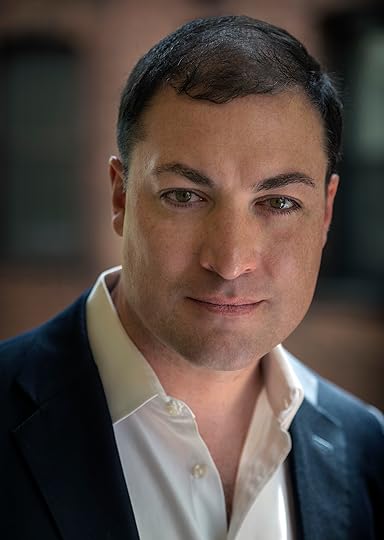
Sean McFate - image from his site
When you read The New Rules of War your view of the world will be irrevocably shaken. It is as if we have all (well, most of us) been walking around with a VR device over our eyes, and reacting to a designed view of the world that can seem quite realistic. But should we take off the gear, the smoking ruins of a post-apocalyptic world blast our senses and our sanity. Ok, I may be exaggerating just a wee bit, but read on, and you may think this is closer to the mark than not.
McFate says that, unlike the experience of the first half of the 20th century, when large wars dominated, with periods of relative peace in between, conflict, while on a lesser scale, has become a more or less permanent feature of the global landscape, and the combatants are not always nation-states.
Conflicts breed like tribbles, and the international community is proved powerless to stop them. This growing entropy signifies the emergence of a new global system that I call “durable disorder,” which contains rather than solves problems. This condition will define the coming age. The world will not collapse into anarchy; however, the rules-based order we know will crumble and be replaced by something more organic and wild.He reports on how most war futurists are mired in Hollywood-based visions of conflict that miss what is actually going on in the world. While inspired prognosticators do exist, they are few and far between. Re this, it’s worth checking out a pretty far-sighted book by Richard Clarke and R.P. Eddy on how important such visionaries are, and how the world usually treats them, Warnings: Finding Cassandras to Stop Catastrophes.
He points to the vast amount of money wasted on so-called advanced military hardware, noting in particular the monstrously over-priced, yet underperforming F-35. He notes also the lax personnel training on US Navy ships, and general overreliance on hi-tech, as examples of misguided priorities.
Cyber is important, but not in ways people think. It gives us new ways of doing old things: sabotage, theft, propaganda, deceit, and espionage. None of this is new. Cyberwar’s real power in modern warfare is influence, not sabotage. Using the internet to change people’s minds is more powerful than blowing up a server, and there’s nothing new about propaganda…Weaponized information will be the WMD of the future, and victory will be won in the influence space.It is certainly clear to anyone living in the West that we have been the target of a Russian-led war of the cyber variety. Many practitioners have been indicted for these crimes in the USA, but the assault continues, as Russia persists in attempting to direct American public opinion, and election results. Putin’s internet blitzkrieg continues to assail the info-sphere in Britain, was a considerable player in the Brexit catastrophe, and delivered a polonium pill to the American political system with the insertion of a Russian asset into the highest office in the land. Who needs nukes, comrade?
McFate breaks his analysis down to ten rules, divided between stark observations of the past as a guide to how to handle sundry political-military problems of today, and a list of best practices for dealing with the new face of warfare.
He argues that the age of the mercenary is upon us. He should know, having worked in the industry for some years. Large scale violence has been the monopoly of nation states since the 1648 Peace of Westphalia, but in recent decades there has been alarming growth in the supply of for-hire military services. This takes two forms. In one, nation-states employ contractors to take on military operations. This is a response to public disapproval of using citizens as cannon fodder in unpopular conflicts. (see Rachel Maddow’s excellent book, Drift, for an insightful look at how this has played out in the USA) US-hired contractors in Iraq and Afghanistan provide significant proportions of our presence in those countries. But even with outsourcing war, the global dominance of the nation-state has seriously eroded.
From the weakening European Union to the raging Middle East, states are breaking down into regimes or are manifestly failing. They are being replaced by other things, such as networks, caliphates, narco-states, warlord kingdoms, corporatocracies, and wastelands. Syria and Iraq may never be viable states again, at least not in the traditional sense. The Fragile States Index, an annual ranking of 178 countries that measures state weakness using social science methods, warned in 2017 that 70 percent of the world’s countries were “fragile.” This trend continues to worsen…But the Westphalian Order is dying.The other client for military contractors is private entities. Corporations, for example, hire high-end private security (not rent-a-cop mall guards, but special-ops-level former military personnel) to provide security in dodgy third-world locations. And there is nothing to prevent individuals from hiring private companies to engage in private military actions. McFate cites one alarming incident in which a well-known actress attempted to hire a private security company to engage in a rescue mission in Darfur. And what’s to keep dueling cartels from hiring some extra help? I was also reminded of situations in which local gangs take on the task of enforcing justice when the state authorities have stepped away. The fascinating books Ghettoside, by Jill Leovy and All Involved, by Ryan Gattis, offer takes on what that looks like.
So you thought you were living in the 21st century? What does that mean? A world organized around the nation-state, government that provides services, including national defense, social regulation and benefits, relative freedom of religion (in first world countries, anyway), food security, health care, education for our children, a respected judicial system. But there are vast swaths of the planet where these conditions do not apply.
Much of the world is devolving into stateless, Mad-Max arenas in which competing warlords, gangs and outside interests compete for spoils such as access to natural resources or economically and/or militarily advantageous assets like ports. What is there to stop a well-armed force but another well-armed force? And maybe one side in a conflict can pay the freight, while the other cannot. Billionaires could easily establish their own fiefdoms, states even, with a few well allocated companies of well-paid soldiers. And there are, even now, wars within states that all but ignore the official military. Mexico is a prime example, in which cartels have been engaging in a years-long death-match. Syria is now a free-for-all, in which the state military is only one among many players.
One can begin to see a medieval universe unfolding, in which nations, churches, and the wealthy each pursue global ambitions as world powers. They will all use force when necessary because it can be bought once again, as in the Middle Ages. The use of private force will expand in the decades to come, because nothing is in place to stop its growth, and in so doing, it will turn the super-rich into potential superpowers.We already have at least one of those. The Kingdom of Saudi Arabia is basically the private property of the Saud family. I could easily see Kochistan in Panem’s District 12 from The Hunger Games.
It is not a part of this book, but it does seem to me that the police power of the state is not the only tool corporate rulers have employed in domestic wars. It is not much of a stretch to see the Pinkertons as domestic mercenaries fighting a class war on behalf of private interests against minimally defended workers. And in another instance, one could also see organized crime as the mercenaries some groups in organized labor brought in to defend itself against such dangers. McFate goes into the perils inherent in employing mercenaries, one of which is the problem of what these armed sorts might do once their assignment is over. His solution is remarkably efficient and cynical.
McFate offers up a nice collection of terminology to add to your dictionary of things military and spooky. He points out the difference between shadow wars and insurgencies, and little green men vs little blue men, for example.
I think McFate understates how much the West has been participating in information wars against our enemies, real and perceived. We have been planting fake news in foreign presses for a long time, and engaging in the usual range of spycraft hoping to influence elections and strategic decision-making for as long as we have had intelligence services. McFate does take some note of this, citing Benjamin Franklin as an early practitioner, waging an InfoWar on the Crown, citing fabricated accounts of Indians delivering packs of hundreds of American scalps at British direction in order to rouse local outrage. Fake news is not new, but our rivals abroad have leapfrogged our deceptive capabilities by devoting resources to developing new cyberwar expertise while we have directed way too much of our resources to expensive and largely useless toys. McFate makes the very sensible suggestion that funding for a few hardware toys be redirected to building up our national arsenal of internet expertise.
One wonders if, as a means of addressing assaults by Russian, Chinese, Iranian, or North Korean bot-warriors, it might not be a part of national tactical planning to respond with actual military attacks even in the absence of 100% certainty of responsibility. That seems to be off the table at present, but in a world of rapidly shifting methodologies and rules the gathered generals might consider dropping some cruise missiles on Internet Research Agency facilities, for example, or other known troll farms. There seems to be a presumption in the book that cyber assaults can only be redressed with cyber-based responses.
So, while it was not achieved by an IED, thank goodness, my mind was totally blown reading this book. The vision of today’s and tomorrow’s world offered by McFate is a truly alarming one. Correct or not, his take seems quite worthy of consideration at the highest levels of government. There is enough food for thought here to supply an army-base canteen. And enough cause for grave concern to keep makers of Xanax, Librium, Valium and Ativan pumping out the pills to a receptive, if somewhat dazed population. Be afraid, be very afraid, but
Stay where you are and simply feel the panic without trying to distract yourself. Place the palm of your hand on your stomach and breathe slowly and deeply. - recommendation from the NHSand once you have calmed down, try to give some thought to how we may approach this possible new world. Do we embrace the mercenary-rich future or seek ways to stifle it? Do we stick with nation-building, and trying to win hearts and minds or go all scorched earth? Do we accept that political wastelands will always exist or try to fix them? Are we ok with billionaire bombers, or are there ways to keep warfare in the public sector? Probably a good idea to attend to these issues ASAP, before someone sends in a team and decides for us.
Review posted – January 25, 2019
Publication date – January 22, 2019
=============================EXTRA STUFF
Links to the author’s personal and Twitter pages
A nice bio of McFate
By McFate
-----CNBC - Forget Iran. Russia is the real threat to the US in the Middle East
Other Items of Interest
-----Foreign Policy Somalia Is a Country Without an Army - by Amanda Sperber
-----The Atlantic - The Return of the Mercenary - by Kathy Gilsinan
Book links in the review
-----Warnings: Finding Cassandras to Stop Catastrophes - by Richard Clarke and R.P. Eddy
-----Drift - by Rachel Maddow
-----Ghettoside - by Jill Leovy
-----All Involved - by Ryan Gattis
-----The Hunger Games - by Suzanne Collins

February 6, 2019
Two and a half stars.
The author raises some good points, but ultimately his arguments go nowhere and his logic does not stand up to even mild scrutiny. The basic point is that “the West” (the USA and Britain? Canada? Germany? what about Sweden? etc - this is not nitpicking, as will be discussed vagueness is a strategy the author goes to time and again to shore up rather muddled thinking) has gotten really bad at “War” (what does that word mean? Well, everything and nothing all at once. When China does it, it means everything anyone in their government ever does, when the USA does it means sending tanks and fighter jets to Iraq). The evidence? Obvious - the US had the debacles of Vietnam and Iraq and Afghanistan. The Russians had the glorious shadow win in Ukraine and China sent some ships to the South China Sea, which was in some covert shadow way a really great victory somehow (it’s fortunate that the whole point of the new War is secrecy and disinformation, this relieves the author of explaining exactly what the hell he is talking about in the South China Sea). Anyway, see Russia and China have figured out that the new game in town is stealthy war, rather than the big “Napoleanic” warfare that stodgy old America is stuck in. Conveniently, the author skips over Russia’s (more recent than Vietnam) debacle in Afghanistan, but hey who’s counting. See, the Order of Westphalia is collapsing and there aren’t anymore states (except, Russia and China I guess?) really, just suckers who think there are and everyone else who plans to hire mercenaries and capitalize on the fact that there are no international laws that matter (as if there ever were, you know, like that time that Interpol arrested Germany for the Anschluss...).
Anyway, so when like non-state-y states like China or Russia conduct “War” now they do it in the new way, with disinformation campaigns, propaganda, secret covert operations, attacks on infrastructure, etc. And when dumb ole “West”ern states conduct War they just send in conventional forces and try to blow things up, which doesn’t work (see, e.g., Iraq, Afghanistan, etc). The problem with this blinding new insight (the author compares himself to Cassandra and wails out bemoaning that his wisdom is destined to be ignored by the narrowly conventional world) is that it is a false dichotomy based on the author’s ambiguous and shifting usages of what should be his axiomatically defined word “War”. If “War” is everything you do as a state to further your own interests, the “West” has been going gangbusters for quite some time now (I can’t even begin to list the number of examples, but let’s start with how somehow the “West” managed to engineer an American Consensus worldwide to its own advantage through a combination of economic policies, financial institutions, loads of propaganda, Hollywood movies, military sponsorship and advertising, covert operations, etc). Why is this not “War” just like the author is calling for?
Also, one of the author’s gimmicks is to shock the faint at heart with some realpolitik about how dirty War can get when you don’t follow conventional rules (although if memory serves, it seems like a couple bad things also happened in WWII, which was pretty conventional). He says this in the sense of “see, the big boys know you gotta get your hands dirty, but America doesn’t want to think about that just now”. The problem, as he breezily glosses over, is that most of the tactics he lists (draining the swamp, torture, covertly overthrowing governments, etc) are incompatible with and dangerous to democracy. Which is why when democratic governments engage in them, they are weakened. The author raises this conundrum, then instantly drops it without ever resolving or even addressing it.
Also - I was not completely sold on his analysis of the Iraq War. Did we REALLY lose it because we failed to understand the “new nature of war” as a chaotic space? Or did we go in unprepared, make disastrous decisions (de-Baathification, etc) and fail to have any clearly defined war aim or mission? Seems like those are a failure to implement conventional strategy and tactics, not evidence that the very nature of conflict has changed.
And furthermore - the evidence for the thesis that warfare is becoming a mercenary business and so we’ll all be kow-towing to our mercenary overlords hired by Mark Zuckerberg to defend against the forces of Bill Gates is scant at best. Private military contractors exist. Always have. Does that really mean that state militaries are disappearing overnight? Oh wait, there are no more states (except, you know, the ones that there are - because most states aren’t states anymore because, um, Somalia isn’t really so... too difficult to explain, which isn’t really the author’s bag - he’s more of a stater than an explainer or convincer).
I could go on, but I won’t. The parts detailing the criminal incompetence and overspending of the US military-industrial complex are well worth the read though, and alone justify having purchased the book.
The author raises some good points, but ultimately his arguments go nowhere and his logic does not stand up to even mild scrutiny. The basic point is that “the West” (the USA and Britain? Canada? Germany? what about Sweden? etc - this is not nitpicking, as will be discussed vagueness is a strategy the author goes to time and again to shore up rather muddled thinking) has gotten really bad at “War” (what does that word mean? Well, everything and nothing all at once. When China does it, it means everything anyone in their government ever does, when the USA does it means sending tanks and fighter jets to Iraq). The evidence? Obvious - the US had the debacles of Vietnam and Iraq and Afghanistan. The Russians had the glorious shadow win in Ukraine and China sent some ships to the South China Sea, which was in some covert shadow way a really great victory somehow (it’s fortunate that the whole point of the new War is secrecy and disinformation, this relieves the author of explaining exactly what the hell he is talking about in the South China Sea). Anyway, see Russia and China have figured out that the new game in town is stealthy war, rather than the big “Napoleanic” warfare that stodgy old America is stuck in. Conveniently, the author skips over Russia’s (more recent than Vietnam) debacle in Afghanistan, but hey who’s counting. See, the Order of Westphalia is collapsing and there aren’t anymore states (except, Russia and China I guess?) really, just suckers who think there are and everyone else who plans to hire mercenaries and capitalize on the fact that there are no international laws that matter (as if there ever were, you know, like that time that Interpol arrested Germany for the Anschluss...).
Anyway, so when like non-state-y states like China or Russia conduct “War” now they do it in the new way, with disinformation campaigns, propaganda, secret covert operations, attacks on infrastructure, etc. And when dumb ole “West”ern states conduct War they just send in conventional forces and try to blow things up, which doesn’t work (see, e.g., Iraq, Afghanistan, etc). The problem with this blinding new insight (the author compares himself to Cassandra and wails out bemoaning that his wisdom is destined to be ignored by the narrowly conventional world) is that it is a false dichotomy based on the author’s ambiguous and shifting usages of what should be his axiomatically defined word “War”. If “War” is everything you do as a state to further your own interests, the “West” has been going gangbusters for quite some time now (I can’t even begin to list the number of examples, but let’s start with how somehow the “West” managed to engineer an American Consensus worldwide to its own advantage through a combination of economic policies, financial institutions, loads of propaganda, Hollywood movies, military sponsorship and advertising, covert operations, etc). Why is this not “War” just like the author is calling for?
Also, one of the author’s gimmicks is to shock the faint at heart with some realpolitik about how dirty War can get when you don’t follow conventional rules (although if memory serves, it seems like a couple bad things also happened in WWII, which was pretty conventional). He says this in the sense of “see, the big boys know you gotta get your hands dirty, but America doesn’t want to think about that just now”. The problem, as he breezily glosses over, is that most of the tactics he lists (draining the swamp, torture, covertly overthrowing governments, etc) are incompatible with and dangerous to democracy. Which is why when democratic governments engage in them, they are weakened. The author raises this conundrum, then instantly drops it without ever resolving or even addressing it.
Also - I was not completely sold on his analysis of the Iraq War. Did we REALLY lose it because we failed to understand the “new nature of war” as a chaotic space? Or did we go in unprepared, make disastrous decisions (de-Baathification, etc) and fail to have any clearly defined war aim or mission? Seems like those are a failure to implement conventional strategy and tactics, not evidence that the very nature of conflict has changed.
And furthermore - the evidence for the thesis that warfare is becoming a mercenary business and so we’ll all be kow-towing to our mercenary overlords hired by Mark Zuckerberg to defend against the forces of Bill Gates is scant at best. Private military contractors exist. Always have. Does that really mean that state militaries are disappearing overnight? Oh wait, there are no more states (except, you know, the ones that there are - because most states aren’t states anymore because, um, Somalia isn’t really so... too difficult to explain, which isn’t really the author’s bag - he’s more of a stater than an explainer or convincer).
I could go on, but I won’t. The parts detailing the criminal incompetence and overspending of the US military-industrial complex are well worth the read though, and alone justify having purchased the book.

March 10, 2019
Facile, vapid, and worse, needlessly pedagogic. There are a couple of good ideas in here, but they are smothered by the author's overwhelming arrogance, numerous misstatements and poorly-researched sweeping generalizations.

March 9, 2019
"Think of warfare like smoke: always shifting, twisting, moving. Strategists who cling to rigid views of war will be blindsided by its mutable character, resulting in strategic surprise and defeat." - author, Sean McFate
McFATE'S NEW RULES FOR WAR (EACH EXPLAINED IN ITS OWN CHAPTER)
- Rule 1: Conventional War Is Dead
- Rule 2: Technology Will Not Save Us
- Rule 3: There Is No Such Thing as War or Peace—Both Coexist, Always
- Rule 4: Hearts and Minds Do Not Matter
- Rule 5: The Best Weapons Do Not Fire Bullets
- Rule 6: Mercenaries Will Return
- Rule 7: New Types of World Powers Will Rule
- Rule 8: There Will Be Wars without States
- Rule 9: Shadow Wars Will Dominate
- Rule 10: Victory Is Fungible
RULE 1: CONVENTIONAL WAR IS DEAD
- So strong is this dogma that other forms of combat are labeled “unconventional,” “asymmetrical,” or “irregular.” These are snubs. Military campaigns waged by armed nonstate actors are not privileged as war, but belittled as something lesser.
- There is just one problem with conventional war: no one fights this way anymore.
- Today states are receding everywhere, a sure sign of disorder...They are being replaced by other things, such as networks, caliphates, narco-states, warlord kingdoms, corporatocracies, and wastelands.
- The Fragile States Index, an annual ranking of 178 countries that measures state weakness using social science methods, warned in 2017 that 70 percent of the world’s countries were “fragile.”
- Now we are returning to the status quo ante of disorder and what came before 1648. The world will not collapse in anarchy but smolder in perpetual conflict, as it has for millennia.
- When it comes to seeing the future of war, nations turn to the past. Or rather, to past successes....Despite the bitter lessons of Vietnam, Somalia, the Balkans, Iraq, Afghanistan, and Syria, the United States still maintains a military designed to thwart enemies who fight conventionally.
- Currently, the military keeps most of its conventional firepower, like tank divisions, on active duty...By contrast, support units remain in the reserves and mobilize when there is a national emergency. They perform tasks like intelligence, engineering, medical support, logistics, and a myriad of highly technical skills needed to sustain the warfighter...This arrangement of active and reserve components is exactly backward...Conventional warfighters should be sent into the reserves, and support functions moved to active duty.
- If we are to face the future, the top billets must go to those who know how to fight in this new age. Generals drawn from special operation forces, intelligence, and information operations could break the old paradigm.
- New capabilities are needed, too, and countries should invest in warrior-diplomats in the mold of T. E. Lawrence.
- Other instruments of national power must be cultivated, such as information dominance, pinpoint sanctions that financially strangle enemy elites, strategic messaging to win the battle of the narrative, public diplomacy that speaks directly to populations, force that provides plausible deniability, and bribes to change adversaries’ minds so that we don’t have to shoot them.
- Much of our future arsenal already exists in the hands of civilians, not among troops,
RULE 2: TECHNOLOGY WILL NOT SAVE US
- The measure of any weapon’s value is its utility. The F-35 is a monument to our faith in technology, as evidenced by how much has been invested in it so far...The United States has sunk $ 1.5 trillion into this airplane—more than Russia’s GDP.
- Some experts believe that America’s debt may be its biggest enemy. “No nation in history has maintained its military power if it failed to keep its fiscal house in order,” said James Mattis,
- Future wars will be low tech...Low tech—so easy to obtain and so difficult to defeat—will form the future’s weapons of choice.
- [DoD created its] own venture capital fund in California’s Silicon Valley, courtesy of US taxpayers. It need not be profitable, just supply the warfighter with gee-whiz technology. They call it the Defense Innovation Unit-Experimental, or DIUx,
- We have invested in technology at the expense of our people...the admiralty believes “there is a technical solution, and we are looking to industry to provide a solution.” Not only does this blind faith in the industry produce duds like the F-35, but it also produces a new generation of officers who lack knowledge of the fundamentals of their profession, such as seamanship.
- This does not suggest we forsake sophisticated gear, but we should stop worshipping it.
- War is armed politics, and seeking a technical solution to a political problem is folly. Ultimately, brainpower is superior to firepower, and we should invest in people, not platforms.
RULE 3: THERE IS NO SUCH THING AS WAR OR PEACE - BOTH CO-EXIST, ALWAYS
- China’s version is called the “Three Warfares” strategy, and it is how its leaders plan to drive the United States from Asia. The Three Warfares strategy succeeds because it’s war disguised as peace.
- You behave differently in war versus peace, making the distinction between them crucial. China wins because it exploits the West’s false belief in this dichotomy...The trick is to keep the US war switch flipped to “off” so the superpower remains docile and at “peace.”
- First, the Chinese play a dangerous game of brinksmanship, going right up to the edge of war—or what the West thinks is war—and then stopping.
- Second, China masks its conquest using nonmilitary tools, so its actions don’t look like war to conventional warriors.
- Instead of battlefield victory, the Three Warfares strategy achieves victory by sapping the enemy’s will to fight before the fighting even begins.
- The bigger the falsification, the more China defends its legality—over and over again—believing that with repetition, people will finally accept it. Hitler had a name for this technique. He called it the “Big Lie.”
- This is not just a US problem. The line between war and peace has become so blurred that all nations mired in the old rules of war are baffled, and they now rush to call everything an “act of war.”
- The Three Warfares strategy conquers with a creeping expansionism designed to remain below the United States’ threshold of “war,” knowing that America will remain inert if at “peace.”
- In modern and future wars, there is no war or peace—only war and peace. Those who grasp this will conquer, like China, and those who don’t will speak Chinese.
- Good grand strategy has five characteristics:
- First, it is not restricted to war and recognizes that war and peace coexist.
- Second, it is dynamic and flexible, requiring a constant balancing of resources needed to ward off new threats. Grand strategy is not a checklist, but rather a jazz improvisation.
- Third, it harnesses all of a nation’s instruments of power, not just the military ones.
- Fourth, it can be offensive or defensive.
- Fifth—and most important—grand strategy endures over a long time, lasting decades or centuries.
- Great Britain’s grand strategy had five elements: transform the nation into an island fortress; gain wealth through colonization and commerce abroad; maintain naval superiority to protect sea lanes and trade; never get the army cornered on mainland Europe; and keep European rivals down by playing them off one another.
- Grand strategy does not require an enemy to be effective.
- credibility is power in foreign affairs.
RULE 4: HEARTS AND MINDS DO NOT MATTER
- Bloody determination and strategic patience eradicated the roots of insurgency and won the war. It is not fair, just, or moral. But it is effective. This is what successful COIN requires, and anything less simply prolongs the fight, as demonstrated by the failure of modern COIN in Iraq and Afghanistan.
- People think that saving the population wins the war, but this rarely works.
- COINistas think you can forge a new social contract in failed states if you provide people with better social services, literally building a nation out of dust...As a result, the United States blew billions in Iraq and Afghanistan building schools, roads, hospitals—a state. But this never succeeds because—spoiler alert—populations are not bribable. Individuals can be bribed, but not communities.
- Legitimacy in societies like Iraq and Afghanistan is not conferred by a democratic social contract but rather by political Islam. Piety to god and observance of sharia law matters most, which is what al-Qaeda, ISIS, and the Taliban are selling.
- COIN was never meant to build democracies—it was designed to enslave people...Their goal was to impose a colonial regime, not to create independent states.
- Here are three COIN strategies that can succeed—if you can stomach them. None triumphed by winning hearts and minds.
- The first is the “drain the swamp” strategy, and it’s what the Romans did to Judea.
- The second is the “export and relocate” strategy.
- The third is the “import and dilute” strategy.
- The best way to kill insurgencies is to use all three strategies at once. Rome ruled for a millennium this way, and it’s how outnumbered European colonialists controlled rebellious territories.
- In the end, effective COIN is brutal and heartless—the opposite of Petraeus’s warm and fuzzy version.
- The West needs a long-term presence in zones of disorder to prevent problems from becoming crises and crises from becoming conflicts.
- There is no substitute for boots on the ground. Troops are needed to root out the enemies in the shadows, where they breed, before they develop into full-blown insurgencies or mature into terrorists who can attack our homeland.
- A foreign legion could provide the United States with long-term boots on the ground in places it needs them the most, solving a perennial strategic problem.
- The transition from US casualties to non-US ones would give the legion political freedom of maneuver
- Legionnaires should replace contractors and all the troubles associated with them.
- Paying for the legion would be easy. It would replace private military contractors and take their budget.
RULE 5: THE BEST WEAPONS DO NOT FIRE BULLETS
- Putin achieved what the Soviets could not by weaponizing refugees rather than threatening firepower...Russia and Syria had turned migration into a weapon by systematically bombarding civilian centers...terrorists like ISIS have exploited the refugee crisis to infiltrate Europe,
- Nonkinetic weapons can be very effective in war, and cunning strategists can weaponize almost anything, including refugee waves.
- The United States spends twelve times more on its military than it does on diplomacy and foreign assistance.
- Contemporary and future threats are not conquering states but failing ones, and what emanates from them are terrorists, rogue regimes, criminal empires, or just plain anarchy.
- It still tries to change minds using Cold War techniques like Radio Free Europe and dropping pamphlets out of the sky (something the air force calls “bullshit bombs”).
- Weaponizing influence and gaining information superiority has three components:
- First is monitoring: intelligence agencies identify who is messaging what to whom, along with how and why.
- Second is discrediting: pinpointing fake news, alternative facts, bots, trolls, false narratives, viral memes, and negative frames, and then exposing them.
- Third is counterattacking, and this is where Western countries grow weak in the legs.
- We need more weapons in our influence arsenal, and here are a few:
- Denigration. Going negative is powerful, but it must be done artfully.
- Involuntary Internalization. (Example: Funding 'American Idol'-style shows abroad) Through analogous action and associative reasoning, people may begin yearning for “voter” participation in their political life and start questioning authority.
- Moral Corruption. (Example: A colleague in the intelligence community once told me we could probably shorten the Taliban’s fighting season if we broadcast Baywatch in Afghanistan.)
RULE 6: MERCENARIES WILL RETURN
- Mercenaries are more economical, and that’s why they have existed throughout history, with today’s national armies as the exception.
- The Holy See still uses a Swiss guard, once a fearsome mercenary unit but now part of the Swiss army, complete with halberds and tights.
- The Congressional Budget Office, a watchdog agency, found that an infantry battalion at war costs $ 110 million a year, while a comparable private military unit totals $ 99 million.
- US Special Forces vs (Russian private contractors) Wagner Group: It took America’s most elite troops and advanced aircraft four hours to defeat five hundred mercenaries. https://youtu.be/UDWw-Zjwxaw
- Following the abductions, the Nigerian government secretly turned to mercenaries to fight Boko Haram...Conducting search-and-destroy missions, they drove out Boko Haram in a few weeks.
- Even terrorists hire mercenaries. Malhama Tactical is based in Uzbekistan, and it works only for jihadi extremists. https://youtu.be/bIrbsJGDcso
- armed contractors sit on “arsenal ships” in pirate waters and chopper to a client’s freighter or tanker when called. Once aboard, they act as “embarked security,” hardening the ship with razor wire and protecting it with high-caliber firepower. After the ship passes through pirate waters, the team returns to its arsenal ship and awaits the next client.
- Congress is authorized to hire privateers under article 1, section 8, of the Constitution,
- There are even mercenaries in cyberspace, called “hack back” companies. These computer companies attack hackers, or “hack back,” those who assail their client’s networks.
RULE 7: NEW TYPES OF WORLD POWERS WILL RULE
- Billions of people live in countries that are in danger of collapse, but that doesn’t mean anarchy.
- According to the World Bank, the top one hundred economies comprise thirty-one countries and sixty-nine corporations.
- subduing or bribing a country’s existing armed forces. This is called “praetorianism,” a name that comes from the infamous Praetorian Guard, the imperial bodyguard of the Roman emperors established by Augustus Caesar. But rather than protect the emperor, the guard often controlled him.
- Only individuals who have been institutionalized after decades of service are promoted to the highest ranks, where they will then reliably promote the institution’s agenda. Conspirators would deride these “company men” as “empty suits” who are promoted for their groupthink—institution über alles!—that is, until they were caught and hung by those same company men.
RULE 8: THERE WILL BE WARS WITHOUT STATES
- (Acapulco, Mexico) In 2006, a severed head was carried in by an ocean wave and deposited next to a Mexican sunbather and her two horrified children.
- They see the “drug war” as a law enforcement challenge rather than a real war. No wonder they are losing, decade after decade.
- First, why do we privilege some armed conflicts as war and regard others as crime?
- Second, cartels are not street gangs but regional superpowers.
- Third, when cartels wage war, they fight like empires.
- Experts no longer know what war is. Buzzwords have replaced ideas, as authorities bicker over hybrid warfare, nonlinear war, active measures, and conflict in the “gray zone.” There is no consensus about what these terms mean, other than that they refer to aspects of unconventional war...As mentioned earlier, there is no such thing as conventional versus unconventional war—there is just war.
- Few war experts study Africa—a strange oversight. Africa shows us the future of war. There are no conventional interstate wars there.
- Because the conventional war mind sees only states, it will always lose wars without states because it cannot diagnose the problem.
- The front line in this Middle East war stretches from Israel across the Shia Crescent to Yemen. It is a single war, with many fronts. However, the conventional war mind views each country’s conflict as a discrete war. Instead of making one strategy to combat a single war, it makes multiple strategies—one per country—and they work at cross-purposes.
- The rise of mercenaries coupled with new kinds of nonstate powers will produce private war...It is literally the marketization of war, in which military force is bought and sold like any other commodity. This will change warfare as we know it.
- First, private war has its own logic: For-profit warriors are not bound by political considerations or patriotism;
- Second, the fact of private warfare lowers the barriers to entry for war.
- Third, private warfare breeds war.
- Fourth, the market for force creates what political scientists call a “security dilemma.”
- Fifth, double-crossing is the bane of private warfare.
RULE 9: SHADOW WARS WILL DOMINATE
- Moscow-controlled media organizations spin the facts at such a high RPM that even Russia experts are confused. The West will not risk a war with Russia if it cannot establish the basic facts of the conflict. It’s a brilliant strategy by the Russians, in a diabolical sort of way.
- By the time the international community figured it out, Russia’s conquest was a fait accompli.
- Plausible deniability is more decisive than firepower in the information age.
- Shadow wars are armed conflicts in which plausible deniability, not firepower, forms the center of gravity...telling what is real from fake will decide the winners and losers. Warriors will be masked and offer good plausible deniability,
- In a shadow war, cloaking is a form of power, and information is weaponized...If you twist your enemy’s perception of reality, you can manipulate him into strategic blunders that can be exploited for victory. It’s also a great defense.
RULE 10: VICTORY IS FUNGIBLE
- fungible (adj.) - able to replace or be replaced by another identical item; mutually interchangeable.
- German agents approached Lenin in Zurich and offered him the deal of the century. Germany would secretly transport him and his followers in a “sealed train” across Europe and into Petrograd...In a single train ride, Kühlmann had taken out the eastern front, not with bullets, but with cunning.
- “War is armed politics” means victory is as much political as military.
- Hanoi used secret agents to manipulate the American press pool in Saigon by acting as trusted sources who fed misinformation.
- The North Vietnamese did not need a big military or superior technology; instead, they used nonkinetic means like the media to portray the war as “mired in stalemate,” which weakened American resolve to the point of withdrawal.
- To garner support for the plucky revolutionaries among the British masses, Franklin published fake news in a counterfeit issue of the Boston Independent Chronicle, an influential newspaper. Writing all the articles himself, he had the newspaper discreetly put into the hands of British tabloid editors, who reprinted the articles.
- T. E. Lawrence believed that “the printing press is the greatest weapon in the armory of the modern commander.”
- The truth is, a clever person can weaponize almost anything: refugees, information, election cycles, money, the law.
McFATE'S NEW RULES FOR WAR (EACH EXPLAINED IN ITS OWN CHAPTER)
- Rule 1: Conventional War Is Dead
- Rule 2: Technology Will Not Save Us
- Rule 3: There Is No Such Thing as War or Peace—Both Coexist, Always
- Rule 4: Hearts and Minds Do Not Matter
- Rule 5: The Best Weapons Do Not Fire Bullets
- Rule 6: Mercenaries Will Return
- Rule 7: New Types of World Powers Will Rule
- Rule 8: There Will Be Wars without States
- Rule 9: Shadow Wars Will Dominate
- Rule 10: Victory Is Fungible
RULE 1: CONVENTIONAL WAR IS DEAD
- So strong is this dogma that other forms of combat are labeled “unconventional,” “asymmetrical,” or “irregular.” These are snubs. Military campaigns waged by armed nonstate actors are not privileged as war, but belittled as something lesser.
- There is just one problem with conventional war: no one fights this way anymore.
- Today states are receding everywhere, a sure sign of disorder...They are being replaced by other things, such as networks, caliphates, narco-states, warlord kingdoms, corporatocracies, and wastelands.
- The Fragile States Index, an annual ranking of 178 countries that measures state weakness using social science methods, warned in 2017 that 70 percent of the world’s countries were “fragile.”
- Now we are returning to the status quo ante of disorder and what came before 1648. The world will not collapse in anarchy but smolder in perpetual conflict, as it has for millennia.
- When it comes to seeing the future of war, nations turn to the past. Or rather, to past successes....Despite the bitter lessons of Vietnam, Somalia, the Balkans, Iraq, Afghanistan, and Syria, the United States still maintains a military designed to thwart enemies who fight conventionally.
- Currently, the military keeps most of its conventional firepower, like tank divisions, on active duty...By contrast, support units remain in the reserves and mobilize when there is a national emergency. They perform tasks like intelligence, engineering, medical support, logistics, and a myriad of highly technical skills needed to sustain the warfighter...This arrangement of active and reserve components is exactly backward...Conventional warfighters should be sent into the reserves, and support functions moved to active duty.
- If we are to face the future, the top billets must go to those who know how to fight in this new age. Generals drawn from special operation forces, intelligence, and information operations could break the old paradigm.
- New capabilities are needed, too, and countries should invest in warrior-diplomats in the mold of T. E. Lawrence.
- Other instruments of national power must be cultivated, such as information dominance, pinpoint sanctions that financially strangle enemy elites, strategic messaging to win the battle of the narrative, public diplomacy that speaks directly to populations, force that provides plausible deniability, and bribes to change adversaries’ minds so that we don’t have to shoot them.
- Much of our future arsenal already exists in the hands of civilians, not among troops,
RULE 2: TECHNOLOGY WILL NOT SAVE US
- The measure of any weapon’s value is its utility. The F-35 is a monument to our faith in technology, as evidenced by how much has been invested in it so far...The United States has sunk $ 1.5 trillion into this airplane—more than Russia’s GDP.
- Some experts believe that America’s debt may be its biggest enemy. “No nation in history has maintained its military power if it failed to keep its fiscal house in order,” said James Mattis,
- Future wars will be low tech...Low tech—so easy to obtain and so difficult to defeat—will form the future’s weapons of choice.
- [DoD created its] own venture capital fund in California’s Silicon Valley, courtesy of US taxpayers. It need not be profitable, just supply the warfighter with gee-whiz technology. They call it the Defense Innovation Unit-Experimental, or DIUx,
- We have invested in technology at the expense of our people...the admiralty believes “there is a technical solution, and we are looking to industry to provide a solution.” Not only does this blind faith in the industry produce duds like the F-35, but it also produces a new generation of officers who lack knowledge of the fundamentals of their profession, such as seamanship.
- This does not suggest we forsake sophisticated gear, but we should stop worshipping it.
- War is armed politics, and seeking a technical solution to a political problem is folly. Ultimately, brainpower is superior to firepower, and we should invest in people, not platforms.
RULE 3: THERE IS NO SUCH THING AS WAR OR PEACE - BOTH CO-EXIST, ALWAYS
- China’s version is called the “Three Warfares” strategy, and it is how its leaders plan to drive the United States from Asia. The Three Warfares strategy succeeds because it’s war disguised as peace.
- You behave differently in war versus peace, making the distinction between them crucial. China wins because it exploits the West’s false belief in this dichotomy...The trick is to keep the US war switch flipped to “off” so the superpower remains docile and at “peace.”
- First, the Chinese play a dangerous game of brinksmanship, going right up to the edge of war—or what the West thinks is war—and then stopping.
- Second, China masks its conquest using nonmilitary tools, so its actions don’t look like war to conventional warriors.
- Instead of battlefield victory, the Three Warfares strategy achieves victory by sapping the enemy’s will to fight before the fighting even begins.
- The bigger the falsification, the more China defends its legality—over and over again—believing that with repetition, people will finally accept it. Hitler had a name for this technique. He called it the “Big Lie.”
- This is not just a US problem. The line between war and peace has become so blurred that all nations mired in the old rules of war are baffled, and they now rush to call everything an “act of war.”
- The Three Warfares strategy conquers with a creeping expansionism designed to remain below the United States’ threshold of “war,” knowing that America will remain inert if at “peace.”
- In modern and future wars, there is no war or peace—only war and peace. Those who grasp this will conquer, like China, and those who don’t will speak Chinese.
- Good grand strategy has five characteristics:
- First, it is not restricted to war and recognizes that war and peace coexist.
- Second, it is dynamic and flexible, requiring a constant balancing of resources needed to ward off new threats. Grand strategy is not a checklist, but rather a jazz improvisation.
- Third, it harnesses all of a nation’s instruments of power, not just the military ones.
- Fourth, it can be offensive or defensive.
- Fifth—and most important—grand strategy endures over a long time, lasting decades or centuries.
- Great Britain’s grand strategy had five elements: transform the nation into an island fortress; gain wealth through colonization and commerce abroad; maintain naval superiority to protect sea lanes and trade; never get the army cornered on mainland Europe; and keep European rivals down by playing them off one another.
- Grand strategy does not require an enemy to be effective.
- credibility is power in foreign affairs.
RULE 4: HEARTS AND MINDS DO NOT MATTER
- Bloody determination and strategic patience eradicated the roots of insurgency and won the war. It is not fair, just, or moral. But it is effective. This is what successful COIN requires, and anything less simply prolongs the fight, as demonstrated by the failure of modern COIN in Iraq and Afghanistan.
- People think that saving the population wins the war, but this rarely works.
- COINistas think you can forge a new social contract in failed states if you provide people with better social services, literally building a nation out of dust...As a result, the United States blew billions in Iraq and Afghanistan building schools, roads, hospitals—a state. But this never succeeds because—spoiler alert—populations are not bribable. Individuals can be bribed, but not communities.
- Legitimacy in societies like Iraq and Afghanistan is not conferred by a democratic social contract but rather by political Islam. Piety to god and observance of sharia law matters most, which is what al-Qaeda, ISIS, and the Taliban are selling.
- COIN was never meant to build democracies—it was designed to enslave people...Their goal was to impose a colonial regime, not to create independent states.
- Here are three COIN strategies that can succeed—if you can stomach them. None triumphed by winning hearts and minds.
- The first is the “drain the swamp” strategy, and it’s what the Romans did to Judea.
- The second is the “export and relocate” strategy.
- The third is the “import and dilute” strategy.
- The best way to kill insurgencies is to use all three strategies at once. Rome ruled for a millennium this way, and it’s how outnumbered European colonialists controlled rebellious territories.
- In the end, effective COIN is brutal and heartless—the opposite of Petraeus’s warm and fuzzy version.
- The West needs a long-term presence in zones of disorder to prevent problems from becoming crises and crises from becoming conflicts.
- There is no substitute for boots on the ground. Troops are needed to root out the enemies in the shadows, where they breed, before they develop into full-blown insurgencies or mature into terrorists who can attack our homeland.
- A foreign legion could provide the United States with long-term boots on the ground in places it needs them the most, solving a perennial strategic problem.
- The transition from US casualties to non-US ones would give the legion political freedom of maneuver
- Legionnaires should replace contractors and all the troubles associated with them.
- Paying for the legion would be easy. It would replace private military contractors and take their budget.
RULE 5: THE BEST WEAPONS DO NOT FIRE BULLETS
- Putin achieved what the Soviets could not by weaponizing refugees rather than threatening firepower...Russia and Syria had turned migration into a weapon by systematically bombarding civilian centers...terrorists like ISIS have exploited the refugee crisis to infiltrate Europe,
- Nonkinetic weapons can be very effective in war, and cunning strategists can weaponize almost anything, including refugee waves.
- The United States spends twelve times more on its military than it does on diplomacy and foreign assistance.
- Contemporary and future threats are not conquering states but failing ones, and what emanates from them are terrorists, rogue regimes, criminal empires, or just plain anarchy.
- It still tries to change minds using Cold War techniques like Radio Free Europe and dropping pamphlets out of the sky (something the air force calls “bullshit bombs”).
- Weaponizing influence and gaining information superiority has three components:
- First is monitoring: intelligence agencies identify who is messaging what to whom, along with how and why.
- Second is discrediting: pinpointing fake news, alternative facts, bots, trolls, false narratives, viral memes, and negative frames, and then exposing them.
- Third is counterattacking, and this is where Western countries grow weak in the legs.
- We need more weapons in our influence arsenal, and here are a few:
- Denigration. Going negative is powerful, but it must be done artfully.
- Involuntary Internalization. (Example: Funding 'American Idol'-style shows abroad) Through analogous action and associative reasoning, people may begin yearning for “voter” participation in their political life and start questioning authority.
- Moral Corruption. (Example: A colleague in the intelligence community once told me we could probably shorten the Taliban’s fighting season if we broadcast Baywatch in Afghanistan.)
RULE 6: MERCENARIES WILL RETURN
- Mercenaries are more economical, and that’s why they have existed throughout history, with today’s national armies as the exception.
- The Holy See still uses a Swiss guard, once a fearsome mercenary unit but now part of the Swiss army, complete with halberds and tights.
- The Congressional Budget Office, a watchdog agency, found that an infantry battalion at war costs $ 110 million a year, while a comparable private military unit totals $ 99 million.
- US Special Forces vs (Russian private contractors) Wagner Group: It took America’s most elite troops and advanced aircraft four hours to defeat five hundred mercenaries. https://youtu.be/UDWw-Zjwxaw
- Following the abductions, the Nigerian government secretly turned to mercenaries to fight Boko Haram...Conducting search-and-destroy missions, they drove out Boko Haram in a few weeks.
- Even terrorists hire mercenaries. Malhama Tactical is based in Uzbekistan, and it works only for jihadi extremists. https://youtu.be/bIrbsJGDcso
- armed contractors sit on “arsenal ships” in pirate waters and chopper to a client’s freighter or tanker when called. Once aboard, they act as “embarked security,” hardening the ship with razor wire and protecting it with high-caliber firepower. After the ship passes through pirate waters, the team returns to its arsenal ship and awaits the next client.
- Congress is authorized to hire privateers under article 1, section 8, of the Constitution,
- There are even mercenaries in cyberspace, called “hack back” companies. These computer companies attack hackers, or “hack back,” those who assail their client’s networks.
RULE 7: NEW TYPES OF WORLD POWERS WILL RULE
- Billions of people live in countries that are in danger of collapse, but that doesn’t mean anarchy.
- According to the World Bank, the top one hundred economies comprise thirty-one countries and sixty-nine corporations.
- subduing or bribing a country’s existing armed forces. This is called “praetorianism,” a name that comes from the infamous Praetorian Guard, the imperial bodyguard of the Roman emperors established by Augustus Caesar. But rather than protect the emperor, the guard often controlled him.
- Only individuals who have been institutionalized after decades of service are promoted to the highest ranks, where they will then reliably promote the institution’s agenda. Conspirators would deride these “company men” as “empty suits” who are promoted for their groupthink—institution über alles!—that is, until they were caught and hung by those same company men.
RULE 8: THERE WILL BE WARS WITHOUT STATES
- (Acapulco, Mexico) In 2006, a severed head was carried in by an ocean wave and deposited next to a Mexican sunbather and her two horrified children.
- They see the “drug war” as a law enforcement challenge rather than a real war. No wonder they are losing, decade after decade.
- First, why do we privilege some armed conflicts as war and regard others as crime?
- Second, cartels are not street gangs but regional superpowers.
- Third, when cartels wage war, they fight like empires.
- Experts no longer know what war is. Buzzwords have replaced ideas, as authorities bicker over hybrid warfare, nonlinear war, active measures, and conflict in the “gray zone.” There is no consensus about what these terms mean, other than that they refer to aspects of unconventional war...As mentioned earlier, there is no such thing as conventional versus unconventional war—there is just war.
- Few war experts study Africa—a strange oversight. Africa shows us the future of war. There are no conventional interstate wars there.
- Because the conventional war mind sees only states, it will always lose wars without states because it cannot diagnose the problem.
- The front line in this Middle East war stretches from Israel across the Shia Crescent to Yemen. It is a single war, with many fronts. However, the conventional war mind views each country’s conflict as a discrete war. Instead of making one strategy to combat a single war, it makes multiple strategies—one per country—and they work at cross-purposes.
- The rise of mercenaries coupled with new kinds of nonstate powers will produce private war...It is literally the marketization of war, in which military force is bought and sold like any other commodity. This will change warfare as we know it.
- First, private war has its own logic: For-profit warriors are not bound by political considerations or patriotism;
- Second, the fact of private warfare lowers the barriers to entry for war.
- Third, private warfare breeds war.
- Fourth, the market for force creates what political scientists call a “security dilemma.”
- Fifth, double-crossing is the bane of private warfare.
RULE 9: SHADOW WARS WILL DOMINATE
- Moscow-controlled media organizations spin the facts at such a high RPM that even Russia experts are confused. The West will not risk a war with Russia if it cannot establish the basic facts of the conflict. It’s a brilliant strategy by the Russians, in a diabolical sort of way.
- By the time the international community figured it out, Russia’s conquest was a fait accompli.
- Plausible deniability is more decisive than firepower in the information age.
- Shadow wars are armed conflicts in which plausible deniability, not firepower, forms the center of gravity...telling what is real from fake will decide the winners and losers. Warriors will be masked and offer good plausible deniability,
- In a shadow war, cloaking is a form of power, and information is weaponized...If you twist your enemy’s perception of reality, you can manipulate him into strategic blunders that can be exploited for victory. It’s also a great defense.
RULE 10: VICTORY IS FUNGIBLE
- fungible (adj.) - able to replace or be replaced by another identical item; mutually interchangeable.
- German agents approached Lenin in Zurich and offered him the deal of the century. Germany would secretly transport him and his followers in a “sealed train” across Europe and into Petrograd...In a single train ride, Kühlmann had taken out the eastern front, not with bullets, but with cunning.
- “War is armed politics” means victory is as much political as military.
- Hanoi used secret agents to manipulate the American press pool in Saigon by acting as trusted sources who fed misinformation.
- The North Vietnamese did not need a big military or superior technology; instead, they used nonkinetic means like the media to portray the war as “mired in stalemate,” which weakened American resolve to the point of withdrawal.
- To garner support for the plucky revolutionaries among the British masses, Franklin published fake news in a counterfeit issue of the Boston Independent Chronicle, an influential newspaper. Writing all the articles himself, he had the newspaper discreetly put into the hands of British tabloid editors, who reprinted the articles.
- T. E. Lawrence believed that “the printing press is the greatest weapon in the armory of the modern commander.”
- The truth is, a clever person can weaponize almost anything: refugees, information, election cycles, money, the law.

May 4, 2021
Great read. Important challenges for military and security leaders to consider. However presentation is a bit...overwhelming. Ideas offered in pretty extreme styles. But, if you can get past the stylistic dynamics, it’s a quite thought-provoking read that I’m glad I checked out.

January 6, 2024
Шон Макфейт, «Нові правила війни. Перемога в епоху тривалого хаосу»
Відкривається 2024 книжковий рік)
Книга про приватні корпорації найманців як головну силу майбутніх збройних конфліктів, про відсутність міжнародного права, безсилля ООН та абсолютну неефективність її миротворчих місій, про глибинну державу, про терористичні угруповання й багато іншого.
Про тіньові війни, приклад якої ми бачимо в Україні. До речі, про Україну та нашу війну багато тут. Приклади, в яких ми живемо. Для інших держав це наразі теорія - нові правила війни в умовах хаосу.
До речі, місцями дуже суперечлива книга))
Неодноразово автор згадує, що коли він виступає перед аудиторією, вона часто бурчить і незадоволена, є багато гнівних запитань)
І не дивно)))
Мені кілька разів хотілося підняти руку й задати запитання автору, бо я підзакипала всередині))) Але при читанні така опція наразі не передбачена))
🖍️ Автор так критикував застарілість F-35 й розказував, що вони літали на нуль бойових завдань, але це найдорожча зброя в історії - вартість більша, ніж ВВП РФ. А я всередині кричала «так віддайте нам».
А потім, виявилося, F-16 ефективніший, хоча й старший))
🖍️ Ще одна цікава теза про те, що національна держава себе віджила як ефективна форма організації влади.
👇👇👇
📌 Щось змінюється - зброя, тактика, технології, керівництво, обставини, - але природа війни незмінна.
📌 Жодна ідея не буває хибна настільки, щоб не знайшлося кого-небудь, хто в неї повірить.
📌 Люди голосують за лідерів на підставі того, що дізнаються з новин.
📌 Почавши не з тої ноги, будеш спотикатися на подальшому шляху знову і знову.
📌 Формування людського сприйняття реальності потужніше за мобілізацію авіаносної ударної групи.
📌 Яке кому діло до меча, якщо можна вплинути на руку, яка його тримає?
📌 Росія стала наддержавою дезінформації, яка застосовує стратегію «вбити їх плутаниною».
📌 Стратегічні можливості хитрого розуму нескінченні.
📌 Перемога належить хитрим, а не сильним.
Факт. Більшість війн ведеться в Африці.
Читаючи цю книгу, перед очима мелькали кадри з серії фільмів «Нестримні».
Книга пронизана Сунь-цзи і 36-мома китайськими стратагемами для ведення війни, але вони залишаються за лаштунками.
На сцені - нові реалії нових воєн.
І після прочитання залишається шлейф серйозних роздумів.
Все, як я люблю))))
❗️ Але через усю книжку йде ниточка - будь-яку силу можна використовувати як для зла, так і для добрих справ.
Як на мене, питання лише в тій особі, яка віддає накази))
І наше майбутнє залежить від нас самих - усіх разом і кожного окремо.
#451deepreading
Наш Формат
Відкривається 2024 книжковий рік)
Книга про приватні корпорації найманців як головну силу майбутніх збройних конфліктів, про відсутність міжнародного права, безсилля ООН та абсолютну неефективність її миротворчих місій, про глибинну державу, про терористичні угруповання й багато іншого.
Про тіньові війни, приклад якої ми бачимо в Україні. До речі, про Україну та нашу війну багато тут. Приклади, в яких ми живемо. Для інших держав це наразі теорія - нові правила війни в умовах хаосу.
До речі, місцями дуже суперечлива книга))
Неодноразово автор згадує, що коли він виступає перед аудиторією, вона часто бурчить і незадоволена, є багато гнівних запитань)
І не дивно)))
Мені кілька разів хотілося підняти руку й задати запитання автору, бо я підзакипала всередині))) Але при читанні така опція наразі не передбачена))
🖍️ Автор так критикував застарілість F-35 й розказував, що вони літали на нуль бойових завдань, але це найдорожча зброя в історії - вартість більша, ніж ВВП РФ. А я всередині кричала «так віддайте нам».
А потім, виявилося, F-16 ефективніший, хоча й старший))
🖍️ Ще одна цікава теза про те, що національна держава себе віджила як ефективна форма організації влади.
👇👇👇
📌 Щось змінюється - зброя, тактика, технології, керівництво, обставини, - але природа війни незмінна.
📌 Жодна ідея не буває хибна настільки, щоб не знайшлося кого-небудь, хто в неї повірить.
📌 Люди голосують за лідерів на підставі того, що дізнаються з новин.
📌 Почавши не з тої ноги, будеш спотикатися на подальшому шляху знову і знову.
📌 Формування людського сприйняття реальності потужніше за мобілізацію авіаносної ударної групи.
📌 Яке кому діло до меча, якщо можна вплинути на руку, яка його тримає?
📌 Росія стала наддержавою дезінформації, яка застосовує стратегію «вбити їх плутаниною».
📌 Стратегічні можливості хитрого розуму нескінченні.
📌 Перемога належить хитрим, а не сильним.
Факт. Більшість війн ведеться в Африці.
Читаючи цю книгу, перед очима мелькали кадри з серії фільмів «Нестримні».
Книга пронизана Сунь-цзи і 36-мома китайськими стратагемами для ведення війни, але вони залишаються за лаштунками.
На сцені - нові реалії нових воєн.
І після прочитання залишається шлейф серйозних роздумів.
Все, як я люблю))))
❗️ Але через усю книжку йде ниточка - будь-яку силу можна використовувати як для зла, так і для добрих справ.
Як на мене, питання лише в тій особі, яка віддає накази))
І наше майбутнє залежить від нас самих - усіх разом і кожного окремо.
#451deepreading
Наш Формат

September 15, 2019
Many people have opinions about why America isn't winning wars, and is instead trapped in never ending quagmires. McFate isn't going to sugarcoat it. Durable Disorder is the new normal and we need to adjust our thinking to it.
Why I started this book: Another library hold that I placed because of the title... looked interesting.
Why I finished it: McFate has a very unusual perspective as both a veteran and a mercenary. He traced the cultural fear of mercenaries back to Machiavelli who's personal experiences made him write a whining letter about them. But mercenaries flourish when states are weak, individuals and corporations or trading companies are strong and there is low grade conflict and battles for spheres of influence. Shocking and depressing to have McFate draw the parallels between Medieval Europe and today. Tons to think about, and I'm eager to read his other books.
Why I started this book: Another library hold that I placed because of the title... looked interesting.
Why I finished it: McFate has a very unusual perspective as both a veteran and a mercenary. He traced the cultural fear of mercenaries back to Machiavelli who's personal experiences made him write a whining letter about them. But mercenaries flourish when states are weak, individuals and corporations or trading companies are strong and there is low grade conflict and battles for spheres of influence. Shocking and depressing to have McFate draw the parallels between Medieval Europe and today. Tons to think about, and I'm eager to read his other books.

November 8, 2019
McFate begins somberly that the West current ways of thinking about warfare is outdated; Too much investment in conventional technologies that will never be deployed, failure to see strategic goals despite tactical success, etc. An example he cites frequently is the investments on F-35s that have not flown a combat mission. McFate subsequently organizes the book along 10 "new rules":
1. Conventional War is dead
2. Technology will not save us
3. There is no such thing as war or peace -- both coexist, always
4. Hearts and Minds do not matter
5. The best weapons do not fire bullets
6. Mercenaries will return
7. New types of world powers
8. There will be wars without states
9. shadow wars will dominate
10. Victory is fungible
I agree with some and i think McFate gives relevant examples and reasoning. Rule 9 includes examples of disinformation by Russian Troll factories, interference, alleged Bloomberg hack and more. In this century, We also see the first cyber attack that caused physical damage (instead of just espionage) with Stuxnet, and the first kinetic action response to a cyber attack with Israeli airstrike on Hamas hackers in 2019. We see Rule 8 more commonly with insurgents, war against non-state actors (think ISIS, Hezbollah and belligerents banded by religion/ ethnicity) and this non-wars skirmishes need different treatment and operations. As such, McFate recommends redirecting funds for conventional war to special ops and such.
However, I am not entirely sold on McFate's harsh treatment on conventional warfare, because it is still bottom-line ways of warfare. Current state of technology and human politics will revise strategy, but traditional "boots on the ground" like capability must still be respected. I, however, cannot comment on budget allocations as I am not in a position to. McFate also underplays Cyber that simply "gives us new ways of doing old things: sabotage, theft, propaganda, deceit and espionage" and that the real power of cyber is in "influence, not sabotage". This concept is also coined "soft power" and i think ]traditional operations are not treated fairly. We cannot abandoned the "old ways" because warfare is not necessarily evolving, but expanding.
I end this review with a quote from the book, "Warfare is simply armed politics". It is not something that begins and ends with declarations and treaties. The essence of War - to fight and take power - perpetuates within humanity. Our recent history with the two World Wars left a distaste of conventional war in our mouths, so War is masked below the threshold of war. It lurks in the shadow, and we must anticipate it.
1. Conventional War is dead
2. Technology will not save us
3. There is no such thing as war or peace -- both coexist, always
4. Hearts and Minds do not matter
5. The best weapons do not fire bullets
6. Mercenaries will return
7. New types of world powers
8. There will be wars without states
9. shadow wars will dominate
10. Victory is fungible
I agree with some and i think McFate gives relevant examples and reasoning. Rule 9 includes examples of disinformation by Russian Troll factories, interference, alleged Bloomberg hack and more. In this century, We also see the first cyber attack that caused physical damage (instead of just espionage) with Stuxnet, and the first kinetic action response to a cyber attack with Israeli airstrike on Hamas hackers in 2019. We see Rule 8 more commonly with insurgents, war against non-state actors (think ISIS, Hezbollah and belligerents banded by religion/ ethnicity) and this non-wars skirmishes need different treatment and operations. As such, McFate recommends redirecting funds for conventional war to special ops and such.
However, I am not entirely sold on McFate's harsh treatment on conventional warfare, because it is still bottom-line ways of warfare. Current state of technology and human politics will revise strategy, but traditional "boots on the ground" like capability must still be respected. I, however, cannot comment on budget allocations as I am not in a position to. McFate also underplays Cyber that simply "gives us new ways of doing old things: sabotage, theft, propaganda, deceit and espionage" and that the real power of cyber is in "influence, not sabotage". This concept is also coined "soft power" and i think ]traditional operations are not treated fairly. We cannot abandoned the "old ways" because warfare is not necessarily evolving, but expanding.
I end this review with a quote from the book, "Warfare is simply armed politics". It is not something that begins and ends with declarations and treaties. The essence of War - to fight and take power - perpetuates within humanity. Our recent history with the two World Wars left a distaste of conventional war in our mouths, so War is masked below the threshold of war. It lurks in the shadow, and we must anticipate it.

July 2, 2021
In his book, The New Rules of War, Sean McFate argues that the old “rules” of conventional warriors and the Westphalian Order are obsolete in this new age of disorder where global superpowers are often defeated at the hands of weaker non-state actors. As such, Western powers and the U.S. in particular need to understand and embrace the “new rules of war,” that harken back to the rules elucidated in Eastern traditions such as Sun Tzu’s The Art of War. These include winning without fighting or through unconventional means as the highest form of warfare. Additionally, future war will be won through information overmatch, such as deception, and through employing information warfare as practiced by Russia and China. He also talks about future war’s increasing emphasis on non-state actors such as narco-terrorists, corporations, and multi-billionaires. He devotes significant space to discussing private armies and mercenaries—a topic with which he’s intimately familiar having spent time as a private security contractor. The U.S. military needs to emphasize special operators, unconventional warfare, and to cultivate “war artists” or those who embrace the new rules and can think about warfare strategically. And the U.S. itself must embrace a Grand Strategy (such as the U.S. policy of containment during the Cold War) and not focus on conventional tactics. While I believe McFate does a great job with out-of-the-box thinking about the future of warfare, I feel he exaggerates or is unduly harsh on U.S. policy makers and military leaders of the past two decades. He argues that the U.S. has not won a war since 1945, but he overlooks the West’s victory in the Cold War, and what I would argue was the U.S. victory in the Global War on Terrorism. In both of these wars, the U.S. actually did an admirable job of applying many of McFate’s new rules. While the GWOT is not over, I’d argue the U.S. achieved its original war aim of preventing another 9/11-style attack on U.S. soil. He also downplays the importance of having a large conventional military, but it’s naïve to think the U.S. could abandon its superior military power and still hope to compete as a global superpower by simply employing information strategies, deception, or mercenary armies. As an ROTC Professor of Military Science, I’m definitely on board with his call to educate our military’s future leaders as early as possible (such as while they are Cadets) about these important topics and how to think strategically and unconventionally—not just as conventional tacticians. I intend to do so, and I’m grateful for his book and how it will help me with that important task.

January 9, 2024
З цією книгою мене повʼязує маленька перемога: писала лист до групи підтримки Goodreads, щоб власне додати сюди український переклад за ISBN кодом))) Після 24.02.2022 почало мати особливе значення. До цієї дати я не читала ні книг про війну, не дивилась фільмів, уникала, навіть боксерських поєдинків дивитись не могла.
Даний твір не дозволили б видати в недемократичному суспільстві. Тому що автор прямолінійно чи завуальовано, але пояснює багато термінів, які всі, хто-де, чув і, сяк-так на свій лад, розумів. Наприклад, «впливові воєнні футуристи», «війна нового покоління або сіра зона», і ,як вишенька на торті, «стратегія трьох війн». І ще «хороша велика стратегія» —це буде просто скарбом для політиків, котрі тяжіють до гучних резонансних публічних заяв. Надзвичайно цікавий розділ про «глибинні держави». Або всюдисущий термін «гібридна війна». Або кому вигідна корупція в держапараті, і що таке клептократія.
Ні, ця книга не словник термінів, ані енциклопедія, ні історичний екскурс, швидше аналітичний текст, адже автор, висловлюючи свої погляди, проаналізував 202 джерел літератури, на які дає посилання, що, погодьтесь, завойовує повагу. Чільне місце відведено Сунь-цзи та «36 китайських стратегм для ведення війни».
Для кого ця книга? Якщо рашисти воюють відповідно до методички, то певно ось це і є воно, її першоджерело, або близько до нього, це я так гадаю.
Для себе виділила багато цитат, поділюсь кількома:
«В інформаційну добу можливість правдоподібного заперечення має більш вирішальне значення, ніж вогнева міць»
«Ми зіткнулися з новим типом бойових дій у якому держави відсунуті на задній план»
«Не існує міжнародної юстиції, поліції чи в’язниць, тож якщо ви з нехтуєте міжнародним правом, для вас це не матиме жодних наслідків»
Висновки—кожен читач робитиме свої.
Для себе я починаю розуміти чому в такий спосіб незрозуміло абсурдний спосіб сформульовані цілі цілі тзв сво—так, ворога треба знати…
Даний твір не дозволили б видати в недемократичному суспільстві. Тому що автор прямолінійно чи завуальовано, але пояснює багато термінів, які всі, хто-де, чув і, сяк-так на свій лад, розумів. Наприклад, «впливові воєнні футуристи», «війна нового покоління або сіра зона», і ,як вишенька на торті, «стратегія трьох війн». І ще «хороша велика стратегія» —це буде просто скарбом для політиків, котрі тяжіють до гучних резонансних публічних заяв. Надзвичайно цікавий розділ про «глибинні держави». Або всюдисущий термін «гібридна війна». Або кому вигідна корупція в держапараті, і що таке клептократія.
Ні, ця книга не словник термінів, ані енциклопедія, ні історичний екскурс, швидше аналітичний текст, адже автор, висловлюючи свої погляди, проаналізував 202 джерел літератури, на які дає посилання, що, погодьтесь, завойовує повагу. Чільне місце відведено Сунь-цзи та «36 китайських стратегм для ведення війни».
Для кого ця книга? Якщо рашисти воюють відповідно до методички, то певно ось це і є воно, її першоджерело, або близько до нього, це я так гадаю.
Для себе виділила багато цитат, поділюсь кількома:
«В інформаційну добу можливість правдоподібного заперечення має більш вирішальне значення, ніж вогнева міць»
«Ми зіткнулися з новим типом бойових дій у якому держави відсунуті на задній план»
«Не існує міжнародної юстиції, поліції чи в’язниць, тож якщо ви з нехтуєте міжнародним правом, для вас це не матиме жодних наслідків»
Висновки—кожен читач робитиме свої.
Для себе я починаю розуміти чому в такий спосіб незрозуміло абсурдний спосіб сформульовані цілі цілі тзв сво—так, ворога треба знати…

October 7, 2024
The New Rules of War: Victory in the Age of Durable Disorder by McFate is a timely addition to the literature of war and security studies.
The author challenges many traditional, orthodox ways of thinking about the subject in his provocative book. From concepts such as hybrid war to the relevance of military might in winning wars, the reader may not always agree with McFate's ideas but she will always find them thought provoking, even jarring at times.
Among other themes, the author views the state run Westphalian order to be on the decline with new non-state actors filling some of the vacuum. These actors are not confined to terrorist groups or militias but even to multinational corporations, mercenary armies and more.
While some basic knowledge of concepts such as strategy, defining victory and other subjects relevant to war will be helpful, the book is not academic in style and will appeal to curious minds, irrespective of background. McFate touches upon many important, creative ideas which I'm sure will get more air time among scholars of strategic studies/ war in the coming years.
The author challenges many traditional, orthodox ways of thinking about the subject in his provocative book. From concepts such as hybrid war to the relevance of military might in winning wars, the reader may not always agree with McFate's ideas but she will always find them thought provoking, even jarring at times.
Among other themes, the author views the state run Westphalian order to be on the decline with new non-state actors filling some of the vacuum. These actors are not confined to terrorist groups or militias but even to multinational corporations, mercenary armies and more.
While some basic knowledge of concepts such as strategy, defining victory and other subjects relevant to war will be helpful, the book is not academic in style and will appeal to curious minds, irrespective of background. McFate touches upon many important, creative ideas which I'm sure will get more air time among scholars of strategic studies/ war in the coming years.

March 2, 2019
A mixed bag. While offering up some fresh and innovative ways to tackle modern problems, there were a lot of inconsistencies in this book. First, I’m not convinced the author has read or studied Clausewitz with any sort of depth. He states that Clausewitz is a dinosaur to be left in the 19th century. But then he uses Clausewitz’s main thesis that war is politics by other means to justify many of his rules. So which is it? I feel like he cherry-picked Clausewitz to attack but offered nothing of substance in terms of justification.
Secondly, the author begins the book by using the words winning and victory but never defines those terms until the end. Towards the end of the book, he defines winning as ending a conflict with the political objectives you started with. Any deviation from those was defeat. I disagree here (see emergent strategy by Mintzberg). And Clausewitz delves deeply into this subject - conveniently ignored by the author.
I do agree with his assessment on the proliferation of mercenaries and shadow wars. I was laughed out of the room last year when I suggested to peers that corporations with large purses would challenge nation states if they could afford their own private armies in the future. McFate’s analysis here is on point and I’m glad to see someone else share the same view. Unfortunately, he is too quick to dismiss the roll of technology.
What’s good about this book? It’s radically different and thought-provoking. You don’t have to agree with all his points, but if you want to discuss the future of war, his ideas will definitely get a discussion going. There are some worthy ideas to pursue further: the best weapons do not fire bullets, rise of mercenaries, and new world powers (corporations) will challenge existing governments. Worth the read but don’t dive too deep into everything he says.
Secondly, the author begins the book by using the words winning and victory but never defines those terms until the end. Towards the end of the book, he defines winning as ending a conflict with the political objectives you started with. Any deviation from those was defeat. I disagree here (see emergent strategy by Mintzberg). And Clausewitz delves deeply into this subject - conveniently ignored by the author.
I do agree with his assessment on the proliferation of mercenaries and shadow wars. I was laughed out of the room last year when I suggested to peers that corporations with large purses would challenge nation states if they could afford their own private armies in the future. McFate’s analysis here is on point and I’m glad to see someone else share the same view. Unfortunately, he is too quick to dismiss the roll of technology.
What’s good about this book? It’s radically different and thought-provoking. You don’t have to agree with all his points, but if you want to discuss the future of war, his ideas will definitely get a discussion going. There are some worthy ideas to pursue further: the best weapons do not fire bullets, rise of mercenaries, and new world powers (corporations) will challenge existing governments. Worth the read but don’t dive too deep into everything he says.

June 8, 2019
This is a must read by West Point students and all those students intending to enter the foreign relations and intelligence fields. As the author wisely points out, to teach our military and State Department leaders how we must fight the wars of today and the future, we must start before they are senior officers attending a war college, or the course he teaches at Georgetown University.
The author answers the question, "Why we have not won any wars since World War II. While military leaders will try to convince us otherwise, we have fought tactical wars, but not attained any strategic objectives - if we even had any.
Dwight Eisenhower's warning speaks loudly to us to be aware of the military-industrial complex. When Washington is filled with lobbyists, corporate executives and congressmen looking out for industries within their district, it is not a surprise we spend hundreds of billions of dollars annually to fight a war we will not win. The author's example of the F-35, the most sophisticated fighter in the world costing $120 million a piece and as a program nearly $1.5 trillion, that has never flown a combat mission and in many respects is less functional than its predecessors, is such an example.
This book is a wake up call to our leaders, but I fear the author is just like the "cry in the wilderness." Who will hear him and act? If we as a nation do not we will continue to see failures such as Viet Nam, Iraq, Afghanistan, Syria where we have won battles, but not won the war. Who can tell us what our country's strategy is in meeting the challenges of China, Russia and Iran and its proxies?
The author answers the question, "Why we have not won any wars since World War II. While military leaders will try to convince us otherwise, we have fought tactical wars, but not attained any strategic objectives - if we even had any.
Dwight Eisenhower's warning speaks loudly to us to be aware of the military-industrial complex. When Washington is filled with lobbyists, corporate executives and congressmen looking out for industries within their district, it is not a surprise we spend hundreds of billions of dollars annually to fight a war we will not win. The author's example of the F-35, the most sophisticated fighter in the world costing $120 million a piece and as a program nearly $1.5 trillion, that has never flown a combat mission and in many respects is less functional than its predecessors, is such an example.
This book is a wake up call to our leaders, but I fear the author is just like the "cry in the wilderness." Who will hear him and act? If we as a nation do not we will continue to see failures such as Viet Nam, Iraq, Afghanistan, Syria where we have won battles, but not won the war. Who can tell us what our country's strategy is in meeting the challenges of China, Russia and Iran and its proxies?
April 4, 2021
Page turning, top of the list for CNO reading list for capabilities category. Although near-future warfare is fun to read about, the reliance on tech and Westphalian state-on-state warfare is not what we have seen in the last 80 years. This book focuses on what is really happening with warfare, and will fall on deaf ears just like carrier navies replacing battleships before Pearl Harbor. Each chapter is a digestible chunk, stepping through them in sequence made it hard to put the book down.
Other nations around the world already understand many of these rules (economics tied to security, deniable attacks using mercenaries, ignoring international law because nobody will enforce it), and the West is stuck in the old mindset from WWII. When the US (mostly the CIA) has tried these tactics we have mostly failed, trying to win and maintain the moral high ground.
My favorite is the idea of a foreign legion: maintaining a permanent military presence overseas trained and led by American active duty. Soldiers can earn US citizenship after some period, or use their experience and skills to help build their own country. It would promote stability around the world while not sapping the US of our fighting strength, spirit, and national honor. And new citizenry from this source would be more invested in the American way of life than most natural born citizens.
Other nations around the world already understand many of these rules (economics tied to security, deniable attacks using mercenaries, ignoring international law because nobody will enforce it), and the West is stuck in the old mindset from WWII. When the US (mostly the CIA) has tried these tactics we have mostly failed, trying to win and maintain the moral high ground.
My favorite is the idea of a foreign legion: maintaining a permanent military presence overseas trained and led by American active duty. Soldiers can earn US citizenship after some period, or use their experience and skills to help build their own country. It would promote stability around the world while not sapping the US of our fighting strength, spirit, and national honor. And new citizenry from this source would be more invested in the American way of life than most natural born citizens.

August 19, 2019
This is a surprisingly good book about modern and future war. Basically, the argument is that both third party proxy wars (with mercenaries, militias, and foreign legions) will predominate, and that various forms of "shadow war" will also be preferred, even (especially) when fighting peers. Thus, it would make sense to focus the military investment on these kinds of capabilities and forces, rather than continuing with conventional forces. A good argument is made that Russia has already conducted this realignment (both vs. the west today, and especially compared to the USSR's old armor-heavy forces.)

March 12, 2021
A great book I picked up to educate myself on how wars have been fought, and more importantly, are going to be fought in the future. This education not for my interest in conflict but my education into the most costly federal expenditure, and as a taxpayer I am concerned. This book was great at providing insight into the trend of warfare and how, in less than a century, the US has turned from a cunning “David” into a lumbering Goliath continuing to spend fortunes on bigger swords when the enemy is refining slings and arrows.
July 23, 2019
Long on what doesn't work, short on what might but all light on analysis. Many of these ideas have been floated throughout the Blob and Military heretical circles for a while, most center on the danger of reflecting your enemy onto you own position- thus becoming them.
Has the ring of a book written by a graduate professor, which it is. This book would serve well as a great source to research about, but not necessarily to teach adherence to.
Has the ring of a book written by a graduate professor, which it is. This book would serve well as a great source to research about, but not necessarily to teach adherence to.

August 3, 2021
Good, not great. Some ideas are insightful; some are uncertain; some are already understood if you have a fair interest in history and foreign policy.
The observation that today's states are receding is well supported but to assume that the tendency will continue can be a very possible error. And if this premise is wrong, part of the conclusions are also wrong. We need to remember that we live in a world, at the moment, spearheaded by the cultural values of the U.S.A. and global market economy which it helped, to a great extent, develop and establish. A weak role of the state is of interest for a free market economy, which, in turn, has been in interest of the U.S.. If the U.S. recedes as a leader in the global stage, so will the pieces it has helped build in the last 250 years, especially last 100 years - one of those pieces is a weakened role of the state.
When we link this idea with the proposition of a needed good grand strategy for the USA, we see it as impracticable because of American cultural tendency to disbelieve government and strong leadership, in order to maintain freedom as a supreme, nonnegotiable value. The more freedom, the less order; the less order, the less organization; the less organization, the less competency and efficiency for the state to work on its interests. The prospect gets even worse when this good grand strategy is needed to endure over time. U.S. policy, culture and educational values are not built to know how to play the long game and for that to change, the educational paradigm within the U.S. would have to change, which is a gargantuan task at the moment.
And if the reality of shadow wars is here to stay, greatly supported by the mutual assured destruction policy, it puts even greater emphasis on the need to coordinate the information war, which needs to be coordinated by the state, which needs to remain strong and with its people's support.
On the reasons for failure in Iraq and Afghanistan, they are spot on. I would just add that the failures are also due to what I mentioned above and importance of cultural values. It's much easier to bribe a population if they are educated and trained to value material and search short term goals over intrinsic value and long term goals.
Then, the perspective that the world can recede into perpetual conflict as before 18th century is dire. We didn't have the weapons we have today. Even in proxy wars, civil wars or shadow wars there is an increased possibility of getting hands and making use of weapons of mass destruction... and even without it, the level of possible destruction is incomparable to what we've seen before the 18th century.
The critical importance of investing in people and brainpower before technology is an ever important idea. Technology can win wars, even the Romans had swords made with superior metal, but it took men to know how to develop it and how to use it.
The idea of Chinese simultaneous view of war & peace is spot on and it goes back to Chinese cultural philosophy of understanding existence and life. It is something missing and a problem within western culture and foreign policy. And if we dig deeper, it is a view that can find its meaning in individual lives - there's always a war to be fought, a challenge to be met, a value to defend and there's always a need for peace, comfort and enjoyment.
It is also a valuable point made about the use of mercenaries and its growing effectiveness in today's world, knowing that direct declaration of war is more and more unlikely (especially due to M.A.D.. I hold doubts about its depth of utility due to the loyalty matter. When death is a very likely scenario, history shows mercenaries are a liability. It can be, generally speaking, that mercenaries may be useful in offensive operations but not as so in defensive operations.
All in all, the author gives a great and fair perspective on the definition of war and what's missing from today's leaders' perspective of it, especially in the west, I would say.
The observation that today's states are receding is well supported but to assume that the tendency will continue can be a very possible error. And if this premise is wrong, part of the conclusions are also wrong. We need to remember that we live in a world, at the moment, spearheaded by the cultural values of the U.S.A. and global market economy which it helped, to a great extent, develop and establish. A weak role of the state is of interest for a free market economy, which, in turn, has been in interest of the U.S.. If the U.S. recedes as a leader in the global stage, so will the pieces it has helped build in the last 250 years, especially last 100 years - one of those pieces is a weakened role of the state.
When we link this idea with the proposition of a needed good grand strategy for the USA, we see it as impracticable because of American cultural tendency to disbelieve government and strong leadership, in order to maintain freedom as a supreme, nonnegotiable value. The more freedom, the less order; the less order, the less organization; the less organization, the less competency and efficiency for the state to work on its interests. The prospect gets even worse when this good grand strategy is needed to endure over time. U.S. policy, culture and educational values are not built to know how to play the long game and for that to change, the educational paradigm within the U.S. would have to change, which is a gargantuan task at the moment.
And if the reality of shadow wars is here to stay, greatly supported by the mutual assured destruction policy, it puts even greater emphasis on the need to coordinate the information war, which needs to be coordinated by the state, which needs to remain strong and with its people's support.
On the reasons for failure in Iraq and Afghanistan, they are spot on. I would just add that the failures are also due to what I mentioned above and importance of cultural values. It's much easier to bribe a population if they are educated and trained to value material and search short term goals over intrinsic value and long term goals.
Then, the perspective that the world can recede into perpetual conflict as before 18th century is dire. We didn't have the weapons we have today. Even in proxy wars, civil wars or shadow wars there is an increased possibility of getting hands and making use of weapons of mass destruction... and even without it, the level of possible destruction is incomparable to what we've seen before the 18th century.
The critical importance of investing in people and brainpower before technology is an ever important idea. Technology can win wars, even the Romans had swords made with superior metal, but it took men to know how to develop it and how to use it.
The idea of Chinese simultaneous view of war & peace is spot on and it goes back to Chinese cultural philosophy of understanding existence and life. It is something missing and a problem within western culture and foreign policy. And if we dig deeper, it is a view that can find its meaning in individual lives - there's always a war to be fought, a challenge to be met, a value to defend and there's always a need for peace, comfort and enjoyment.
It is also a valuable point made about the use of mercenaries and its growing effectiveness in today's world, knowing that direct declaration of war is more and more unlikely (especially due to M.A.D.. I hold doubts about its depth of utility due to the loyalty matter. When death is a very likely scenario, history shows mercenaries are a liability. It can be, generally speaking, that mercenaries may be useful in offensive operations but not as so in defensive operations.
All in all, the author gives a great and fair perspective on the definition of war and what's missing from today's leaders' perspective of it, especially in the west, I would say.

March 31, 2024
This book offers a comprehensive and objective examination of contemporary warfare, presenting a candid assessment that I largely endorse. The author's insights are on point, addressing the complexities of modern conflict with precision. However, I find myself at odds with certain modern theorists, particularly on the notion of reshaping our military to address current threats—such as insurgency, information warfare, deception, and challenges from non-state actors. This focus could leave us ill-prepared for conventional military threats.
This is a concern I encounter frequently among futurists who emphasize the unpredictability of future battlegrounds—a valid, albeit somewhat superficial, observation. In contrast, I argue that our past successes in deterring conflicts in expected hotspots can be attributed to a well-rounded strategy that includes force shaping, tactical planning, diplomacy, and geopolitics. For instance, it's impossible to definitively prove that our preventative measures deterred a potential Russian invasion through the Fulda Gap during the Cold War. Yet, the fact that 1) we implemented specific countermeasures and 2) such an invasion never occurred, speaks volumes. This begs the question: if we had focused our military preparations on a conflict like Iraq instead of a broader strategic approach, would our performance in the Gulf War have been as effective? Would it have provided Russia with an opportunity to exploit a strategic opening in Europe?
Modern military theorists often advocate for the reallocation of defense budgets towards preparing for their predicted forms of warfare, yet they seldom consider the opportunity costs of such a pivot. It's as though their perspective is the only viable approach, neglecting a more holistic view that has historically served us well. This oversight can potentially undermine our preparedness for a range of threats, both conventional and unconventional, underscoring the need for a balanced and flexible military strategy.

January 12, 2021
Sean McFate thinks he sees the future of war and it is a dark, dark place. His analysis is probably right though, despite how dystopian and queasy the resurgence of mercenaries and the downfall of states as the most powerful actors may be. I think this is an important book to read, especially because his biggest warning is that commitment to a stubborn (ie, not updated) world view, without being flexible enough to see how the world is evolving, will be weaponized as a weakness and a vulnerability by others. I liked his clear thinking and how he broke down "conventional" militaries who operate under "conventional war" rules as just one type of warfare. That's key to understand as violence consumes regions that are notably not at war; cartel violence in Mexico, drug wars all over the world, insurgency in Iraq and Afghanistan, Iran's countless proxy wars. Western militaries have been unsuccessful in many of these cases and ignorant of others which is perhaps my favorite point in this book: why is Mexico experiencing high crime but Iraq is at war? Drug cartels and ISIS have similar methods after all, and McFate explains how blind it is to not see war for what it is. This book is strongest at its eyeopening level and I respect his thoughts and analysis because I really don't think he's wrong, but I also think I would absolutely loathe Sean McFate if I ever met him.

May 23, 2021
Hyvää:
- Uusia ajatuksia
- Sodankäynnin ansiokas temaattinen erittely
- Uudelleenkäsitteellistäminen ja tuominen nykyhetkeen
Huonoa:
- Jenkkimädätystä
- Sodan käsitteleminen itseisarvoisena ja vääjäämättömänä
- Kylmän realistinen
- Paikoitellen jopa epähumaani
- Kirjoittaja kärsii keskivaikeasta narsismista, joka pulpahtelee pintaan name-droppailuna, sodan voimafantasioina sekä epäirrallisina sota-anekdootteina
- Uusia ajatuksia
- Sodankäynnin ansiokas temaattinen erittely
- Uudelleenkäsitteellistäminen ja tuominen nykyhetkeen
Huonoa:
- Jenkkimädätystä
- Sodan käsitteleminen itseisarvoisena ja vääjäämättömänä
- Kylmän realistinen
- Paikoitellen jopa epähumaani
- Kirjoittaja kärsii keskivaikeasta narsismista, joka pulpahtelee pintaan name-droppailuna, sodan voimafantasioina sekä epäirrallisina sota-anekdootteina

January 10, 2021
Very interesting book. The author skillfully argues that the character of war has radically changed. In his opinion, conventional war is dead. While our major adversaries, Russia and China, recognize this fact and have reoriented their tactics, the US remains focused on the conventional way of war. The author makes a compelling argument and offers a variety of solutions as to how the US can fight future wars. While some seem controversial, all of his suggestions are thought provoking and worthy of consideration. I highly recommend this book for military professionals, particularly those charged with leading our military in future conflicts.

January 13, 2021
As smart as it is terrifying, although it stands to question whether unconventional warfare is really more gruelling than conventional warfare. It may be less restrained, but was conventional warfare ever really that restrained? Most of all, it validates my perception that my course in Grand Strategy in Cambridge was utter BS.

January 3, 2021
The idea I liked best was the authors suggestion to create an American Foreign Legion. It makes sense and has a well-established real world precedent. The book lacked because the author didn’t seem to take seriously or anticipate critiques of his claims and ideas.

February 8, 2023
War in the modern age has evolved manifolds. Accepting the change is the way forward. Good read!

November 7, 2023
An interessting point of view of modern warfare, and the relevance of mercenaries.
December 20, 2024
A good book that reflects on the future of warfare. It is not just guns and bombs but increasingly a Multi-domain, sub-threshold battle that we don’t even know we are fighting, let alone losing.
May 17, 2019
Well, this was an enlightening, depressing book.
The return of mercenaries as major actors once again to warfare, & a field of battle that never ends.
Hopefully some-one in charge of our military will be paying attention, & I'm all for pushing the liberal arts because they make people think about more than outmoded tactics.
Realpolitik.
The return of mercenaries as major actors once again to warfare, & a field of battle that never ends.
Hopefully some-one in charge of our military will be paying attention, & I'm all for pushing the liberal arts because they make people think about more than outmoded tactics.
Realpolitik.
July 31, 2019
Periodically, I come across a book that creates a conflict in my own mind about how to evaluate it. Sean McFate’s book created one of those conflicts. Though I had never heard of the author, I was very excited to see that the forward was written by Gen. Stanley McChrystal.
Honestly, I almost stopped reading after the first chapter. I forced myself to continue reading in order to get the full picture of McFate’s arguments, and I am glad that I did so because it ended up elevating my opinion of this work and author.
McFate presents some correct assessments about the problems in the American military at large. There indeed seems to be a historically negative reaction towards anyone who attempts to change people’s thinking, and more than once, those who are ostracized for their ideas end up being proven correct. As well, the military does too often waste money on projects that do not significantly help our military readiness and our ability to defend the nation and its interests. He mentions the current F-35 fiasco, which is probably the best example anyone can use from modern times.
The author also creates an interesting argument for an American “foreign legion” modeled after the French Foreign Legion. His arguments made sense, though one cannot help but wonder whether the U.S. electorate would support the creation of such a force.
However, McFate fails on several occasions to actually convince the reader (at least this reader) of his views. He assumes that all warfare will become non-conventional, mostly conducted by mercenary groups hired by states and non-states. He argues that the age of large standing armies is completely over and that the U.S. should prepare only for what are commonly called “non-traditional” wars – those fought by special forces and guerillas.
The author also consistently talks about a “Western” way of war which is based almost solely on Clausewitz’s views and focuses large armies slugging it out on the battlefield; this is contrasted (according to McFate) with the “Eastern” way of war which is based on Sun Tzu and focuses on guerilla-style, non-battlefield warfare. McFate returns to this division quite often, despite the fact that this dichotomy is hotly debated among military scholars. Further, Sun Tzu himself spoke at length about “standing armies” that were as larger (or larger) than those of Clausewitz, a fact which the author Max Boot brings out in his book on guerilla warfare Invisible Armies.
Boot (without planning to do so) also dispels McFate’s idea that Gen. David Petraus’s “Surge” in Iraq is an illustration of how big armies still don’t win against non-traditional combatants. Contrary to McFate, Boot shows that the only reason that the “Sunni Awakening” even happened was because the Surge (and its successes) showed the tribal leaders that the U.S. was the stronger side in the fight.
Finally, McFate states throughout that insurgents will always beat a large standing army, or “David” will beat “Goliath.” Again, Boot’s extensive work proves that insurgencies do not always win; in fact, the insurgents lose very often, especially if they do not receive extensive backing from outside sources.
In the end, McFate’s work is an interest read with some good ideas, but the problems with his theory severely diminish the overall impact of his views. However, McFate’s attitude is perhaps the most problematic part of this book. In his mind, he has discovered the truth, and anyone who disagrees with him is simply stuck in their ways or an idiot. As I read this book, I was reminded several times of something Mark Bowden wrote: “Beware of men with theories that explain everything. Trust those who approach the world with humility and cautious insight” (Hue, 1968). I would caution other readers to approach McFate's work cautiously.
Honestly, I almost stopped reading after the first chapter. I forced myself to continue reading in order to get the full picture of McFate’s arguments, and I am glad that I did so because it ended up elevating my opinion of this work and author.
McFate presents some correct assessments about the problems in the American military at large. There indeed seems to be a historically negative reaction towards anyone who attempts to change people’s thinking, and more than once, those who are ostracized for their ideas end up being proven correct. As well, the military does too often waste money on projects that do not significantly help our military readiness and our ability to defend the nation and its interests. He mentions the current F-35 fiasco, which is probably the best example anyone can use from modern times.
The author also creates an interesting argument for an American “foreign legion” modeled after the French Foreign Legion. His arguments made sense, though one cannot help but wonder whether the U.S. electorate would support the creation of such a force.
However, McFate fails on several occasions to actually convince the reader (at least this reader) of his views. He assumes that all warfare will become non-conventional, mostly conducted by mercenary groups hired by states and non-states. He argues that the age of large standing armies is completely over and that the U.S. should prepare only for what are commonly called “non-traditional” wars – those fought by special forces and guerillas.
The author also consistently talks about a “Western” way of war which is based almost solely on Clausewitz’s views and focuses large armies slugging it out on the battlefield; this is contrasted (according to McFate) with the “Eastern” way of war which is based on Sun Tzu and focuses on guerilla-style, non-battlefield warfare. McFate returns to this division quite often, despite the fact that this dichotomy is hotly debated among military scholars. Further, Sun Tzu himself spoke at length about “standing armies” that were as larger (or larger) than those of Clausewitz, a fact which the author Max Boot brings out in his book on guerilla warfare Invisible Armies.
Boot (without planning to do so) also dispels McFate’s idea that Gen. David Petraus’s “Surge” in Iraq is an illustration of how big armies still don’t win against non-traditional combatants. Contrary to McFate, Boot shows that the only reason that the “Sunni Awakening” even happened was because the Surge (and its successes) showed the tribal leaders that the U.S. was the stronger side in the fight.
Finally, McFate states throughout that insurgents will always beat a large standing army, or “David” will beat “Goliath.” Again, Boot’s extensive work proves that insurgencies do not always win; in fact, the insurgents lose very often, especially if they do not receive extensive backing from outside sources.
In the end, McFate’s work is an interest read with some good ideas, but the problems with his theory severely diminish the overall impact of his views. However, McFate’s attitude is perhaps the most problematic part of this book. In his mind, he has discovered the truth, and anyone who disagrees with him is simply stuck in their ways or an idiot. As I read this book, I was reminded several times of something Mark Bowden wrote: “Beware of men with theories that explain everything. Trust those who approach the world with humility and cautious insight” (Hue, 1968). I would caution other readers to approach McFate's work cautiously.

January 28, 2025
Startling thought leadership, pushed me far beyond many of my assumptions about national security in the modern era. Take some, leave some, but very thought provoking overall. Sat in on his lecture today and he's advancing many concepts into a new era of how to win in strategic competition.
Displaying 1 - 30 of 209 reviews