

What do you think?

Out of the Gobi: My Story of China and America
Foreword by Janet Yellen Weijian Shan's Out of the Gobi is a powerful memoir and commentary that will be one of the most important books on China of our time, one with the potential to re-shape how Americans view China, and how the Chinese view life in America. Shan, a former hard laborer who is now one of Asia's best-known financiers, is thoughtful, observant, eloquent, and brutally honest, making him well-positioned to tell the story of a life that is a microcosm of modern China, and of how, improbably, that life became intertwined with America. Out of the Gobi draws a vivid picture of the raw human energy and the will to succeed against all odds. Shan only finished elementary school when Mao Zedong's Cultural Revolution tore his country apart. He was a witness to the brutality and absurdity of Mao's policies during one of the most tumultuous eras in China's history. Exiled to the Gobi Desert at age 15 and denied schooling for 10 years, he endured untold hardships without ever giving up his dream for an education. Shan's improbable journey, from the Gobi to the "People's Republic of Berkeley" and far beyond, is a uniquely American success story – told with a splash of humor, deep insight and rich and engaging detail. This powerful and personal perspective on China and America will inform Americans' view of China, humanizing the country, while providing a rare view of America from the prism of a keen foreign observer who lived the American dream. Says former Federal Reserve chair Janet "Shan's life provides a demonstration of what is possible when China and the United States come together, even by happenstance. It is not only Shan's personal history that makes this book so interesting but also how the stories of China and America merge in just one moment in time to create an inspired individual so unique and driven, and so representative of the true sprits of both countries."
480 pages, Hardcover
Published January 17, 2019
Ratings & Reviews
Friends & Following
Create a free account to discover what your friends think of this book!
Community Reviews
Displaying 1 - 30 of 120 reviews

August 28, 2024
It took me forever to read this, not because it was uninteresting but because life kept getting in the way. I sense that the author, Weijian Shan, would be disappointed in me. After all, he didn't let anything stand between him and his goals. And while this might make him sound insufferable, it's hard not to root for a guy who went from spending entire winters freezing half to death in a straw hut in Inner Mongolia to UC Berkeley, the Wharton School of Economics and ultimately becoming a Wall Street shark.
At the time I'm writing this, many people in my country have adopted a "burn it down" attitude about our government, which they consider terrible because inflation is currently running at 4% and books about gay people are in our libraries. Oh, man. Until you read about China in the 1960's, you truly have no idea what a bad government looks like.
The author, growing up middle class in Beijing, became a Red Guard at about the same time that most of his classmates did. Chairman Mao decreed one day that these little hellions would be allowed to travel freely throughout the country, unimpeded by inconveniences like paying for trains or hotels. So he and his pals set off on a four-month parentless trip that took them to Shanghai, then down to Fuzhou (much further south) and then wandering around historic sites. The trip lasted for four months. Shan was twelve years old at the time -- but no worries, they had a chaperone. Who was seventeen.
But the fun couldn't last, and eventually he was shipped off to the Gobi Desert, where their Pioneer Spirit was put in service of growing crops. Living on a diet of corn cakes and pumpkin soup -- day after day, meal after meal, year after year -- they did things like spend two weeks in the blazing summer digging a canal, manually hauling 100-Kg buckets of clay up an embankment all day, and ending this two-week fiesta by working for 31 hours straight to make up for lost time. A week later, they learned that the place they were digging was too high and water could not get to it. Each year, the program they were in planted about three times as much seed corn as they harvested at the end of the year. So the government was paying about 2000 workers, feeding and housing them, to have them waste precious grain that would have better gone to feed other people.
Not to mention stuff like seeing a gang of girls beating the school principal to death with the metal ends of their belt buckles.
These are a couple of high-level examples, but the book abounds in day-to-day examples of piss-poor management and high-level lunacy. I've read plenty about the Cultural Revolution, but this day-by-day diary of what daily life was like really brought it home.
Shan is largely admirable, but he's no angel, and when he needed a bicycle -- a most prized possession in those days -- to get to his exams, he simply stole one from a poor family who could not afford the loss. One day it dawned on him that his fellow workers really didn't like him very much, so he methodically laid out a plan to make himself more likeable, in order to advance his aims. I've met some people like this, and I have no doubt many people whom society most values -- world class athletes and such -- have similar mindsets. But I wouldn't necessarily want him as a roommate.
By the way, I've always wondered if I couldn't understand economics because I'm dim or because economists are, to put it kindly, a bit sloppy in their thinking. On page 379, our intrepid Wharton School of Economics Professor (forward by Janet Yellen) says
There's much, much more here. This was far better than I expected.
Shout-out to Grace for alerting me to this one.
At the time I'm writing this, many people in my country have adopted a "burn it down" attitude about our government, which they consider terrible because inflation is currently running at 4% and books about gay people are in our libraries. Oh, man. Until you read about China in the 1960's, you truly have no idea what a bad government looks like.
The author, growing up middle class in Beijing, became a Red Guard at about the same time that most of his classmates did. Chairman Mao decreed one day that these little hellions would be allowed to travel freely throughout the country, unimpeded by inconveniences like paying for trains or hotels. So he and his pals set off on a four-month parentless trip that took them to Shanghai, then down to Fuzhou (much further south) and then wandering around historic sites. The trip lasted for four months. Shan was twelve years old at the time -- but no worries, they had a chaperone. Who was seventeen.
But the fun couldn't last, and eventually he was shipped off to the Gobi Desert, where their Pioneer Spirit was put in service of growing crops. Living on a diet of corn cakes and pumpkin soup -- day after day, meal after meal, year after year -- they did things like spend two weeks in the blazing summer digging a canal, manually hauling 100-Kg buckets of clay up an embankment all day, and ending this two-week fiesta by working for 31 hours straight to make up for lost time. A week later, they learned that the place they were digging was too high and water could not get to it. Each year, the program they were in planted about three times as much seed corn as they harvested at the end of the year. So the government was paying about 2000 workers, feeding and housing them, to have them waste precious grain that would have better gone to feed other people.
Not to mention stuff like seeing a gang of girls beating the school principal to death with the metal ends of their belt buckles.
These are a couple of high-level examples, but the book abounds in day-to-day examples of piss-poor management and high-level lunacy. I've read plenty about the Cultural Revolution, but this day-by-day diary of what daily life was like really brought it home.
Shan is largely admirable, but he's no angel, and when he needed a bicycle -- a most prized possession in those days -- to get to his exams, he simply stole one from a poor family who could not afford the loss. One day it dawned on him that his fellow workers really didn't like him very much, so he methodically laid out a plan to make himself more likeable, in order to advance his aims. I've met some people like this, and I have no doubt many people whom society most values -- world class athletes and such -- have similar mindsets. But I wouldn't necessarily want him as a roommate.
By the way, I've always wondered if I couldn't understand economics because I'm dim or because economists are, to put it kindly, a bit sloppy in their thinking. On page 379, our intrepid Wharton School of Economics Professor (forward by Janet Yellen) says
He came to California hoping to make a fortune and struck gold within a few months, unearthing $1500 of it. His gold haul was worth more than $5 million in today's money ($100 in 1850 = $3412.56 in 2017.)They way they taught me to do math back in my college days says that he's off by about a factor of 100. Maybe he meant $1 and not $100, but either way it fills me with the same dim dread I always feel when economists start explaining how to fix the world.
There's much, much more here. This was far better than I expected.
Shout-out to Grace for alerting me to this one.
February 17, 2020
This is a book about Shan Weijian's one of the most reputable investors in Asia market.
In this book, he has provided us a first hand detailed account on how cultural revolution unfolded in China and his later journey in the US.
It was probably one of the most unfortunate event in the history of China. Chairman Mao Zedong’s directive has made tens of millions of aspiring Young Chinese teens went to the remote rural China and wasted their formative years doing useless farm works.
During 7 years time in Gobi, Shan was digging canals and air raid shelter and growing potatoes. Their poor knowledge of agriculture and construction had made all these activities a waste of time and the entire generation missed the opportunity to receive proper education.
I grew up in China in the 90s and I learnt about cultural revolution in my history book however it is through Shan’s book that I really understand the devastating impact of the Culture revolution on the entire generation of his age.
I hope China will not experience this or anything similar again.
In this book, he has provided us a first hand detailed account on how cultural revolution unfolded in China and his later journey in the US.
It was probably one of the most unfortunate event in the history of China. Chairman Mao Zedong’s directive has made tens of millions of aspiring Young Chinese teens went to the remote rural China and wasted their formative years doing useless farm works.
During 7 years time in Gobi, Shan was digging canals and air raid shelter and growing potatoes. Their poor knowledge of agriculture and construction had made all these activities a waste of time and the entire generation missed the opportunity to receive proper education.
I grew up in China in the 90s and I learnt about cultural revolution in my history book however it is through Shan’s book that I really understand the devastating impact of the Culture revolution on the entire generation of his age.
I hope China will not experience this or anything similar again.
October 20, 2024
This was an utterly captivating read for me, but pinpointing just one reason why is tricky. Maybe it’s the way Weijian Shan effortlessly intertwines the Cultural Revolution, international business, academia, and his relentless pursuit of success across continents. Or maybe it’s the way his story makes me feel wildly unproductive by comparison.... In any case, his memoir strikes an excellent balance between a deeply personal account of surviving Mao's Cultural Revolution & a broader exploration of how sheer perseverance can lead one to navigate the complexities of global capitalism and academia.
Before this, my understanding of the Cultural Revolution was as fragmented as most people’s—sporadic lessons in school (very few), passive comments from my parents, a couple of documentaries, and the occasional Wikipedia rabbit hole. My parents' generation narrowly missed being caught in the upheaval—my mom’s older sister was just a year or two off from the students affected. That made Shan’s perspective particularly valuable, especially since it’s not just a firsthand account, but a nuanced, English-language narrative (with a slight Western lens) that breaks through China’s Great Firewall, even if today's modern China has a more critical impression of Mao. His story stands out in a world where firsthand, unfiltered perspectives on this period, written in English, are scarce. Shan’s account feels like finally hearing the full, unvarnished tale from someone who lived it—and there’s something uniquely compelling about hearing about academia, business, and history from a man who also had to shovel dirt in the Gobi Desert. It’s the minor details, too, that linger with me. Decades later, memory naturally falters, but Shan writes with such vivid clarity that I couldn’t help but wonder: how much of this is drawn from painstakingly kept journals, and how much has been shaped by the passage of time? In any case, it is remarkably impressive.
What makes the book even better is that Shan doesn’t chronicle his trials with a grim sense of duty. His writing is sharp, witty, and—dare I say—entertaining. His reflections on resilience, determination, and the pursuit of dreams across cultural and political divides left me not just thinking about China’s past, but also about how history shapes individuals in ways we rarely consider. While reading, I mentioned this book to an older coworker whose parents were laborers during the same generation. He pointed me toward learning more about the “alumni” of the Red Guard—like Song Binbin, who recently passed away and whose complex legacy, including earning a doctorate at MIT after beating eight teachers to death, raises difficult ethical questions. To what extent can someone be forgiven for their role in a turbulent period like the Cultural Revolution, when their later life contributes positively to society?
In short, Out of the Gobi is more than just a memoir of hardship and survival—it’s a deftly written, slyly humorous narrative of global ambition and political navigation. Plus, it leaves you feeling intellectually enriched and maybe just a little inadequate at the same time.
Before this, my understanding of the Cultural Revolution was as fragmented as most people’s—sporadic lessons in school (very few), passive comments from my parents, a couple of documentaries, and the occasional Wikipedia rabbit hole. My parents' generation narrowly missed being caught in the upheaval—my mom’s older sister was just a year or two off from the students affected. That made Shan’s perspective particularly valuable, especially since it’s not just a firsthand account, but a nuanced, English-language narrative (with a slight Western lens) that breaks through China’s Great Firewall, even if today's modern China has a more critical impression of Mao. His story stands out in a world where firsthand, unfiltered perspectives on this period, written in English, are scarce. Shan’s account feels like finally hearing the full, unvarnished tale from someone who lived it—and there’s something uniquely compelling about hearing about academia, business, and history from a man who also had to shovel dirt in the Gobi Desert. It’s the minor details, too, that linger with me. Decades later, memory naturally falters, but Shan writes with such vivid clarity that I couldn’t help but wonder: how much of this is drawn from painstakingly kept journals, and how much has been shaped by the passage of time? In any case, it is remarkably impressive.
What makes the book even better is that Shan doesn’t chronicle his trials with a grim sense of duty. His writing is sharp, witty, and—dare I say—entertaining. His reflections on resilience, determination, and the pursuit of dreams across cultural and political divides left me not just thinking about China’s past, but also about how history shapes individuals in ways we rarely consider. While reading, I mentioned this book to an older coworker whose parents were laborers during the same generation. He pointed me toward learning more about the “alumni” of the Red Guard—like Song Binbin, who recently passed away and whose complex legacy, including earning a doctorate at MIT after beating eight teachers to death, raises difficult ethical questions. To what extent can someone be forgiven for their role in a turbulent period like the Cultural Revolution, when their later life contributes positively to society?
In short, Out of the Gobi is more than just a memoir of hardship and survival—it’s a deftly written, slyly humorous narrative of global ambition and political navigation. Plus, it leaves you feeling intellectually enriched and maybe just a little inadequate at the same time.

November 25, 2019
“Out of the Gobi” is a story of a young man overcoming incredible obstacles to eventually become one of Asia’s best known financiers. During Mao Zedong’s Cultural Revolution, a young Shan is sent to the Gobi desert, ostensibly in an effort to bring educated city youth to rural areas to enlighten them. Shan leaves school at the end of elementary school and is sent to the Gobi desert and put to work in hard manual labor. He spends his time digging up potatoes, digging irrigation ditches by hand, making bricks, battling a frozen lake, becoming a “barefoot doctor” (rural doctor) practicing primitive medicine, all the while reading everything he could find in order to continue to educate himself since schools were shut down at the time. After it became apparent to just about everyone that Mao’s Cultural Revolution was a dismal failure, Shan returned to his home city of Beijing and eventually later becomes one of the first Chinese students to travel to the US in the early 1980s after China and the US agreed to be trading partners. I wasn’t aware of this but apparently there is a US law requiring that citizens of any country we trade with must also be allowed to emigrate to the US if they choose to do so. Up until this point, the Chinese people were not allowed to leave China. Deng Xiaping, who was fully in control of China in 1980, recognized the value of allowing young Chinese students to study in the US. He supported the effort to adopt more open market policies and reciprocal trade. Over time, Shan goes from digging potatoes to studying at UC Berkeley where he earns a doctorate. He later becomes a professor at the Wharton School of Business and is now a very wealthy businessman. This is truly an incredible story.

May 29, 2020
I havent read many memoirs and so I cannot compare this one to ones of its like.
What I do know is that this is the first time I was able to entertain myself by reading. Entertainment that can be compared to the enticing and visually stimulating world Netflix, YouTube and TikTok.
Its a very personal and intimate account of one great man's extraordinary journey from the lowest of lows to the highest of highs. His freindly and optimistic attidude towards life was extremely pleasant to witness. His hardwork and persevance extremely inspiring. He remained, however, humble throughout.
Weijian Shan himself, turned out to be a ball of cotton with a needle inside (Assuming Mao meant Deng was sharp, determined and accurate, not dangerous or scornful).
As I was concluding, I couldn't help but notice that the book was ending with little mention of Mr. Weijian's transition into the world of finance. "Oh high I wanted to see how this remarkable man fared in the ever-competive world of private equity", I thought to myself. I did wonder though if the inclusion of this next chapter in his life would diminish the books appeal as it got longer and longer. Then Mr. Weijian put me at ease in the epilogue by saying: "How I got into playing high-stake money games is, perhaps, another story worth telling." It really would be.
I thank you, Mr. Weijian, for sharing your story and wisdom with the world. Fortune truly does favour the prepared, as you always have been.
What I do know is that this is the first time I was able to entertain myself by reading. Entertainment that can be compared to the enticing and visually stimulating world Netflix, YouTube and TikTok.
Its a very personal and intimate account of one great man's extraordinary journey from the lowest of lows to the highest of highs. His freindly and optimistic attidude towards life was extremely pleasant to witness. His hardwork and persevance extremely inspiring. He remained, however, humble throughout.
Weijian Shan himself, turned out to be a ball of cotton with a needle inside (Assuming Mao meant Deng was sharp, determined and accurate, not dangerous or scornful).
As I was concluding, I couldn't help but notice that the book was ending with little mention of Mr. Weijian's transition into the world of finance. "Oh high I wanted to see how this remarkable man fared in the ever-competive world of private equity", I thought to myself. I did wonder though if the inclusion of this next chapter in his life would diminish the books appeal as it got longer and longer. Then Mr. Weijian put me at ease in the epilogue by saying: "How I got into playing high-stake money games is, perhaps, another story worth telling." It really would be.
I thank you, Mr. Weijian, for sharing your story and wisdom with the world. Fortune truly does favour the prepared, as you always have been.

May 14, 2019
Although this autobiography had some interest - especially the period in the 1960’s the author spent in back-breakingly hard labor in the extreme climate of the Gobi - it didn’t not sustain this interest when he relocated to the US to study and subsequently enter academia as a faculty member. The fascination the unimaginable cultural revolution holds for westerners and the interesting Chinese characters Weijian worked with were lost when the story moved to a western environment that is all too familiar to us involving personalities that sound very much like people we know ourselves. Having said that, I do admire Weijian's success - he is obviously exceptionally intelligent, highly motivated and a very hard worker and has earned his considerable achievements.
It is hard, however, not to compare this book to a similarly themed one, ‘Wolf Totem’ by Jiang Rong in which a young Chinese teenager was also sent to Mongolia in the 1960’s. In this book, the interaction between wolves, humans and the environment, all set against the encroachment of the Han to disrupt the centuries old synergy, has a breadth and depth that is lacking in Weijian’s book. This is not to say it is not worth reading. It is but not if you are looking for something riveting.
It is hard, however, not to compare this book to a similarly themed one, ‘Wolf Totem’ by Jiang Rong in which a young Chinese teenager was also sent to Mongolia in the 1960’s. In this book, the interaction between wolves, humans and the environment, all set against the encroachment of the Han to disrupt the centuries old synergy, has a breadth and depth that is lacking in Weijian’s book. This is not to say it is not worth reading. It is but not if you are looking for something riveting.

August 31, 2019
I wish he had covered more chapters on his life in America and how he became so successful in America.
This is what I think key factors to his success in life:
(1) In line with traditional Chinese thinking, Weijian is a fervent believer in the value and crucial role of education in changing one's destiny.
(2) He is always prepared for any opportunity coming his way. In China of his time, all individuals belonged to an organization, which was controlled by their immediate boss. They had no control over their future and their destiny. That's why Weijian has this attitude-- be prepared and capture any opportunity. This reminds me of the saying, Fate smiles at he who is prepared. I think this attitude has helped him when the opportunity of college was presented to him.
(3)His love of reading, even in the Gobi desert when most people saw no future and no use of reading.
(4) He makes sure that he doesn't waste time, makes sure that he learns something everyday.
See this quote from his book --
"Li Rongtian believed that wasting time was the biggest sin one could commit against oneself. My whole life since then has been influenced by this wisdom he had shared with me. I still feel a sense of guilt when I find myself with nothing productive to do, such as when on vacation." pp. 132-33.
(5) Another quality that helps him is his conscientiousness, no matter where and what he does. That's how he was chosen as the best TA in Berkeley. This attitude toward whatever he does put him above the average, no matter where and when.
This is a good book for anyone who does not know that era of China and who wants to know.
This is what I think key factors to his success in life:
(1) In line with traditional Chinese thinking, Weijian is a fervent believer in the value and crucial role of education in changing one's destiny.
(2) He is always prepared for any opportunity coming his way. In China of his time, all individuals belonged to an organization, which was controlled by their immediate boss. They had no control over their future and their destiny. That's why Weijian has this attitude-- be prepared and capture any opportunity. This reminds me of the saying, Fate smiles at he who is prepared. I think this attitude has helped him when the opportunity of college was presented to him.
(3)His love of reading, even in the Gobi desert when most people saw no future and no use of reading.
(4) He makes sure that he doesn't waste time, makes sure that he learns something everyday.
See this quote from his book --
"Li Rongtian believed that wasting time was the biggest sin one could commit against oneself. My whole life since then has been influenced by this wisdom he had shared with me. I still feel a sense of guilt when I find myself with nothing productive to do, such as when on vacation." pp. 132-33.
(5) Another quality that helps him is his conscientiousness, no matter where and what he does. That's how he was chosen as the best TA in Berkeley. This attitude toward whatever he does put him above the average, no matter where and when.
This is a good book for anyone who does not know that era of China and who wants to know.
April 4, 2019
Riveting and enlightening.
As discussed in the acknowledgements, this book is a memoir, not an autobiography. It is a personal narrative centering on the chaos and indigence of the Cultural Revolution and the Down to the Countryside Movement.
This book is a window into a world so far detached from 21st century America or Western Europe, where our basic needs can often be easily met. Thus, the hardship Weijian Shan and his friends endured in China just a few decades ago can at times seem surreal.
Shan not only survived the incessant hardships of the Gobi, but pushed himself far beyond; later becoming a Wharton professor and one of Asia’s foremost financiers. Shan’s life philosophy, always be prepared to capture whatever opportunity comes your way, appears to identify why he has succeeded. This philosophy incapsulates his work ethic, diligence, and targeted problem solving. Above all, he maintained an unyielding tenacity to advance educationally.
I came across this book through ForeignAffairs and cannot recommend it enough. For those considering this book, I recommend reading this publicly available extract on ForeignAffairs https://www.foreignaffairs.com/articl... .
As discussed in the acknowledgements, this book is a memoir, not an autobiography. It is a personal narrative centering on the chaos and indigence of the Cultural Revolution and the Down to the Countryside Movement.
This book is a window into a world so far detached from 21st century America or Western Europe, where our basic needs can often be easily met. Thus, the hardship Weijian Shan and his friends endured in China just a few decades ago can at times seem surreal.
Shan not only survived the incessant hardships of the Gobi, but pushed himself far beyond; later becoming a Wharton professor and one of Asia’s foremost financiers. Shan’s life philosophy, always be prepared to capture whatever opportunity comes your way, appears to identify why he has succeeded. This philosophy incapsulates his work ethic, diligence, and targeted problem solving. Above all, he maintained an unyielding tenacity to advance educationally.
I came across this book through ForeignAffairs and cannot recommend it enough. For those considering this book, I recommend reading this publicly available extract on ForeignAffairs https://www.foreignaffairs.com/articl... .

July 27, 2019
This book would be worth 5 stars just for the content I think. Even when you know Chinese people, they usually don't like to talk about the past, especially with foreigners. (Don't want to give a bad image of their country.) Even though factually, there is nothing here than isn't in the wiki page, knowing the feelings, the outlooks, an inner point of view of a person that lived through this period (from the bottom) is great.
On top of that, the authors is very insightful (his intelligence is clear from the beginning, although he doesn't say it directly). The writing style is quite engaging: you want to know what's next (although, the current position it's quite a spoiler :p ).
Great insider outlook. The only con I'd have is that the authors clearly avoided to mention recent Chinese politics (I guess to protect himself?). But then that's not what promise on the cover so it's fine :-).
On top of that, the authors is very insightful (his intelligence is clear from the beginning, although he doesn't say it directly). The writing style is quite engaging: you want to know what's next (although, the current position it's quite a spoiler :p ).
Great insider outlook. The only con I'd have is that the authors clearly avoided to mention recent Chinese politics (I guess to protect himself?). But then that's not what promise on the cover so it's fine :-).

March 27, 2019
This book is the best insight into modern China imaginable
I have read nothing else which has given me such insight into the China of Mao and what has happened since. The author is the most extraordinary man And Out of Gobi should become a classic. It is also a page-turning good read.
I have read nothing else which has given me such insight into the China of Mao and what has happened since. The author is the most extraordinary man And Out of Gobi should become a classic. It is also a page-turning good read.

October 5, 2020
The majority of the book is about Weijian's experience living in the Gobi Desert during the cultural revolution. It doesn't go into getting out of Gobi until chapter ~17 of 22. I hope Weijian will publish a subsequent book about his investment experience in Asia.

January 17, 2026
Highly Recommended…
A very interesting autobiography and quite a good history of the communist China
Weijian Shan tells his of life story living in communist China and how things have changed for him and his people dramatically in the past 70 years. He was born in 1953 in Shandong Province and was raised by parents from poor laborer backgrounds. His father was an avid reader of Chinese classics and history while his mother was a gentle, hardworking woman who fought to feed her children. Shan childhood was defined by the Great Famine (1958-1962) a manmade famine that claimed between 20 and 36 million lives. A politician close to Mao, the leader of China, warned him that history would record him as the man responsible for this era as one of "man eating man".
The author had little schooling finishing only primary school but has developed a passion for book reading although books were categorized as "poisonous weeds" risking his safety to save and read some of them. His education was cut short by the Cultural Revolution and Mao vision for re-educating the youth and was sent to the Gobi Desert in the inner part of Mongolia to join the Construction Army Corps. There, he will spend 6 years doing manual work of farming, building and training. The lack of food was so extreme that they would eat dogs and cats to survive. Despite the misery, he adopted a philosophy of perseverance and worked hard every day.
Shan was known in the camp as bookworm and was selected to become a "barefoot doctor" a role created to address the lack of medical care in the remote regions of China. He received a little bit of medical training during this time and practiced this profession for some time and later were removed from it by his commander and went back to manual work.
After 6 years of struggle in the Gobi desert, Shan work ethic and self education led him to be picked up from the manual work to attend college in Beijing though he felt a great guilt for the friends he left behind in the Gobi. He excelled in his studies and was offered the chance to study in the United States. In a humorous twist of fate, the president of his Beijing university dismissed Stanford and Berkeley as branch schools and sent him to the University of San Francisco because he recognized its Chinese name (Old Gold Mountain). Finishing his master and PhD in business (from Berkeley), he transitioned into academia in Wharton university and became an Assistant Professor. Eventually, in 1993, he took a job at JP Morgan and was sent to Hong Kong to help the firm develop its business in China.
In 2005, 30 years after leaving the Gobi desert, he went back to it and was struck by the big changed that happened in it since he left it. Only then did it strike him how his life had changed and how fate turned in his favor after years of struggle.
The story is very well told and teaches the reader how perseverance, work ethic, patience, and self-education can take a person's life down routes they never expected. A reader will always learn something from reading the biographies of others.
Few Highlights:
Li Rongtian believed that wasting time was the biggest sin one could commit against oneself. My whole life since then has been influenced by this wisdom... I still feel a sense of guilt when I find myself with nothing productive to do.
“Don’t stop planting wheat just because mole crickets chirp,” which means you should not let little problems or risks prevent you from doing what is necessary. I still follow such wisdom today
“The mood of misery wasn’t caused by the moonlight,” my mother later wrote me, in case I didn’t know, “it was in your mind. Cheer up.”
One time, a professor caught me off guard in class by asking me why McDonald’s was so popular. At that time, I didn’t yet know McDonald’s was a restaurant chain, so I guessed: “Maybe he is very handsome?
A very interesting autobiography and quite a good history of the communist China
Weijian Shan tells his of life story living in communist China and how things have changed for him and his people dramatically in the past 70 years. He was born in 1953 in Shandong Province and was raised by parents from poor laborer backgrounds. His father was an avid reader of Chinese classics and history while his mother was a gentle, hardworking woman who fought to feed her children. Shan childhood was defined by the Great Famine (1958-1962) a manmade famine that claimed between 20 and 36 million lives. A politician close to Mao, the leader of China, warned him that history would record him as the man responsible for this era as one of "man eating man".
The author had little schooling finishing only primary school but has developed a passion for book reading although books were categorized as "poisonous weeds" risking his safety to save and read some of them. His education was cut short by the Cultural Revolution and Mao vision for re-educating the youth and was sent to the Gobi Desert in the inner part of Mongolia to join the Construction Army Corps. There, he will spend 6 years doing manual work of farming, building and training. The lack of food was so extreme that they would eat dogs and cats to survive. Despite the misery, he adopted a philosophy of perseverance and worked hard every day.
Shan was known in the camp as bookworm and was selected to become a "barefoot doctor" a role created to address the lack of medical care in the remote regions of China. He received a little bit of medical training during this time and practiced this profession for some time and later were removed from it by his commander and went back to manual work.
After 6 years of struggle in the Gobi desert, Shan work ethic and self education led him to be picked up from the manual work to attend college in Beijing though he felt a great guilt for the friends he left behind in the Gobi. He excelled in his studies and was offered the chance to study in the United States. In a humorous twist of fate, the president of his Beijing university dismissed Stanford and Berkeley as branch schools and sent him to the University of San Francisco because he recognized its Chinese name (Old Gold Mountain). Finishing his master and PhD in business (from Berkeley), he transitioned into academia in Wharton university and became an Assistant Professor. Eventually, in 1993, he took a job at JP Morgan and was sent to Hong Kong to help the firm develop its business in China.
In 2005, 30 years after leaving the Gobi desert, he went back to it and was struck by the big changed that happened in it since he left it. Only then did it strike him how his life had changed and how fate turned in his favor after years of struggle.
The story is very well told and teaches the reader how perseverance, work ethic, patience, and self-education can take a person's life down routes they never expected. A reader will always learn something from reading the biographies of others.
Few Highlights:
Li Rongtian believed that wasting time was the biggest sin one could commit against oneself. My whole life since then has been influenced by this wisdom... I still feel a sense of guilt when I find myself with nothing productive to do.
“Don’t stop planting wheat just because mole crickets chirp,” which means you should not let little problems or risks prevent you from doing what is necessary. I still follow such wisdom today
“The mood of misery wasn’t caused by the moonlight,” my mother later wrote me, in case I didn’t know, “it was in your mind. Cheer up.”
One time, a professor caught me off guard in class by asking me why McDonald’s was so popular. At that time, I didn’t yet know McDonald’s was a restaurant chain, so I guessed: “Maybe he is very handsome?
January 20, 2019
I really enjoyed this book. It is a story in the vein of Unbroken, Man’s Search for Meaning, and the Long Walk — a story of one man’s struggle for survival after being separated from his family as a teenager during China’s Cultural Revolution. Sent to the Gobi desert to a hard labor camp, Shan details the stark realities of his experience in vivid color: the rampant starvation, 18 hour days in -40 degree weather, drinking mosquito larvae infested puddle water, digging holes in the ground to sleep in... and that’s just the start of it. To endure and survive such trauma and go on to the life that he has led is a testament to the resilience of the human spirit. Fascinating read.

August 13, 2023
I first fell in love with this book when I saw it’s cover in a Barnes & Noble in 2019. Buying a brand new hardcover book seemed like an unnecessary expense at the time, though, so I put it on my wishlist. There it sat for four years until I rediscovered it as an Audible Premium title a few months ago. It was worth the wait.
“Out of the Gobi” is the autobiography of an eminent businessman and academic named Weijian Shan (or Shan Weijian, since family names come first in China). Before reading his autobiography, I was completely unfamiliar with Mr. Shan. This did not detract from the book whatsoever, in my opinion. His story is a classic rags-to-riches tale (although the wealth he earned later in life is absolutely not point of his story). Like Tara Westover’s “Uneducated,” Weijian Shan’s book is really about the effort he put into cultivating a world-class education.
Education is one of my paramount values. I think it is one of the most important things a person can obtain. Clearly, Mr. Shan agrees. But he was not always destined to be an academic. Early in life he was a Red Guard in Beijing during the Cultural Revolution. Then he labored for six years in the Gobi Desert, where he endured life-altering hardship. Only after a winding path and a handful of seriously lucky encounters did he end up on his prestigious academic path.
I really enjoyed “Out of the Gobi.” I thought it was thoughtfully and vividly written. Weijian Shan’s passion for education was plainly evident throughout the book. I sincerely appreciated his sharp political and business acumen, too. If you’re interested in contemporary Chinese culture, business, or politics, this is well worth your time.
“Out of the Gobi” is the autobiography of an eminent businessman and academic named Weijian Shan (or Shan Weijian, since family names come first in China). Before reading his autobiography, I was completely unfamiliar with Mr. Shan. This did not detract from the book whatsoever, in my opinion. His story is a classic rags-to-riches tale (although the wealth he earned later in life is absolutely not point of his story). Like Tara Westover’s “Uneducated,” Weijian Shan’s book is really about the effort he put into cultivating a world-class education.
Education is one of my paramount values. I think it is one of the most important things a person can obtain. Clearly, Mr. Shan agrees. But he was not always destined to be an academic. Early in life he was a Red Guard in Beijing during the Cultural Revolution. Then he labored for six years in the Gobi Desert, where he endured life-altering hardship. Only after a winding path and a handful of seriously lucky encounters did he end up on his prestigious academic path.
I really enjoyed “Out of the Gobi.” I thought it was thoughtfully and vividly written. Weijian Shan’s passion for education was plainly evident throughout the book. I sincerely appreciated his sharp political and business acumen, too. If you’re interested in contemporary Chinese culture, business, or politics, this is well worth your time.

April 7, 2024
An incredible story of perseverance and the importance of a sunny disposition.

July 17, 2025
Learned a lot about China’s history / the cultural revolution, and Weijian Shan’s story is really admirable! Took a long time to get through this one but it was worth the read.

January 22, 2026
Out of the Gobi: From Mao's China to American Success
Weijian Shan's Out of the Gobi presents a remarkable bildungsroman set against the catastrophic backdrop of Mao's Cultural Revolution. The memoir traces Shan's journey from teenage laborer in the Gobi Desert to successful academic and investment professional in the United States, offering invaluable insight into both the failures of Maoist economics and the possibilities of individual determination. What emerges is not merely a personal success story but a damning portrait of central planning's capacity for waste and a testament to human resilience under oppressive conditions.
Shan's narrative begins during his teenage years, from age fifteen to twenty-one, when he was sent to the Construction Army to raise food in the Gobi Desert. The fundamental inefficiency of this enterprise reveals itself in a single devastating statistic: the operation required six times as much seed as it produced in crops. Shan suspects, probably correctly, that this massive agricultural project served primarily as a mechanism to keep millions of young people away from cities and possible demonstrations rather than as a genuine effort to increase food production. The regime prioritized political control over economic rationality, a pattern that defined Maoist governance.
The Great Leap Forward, initiated in 1958, exemplifies this catastrophic approach to economic development. The campaign produced sixty million blast furnaces across China but yielded no good iron or steel. More perniciously, the Great Leap generated prodigious amounts of phony statistics. Believing these fabricated production figures, the government exported grain, leaving insufficient food for the domestic population. The resulting famine from 1959 to 1962 killed millions and led to the "clean your plate club," a response to widespread starvation. Shan himself avoided hunger only because his mother simply ate much less, sacrificing her own nutrition for her children.
The book provides important detail on the Communist Party's consolidation of power in the early years of the People's Republic. In 1949, two of four vice premiers and fourteen of thirty-four cabinet ministers were not Communist Party members, reflecting some initial pluralism in the new government. By 1957, this anomaly had been rectified, with party members holding virtually all significant positions. This trajectory from limited inclusion to complete party domination established the pattern for subsequent decades.
Shan emerges from these pages as a studious, excellent student determined to achieve perfection. He aimed for scores of 100 in both mathematics and language to secure admission to the best middle school. This academic drive, maintained despite extraordinary obstacles, would ultimately prove his salvation. Education represented the only reliable path to a better life, and Shan pursued it with single-minded determination.
The memoir's treatment of Zhou Enlai proves notable. Shan identifies Zhou as "the only sensible person in the government" as the Cultural Revolution began in 1966. This assessment reflects the widespread perception among educated Chinese that Zhou represented moderation compared to the chaos unleashed by Mao and the Red Guards. And of course, Kissinger called Zhou one of the most intelligent people he had ever met. The Cultural Revolution became, in Shan's telling, "a mania, public hysteria led by or at least featuring teenagers," a characterization that captures both its irrational violence and its exploitation of youthful energy for destructive purposes.
Shan's experience in the Gobi Desert illuminates the comparative failures of different organizational forms within the socialist economy. State farms paid workers the same regardless of contribution, eliminating any incentive for increased effort. Collectives paid depending on the work contributed, creating at least minimal incentives for productivity. Yet even this marginal improvement could not overcome the fundamental inefficiencies of the system. As Shan observes, "All socialist economies are shortage economies, but China was probably the most extreme case in the late 1960s and 1970s as the Cultural Revolution took a heavy toll on the economy."
The agricultural statistics from Shan's unit demonstrate the system's absurdity with painful clarity. In the same area of the Gobi, twelve farmers had previously produced 500,000 kilograms of grain. Under the Construction Army, three hundred workers sowed 750,000 kilograms of seed and produced only 70,000 kilograms of grain. This represented not merely inefficiency but catastrophic resource destruction, consuming far more than it created. Such operations could persist only because the regime prioritized political objectives over economic rationality and maintained control through coercion rather than performance.
The book details how Cold War tensions shaped Chinese domestic policy. In the early 1960s, the Sino-Soviet split had convinced Chinese authorities that the USSR was an enemy and that invasion was imminent, or so citizens were told. This external threat justified continued mobilization and sacrifice, though whether the leadership genuinely believed their own propaganda remains unclear. Shan himself was trained as a "barefoot doctor" and served in that capacity until he offended local bosses with justified complaints, demonstrating how personal relationships and political considerations determined opportunities even in technical roles.
An unexpected historical footnote involves Glenn Cowan, a nineteen-year-old American ping pong player who "accidentally changed history in 1971" by boarding the wrong bus in Nagoya, Japan, and bumping into the Chinese ping pong team. This chance encounter led to the famous ping pong diplomacy that helped open relations between the United States and China. Mao initially said no to inviting American players, then reversed himself, illustrating how personal whim could determine policy in the highly personalized dictatorship.
Despite limited formal schooling during the Cultural Revolution, Shan ceased believing government stories about production successes or claims that the rest of the world was worse off than China. Yet he suspected that Mao himself believed the propaganda, insulated from reality by layers of officials feeding him false information. This parallel between Mao's self-deception and American military leaders' acceptance of inflated statistics about trucks destroyed on the Ho Chi Minh Trail illustrates how bureaucratic incentives produce systematic lying in hierarchical organizations insulated from reality checks.
The United States ranked as China's second greatest enemy after the USSR in official propaganda. However, Shan's encounter with a former pilot who had flown for the Nationalists and visited America provided alternative information. The pilot's assurance that Americans were friendly planted seeds of doubt about official narratives. Shan also records Mao's saying: "A man should be afraid of being well known; a pig should be afraid of being fat," advice reflecting the danger of attracting attention in a society where prominence could mean persecution.
The book notes that Mao himself had worked as a librarian at Peking University, a biographical detail that adds irony to his later campaign against intellectuals and educated elites. Shan adopted a program of self-improvement modeled on Benjamin Franklin, demonstrating how Western ideas about self-cultivation could inspire even those educated under communism. He finally returned to Beijing in 1975, having survived six years in the Gobi without losing his determination to escape through education.
Shan's arrival in the United States exposed him to cultural differences that proved both amusing and revealing. He expressed surprise that Americans wanted news only from their own hometown, lacking interest in international affairs. He had never heard the term "tuition," as education in China was state-provided, nor had he encountered salad before coming to America. These small details illustrate the vast cultural gulf between Mao's China and the contemporary United States.
The memoir's most penetrating social observation concerns the relationship between equality and survival. "In China everyone was equally poor. Survival did not depend on fitness. In the US the fittest had a much better chance to succeed." This contrast captures a fundamental difference between socialist systems that guarantee minimal survival regardless of effort and capitalist systems that reward productivity but offer less security. Shan clearly preferred the American model, which rewarded his talent and determination, but he never romanticizes the anxiety and competition it requires.
Shan concluded that "an Asian could never make it in European academia," citing barriers of culture and prejudice, but found that the United States "respected talent" regardless of origin. This assessment reflects both American meritocratic ideals and Shan's own success in navigating American institutions. His observation that "a coach cannot outplay his players but he can help them do better" reveals his later philosophy as a business leader, emphasizing enabling excellence rather than commanding it.
The book notes pragmatically that "brand names and rankings matter to employers though the education is the same," advice reflecting realistic understanding of how credentials function in competitive markets. Shan must have been remarkably charming, securing financial support for his tuition and obtaining help securing a permanent visa, obstacles that derail many talented immigrants. His characteristic of "always smiling" appears repeatedly, suggesting how personal warmth and optimism complemented his intellectual abilities in winning support from mentors and sponsors.
Out of the Gobi succeeds on multiple levels. As memoir, it provides an engaging narrative of individual triumph over adversity. As historical document, it offers ground-level perspective on the Cultural Revolution's impact on ordinary Chinese lives. As economic analysis, it demonstrates through concrete examples the catastrophic inefficiency of Maoist central planning. As immigrant story, it illuminates both the opportunities America offers talented newcomers and the cultural adjustments they must make.
The book's greatest strength lies in its specificity. Rather than offering abstract critiques of socialism or celebrations of capitalism, Shan presents detailed examples: twelve farmers producing 500,000 kilograms versus three hundred producing 70,000; the Great Leap Forward's sixty million useless blast furnaces; the famine that killed millions based on false statistics. These concrete details prove far more persuasive than theoretical arguments.
Shan's narrative also complicates simple stories about Chinese communism. He documents the regime's catastrophic failures without claiming that all officials were malicious or that ordinary Chinese lacked agency. Zhou Enlai emerges as more reasonable than Mao, collectives proved more efficient than state farms, and individual Chinese like Shan himself found ways to maintain intellectual integrity and pursue self-improvement despite systemic obstacles.
For contemporary readers, the book offers perspective on China's subsequent transformation. Shan experienced the nadir of Maoist economics, when ideology trumped rationality and political campaigns destroyed productivity. His generation's direct experience with central planning's failures helps explain why post-Mao reforms embraced market mechanisms, even while maintaining Communist Party political control. The regime learned that economic performance mattered for political stability, a lesson purchased at the cost of millions of lives and years of stagnation.
The memoir also illuminates why talented Chinese immigrants often achieve remarkable success in the United States. Shan and his cohort developed extraordinary determination simply to survive the Cultural Revolution. They valued education intensely, having seen how its absence condemned people to poverty and powerlessness. They understood institutional navigation, having maneuvered through Chinese bureaucracy. These skills, combined with American opportunity, produced a generation of exceptional achievers.
Out of the Gobi deserves recognition as both personal testament and historical document. Shan writes with clarity and honesty, neither exaggerating his suffering nor claiming unique virtue. He documents a system that wasted human potential on a massive scale while demonstrating that individual excellence could survive even catastrophic conditions. His journey from teenage laborer in the Gobi Desert to successful American professional illustrates possibilities for human flourishing when talent meets opportunity, and his willingness to record the Chinese Communist Party's failures provides valuable historical testimony about one of the twentieth century's great tragedies.
Weijian Shan's Out of the Gobi presents a remarkable bildungsroman set against the catastrophic backdrop of Mao's Cultural Revolution. The memoir traces Shan's journey from teenage laborer in the Gobi Desert to successful academic and investment professional in the United States, offering invaluable insight into both the failures of Maoist economics and the possibilities of individual determination. What emerges is not merely a personal success story but a damning portrait of central planning's capacity for waste and a testament to human resilience under oppressive conditions.
Shan's narrative begins during his teenage years, from age fifteen to twenty-one, when he was sent to the Construction Army to raise food in the Gobi Desert. The fundamental inefficiency of this enterprise reveals itself in a single devastating statistic: the operation required six times as much seed as it produced in crops. Shan suspects, probably correctly, that this massive agricultural project served primarily as a mechanism to keep millions of young people away from cities and possible demonstrations rather than as a genuine effort to increase food production. The regime prioritized political control over economic rationality, a pattern that defined Maoist governance.
The Great Leap Forward, initiated in 1958, exemplifies this catastrophic approach to economic development. The campaign produced sixty million blast furnaces across China but yielded no good iron or steel. More perniciously, the Great Leap generated prodigious amounts of phony statistics. Believing these fabricated production figures, the government exported grain, leaving insufficient food for the domestic population. The resulting famine from 1959 to 1962 killed millions and led to the "clean your plate club," a response to widespread starvation. Shan himself avoided hunger only because his mother simply ate much less, sacrificing her own nutrition for her children.
The book provides important detail on the Communist Party's consolidation of power in the early years of the People's Republic. In 1949, two of four vice premiers and fourteen of thirty-four cabinet ministers were not Communist Party members, reflecting some initial pluralism in the new government. By 1957, this anomaly had been rectified, with party members holding virtually all significant positions. This trajectory from limited inclusion to complete party domination established the pattern for subsequent decades.
Shan emerges from these pages as a studious, excellent student determined to achieve perfection. He aimed for scores of 100 in both mathematics and language to secure admission to the best middle school. This academic drive, maintained despite extraordinary obstacles, would ultimately prove his salvation. Education represented the only reliable path to a better life, and Shan pursued it with single-minded determination.
The memoir's treatment of Zhou Enlai proves notable. Shan identifies Zhou as "the only sensible person in the government" as the Cultural Revolution began in 1966. This assessment reflects the widespread perception among educated Chinese that Zhou represented moderation compared to the chaos unleashed by Mao and the Red Guards. And of course, Kissinger called Zhou one of the most intelligent people he had ever met. The Cultural Revolution became, in Shan's telling, "a mania, public hysteria led by or at least featuring teenagers," a characterization that captures both its irrational violence and its exploitation of youthful energy for destructive purposes.
Shan's experience in the Gobi Desert illuminates the comparative failures of different organizational forms within the socialist economy. State farms paid workers the same regardless of contribution, eliminating any incentive for increased effort. Collectives paid depending on the work contributed, creating at least minimal incentives for productivity. Yet even this marginal improvement could not overcome the fundamental inefficiencies of the system. As Shan observes, "All socialist economies are shortage economies, but China was probably the most extreme case in the late 1960s and 1970s as the Cultural Revolution took a heavy toll on the economy."
The agricultural statistics from Shan's unit demonstrate the system's absurdity with painful clarity. In the same area of the Gobi, twelve farmers had previously produced 500,000 kilograms of grain. Under the Construction Army, three hundred workers sowed 750,000 kilograms of seed and produced only 70,000 kilograms of grain. This represented not merely inefficiency but catastrophic resource destruction, consuming far more than it created. Such operations could persist only because the regime prioritized political objectives over economic rationality and maintained control through coercion rather than performance.
The book details how Cold War tensions shaped Chinese domestic policy. In the early 1960s, the Sino-Soviet split had convinced Chinese authorities that the USSR was an enemy and that invasion was imminent, or so citizens were told. This external threat justified continued mobilization and sacrifice, though whether the leadership genuinely believed their own propaganda remains unclear. Shan himself was trained as a "barefoot doctor" and served in that capacity until he offended local bosses with justified complaints, demonstrating how personal relationships and political considerations determined opportunities even in technical roles.
An unexpected historical footnote involves Glenn Cowan, a nineteen-year-old American ping pong player who "accidentally changed history in 1971" by boarding the wrong bus in Nagoya, Japan, and bumping into the Chinese ping pong team. This chance encounter led to the famous ping pong diplomacy that helped open relations between the United States and China. Mao initially said no to inviting American players, then reversed himself, illustrating how personal whim could determine policy in the highly personalized dictatorship.
Despite limited formal schooling during the Cultural Revolution, Shan ceased believing government stories about production successes or claims that the rest of the world was worse off than China. Yet he suspected that Mao himself believed the propaganda, insulated from reality by layers of officials feeding him false information. This parallel between Mao's self-deception and American military leaders' acceptance of inflated statistics about trucks destroyed on the Ho Chi Minh Trail illustrates how bureaucratic incentives produce systematic lying in hierarchical organizations insulated from reality checks.
The United States ranked as China's second greatest enemy after the USSR in official propaganda. However, Shan's encounter with a former pilot who had flown for the Nationalists and visited America provided alternative information. The pilot's assurance that Americans were friendly planted seeds of doubt about official narratives. Shan also records Mao's saying: "A man should be afraid of being well known; a pig should be afraid of being fat," advice reflecting the danger of attracting attention in a society where prominence could mean persecution.
The book notes that Mao himself had worked as a librarian at Peking University, a biographical detail that adds irony to his later campaign against intellectuals and educated elites. Shan adopted a program of self-improvement modeled on Benjamin Franklin, demonstrating how Western ideas about self-cultivation could inspire even those educated under communism. He finally returned to Beijing in 1975, having survived six years in the Gobi without losing his determination to escape through education.
Shan's arrival in the United States exposed him to cultural differences that proved both amusing and revealing. He expressed surprise that Americans wanted news only from their own hometown, lacking interest in international affairs. He had never heard the term "tuition," as education in China was state-provided, nor had he encountered salad before coming to America. These small details illustrate the vast cultural gulf between Mao's China and the contemporary United States.
The memoir's most penetrating social observation concerns the relationship between equality and survival. "In China everyone was equally poor. Survival did not depend on fitness. In the US the fittest had a much better chance to succeed." This contrast captures a fundamental difference between socialist systems that guarantee minimal survival regardless of effort and capitalist systems that reward productivity but offer less security. Shan clearly preferred the American model, which rewarded his talent and determination, but he never romanticizes the anxiety and competition it requires.
Shan concluded that "an Asian could never make it in European academia," citing barriers of culture and prejudice, but found that the United States "respected talent" regardless of origin. This assessment reflects both American meritocratic ideals and Shan's own success in navigating American institutions. His observation that "a coach cannot outplay his players but he can help them do better" reveals his later philosophy as a business leader, emphasizing enabling excellence rather than commanding it.
The book notes pragmatically that "brand names and rankings matter to employers though the education is the same," advice reflecting realistic understanding of how credentials function in competitive markets. Shan must have been remarkably charming, securing financial support for his tuition and obtaining help securing a permanent visa, obstacles that derail many talented immigrants. His characteristic of "always smiling" appears repeatedly, suggesting how personal warmth and optimism complemented his intellectual abilities in winning support from mentors and sponsors.
Out of the Gobi succeeds on multiple levels. As memoir, it provides an engaging narrative of individual triumph over adversity. As historical document, it offers ground-level perspective on the Cultural Revolution's impact on ordinary Chinese lives. As economic analysis, it demonstrates through concrete examples the catastrophic inefficiency of Maoist central planning. As immigrant story, it illuminates both the opportunities America offers talented newcomers and the cultural adjustments they must make.
The book's greatest strength lies in its specificity. Rather than offering abstract critiques of socialism or celebrations of capitalism, Shan presents detailed examples: twelve farmers producing 500,000 kilograms versus three hundred producing 70,000; the Great Leap Forward's sixty million useless blast furnaces; the famine that killed millions based on false statistics. These concrete details prove far more persuasive than theoretical arguments.
Shan's narrative also complicates simple stories about Chinese communism. He documents the regime's catastrophic failures without claiming that all officials were malicious or that ordinary Chinese lacked agency. Zhou Enlai emerges as more reasonable than Mao, collectives proved more efficient than state farms, and individual Chinese like Shan himself found ways to maintain intellectual integrity and pursue self-improvement despite systemic obstacles.
For contemporary readers, the book offers perspective on China's subsequent transformation. Shan experienced the nadir of Maoist economics, when ideology trumped rationality and political campaigns destroyed productivity. His generation's direct experience with central planning's failures helps explain why post-Mao reforms embraced market mechanisms, even while maintaining Communist Party political control. The regime learned that economic performance mattered for political stability, a lesson purchased at the cost of millions of lives and years of stagnation.
The memoir also illuminates why talented Chinese immigrants often achieve remarkable success in the United States. Shan and his cohort developed extraordinary determination simply to survive the Cultural Revolution. They valued education intensely, having seen how its absence condemned people to poverty and powerlessness. They understood institutional navigation, having maneuvered through Chinese bureaucracy. These skills, combined with American opportunity, produced a generation of exceptional achievers.
Out of the Gobi deserves recognition as both personal testament and historical document. Shan writes with clarity and honesty, neither exaggerating his suffering nor claiming unique virtue. He documents a system that wasted human potential on a massive scale while demonstrating that individual excellence could survive even catastrophic conditions. His journey from teenage laborer in the Gobi Desert to successful American professional illustrates possibilities for human flourishing when talent meets opportunity, and his willingness to record the Chinese Communist Party's failures provides valuable historical testimony about one of the twentieth century's great tragedies.
May 15, 2021
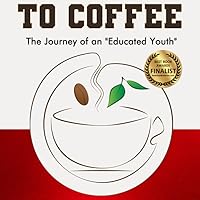
I have been working on my memoir, From Tea to Coffee: The Journey of an "Educated Youth" (to be released this Summer by Open Books Publisher). Out of Gobi has presented a similar theme of the generational story of struggle and triumph over the same part of history in China, The 10-year Cultural Revolution, thus it strikes the chord with me rather profoundly.
Although Out of Gobi reflects time changes from the same period in history, the two memoirs present two completely different storylines and central points. Out of Gobi is one extraordinary fact-finding mission, focusing on personal accomplishment along its timeline; From Tea to Coffee is an emotional excavating journey. While readers look to learn something intellectually from Out of Gobi, they can expect to experience something emotionally journeying From Tea to Coffee.
Although Out of Gobi reflects time changes from the same period in history, the two memoirs present two completely different storylines and central points. Out of Gobi is one extraordinary fact-finding mission, focusing on personal accomplishment along its timeline; From Tea to Coffee is an emotional excavating journey. While readers look to learn something intellectually from Out of Gobi, they can expect to experience something emotionally journeying From Tea to Coffee.
March 25, 2019
This book reminded me somewhat of "Mao's Last Dancer", but from a different viewpoint. It is 480 pages long and reads like a memoir, with some pages here and there I felt could be skipped as they were practically a list of names I couldn't pronounce. But the story is great, the author mentally and emotionally strong and very, very intelligent. He lived through Mao's "Great Leap Forward", endured starvation, hard labor, being forced to live in the Gobi desert, shut out of 10 years of education, to prevail in the end. Much of what he learned was self-taught and he studied voraciously when he did finally get to complete his education. I would like to know what he is doing now.

March 31, 2019
remarkable book on human determination and struggle. While there has been many stories and accounts on the cultural revolution, Shen combines his analytical mind to provide a factual account of the events together with his witty humor to make the journey enjoyable for the reader. Inspiring and eye opening book to be forever remembered.

February 9, 2021
What a phenomenal story. For those with short attention spans, he may have spent too much of the book on the hardships of the Gobi, but when one spends six years essentially enslaved, the stories are really fascinating.
A great amount of Chinese history woven into his story, a lot of fun old haunts in the Bay Area, and a guy who just continued to be in the right place at the right time.
A great amount of Chinese history woven into his story, a lot of fun old haunts in the Bay Area, and a guy who just continued to be in the right place at the right time.
April 28, 2020
Despite the raving reviews, thought that this was a pretty mundane and plodding read. Probably would have been more fascinating to Western readers less familiar with Mao's policies and their impacts on the Chinese populace.
March 25, 2020
Boring details in the Gobi and very interesting interactions in America. Well, because there certainly couldn't be many interesting experiences in the Gobi...inspiring guy.

May 10, 2025
Learned more of what happened to my parents’ generation from this book than my parents

November 23, 2025
Pretty admiring story but for me it was kind of a dull read. Maybe read it if you don't know anything about life in China during the cultural revolution and reform period
June 19, 2022
I'm a Chinese born and grew up in a small city in the 90s, made a long way to study and settle down abroad, I relate to Shan's story immensely. It helped me understand where the modern China came from, why it is such, and where we may be heading to.
Shan just finished elementary school when the Cultural Revolution broke out. His early education in the 60s was in many ways more advanced than what I received in the 90s. Things like science camp in Beihai Park have always been why I aspired to go to Beijing since my childhood.
As the call of Mao, people across the country were determined to eradicate the four pests (mosquitoes, flies, rats and sparrows). This ironically reminds me of the "zero Covid" policy the country is currently going through. It must have been too easy to crush people. Hence, to fight against and declare winning over the mother nature might be a more sweet victory for all dictators.
Cultural Revolution unleashed the cruelty of teenagers almost immediately. Shan witnessed a group of junior high school girls beat their principal to death in the school playground.
During the purge of Liu Shaoqi, a massive group of teenagers camped outside of Zhongnanhai (the central government). One night, Premier Zhou Enlai called in one representative from each camp, debated with them all night, magically convinced them to retreat from their camps. This story amazed me and reminded of the incapable Premier Li Peng during the Tiananmen protest in 1989 and his failure in talking with the much better educated college students.
Seeing all these teenagers wandering around in the city and looking for troubles, Mao came up with this brilliant idea of sending them to the countryside for hard labor. This is how Shan ended up in the Gobi of Inner Mongolia.
The absurdity of the life in the Gobi has come to the point of surreal. Shan recounted a few interesting stories:
- Digging potatoes. Where a group of people were cast away to a fly field to dig potatoes. In the first night they were asked to dig a hole and still inside - damn cold! Luckily they managed to find a shelter for the following days. The group had to eat potatoes for every meal. Nobody cared about the potatoes - regiment didn't even send anyone to transport the potatoes and they had to watch the piled up potatoes go rot.
- To prepare for an imaginary invasion by SU, they went through drill after drill, asked to crawl around over fresh cow poop.
- They harvested less than what they grew each year.
- During the winter, they were asked to live on the frozen lake to cut reed for paper mill.
- Once they were ordered to work non-stop for over 30 hours to dig a canal to meet a strict "deadline". Later they were told the calculation was wrong and the digging was in vain.
- He was chosen to be a barefoot doctor, enjoyed helping people, but later was fired because he refused to give sugarcoated cough pills to the commander who didn't cough but just wanted a taste of sweetness.
- He tried to persuade their own company leader to install a brick-making machine. When he investigate another company which had such machine, he found that leader was humble (living in mud house whilst his charges lived in brick houses), approachable, pragmatic, and their charges had a happier life. Their company store even had cookies and popsicles to sell (which the company members made themselves)
- November 9, 1949, two airlines pilots hijacked 12 planes and joined the new Communist government in Beijing. Almost all of these people were purged during the Cultural Revolution. One pilot, Yi Kong, was raising pigs in Shan's company. Yi was kind, knowledgeable, well respected, and has a good relationship with Shan. He was like the father to them all.
- Shan also recounted two sex scandals. An educated youth was charged with rape (which he denied). He was sentenced 4 years in prison. Later during 严打, he was sent to labor camp for no other reason but his criminal record. On the other hand, the company commander was charged with sextual misconduct by more than one girl (sexual exploitation of educated girls were common across the country then). He was merely discharged, without any criminal penalty.
- 1974 was the first year when educated youth could be "recommended by the mass" to go to college. To build good image among the people, he managed to master the volleyball rules so he could be a referee - not much physical work, great way to gain exposure and earn respect. There have been a few twists and turns, when he was finally approved to go to college, he left most of stuff behind and left almost immediately on the same day. I could feel his excitement and urge to leave.
- Later he had his fair share of ups and downs in Beijing and U.S., but nothing compared to the life in Gobi.
Shan just finished elementary school when the Cultural Revolution broke out. His early education in the 60s was in many ways more advanced than what I received in the 90s. Things like science camp in Beihai Park have always been why I aspired to go to Beijing since my childhood.
As the call of Mao, people across the country were determined to eradicate the four pests (mosquitoes, flies, rats and sparrows). This ironically reminds me of the "zero Covid" policy the country is currently going through. It must have been too easy to crush people. Hence, to fight against and declare winning over the mother nature might be a more sweet victory for all dictators.
Cultural Revolution unleashed the cruelty of teenagers almost immediately. Shan witnessed a group of junior high school girls beat their principal to death in the school playground.
During the purge of Liu Shaoqi, a massive group of teenagers camped outside of Zhongnanhai (the central government). One night, Premier Zhou Enlai called in one representative from each camp, debated with them all night, magically convinced them to retreat from their camps. This story amazed me and reminded of the incapable Premier Li Peng during the Tiananmen protest in 1989 and his failure in talking with the much better educated college students.
Seeing all these teenagers wandering around in the city and looking for troubles, Mao came up with this brilliant idea of sending them to the countryside for hard labor. This is how Shan ended up in the Gobi of Inner Mongolia.
The absurdity of the life in the Gobi has come to the point of surreal. Shan recounted a few interesting stories:
- Digging potatoes. Where a group of people were cast away to a fly field to dig potatoes. In the first night they were asked to dig a hole and still inside - damn cold! Luckily they managed to find a shelter for the following days. The group had to eat potatoes for every meal. Nobody cared about the potatoes - regiment didn't even send anyone to transport the potatoes and they had to watch the piled up potatoes go rot.
- To prepare for an imaginary invasion by SU, they went through drill after drill, asked to crawl around over fresh cow poop.
- They harvested less than what they grew each year.
- During the winter, they were asked to live on the frozen lake to cut reed for paper mill.
- Once they were ordered to work non-stop for over 30 hours to dig a canal to meet a strict "deadline". Later they were told the calculation was wrong and the digging was in vain.
- He was chosen to be a barefoot doctor, enjoyed helping people, but later was fired because he refused to give sugarcoated cough pills to the commander who didn't cough but just wanted a taste of sweetness.
- He tried to persuade their own company leader to install a brick-making machine. When he investigate another company which had such machine, he found that leader was humble (living in mud house whilst his charges lived in brick houses), approachable, pragmatic, and their charges had a happier life. Their company store even had cookies and popsicles to sell (which the company members made themselves)
- November 9, 1949, two airlines pilots hijacked 12 planes and joined the new Communist government in Beijing. Almost all of these people were purged during the Cultural Revolution. One pilot, Yi Kong, was raising pigs in Shan's company. Yi was kind, knowledgeable, well respected, and has a good relationship with Shan. He was like the father to them all.
- Shan also recounted two sex scandals. An educated youth was charged with rape (which he denied). He was sentenced 4 years in prison. Later during 严打, he was sent to labor camp for no other reason but his criminal record. On the other hand, the company commander was charged with sextual misconduct by more than one girl (sexual exploitation of educated girls were common across the country then). He was merely discharged, without any criminal penalty.
- 1974 was the first year when educated youth could be "recommended by the mass" to go to college. To build good image among the people, he managed to master the volleyball rules so he could be a referee - not much physical work, great way to gain exposure and earn respect. There have been a few twists and turns, when he was finally approved to go to college, he left most of stuff behind and left almost immediately on the same day. I could feel his excitement and urge to leave.
- Later he had his fair share of ups and downs in Beijing and U.S., but nothing compared to the life in Gobi.
This entire review has been hidden because of spoilers.

July 21, 2024
Since I started college in 2020, I like many others have mourned the lost opportunities from having my last semester of high school to half of my college experience being online and under a lot of covid fear. my peers and i graduated this yr into an economy marked by layoffs and low intern return offers, a reality starkly different from what we had envisioned. While I'm generally pretty good about not overthinking macro things I couldn’t control (thank you dad!), reading Malcolm Gladwell’s Outliers recently left me frustrated that the global pandemic and hiring freezes had to coincide with what were supposed to be my most transformative years.
Reading Shan’s Out of Gobi, where he slaved away for six years—15 - 21 and what we are told to be the prime years, right?—in the desert middle of nowhere, puts so much of my own complaining into perspective. Shan’s detailed recollection provides incredible insight into the lived realities of “worker-peasant-soldiers.” The level of hardship is unimaginable to me. His story is a powerful reminder of the strength of the human spirit and the capacity to endure and thrive despite seemingly insurmountable odds.
I'm rlly glad I randomly decided to picked up this book after coming across someone’s review on xiaohongshu about 正能量 haha. I was debating between giving it 4 or 5 stars because occasionally, I didn't see the necessity of certain anecdotes/historical explanations. But I frequently thought about the book hours after i’ve put it down. To have made such a lasting impression probably is enough to warrant 5 stars :)
there are so many randomly unexpectedly funny moments:
- the poor animals - “In any event, by the end of November, the war preparation projects were completed. Our company was so well protected that there were trenches and air-raid holes everywhere. In fact, it turned out that these projects did have lethal powers. That winter, many of the cattle and horses roaming the land in search of dried grass fell into the ditches and died from being trapped.”
- 2 vs 20 adults labeling leading to almost a self-inflicted bubonic plague
- the cao cao pig walking an hour to visiting a “reading stud”
- xiuling’s hysteria and how Old Hou earned the nickname of “true proletarian” - “I am a proletarian, why don’t you love me?” he demanded. “If you do not love me, you do not love the proletariat.”
- his group of friends! And how much they cared for and took care of each other. li baoquan especially is so funny
other memorable moments:
- fish and the morally upright dasheng
- Old Yi - his backstory having being beaten and forced a confession, the 50 kg buckets of water for 10 km scene
- being rejected again, and again, and again in the corrupted college selection system: “To give up was to commit a sin against myself, I reminded myself time and time again. And I would never give up.”
- dealing with bureaucratic nonsense was so relatable and something literally NO ONE warned me about being an international student in the US (i was rlly naive...). this passage resonated so much - “it was impossible for me to plan my work and research or for our family to plan our life. It had been a long time since I had had to face such bureaucratic arbitrariness, and I had almost forgotten what it felt like. It was like pleading with someone who was holding a gun to my head, and I had no idea if he would step away or pull the trigger. The suspense was so agonizing I sometimes thought it might be better if he just pulled the trigger and got it over with.”
- during the un interview - “To me, the future had always been unpredictable. Why torture myself with dreams? My philosophy in life was to be always prepared, to capture whatever opportunity came my way.”My ambition knows no bound,” I said.” what a chad!
Reading Shan’s Out of Gobi, where he slaved away for six years—15 - 21 and what we are told to be the prime years, right?—in the desert middle of nowhere, puts so much of my own complaining into perspective. Shan’s detailed recollection provides incredible insight into the lived realities of “worker-peasant-soldiers.” The level of hardship is unimaginable to me. His story is a powerful reminder of the strength of the human spirit and the capacity to endure and thrive despite seemingly insurmountable odds.
I'm rlly glad I randomly decided to picked up this book after coming across someone’s review on xiaohongshu about 正能量 haha. I was debating between giving it 4 or 5 stars because occasionally, I didn't see the necessity of certain anecdotes/historical explanations. But I frequently thought about the book hours after i’ve put it down. To have made such a lasting impression probably is enough to warrant 5 stars :)
there are so many randomly unexpectedly funny moments:
- the poor animals - “In any event, by the end of November, the war preparation projects were completed. Our company was so well protected that there were trenches and air-raid holes everywhere. In fact, it turned out that these projects did have lethal powers. That winter, many of the cattle and horses roaming the land in search of dried grass fell into the ditches and died from being trapped.”
- 2 vs 20 adults labeling leading to almost a self-inflicted bubonic plague
- the cao cao pig walking an hour to visiting a “reading stud”
- xiuling’s hysteria and how Old Hou earned the nickname of “true proletarian” - “I am a proletarian, why don’t you love me?” he demanded. “If you do not love me, you do not love the proletariat.”
- his group of friends! And how much they cared for and took care of each other. li baoquan especially is so funny
other memorable moments:
- fish and the morally upright dasheng
- Old Yi - his backstory having being beaten and forced a confession, the 50 kg buckets of water for 10 km scene
- being rejected again, and again, and again in the corrupted college selection system: “To give up was to commit a sin against myself, I reminded myself time and time again. And I would never give up.”
- dealing with bureaucratic nonsense was so relatable and something literally NO ONE warned me about being an international student in the US (i was rlly naive...). this passage resonated so much - “it was impossible for me to plan my work and research or for our family to plan our life. It had been a long time since I had had to face such bureaucratic arbitrariness, and I had almost forgotten what it felt like. It was like pleading with someone who was holding a gun to my head, and I had no idea if he would step away or pull the trigger. The suspense was so agonizing I sometimes thought it might be better if he just pulled the trigger and got it over with.”
- during the un interview - “To me, the future had always been unpredictable. Why torture myself with dreams? My philosophy in life was to be always prepared, to capture whatever opportunity came my way.”My ambition knows no bound,” I said.” what a chad!
This entire review has been hidden because of spoilers.

June 26, 2021
This is the most inspirational story of overcoming hardship I have ever read. Growing up in the midst of China's cultural revolution in the 60's, Shan was sent to the Gobi desert along with countless other teenagers who grew up in cities in order to be "reeducated". This had come shortly after Mao mobilized the entire country's youth, aka the Red Guard, to destroy the "Four Olds": pre-revolutionary ideas, culture, habits, and customs. This manifested as book burnings, public shaming of professors, the closure of all schools, and censorship of anything deemed counter to Marxism and Maoism. It didn't take much for one to be labeled as a "bad element", effectively destroying all of one's life opportunities and often placing one in imminent physical danger.
For six years he toiled in the desert performing fruitless hard labor and never knowing if there would be a way out. Despite extreme hardship and many setbacks he persisted in finding time to educate himself with anything he could get his hands on like books, radio programs, and magazines. Imagine spending 10 hours a day in the fields with hardly any food or water and still having the conviction to read before going to sleep exhausted.
Even as restrictions on education loosened and the communist party started to select youth to return to the cities and go to university, Shan was denied this opportunity for several years despite being the most qualified person simply because some of his superiors didn't like him. Yet he never gave up. Eventually good fortune found him.
It's easy to see how most people in his shoes would have resigned themselves to their fate and lost all hope for a better future. Many of his peers did, and who would blame them? The fact that he didn't is nothing short of extraordinary.
For six years he toiled in the desert performing fruitless hard labor and never knowing if there would be a way out. Despite extreme hardship and many setbacks he persisted in finding time to educate himself with anything he could get his hands on like books, radio programs, and magazines. Imagine spending 10 hours a day in the fields with hardly any food or water and still having the conviction to read before going to sleep exhausted.
Even as restrictions on education loosened and the communist party started to select youth to return to the cities and go to university, Shan was denied this opportunity for several years despite being the most qualified person simply because some of his superiors didn't like him. Yet he never gave up. Eventually good fortune found him.
It's easy to see how most people in his shoes would have resigned themselves to their fate and lost all hope for a better future. Many of his peers did, and who would blame them? The fact that he didn't is nothing short of extraordinary.
January 13, 2025
Out of the Gobi by Weijan Shan is a biography and a masterpiece about a dark period in Chinese history. Shan takes us through his life growing up during the cultural revolution in China. We get to experience the hardships he faced of being exiled as a red guard to the Gobi with millions of other Chinese youth, stripping his education away. His accounts of the Gobi were genuinely eye-opening, helping me understand such an essential part of history. Shan is now an inspiration to me. Throughout the story, he tells us how even though they took away his right to education, he never abandoned his animal pursuit of wishing to learn, constantly reading and putting his hands on any book he could get.
After Mao Zedong passed and a new Chairman, Deng Xiaoping, took over China, Shan was one of a few thousand students who were given scholarships to study in the USA. Shan's relentless desire to learn and never giving up, even when he saw his peers starving and freezing beside him in the vastness of the Gobi desert, transformed him from a poor peasant boy to one of the wealthiest men in China today with an estimated net worth of over 2 billion dollars. After every middle school was shut down in China, Shan was still able to excel at Berkley and start a hedge fund right out of university, even with no formal education prior to college.
After reading his book, I realized that Shan is truly an inspiration. I recommend every person who is interested in history and wants to be motivated to read this thrilling account of China and the life of Weijan Shan.
After Mao Zedong passed and a new Chairman, Deng Xiaoping, took over China, Shan was one of a few thousand students who were given scholarships to study in the USA. Shan's relentless desire to learn and never giving up, even when he saw his peers starving and freezing beside him in the vastness of the Gobi desert, transformed him from a poor peasant boy to one of the wealthiest men in China today with an estimated net worth of over 2 billion dollars. After every middle school was shut down in China, Shan was still able to excel at Berkley and start a hedge fund right out of university, even with no formal education prior to college.
After reading his book, I realized that Shan is truly an inspiration. I recommend every person who is interested in history and wants to be motivated to read this thrilling account of China and the life of Weijan Shan.

January 31, 2022
This book brought me on a time-travel to the 1960s when China was under siege by Mao’s dictatorship. One of my favourite modules back in uni was China politics as I was just so captivated by how China grew rapidly over the years. I recalled my professor was someone who had been through cultural revolution and he too, felt emotional when he shared with us his journey.
But to read Shan’s raw experience of growing up in famine, being deported to Gobi and eventually having his life turned around during Deng Xiao Ping’s succession to leadership offered me so many perspectives on how the policies and leadership have such profound impact on a civilian’s life.
This has got to be one of my favourite memoir! I love Shan’s raw and brutally honest account of how he felt towards Mao’s cultural revolution (read: no filter 😬)- burning of books, demolishing formal education, no romance (what?!) and only allowed to read Mao’s little red book. I enjoyed reading his eye-opening experience stepping into America as a young student and my deep admiration for him grew as he topped the class even though he did not receive any formal education and picked up English language all by himself!
It made me feel thankful to have been blessed by great education policies in Singapore and having great leadership over the years to bring our nation to prosperity 🥰
But to read Shan’s raw experience of growing up in famine, being deported to Gobi and eventually having his life turned around during Deng Xiao Ping’s succession to leadership offered me so many perspectives on how the policies and leadership have such profound impact on a civilian’s life.
This has got to be one of my favourite memoir! I love Shan’s raw and brutally honest account of how he felt towards Mao’s cultural revolution (read: no filter 😬)- burning of books, demolishing formal education, no romance (what?!) and only allowed to read Mao’s little red book. I enjoyed reading his eye-opening experience stepping into America as a young student and my deep admiration for him grew as he topped the class even though he did not receive any formal education and picked up English language all by himself!
It made me feel thankful to have been blessed by great education policies in Singapore and having great leadership over the years to bring our nation to prosperity 🥰
Displaying 1 - 30 of 120 reviews