

What do you think?

La mort de Staline #1-2
La Mort de Staline
Cette intégrale de La Mort de Staline regroupe les deux tomes de ce vrai faux récit historique signé par deux grands noms de la nouvelle BD française : Fabien Nury et Thierry Robin.
Le 2 mars 1953, en pleine nuit, Joseph Staline, le Petit Père des peuples, l'homme qui régna en maître absolu sur toutes les Russies, fait une attaque cérébrale. Il est déclaré mort deux jours plus tard. Commence alors une lutte acharnée pour le pouvoir suprême, lutte qui concentrera toute la démence, la perversité et l'inhumanité du totalitarisme. Qui succédera à Staline ? Une histoire vraie soviétique, à l'humour ravageur et cruel, portrait saisissant d'une dictature plongée dans la folie.
Le 2 mars 1953, en pleine nuit, Joseph Staline, le Petit Père des peuples, l'homme qui régna en maître absolu sur toutes les Russies, fait une attaque cérébrale. Il est déclaré mort deux jours plus tard. Commence alors une lutte acharnée pour le pouvoir suprême, lutte qui concentrera toute la démence, la perversité et l'inhumanité du totalitarisme. Qui succédera à Staline ? Une histoire vraie soviétique, à l'humour ravageur et cruel, portrait saisissant d'une dictature plongée dans la folie.
144 pages, Hardcover
First published January 1, 2010
About the author
Fabien Nury
116 books114 followersBorn in 1976, Fabien Nury began his career by co-writing with Xavier Dorison the script of W.E.S.T (Dargaud), a hit series illustrated by Christian Rossi (six volumes between 2003 and 2011). Nury independently wrote Je suis Légion (2004-2007, Humanoids Associés), a trilogy illustrated by the American John Cassaday. Translated into eight languages, the series continues with several other illustrators under the title Les chroniques de Légion (Glénat). In 2007 he also started working on Le maître de Benson Gate (Dargaud) with Renaud Garreta. From 2007 to 2012, Nury wrote the script for the six volumes of Il était une fois en France (Glénat). The historical series, illustrated by Sylvain Vallée, received wide critical and public acclaim (850,000 copies sold). Amongst other achievements, in 2011 he received an award for best international series at the Angoulême Comics Festival. Since then Fabien Nury has been gaining success in various genres: Mort de Staline (The Death of Stalin, Dargaud/Europe Comics, forthcoming), in historical narrative; Steve Rowland, volume 5 of the XIII Mystery series (Dargaud, art by Richard Guérineau) in thriller; Corey Silas ( Glénat, art by Pierre Alary) in detective series; and Atar Gull (Dargaud, art by Brüno) in literary adaptation, based on the novel by Eugène Sue. In 2013, he created Tyler Cross with Brüno, (Tyler Cross, Dargaud/Europe Comics, 2015) a noir graphic novel. The album was praised by both critics and readers (over 50,000 copies sold) with volume two in August 2015. In 2014, Fabien Nury published the fourth and final volume of L'or et le sang (Glénat), the script by Maurin Defrance and art by Merwan and Fabien Bedouel. With Tierry Robin he created the two-part series Mort au Tsar (Death to the Tsar, Dargaud/Europe Comics, 2015). In 2014, with Eric Henninot he also published Fils du soleil (Dargaud), an adventure album adapted from two novels by Jack London. As for audiovisual, Fabien Nury co-wrote with Dorison the scripts to a feature film Les brigades du Tigre (directed by Jérôme Cornuau, 2006) and a TV movie Pour toi, j'ai tué (directed by Laurent Heynemann, 2012).
Ratings & Reviews
Friends & Following
Create a free account to discover what your friends think of this book!
Community Reviews
Displaying 1 - 30 of 301 reviews

October 27, 2017
Very interesting GN, but be warned: there is much interpretive 'filler' in this story that is based on historic events. I would suggest reading up on the historical facts before reading this GN. Having said this I found the story arch thought provoking and entertaining. Still a very original and interesting story.

March 16, 2022
You're going to guess I read this today because I was thinking of the current dictator of Russia? Hmm, just a coincidence. Just in case anyone is reading this or following me on Goodreads. . . hey, I'm just reading a book here! And no, have not yet seen the movie, but this is very accomplished, crazy, tragic-comic, and though I had read about Stalin from time to time over the years, I only had recalled that everything was not surprisingly repressed, there were purges of the top rings of Soviet power accusing people of murder. The authors subtitle this "A True Soviet Story," but they also write:
“. . . the authors would like to make clear that their imaginations were hardly stretched in the creation of this story, since it would have been impossible for them to come up with anything half as insane as the real events surrounding the death of Stalin.”
So I know there is no definitive account of the death of Stalin, so much of this is speculation, invented, fiction, but it has a basis in some known events and some things culled together from historical sources. But it is an amazingly well told and frightening and horrific tale of a dictatorship and terror and the suppression of truth by all official channels. It is great comics storytelling that may make you want to delve deeper into the story. I will look into other reviews reflecting greater knowledge of Russian history than I have to see if it is more than just a crazy tale. I am sure just as American history only reveals the truth (see The People's History of The US by Zinn), Russian history books must tell what really happened, right? You mean the suppression of truth I understand is happening in Russia right now has always been a little problem there (and everywhere)? But let me take a chance here: In this historical moment, I stand with Ukraine.
“. . . the authors would like to make clear that their imaginations were hardly stretched in the creation of this story, since it would have been impossible for them to come up with anything half as insane as the real events surrounding the death of Stalin.”
So I know there is no definitive account of the death of Stalin, so much of this is speculation, invented, fiction, but it has a basis in some known events and some things culled together from historical sources. But it is an amazingly well told and frightening and horrific tale of a dictatorship and terror and the suppression of truth by all official channels. It is great comics storytelling that may make you want to delve deeper into the story. I will look into other reviews reflecting greater knowledge of Russian history than I have to see if it is more than just a crazy tale. I am sure just as American history only reveals the truth (see The People's History of The US by Zinn), Russian history books must tell what really happened, right? You mean the suppression of truth I understand is happening in Russia right now has always been a little problem there (and everywhere)? But let me take a chance here: In this historical moment, I stand with Ukraine.

April 25, 2021
https://www.youtube.com/watch?v=iLkMx...
From the disclaimer:
“(…) the authors would like to make clear that their imaginations were hardly stretched in the creation of this story, since it would have been impossible for them to come up with anything half as insane as the real events surrounding the death of Stalin.”
Truth can definitely be stranger than fiction, and while Nury and Robin padded the official story with some darkly comic interpretative flourishes, this story captures the bizarre and almost surreal feeling that I have come to associate with anecdotes about the Soviet Union. The plotting, double-crossing, abuses and excesses of the historical characters who are part of this story are certainly well-known, but it is fascinating to see the events acted out as imagined by a writer of Nury’s talent.
When Stalin suffers a stroke, the Central Committee is called to his bedside in order to decide how to handle this situation and what to do next. Beria sees in the death of Stalin a chance to manipulate his fellow committee members into doing exactly what he wants, even if he is not elected Chair – by giving Khrushchev a job he can’t handle well, by flattering Malenkov and using Molotov’s feelings against him. But those little games will turn against the man who might have been the most corrupt and evil of the bunch.
I picked up a copy of this graphic novel after watching the absolutely amazing movie Armando Iannucci made from it, and I must say that it’s as close to perfect as movies get: the casting is so amazing, so absurdly hilarious in their performances that I will never be able to imagine the historical figures as anyone else. The graphic novel probably has a more serious tone than the movie, which is a darkly funny political satire that rings just a little too contemporary for comfort. But both are a fantastic if slightly twisted retelling of the historical events. But that twist is precisely what makes them memorable, thought-provoking and wonderfully cringey.
From the disclaimer:
“(…) the authors would like to make clear that their imaginations were hardly stretched in the creation of this story, since it would have been impossible for them to come up with anything half as insane as the real events surrounding the death of Stalin.”
Truth can definitely be stranger than fiction, and while Nury and Robin padded the official story with some darkly comic interpretative flourishes, this story captures the bizarre and almost surreal feeling that I have come to associate with anecdotes about the Soviet Union. The plotting, double-crossing, abuses and excesses of the historical characters who are part of this story are certainly well-known, but it is fascinating to see the events acted out as imagined by a writer of Nury’s talent.
When Stalin suffers a stroke, the Central Committee is called to his bedside in order to decide how to handle this situation and what to do next. Beria sees in the death of Stalin a chance to manipulate his fellow committee members into doing exactly what he wants, even if he is not elected Chair – by giving Khrushchev a job he can’t handle well, by flattering Malenkov and using Molotov’s feelings against him. But those little games will turn against the man who might have been the most corrupt and evil of the bunch.
I picked up a copy of this graphic novel after watching the absolutely amazing movie Armando Iannucci made from it, and I must say that it’s as close to perfect as movies get: the casting is so amazing, so absurdly hilarious in their performances that I will never be able to imagine the historical figures as anyone else. The graphic novel probably has a more serious tone than the movie, which is a darkly funny political satire that rings just a little too contemporary for comfort. But both are a fantastic if slightly twisted retelling of the historical events. But that twist is precisely what makes them memorable, thought-provoking and wonderfully cringey.

December 28, 2021
Stalin collapsed on 1 March 1953 and died a few days later. Fabien Nury and Thierry Robin relate the farce that was going on behind the scenes in those days before Stalin actually kicked the bucket, as high ranking communist party officials ineptly tried to help save their comrade’s life while also attempting to secure power for themselves in the vacuum of his impending exit.
It’s an incredible story that Nury/Robin have to say at the start is a work of fiction because of the intentional (the Soviets were extremely censorius) lack of historical evidence, though they have produced something as close to what likely happened and so it’s fair to assume that, as bizarre as it is, it’s probably the truth.
As Stalin was lying unconscious, party officials literally held quite casual committee meetings before deciding to send for any doctor to treat Stalin, and, even then, needed to hold further meetings to vet which doctors would see him. But that’s only the beginning of the lunacy that led to Stalin’s eventual death with drunken party officials terrorising doctors as they worked, thinking they were trying to kill him rather than treat him!
And when they finally locate a suitable ventilator for Stalin (the state-of-the-art machine was American-made - indicating that even in 1953 the Soviet Union was doomed to lose the Cold War), it was the wrong voltage and needed a generator, but it was too loud to run indoors, so they needed to put it outside and find extra cables - but it was too late. Ironically, Stalin was killed by the paranoia, fear and stultifying bureaucracy of his own creation as much as his poor health.
There are glimpses into the sad lives Stalin’s children led, especially his wretched son Vasily, and you get an idea of the pure evil that was party official Beria (although his Wiki is even more damning - he was apparently a serial killer in addition to being a serial rapist). The power plays going on while Stalin was on his deathbed are fascinating to see even if you know Khrushchev ultimately stages a coup, and the way the state funeral was handled was needlessly tragic - even in death, Stalin managed to kill even more of his own people.
I had no idea how bonkers the fallout from Stalin’s death was so this is a very informative book as well as darkly entertaining. The Death of Stalin is an utterly gripping story from start to finish, masterfully told through the perfect balance of words and art, complementing one another beautifully - a powerful look at the staggeringly high levels of incompetence and corruption at the heart of the Soviet Union represented by the apt metaphor of the death of its most famous leader.
It’s an incredible story that Nury/Robin have to say at the start is a work of fiction because of the intentional (the Soviets were extremely censorius) lack of historical evidence, though they have produced something as close to what likely happened and so it’s fair to assume that, as bizarre as it is, it’s probably the truth.
As Stalin was lying unconscious, party officials literally held quite casual committee meetings before deciding to send for any doctor to treat Stalin, and, even then, needed to hold further meetings to vet which doctors would see him. But that’s only the beginning of the lunacy that led to Stalin’s eventual death with drunken party officials terrorising doctors as they worked, thinking they were trying to kill him rather than treat him!
And when they finally locate a suitable ventilator for Stalin (the state-of-the-art machine was American-made - indicating that even in 1953 the Soviet Union was doomed to lose the Cold War), it was the wrong voltage and needed a generator, but it was too loud to run indoors, so they needed to put it outside and find extra cables - but it was too late. Ironically, Stalin was killed by the paranoia, fear and stultifying bureaucracy of his own creation as much as his poor health.
There are glimpses into the sad lives Stalin’s children led, especially his wretched son Vasily, and you get an idea of the pure evil that was party official Beria (although his Wiki is even more damning - he was apparently a serial killer in addition to being a serial rapist). The power plays going on while Stalin was on his deathbed are fascinating to see even if you know Khrushchev ultimately stages a coup, and the way the state funeral was handled was needlessly tragic - even in death, Stalin managed to kill even more of his own people.
I had no idea how bonkers the fallout from Stalin’s death was so this is a very informative book as well as darkly entertaining. The Death of Stalin is an utterly gripping story from start to finish, masterfully told through the perfect balance of words and art, complementing one another beautifully - a powerful look at the staggeringly high levels of incompetence and corruption at the heart of the Soviet Union represented by the apt metaphor of the death of its most famous leader.

May 31, 2020
I can certainly see why Armando Iannucci decided to make this into his next project after Veep. It has the same black comedy and absurdity as the heads of the Communist Party in Russia try to outmaneuver one another while also making sure they can't be blamed if Stalin were to recover from his heart attack. It also plays to the fear and farce of Stalin's reign as the very same doctors he needed to save him, he had sent to the Gulag or executed the month prior. After reading this, I can't wait to see what Iannucci did with it.

February 13, 2018
3.0/5.0
Μια ενδιαφέρουσα πολιτική σάτιρα που αναμιγνύει ιστορικά και φανταστικά γεγονότα και στοιχεία για να μας μεταφέρει στην παράνοια του σταλινικού καθεστώτος και στα ανελέητα παιχνίδια εξουσίας. Το μαύρο χιούμορ είναι διάχυτο αλλά υποβόσκον, προκύπτει μέσα από την ακραιφνή σοβαρότητα των όσων διαμείβονται, θα έλεγα εκτός από μαύρο είναι και πικρό. Εύκολα διαπιστώνει κανείς τα κοινά μοτίβα συμπεριφορών που χαρακτηρίζουν κάθε ολοκληρωτικό, γραφειοκρατικό καθεστώς.
Εννοείται ότι ο αναγνώστης πρέπει να διαθέτει χιούμορ για να το προσεγγίσει επομένως είναι ακατάλληλο για αβάσταχτα δογματικούς ιδεολόγους.
Μια ενδιαφέρουσα πολιτική σάτιρα που αναμιγνύει ιστορικά και φανταστικά γεγονότα και στοιχεία για να μας μεταφέρει στην παράνοια του σταλινικού καθεστώτος και στα ανελέητα παιχνίδια εξουσίας. Το μαύρο χιούμορ είναι διάχυτο αλλά υποβόσκον, προκύπτει μέσα από την ακραιφνή σοβαρότητα των όσων διαμείβονται, θα έλεγα εκτός από μαύρο είναι και πικρό. Εύκολα διαπιστώνει κανείς τα κοινά μοτίβα συμπεριφορών που χαρακτηρίζουν κάθε ολοκληρωτικό, γραφειοκρατικό καθεστώς.
Εννοείται ότι ο αναγνώστης πρέπει να διαθέτει χιούμορ για να το προσεγγίσει επομένως είναι ακατάλληλο για αβάσταχτα δογματικούς ιδεολόγους.

January 25, 2018
Βαθμολογία: 9/10
Δεν ξέρω αν η ελληνική έκδοση κυκλοφόρησε με αφορμή την καινούργια ταινία του Armando Iannucci που βασίζεται στο συγκεκριμένο κόμικ, όπως και να'χει όμως ήταν μια από τις καλύτερες και πιο ευχάριστες εκπλήξεις που θα μπορούσε να ελπίζει ένας λάτρης των BD, αλλά και των κόμικς γενικότερα. Προσωπικά, από τη στιγμή που έμαθα ότι θα κυκλοφορούσε στα ελληνικά, δεν έβλεπα την ώρα να το πιάσω στα χέρια μου. Το αγόρασα πριν λίγες μέρες και σήμερα το διάβασα, χωρίς κανένα διάλειμμα.
Μιλάμε για ένα πάρα πολύ ωραίο και ενδιαφέρον κόμικ, που μεταφέρει στον αναγνώστη με γλαφυρό τρόπο την παράνοια που επικρατούσε στη Σοβιετική Ένωση, το διάστημα μετά το εγκεφαλικό επεισόδιο που υπέστη ο "Πατερούλης" Στάλιν την 1η Μαρτίου του 1953 και τον θάνατό του που ακολούθησε λίγες μέρες αργότερα. Το όλο θέμα είναι, φυσικά, πάρα πολύ σοβαρό, αλλά ο τρόπος που αναδεικνύεται από τους δημιουργούς του κόμικ θυμίζει έντονα μαύρη κωμωδία και σάτιρα απέναντι στο Κομμουνιστικό καθεστώς της Σοβιετικής Ένωσης. Ο τόνος του κόμικ δεν είναι και τόσος αστείος, όσο αυτός που φαίνεται να είναι στην ομότιτλη ταινία, αλλά ο σκεπτόμενος αναγνώστης δεν μπορεί παρά να αναστενάξει από αγανάκτηση για την παράνοια εκείνης της εποχής στη Σοβιετική Ένωση, και τελικά ίσως να βάλει τα γέλια. Φυσικά υπάρχουν πολλά πράγματα στην πλοκή που δεν ανταποκρίνονται στην πραγματικότητα, καθώς και υπερβολές, όμως όλα αυτά υπογραμμίζουν τον παραλογισμό της σκληρής πραγματικότητας.
Το σχέδιο είναι εξαιρετικό και αρκετά ιδιαίτερο, θεωρώ ότι ο σχεδιαστής έδωσε ρέστα με την αποτύπωση των προσώπων και των κινήσεων των διαφόρων πολιτικών και στρατιωτικών, που έλυναν και έδεναν εκείνα τα χρόνια στη Σοβιετική Ένωση. Μάλιστα, σε κάποιον μπορεί να θυμίσουν και καρικατούρες. Επίσης τα χρώματα μου φάνηκαν φανταστικά. Γενικά δηλώνω πολύ ικανοποιημένος, τόσο από την ιστορία, όσο και από το σχέδιο και τα χρώματα. Η ελληνική έκδοση είναι εξαιρετική: Μεγάλο μέγεθος, πολύ καλό χαρτί, ωραία εκτύπωση και πολύ προσεγμένη μετάφραση. Τώρα ανυπομονώ να δω και την ταινία!
Δεν ξέρω αν η ελληνική έκδοση κυκλοφόρησε με αφορμή την καινούργια ταινία του Armando Iannucci που βασίζεται στο συγκεκριμένο κόμικ, όπως και να'χει όμως ήταν μια από τις καλύτερες και πιο ευχάριστες εκπλήξεις που θα μπορούσε να ελπίζει ένας λάτρης των BD, αλλά και των κόμικς γενικότερα. Προσωπικά, από τη στιγμή που έμαθα ότι θα κυκλοφορούσε στα ελληνικά, δεν έβλεπα την ώρα να το πιάσω στα χέρια μου. Το αγόρασα πριν λίγες μέρες και σήμερα το διάβασα, χωρίς κανένα διάλειμμα.
Μιλάμε για ένα πάρα πολύ ωραίο και ενδιαφέρον κόμικ, που μεταφέρει στον αναγνώστη με γλαφυρό τρόπο την παράνοια που επικρατούσε στη Σοβιετική Ένωση, το διάστημα μετά το εγκεφαλικό επεισόδιο που υπέστη ο "Πατερούλης" Στάλιν την 1η Μαρτίου του 1953 και τον θάνατό του που ακολούθησε λίγες μέρες αργότερα. Το όλο θέμα είναι, φυσικά, πάρα πολύ σοβαρό, αλλά ο τρόπος που αναδεικνύεται από τους δημιουργούς του κόμικ θυμίζει έντονα μαύρη κωμωδία και σάτιρα απέναντι στο Κομμουνιστικό καθεστώς της Σοβιετικής Ένωσης. Ο τόνος του κόμικ δεν είναι και τόσος αστείος, όσο αυτός που φαίνεται να είναι στην ομότιτλη ταινία, αλλά ο σκεπτόμενος αναγνώστης δεν μπορεί παρά να αναστενάξει από αγανάκτηση για την παράνοια εκείνης της εποχής στη Σοβιετική Ένωση, και τελικά ίσως να βάλει τα γέλια. Φυσικά υπάρχουν πολλά πράγματα στην πλοκή που δεν ανταποκρίνονται στην πραγματικότητα, καθώς και υπερβολές, όμως όλα αυτά υπογραμμίζουν τον παραλογισμό της σκληρής πραγματικότητας.
Το σχέδιο είναι εξαιρετικό και αρκετά ιδιαίτερο, θεωρώ ότι ο σχεδιαστής έδωσε ρέστα με την αποτύπωση των προσώπων και των κινήσεων των διαφόρων πολιτικών και στρατιωτικών, που έλυναν και έδεναν εκείνα τα χρόνια στη Σοβιετική Ένωση. Μάλιστα, σε κάποιον μπορεί να θυμίσουν και καρικατούρες. Επίσης τα χρώματα μου φάνηκαν φανταστικά. Γενικά δηλώνω πολύ ικανοποιημένος, τόσο από την ιστορία, όσο και από το σχέδιο και τα χρώματα. Η ελληνική έκδοση είναι εξαιρετική: Μεγάλο μέγεθος, πολύ καλό χαρτί, ωραία εκτύπωση και πολύ προσεγμένη μετάφραση. Τώρα ανυπομονώ να δω και την ταινία!

April 28, 2018
Soviet Russia may provide some of the best examples of truth being stranger than fiction. I’m not sure how to rate this graphic novel because although it was quite well done, it is pretty disturbing and the dark comedy focus doesn’t change the horrific truth of it. It is, however, pretty brilliant with its excellent cartoonish caricatures, crazy (mostly true) plot and overall darkness. Not for children. 4 stars
I cannot believe I was an exchange student in Soviet Russia a mere 35 years after the death of Stalin. My poor parents!
I cannot believe I was an exchange student in Soviet Russia a mere 35 years after the death of Stalin. My poor parents!

June 4, 2018
Μπορεί να το διάβασα τον Φεβρουάριο και να γράφω για αυτό τον Ιούνιο, αλλά έτσι είναι η αναβλητικότητα φίλοι μου, τι να κάνουμε. Λίγο πριν την αρχή ενός μεγάλου reading slump, 'Ο θάνατος του Στάλιν' μου κράτησε παρέα με το μαύρο χιούμορ του.
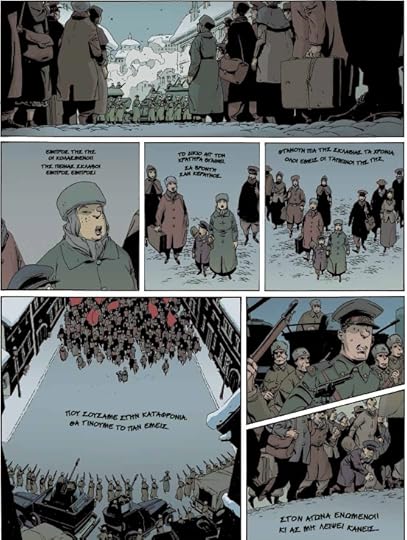
Το κόμικς δεν είναι ιστορικό, τα γεγονότα που περιγράφει δηλαδή δεν είναι αυτά που συνέβησαν στην πραγματικότητα όταν πέθανε ο Πατερούλης της Σοβιετικής Ένωσης, αλλά [κι εδώ βρίσκεται η ιδιοφυΐα του έργου] θα μπορούσαν να έχουν συμβεί στ' αλήθεια ακριβώς έτσι, μιας και οι μέρες που ακολούθησαν την εγκεφαλική αιμορραγία του και το θάνατό του ήταν ΤΡΕΛΕΣ.
[αν θέλετε να διαβάσετε περισσότερα για το πριν και το μετά του θανάτου του Στάλιν, νομίζω το σχετικά φρέσκο 'Οι τελευταίες ημέρες του Στάλιν' του Joshua Rubenstein είναι μια καλή αρχή]
Μπορεί λοιπόν να "στηρίζεται" στα ιστορικά γεγονότα, να παίζει με το χρόνο που συνέβησαν διάφορα πράγματα και να παίρνει πολλές ελευθερίες, αλλά τίποτα από όσα περιγράφει το κόμικς δε φαίνεται ιδιαίτερα εξωφρενικό. Η σάτιρα απέναντι στη Σοβιετική Ένωση και τα μεγάλα κεφάλια του καθεστώτος της είναι αστεία, όχι ακριβώς γελάω-δυνατά αστεία, αλλά ξέρετε, αστεία παρ' όλα αυτά.

Το σχέδιο του Thierry Robin εμένα μου θύμισε λιγάκι manga, ειδικά στον τρόπο σχεδιασμού των χαρακτήρων του. Δείτε ας πούμε πως έχει σχεδιάσει τον Λαβρέντι Μπέρια [ο κάτω αριστερά], δε σας φέρνει σε κάτι από κακό βιομήχανο σε manga; Άνετα θα διάβαζα και το 'Ο θάνατος του Τσάρου' που βγάλανε μαζί με τον Fabien Nury λίγα χρόνια μετά από αυτό εδώ το κόμικς.
Ανακεφαλαιώνοντας, παράλογο και ιστορία ίσον L.F.E., ζήτω ο κομμουνισμός, ζήτω τα κόμικς.
Ο θάνατος του Στάλιν: ★★★½

Το κόμικς δεν είναι ιστορικό, τα γεγονότα που περιγράφει δηλαδή δεν είναι αυτά που συνέβησαν στην πραγματικότητα όταν πέθανε ο Πατερούλης της Σοβιετικής Ένωσης, αλλά [κι εδώ βρίσκεται η ιδιοφυΐα του έργου] θα μπορούσαν να έχουν συμβεί στ' αλήθεια ακριβώς έτσι, μιας και οι μέρες που ακολούθησαν την εγκεφαλική αιμορραγία του και το θάνατό του ήταν ΤΡΕΛΕΣ.
[αν θέλετε να διαβάσετε περισσότερα για το πριν και το μετά του θανάτου του Στάλιν, νομίζω το σχετικά φρέσκο 'Οι τελευταίες ημέρες του Στάλιν' του Joshua Rubenstein είναι μια καλή αρχή]
Μπορεί λοιπόν να "στηρίζεται" στα ιστορικά γεγονότα, να παίζει με το χρόνο που συνέβησαν διάφορα πράγματα και να παίρνει πολλές ελευθερίες, αλλά τίποτα από όσα περιγράφει το κόμικς δε φαίνεται ιδιαίτερα εξωφρενικό. Η σάτιρα απέναντι στη Σοβιετική Ένωση και τα μεγάλα κεφάλια του καθεστώτος της είναι αστεία, όχι ακριβώς γελάω-δυνατά αστεία, αλλά ξέρετε, αστεία παρ' όλα αυτά.
Το σχέδιο του Thierry Robin εμένα μου θύμισε λιγάκι manga, ειδικά στον τρόπο σχεδιασμού των χαρακτήρων του. Δείτε ας πούμε πως έχει σχεδιάσει τον Λαβρέντι Μπέρια [ο κάτω αριστερά], δε σας φέρνει σε κάτι από κακό βιομήχανο σε manga; Άνετα θα διάβαζα και το 'Ο θάνατος του Τσάρου' που βγάλανε μαζί με τον Fabien Nury λίγα χρόνια μετά από αυτό εδώ το κόμικς.
Ανακεφαλαιώνοντας, παράλογο και ιστορία ίσον L.F.E., ζήτω ο κομμουνισμός, ζήτω τα κόμικς.
Ο θάνατος του Στάλιν: ★★★½
August 5, 2017
Here Be Monsters
A review of the Titan Comics hardcover (2017) translated from the French language original La Mort de Staline (2 volumes 2010 & 2012).
Sometimes the most persuasive way to portray the monstrous is through the medium of fiction, whether it be the recording of Nazi atrocities in The Kindly Ones by Jonathan Littell or in the case of this graphic novelization of various apocryphal stories surrounding the death of the Communist dictator Joseph Stalin, who ruled the Soviet Union from the mid-1920's through to his death in 1953. A strict non-fictional listing of the brutal facts can by turns be simply repellent, too overwhelming or just a droning bore.
Fiction usually needs a hero or perhaps an anti-hero to give the reader a point of entry into the book's world. "The Death of Stalin" does provide that somewhat through the bookending use of classical pianist Maria Yudina. An infamous apocryphal story related in Solomon Volkov's Testimony: The Memoirs (it has been long disputed whether any of it was actually written by composer Dmitri Shostakovich) is that Stalin heard a broadcast of Yudina performing Mozart's Piano Concerto No. 23 with the Moscow Symphony and phoned up Radio Moscow to ask for a personal copy to be delivered the next day.
The broadcast had been live-to-air though and no actual recording existed. Such was the terror induced by a mere trifling request from the feared dictator that the radio station re-assembled the musicians in the middle of the night to record the album and to press a single LP copy to be delivered to Stalin the following morning. Graphic novel writer Fabien Nury takes this story a step further though and moves the night of the broadcast & recording to a few days prior to Stalin's death in 1953, although Volkov's supposed incident occurred in 1944. So a likely fictional story is made to serve as a dramatic plot element leading to Stalin's death.
But the point of it is how a single incident can be used to portray the fear that Stalin induced in his people. Yudina is drawn as a feisty glamorous diva, a portrayal that will likely be accentuated further by having model-actress Olga Kurylenko in the role for the upcoming film-version by director Armando Iannucci. The real-life Yudina seems to have been more of a dour religiously-observant individual.
I've over-explained the Yudina incident here only because I had read of it previously. But it is a good example to show how Fabien Nury and illustrator Thierry Robin have taken the bare-bones facts and various rumours and apocryphal stories to illustrate the incidents preceding and following the death of Stalin. It may seem unbelievable, but it is horrifying, entertaining and persuasive. And the actual truth would likely be even more unbelievable.
Trivia and Links: Further on Fabien Nury
Looking further into writer Fabien Nury I found that many of his works have not yet (as of mid-2017) been translated from their original French. There is one other collaboration with artist Thierry Robin in "Mort au Tsar" (Death to the Tsar) in 2 parts Le Gouverneur & Le Terroriste which is about the 1905 Russian Revolution (not the 1917 one). Other works are the Nazis & Vampires saga I Am Legion which is apparently also in film preproduction and various genre series such as the WWII Occupied France story of Il était une fois en France, Tome 1 : L'empire de Monsieur Joseph (Once Upon a Time in France) and the wild west epic "W.E.S.T."
A review of the Titan Comics hardcover (2017) translated from the French language original La Mort de Staline (2 volumes 2010 & 2012).
Sometimes the most persuasive way to portray the monstrous is through the medium of fiction, whether it be the recording of Nazi atrocities in The Kindly Ones by Jonathan Littell or in the case of this graphic novelization of various apocryphal stories surrounding the death of the Communist dictator Joseph Stalin, who ruled the Soviet Union from the mid-1920's through to his death in 1953. A strict non-fictional listing of the brutal facts can by turns be simply repellent, too overwhelming or just a droning bore.
Fiction usually needs a hero or perhaps an anti-hero to give the reader a point of entry into the book's world. "The Death of Stalin" does provide that somewhat through the bookending use of classical pianist Maria Yudina. An infamous apocryphal story related in Solomon Volkov's Testimony: The Memoirs (it has been long disputed whether any of it was actually written by composer Dmitri Shostakovich) is that Stalin heard a broadcast of Yudina performing Mozart's Piano Concerto No. 23 with the Moscow Symphony and phoned up Radio Moscow to ask for a personal copy to be delivered the next day.
The broadcast had been live-to-air though and no actual recording existed. Such was the terror induced by a mere trifling request from the feared dictator that the radio station re-assembled the musicians in the middle of the night to record the album and to press a single LP copy to be delivered to Stalin the following morning. Graphic novel writer Fabien Nury takes this story a step further though and moves the night of the broadcast & recording to a few days prior to Stalin's death in 1953, although Volkov's supposed incident occurred in 1944. So a likely fictional story is made to serve as a dramatic plot element leading to Stalin's death.
But the point of it is how a single incident can be used to portray the fear that Stalin induced in his people. Yudina is drawn as a feisty glamorous diva, a portrayal that will likely be accentuated further by having model-actress Olga Kurylenko in the role for the upcoming film-version by director Armando Iannucci. The real-life Yudina seems to have been more of a dour religiously-observant individual.
I've over-explained the Yudina incident here only because I had read of it previously. But it is a good example to show how Fabien Nury and illustrator Thierry Robin have taken the bare-bones facts and various rumours and apocryphal stories to illustrate the incidents preceding and following the death of Stalin. It may seem unbelievable, but it is horrifying, entertaining and persuasive. And the actual truth would likely be even more unbelievable.
Trivia and Links: Further on Fabien Nury
Looking further into writer Fabien Nury I found that many of his works have not yet (as of mid-2017) been translated from their original French. There is one other collaboration with artist Thierry Robin in "Mort au Tsar" (Death to the Tsar) in 2 parts Le Gouverneur & Le Terroriste which is about the 1905 Russian Revolution (not the 1917 one). Other works are the Nazis & Vampires saga I Am Legion which is apparently also in film preproduction and various genre series such as the WWII Occupied France story of Il était une fois en France, Tome 1 : L'empire de Monsieur Joseph (Once Upon a Time in France) and the wild west epic "W.E.S.T."

November 1, 2016
La muerte de Stalin desencadenó un juego de traiciones, alianzas imprevisibles y caos que no puso a la URSS en peligro porque el régimen se había establecido con tal fuerza (y con cualquier posible oposición tan purgada) que ni siquiera la lucha intestina de los posibles herederos al poder podía hacerlo tambalear.
¿Es todo lo que cuenta este cómic verdad? No. Pero la intención es más bien alcanzar una especie de narrativa que logre armonizar los relatos contrapuestos y que puede llegar más a ser una verdad que los hechos sueltos vistos en frío.
El cómic es de la escuela franco-belga y el dibujo resulta muy expresivo y cinematográfico. Hay casi un acercamiento al expresionismo, en cuanto a que los personajes parecen algo deformados o caricaturizados, como si no se quisiera hacerlos del todo humanos, pero es precisamente sus debilidades humanas las que el lector viera.
Es un cómic entretenido pese a contar una historia aterradora y aterrador pese a contar una serie de hechos que podrían ser perfectamente plausibles.
¿Es todo lo que cuenta este cómic verdad? No. Pero la intención es más bien alcanzar una especie de narrativa que logre armonizar los relatos contrapuestos y que puede llegar más a ser una verdad que los hechos sueltos vistos en frío.
El cómic es de la escuela franco-belga y el dibujo resulta muy expresivo y cinematográfico. Hay casi un acercamiento al expresionismo, en cuanto a que los personajes parecen algo deformados o caricaturizados, como si no se quisiera hacerlos del todo humanos, pero es precisamente sus debilidades humanas las que el lector viera.
Es un cómic entretenido pese a contar una historia aterradora y aterrador pese a contar una serie de hechos que podrían ser perfectamente plausibles.

May 31, 2018
Passing judgement on Fabien Nury and Thierry Robin’s graphic novel. The Death of Stalin may be as much a study of the psychology of the reviewer as the quality of the book. This is a fictionalized version of life inside the belly of one of modern history’s most insidiously evil places and people. One has to question what it means to say that you liked a book like this. I am siding with the folks who call this black humor. Only it is blacker. Black like the sun had never shone.
The Story line has a firm anchor in historic events and real people. However the authors are clear that they intend The Death of Stalin as fiction. Even as fiction it is not that far off from the strange actual events and people as portrayed.
Given that this was a world of state directed arbitrary terror, and measured political intrigue, what does it mean to say you laughed at these craven people and these violent events? Is there a message in the contrived and genuinely believing leaders who so willingly put doctrine, even a twisted and corrupted version of doctrine over life and any retention of human dignity?
In the opening pages, Soviet Russian Dictator is cursed by the wife of one of his victims. He falls to the ground. Before doctors are called or any thought is given to the possibility he may still be alive, The members of the Supreme Central Committee meet to decide on who is left among the recently purged Moscow medical community who can be allowed near the dying beloved<?> leader.
The played out subtext of every word and action among these men, is, who is to assume power, under what terms and with who allowed to survive? Beria immediately executes his long planned machinations to either assume the Chair of the Soviet, or at least be the master string puller. Nikita Khrushchev lumbers into the maneuvering, but always seems to be behind Beria. Molotov comes close to being the one honorable man, in that he is to the end motivated by his abstract political doctrine. General Zhukov, is not a member of the Committee, but as head of the Army he is effectively the King maker. The rest of the Committee fall into camps, but as characters they do not appear as rounded figure.
This lack of depth in so many characters tends to make it hard to accept the too speedily reached resolution. This resolution is explained much better in the movie. Never explained is the importance of Stalin’s Children, both now adults neither, of no obvious consequence and both treated as key pawns in the power struggle.
The back drop to Stalin death is the continuation of the Stalinist State as a place where people are murdered on less than whim.
The art work on character faces is not well standardized. It is appropriate that the panels are drawn from awkward and unsettling angles. The muted, dark earth tones are all effective and again, appropriate.
There is something hard to read in The Death of Stalin; given how dark the place and time, but the humor, draws from the extremes that was this place and time.
The Story line has a firm anchor in historic events and real people. However the authors are clear that they intend The Death of Stalin as fiction. Even as fiction it is not that far off from the strange actual events and people as portrayed.
Given that this was a world of state directed arbitrary terror, and measured political intrigue, what does it mean to say you laughed at these craven people and these violent events? Is there a message in the contrived and genuinely believing leaders who so willingly put doctrine, even a twisted and corrupted version of doctrine over life and any retention of human dignity?
In the opening pages, Soviet Russian Dictator is cursed by the wife of one of his victims. He falls to the ground. Before doctors are called or any thought is given to the possibility he may still be alive, The members of the Supreme Central Committee meet to decide on who is left among the recently purged Moscow medical community who can be allowed near the dying beloved<?> leader.
The played out subtext of every word and action among these men, is, who is to assume power, under what terms and with who allowed to survive? Beria immediately executes his long planned machinations to either assume the Chair of the Soviet, or at least be the master string puller. Nikita Khrushchev lumbers into the maneuvering, but always seems to be behind Beria. Molotov comes close to being the one honorable man, in that he is to the end motivated by his abstract political doctrine. General Zhukov, is not a member of the Committee, but as head of the Army he is effectively the King maker. The rest of the Committee fall into camps, but as characters they do not appear as rounded figure.
This lack of depth in so many characters tends to make it hard to accept the too speedily reached resolution. This resolution is explained much better in the movie. Never explained is the importance of Stalin’s Children, both now adults neither, of no obvious consequence and both treated as key pawns in the power struggle.
The back drop to Stalin death is the continuation of the Stalinist State as a place where people are murdered on less than whim.
The art work on character faces is not well standardized. It is appropriate that the panels are drawn from awkward and unsettling angles. The muted, dark earth tones are all effective and again, appropriate.
There is something hard to read in The Death of Stalin; given how dark the place and time, but the humor, draws from the extremes that was this place and time.

August 16, 2017
Having recently read Joshua Rubenstein's The Last Days of Stalin, I was interested in this graphic novel. It is being made into a major Hollywood film with Steve Buscemi, Jason Isaacs, and Jeffrey Tambor. This appears to be comedy, even though the actual events were in no way funny, nor is the graphic novel. I think that this is an interesting approach to history, and would like to see it applied to other historical events, but the pageantry of the Soviet Union lends itself to this medium. I recommend the ebook, as it seems to be perfect to read on an IPad.

October 20, 2022
Just rewatched the movie today and felt the itch to read the book. It's not bad but the movie is just stupendous!

November 12, 2016
Staljinova smrt je priča o tome što se dešavalo u SSSR-u nedugo prije te nakon Staljinove smrti, u čijem fokusu je vrh komunističke partije u paničnoj borbi za njegovo mjesto.
Bilo je tu materijala za dobru političku satiru, ali Nury se jednostavno izgubio u hrpi arhivskih zapisa. Strip je kao serija skica s najbitnijim događajima koju još treba doraditi da bi od toga nastala priča, a povjesne ličnosti nisu oživjele kao likovi. Nury kao da nije znao što je bitno, te što treba izostaviti, a na kraju i što uopće želi reći sa ovom pričom. Od njega sam pročitao i Bilo jednom u Francuskoj koji je bio malo bolji, ali koji takodjer pati od sličnih boljki.
Crtež Thierryja Robina je previše generičan da bi ovaj strip iznio na nekakvu višu razinu. Malo je karikaturalan pa malo realističan, što samo još ističe nedorečenost.
Ipak je dvojka jer ima par zanimljivih scena, kao na primjer kada su sazvali skup partijskog vijeća nakon što se Staljin srušio, da bi glasovali da li da zovu liječnika pošto nisu bili sigurni da li je samo pijan ili je moždani udar.
Bilo je tu materijala za dobru političku satiru, ali Nury se jednostavno izgubio u hrpi arhivskih zapisa. Strip je kao serija skica s najbitnijim događajima koju još treba doraditi da bi od toga nastala priča, a povjesne ličnosti nisu oživjele kao likovi. Nury kao da nije znao što je bitno, te što treba izostaviti, a na kraju i što uopće želi reći sa ovom pričom. Od njega sam pročitao i Bilo jednom u Francuskoj koji je bio malo bolji, ali koji takodjer pati od sličnih boljki.
Crtež Thierryja Robina je previše generičan da bi ovaj strip iznio na nekakvu višu razinu. Malo je karikaturalan pa malo realističan, što samo još ističe nedorečenost.
Ipak je dvojka jer ima par zanimljivih scena, kao na primjer kada su sazvali skup partijskog vijeća nakon što se Staljin srušio, da bi glasovali da li da zovu liječnika pošto nisu bili sigurni da li je samo pijan ili je moždani udar.

December 30, 2022
Totalitarismin kuvauksena The death of Stalin on pelottavan ajaton. Sarjakuvaan vangittu tunnelma varmasti sopisi heittämällä kuvaamasn tämähetkistä Putinin hirmuhallintoa itärajan takana. Valehtelu, ahneus, julmuus ja pelko ovat kulmakiviä, joille diktatuurit perustetaan. Tekijöiden esipuhe antaa ymmärtää, että Stalinin kuolemaan liittyvät tapahtumat tuntuvat uskomattomilta, mutta koko neuvostohallinto oli kokonaisuutena vielä absurdimpi ilmiö.
Sarjakuvan ilmaisu on harmaan ja tumman sävyissään musertavaa ja kuvaa henkilöiden sielunmaisemaa sekä Stalinin historiallista vaikutusta. Will Eisnerin perintö näkyy piirrosjäljessä: henkilöt on kuvattu ilmeikkäästi ja kuvakulmat vaihtelevat, hahmojen asennotkin paljastavat heistä paljon.
Näin ensin sarjakuvan pohjalta tehdyn elokuvan ja vastikään sen pohjalta tehdyn näytelmän Tampereen teatterissa. Fabien Nuryn ja Thierry Robinin sarjakuva on siis saanut aikaan ilmiön ja inspiroinut muitakin taiteenlajeja, enkä yhtään ihmettele miksi. Se on loistavaa historiankirjoitusta.
Sarjakuvan ilmaisu on harmaan ja tumman sävyissään musertavaa ja kuvaa henkilöiden sielunmaisemaa sekä Stalinin historiallista vaikutusta. Will Eisnerin perintö näkyy piirrosjäljessä: henkilöt on kuvattu ilmeikkäästi ja kuvakulmat vaihtelevat, hahmojen asennotkin paljastavat heistä paljon.
Näin ensin sarjakuvan pohjalta tehdyn elokuvan ja vastikään sen pohjalta tehdyn näytelmän Tampereen teatterissa. Fabien Nuryn ja Thierry Robinin sarjakuva on siis saanut aikaan ilmiön ja inspiroinut muitakin taiteenlajeja, enkä yhtään ihmettele miksi. Se on loistavaa historiankirjoitusta.

September 15, 2018
Καιρό έλεγα να το πιάσω και περίμενα την ελληνική έκδοση. Τελικά λόγω συγκυριών δεν έκατσε να την πάρω και συμβιβάστηκα με την ψηφιοποιημένη έκδοση της titan.
Γέλασα υπερβολικά σε μερικά σημεία. Το κόμικ έχει όλα τα καλά χαρακτηριστικά που μου αρκούν για να ευχαριστηθώ: είναι καλοστημένο, δεν κάνει κοιλιά, έχει σχέδιο που βρήκα όμορφο και εύκολο στο μάτι, είχε πετυχημένο χιουμοράκι, λίγα κλισέ.
Δεν έκατσα να δω ποσοστιαία τι κράτησε από την πραγματικότητα και τι όχι. Είναι προϊόν φαντασίας, έτσι πρέπει να εκλαμβάνεται και εν τέλει ουδείς απυρόβλητος της σάτιρας. Γιατί όποιος πιστέψει έστω και στο ελάχιστον ότι το συγκεκριμένο δεν έχει κύριο σκοπό την σάτιρα, ας το ξαναδιαβάσει. Ανά τα χρόνια έχουμε δει σχεδόν όλες τις ιστορικές μορφές της ανθρωπότητας να μπαίνουν στο στόχαστρο της τέχνης και αυτό εννοείται πως δεν αποτελεί εξαίρεση. Εν τέλει μπράβο στους δημιουργούς που γούσταραν να κάνουν την ιστορία τους κόμικ και την έκαναν.
Τσίμπησε ταληράκι από μένα στο goodreads, τίμιο και χωρίς σκέψη.
Γέλασα υπερβολικά σε μερικά σημεία. Το κόμικ έχει όλα τα καλά χαρακτηριστικά που μου αρκούν για να ευχαριστηθώ: είναι καλοστημένο, δεν κάνει κοιλιά, έχει σχέδιο που βρήκα όμορφο και εύκολο στο μάτι, είχε πετυχημένο χιουμοράκι, λίγα κλισέ.
Δεν έκατσα να δω ποσοστιαία τι κράτησε από την πραγματικότητα και τι όχι. Είναι προϊόν φαντασίας, έτσι πρέπει να εκλαμβάνεται και εν τέλει ουδείς απυρόβλητος της σάτιρας. Γιατί όποιος πιστέψει έστω και στο ελάχιστον ότι το συγκεκριμένο δεν έχει κύριο σκοπό την σάτιρα, ας το ξαναδιαβάσει. Ανά τα χρόνια έχουμε δει σχεδόν όλες τις ιστορικές μορφές της ανθρωπότητας να μπαίνουν στο στόχαστρο της τέχνης και αυτό εννοείται πως δεν αποτελεί εξαίρεση. Εν τέλει μπράβο στους δημιουργούς που γούσταραν να κάνουν την ιστορία τους κόμικ και την έκαναν.
Τσίμπησε ταληράκι από μένα στο goodreads, τίμιο και χωρίς σκέψη.

October 25, 2017
I'm not usually one for graphic novels, however I wanted to get hold of this before seeing the Armando Iannucci movie when it hits Australia soon. (I'm also highly aware of needing to catch up on my 2017 Goodreads challenge - damn you, 'Little Life' for buggering that up)
'The Death of Stalin' follows the immediate aftermath of the passing of Stalin and how those who operated in his wings chose to continue once the figurehead of the terror had died. It's always been obvious that Stalin's lackies certainly had their own hand in his regime and they weren't in a hurry to relinquish the state of play.
Russian history is complex and anything that can give a brief introduction to those who might either not know how fascinating it is, or feel a bit intimidated by all the works you need to read to catch up on it (which is certainly my camp) is welcomed - however I did feel this was an incomplete story, and I fully expected it to be the first of a series. I felt as though half the characterization was left to the reader to already know something about the key players, although for some characters it only takes a frame or two to communicate so much.
Obviously Iannucci took this ball and has run with it a lot further, so I do wonder how the book will be reviewed by those checking it out after they've seen his treatment, but as a stand alone the book is a good interpretation of a complex situation.
'The Death of Stalin' follows the immediate aftermath of the passing of Stalin and how those who operated in his wings chose to continue once the figurehead of the terror had died. It's always been obvious that Stalin's lackies certainly had their own hand in his regime and they weren't in a hurry to relinquish the state of play.
Russian history is complex and anything that can give a brief introduction to those who might either not know how fascinating it is, or feel a bit intimidated by all the works you need to read to catch up on it (which is certainly my camp) is welcomed - however I did feel this was an incomplete story, and I fully expected it to be the first of a series. I felt as though half the characterization was left to the reader to already know something about the key players, although for some characters it only takes a frame or two to communicate so much.
Obviously Iannucci took this ball and has run with it a lot further, so I do wonder how the book will be reviewed by those checking it out after they've seen his treatment, but as a stand alone the book is a good interpretation of a complex situation.

April 15, 2018
THE GRAPHIC NOVEL THAT INSPIRED THE MOVIE
I think the DISCLAIMER by the author will accurately sum up this graphic novel in a nutshell and is listed below. I like on page 61 the various front page news of newspapers around the world. As with most historical events, the story told, whether in a book, a graphic novel or comic, a screenplay, etc., is an interpretation surrounding actual events. I am sure, based on where you live in the world, what you are taught in school, will vary from location to location.
"Disclaimer: Although inspired by real events, this book in nonetheless a work of FICTION: artistic license has been used to construct a story from historical evidence that was at best patchy, at times partial, and often contradictory.
Having said this, the authors would like to make clear that their IMAGINATIONS were scarcely stretched in the CREATION of this story since it would have been impossible for them to come up with anything half as insane as the real events surrounding the death of Stalin."
The author and artist were creative with their imaginations in writing the dialogue along with the sketches.
I won a copy of this book during a Goodreads giveaway. I am under no obligation to leave a review or rating and do so voluntarily. So that others may also enjoy this book, I am paying it forward by donating it a local library.
I think the DISCLAIMER by the author will accurately sum up this graphic novel in a nutshell and is listed below. I like on page 61 the various front page news of newspapers around the world. As with most historical events, the story told, whether in a book, a graphic novel or comic, a screenplay, etc., is an interpretation surrounding actual events. I am sure, based on where you live in the world, what you are taught in school, will vary from location to location.
"Disclaimer: Although inspired by real events, this book in nonetheless a work of FICTION: artistic license has been used to construct a story from historical evidence that was at best patchy, at times partial, and often contradictory.
Having said this, the authors would like to make clear that their IMAGINATIONS were scarcely stretched in the CREATION of this story since it would have been impossible for them to come up with anything half as insane as the real events surrounding the death of Stalin."
The author and artist were creative with their imaginations in writing the dialogue along with the sketches.
I won a copy of this book during a Goodreads giveaway. I am under no obligation to leave a review or rating and do so voluntarily. So that others may also enjoy this book, I am paying it forward by donating it a local library.

August 12, 2018
This is a review of the graphic novel THE DEATH OF STALIN, which inspired the 2018 movie of the same name. I didn't like it as much as I'd hoped, but it did have some residual utility (see below). Really, the story, a mix of historical fiction and just-plain-fiction, credibly states a scenario for the death of Josef Stalin and the reaction, both political and personal, to that death. Imagine if a powerful country's Leader died and there was no clear line of succession -- no Vice President, no monarchical line, just a bunch of thugs with mixed motives and no real reason to tell the truth to anyone but a crony or two -- sometimes not even them.
It is, as prior reviewer Phroderick said, the blackest of black humor but it works. I was less enchanted with the artwork and inking, which verged on the trite and flat. Given such a large cast of meanies, I found it difficult at times to keep them all straight. The author got off to a good start by introducing the players, vignette style, but artistically, I couldn't always distinguish the young moustache-wearer from the middle-aged moustache-wearer; or the man in spectacles from the other man in spectacles. The concert pianist is almost always shown with her eyes gone to slits -- charming, like the early Shirley MacLaine, but not revealing of character or emotion. Perhaps worst of all, the corpulent Nikita Khrushchev appears through the second half of the book looking much like a light bulb in a tight collar. I expected the inking to be on the dull side, color-wise; after all, Stalin died in the late winter so this Russian play ought to be full of skies of gray. But even during the sunlit denouement, wan and weak predominate. I would have thought a little TOO much color in the final pages would work better, to fit the falsely optimistic picture of the Soviet Union under Beria.
The hidden nuggets in all this good-but-not-irresistible graphic work are twofold; (1) a very good physical production, perfect bound and with a stiffer cover than the interior pages; and (2) if nothing else, it should provide a useful Who's Who to the critically acclaimed movie, whose major flaw is said to be that the characters aren't well introduced.
Overall, out of five stars:
Story: 4.5
Art: 3.5
Inking: 3.0
Physical quality of book: 5.0
Relevance to movie: 4.0
The average would land at somewhere around four, but due to the mixed quality of this graphic novel on any competence-to-excellence scale, I'll forgo posting that average as a certain number of stars. THE DEATH OF STALIN deserves to be read, but don't step on any Kulaks to get there.
It is, as prior reviewer Phroderick said, the blackest of black humor but it works. I was less enchanted with the artwork and inking, which verged on the trite and flat. Given such a large cast of meanies, I found it difficult at times to keep them all straight. The author got off to a good start by introducing the players, vignette style, but artistically, I couldn't always distinguish the young moustache-wearer from the middle-aged moustache-wearer; or the man in spectacles from the other man in spectacles. The concert pianist is almost always shown with her eyes gone to slits -- charming, like the early Shirley MacLaine, but not revealing of character or emotion. Perhaps worst of all, the corpulent Nikita Khrushchev appears through the second half of the book looking much like a light bulb in a tight collar. I expected the inking to be on the dull side, color-wise; after all, Stalin died in the late winter so this Russian play ought to be full of skies of gray. But even during the sunlit denouement, wan and weak predominate. I would have thought a little TOO much color in the final pages would work better, to fit the falsely optimistic picture of the Soviet Union under Beria.
The hidden nuggets in all this good-but-not-irresistible graphic work are twofold; (1) a very good physical production, perfect bound and with a stiffer cover than the interior pages; and (2) if nothing else, it should provide a useful Who's Who to the critically acclaimed movie, whose major flaw is said to be that the characters aren't well introduced.
Overall, out of five stars:
Story: 4.5
Art: 3.5
Inking: 3.0
Physical quality of book: 5.0
Relevance to movie: 4.0
The average would land at somewhere around four, but due to the mixed quality of this graphic novel on any competence-to-excellence scale, I'll forgo posting that average as a certain number of stars. THE DEATH OF STALIN deserves to be read, but don't step on any Kulaks to get there.

June 5, 2020
Hilarious!
What could have happened! Funny, interesting, realistic.
What could have happened! Funny, interesting, realistic.

September 25, 2018
3/5
So I found out about this from watching the film which was brilliant, once I saw Armando Iannucci's name come up writer of shows like the thick of it, in the loop, Veep and the day today, all brilliant political satires which take the piss out of the British/American governments. Anyway when I heard this was based on a graphic novel I was intrigued and on impulse I decided to read the whole thing.
The story takes place in the USSR, Stalin has recently died and the graphic novel looks at the power vacuum created by the committee as they are left with one question. What happens now?
To be honest with you I am slightly disappointed, I was kind of expecting satire as good as or better than the film and at points there were some good parts, but overall it didn't feel satisfying to me. That's not to say I didn't enjoy it, because I did but I don't think the graphic novel was the satire I was expecting. I assume this was the case, since this is my first time graphic novel with political satire or because my idea of satire came from TV shows.
However I have to say I do like the dark tone this graphic novels puts across, from the artwork to the main characters, you can feel that this is a stressful time as the fight for control is no laughing matter. Also, I think the graphic novel had shown a few characters specifically Lavrentiy Beria and Stalin's son Vasily, to be much more sinister and unstable than in the film and the ending, while I prefer the films it definitely hits me since it shows how much of a monster Stalin was, and how he was the victim of his own undoing. Although that's not to say the other members were innocent since they have committed horrible acts as well.
I will be writing a blog where I talk about the stuff I liked and didn't like in both the graphic novel and the film, but some details really surprised me
Overall a decent graphic novel if you haven't seen the film then I recommend you read this first, because it is a nice read if not what I was hoping for but I hope this doesn't make me prefer political satire in one medium if that makes sense.
So I found out about this from watching the film which was brilliant, once I saw Armando Iannucci's name come up writer of shows like the thick of it, in the loop, Veep and the day today, all brilliant political satires which take the piss out of the British/American governments. Anyway when I heard this was based on a graphic novel I was intrigued and on impulse I decided to read the whole thing.
The story takes place in the USSR, Stalin has recently died and the graphic novel looks at the power vacuum created by the committee as they are left with one question. What happens now?
To be honest with you I am slightly disappointed, I was kind of expecting satire as good as or better than the film and at points there were some good parts, but overall it didn't feel satisfying to me. That's not to say I didn't enjoy it, because I did but I don't think the graphic novel was the satire I was expecting. I assume this was the case, since this is my first time graphic novel with political satire or because my idea of satire came from TV shows.
However I have to say I do like the dark tone this graphic novels puts across, from the artwork to the main characters, you can feel that this is a stressful time as the fight for control is no laughing matter. Also, I think the graphic novel had shown a few characters specifically Lavrentiy Beria and Stalin's son Vasily, to be much more sinister and unstable than in the film and the ending, while I prefer the films it definitely hits me since it shows how much of a monster Stalin was, and how he was the victim of his own undoing. Although that's not to say the other members were innocent since they have committed horrible acts as well.
I will be writing a blog where I talk about the stuff I liked and didn't like in both the graphic novel and the film, but some details really surprised me
Overall a decent graphic novel if you haven't seen the film then I recommend you read this first, because it is a nice read if not what I was hoping for but I hope this doesn't make me prefer political satire in one medium if that makes sense.

December 9, 2017
This is a fairly interesting depiction of the power struggle at the highest level of the Soviet government following the death of Stalin. Evil old white men rape, conspire and murder, so yeah, there's no one to root for in this tale of political intrigue beyond a defiant young female pianist shoved into framing scenes and a small cameo in the center of the book. Also, this is a fictionalized take on events so being ignorant of the facts, I was a little frustrated at not knowing what was real and what was made up, though a disclaimer at the start implies much of it is conjecture. Bottom line: this is a well executed work whose subject matter left me cold.

October 19, 2020
Stalin's cerebral hemorrhage in 1953 led to a mad scramble for power among the members of the Central Committee, foremost Beria, Krushchev, and Malenkov. They maneuver for allies, control of various government organs, and propaganda victories, setting themselves up for what will eventually be a coup.
It's not bad but the movie did it far better.
---------------------------------
SECOND READ
It's difficult to read this relatively straightforward telling without comparing it to Armando Iannucci's brilliantly black comic film interpretation. I keep seeing what's missing instead of what's there.
It's not bad but the movie did it far better.
---------------------------------
SECOND READ
It's difficult to read this relatively straightforward telling without comparing it to Armando Iannucci's brilliantly black comic film interpretation. I keep seeing what's missing instead of what's there.

July 9, 2017
Nury's account of the high-stakes, high-level gamesmanship in anticipating and reacting to Stalin's death is darkly, tragically funny—a lacerating portrait of a society virtually undone by authoritarianism, racked by rampant corruption and entirely appropriate paranoia. Robin's caricatured faces help keep the players straight.

April 10, 2022
The Death of Stalin (Originally published as La Mort De Staline) is a graphic novel written by Fabien Nury and art by Thierry Robin.
On a cold winter night in 1953, Joseph Stalin, the Secretary General of the Soviet Union collapses. Before seeking medical treatment, the Central Commitee had to be summoned to agree on a course of action and which doctors to call. This decision was made all the more difficult since Stalin had just had all the prominent doctors in Moscow arrested or executed. What should have been a simple emergency doctor call lead to a bureaucratic nightmare in which communist leaders were all making moves to establish their future and control of the Soviet Union.
This was a dark comedy on the blunders and evil that powerful leaders can make and echoes of this still ring true in today's world. There are a lot of assumptions and guess work taken in this book as not much was recorded at the time due to the secrecy of the situation. And even if it was recorded, it wasn't like the Soviet Union's official documentation was known for its truth and accuracy. This is a fascinating look at the powers in play and interesting time period of the 20th century. The art is also fantastic throughout and helps the brings the world to light. For history lovers, this is great read.
On a cold winter night in 1953, Joseph Stalin, the Secretary General of the Soviet Union collapses. Before seeking medical treatment, the Central Commitee had to be summoned to agree on a course of action and which doctors to call. This decision was made all the more difficult since Stalin had just had all the prominent doctors in Moscow arrested or executed. What should have been a simple emergency doctor call lead to a bureaucratic nightmare in which communist leaders were all making moves to establish their future and control of the Soviet Union.
This was a dark comedy on the blunders and evil that powerful leaders can make and echoes of this still ring true in today's world. There are a lot of assumptions and guess work taken in this book as not much was recorded at the time due to the secrecy of the situation. And even if it was recorded, it wasn't like the Soviet Union's official documentation was known for its truth and accuracy. This is a fascinating look at the powers in play and interesting time period of the 20th century. The art is also fantastic throughout and helps the brings the world to light. For history lovers, this is great read.

February 15, 2023
Vi la película y me quede impresionada. Si no fuera todo tan horrible por el trasfondo de esta figura inmunda de la historia, son tan absurdas las situaciones que se dan que son cómicas. Luego lees entre líneas y te dan escalofríos lo que sufrió tanta gente.
Es el volumen con las dos historias, Agonía y Funeral.
Muy recomendable, y el visionado de la película también para conocer más detalles de la historia.
Es el volumen con las dos historias, Agonía y Funeral.
Muy recomendable, y el visionado de la película también para conocer más detalles de la historia.

August 21, 2025
Although some events are not exactly historically correct, or even made up insome cases, this serves as beautiful hyperbolic probe into the mind of Russian society. Ending leaves you sad and frustrated as you realize that nothing really changed... Art and panel composition is great.

October 24, 2017
في العام قبل الماضي، قرأت رواية "الرجل الذي مات مرتين" أو "كانكان العوام الذي مات مرتين" للكاتب البرازيلي جورج آمادو بعد مشاهدات عديدة للفيلم المصري "جنة الشياطين" التي تروي ما حدث عقب وفاة رجل صعلوك يدعى كانكان في إحدى اﻷحياء العشوائية في باهيا بالبرازيل، والتنازع الكبير الذي نشهده بين حياتين فائقتي التضارب عاشها هذا الرجل: حياة الموظف المحترم رب اﻷسرة، وحياة الرجل الصعلوك الذي ضاق بكل القيود المجتمعية وقرر أن يعيش حياته على سجيتها، فيصير كانكان طوال اﻷحداث حاضرًا في المشهد حتى مع غيابه التام عن عالم اﻷحياء، مع حضور جثمانه سواء بين اﻷصدقاء الذين يرغبون في وداعه بالطريقة التي يعرفونها وكان سيفضلها كانكان بنفسه، وبين العائلة التي ترغب في توديعه بجنازة رسمية تستعيد شخصية ضاق بها ذرعًا وتدفن معه شخصية أحبها وتعايش معها.
وعلى الرغم من اختلاف السياقات، إلا أن "كانكان العوام الذي مات مرتين" كانت في بالي على الدوام طوال فترة قراءة الرواية المصورة "موت ستالين"، فالرواية هى اﻵخرى يحضر فيها طاغية اﻹتحاد السوفيتي السابق جوزيف ستالين طوال اﻷحداث حتى مع موته في البدايات المبكرة للرواية وغيابه كبطل فعلي عن المشهد، لتحضر سيرته على اﻷلسنة بين كونه الديكتاتور الذي لم يجرؤ أحد على معارضته أو حتى التفكير في معارضته طوال فترة حكمه حتى لا يجدوا أنفسهم في يوم من اﻷيام مودعين في سجن الغولاغ، وبين القائد الملهم الذي جلب لروسيا النصر على القوات النازية خلال الحرب العالمية الثانية.
تتحول توابع ما حدث بعد وفاة ستالين مباشرة إلى حلبة صراع شرسة على من سيخلفه في السلطة، أطراف عديدة تتداخل وتتشابك في سبيل الوصول إلى السلطة، محولة هذا الصراع إلى عبث محض وكوميديا سوداء تعيد إلى اﻷذهان الحلقة المفرغة للتاريخ، وتعيد ترتيب موزاين القوى من جديد بعد ان استتبت لزمن طويل، وكان موت ستالين قد أزاح الستار عمن في موقع السلطة فرأيناهم متلبسين.
وعلى الرغم من اختلاف السياقات، إلا أن "كانكان العوام الذي مات مرتين" كانت في بالي على الدوام طوال فترة قراءة الرواية المصورة "موت ستالين"، فالرواية هى اﻵخرى يحضر فيها طاغية اﻹتحاد السوفيتي السابق جوزيف ستالين طوال اﻷحداث حتى مع موته في البدايات المبكرة للرواية وغيابه كبطل فعلي عن المشهد، لتحضر سيرته على اﻷلسنة بين كونه الديكتاتور الذي لم يجرؤ أحد على معارضته أو حتى التفكير في معارضته طوال فترة حكمه حتى لا يجدوا أنفسهم في يوم من اﻷيام مودعين في سجن الغولاغ، وبين القائد الملهم الذي جلب لروسيا النصر على القوات النازية خلال الحرب العالمية الثانية.
تتحول توابع ما حدث بعد وفاة ستالين مباشرة إلى حلبة صراع شرسة على من سيخلفه في السلطة، أطراف عديدة تتداخل وتتشابك في سبيل الوصول إلى السلطة، محولة هذا الصراع إلى عبث محض وكوميديا سوداء تعيد إلى اﻷذهان الحلقة المفرغة للتاريخ، وتعيد ترتيب موزاين القوى من جديد بعد ان استتبت لزمن طويل، وكان موت ستالين قد أزاح الستار عمن في موقع السلطة فرأيناهم متلبسين.

November 28, 2017
Having watched and thoroughly enjoyed Veep, and knowing that the creators of Veep are making a film based on this graphic novel, I might have come into The Death of Stalin biased towards enjoying it. But if you appreciate the comedy of errors that is our modern government, you'll almost certainly enjoy the hilarious chaos that swirls around Stalin's death.
Obviously, the Soviet Russian government was far more sclerotic and corrupt that our current administration, so Stalin's death allowed the main movers and shakers to really cut loose with their moving and shaking. The entirety of the graphic novel really amounts to a handful of men plotting the future of Russia in some way that excludes at least one of the other men. Other great characters zoom through too - Stalin's son especially is worth a few sad laughs.
I guess that's key to being able to enjoy this graphic novel - appreciating the hilarity in just how awful everyone and everything is. There's a scene where Soviet troops gun down innocent civilians who are just trying to attend Stalin's funeral. Obviously, it's horrific and almost certainly a real event, but in the course of the story, it's played for laughs. Sad, dark, awful laughs. If you can handle that kind of humor, The Death of Stalin is a real trip.
Obviously, the Soviet Russian government was far more sclerotic and corrupt that our current administration, so Stalin's death allowed the main movers and shakers to really cut loose with their moving and shaking. The entirety of the graphic novel really amounts to a handful of men plotting the future of Russia in some way that excludes at least one of the other men. Other great characters zoom through too - Stalin's son especially is worth a few sad laughs.
I guess that's key to being able to enjoy this graphic novel - appreciating the hilarity in just how awful everyone and everything is. There's a scene where Soviet troops gun down innocent civilians who are just trying to attend Stalin's funeral. Obviously, it's horrific and almost certainly a real event, but in the course of the story, it's played for laughs. Sad, dark, awful laughs. If you can handle that kind of humor, The Death of Stalin is a real trip.
Displaying 1 - 30 of 301 reviews